
Rahasya Fragrances co-founder and his stubborn refusal to make Indian culture more palatable for global luxury
Sai Pogaru discusses cultural authorship, international expansion, and the creative independence of a growing perfume house.
By Zat Astha /
Share this article
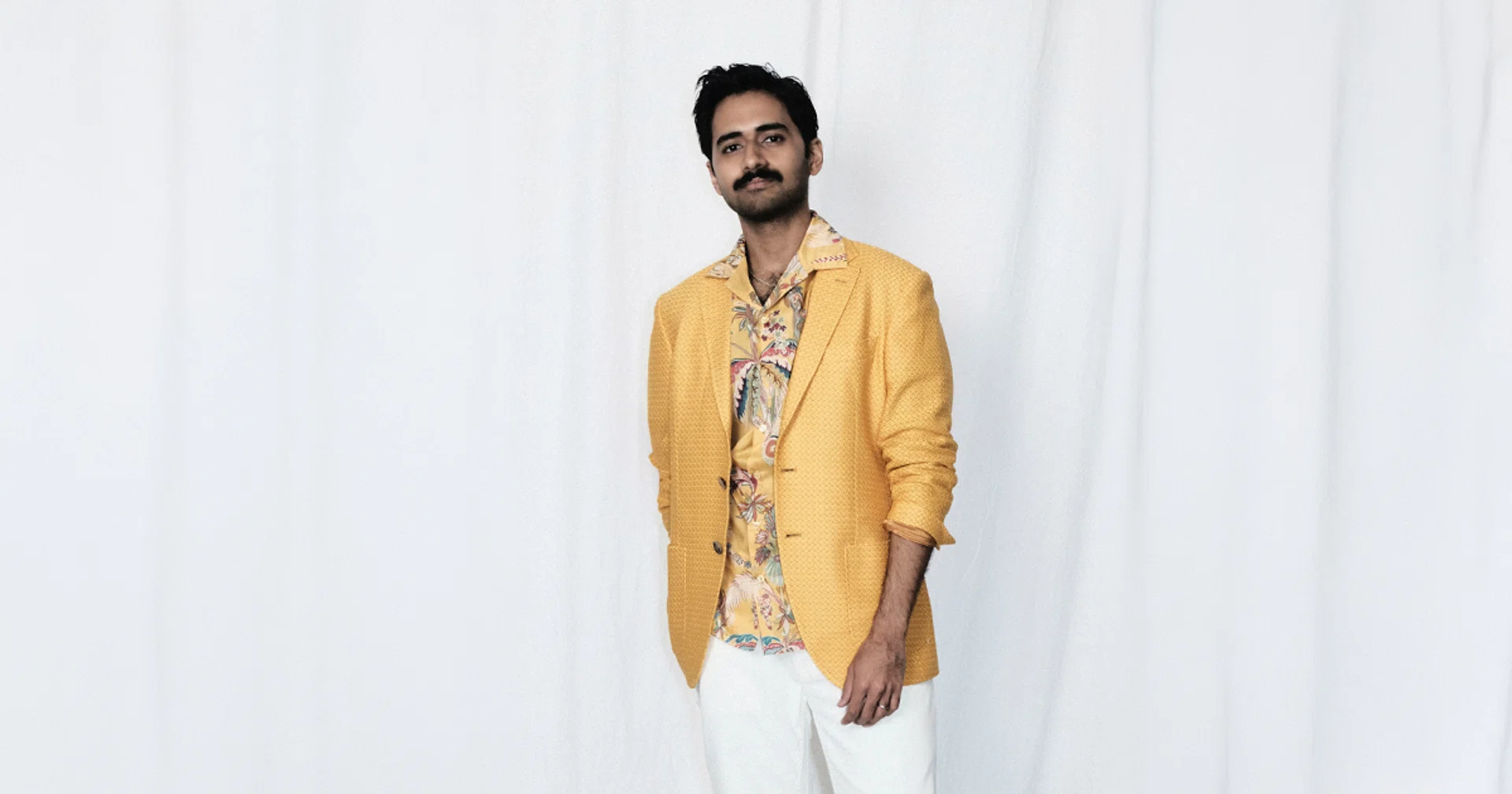
Sai Pogaru, co-founder of Rahasya Fragrances, a Singapore-born niche perfume house inspired by contemporary Indian culture, has little interest in producing another interpretation of the India that international luxury consumers have already learned to recognise.
The palaces, maharajas, spices, and familiar vocabulary of exotic opulence have served fragrance houses and luxury brands well enough. But for 32-year-old Pogaru and his two co-founders, those references offered an increasingly inadequate portrait of a country whose cultural life refuses to remain frozen in its past.
“The initial frustration was quite simple: We couldn’t find many fragrance brands telling stories about India that felt like the India we knew,” he recalls.
What they wanted was a fragrance house whose creative imagination belonged to the people telling the stories, rather than to an established industry’s expectations of what those stories should contain.
“For a long time, cultures like ours have been incredibly valuable as inspiration for global luxury, without necessarily being the ones building the brands and defining how those stories are told.”
Rahasya emerged from that imbalance, with fragrances inspired by the everyday textures of Indian life rather than its most familiar symbols of grandeur.
Whose India, anyway?
A particular kind of cultural translation happens when a brand begins pursuing international recognition. References broaden, narratives grow less specific, and products become increasingly detached from the places that first inspired them.
Pogaru considers this instinct misguided.
“We actively reject the idea that being culturally specific makes a brand less globally relevant,” he says. “The more specific something is, the more interesting it becomes.”
Rahasya’s fragrances follow that conviction. Chapter One draws on memories of old independent bookshops, Rickshaw Rhythms evokes journeys along coastal Indian roads, and Chai Addiction takes a beverage deeply familiar to South Asian life without attempting to disguise its origins.
For Pogaru, these references require neither apology nor extensive cultural interpretation. Someone who has never travelled in an Indian rickshaw might still recognise the exhilaration of movement; someone unfamiliar with a particular bookshop may still understand the pleasures of nostalgia.
“These ideas may begin somewhere specific, but the emotions around them — nostalgia, movement, comfort, joy — travel incredibly well across different cultures.”
His position also implicitly challenges luxury’s customary division between the cultures that inspire products and the companies that establish their commercial value.
“Our ambition isn’t to make Indian culture easier for the world to consume,” he explains. “It’s to enable people to connect to memories of home, wherever that may be to them.”
The advantage of ignorance
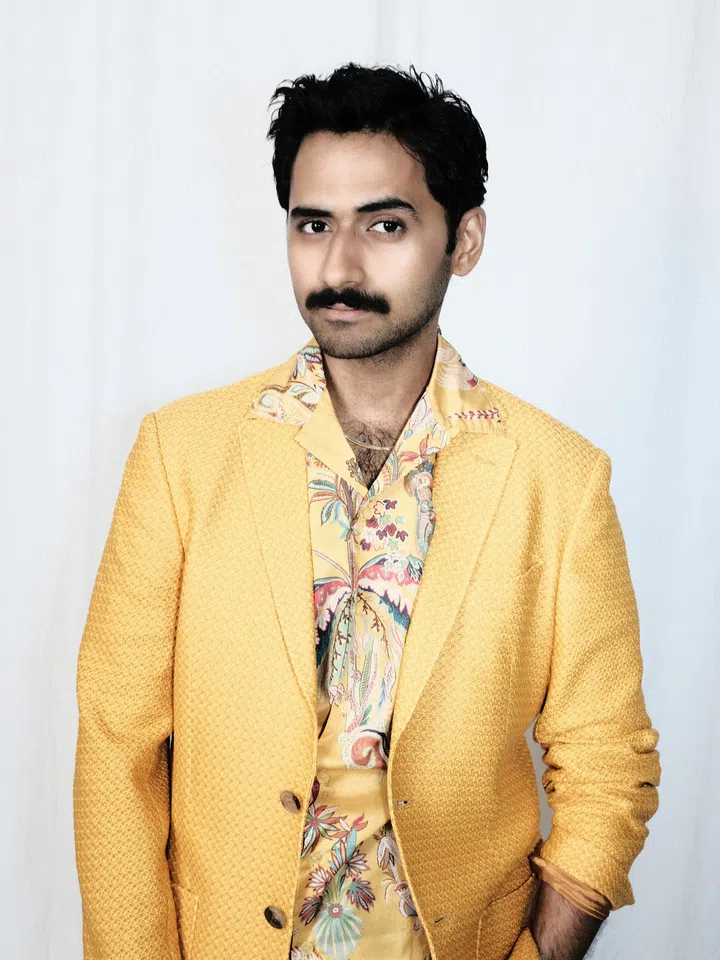
Pogaru and his co-founders entered perfumery without professional experience or established industry connections. In a sector whose credibility often rests on heritage, technical authority, and carefully cultivated prestige, this could have proved a formidable handicap.
“The hardest part is that credibility normally comes with a track record, and when you’re young, you’re building the track record at the same time as asking people to believe in the vision.”
Yet the absence of an industry pedigree also liberated the founders from some of its more entrenched habits. “We’re less attached to how a fragrance brand is ‘supposed’ to behave,” Pogaru observes.
Rather than follow consumer trends or conventional beauty campaigns, Rahasya might communicate a fragrance through a film, a DJ set inside a rickshaw, or an elaborate physical installation.
The approach reflects the cultural tastes of the founders themselves, who see their audience as curious, diverse, and receptive to experiences that resist the familiar solemnity of luxury.
“Sometimes not knowing the rules particularly well makes you more willing to question which ones actually matter.”
That philosophy found an unusually ambitious expression in London.
A railway carriage in Soho
Rahasya was still a young brand with limited resources when its founders decided to spend money building a railway-carriage-inspired pop-up in Soho, a city where, as Pogaru recalls, they knew nobody.
A more conventional strategy would have directed the budget towards digital advertising. The founders instead wanted visitors to physically inhabit the imaginative universe surrounding their fragrances. “On paper, it wasn’t the obvious decision,” Pogaru admits.
Nearly 1,000 visitors attended over four days, according to his account. The experience subsequently contributed to Rahasya’s official launch at Selfridges across the UK. The commercial outcome vindicated an experiment that performance-marketing metrics might have struggled to justify in advance.
“That brands are ultimately built in people’s memories, not just on dashboards.”
It is an especially useful conviction for a young company selling fragrance, a product whose relationship with memory and emotion is unusually intimate.
But success has also introduced a more complicated question: How much of Rahasya’s creative independence can survive the machinery required to support an international business?
The luxury of taking time
Over the past year, Rahasya has grown from a boutique Singapore fragrance house into an international brand stocked by retailers across the US and Europe. This expansion has inevitably brought heavier logistical demands, larger commercial commitments, and the relentless pressure to maintain momentum through constant new launches.
Pogaru, however, flatly refuses to let the retail calendar dictate the creative process.
“Some ideas need time,” he reflects. “Sometimes the right decision after months of development is still, ‘this isn’t good enough.’”
The founders have been known to spend months debating a single fragrance accord, deliberately rejecting commercially lucrative opportunities if they dilute the brand’s identity. These choices become increasingly difficult to defend as retail partners demand new products and operational efficiency creates a natural appetite for sheer volume.
Yet, Pogaru embraces this friction. “Our job is to build an increasingly sophisticated business around a creative core that still has permission to be slow, obsessive, and occasionally inefficient.”
To achieve this, he is cultivating two entirely different metabolisms within the same organisation: distribution, logistics, and operations must scale and accelerate, while the creative studio retains the absolute freedom to resist commercially convenient deadlines.
Driving this delicate balancing act is the foundational ambition that brought Rahasya into existence. “We’d love to see more brands from India, Singapore and this part of the world telling their own stories, on their own terms,” Pogaru explains.
Born in Singapore — a city defined by overlapping cultural identities — and drawing deeply from its founders’ Indian heritage, the company refuses to conform to comfortable international expectations. For Pogaru, true success means regional brands actively shaping global culture, rather than merely providing exotic raw materials for Western houses to interpret.
Today, this ambition is facing its most consequential test. As Rahasya reaches a larger international audience, there is immense commercial temptation to dilute the brand — to make its stories a little broader, a little safer, and a little easier for a global consumer to understand immediately.
But Pogaru isn’t interested in easy translations. He would rather a customer encounter a fragrance inspired by a highly specific, unfamiliar Indian memory and discover something unexpectedly personal within it. For him, a rickshaw ride need not become a carriage ride to travel the world.
Art direction: Fazlie Hashim
Photographer: Athirah Annissa
Stylist: Dolphin Yeo
Hair: Joanne Ong, using Kevin Murphy
Make-up: Keith Bryant Lee, using Clarins
For more stories on Strictly Zillennial, visit here.