%22%3E%0A%3Cpath%20d%3D%22M412%20101.2H393.7C393.1%20101.2%20392.3%20100.9%20391.8%20100.5C377.3%2087.6004%20362.9%2074.6004%20348.4%2061.6004C344.8%2058.4004%20341.3%2055.2004%20337.7%2052.0004C337.1%2051.5004%20336.2%2051.1004%20335.5%2051.0004C334.2%2050.8004%20333%2051.0004%20331.5%2051.0004V101.1H316.7V0.100391H331.4V44.3004C331.9%2044.3004%20332.2%2044.4004%20332.5%2044.4004C334.9%2044.4004%20337.2%2044.5004%20339.6%2044.4004C340.4%2044.4004%20341.3%2044.0004%20341.8%2043.5004C351.6%2034.4004%20361.4%2025.2004%20371.1%2016.0004C376.5%2010.9004%20381.9%205.90039%20387.3%200.800391C387.9%200.200391%20388.5%200.000390626%20389.3%200.000390626H400.9C384.2%2015.8004%20367.8%2031.3004%20351.2%2047.0004C371.5%2065.0004%20391.8%2082.9004%20412.1%20100.9C412.1%20101%20412.1%20101.1%20412%20101.2ZM180.9%20101.2C184.1%2094.9004%20187.2%2088.9004%20190.3%2082.8004C198.3%2067.3004%20206.2%2051.8004%20214.2%2036.2004C220.3%2024.4004%20226.4%2012.5004%20232.4%200.700391C232.7%200.100391%20233%20-0.0996094%20233.7%20-0.0996094H248.1C248.8%20-0.0996094%20249.2%200.100391%20249.6%200.800391C256%2013.3004%20262.4%2025.7004%20268.8%2038.2004C279.3%2058.6004%20289.8%2079.0004%20300.3%2099.5004C300.5%20100%20300.8%20100.4%20301.1%20101.1C300.5%20101.1%20300.1%20101.2%20299.7%20101.2H286.5C285.6%20101.2%20285.1%20100.9%20284.7%20100.2C280.1%2091.3004%20275.4%2082.4004%20270.8%2073.4004C270.1%2072.1004%20269.3%2071.6004%20267.8%2071.6004H209.9C208.7%2071.6004%20208.1%2072.0004%20207.5%2073.1004C202.9%2082.1004%20198.2%2091.0004%20193.6%20100C193.1%20101%20192.6%20101.3%20191.5%20101.3C188.4%20101.2%20185.3%20101.3%20182.3%20101.3C182%20101.2%20181.6%20101.2%20180.9%20101.2ZM239.1%2011.4004C230%2029.2004%20221.1%2046.7004%20212.1%2064.3004H266.4C257.2%2046.7004%20248.2%2029.2004%20239.1%2011.4004ZM0%200.000390626H43.4C51.2%200.000390626%2058.7%201.20039%2065.7%204.80039C75.9%2010.0004%2078.9%2018.0004%2078.6%2027.4004C78.3%2034.3004%2076%2040.5004%2071.2%2045.5004C67.3%2049.6004%2062.4%2052.3004%2057.1%2054.3004C50.6%2056.7004%2043.9%2058.0004%2037.1%2058.6004C30.1%2059.2004%2023.1%2059.4004%2016.2%2059.7004C15.8%2059.7004%2015.3%2059.8004%2014.8%2059.8004V101.1H0.1C0%2067.4004%200%2033.8004%200%200.000390626ZM14.8%207.10039V52.2004C23.7%2052.4004%2032.6%2052.3004%2041.2%2050.1004C44.4%2049.3004%2047.6%2048.2004%2050.6%2046.7004C58.4%2043.0004%2062.3%2036.7004%2062.7%2028.0004C63%2019.9004%2059.5%2014.1004%2052.4%2010.5004C47.6%208.00039%2042.5%207.10039%2037.2%207.10039H14.8ZM95.9%20101.1V0.100391H167.3V7.20039H110.7V44.7004H158.1V51.9004H110.8V93.9004H171.1V101C146.1%20101.1%20121%20101.1%2095.9%20101.1Z%22%20fill%3D%22black%22%2F%3E%0A%3Cpath%20d%3D%22M35.0004%2025.7996H42.5004V20.6996H44.8004V33.1996H42.6004V27.5996H34.9004V33.2996H32.7004V20.7996H35.0004V25.7996ZM54.4004%2025.8996V27.2996H48.9004V31.6996H55.9004C55.9004%2032.1996%2056.0004%2032.5996%2056.0004%2033.0996H46.5004V20.5996H55.5004V21.8996H49.0004V25.7996C50.7004%2025.8996%2052.5004%2025.8996%2054.4004%2025.8996ZM25.9004%2033.0996H23.5004V21.9996H17.9004V20.6996H31.6004V22.0996H27.1004C26.2004%2022.0996%2025.9004%2022.2996%2025.9004%2023.1996C26.0004%2026.0996%2025.9004%2028.9996%2025.9004%2031.7996V33.0996Z%22%20fill%3D%22black%22%2F%3E%0A%3C%2Fg%3E%0A%3Cdefs%3E%0A%3CclipPath%20id%3D%22clip0_388_462%22%3E%0A%3Crect%20width%3D%22411%22%20height%3D%22101.2%22%20fill%3D%22white%22%2F%3E%0A%3C%2FclipPath%3E%0A%3C%2Fdefs%3E%0A%3C%2Fsvg%3E%0A)
In space-starved Singapore, LHN Group posits a more sustainable real estate solution than just demolishing and rebuilding
The executive chairman, executive director, and group managing director of LHN Group has a strategy to turn Singapore’s old spaces into new opportunities and fuel economic renewal.
By Kelvin Lim /

Share this article
In land-scarce Singapore, deciding on land use and infrastructure is a balancing act between the needs of today's residents and future generations. In fact, Minister for National Development Desmond Lee shared that Singapore has two-thirds of the population of Switzerland squeezed into less than 2 per cent of its land area.
Against such a backdrop, it’s no wonder that the government is increasingly adopting the approach of repurposing unused spaces. There is plenty of potential in recycling these abandoned or underutilised properties and turning them into productive spaces. At LHN Group, we call this adaptive reuse, or "Space Optimisation", referring to identifying old buildings, reorganising the layout, and reinvigorating it to suit modern needs.
Apart from rapidly supplying affordable space to the market, retrofitting an old building is much quicker and less costly than developing a property from the ground up. This benefits businesses, especially small and medium enterprises (SMEs) — that contribute almost half of Singapore’s GDP and employ around 70 per cent of the country’s workforce — by allowing them to start up as shortly and cost-effectively as possible.
Today, Space Optimisation leverages Singapore's reputation as a top destination for establishing regional headquarters and foreign company structures across Southeast Asia. By catering to the 20 per cent of foreign-owned enterprises in the city-state, Space Optimisation brings invaluable support to these businesses, which introduce international experts, advanced technologies, and significant assets.
Space Optimisation also enables foreign companies to set up and expand their operations in Singapore quickly and cost-effectively through its flexible serviced offices, self-storage, and corporate housing solutions.
Further, surrounding neighbourhoods of revitalised buildings can benefit from improving rental yield and occupancy rates. By injecting renewed life into such architecture and encouraging footfall, nearby businesses (F&B or otherwise) can experience the ripple effect of more customers and, in turn, more sales.
Urban renewal impact
Space Optimisation offers benefits extending well beyond economic gains, which is crucial in Singapore’s sustainability and community development. In 2010, the Building and Construction Authority released the “Existing Building Retrofit” guidebook, highlighting retrofitting as a pivotal strategy for Singapore to achieve its ambitious goal of greening at least 80 per cent of its buildings by 2030. Unlike demolishing and rebuilding, refurbishing existing properties is more cost-effective and time-efficient while significantly reducing carbon emissions and noise pollution.

Moreover, Space Optimisation often involves enhancing a property's landscaping, surrounding infrastructure, services, and amenities. These upgrades elevate the quality of life for local residents and attract new tenants, leading to increased foot traffic. This surge in activity enhances neighbourhood safety through higher occupancy rates and improved community surveillance.
Beyond economic and environmental benefits, Space Optimisation bridges preserving Singapore’s rich heritage and embracing modern innovation. A prime example is repurposing conservation shophouses for commercial and retail uses, allowing historic structures to remain relevant and vibrant within the urban landscape.
Space Optimisation in practice
Transforming a neglected property through retrofitting is just the beginning. Space Optimisation involves thoughtfully redesigning a building’s layout to serve functional purposes while enhancing urban aesthetics and benefiting the surrounding community. The process starts with selecting buildings with character and structural integrity, ensuring they can be adapted flexibly to meet diverse needs.
A key aspect of Space Optimisation is implementing space-saving designs that maximise a property's efficiency, allowing for increased usable area without extensive rebuilding. For instance, innovative storage solutions like Work+Store convert non-lettable spaces into packing stations and last-mile delivery hubs tailored for e-commerce businesses.
These areas provide essential storage and function as breakout zones, fostering networking opportunities among businesses during their daily operations.
Similarly, projects like Coliwoo's co-living properties transform open spaces into urban farming areas. This initiative enables residents to engage in sustainable practices, creating a more self-sufficient and environmentally friendly living environment.
Through these examples, Space Optimisation demonstrates its ability to rejuvenate buildings, support economic growth, preserve cultural heritage, and enhance community well-being — all while promoting sustainable urban development in Singapore.
Taking Space Optimisation a step further, it seamlessly integrates residential and commercial uses, as demonstrated by 1557 Keppel. Originally the old Customs House, this building has been transformed into a vibrant mixed-use development that includes co-living accommodations, lifestyle amenities, food and beverage (F&B) outlets, and office spaces.
The retrofitted property features a modern, welcoming design enhanced by a lively wall mural, which injects new energy and vibrancy into the surrounding neighbourhood.
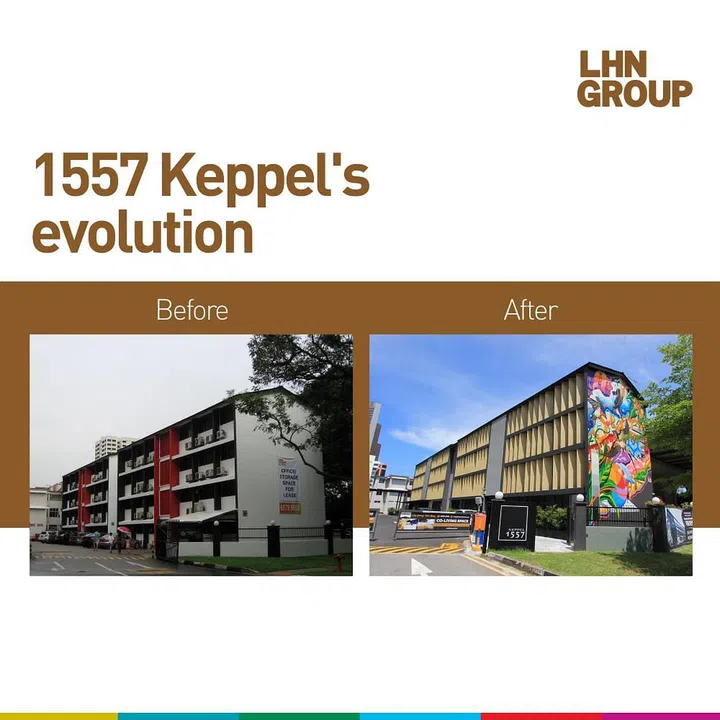
1557 Keppel Road property before and after Space Optimisation. (Photo: LHN Group)
Additionally, repurposed properties are advancing sustainability by utilising available spaces for eco-friendly initiatives. For instance, rooftops are equipped with solar panels to harness renewable energy, while green walls are planted to naturally cool building temperatures.
These sustainable measures reduce energy costs and improve environmental efficiency, demonstrating how Space Optimisation can effectively balance functionality with ecological responsibility.
The future of space
Today, Space Optimisation and repurposing of old buildings are prevalent globally and are often executed in different capacities and for various uses. Still, one commonality stands out throughout — the significance of recognising the value of these seemingly unattractive properties.
We can learn from cosmopolitan cities that successfully balance contemporary and historical architecture when preserving heritage. A prime example is the Tai-O project in Hong Kong, where a former police station in one of the city’s last remaining fishing villages has been transformed into a distinctive boutique hotel.
This refurbishment not only preserves the building's character but also honours the stories of the close relationship between the police station's former occupants and the local villagers.
Another interesting case is Streetmekka in Viborg, Denmark, an indoor community sports centre refurbished from a former windmill factory at approximately one-third the cost of constructing a traditional sports hall. The once-dreary abandoned factory has become a beloved landmark and community hub for local youth.
Space Optimisation in urban planning offers numerous benefits, from driving economic growth to strengthening communities and advancing Singapore's goal of achieving net-zero emissions by 2030. Revitalising old and underutilised buildings is a strategic approach to managing land use in a land-scarce city like Singapore.
This maximises existing resources and supports the sustainable creation of a liveable environment where both businesses and individuals can flourish.