%22%3E%0A%3Cpath%20d%3D%22M412%20101.2H393.7C393.1%20101.2%20392.3%20100.9%20391.8%20100.5C377.3%2087.6004%20362.9%2074.6004%20348.4%2061.6004C344.8%2058.4004%20341.3%2055.2004%20337.7%2052.0004C337.1%2051.5004%20336.2%2051.1004%20335.5%2051.0004C334.2%2050.8004%20333%2051.0004%20331.5%2051.0004V101.1H316.7V0.100391H331.4V44.3004C331.9%2044.3004%20332.2%2044.4004%20332.5%2044.4004C334.9%2044.4004%20337.2%2044.5004%20339.6%2044.4004C340.4%2044.4004%20341.3%2044.0004%20341.8%2043.5004C351.6%2034.4004%20361.4%2025.2004%20371.1%2016.0004C376.5%2010.9004%20381.9%205.90039%20387.3%200.800391C387.9%200.200391%20388.5%200.000390626%20389.3%200.000390626H400.9C384.2%2015.8004%20367.8%2031.3004%20351.2%2047.0004C371.5%2065.0004%20391.8%2082.9004%20412.1%20100.9C412.1%20101%20412.1%20101.1%20412%20101.2ZM180.9%20101.2C184.1%2094.9004%20187.2%2088.9004%20190.3%2082.8004C198.3%2067.3004%20206.2%2051.8004%20214.2%2036.2004C220.3%2024.4004%20226.4%2012.5004%20232.4%200.700391C232.7%200.100391%20233%20-0.0996094%20233.7%20-0.0996094H248.1C248.8%20-0.0996094%20249.2%200.100391%20249.6%200.800391C256%2013.3004%20262.4%2025.7004%20268.8%2038.2004C279.3%2058.6004%20289.8%2079.0004%20300.3%2099.5004C300.5%20100%20300.8%20100.4%20301.1%20101.1C300.5%20101.1%20300.1%20101.2%20299.7%20101.2H286.5C285.6%20101.2%20285.1%20100.9%20284.7%20100.2C280.1%2091.3004%20275.4%2082.4004%20270.8%2073.4004C270.1%2072.1004%20269.3%2071.6004%20267.8%2071.6004H209.9C208.7%2071.6004%20208.1%2072.0004%20207.5%2073.1004C202.9%2082.1004%20198.2%2091.0004%20193.6%20100C193.1%20101%20192.6%20101.3%20191.5%20101.3C188.4%20101.2%20185.3%20101.3%20182.3%20101.3C182%20101.2%20181.6%20101.2%20180.9%20101.2ZM239.1%2011.4004C230%2029.2004%20221.1%2046.7004%20212.1%2064.3004H266.4C257.2%2046.7004%20248.2%2029.2004%20239.1%2011.4004ZM0%200.000390626H43.4C51.2%200.000390626%2058.7%201.20039%2065.7%204.80039C75.9%2010.0004%2078.9%2018.0004%2078.6%2027.4004C78.3%2034.3004%2076%2040.5004%2071.2%2045.5004C67.3%2049.6004%2062.4%2052.3004%2057.1%2054.3004C50.6%2056.7004%2043.9%2058.0004%2037.1%2058.6004C30.1%2059.2004%2023.1%2059.4004%2016.2%2059.7004C15.8%2059.7004%2015.3%2059.8004%2014.8%2059.8004V101.1H0.1C0%2067.4004%200%2033.8004%200%200.000390626ZM14.8%207.10039V52.2004C23.7%2052.4004%2032.6%2052.3004%2041.2%2050.1004C44.4%2049.3004%2047.6%2048.2004%2050.6%2046.7004C58.4%2043.0004%2062.3%2036.7004%2062.7%2028.0004C63%2019.9004%2059.5%2014.1004%2052.4%2010.5004C47.6%208.00039%2042.5%207.10039%2037.2%207.10039H14.8ZM95.9%20101.1V0.100391H167.3V7.20039H110.7V44.7004H158.1V51.9004H110.8V93.9004H171.1V101C146.1%20101.1%20121%20101.1%2095.9%20101.1Z%22%20fill%3D%22black%22%2F%3E%0A%3Cpath%20d%3D%22M35.0004%2025.7996H42.5004V20.6996H44.8004V33.1996H42.6004V27.5996H34.9004V33.2996H32.7004V20.7996H35.0004V25.7996ZM54.4004%2025.8996V27.2996H48.9004V31.6996H55.9004C55.9004%2032.1996%2056.0004%2032.5996%2056.0004%2033.0996H46.5004V20.5996H55.5004V21.8996H49.0004V25.7996C50.7004%2025.8996%2052.5004%2025.8996%2054.4004%2025.8996ZM25.9004%2033.0996H23.5004V21.9996H17.9004V20.6996H31.6004V22.0996H27.1004C26.2004%2022.0996%2025.9004%2022.2996%2025.9004%2023.1996C26.0004%2026.0996%2025.9004%2028.9996%2025.9004%2031.7996V33.0996Z%22%20fill%3D%22black%22%2F%3E%0A%3C%2Fg%3E%0A%3Cdefs%3E%0A%3CclipPath%20id%3D%22clip0_388_462%22%3E%0A%3Crect%20width%3D%22411%22%20height%3D%22101.2%22%20fill%3D%22white%22%2F%3E%0A%3C%2FclipPath%3E%0A%3C%2Fdefs%3E%0A%3C%2Fsvg%3E%0A)
Share this article
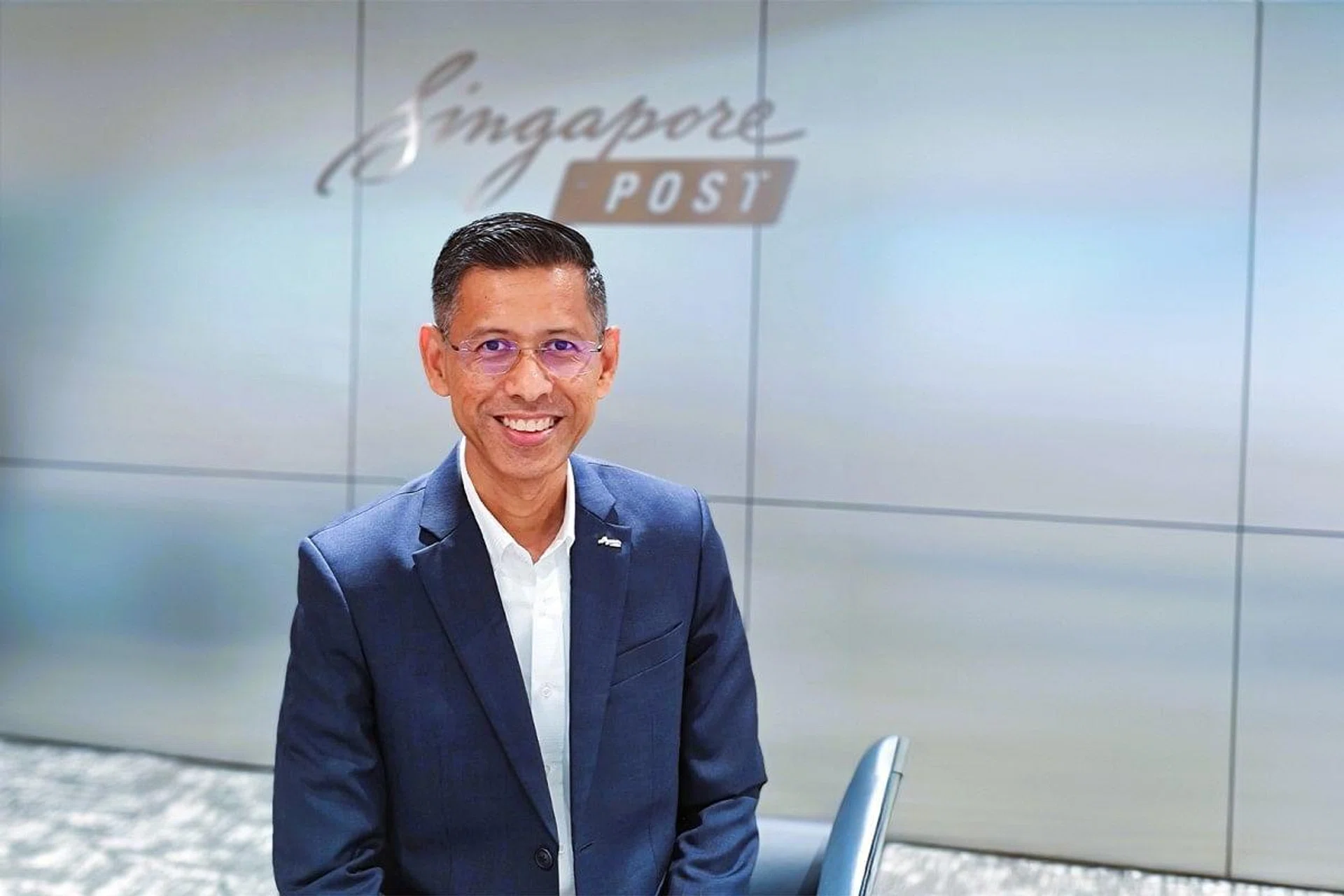
“I don’t wake up worrying about things,” Shahrin Abdol Salam, the newly minted Singapore CEO of SingPost tells me. Normally, I bristle when business leaders answer my opening question — “When you woke up this morning, what worried you the most?” — in the most politically correct way, as if to place themselves on a pedestal free from such worldly and insignificant affairs as worry.
But after speaking to Shahrin for close to ninety minutes on a Wednesday afternoon, I do actually believe that he wakes up without any semblance of worry not for lack of care but largely in part due to a life philosophy. “I wake up thinking, how can today be better than yesterday? Especially as a leader, it's about how I spend my hours in the day to come — doing something to do good, to do well, to do right."
Shahrin attributes this mindset to his practice of Kaizen, a Japanese term that translates to "continuous improvement" or "change for the better." For Shahrin, that involves a deep and intentional reflection of what happened yesterday and the day before. It’s about asking himself if there is any area that he could do better, anything he can approach differently. “Every single day has to be a day that we can make a difference, that we can progress, that there’s something to look forward to,” the former Managing Director of SMRT's Thomson East Coast Line insists.
Still, ever the immaculate communications professional, Shahrin brings the conversation back to the original premise of my question, albeit with a slight twist. “The one thing that does worry me is when I am not able to think of something new to do. If I cannot think of an area where we can do better, then my worry is, are we entering into the realms of complacency? The moment you allow yourself to get closer to a state of complacency, you set yourself further away from improvements and making a difference."
This life philosophy perhaps explains Shahrin’s string of leadership appointments prior to joining Singapore Post as the Singapore CEO. At SMRT, he held various roles, including Director of Station Operations, then Train Operations before taking on the position of Chief Engineer of Rail Operations and then Rail Expert and Advisor to the CEO at the Roads and Transport Authority in Dubai, President at Singapore Business Council (UAE), Senior VP of Plans and Development at SMRT in 2017, and Senior VP and Deputy Managing Director at SMRT TEL Pte Ltd in October 2020.
It’s a breathless resume that, if you don’t know the man, may come across as a tad overachieving. But knowing what I know about Shahrin now, his impressive resume is not a sign of restlessness — rather it’s his way of manifesting improvements. That it helped him climb the leadership career ladder of success is but a happy coincidence.
Run fast, run slow, but always run
“Does it get tiring to always be in that mental mode of constant improvement?” I probe. Shahrin leans forward and clarifies that having a mental mode doesn’t mean that he doesn't accept failure. Yes, he is concerned about things going wrong — “of course” — but that, he asserts, is not at the top of his mind. “I know that I am prepared to accept challenges, and if and when something goes wrong, I must be able to react and recover quickly.”
To my question of whether it gets tiring, Shahrin sees life as a marathon — “Sometimes you run faster, sometimes slower, but you run at a pace that is most appropriate at that point in time.” Elaborating, he insists that “Going steady doesn’t mean going slower, but just maintaining a steady pace to get there.”
“Is it tiring? Of course,” he admits, finally. “But, if you know that this is something worth running for, for whatever reason, then you must be prepared to be tired.“
It sounds to me like a case of sometimes running fast, sometimes running slow, but one must always continue running. Shahrin concurs: “There are occasions when working fast is my way of managing time. If you stop, it’s like having to start over again. Even if you stop, you need to calm down, otherwise your muscles will stiffen. Using that analogy, you need to keep going.”
On his runs he makes sure to set the context correctly. “When you run around the neighbourhood and reach a traffic light, you keep running on the spot. To me, that’s also progress. Stopping completely makes it harder to start again.”
Internal missteps, external shifts
This philosophy of continuous movement and progress resonates deeply with SingPost's journey over the past decade. Over this period, SingPost has endured a litany of problems, mistakes, and scandals that have cast a long shadow over its operations.
In 2018, the Infocomm Media Development Authority (IMDA) slapped SingPost with a S$100,000 fine for significant lapses in mail delivery standards, following public outcry over misdelivered and delayed mail. A year later in 2019, the group was fined S$300,000 for 20 incidents of non-compliance. These two instances laid bare the internal inefficiencies plaguing the organisation and marked a pivotal moment in its declining public trust.
Leadership turbulence further compounded SingPost’s woes. The abrupt resignation of CEO Wolfgang Baier in 2015 set off a cascade of departures among top executives, creating a leadership vacuum that left the company floundering. The absence of steady leadership during this period hindered strategic decision-making and contributed to a sense of drift within the organisation.
Financially, SingPost’s traditional postal business has been in a tailspin, with 2022 marking a particularly dire year as the company reported substantial losses. The decline in mail volumes, exacerbated by the digital shift, and the costly misadventures in overseas acquisitions, such as the ill-fated TradeGlobal deal, have drained resources and undermined financial stability. These ventures, intended to diversify revenue streams, instead became millstones, dragging the company deeper into financial quagmire.

In response to these challenges, SingPost launched a transformation plan, aiming to bolster its logistics capabilities and expand its e-commerce footprint. In 2024, the company completed a strategic review, outlining five key strategies to drive growth and unlock shareholder value. These included reorganisation into three business units focused on Singapore, Australia, and international markets, strategic capital management, and developing tech-driven logistics solutions.
SingPost's narrative over the past decade is one of a once-dominant player grappling with internal missteps and external market shifts. Despite the strategic initiatives and restructuring efforts, the road to recovery remains fraught with challenges. Whether SingPost can navigate these turbulent waters and reclaim its standing as a leading logistics provider remains an open question.
Shuffle, shuffle, step
It’s why I wanted to know why Shahrin decided to take on this job and enter uncharted (read: non-rail) waters. He laughs at my description, adding that while it may be true, he sees it as a rare opportunity to shape the future. “Not many people get this chance — it would be a loss if I didn’t take it.”
And in no small ways, Shahrin is best suited for the role, having taken on other similarly tenuous positions in the past. “When I was posted to Dubai for SMRT, it was the first time a subsidiary company operated overseas. It was a challenge and not easy, but years later, I see the positives. When I returned in 2016, the rail network was not at its peak, and I was tasked with transforming the railway industry.”
“People might say I am entering a different industry, but I see it as building on the strengths and lessons from my previous organisations,” Shahrin admits. As someone known globally for his railway expertise and being the first Asian to hold the accreditation of Fellow of the Chartered Institute of Railway Operators, Shahrin understands when people express reticence at this industry switch. “There is a lot to learn in this new role, but I have good people in this company who are willing to change if they understand its purpose.”
Alongside a motivated workforce, Shahrin also plans to roll out a three-pronged plan to supercharge SingPost’s growth under his stewardship. People, as you have seen, is one such prong — the other two are process and technology. He reminds me that customers are also part of his ‘People’ prong: “Shaping their perception is tough, but if we do things right consistently, they will recognise improvements. They may not always thank us, but at least they won’t complain as much,” he explains with a laugh.
The ‘Process’ prong stems from the understanding that as everything in this world becomes more digital, there’s an expectation from customers for faster and more convenient services. This, he tells me, can only be achieved through a reengineering of processes. “What worked well in the past deserves recognition, but it also requires rethinking,” says Shahrin, adding that if successful, reengineering is an opportunity to bring out the best in everyone.
Failing fast
But it’s his ‘Technology’ prong that Shahrin takes pains to elaborate on and flesh out more intentionally. At the core of his plan is the underlying belief that today, if you want something, you want it fast—preferably now.
Shahrin posits that the key to achieving that is providing information. “If you order GrabFood, it also cannot happen instantaneously. But you get updates — the kitchen has received your order, someone has picked up your food, and now it's on its way. You know it’s progressing. If you know you’re progressing, you’re less fearful, and people will embrace change better. Technology should help you embrace that journey.”
To this end, Shahrin finds himself in familiar company. In a bid to redefine its role in the digital age, SingPost has undergone a technological metamorphosis over the past three years. Central to this transformation is the adoption of AI-driven sorting systems that don’t just sort mail; they orchestrate a symphony of efficiency and precision, handling increasing volumes with the grace of a seasoned conductor.
Then there’s the introduction of the SAM (SingPost Automated Machines) kiosks — tech-savvy hubs offering a myriad of services—from buying stamps to weighing parcels and tracking mail. SingPost has also focused on mobile technology, launching a mobile app that offers real-time tracking and other postal services. Blockchain technology has been integrated to ensure secure and transparent transactions, boosting customer trust and operational efficiency.
Additionally, the establishment of smart lockers across various locations has provided convenient and contactless delivery options, meeting the growing demand from e-commerce
The plan, according to the new CEO, is to stay ahead of the curve. “We need to think two to three steps ahead because if you focus on today’s technology, it’s obsolete by the time you implement it,” says Shahrin. “Will we get all our technology choices right? Not always, but the ability to fail fast is important so we can rebuild quickly.”
Shahrin is confident that it is in this arena of technology where he can truly add value. As an engineer, problem-solving, processes, and systems thinking are his bedfellows.
We need to envision what the future will look like and what our customers will want from SingPost. Then, we bring back that expectation and drive the technology accordingly. ”It’s about making things better and making life easier, which is second nature to me.”
The business of people
At this juncture, the changes Shahrin promised sounds non-negotiable, a certainty in fact. Still, the reality is that with change, the unwillingness often comes from team members who have been around for a long time and don’t see any other better way to do the work they’ve been tasked with. “People fear change if they don’t know what it looks like,” Shahrin shares, tacitly acknowledging that most resistance to improvements is due to a lack of transparency. “If we can paint a narrative that shows where we are heading, they are more likely to embrace it. They need to know we are behind them every step of the way."
Broad corporate mission strokes aside, Shahrin also insists that leading, caring, and recognising the health and well-being of his employees is important, admitting that sometimes the company may fall short. “We often feel we never do enough for our people — never do enough to prepare them for what’s ahead. But we need to care for them and prepare them for the changes that will come."
Shahrin takes pains to drive home this point about creating a positive and inspiring work environment. After all, even centuries-old institutions like universities and banks have had to significantly adapt to remain relevant in today's fast-paced world. For instance, universities have embraced online learning platforms and digital resources to cater to the global student population. Banks have integrated advanced fintech solutions and mobile banking to enhance customer convenience and security.

SingPost and Qazpost sign strategic cooperation agreement aimed at boosting eCommerce and logistics, and bolster development in both countries. (Photo: SingPost)
“For SingPost, people are at the core of what we do,” he posits. “I can’t be everywhere all the time, but knowing that they provide excellent service without expecting any compliment in return indicates a strong culture — a culture of excellence. That's why I'm happy to be here.” Shahrin’s starting point, he emphasises, is great people, adding that “When we take care of our people, they will take care of our customers."
For Shahrin, that intuitive level of care and conscientiousness extends to how he sees SingPost serving its customers under his leadership today. And that starts with being where the customers are — but it shouldn’t just stop there he asserts. “We exist in various locations today — around 50. Where there’s a new township or a catchment area that needs our services, we’re there.” Shahrin explains, acknowledging that SingPost’s focus is on evolving along with the change in the landscape of the country’s townships.
Still, he doesn't want the team to be too hyper-fixated on where their services currently are or if there are a lot of customers to serve. “Let’s focus on bringing SingPost’s services closer to the community instead. That’s a key point for us. It’s about being accessible and convenient."
Competitors, we’ve had a few
This customer-centric approach is crucial, especially as the e-commerce landscape rapidly expands. In 2020, e-commerce values in Singapore skyrocketed by 87%, reflecting a substantial increase in online shopping activities. This trend is expected to continue, with e-commerce values projected to double by 2025. As the e-commerce sector flourishes, the competitive landscape of Singapore’s last-mile delivery market becomes increasingly robust, with both global and local players like DHL Logistics, and UPS Singapore leading the charge
Other notable players, such as Ninja Van, a logistics company in Southeast Asia, have also established a strong presence with its reliable and efficient delivery services tailored for the e-commerce market. Similarly, Shopee Delivery, the logistics arm of the popular e-commerce platform Shopee, has significantly contributed to enhancing delivery efficiency and customer satisfaction through its extensive network and technological advancements.
For Shahrin, the rapid growth of the e-commerce industry, while encouraging, should be taken with a pinch of benchmarking salt. He explains that “the e-commerce industry is continuously evolving, with changing expectations and growth dynamics.” He also notes that the current players are mostly startups with a different mental model and objectives compared to more established companies, making it difficult to benchmark them against each other.
“There's a powerful statement that floats within the company: we are the only logistics company in Singapore that can reach every single household every single day,” Shahrin expounds. As a preface, he adds that SingPost has a rich legacy dating back 165 years, even before Singapore’s independence. “Surviving for so long means we have weathered numerous changes and challenges while many other companies have not. Companies like IBM and Kodak have faced significant challenges, but SingPost has remained resilient.”
In line with its commitment to innovation and resilience, SingPost has made substantial investments in its e-commerce capabilities, pioneering seamless digital shopping experiences.
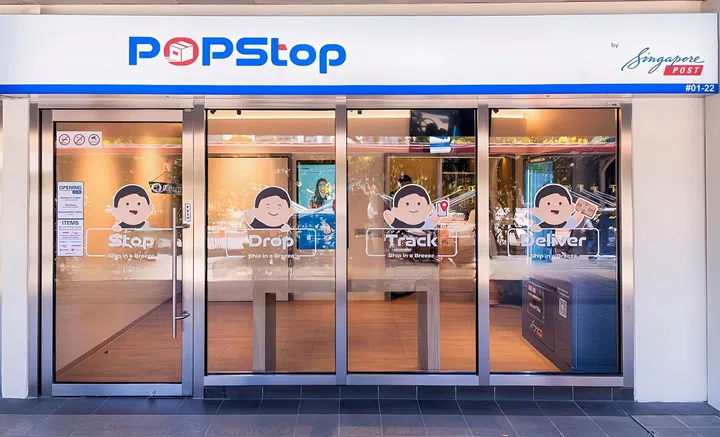
Exterior of POPStop at Tampines MRT Station. (Photo: SingPost)
One such example of its commitment to innovation is with POPStop@Tampines, the first of many planned locations, in collaboration with Stellar Lifestyle, SMRT's business arm. POPStops offer seamless drop-off and return experiences for small businesses and individual sellers. The new Tampines location features a gen-AI powered digital assistant, enhancing customer interactions by answering questions and dispensing labels. This initiative integrates parcel services into daily commutes, enhancing convenience for commuters. Tony Heng, President of Stellar Lifestyle, highlights this collaboration's alignment with their vision of enhancing lifestyles and supporting SME merchants through innovative solutions like POPStop.
Still, when it comes to disappointing service standards in the space, ironically, Shahrin is not spared. He recalls a time when he did some online shopping and got a message saying his purchase had arrived. “But it wasn’t there, Zat. Three packages were supposedly delivered in one hour, but none arrived. Was I happy about it? Of course not. Am I asking for an apology? No, I just want my items.”
“Now, the question is, should we be like them?” Shahrin asks rhetorically. “My starting point,” he asserts, “isn’t to be like them. My starting point is, why can't we provide a service that is deemed better or more valuable than theirs?"
Going by track record, it’s not an impossible feat for SingPost to achieve. Shahrin reminds me that during the pandemic, the company delivered ART kits, not once, but five times, to every single household. “That’s an achievement. Still, I am watching the other industry players. And where it makes sense for me to do something that either competes or does better, and doing better can mean doing something different, then I’ll do that.”
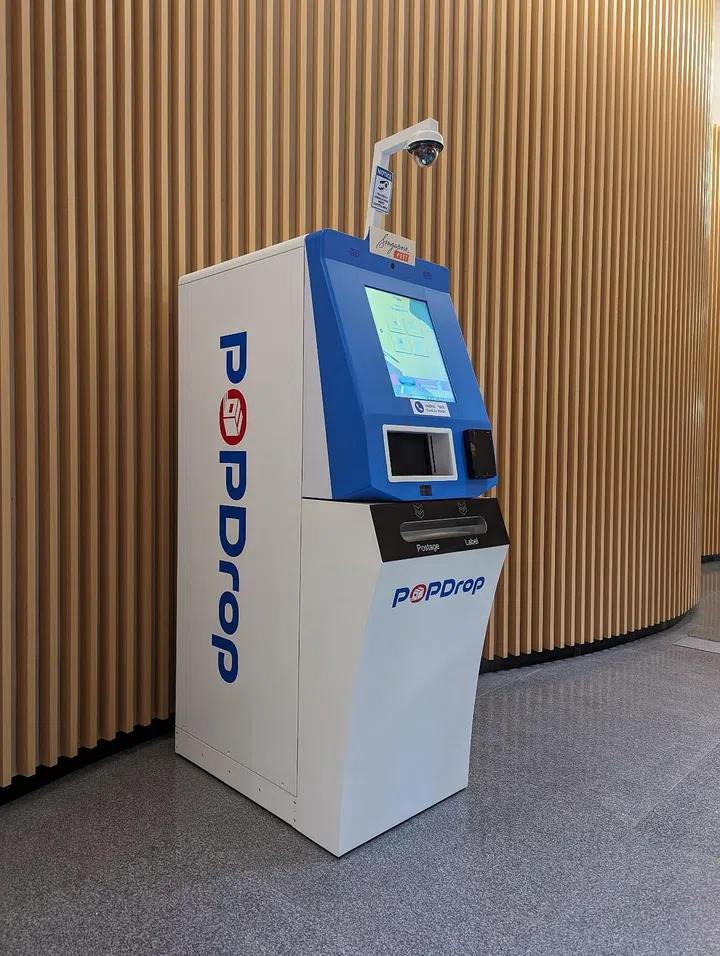
The addition of standalone POPStops at MRT stations and new POPDrops boosts the connectivity within SingPost's existing infrastructure network. (Photo: SingPost)
SMRT X SingPost
One of the improvements Shahrin has planned involves accessibility. “We need to be closer to the community. For example, you might visit the Braddell post office not because you love it, but because it’s conveniently located along your route.”
Shahrin is referencing my retelling of a time when I desperately needed to post something out to Malaysia and chose the SingPost branch opposite SPH Media to finalise the transaction. In hindsight, I chose SingPost not simply because of its stellar record or its glowing customer service but because it was right where I needed it to be.
Shahrin smiles as I share this story adding that the work today is to understand how SingPost can be part of people’s lifestyle. “People want convenience — they want to accomplish tasks on their way to somewhere else. Our customers shouldn’t have to think about where the nearest post office is or walk long distances from the MRT station. Our goal is to be where people need us, making our services easy to access and use.”

One such initiative is SingPost's strategic collaboration with SMRT Corporation, which aims to enhance last-mile delivery and logistics solutions. This partnership leverages the strengths of both companies — SingPost’s extensive postal and logistics network and SMRT’s comprehensive public transportation infrastructure — to create a more efficient and integrated urban logistics ecosystem.
Central to this collaboration is developing parcel lockers and collection points at SMRT's MRT stations, providing convenient and secure pick-up and drop-off locations for consumers. By utilising SMRT’s strategic locations, SingPost can significantly reduce the distance and time required for last-mile deliveries, enhancing overall operational efficiency. Additionally, the partnership explores using SMRT’s transportation assets for parcel distribution during non-peak hours, maximising the utility of existing resources while reducing environmental impact and costs.
Shahrin’s conviction to accessibility is unwavering, a dogged commitment to bring SingPost’s service closer to the community. “We must understand our communities’ behaviour, aspirations, and what they consider convenient. These factors will be at the centre of our exploration and planning.”
A silver lining
Today, if their 2023/2024 annual report is to be believed, SingPost has transformed from a traditional postal service provider into a formidable international logistics enterprise. The group reported a net profit of S$81.5 million for the year, a dramatic increase from S$38.8 million the previous year. This impressive growth is largely attributed to the successful integration of acquisitions in Australia, particularly the full ownership of Freight Management Holdings and Border Express.
In Singapore, SingPost has adeptly navigated the structural decline in domestic mail by adjusting postal rates and capitalising on the burgeoning e-commerce market. An 11% year-on-year growth in e-commerce volumes within the Post & Parcel business highlights the group’s agility in adapting to changing market dynamics. SingPost's investments in digitalisation, exemplified by the launch of the ARRIV platform, underscore its commitment to enhancing customer experiences and operational efficiencies through advanced technologies like cloud computing and AI.
And then there’s SingPost’s dedication to sustainability, which is woven into the fabric of its operations. The group’s efforts have since been recognised globally, earning accolades such as the Best Innovation Strategy and Commitment to Sustainability at the World Post and Parcel Awards 2023.
Other noteworthy achievements include a 26% reduction in Scope 1 and 2 emissions in Singapore since FY2018/19, underscoring SingPost’s proactive approach to environmental stewardship. The group’s ambitious goal of achieving net-zero emissions by 2030 in Singapore and by 2050 globally is complemented by initiatives in sustainable packaging and carbon-efficient ecosystems.
Investing in its people remains a cornerstone of SingPost’s strategy. Through upskilling initiatives and fostering a digital-first mindset, the group has cultivated a supportive and innovative workplace culture. Recognition as a Great Place to Work® in Australia, China, Singapore, and Taiwan attests to this commitment. Additionally, SingPost’s community engagement, including the AED-on-Wheels program and collaborations with local charities, highlights its dedication to social responsibility and community welfare.
The power of recognition
As part of his familiarisation effort with his team members' on-the-ground work, Shahrin once shadowed a mail ambassador on his delivery route. One of the stops was an industrial estate. “I thought it would be simple to put letters into mailboxes. But the addresses were not in order, making it challenging to find the correct boxes. This experience made me realise that our mail ambassadors face difficulties that many people don’t recognise. They work in all weather conditions, and their safety is paramount.”

With a sigh, he shares his disappointment at the lack of recognition of the hard work of SingPost’s mail ambassadors. This, he tells me, is even when every HDB block has a QR code that tells you who serves your area and allows you to give feedback. “When everything runs smoothly, it’s to be expected, and when things go wrong, people complain. We deliver mail for as little as 52 cents, Zat. It isn’t even enough to buy a soft drink.”
He has a point. In my conversation with Shahrin, I suddenly recalled an interaction I had with the patient staff at a post office near where I stay, who went out of their way (and maybe violating company policies while at it) to retrieve a parcel I dropped off barely ten mins ago because the address I had written was wrong. They had to unlock the door to the drop-off bin, look through the sack, and rummage until they found the parcel that I described. Mind you, this was an interaction from five years ago. That it remains fresh in my memory is testament to how impressed I was by their customer service though I am perplexed and slightly embarrassed that I waited till today to share this with anyone.
A more recent positive encounter happened to me while I was at the Braddell branch of SingPost. The staff there saw that my package could be a little fragile and suggested that I stuffed it with bubble wrap — which I didn’t have. Instead of just shrugging it off, the lady went to the back, searched for some loose bubble wrap, and helped stuff my envelope with it.
Becoming number one again
Shahrin is visibly delighted when I mention these incidents, going the extra step to remind his assistant to drop a note to the staff at the Braddell brand on a job well done. “Recognising our staff and their efforts is crucial. As leaders, we need to acknowledge and appreciate their hard work at every opportunity. I’m sure they didn’t know you would meet me and share these stories, which, to me, shows their genuine dedication.”
These stories inspire Shahrin and his team, a catalyst that drives everyone to do better and to do right by Singaporeans. He takes comfort in knowing that beyond the corporate walls of SingPost at Paya Lebar are service staff who know they can make Singapore better. “It’s why it’s important that we empower them, provide opportunities, and ensure a safe environment for them to thrive. That’s how we can achieve great things. That's what I want to do.”
It’s evident that Shahrin views his leadership at SingPost through a people-first lens. While this is not uncommon, it’s refreshing to see a newly minted CEO approach transformational change to an organisation by emphasising the power of human connections. This approach extends to his personal worldview, too.
“I hope that we evolve into a more caring society,” Shahrin offers when I ask him what is the one thing he wishes could happen today to humanity. He brings up a desire to live in a more compassionate world where individuals are willing to step forward and do what they can to make a difference — no matter how small. “If we can be a more caring society, we will naturally become a better community.”
”If more of us in Singapore can embrace this mindset, then this little red dot is a country we should be very proud of. It starts with one person, and if we can amplify that one, we will become number one.”