%22%3E%0A%3Cpath%20d%3D%22M412%20101.2H393.7C393.1%20101.2%20392.3%20100.9%20391.8%20100.5C377.3%2087.6004%20362.9%2074.6004%20348.4%2061.6004C344.8%2058.4004%20341.3%2055.2004%20337.7%2052.0004C337.1%2051.5004%20336.2%2051.1004%20335.5%2051.0004C334.2%2050.8004%20333%2051.0004%20331.5%2051.0004V101.1H316.7V0.100391H331.4V44.3004C331.9%2044.3004%20332.2%2044.4004%20332.5%2044.4004C334.9%2044.4004%20337.2%2044.5004%20339.6%2044.4004C340.4%2044.4004%20341.3%2044.0004%20341.8%2043.5004C351.6%2034.4004%20361.4%2025.2004%20371.1%2016.0004C376.5%2010.9004%20381.9%205.90039%20387.3%200.800391C387.9%200.200391%20388.5%200.000390626%20389.3%200.000390626H400.9C384.2%2015.8004%20367.8%2031.3004%20351.2%2047.0004C371.5%2065.0004%20391.8%2082.9004%20412.1%20100.9C412.1%20101%20412.1%20101.1%20412%20101.2ZM180.9%20101.2C184.1%2094.9004%20187.2%2088.9004%20190.3%2082.8004C198.3%2067.3004%20206.2%2051.8004%20214.2%2036.2004C220.3%2024.4004%20226.4%2012.5004%20232.4%200.700391C232.7%200.100391%20233%20-0.0996094%20233.7%20-0.0996094H248.1C248.8%20-0.0996094%20249.2%200.100391%20249.6%200.800391C256%2013.3004%20262.4%2025.7004%20268.8%2038.2004C279.3%2058.6004%20289.8%2079.0004%20300.3%2099.5004C300.5%20100%20300.8%20100.4%20301.1%20101.1C300.5%20101.1%20300.1%20101.2%20299.7%20101.2H286.5C285.6%20101.2%20285.1%20100.9%20284.7%20100.2C280.1%2091.3004%20275.4%2082.4004%20270.8%2073.4004C270.1%2072.1004%20269.3%2071.6004%20267.8%2071.6004H209.9C208.7%2071.6004%20208.1%2072.0004%20207.5%2073.1004C202.9%2082.1004%20198.2%2091.0004%20193.6%20100C193.1%20101%20192.6%20101.3%20191.5%20101.3C188.4%20101.2%20185.3%20101.3%20182.3%20101.3C182%20101.2%20181.6%20101.2%20180.9%20101.2ZM239.1%2011.4004C230%2029.2004%20221.1%2046.7004%20212.1%2064.3004H266.4C257.2%2046.7004%20248.2%2029.2004%20239.1%2011.4004ZM0%200.000390626H43.4C51.2%200.000390626%2058.7%201.20039%2065.7%204.80039C75.9%2010.0004%2078.9%2018.0004%2078.6%2027.4004C78.3%2034.3004%2076%2040.5004%2071.2%2045.5004C67.3%2049.6004%2062.4%2052.3004%2057.1%2054.3004C50.6%2056.7004%2043.9%2058.0004%2037.1%2058.6004C30.1%2059.2004%2023.1%2059.4004%2016.2%2059.7004C15.8%2059.7004%2015.3%2059.8004%2014.8%2059.8004V101.1H0.1C0%2067.4004%200%2033.8004%200%200.000390626ZM14.8%207.10039V52.2004C23.7%2052.4004%2032.6%2052.3004%2041.2%2050.1004C44.4%2049.3004%2047.6%2048.2004%2050.6%2046.7004C58.4%2043.0004%2062.3%2036.7004%2062.7%2028.0004C63%2019.9004%2059.5%2014.1004%2052.4%2010.5004C47.6%208.00039%2042.5%207.10039%2037.2%207.10039H14.8ZM95.9%20101.1V0.100391H167.3V7.20039H110.7V44.7004H158.1V51.9004H110.8V93.9004H171.1V101C146.1%20101.1%20121%20101.1%2095.9%20101.1Z%22%20fill%3D%22black%22%2F%3E%0A%3Cpath%20d%3D%22M35.0004%2025.7996H42.5004V20.6996H44.8004V33.1996H42.6004V27.5996H34.9004V33.2996H32.7004V20.7996H35.0004V25.7996ZM54.4004%2025.8996V27.2996H48.9004V31.6996H55.9004C55.9004%2032.1996%2056.0004%2032.5996%2056.0004%2033.0996H46.5004V20.5996H55.5004V21.8996H49.0004V25.7996C50.7004%2025.8996%2052.5004%2025.8996%2054.4004%2025.8996ZM25.9004%2033.0996H23.5004V21.9996H17.9004V20.6996H31.6004V22.0996H27.1004C26.2004%2022.0996%2025.9004%2022.2996%2025.9004%2023.1996C26.0004%2026.0996%2025.9004%2028.9996%2025.9004%2031.7996V33.0996Z%22%20fill%3D%22black%22%2F%3E%0A%3C%2Fg%3E%0A%3Cdefs%3E%0A%3CclipPath%20id%3D%22clip0_388_462%22%3E%0A%3Crect%20width%3D%22411%22%20height%3D%22101.2%22%20fill%3D%22white%22%2F%3E%0A%3C%2FclipPath%3E%0A%3C%2Fdefs%3E%0A%3C%2Fsvg%3E%0A)
When every luxury hotel promises authenticity, what does luxury actually mean?
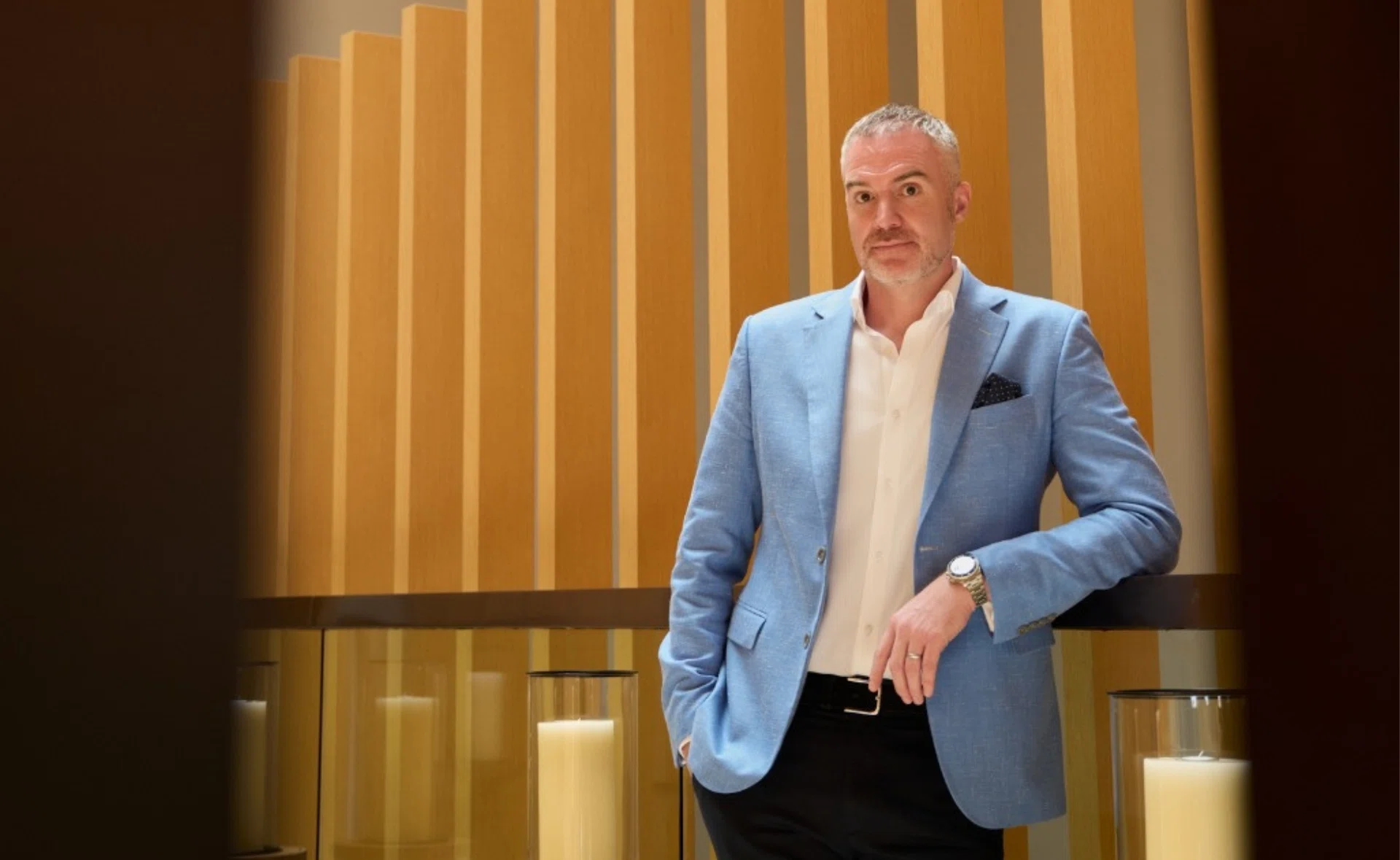
For Upper House Hong Kong’s Simon McHendry, luxury now means human connection. The harder question is whether an expanding hotel brand can manufacture it without making it feel manufactured.
By Zat Astha /
Share this article
Listen to enough hotels describe themselves and a strange sameness emerges: nobody wants to be formal or merely provide service anymore. Instead, they offer intuition, intimacy, connection, and community — repositioning guests as temporary locals, concierges as curators, and hotels as homes. Authenticity, once positioned as an antidote to corporate hospitality, has become one of its most reliable products.
Upper House Hong Kong occupies an interesting position within this contradiction because many of the ideas now endemic to luxury hospitality have long been central to its identity. General manager Simon McHendry speaks of genuine warmth, spontaneous encounters, individuality, and what the hotel calls “unscripted hospitality.” Its guiding ethos, “Houses Not Hotels,” is intended to make guests feel as though they are “returning home to friends”, though the modern difficulty is that almost everyone now wants to be your friend.
Over the past decade, luxury hotels have fled traditional iconography, as opulence can appear vulgar, formality feels antiquated, and conspicuous service reads as theatre. The more sophisticated proposition is increasingly to make enormous expenditure disappear behind apparent effortlessness.
This has produced one of contemporary hospitality’s stranger achievements: an industry devoting massive resources to making expensive experiences feel as though nobody tried very hard to create them.
Spontaneity by appointment
Upper House explicitly positions itself against those older codes. “We deliberately move away from the formality of traditional luxury travel,” McHendry says. Every expansion, he adds, must retain “something more authentic, which is what makes us special.” “Travellers want more than a hotel stay,” he says. “They genuinely are looking to ‘live’ and ‘eat’ like a local.”
This sounds reasonable until one considers the peculiar transaction involved: a traveller flies into an unfamiliar city, enters an extremely expensive hotel, and pays an organisation to construct the illusion that the organisation is no longer mediating the city for them. Authenticity has become something you can book. Local restaurants are carefully selected, cultural encounters are programmed, and wellness experiences are assembled, until even spontaneity receives a calendar invitation.
Still, none of this necessarily makes the experience fraudulent, but it highlights a more interesting problem: the distinction between authenticity and its simulation has become increasingly difficult to locate.
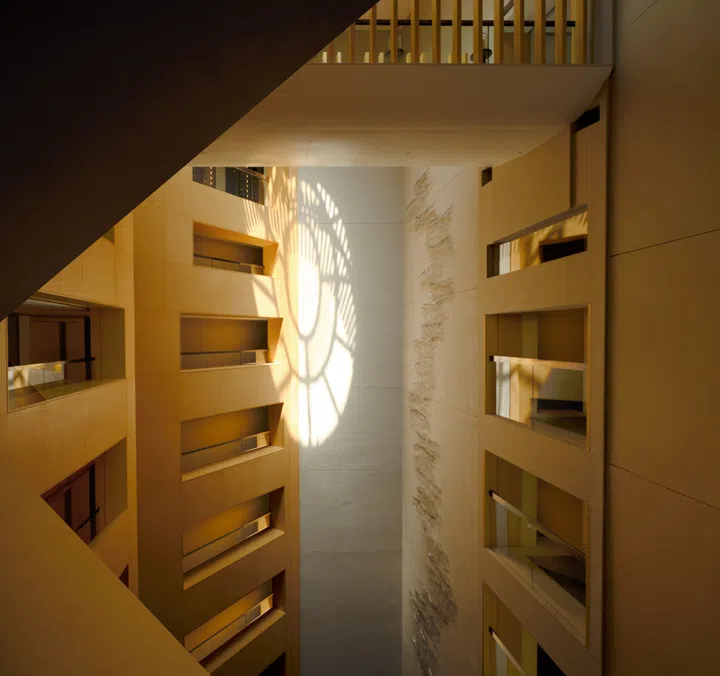
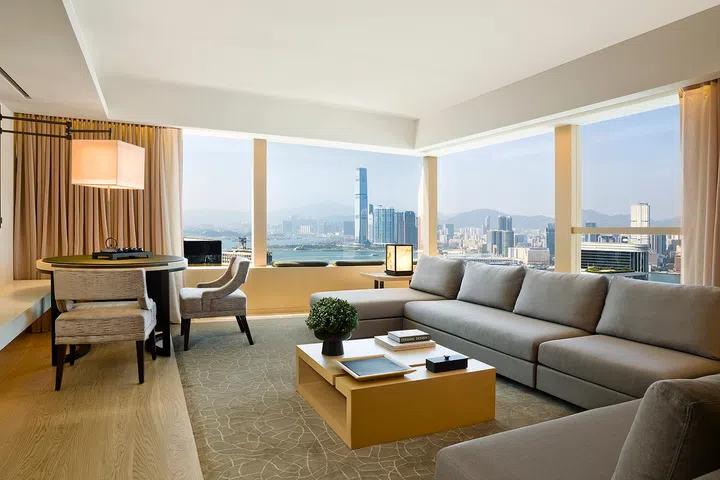
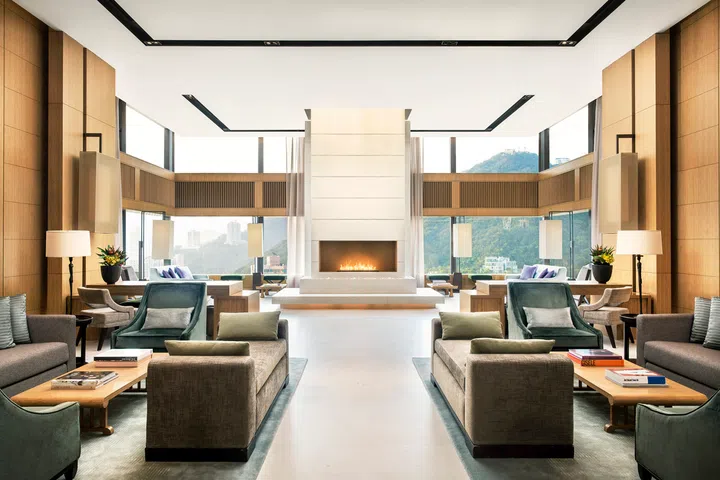
Or perhaps that distinction no longer matters given that the physical markers of luxury have become surprisingly easy to reproduce. With enough capital, any competitor can hire an excellent architect, import exquisite stone, commission bespoke furniture, and install technology sophisticated enough to anticipate a guest’s preferences before breakfast. Beautiful hotels and restaurants are no longer particularly rare, and even excellent service exists far beyond the uppermost reaches of the market.
What capital cannot buy
And when asked what luxury can still offer that a well-funded competitor cannot easily replicate, McHendry provides the interview’s most revealing answer: “Real luxury today is emotional ease.”
“We are generous not only with our space and amenities, but most importantly with our time,” he continues, describing relationships with guests that extend “far beyond the hotel walls”.
His is an elegant proposition that describes something commercially brutal. Because these physical markers can be copied, luxury must retreat into less tangible qualities. It requires knowing when to appear, when to disappear, and how to make guest recognition feel generous rather than forensic.
In short, the new luxury is behavioural.
McHendry offers several unusually concrete examples. “Our team has been hiking with guests, sat down to family dinners with them, and even visited them when travelling overseas,” he says.
These examples prove that the ‘returning home to friends’ ethos is occasionally more than just marketing copy. “This is made possible by a team who are familiar with our philosophy, which takes years to develop,” he says, “and is why hospitality remains a craft rather than a product.”
Scaling the unscripted
However, this creates another problem as Upper House expands.
In 2025, Swire Hotels consolidated its former House Collective properties under a single Upper House identity, bringing Hong Kong, Chengdu and Shanghai beneath the same name before embarking on a markedly more ambitious expansion. Shenzhen, designed by Büro Ole Scheeren, is scheduled for 2027; a Shigeru Ban-designed House within Xi’an’s Small Wild Goose Pagoda historical and cultural zone follows in 2028; Snøhetta’s Tokyo property is due in Shibuya in 2029; and in 2030, Foster + Partners will take the brand into a different category altogether with Upper House Residences in Bangkok.
“Scaling a brand built around individuality comes down to protecting our core philosophy of authentic service while allowing each House to adapt to its own environment and establish its own identity,” McHendry says.
While this sounds like a standard brand strategy, it is also a philosophical contradiction: scale demands repetition, yet luxury increasingly demands the appearance of its absence. A growing hospitality company needs standards to make quality legible and transferable, ensuring employees are trained, operations are systematised, and investors remain confident. Yet Upper House’s value proposition rests partly on things that supposedly resist scripting, such as individuality and spontaneous gestures. McHendry wants employees to ‘trust their intuition,’ but the challenge is obvious: how do you institutionalise intuition?”
That tension extends far beyond a single hotel group and may be the central business problem confronting contemporary luxury hospitality. The more successfully a company codifies what makes it special, the greater the risk that this specialness becomes a formula.
The distinctive neighbourhood restaurant devolves into a “local dining recommendation,” the unexpected conversation becomes “personalised engagement,” and the staff member with exquisite social judgement is reduced to a service standard.
This is exactly why authenticity has become such a treacherous word for luxury brands: the moment it becomes a corporate objective, someone has to design the conditions under which it occurs. Once everybody starts designing for authenticity, it inevitably acquires a house style.
Forgetting the promise
Upper House may be better positioned than many competitors to resist this drift. “The benefit of being small luxury hotels is that we have the opportunity to get to know our guests on a personal level and understand their preferences,” he says.
He repeatedly identifies organisational culture, rather than physical infrastructure, as the force sustaining the brand. “Our people are the heart and soul of the House,” he says, arguing that employees need enough autonomy to be “their true selves”.
But culture is also one of business’s favourite explanations for things it cannot easily quantify; it takes years to build, behaves unpredictably, and becomes increasingly difficult to preserve as organisations grow. While a room can be replicated in months, institutional instinct cannot be ordered from a supplier.
Looking five years ahead, McHendry wants Upper House to preserve “the sense of community and connection that may become increasingly rare in the digital age”. “The human element is the component that truly matters,” he says.
Perhaps that is where luxury is genuinely heading: away from owning scarce objects and towards accessing scarce forms of human behaviour. It will demand attention without distraction, recognition without surveillance, service without choreography, and company without obligation.
The irony is that luxury hotels everywhere have already realised this. Consequently, the next battle will no longer be over who promises authenticity most convincingly, but over who can make us forget it was promised at all.