%22%3E%0A%3Cpath%20d%3D%22M412%20101.2H393.7C393.1%20101.2%20392.3%20100.9%20391.8%20100.5C377.3%2087.6004%20362.9%2074.6004%20348.4%2061.6004C344.8%2058.4004%20341.3%2055.2004%20337.7%2052.0004C337.1%2051.5004%20336.2%2051.1004%20335.5%2051.0004C334.2%2050.8004%20333%2051.0004%20331.5%2051.0004V101.1H316.7V0.100391H331.4V44.3004C331.9%2044.3004%20332.2%2044.4004%20332.5%2044.4004C334.9%2044.4004%20337.2%2044.5004%20339.6%2044.4004C340.4%2044.4004%20341.3%2044.0004%20341.8%2043.5004C351.6%2034.4004%20361.4%2025.2004%20371.1%2016.0004C376.5%2010.9004%20381.9%205.90039%20387.3%200.800391C387.9%200.200391%20388.5%200.000390626%20389.3%200.000390626H400.9C384.2%2015.8004%20367.8%2031.3004%20351.2%2047.0004C371.5%2065.0004%20391.8%2082.9004%20412.1%20100.9C412.1%20101%20412.1%20101.1%20412%20101.2ZM180.9%20101.2C184.1%2094.9004%20187.2%2088.9004%20190.3%2082.8004C198.3%2067.3004%20206.2%2051.8004%20214.2%2036.2004C220.3%2024.4004%20226.4%2012.5004%20232.4%200.700391C232.7%200.100391%20233%20-0.0996094%20233.7%20-0.0996094H248.1C248.8%20-0.0996094%20249.2%200.100391%20249.6%200.800391C256%2013.3004%20262.4%2025.7004%20268.8%2038.2004C279.3%2058.6004%20289.8%2079.0004%20300.3%2099.5004C300.5%20100%20300.8%20100.4%20301.1%20101.1C300.5%20101.1%20300.1%20101.2%20299.7%20101.2H286.5C285.6%20101.2%20285.1%20100.9%20284.7%20100.2C280.1%2091.3004%20275.4%2082.4004%20270.8%2073.4004C270.1%2072.1004%20269.3%2071.6004%20267.8%2071.6004H209.9C208.7%2071.6004%20208.1%2072.0004%20207.5%2073.1004C202.9%2082.1004%20198.2%2091.0004%20193.6%20100C193.1%20101%20192.6%20101.3%20191.5%20101.3C188.4%20101.2%20185.3%20101.3%20182.3%20101.3C182%20101.2%20181.6%20101.2%20180.9%20101.2ZM239.1%2011.4004C230%2029.2004%20221.1%2046.7004%20212.1%2064.3004H266.4C257.2%2046.7004%20248.2%2029.2004%20239.1%2011.4004ZM0%200.000390626H43.4C51.2%200.000390626%2058.7%201.20039%2065.7%204.80039C75.9%2010.0004%2078.9%2018.0004%2078.6%2027.4004C78.3%2034.3004%2076%2040.5004%2071.2%2045.5004C67.3%2049.6004%2062.4%2052.3004%2057.1%2054.3004C50.6%2056.7004%2043.9%2058.0004%2037.1%2058.6004C30.1%2059.2004%2023.1%2059.4004%2016.2%2059.7004C15.8%2059.7004%2015.3%2059.8004%2014.8%2059.8004V101.1H0.1C0%2067.4004%200%2033.8004%200%200.000390626ZM14.8%207.10039V52.2004C23.7%2052.4004%2032.6%2052.3004%2041.2%2050.1004C44.4%2049.3004%2047.6%2048.2004%2050.6%2046.7004C58.4%2043.0004%2062.3%2036.7004%2062.7%2028.0004C63%2019.9004%2059.5%2014.1004%2052.4%2010.5004C47.6%208.00039%2042.5%207.10039%2037.2%207.10039H14.8ZM95.9%20101.1V0.100391H167.3V7.20039H110.7V44.7004H158.1V51.9004H110.8V93.9004H171.1V101C146.1%20101.1%20121%20101.1%2095.9%20101.1Z%22%20fill%3D%22black%22%2F%3E%0A%3Cpath%20d%3D%22M35.0004%2025.7996H42.5004V20.6996H44.8004V33.1996H42.6004V27.5996H34.9004V33.2996H32.7004V20.7996H35.0004V25.7996ZM54.4004%2025.8996V27.2996H48.9004V31.6996H55.9004C55.9004%2032.1996%2056.0004%2032.5996%2056.0004%2033.0996H46.5004V20.5996H55.5004V21.8996H49.0004V25.7996C50.7004%2025.8996%2052.5004%2025.8996%2054.4004%2025.8996ZM25.9004%2033.0996H23.5004V21.9996H17.9004V20.6996H31.6004V22.0996H27.1004C26.2004%2022.0996%2025.9004%2022.2996%2025.9004%2023.1996C26.0004%2026.0996%2025.9004%2028.9996%2025.9004%2031.7996V33.0996Z%22%20fill%3D%22black%22%2F%3E%0A%3C%2Fg%3E%0A%3Cdefs%3E%0A%3CclipPath%20id%3D%22clip0_388_462%22%3E%0A%3Crect%20width%3D%22411%22%20height%3D%22101.2%22%20fill%3D%22white%22%2F%3E%0A%3C%2FclipPath%3E%0A%3C%2Fdefs%3E%0A%3C%2Fsvg%3E%0A)
In a phantom city, can “experience consultancies” like ERA-co sell the ghost?
As automation threatens to hollow out the central business district, Steven Cornwell, Global Director at ERA-co, argues that cities must urgently find a new purpose. But are “experience” strategists offering a genuine cure, or just masterfully branding the vacuum?
By Zat Astha /
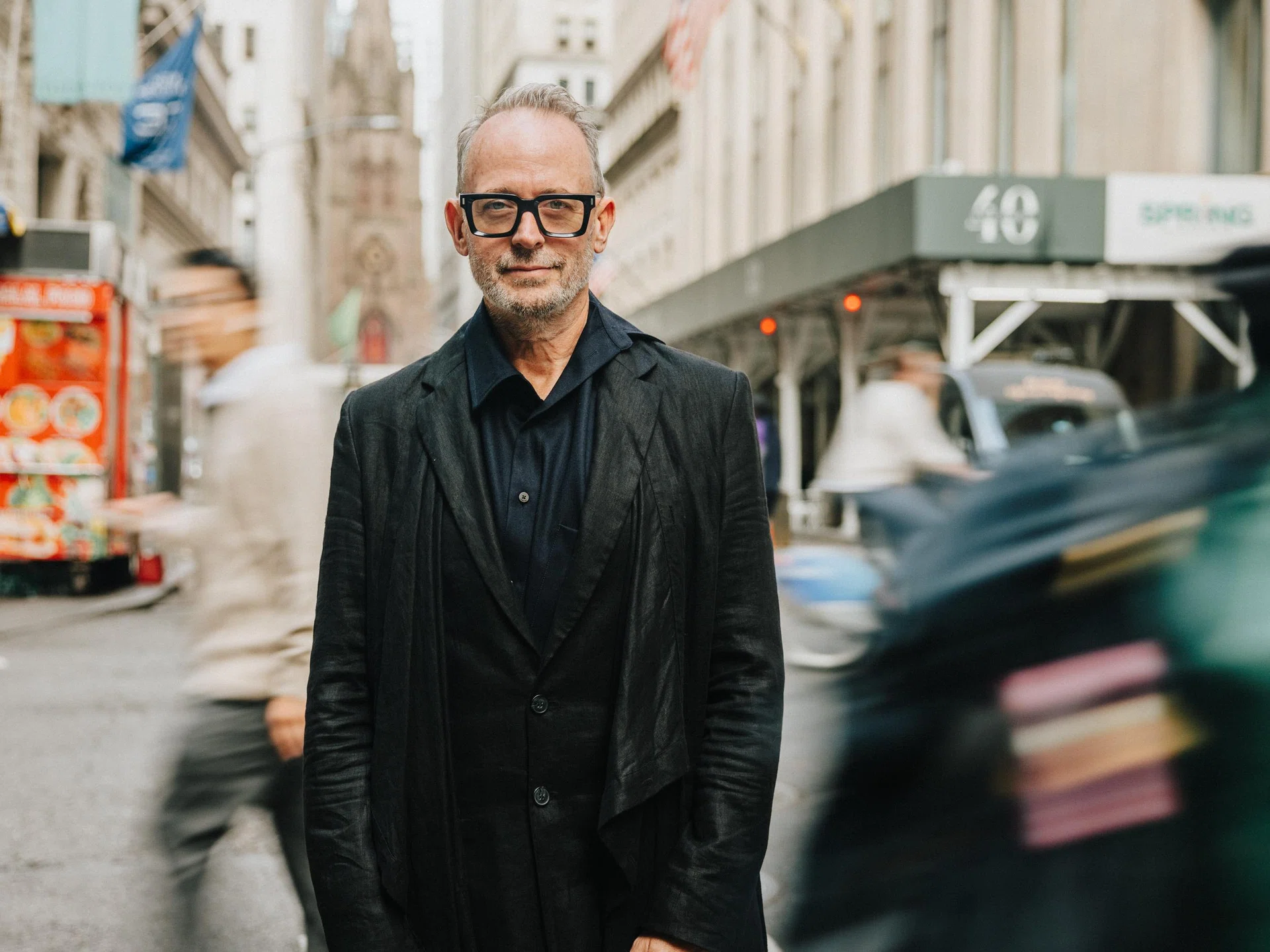
The modern central business district is a monument to the punch card. For over a century, our grandest urban experiments have been engineered around a singular, mechanical ritual: the mass migration of human bodies into glass towers at nine in the morning, and their mass expulsion at five in the evening.
It has long been a reliable, if uninspired, engine of density. We endured the noise, the claustrophobic commutes, and the exorbitant rents because that was where the capital gathered, and by extension, where we had to gather too.
Enter Steven Cornwell. The Global Director of ERA-co lays out a vision of a world where this mechanical ritual stops working. His firm positions itself not as a traditional bricks-and-mortar architectural firm, but as a global “experience consultancy” — a modern hybrid of data science, ethnography, spatial design, and place-branding tasked with solving the existential anxieties of master developers and municipal governments from New York to Sydney.
ERA-co’s business model is fundamentally predicated on the survival and optimisation of the square foot. Yet Cornwell behaves less like a real-estate cheerleader and more like an analytical coroner, probing the fading pulse of the twentieth-century metropolis.
His thesis is provocative: if machine intelligence and robotics break the historical link between physical presence and economic productivity, the foundational logic of the city collapses.
But as we peer into this automated future, it is worth asking whether the city is truly just an office park with a cultural veneer, or if urban strategists are overestimating the machine while selling us a brand-new flavour of structural panic.
The logic of labour
Cornwell argues that our current urban forms are entirely derivative of the daily grind. “The movement of labour has become the hallmark of large city success, with the rise of the global service economy becoming the backbone of 21st century city identity,” he observes.
“What is often missed is that most cities are fundamentally driven by work,” Cornwell writes. “It was the most consistent reason for people to be in the same place at the same time. This concentration of people coming together for the purpose of knowledge and work created density, which later created everything else.”
Here, one must pause and question the stark utilitarianism of the premise. To view the city strictly as a container for labour is to ignore centuries of history where people crowded within walls for reasons entirely detached from corporate efficiency — for safety, for shared ritual, for matchmaking, and for the simple, chaotic pleasure of proximity.
Was ancient Rome driven by “knowledge workers”? Was bohemian Paris merely a support system for a daily commute? By framing the city’s identity so narrowly around work, urbanists create a crisis that neatly requires their own specialised services to solve.
Still, Cornwell insists the stakes are uniquely modern. “If that reason weakens, cities will not disappear per se as there is too much value at stake, but they could potentially lose their purpose and their very identity,” he warns.
The anxiety here is not that cities will crumble into physical ruins, but that they will become culturally untethered, drifting without an anchor.
The ghostly paradox of the “robot dividend”
When the conversation shifts to who actually benefits from this automated efficiency, Cornwell dispels any egalitarian illusions. The glossy marketing brochures for AI-driven productivity rarely mention what happens at the street level.
“The short answer is that the ‘robot dividend’ is unlikely to be evenly distributed,” Cornwell states flatly. “The current trajectory suggests that gains from automation will tend to concentrate with those who own the systems, platforms and capital behind them.”
This concentration of wealth poses a direct, material threat to municipal health. Cities do not run on corporate balance sheets alone; they run on the circulation of physical currency through physical hands. If a technology company can generate record-breaking GDP using an array of remote servers and a handful of prompt engineers, the economic output of a district might skyrocket while its physical reality rots.
“Cities depend on a broad base of people being part of how value is created,” Cornwell points out. If automation severs that connection, he envisions a ghostly paradox: “one possible future is a situation where everyday urban activity weakens despite productivity increasing. You would still see strong business output, but with less footfall, less incidental interaction, and less need for amenity to support the worker, a complete rework of the city ecosystem would be required.”
Imagine a central business district of ghost towers generating invisible wealth for invisible stakeholders, while the local barista, the dry cleaner, and the mass-transit system face structural irrelevance. In this scenario, productivity does not save the city; it bypasses it.
What makes a techno-hyperbole
To justify the scale of this threat, Cornwell leans into the kind of dramatic framing favoured by Silicon Valley evangelists.
Reflecting on past urban disruptions — from the Great Depression to the internet — he argues that the AI revolution is fundamentally distinct. “The biggest difference this time around is that we have invented a new kind of humanity,” he declares. “A tech-enabled humanity capable of replacing us and enabling us in equal measure.”
It is a startling phrase: a new kind of humanity. But it is imperative that the claim be challenged. Labelling an advanced collection of predictive text models and automated warehouse machinery as a “new humanity” feels less like objective urban analysis and more like techno-hyperbole.
Sure, software can draft a legal brief or route a delivery truck, but it does not crave community, it does not seek status, and it does not buy an overpriced espresso because it wants to feel seen in a trendy neighbourhood.
By elevating technology to the level of a rival species, urban planners risk misdiagnosing a classic labour-capital dispute as a sci-fi epic. The threat is not a new humanity; it is the old humanity using new tools to further marginalise the urban working class.
In Singapore, a paradox
This tension between cold efficiency and human vitality hits hardest in hyper-optimised city-states like Singapore, which have spent decades perfecting a model built on frictionless infrastructure and global competitiveness.
Cornwell acknowledges Singapore’s unique position, noting its “strong government oversight across much of its operations,” which theoretically makes it “more agile to pivot as the inevitable robotics infiltration takes hold globally.”
Yet Cornwell’s analysis implicitly challenges the very ethos of the Singaporean miracle: optimisation itself. “With automation reducing the need for people to be physically present, the risk is that it becomes less dependent on the activity it was designed to support,” he notes.
The risk for Singapore is that it builds the world’s most flawless machine, only to find that the humans have logged off or moved elsewhere. A city optimised to the point of sterility loses the very erratic, unplannable friction that births culture.
The next phase, Cornwell argues, requires looking past performance indicators to see how people actually use and experience the city. But can top-down government oversight, no matter how agile, ever successfully mandate or manufacture organic “soul”?
A five-year panic
Perhaps the most sobering claim Cornwell makes is regarding the timeline of this disruption. Urban planning is historically a glacial discipline, operating on thirty-year masterplans and multi-decade bond cycles. But software moves in months.
“The impact of AI and Robotics is represented as a 5 to 10-year disruption, not a 30- to 40-year disruption,” Cornwell stresses, emphasising that the places being conceptualised today will be delivered into a completely transformed landscape in five years. He warns that city leaders, developers, and employers are blinding themselves by clinging to outdated dogmas, particularly the assumption “that demand for space will continue to follow employment in a predictable way.”
If work is no longer the central organising principle, Cornwell suggests that the next generation of great cities will have to compete on something far more ephemeral, namely identity, cultural depth, and the quality of meaningful connections. “The next generation of cities will need to combine both financial and cultural contribution in equal measures,” he concludes.
It is an elegant pitch, and precisely the kind of narrative an “experience agency” like ERA-co is built to monetise. If cities can no longer justify themselves through the cold logic of the commuter spreadsheet, they must hire strategists to brand their essence.
Cornwell calls it “an exciting time to be an urbanist.” But for the citizens who actually inhabit these changing grids, the worry remains that the automated metropolis will be less of a cultural sanctuary and more of a highly optimised playground for capital, where the humans are merely incidental.