%22%3E%0A%3Cpath%20d%3D%22M412%20101.2H393.7C393.1%20101.2%20392.3%20100.9%20391.8%20100.5C377.3%2087.6004%20362.9%2074.6004%20348.4%2061.6004C344.8%2058.4004%20341.3%2055.2004%20337.7%2052.0004C337.1%2051.5004%20336.2%2051.1004%20335.5%2051.0004C334.2%2050.8004%20333%2051.0004%20331.5%2051.0004V101.1H316.7V0.100391H331.4V44.3004C331.9%2044.3004%20332.2%2044.4004%20332.5%2044.4004C334.9%2044.4004%20337.2%2044.5004%20339.6%2044.4004C340.4%2044.4004%20341.3%2044.0004%20341.8%2043.5004C351.6%2034.4004%20361.4%2025.2004%20371.1%2016.0004C376.5%2010.9004%20381.9%205.90039%20387.3%200.800391C387.9%200.200391%20388.5%200.000390626%20389.3%200.000390626H400.9C384.2%2015.8004%20367.8%2031.3004%20351.2%2047.0004C371.5%2065.0004%20391.8%2082.9004%20412.1%20100.9C412.1%20101%20412.1%20101.1%20412%20101.2ZM180.9%20101.2C184.1%2094.9004%20187.2%2088.9004%20190.3%2082.8004C198.3%2067.3004%20206.2%2051.8004%20214.2%2036.2004C220.3%2024.4004%20226.4%2012.5004%20232.4%200.700391C232.7%200.100391%20233%20-0.0996094%20233.7%20-0.0996094H248.1C248.8%20-0.0996094%20249.2%200.100391%20249.6%200.800391C256%2013.3004%20262.4%2025.7004%20268.8%2038.2004C279.3%2058.6004%20289.8%2079.0004%20300.3%2099.5004C300.5%20100%20300.8%20100.4%20301.1%20101.1C300.5%20101.1%20300.1%20101.2%20299.7%20101.2H286.5C285.6%20101.2%20285.1%20100.9%20284.7%20100.2C280.1%2091.3004%20275.4%2082.4004%20270.8%2073.4004C270.1%2072.1004%20269.3%2071.6004%20267.8%2071.6004H209.9C208.7%2071.6004%20208.1%2072.0004%20207.5%2073.1004C202.9%2082.1004%20198.2%2091.0004%20193.6%20100C193.1%20101%20192.6%20101.3%20191.5%20101.3C188.4%20101.2%20185.3%20101.3%20182.3%20101.3C182%20101.2%20181.6%20101.2%20180.9%20101.2ZM239.1%2011.4004C230%2029.2004%20221.1%2046.7004%20212.1%2064.3004H266.4C257.2%2046.7004%20248.2%2029.2004%20239.1%2011.4004ZM0%200.000390626H43.4C51.2%200.000390626%2058.7%201.20039%2065.7%204.80039C75.9%2010.0004%2078.9%2018.0004%2078.6%2027.4004C78.3%2034.3004%2076%2040.5004%2071.2%2045.5004C67.3%2049.6004%2062.4%2052.3004%2057.1%2054.3004C50.6%2056.7004%2043.9%2058.0004%2037.1%2058.6004C30.1%2059.2004%2023.1%2059.4004%2016.2%2059.7004C15.8%2059.7004%2015.3%2059.8004%2014.8%2059.8004V101.1H0.1C0%2067.4004%200%2033.8004%200%200.000390626ZM14.8%207.10039V52.2004C23.7%2052.4004%2032.6%2052.3004%2041.2%2050.1004C44.4%2049.3004%2047.6%2048.2004%2050.6%2046.7004C58.4%2043.0004%2062.3%2036.7004%2062.7%2028.0004C63%2019.9004%2059.5%2014.1004%2052.4%2010.5004C47.6%208.00039%2042.5%207.10039%2037.2%207.10039H14.8ZM95.9%20101.1V0.100391H167.3V7.20039H110.7V44.7004H158.1V51.9004H110.8V93.9004H171.1V101C146.1%20101.1%20121%20101.1%2095.9%20101.1Z%22%20fill%3D%22black%22%2F%3E%0A%3Cpath%20d%3D%22M35.0004%2025.7996H42.5004V20.6996H44.8004V33.1996H42.6004V27.5996H34.9004V33.2996H32.7004V20.7996H35.0004V25.7996ZM54.4004%2025.8996V27.2996H48.9004V31.6996H55.9004C55.9004%2032.1996%2056.0004%2032.5996%2056.0004%2033.0996H46.5004V20.5996H55.5004V21.8996H49.0004V25.7996C50.7004%2025.8996%2052.5004%2025.8996%2054.4004%2025.8996ZM25.9004%2033.0996H23.5004V21.9996H17.9004V20.6996H31.6004V22.0996H27.1004C26.2004%2022.0996%2025.9004%2022.2996%2025.9004%2023.1996C26.0004%2026.0996%2025.9004%2028.9996%2025.9004%2031.7996V33.0996Z%22%20fill%3D%22black%22%2F%3E%0A%3C%2Fg%3E%0A%3Cdefs%3E%0A%3CclipPath%20id%3D%22clip0_388_462%22%3E%0A%3Crect%20width%3D%22411%22%20height%3D%22101.2%22%20fill%3D%22white%22%2F%3E%0A%3C%2FclipPath%3E%0A%3C%2Fdefs%3E%0A%3C%2Fsvg%3E%0A)
To understand Daryl Tan’s therapy room is to question what success usually hides
Goodity Co’s co-founder & managing director built a practice around looking past the polished version of a person’s life. It’s a discipline that turned out to matter more than expected.
By Zawani Abdul Ghani /

Share this article
When a client sits down across from Daryl Tan and begins recounting the shape of their success — the promotions, the payouts, the corner office that finally arrived — he listens all the way through. Once it’s finished, he tends to ask the question sitting underneath it: Why are you actually here?
“I don’t want to hear your wins,” he says. “Your wins are celebrated by everyone else. I am more concerned about something that’s affecting you on an emotional level, on a relational level with your people, and I want you to tell me what that is.”
It isn’t indifference to what a client has built — Tan is quick to say those wins deserve their own celebration — so much as a deliberate redirection toward the part of a session he considers more useful: the emotional and relational ground a polished record can just as easily obscure.
It’s a redirection he’s learned to make often, with clients whose lives look, on paper, entirely resolved — people who arrive composed, articulate, and not quite sure why they’ve been told to be here at all. Over a decade in social work and clinical practice has taught Tan that competence, however genuine, rarely tells a person’s full story.
Earlier this year, Tan, co-founder and managing director of Goodity Co, found himself needing to ask that same question of his own life. A health scare, brought on by months of overwork he’d barely registered as unusual, forced a pause he had spent years helping other people choose for themselves, except this time the choosing wasn’t his to make.
Piecing together what had happened, he arrived at an uncomfortably familiar explanation: a conviction, largely unexamined until then, that he hadn’t quite earned the opportunities coming his way, and that the only way to settle the debt was to keep saying yes, regardless of what it cost him.

It’s a pattern he would recognise instantly in someone else’s session notes. This time, turning that same attention on his own life meant sitting with it himself.
Breaking down the walls
That instinct to look past a polished narrative toward what’s actually driving it traces back to where his career began, well before Goodity Co existed. Years in social work, working with young people in residential and community settings, left Tan increasingly frustrated by everything standing between him and the person he was meant to be helping: funding paperwork, rate tapes, office politics.
Therapy, by contrast, worked on something social work’s more systemic approach rarely reached — the internal world a person carries regardless of what gets rearranged around them. “Why not change the person?” he recalls thinking. Someone could come from the hardest circumstances and still be handed an entirely different way of seeing what they had to work with.
That conviction became Goodity Co once Tan and his co-founder surveyed Singapore’s therapy clinics and found them uniformly corporate — stiff headshots, paragraphs of credentials, nothing a prospective client could actually relate to.
Tan’s fix was to put therapists online as people first, so someone could sense a fit before ever booking a session. “We want the clients to get to know us before they even book us,” Tan says. “There’s already a rapport, so the first session isn’t as intimidating.”
Now, what?
Getting someone through the door, though, is only the start. Once they’re seated across from him, Tan has come to recognise the same pattern surfacing again and again — clients whose lives look, from any reasonable outside vantage, already resolved.
They’ve spent years climbing toward a specific version of arrival, only to find that once they’re standing at the top, there’s nothing obviously left to reach for. “Their entire identity is packed into what their career is,” he says. “They’re probably at the pinnacle of what they can achieve at work.”
And once there, with nowhere further to climb, what’s left is the question he hears again and again: Now, what?
He’s careful, though, not to treat achievement itself as the problem. One former client, who had grown up watching his mother struggle to keep food on the table, spent years climbing the corporate ladder in pursuit of a feeling of safety he had never quite named.
The striving wasn’t the issue, Tan explains: chasing security through income had simply stood in for a need he’d never directly addressed. “All your work achievements don’t mean a thing if you don’t address the part that you need to feel safe,” he says. The resilience that client had built through poverty was real, Tan adds; it simply needed to be pointed at something other than a bank balance.
That same scepticism carries into how he reads why someone walks in at all. In his experience, success is rarely the reason. More often it’s a partner’s ultimatum, or a relationship fraying beneath everything that looks, from outside, like it’s going right.
In over a decade of practice, Tan reckons he’s met only one or two people who came in purely out of curiosity, with nothing actually wrong — and even then, he told them plainly that they were coping fine without him.
Scaling a relationship
Multiply that dynamic across a growing client base, and therapy starts to feel less like a calling and more like an operating problem — an oddly personal service that somehow also needs to scale. Therapy, Tan admits, sits awkwardly between transaction and relationship.

His answer was to abandon the model most private practices run on: one therapist, a fixed number of hours, an inevitable ceiling on how many people they can see before burning out entirely. “I only take one day of clinic right now,” he says of his own caseload. “If I were to do this full-time, seven days a week, I wouldn’t have time for my other businesses or my own personal life.”
Goodity Co instead operates as a network of freelance therapists, handling bookings, billing and social media in exchange for a cut of earnings, so that, in Tan’s words, “all they need to do is show up, do the session, and go”.
And here, growth hasn’t meant loosening standards. Tan describes a stringent, invite-only vetting process built to protect the brand’s identity as much as its clinical quality — screening out, for instance, a religious therapist whose personal views might compromise working neutrally with a queer client.
The same discipline extends to money: overheads stay low enough, he says, to turn away brand partnerships that don’t fit Goodity’s values, “no matter how much they will pay us”.
The best supporting character
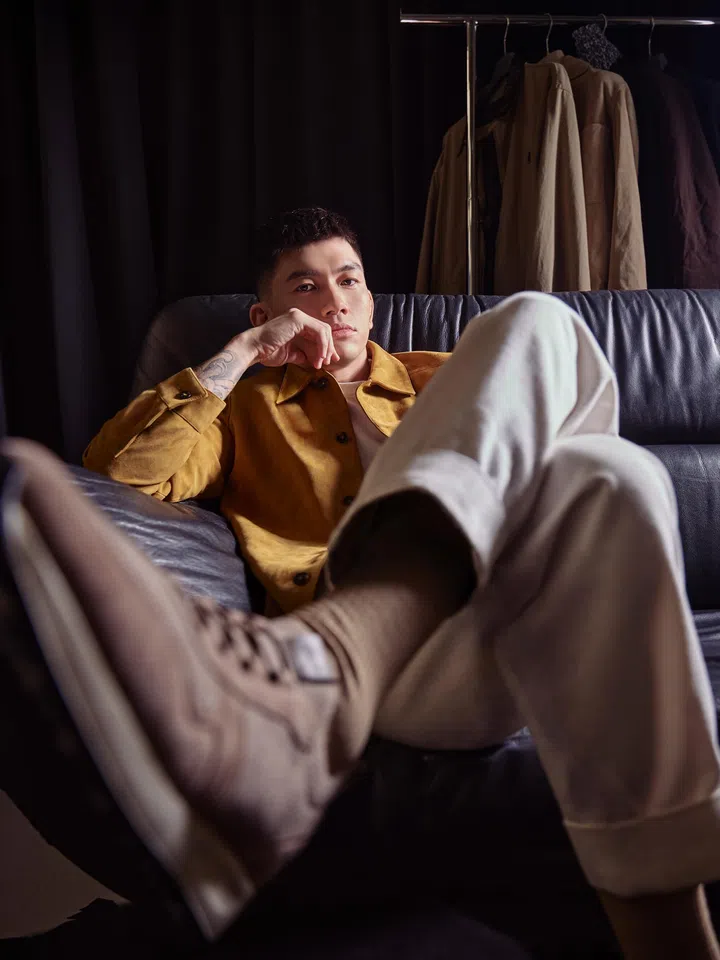
That same discipline, it turns out, was harder for him to apply. Running multiple businesses at once was what first showed Tan something about himself he hadn’t quite named before: that he was, by his own admission, a workaholic, and that the habit wasn’t serving him well.
He traces some of it to a script absorbed early and rarely questioned. “It’s ingrained in us,” he says, “because our self-worth is a lot of times tied to our work” — so rest starts to feel like a debt still owed, and small pleasures arrive stapled to guilt inherited from parents who worked simply to survive.
This year’s health scare pushed that reckoning further.
Looking back, Tan traces it to a belief that he hadn’t fully earned the opportunities coming his way, and that saying yes to everything, regardless of the cost, was the only way to close that gap. He has since started saying no more often, and taking breaks he once treated as negotiable.
It has also reshaped what he considers success. Where he once measured it outwardly, he now measures it by what he gives the people around him. “I want to be the best supporting character for people to become the best main character that they can,” he says. “I no longer want to be the main character of the show.”
That shift shows up, too, when asked: “If someone comes in and seems successful by social parameters, what would be your honest case for them to still give therapy a try?”
Very quickly, Tan offers one question in response: “‘What would your life look like if whatever’s been bothering you simply disappeared?’ It should always be client-led, not led by me,” he says. “I should not be digging things out of you. You should be telling me things.”
This year, it’s advice that holds on both sides of the room.
Art direction: Fazlie Hashim
Photographer: Lawrence Teo
Stylist: Dolphin Yeo
Grooming: Benedict Choo