%22%3E%0A%3Cpath%20d%3D%22M412%20101.2H393.7C393.1%20101.2%20392.3%20100.9%20391.8%20100.5C377.3%2087.6004%20362.9%2074.6004%20348.4%2061.6004C344.8%2058.4004%20341.3%2055.2004%20337.7%2052.0004C337.1%2051.5004%20336.2%2051.1004%20335.5%2051.0004C334.2%2050.8004%20333%2051.0004%20331.5%2051.0004V101.1H316.7V0.100391H331.4V44.3004C331.9%2044.3004%20332.2%2044.4004%20332.5%2044.4004C334.9%2044.4004%20337.2%2044.5004%20339.6%2044.4004C340.4%2044.4004%20341.3%2044.0004%20341.8%2043.5004C351.6%2034.4004%20361.4%2025.2004%20371.1%2016.0004C376.5%2010.9004%20381.9%205.90039%20387.3%200.800391C387.9%200.200391%20388.5%200.000390626%20389.3%200.000390626H400.9C384.2%2015.8004%20367.8%2031.3004%20351.2%2047.0004C371.5%2065.0004%20391.8%2082.9004%20412.1%20100.9C412.1%20101%20412.1%20101.1%20412%20101.2ZM180.9%20101.2C184.1%2094.9004%20187.2%2088.9004%20190.3%2082.8004C198.3%2067.3004%20206.2%2051.8004%20214.2%2036.2004C220.3%2024.4004%20226.4%2012.5004%20232.4%200.700391C232.7%200.100391%20233%20-0.0996094%20233.7%20-0.0996094H248.1C248.8%20-0.0996094%20249.2%200.100391%20249.6%200.800391C256%2013.3004%20262.4%2025.7004%20268.8%2038.2004C279.3%2058.6004%20289.8%2079.0004%20300.3%2099.5004C300.5%20100%20300.8%20100.4%20301.1%20101.1C300.5%20101.1%20300.1%20101.2%20299.7%20101.2H286.5C285.6%20101.2%20285.1%20100.9%20284.7%20100.2C280.1%2091.3004%20275.4%2082.4004%20270.8%2073.4004C270.1%2072.1004%20269.3%2071.6004%20267.8%2071.6004H209.9C208.7%2071.6004%20208.1%2072.0004%20207.5%2073.1004C202.9%2082.1004%20198.2%2091.0004%20193.6%20100C193.1%20101%20192.6%20101.3%20191.5%20101.3C188.4%20101.2%20185.3%20101.3%20182.3%20101.3C182%20101.2%20181.6%20101.2%20180.9%20101.2ZM239.1%2011.4004C230%2029.2004%20221.1%2046.7004%20212.1%2064.3004H266.4C257.2%2046.7004%20248.2%2029.2004%20239.1%2011.4004ZM0%200.000390626H43.4C51.2%200.000390626%2058.7%201.20039%2065.7%204.80039C75.9%2010.0004%2078.9%2018.0004%2078.6%2027.4004C78.3%2034.3004%2076%2040.5004%2071.2%2045.5004C67.3%2049.6004%2062.4%2052.3004%2057.1%2054.3004C50.6%2056.7004%2043.9%2058.0004%2037.1%2058.6004C30.1%2059.2004%2023.1%2059.4004%2016.2%2059.7004C15.8%2059.7004%2015.3%2059.8004%2014.8%2059.8004V101.1H0.1C0%2067.4004%200%2033.8004%200%200.000390626ZM14.8%207.10039V52.2004C23.7%2052.4004%2032.6%2052.3004%2041.2%2050.1004C44.4%2049.3004%2047.6%2048.2004%2050.6%2046.7004C58.4%2043.0004%2062.3%2036.7004%2062.7%2028.0004C63%2019.9004%2059.5%2014.1004%2052.4%2010.5004C47.6%208.00039%2042.5%207.10039%2037.2%207.10039H14.8ZM95.9%20101.1V0.100391H167.3V7.20039H110.7V44.7004H158.1V51.9004H110.8V93.9004H171.1V101C146.1%20101.1%20121%20101.1%2095.9%20101.1Z%22%20fill%3D%22black%22%2F%3E%0A%3Cpath%20d%3D%22M35.0004%2025.7996H42.5004V20.6996H44.8004V33.1996H42.6004V27.5996H34.9004V33.2996H32.7004V20.7996H35.0004V25.7996ZM54.4004%2025.8996V27.2996H48.9004V31.6996H55.9004C55.9004%2032.1996%2056.0004%2032.5996%2056.0004%2033.0996H46.5004V20.5996H55.5004V21.8996H49.0004V25.7996C50.7004%2025.8996%2052.5004%2025.8996%2054.4004%2025.8996ZM25.9004%2033.0996H23.5004V21.9996H17.9004V20.6996H31.6004V22.0996H27.1004C26.2004%2022.0996%2025.9004%2022.2996%2025.9004%2023.1996C26.0004%2026.0996%2025.9004%2028.9996%2025.9004%2031.7996V33.0996Z%22%20fill%3D%22black%22%2F%3E%0A%3C%2Fg%3E%0A%3Cdefs%3E%0A%3CclipPath%20id%3D%22clip0_388_462%22%3E%0A%3Crect%20width%3D%22411%22%20height%3D%22101.2%22%20fill%3D%22white%22%2F%3E%0A%3C%2FclipPath%3E%0A%3C%2Fdefs%3E%0A%3C%2Fsvg%3E%0A)
Share this article
To step into a contemporary bakery in any major Asian metropolis is to witness a landscape largely industrialised by a single company’s vision. Founded in Singapore at the turn of the millennium by George Quek and Katherine Lee, BreadTalk Group did something radical to a hitherto mundane carbohydrate: they turned it into theatre.
Through clear glass walls, customers watched bakers dust flour and assemble the now-iconic pork floss bun, transforming a functional morning transaction into a sensory spectacle. Over two decades, that singular concept ballooned into a sprawling food-and-beverage empire encompassing Toast Box, Food Republic, and regional Din Tai Fung franchises. It became an institution synonymous with scale.
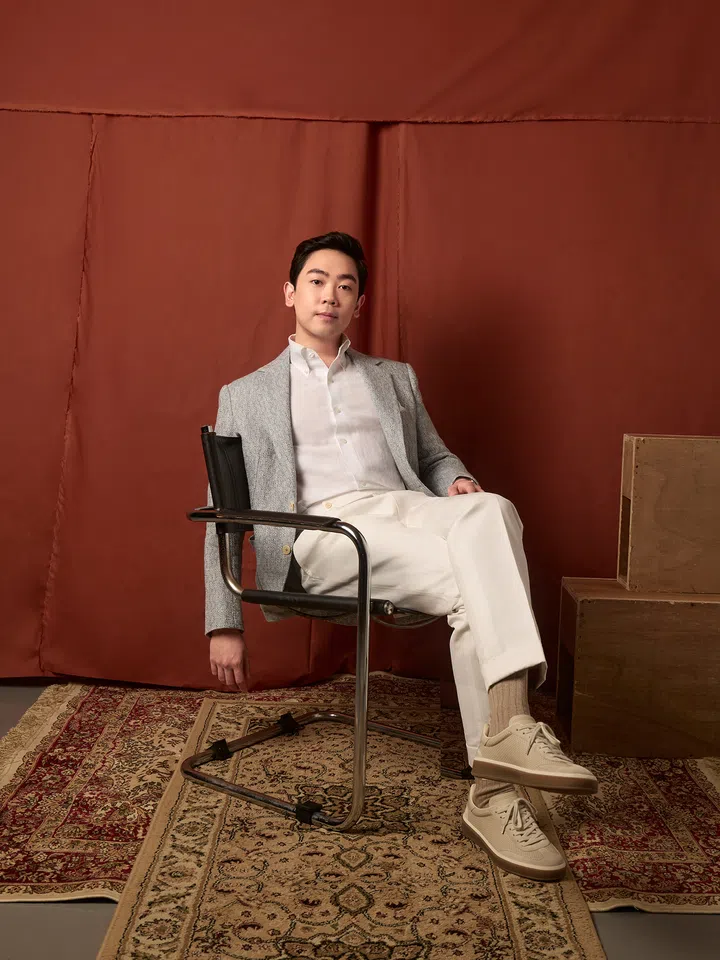
Yet, when Jonathan Quek assumed the mantle of chief executive officer in 2024, he did so at a historical flashpoint where the old mechanics of scale began to show their structural fatigue. The market was oversaturated, consumers were fickle, and the global economy was fracturing. The inheritance was heavy, but the script required rewriting.
Quek’s selection for this year’s Power List rests precisely on his capacity to address the theme of A New Form — a leadership philosophy that resists the urge to abandon the historical centre of the business, choosing instead to profoundly re-engineer the vessel that carries it.
The discipline of less
The immediate instinct of any modern corporate custodian, when confronted with a crisis, is typically to flood the market with noise. Quek admits that he was initially no exception to this corporate conditioning.
“When I first joined the business in 2020, my instinct was to do more — more promotions, more campaigns, more product launches,” he reflects, his tone carrying the hard-won clarity of someone who survived the trial by fire of the early pandemic years. “We were chasing growth, but might have ended up spreading ourselves too thin in the process.”
This confession cuts to the heart of a broader industry malady: conflating activity with progress. In the quick-service restaurant world, the temptation to launch endless seasonal gimmicks is a default strategy.
Yet, Quek quickly countered this orthodox approach by applying a rigorous filter of reduction. “Over time, I realised that strategy isn’t just about deciding what to do but having the discipline to decide what not to do,” he notes.
To question this premise is to ask whether a multi-brand conglomerate can truly afford to slow its roll in a hyper-competitive market. Critics might argue that pulling back on campaigns risks losing immediate market share. But Quek contends that modern consumer psychology demands a different currency.
“Customers are inundated with endless choices every day, so providing clarity is what helps us stand out,” he explains. “A winning product, a memorable campaign, or an exceptional service experience can often create more impact than trying to do everything at once.” By tightening the focus, he altered the company’s trajectory, moving the metrics away from brute physical footprint toward something far more elusive: consumer devotion.
The studio in the machine
Perhaps the most provocative claim Quek makes is an aesthetic one. “I think one outdated assumption is that we’re simply in the food business,” he argues. “Yes, we make bread, kopi, and xiao long baos, but at our core, we’re a creative company. We operate like a creative studio — constantly imagining new products, designing stores, building brands, and creating memorable experiences that people want to return to.”
It is a romantic framing, yet a cynical reader might wonder if calling a company that produces millions of buns a year a “creative studio” is simply an elegant piece of corporate mythmaking. Can a corporate giant truly retain the soul of an artisan workshop while operating across multiple international territories?
Quek insists that this creativity is not merely a coat of paint applied by the marketing department. “Creativity isn’t confined to our design team. It lives in our kitchens, our operations, our marketing, our technology, and even in how we solve customer problems,” he maintains. “Great hospitality is both an art and a science.”
The “science” aspect of that equation is where the true transformation of form occurs. Under Quek’s tenure, the company has undergone a quiet digital revolution that contrasts sharply with the romanticism of the kitchen hearth. The business has shifted away from purely intuitive retail expansion and is investing heavily in modern infrastructure.
“Together with the senior leadership team, we’ve shifted from relying primarily on instinct to making more data-informed decisions, while always balancing data with experience and judgment,” he details.
This means utilising Geographic Information System tools for site selection and deploying AI initiatives to strip out the administrative friction that plagues front-line workers. “The goal isn’t technology for technology’s sake,” Quek clarifies. “It’s about helping our people work smarter, not harder, so they can focus on creating better experiences for our customers.”
Beyond the founder’s shadow
In the landscape of Asian family dynasties, the narrative of the returning scion is often plagued by assumptions of unearned authority. The public frequently views the second-generation leader as either a passive caretaker or a reckless disruptor intent on erasing the past.
Quek is acutely aware of these perceptions.
“People often assume my biggest challenge is carrying the weight of my parents’ legacy,” he observes calmly. “In reality, my biggest responsibility is earning the trust to lead change while preserving what made the business successful in the first place; it’s a position that doesn’t leave much room for second-guessing yourself.”
That responsibility required a rapid acceleration of his personal and professional maturity. Stepping into the crucible during a global downturn meant there was no buffer zone for corporate apprenticeship. “Growth has demanded that I grow up much faster than I wanted,” he acknowledges. “When I joined the business, I thought I’d have more time to learn before taking on greater responsibility. Instead, I found myself leading through one of the most challenging periods in our company’s history. There were moments when I questioned whether I was ready.”
The resolution of that internal tension did not come from adopting a posture of infallibility. Instead, Quek pivoted toward a model of servant leadership that feels distinctly modern, stripping away the traditional, top-down authoritarianism that characterised much of twentieth-century corporate culture.
“Leadership isn’t about pretending to know everything. It’s about listening, asking better questions, and surrounding yourself with people whose expertise complements your own,” he says. “My role isn’t to be the smartest person in the room — it’s to create an environment where others can do their best work. Leading with compassion, empathy, and trust isn’t a softer way to lead; it’s what enables people and organisations to grow together.”
It is this synthesis of structural transformation and cultural humility that defines his tenure. If the experiment holds, it offers a blueprint for legacy survival: a form completely modernised, supporting a centre that remains entirely intact, working toward an ultimate ambition that Quek sums up as “a Life Well Baked”.
Photography: Lawrence Teo
Art direction: Ashruddin Sani
Styling: Dolphin Yeo
Grooming: Angel Gwee, using Chanel and Davines
For more stories on The Peak Power List, visit here.