%22%3E%0A%3Cpath%20d%3D%22M412%20101.2H393.7C393.1%20101.2%20392.3%20100.9%20391.8%20100.5C377.3%2087.6004%20362.9%2074.6004%20348.4%2061.6004C344.8%2058.4004%20341.3%2055.2004%20337.7%2052.0004C337.1%2051.5004%20336.2%2051.1004%20335.5%2051.0004C334.2%2050.8004%20333%2051.0004%20331.5%2051.0004V101.1H316.7V0.100391H331.4V44.3004C331.9%2044.3004%20332.2%2044.4004%20332.5%2044.4004C334.9%2044.4004%20337.2%2044.5004%20339.6%2044.4004C340.4%2044.4004%20341.3%2044.0004%20341.8%2043.5004C351.6%2034.4004%20361.4%2025.2004%20371.1%2016.0004C376.5%2010.9004%20381.9%205.90039%20387.3%200.800391C387.9%200.200391%20388.5%200.000390626%20389.3%200.000390626H400.9C384.2%2015.8004%20367.8%2031.3004%20351.2%2047.0004C371.5%2065.0004%20391.8%2082.9004%20412.1%20100.9C412.1%20101%20412.1%20101.1%20412%20101.2ZM180.9%20101.2C184.1%2094.9004%20187.2%2088.9004%20190.3%2082.8004C198.3%2067.3004%20206.2%2051.8004%20214.2%2036.2004C220.3%2024.4004%20226.4%2012.5004%20232.4%200.700391C232.7%200.100391%20233%20-0.0996094%20233.7%20-0.0996094H248.1C248.8%20-0.0996094%20249.2%200.100391%20249.6%200.800391C256%2013.3004%20262.4%2025.7004%20268.8%2038.2004C279.3%2058.6004%20289.8%2079.0004%20300.3%2099.5004C300.5%20100%20300.8%20100.4%20301.1%20101.1C300.5%20101.1%20300.1%20101.2%20299.7%20101.2H286.5C285.6%20101.2%20285.1%20100.9%20284.7%20100.2C280.1%2091.3004%20275.4%2082.4004%20270.8%2073.4004C270.1%2072.1004%20269.3%2071.6004%20267.8%2071.6004H209.9C208.7%2071.6004%20208.1%2072.0004%20207.5%2073.1004C202.9%2082.1004%20198.2%2091.0004%20193.6%20100C193.1%20101%20192.6%20101.3%20191.5%20101.3C188.4%20101.2%20185.3%20101.3%20182.3%20101.3C182%20101.2%20181.6%20101.2%20180.9%20101.2ZM239.1%2011.4004C230%2029.2004%20221.1%2046.7004%20212.1%2064.3004H266.4C257.2%2046.7004%20248.2%2029.2004%20239.1%2011.4004ZM0%200.000390626H43.4C51.2%200.000390626%2058.7%201.20039%2065.7%204.80039C75.9%2010.0004%2078.9%2018.0004%2078.6%2027.4004C78.3%2034.3004%2076%2040.5004%2071.2%2045.5004C67.3%2049.6004%2062.4%2052.3004%2057.1%2054.3004C50.6%2056.7004%2043.9%2058.0004%2037.1%2058.6004C30.1%2059.2004%2023.1%2059.4004%2016.2%2059.7004C15.8%2059.7004%2015.3%2059.8004%2014.8%2059.8004V101.1H0.1C0%2067.4004%200%2033.8004%200%200.000390626ZM14.8%207.10039V52.2004C23.7%2052.4004%2032.6%2052.3004%2041.2%2050.1004C44.4%2049.3004%2047.6%2048.2004%2050.6%2046.7004C58.4%2043.0004%2062.3%2036.7004%2062.7%2028.0004C63%2019.9004%2059.5%2014.1004%2052.4%2010.5004C47.6%208.00039%2042.5%207.10039%2037.2%207.10039H14.8ZM95.9%20101.1V0.100391H167.3V7.20039H110.7V44.7004H158.1V51.9004H110.8V93.9004H171.1V101C146.1%20101.1%20121%20101.1%2095.9%20101.1Z%22%20fill%3D%22black%22%2F%3E%0A%3Cpath%20d%3D%22M35.0004%2025.7996H42.5004V20.6996H44.8004V33.1996H42.6004V27.5996H34.9004V33.2996H32.7004V20.7996H35.0004V25.7996ZM54.4004%2025.8996V27.2996H48.9004V31.6996H55.9004C55.9004%2032.1996%2056.0004%2032.5996%2056.0004%2033.0996H46.5004V20.5996H55.5004V21.8996H49.0004V25.7996C50.7004%2025.8996%2052.5004%2025.8996%2054.4004%2025.8996ZM25.9004%2033.0996H23.5004V21.9996H17.9004V20.6996H31.6004V22.0996H27.1004C26.2004%2022.0996%2025.9004%2022.2996%2025.9004%2023.1996C26.0004%2026.0996%2025.9004%2028.9996%2025.9004%2031.7996V33.0996Z%22%20fill%3D%22black%22%2F%3E%0A%3C%2Fg%3E%0A%3Cdefs%3E%0A%3CclipPath%20id%3D%22clip0_388_462%22%3E%0A%3Crect%20width%3D%22411%22%20height%3D%22101.2%22%20fill%3D%22white%22%2F%3E%0A%3C%2FclipPath%3E%0A%3C%2Fdefs%3E%0A%3C%2Fsvg%3E%0A)
Share this article
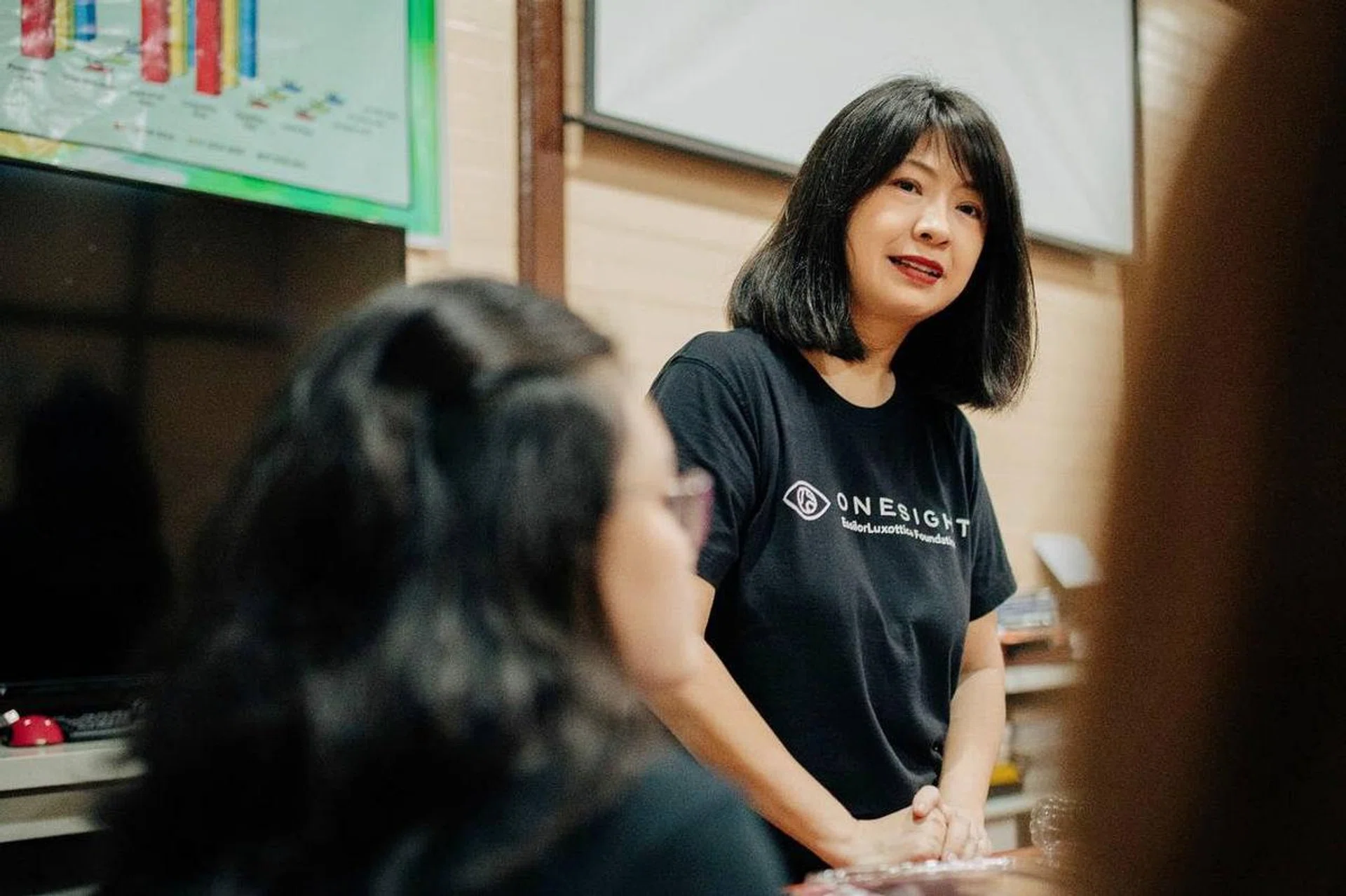
“How They See It” is where we explore the perspectives of leaders shaping today’s most impactful organisations. In this instalment, we speak with Yvonne Siow, head of the OneSight EssilorLuxottica Foundation, who is on a mission to eliminate uncorrected poor vision worldwide. Yvonne shares her insights on building sustainable partnerships, rethinking philanthropy, and the innovative solutions driving her work to bring vision care to underserved communities.
In a world increasingly driven by technology, the importance of vision — literal, not metaphorical — has never been more critical. As we hurtle into a digital era where screens dominate our daily lives, good vision is no longer a luxury; it’s a necessity.
Yet, millions across the globe, particularly in marginalised communities, still suffer from uncorrected poor vision. The divide between those who have access to vision care and those who do not is widening, and this gap carries serious consequences for those left behind. Without addressing this, we risk deepening societal inequalities — exacerbating biases, limiting opportunities, and marginalising entire populations further.
At the OneSight EssilorLuxottica Foundation, I’ve dedicated myself to changing this narrative. Our goal is ambitious: to eliminate uncorrected poor vision within a generation. We don’t just want to treat the symptoms; we’re working to create sustainable solutions by collaborating with governments, NGOs, and the private sector. This goes beyond handing out glasses — it’s about ensuring that everyone, everywhere, can see clearly and lead fuller, more productive lives. And the effects of this work ripple outwards — clearer vision leads to better education, greater job opportunities, and ultimately, stronger, more resilient communities.
Part of our success comes from reimagining how we give. Take, for example, our Migrant Workers Vision Care Programme. One might assume that it’s a straightforward philanthropic effort, but it’s far more complex. We didn’t just want to provide vision care; we wanted to innovate how it was delivered.

That’s where the vending machine project came in — dispensing reading glasses through a machine might sound unconventional, but it’s exactly the kind of bold solution we need in today’s world. The project didn’t happen overnight; it took countless iterations, but each step taught us something valuable. Beyond just developing new products or services, it changes the way we think about giving and the systems that support it.
This approach of reimagining solutions extends beyond one-off projects. I’ve come to realise that the future of philanthropy hinges quite a far bit on collaboration. When public, private, and people sectors come together, we can achieve far more than we ever could alone.
In fact, one of the biggest misconceptions about corporate philanthropy is that it’s often viewed as a one-way street — a simple transaction of money or resources. But real, impactful philanthropy is a collaborative process — solutions don’t always come from outside the communities we aim to help. Often, the answers are already there. The challenge is recognising, supporting, and scaling these local solutions. And this kind of work requires a shift in perspective and understanding that it’s not about immediate relief but long-term systemic change.
The hardest battle
That said, working in the philanthropic sector is far from easy. People often don’t understand just how emotionally taxing it can be. When your daily work involves confronting some of the world’s most persistent social problems, it takes a toll. The hardest part of my job at OneSight EssilorLuxottica Foundation isn’t just the resource constraints — it’s the emotional weight of constantly fighting uphill battles.
Attracting and retaining top talent in this sector is another challenge. The work demands resilience, yet the compensation often doesn’t match the demands. Many people come into this field with passion and optimism, but the lower pay compared to corporate roles, coupled with the constant expectation to do more with less, can lead to burnout.
And then there’s the pervasive belief that overhead costs should be kept to a minimum, which, while well-intentioned, can result in underinvestment in the very people who make the work happen.
The truth is, we can’t achieve our goals without investing in the people behind them. We need to rethink how we approach the allocation of resources in philanthropy — not just in terms of financial donations but in terms of human capital as well. Enlightened leadership is key here. When leaders truly understand and embrace social responsibility, they inspire others to give their best. It’s not enough for corporate social responsibility to be a box-ticking exercise. It needs to be ingrained into a company’s culture.
Tech x Philanthropy
And that’s where innovation comes in — rethinking how we engage people in the act of giving. One of the focuses of my work at PlayPan has been using the concept of play to engage people in philanthropy. It might sound odd, but incorporating elements of fun and camaraderie into social responsibility initiatives can increase participation, foster innovation, and strengthen the emotional connection between employees and the causes they support. This approach helps reframe giving from something that’s often seen as a cost centre into something that’s enjoyable and fulfilling.

This reimagining of giving also needs to extend beyond individual acts of charity. We need to think about giving in a broader, systemic way — whether it’s integrating social impact into the core operations of businesses or creating more sustainable models for corporate-driven philanthropy.
You see, when companies align their philanthropic efforts with their core strengths, the impact is more meaningful and lasting. It’s about thinking long-term and recognising that philanthropy isn’t just about the immediate return on investment but about the deeper, more sustained impact that can be achieved through collaboration and innovation.
And while we talk about the importance of innovation and collaboration in philanthropy, technology is rapidly changing the landscape as well. In the coming decade, I see tools like AI, blockchain, and even virtual reality playing a central role in how organisations like OneSight EssilorLuxottica Foundation approach giving.
Blockchain, for example, could bring a new level of transparency to philanthropy, allowing donors to track their contributions and see exactly where their money is going. AI could help us analyse data more effectively and allocate resources where they’re needed most. These technologies are not solutions in themselves but tools that can help us better achieve our goals.
Still, despite all the challenges, what gives me hope is the community around me. There’s a growing movement of individuals and organisations committed to doing good, and it’s this collective effort that keeps me going. It’s less about lofty ideals and more about the genuine connections we build—working together with a shared purpose to create real, lasting change. Together, we can face even the toughest challenges and create a future full of kindness and new possibilities.