%22%3E%0A%3Cpath%20d%3D%22M412%20101.2H393.7C393.1%20101.2%20392.3%20100.9%20391.8%20100.5C377.3%2087.6004%20362.9%2074.6004%20348.4%2061.6004C344.8%2058.4004%20341.3%2055.2004%20337.7%2052.0004C337.1%2051.5004%20336.2%2051.1004%20335.5%2051.0004C334.2%2050.8004%20333%2051.0004%20331.5%2051.0004V101.1H316.7V0.100391H331.4V44.3004C331.9%2044.3004%20332.2%2044.4004%20332.5%2044.4004C334.9%2044.4004%20337.2%2044.5004%20339.6%2044.4004C340.4%2044.4004%20341.3%2044.0004%20341.8%2043.5004C351.6%2034.4004%20361.4%2025.2004%20371.1%2016.0004C376.5%2010.9004%20381.9%205.90039%20387.3%200.800391C387.9%200.200391%20388.5%200.000390626%20389.3%200.000390626H400.9C384.2%2015.8004%20367.8%2031.3004%20351.2%2047.0004C371.5%2065.0004%20391.8%2082.9004%20412.1%20100.9C412.1%20101%20412.1%20101.1%20412%20101.2ZM180.9%20101.2C184.1%2094.9004%20187.2%2088.9004%20190.3%2082.8004C198.3%2067.3004%20206.2%2051.8004%20214.2%2036.2004C220.3%2024.4004%20226.4%2012.5004%20232.4%200.700391C232.7%200.100391%20233%20-0.0996094%20233.7%20-0.0996094H248.1C248.8%20-0.0996094%20249.2%200.100391%20249.6%200.800391C256%2013.3004%20262.4%2025.7004%20268.8%2038.2004C279.3%2058.6004%20289.8%2079.0004%20300.3%2099.5004C300.5%20100%20300.8%20100.4%20301.1%20101.1C300.5%20101.1%20300.1%20101.2%20299.7%20101.2H286.5C285.6%20101.2%20285.1%20100.9%20284.7%20100.2C280.1%2091.3004%20275.4%2082.4004%20270.8%2073.4004C270.1%2072.1004%20269.3%2071.6004%20267.8%2071.6004H209.9C208.7%2071.6004%20208.1%2072.0004%20207.5%2073.1004C202.9%2082.1004%20198.2%2091.0004%20193.6%20100C193.1%20101%20192.6%20101.3%20191.5%20101.3C188.4%20101.2%20185.3%20101.3%20182.3%20101.3C182%20101.2%20181.6%20101.2%20180.9%20101.2ZM239.1%2011.4004C230%2029.2004%20221.1%2046.7004%20212.1%2064.3004H266.4C257.2%2046.7004%20248.2%2029.2004%20239.1%2011.4004ZM0%200.000390626H43.4C51.2%200.000390626%2058.7%201.20039%2065.7%204.80039C75.9%2010.0004%2078.9%2018.0004%2078.6%2027.4004C78.3%2034.3004%2076%2040.5004%2071.2%2045.5004C67.3%2049.6004%2062.4%2052.3004%2057.1%2054.3004C50.6%2056.7004%2043.9%2058.0004%2037.1%2058.6004C30.1%2059.2004%2023.1%2059.4004%2016.2%2059.7004C15.8%2059.7004%2015.3%2059.8004%2014.8%2059.8004V101.1H0.1C0%2067.4004%200%2033.8004%200%200.000390626ZM14.8%207.10039V52.2004C23.7%2052.4004%2032.6%2052.3004%2041.2%2050.1004C44.4%2049.3004%2047.6%2048.2004%2050.6%2046.7004C58.4%2043.0004%2062.3%2036.7004%2062.7%2028.0004C63%2019.9004%2059.5%2014.1004%2052.4%2010.5004C47.6%208.00039%2042.5%207.10039%2037.2%207.10039H14.8ZM95.9%20101.1V0.100391H167.3V7.20039H110.7V44.7004H158.1V51.9004H110.8V93.9004H171.1V101C146.1%20101.1%20121%20101.1%2095.9%20101.1Z%22%20fill%3D%22black%22%2F%3E%0A%3Cpath%20d%3D%22M35.0004%2025.7996H42.5004V20.6996H44.8004V33.1996H42.6004V27.5996H34.9004V33.2996H32.7004V20.7996H35.0004V25.7996ZM54.4004%2025.8996V27.2996H48.9004V31.6996H55.9004C55.9004%2032.1996%2056.0004%2032.5996%2056.0004%2033.0996H46.5004V20.5996H55.5004V21.8996H49.0004V25.7996C50.7004%2025.8996%2052.5004%2025.8996%2054.4004%2025.8996ZM25.9004%2033.0996H23.5004V21.9996H17.9004V20.6996H31.6004V22.0996H27.1004C26.2004%2022.0996%2025.9004%2022.2996%2025.9004%2023.1996C26.0004%2026.0996%2025.9004%2028.9996%2025.9004%2031.7996V33.0996Z%22%20fill%3D%22black%22%2F%3E%0A%3C%2Fg%3E%0A%3Cdefs%3E%0A%3CclipPath%20id%3D%22clip0_388_462%22%3E%0A%3Crect%20width%3D%22411%22%20height%3D%22101.2%22%20fill%3D%22white%22%2F%3E%0A%3C%2FclipPath%3E%0A%3C%2Fdefs%3E%0A%3C%2Fsvg%3E%0A)
The new Clash de Cartier three-finger ring, which resembles a knuckle-duster, is our bejewelled dream come true
This striking ring pushes the house’s bold studded aesthetic into new territory alongside flexible constructions, colourful gemstones, and amplified designs.
By Yanni Tan /

Share this article
Few jewellery collections balance polish and provocation quite like Clash de Cartier. Since its debut in 2019, the line has stood out for its distinctive aesthetic. While drawing on Cartier’s long-standing fascination with geometry and form, its designs — composed of studs, beads, and clous carres — are as refined as they are subversive.
The latest creations build on that tension. With new flexible constructions, the introduction of coloured hard stones, and amplified proportions, Clash de Cartier continues to evolve by pushing the house codes further.
Fluidity in yellow gold
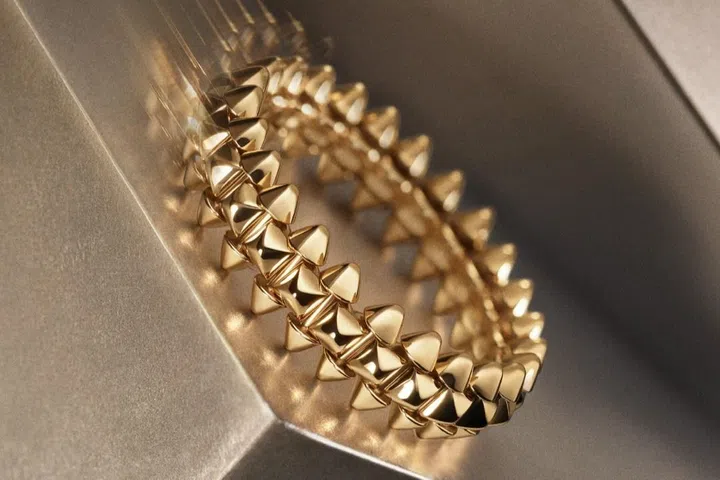
One of the most notable developments is the arrival of fully flexible yellow-gold necklaces and bracelets, a first for the collection. While Clash de Cartier has explored movement before, particularly in rose gold iterations, these new pieces take that idea further with a warmer, more luminous material.
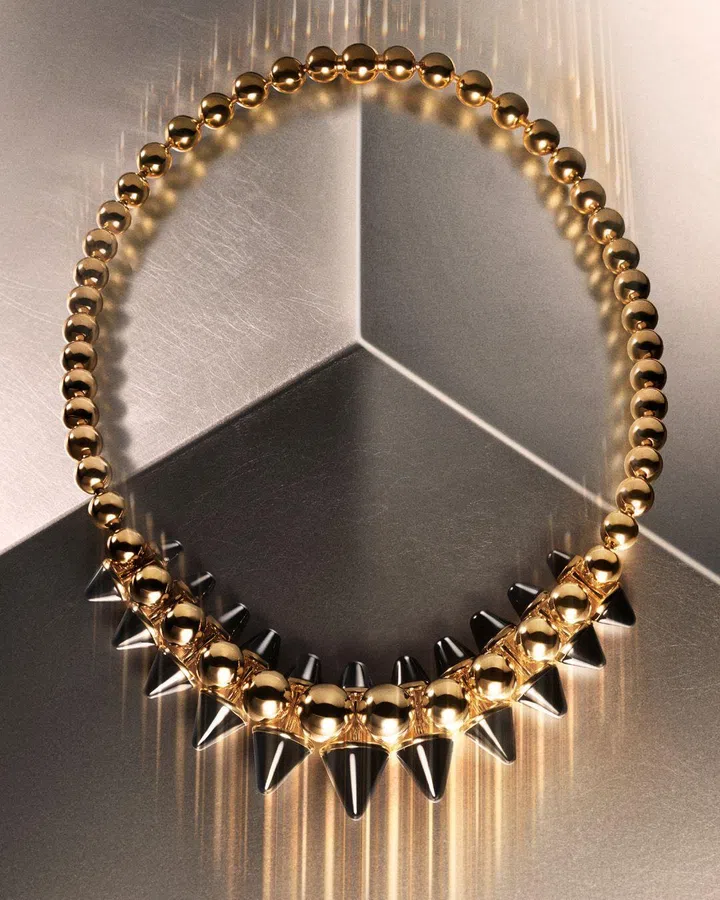
Behind their suppleness lies considerable technical complexity. Each piece is composed of hundreds of individual components — sometimes as many as 600 — brought together through a combination of traditional jewellery-making and advanced engineering.
The ancestral technique of lost-wax casting is used alongside high-precision machining, ensuring that each element is produced with absolute accuracy.
Every link is then hand-polished and assembled into an articulated structure that allows the entire piece to move freely while remaining perfectly cohesive. The effect is subtle but unmistakable: the jewellery shifts naturally with the body, softening what would otherwise be a rigid, architectural form.
Cartier has even considered the acoustic dimension of this movement. As the components glide against one another, they produce a barely perceptible vibration and sound that enhance the sensory experience of wearing the piece.
Colour and architectural volume
Alongside this new fluidity, Clash de Cartier introduces colour more prominently. Rings, earrings and pendants now incorporate beads of red-dyed agate, green-dyed agate, pink chalcedony, and onyx, anchored by yellow or rose gold.
Beyond introducing colour, the gems reshape the visual rhythm of the pieces. The smooth, rounded stones sit in deliberate contrast to the sharp spikes and geometric studs, reinforcing the collection’s central idea of opposing forces held in balance.
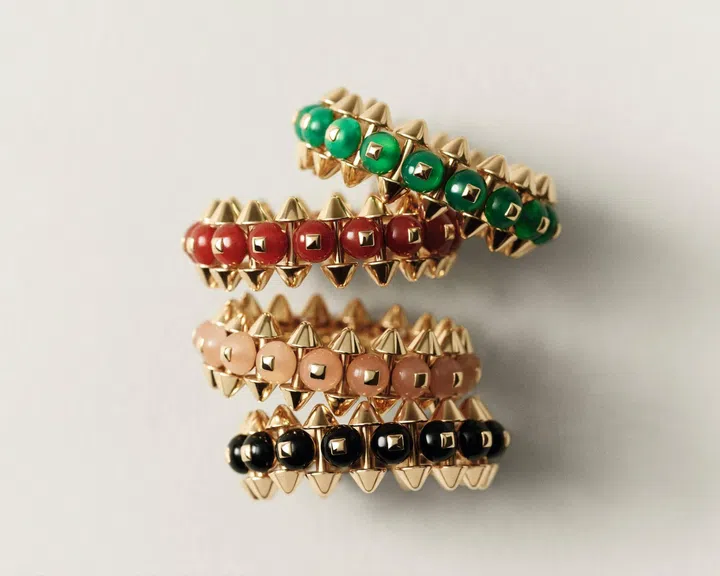
Achieving this effect requires a high degree of precision. Each stone must be carefully selected to meet strict colour-grading standards, ensuring absolute consistency across each creation. The beads are then pierced and secured with a Clous de Paris nail — a process that alternates between mechanical fastening and manual adjustment.
The complexity of this construction is significant. Compared to the all-gold versions, these gemstone pieces can contain up to twice as many components. Yet the result feels effortless: a seamless interplay of colour, volume, and texture that imbues the design with vibrancy without overwhelming it.
The stones also enhance the sense of scale. By introducing rounded forms between the studs, Cartier emphasises the collection’s sculptural qualities, turning each piece into a miniature composition of shapes and surfaces.
Bolder forms, greater versatility
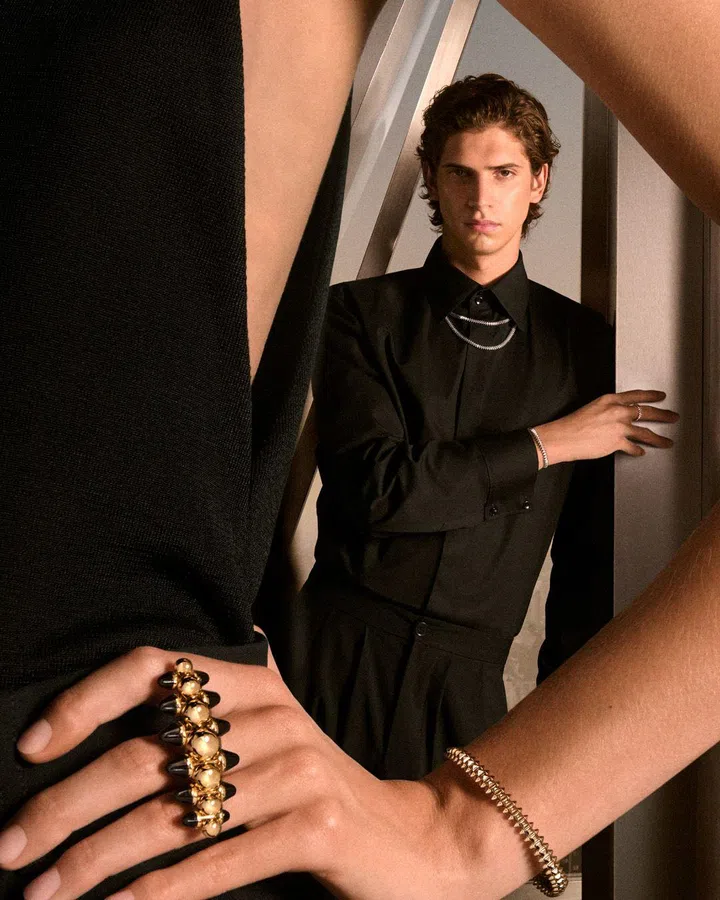
If earlier Clash de Cartier pieces hinted at boldness, the latest creations embrace it fully. The collection now includes extra-large interpretations that push its proportions to new extremes. Studs appear larger, lines grow wider, and silhouettes become more assertive.
These expanded designs are particularly striking in pieces such as flexible bracelets, a head-turning necklace, and a three-finger ring resembling a knuckle duster, where the increased scale amplifies both the visual impact and the tactile experience.
The onyx-set studs, with their deep black sheen, introduce an additional layer of contrast, heightening the interplay between light and shadow.

At the same time, Cartier continues to emphasise versatility. Multiwear earrings, for instance, are designed with one fixed strand and a removable one that can be styled in different ways — worn singly, one at the front of the ear and one at the back, or together for a more dramatic effect.
This duality — unapologetically bold yet wearable, structured yet fluid — lies at the heart of Clash de Cartier. It is a collection that invites interaction with movement, texture, and volume.

Heritage reimagined
While the collection feels distinctly contemporary, its roots run deep. Cartier has long experimented with studs, clous carres, and bead motifs, particularly during the early 20th century when industrial influences began to shape the house’s aesthetic language.
These elements appeared across watches, accessories, and jewellery, forming a visual vocabulary that was both modern and unmistakably Cartier.
The latest creations push Clash de Cartier further into the realm of sensory jewellery for the contemporary sophisticate. In doing so, Cartier continues to define a space where tradition meets experimentation, and where jewellery is never merely decorative but totally alive.