%22%3E%0A%3Cpath%20d%3D%22M412%20101.2H393.7C393.1%20101.2%20392.3%20100.9%20391.8%20100.5C377.3%2087.6004%20362.9%2074.6004%20348.4%2061.6004C344.8%2058.4004%20341.3%2055.2004%20337.7%2052.0004C337.1%2051.5004%20336.2%2051.1004%20335.5%2051.0004C334.2%2050.8004%20333%2051.0004%20331.5%2051.0004V101.1H316.7V0.100391H331.4V44.3004C331.9%2044.3004%20332.2%2044.4004%20332.5%2044.4004C334.9%2044.4004%20337.2%2044.5004%20339.6%2044.4004C340.4%2044.4004%20341.3%2044.0004%20341.8%2043.5004C351.6%2034.4004%20361.4%2025.2004%20371.1%2016.0004C376.5%2010.9004%20381.9%205.90039%20387.3%200.800391C387.9%200.200391%20388.5%200.000390626%20389.3%200.000390626H400.9C384.2%2015.8004%20367.8%2031.3004%20351.2%2047.0004C371.5%2065.0004%20391.8%2082.9004%20412.1%20100.9C412.1%20101%20412.1%20101.1%20412%20101.2ZM180.9%20101.2C184.1%2094.9004%20187.2%2088.9004%20190.3%2082.8004C198.3%2067.3004%20206.2%2051.8004%20214.2%2036.2004C220.3%2024.4004%20226.4%2012.5004%20232.4%200.700391C232.7%200.100391%20233%20-0.0996094%20233.7%20-0.0996094H248.1C248.8%20-0.0996094%20249.2%200.100391%20249.6%200.800391C256%2013.3004%20262.4%2025.7004%20268.8%2038.2004C279.3%2058.6004%20289.8%2079.0004%20300.3%2099.5004C300.5%20100%20300.8%20100.4%20301.1%20101.1C300.5%20101.1%20300.1%20101.2%20299.7%20101.2H286.5C285.6%20101.2%20285.1%20100.9%20284.7%20100.2C280.1%2091.3004%20275.4%2082.4004%20270.8%2073.4004C270.1%2072.1004%20269.3%2071.6004%20267.8%2071.6004H209.9C208.7%2071.6004%20208.1%2072.0004%20207.5%2073.1004C202.9%2082.1004%20198.2%2091.0004%20193.6%20100C193.1%20101%20192.6%20101.3%20191.5%20101.3C188.4%20101.2%20185.3%20101.3%20182.3%20101.3C182%20101.2%20181.6%20101.2%20180.9%20101.2ZM239.1%2011.4004C230%2029.2004%20221.1%2046.7004%20212.1%2064.3004H266.4C257.2%2046.7004%20248.2%2029.2004%20239.1%2011.4004ZM0%200.000390626H43.4C51.2%200.000390626%2058.7%201.20039%2065.7%204.80039C75.9%2010.0004%2078.9%2018.0004%2078.6%2027.4004C78.3%2034.3004%2076%2040.5004%2071.2%2045.5004C67.3%2049.6004%2062.4%2052.3004%2057.1%2054.3004C50.6%2056.7004%2043.9%2058.0004%2037.1%2058.6004C30.1%2059.2004%2023.1%2059.4004%2016.2%2059.7004C15.8%2059.7004%2015.3%2059.8004%2014.8%2059.8004V101.1H0.1C0%2067.4004%200%2033.8004%200%200.000390626ZM14.8%207.10039V52.2004C23.7%2052.4004%2032.6%2052.3004%2041.2%2050.1004C44.4%2049.3004%2047.6%2048.2004%2050.6%2046.7004C58.4%2043.0004%2062.3%2036.7004%2062.7%2028.0004C63%2019.9004%2059.5%2014.1004%2052.4%2010.5004C47.6%208.00039%2042.5%207.10039%2037.2%207.10039H14.8ZM95.9%20101.1V0.100391H167.3V7.20039H110.7V44.7004H158.1V51.9004H110.8V93.9004H171.1V101C146.1%20101.1%20121%20101.1%2095.9%20101.1Z%22%20fill%3D%22black%22%2F%3E%0A%3Cpath%20d%3D%22M35.0004%2025.7996H42.5004V20.6996H44.8004V33.1996H42.6004V27.5996H34.9004V33.2996H32.7004V20.7996H35.0004V25.7996ZM54.4004%2025.8996V27.2996H48.9004V31.6996H55.9004C55.9004%2032.1996%2056.0004%2032.5996%2056.0004%2033.0996H46.5004V20.5996H55.5004V21.8996H49.0004V25.7996C50.7004%2025.8996%2052.5004%2025.8996%2054.4004%2025.8996ZM25.9004%2033.0996H23.5004V21.9996H17.9004V20.6996H31.6004V22.0996H27.1004C26.2004%2022.0996%2025.9004%2022.2996%2025.9004%2023.1996C26.0004%2026.0996%2025.9004%2028.9996%2025.9004%2031.7996V33.0996Z%22%20fill%3D%22black%22%2F%3E%0A%3C%2Fg%3E%0A%3Cdefs%3E%0A%3CclipPath%20id%3D%22clip0_388_462%22%3E%0A%3Crect%20width%3D%22411%22%20height%3D%22101.2%22%20fill%3D%22white%22%2F%3E%0A%3C%2FclipPath%3E%0A%3C%2Fdefs%3E%0A%3C%2Fsvg%3E%0A)
Franck Muller’s Skafander 43 dives in with a distinctive twist
With its signature tonneau shape and rotating inner bezel, the Franck Muller Skafander 43 puts a unique spin on the quintessential tool watch
By The Peak Singapore /
Share this article
In the digital age, professional divers are more likely to use dive computers than analogue watches to time their dives. Yet the allure of mechanical dive watches continues to grip watch enthusiasts, if not for their long history, then for their remarkable evolution into the multitude of designs and technical fortitude we see today.
Amid the sea of modern mechanical dive watch offerings, Franck Muller’s Skafander shines as a beacon of innovation, merging the classic attributes of dive watches with pioneering design and technical know-how. Introduced in 2018, its striking outlook, with high contrast colours that match the rubber strap to dial elements, makes it as much a fashion statement as it is a superlative tool watch.
A modern marvel
Dive watches emerged in the early 20th century, born out of necessity. The first of these were developed to aid underwater explorers in their quests, offering a reliable tool to measure time beneath the waves. Over the years, these instruments evolved, powered by innovations in water resistance, legibility, and durability, transforming from niche tools to symbols of luxury, technical prowess, and the spirit of adventure.
Amid this storied lineage, Franck Muller’s Skafander stands out for its unique contribution to the genre. It’s the world’s first dive watch to feature a tonneau shape, a departure from the traditional round cases typical of dive watches. This distinctive design not only challenges the status quo, but it also imbues the watch with an elegance and singular quality, making it instantly recognisable from a distance.
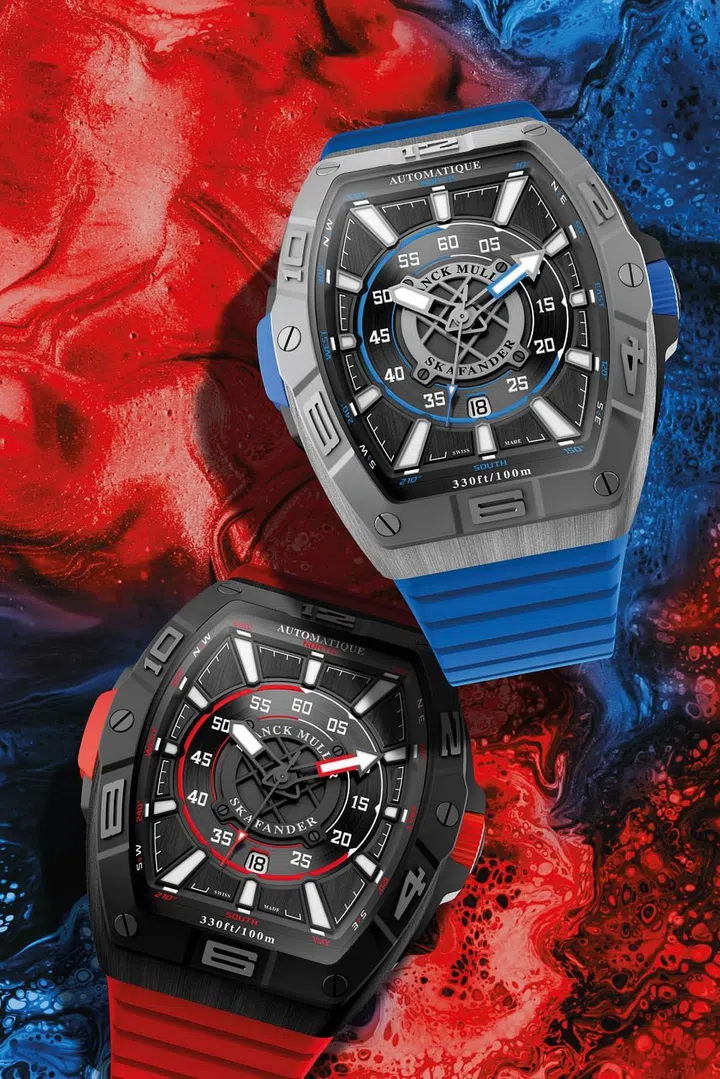
The Skafander is the first dive watch in the world to feature a tonneau shape. (Photo: Franck Muller)
While the original Skafander from 2021 was housed in a 46mm x 57mm case, the Skafander 43 comes in a 43mm x 52mm case, making it a better fit for smaller wrists and giving it a slightly more refined outlook in the process. Here, Franck Muller’s pursuit of technical advancement is writ large: It has a second central rotating ring for divers to track their dive times more precisely, down to the seconds. Comparatively, most diving watches only afford minute-level precision.
Water resistant up to 100m, the Skafander 43 is powered by an automatic movement with a bidirectional rotor and a power reserve of 42 hours. The watch works just as well for recreational dives as it does for professional deep dives. What’s more, its variety of case materials and strap colours allows users to express their personalities through their preferred combination.
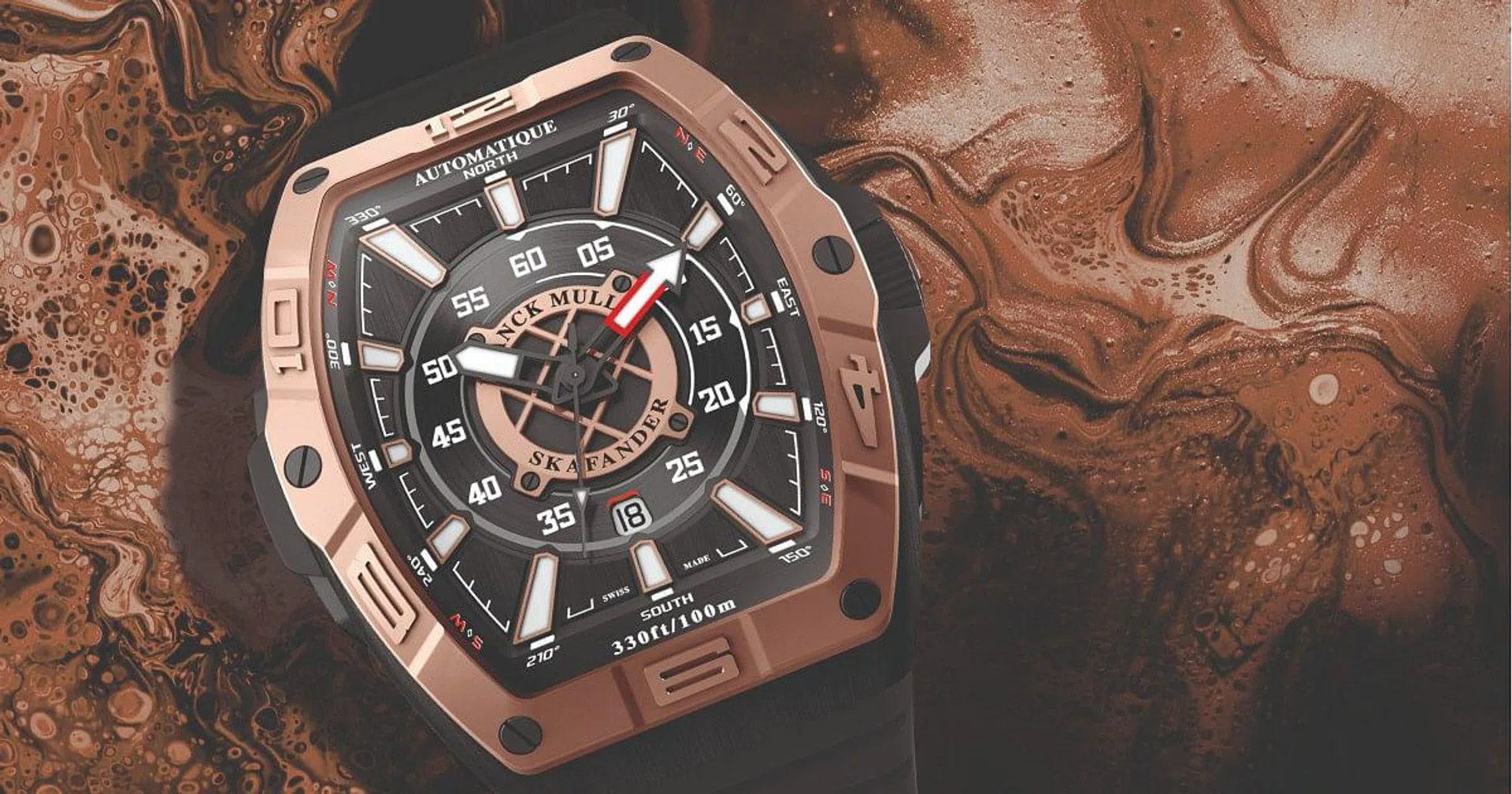
Models with brushed titanium cases have five different colour options for the rubber strap: red, orange, yellow, green and blue. Those with PVD-treated titanium cases have the same choices, with the addition of a version in black. The last and most prestigious version sports a PVD-treated titanium case with a rose gold bezel and black strap.
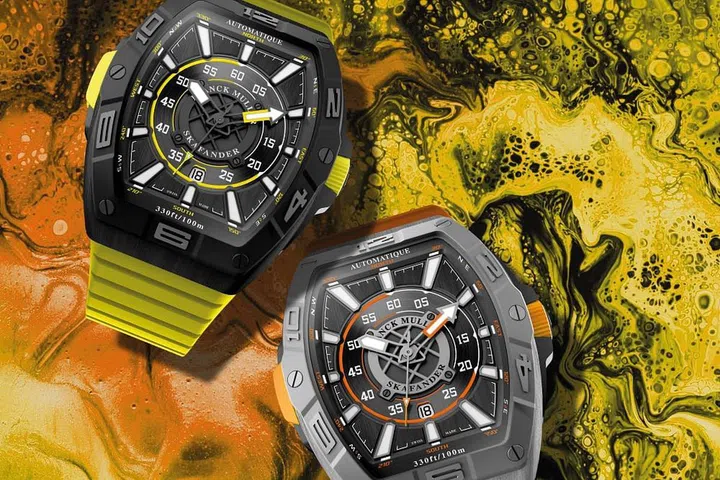
A variety of colour options, from yellow to orange, is available in the new Skafander 43 collection. (Photo: Franck Muller)
The aesthetic appeal of the Skafander 43 is undeniable. Its youthful, athletic vibe, characterised by vibrant colours and the iconic tonneau shape sets it apart in the crowded luxury dive watch market. This design philosophy not only adheres to the functional requirements of a diving watch – such as legibility and durability – but also gives it a touch of sophistication.
The evolution of technology and design in diving watches
The trajectory of dive watches has been significantly influenced by advancements in technology and materials. The earliest watch cases from the 1920s were built using stainless steel, but from the 1980s onwards, the use of titanium, ceramic and other lightweight, corrosion-resistant materials became more common. The Skafander 43, for example, features a brushed titanium case, offering both strength and durability for underwater exploits.
Similarly, improvements in luminescent materials have benefited diving enthusiasts as well as a broader audience. Before the advent of Super-LumiNova in the 1990s, watchmakers fitted their diving instruments with lume made from radium and tritium. But concerns over their radioactive nature convinced the majority of the industry to adopt Super-LumiNova and other non-radioactive equivalents instead.
With their ability to tell time in the dark – not just underwater but also in nightspots, cinemas, theatres and concert venues – it’s easy to see how dive watches like the Skafander 43 have become so highly favoured, even among non-divers.
Looking to the future, dive watches appear poised for further innovation, with sustainable materials and even more advanced technologies shaping the next generation of timepieces. The Franck Muller Skafander, with its pioneering design and functionality, offers a glimpse into what the future holds for luxury diving watches. Expect to see precision instruments that marry the practical needs of underwater exploration with the aesthetic desires of modern mechanical watch enthusiasts.
The Skafander 43 is available at both Franck Muller Boutiques, located at #02-07A of Ion Orchard and #01-55/55A at The Shoppes at Marina Bay Sands.
Brought to you by Franck Muller