%22%3E%0A%3Cpath%20d%3D%22M412%20101.2H393.7C393.1%20101.2%20392.3%20100.9%20391.8%20100.5C377.3%2087.6004%20362.9%2074.6004%20348.4%2061.6004C344.8%2058.4004%20341.3%2055.2004%20337.7%2052.0004C337.1%2051.5004%20336.2%2051.1004%20335.5%2051.0004C334.2%2050.8004%20333%2051.0004%20331.5%2051.0004V101.1H316.7V0.100391H331.4V44.3004C331.9%2044.3004%20332.2%2044.4004%20332.5%2044.4004C334.9%2044.4004%20337.2%2044.5004%20339.6%2044.4004C340.4%2044.4004%20341.3%2044.0004%20341.8%2043.5004C351.6%2034.4004%20361.4%2025.2004%20371.1%2016.0004C376.5%2010.9004%20381.9%205.90039%20387.3%200.800391C387.9%200.200391%20388.5%200.000390626%20389.3%200.000390626H400.9C384.2%2015.8004%20367.8%2031.3004%20351.2%2047.0004C371.5%2065.0004%20391.8%2082.9004%20412.1%20100.9C412.1%20101%20412.1%20101.1%20412%20101.2ZM180.9%20101.2C184.1%2094.9004%20187.2%2088.9004%20190.3%2082.8004C198.3%2067.3004%20206.2%2051.8004%20214.2%2036.2004C220.3%2024.4004%20226.4%2012.5004%20232.4%200.700391C232.7%200.100391%20233%20-0.0996094%20233.7%20-0.0996094H248.1C248.8%20-0.0996094%20249.2%200.100391%20249.6%200.800391C256%2013.3004%20262.4%2025.7004%20268.8%2038.2004C279.3%2058.6004%20289.8%2079.0004%20300.3%2099.5004C300.5%20100%20300.8%20100.4%20301.1%20101.1C300.5%20101.1%20300.1%20101.2%20299.7%20101.2H286.5C285.6%20101.2%20285.1%20100.9%20284.7%20100.2C280.1%2091.3004%20275.4%2082.4004%20270.8%2073.4004C270.1%2072.1004%20269.3%2071.6004%20267.8%2071.6004H209.9C208.7%2071.6004%20208.1%2072.0004%20207.5%2073.1004C202.9%2082.1004%20198.2%2091.0004%20193.6%20100C193.1%20101%20192.6%20101.3%20191.5%20101.3C188.4%20101.2%20185.3%20101.3%20182.3%20101.3C182%20101.2%20181.6%20101.2%20180.9%20101.2ZM239.1%2011.4004C230%2029.2004%20221.1%2046.7004%20212.1%2064.3004H266.4C257.2%2046.7004%20248.2%2029.2004%20239.1%2011.4004ZM0%200.000390626H43.4C51.2%200.000390626%2058.7%201.20039%2065.7%204.80039C75.9%2010.0004%2078.9%2018.0004%2078.6%2027.4004C78.3%2034.3004%2076%2040.5004%2071.2%2045.5004C67.3%2049.6004%2062.4%2052.3004%2057.1%2054.3004C50.6%2056.7004%2043.9%2058.0004%2037.1%2058.6004C30.1%2059.2004%2023.1%2059.4004%2016.2%2059.7004C15.8%2059.7004%2015.3%2059.8004%2014.8%2059.8004V101.1H0.1C0%2067.4004%200%2033.8004%200%200.000390626ZM14.8%207.10039V52.2004C23.7%2052.4004%2032.6%2052.3004%2041.2%2050.1004C44.4%2049.3004%2047.6%2048.2004%2050.6%2046.7004C58.4%2043.0004%2062.3%2036.7004%2062.7%2028.0004C63%2019.9004%2059.5%2014.1004%2052.4%2010.5004C47.6%208.00039%2042.5%207.10039%2037.2%207.10039H14.8ZM95.9%20101.1V0.100391H167.3V7.20039H110.7V44.7004H158.1V51.9004H110.8V93.9004H171.1V101C146.1%20101.1%20121%20101.1%2095.9%20101.1Z%22%20fill%3D%22black%22%2F%3E%0A%3Cpath%20d%3D%22M35.0004%2025.7996H42.5004V20.6996H44.8004V33.1996H42.6004V27.5996H34.9004V33.2996H32.7004V20.7996H35.0004V25.7996ZM54.4004%2025.8996V27.2996H48.9004V31.6996H55.9004C55.9004%2032.1996%2056.0004%2032.5996%2056.0004%2033.0996H46.5004V20.5996H55.5004V21.8996H49.0004V25.7996C50.7004%2025.8996%2052.5004%2025.8996%2054.4004%2025.8996ZM25.9004%2033.0996H23.5004V21.9996H17.9004V20.6996H31.6004V22.0996H27.1004C26.2004%2022.0996%2025.9004%2022.2996%2025.9004%2023.1996C26.0004%2026.0996%2025.9004%2028.9996%2025.9004%2031.7996V33.0996Z%22%20fill%3D%22black%22%2F%3E%0A%3C%2Fg%3E%0A%3Cdefs%3E%0A%3CclipPath%20id%3D%22clip0_388_462%22%3E%0A%3Crect%20width%3D%22411%22%20height%3D%22101.2%22%20fill%3D%22white%22%2F%3E%0A%3C%2FclipPath%3E%0A%3C%2Fdefs%3E%0A%3C%2Fsvg%3E%0A)
Aurel Bacs, the “Indiana Jones of watches”, spills the honest truth about the high-rollin' horology auction industry
The preeminent auctioneer, who ditched a legal career for horology, surprises and shocks us with his candid, thoughtful insights.
By Andre Frois /

Share this article
Aurel Bacs is the salt of the earth when he isn’t wielding his mighty gavel. Nonetheless, people are usually on their best behaviour around him, as if he were a headmaster of some sort. From the corner of my eye, I see passersby mouth “Is that Aurel Bacs?” during our tete-a-tete at Phillips’ recent pit-stop in Singapore for a preview of its Fall 2024 auctions to be held in Geneva and Hong Kong through November.
The senior consultant of watches at Phillips is very much the headmaster of horology. Over the past three decades, he’s risen to become the world’s preeminent auctioneer of watches. The man and his wife Livia Russo also co-founded prominent watch consultancy firm Bacs & Russo, which is a partner of Phillips.
While the title “game changer” might be thrown around loosely, this 52-year-old has proven time and again that it is his rightful descriptor. Before Bacs, vintage watches were fastidiously restored in the name of commanding higher bids. Over his emphatic career, he has changed collectors’ loathing for signs of ageing on a watch, into a yearning. Connoisseurs today appreciate, and many even desire, patina, oxidation, and other signs of wear — all because of him.
He is known to switch between several European languages during his intense auctions, which have not only reshaped collectors’ perceptions of value, but also come to determine the equity of brands.
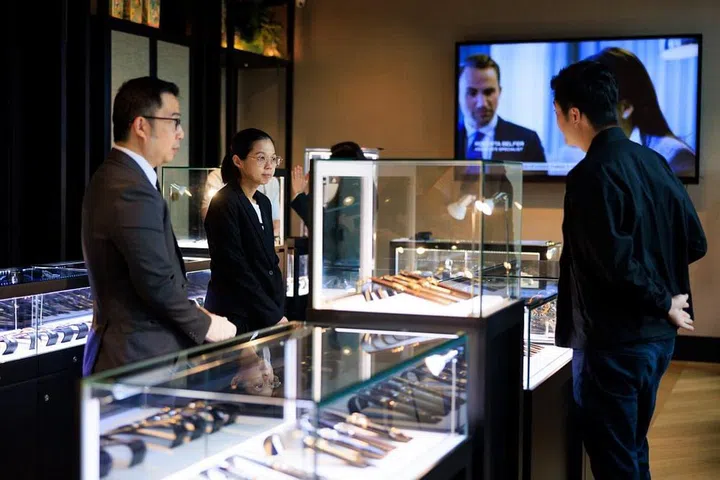
Phillips' Singapore preview of its Fall 2024 auctions in Geneva and Hong Kong (Photo: Phillips)
Bacs, who grew Christie’s annual watch sales by almost 10 times in the span of as many years, has been further immortalised by the staggering records that his auctions have set. You might have heard of Paul Newman’s Rolex Daytona that he sold for over US$17 million, and the steel Patek Philippe Ref. 1518 that went under his hammer for CHF9.6 million. These and many other jaw-dropping bids uttered at Bacs & Russo auctions have instantly boosted the prices that brands command.
Collectors today are also armed with a wealth of knowledge, because Bacs played a starring role in pushing for transparency, the education of the consumer, and the democratisation of watch knowledge.
It’s hard to believe that this font of mechanical watch knowledge didn’t care for Swiss watches when he was a child. And when his parents asked him to pick a mechanical watch, he’d begged them for a Casio calculator watch instead.
When did you decide on becoming an auctioneer as a career?
Actually, it was never my plan, not at any moment in my life. I discovered vintage watches around the age of 12, and just like other young people who enjoyed video games or sports, my hobby was watches. I spent all my money on watches, books and magazines about watches, and travelling to watch events. I thought of watches while awake, and when I went to sleep, my brain was still thinking of watches.
When I graduated from high school, I didn’t really know what to do, so I studied business and law to give me a good foundation to do something “serious” later. With each year, I spent more time with watches, and less time with school books. One day, I came across a magazine advertisement about an auction house seeking a watch specialist. I didn’t think much about it, but my parents said, “Why don’t you apply?”
That job was right up your alley.
The job advert actually said that the auction house was looking for candidates who are watchmakers, with at least 10 years of watchmaking experience, and have worked in the auction industry. I couldn’t meet all that criteria because I was a student, but my parents said it’s a good thing to apply because it would be my first professional interview, which would prepare me for many more later on. After four or five rounds of interviews, I got the job! My first instinct was to say “thank you very much” and become a lawyer.
However, my parents said, “Think for a minute, how many auction houses have watch departments?” There were maybe nine watch auction specialists in the world, less than there are presidents, less than there are Formula One drivers. And so I took the job with the plan that in three to six months, I would continue my career as a lawyer. And here we are now 30 years later.
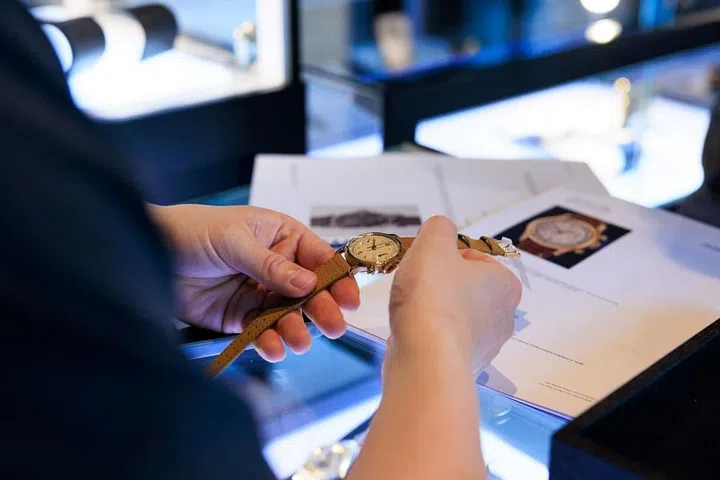
A guest viewing a vintage Patek Philippe at the Singapore preview at Artyzen hotel (Photo: Phillips)
What aspect of watches do you like the most?
Imagine being in love, and I ask you why you love your spouse. Is it maybe her kindness, smile, humour, or generosity? It’s all of it, and I cannot explain it — it’s magic. I wake up at 5 or 6am, and it makes me go, “Yes, I get to go to work!”
In no particular order: I love the aesthetics of a watch, down to details like the font of the dial, when they strike a balance. I love quality watches that are well-made, because when something is well-built, you can feel that. I love their condition. I love the story behind a watch, because a simple watch with a heartwarming story is more valuable than a complex watch with no history or personality.
And I love the surprise, when I discover a watch that I didn’t know existed. I sometimes refer to myself as the Indiana Jones of watches, because I never know what I’ll discover next. This is what excites me.
Which watchmaking period fascinates you?
Personally, I like the 1930s to 60s. I feel like the quality and finishing peaked then. Design and creativity peaked too, not to say that watchmakers are any less creative now. The most beautiful, most wearable, and best finished timepieces were made during that period. I sometimes wish I had a time machine that could transport me to that era.
Speaking of condition, you’ve changed the way the world sees the beauty in worn, unrestored watches.
I like to advocate for giving every collector the freedom of choice, between completely unrestored and beautifully refurbished watches. There is an expression for a collector who believes that there is only one way of collecting watches – a “horological Taliban”. I am the opposite; I am very liberal and I accept everyone’s personal choice.
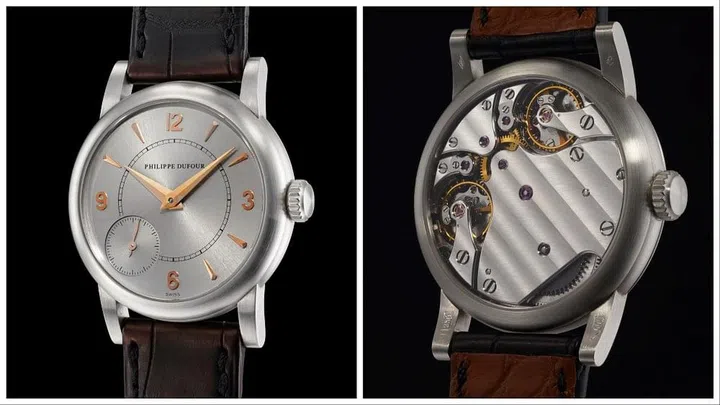
A previously unknown, unique Philippe Dufour Duality watch slated for Reloaded: The Rebirth of Mechanical Watchmaking auction in Geneva on November 8 (Photos: Phillips)
Is that the legacy you would like to be remembered for?
I’ve never thought about it because I don’t think I’m that important. Your questions provoke very weird thoughts within me. Now I am asking myself why I do what I do. Maybe I am a crazy watch addict and this is my self-therapy. I am like a food addict working for the Michelin Guide. What better therapy is there than being an auctioneer and having time alone with rare watches?
The one thing that I believe I’ve contributed to the community is that I speak honestly and share openly. Even when people read my descriptions of watches in catalogues, I would like them to hear my voice. Not a press release written by ChatGPT that has been streamlined and filtered by marketing departments, but to hear my voice — the way I would talk about a watch over a cup of coffee or a glass of wine.
“Aurel really loved watches and he shared his love with us.” That’s how I would like to be remembered.
You’ll surely be remembered by your historic auctions too. What was the tensest moment you’ve ever had?
I could well imagine that that was on October 26, 2017 in New York when I opened the bidding for lot number 8, the Rolex Daytona “Paul Newman”. I can’t even describe what feelings I had. Adrenaline, stress, anxiety, pride, fear, hope. It was literally shock therapy. I had a US$1 million commissioned bid, but Tiffany To — she's over there — bid U$10 million.
When did you finally fathom the immensity of that life-changing auction?
It was not weeks, but months and years later when everything finally sank in, what that watch had done to me personally, to my team, for Phillips as a company, and the entire watch-collecting community. I have been told that half the world’s population have heard of the Rolex “Paul Newman”.
I was in Italy in my mother-in-law’s house when I saw on Who Wants to be a Millionaire? that the price I auctioned the Rolex “Paul Newman” for was asked as a question. It was then I realised that this event had become general knowledge. Watches used to be considered more or less on the same level as vintage toy trains, and I had always felt that watches deserve the same respect as art. And now they do.
Like art, so many “collectors” now treat watches like investments and buy watches only if that will appreciate. Does that pain you?
It doesn’t physically pain me, but I’m to some extent sorry that some people only see the monetary value in a watch, and cannot enjoy a watch for what it is. If you go to an art museum and only see the prices, you won’t enjoy the art. I don’t know why the poor watch has become the subject of speculation. There are shares, funds, currencies, gold, platinum, gasoline… Do you think Philippe Dufour, Rexhep Rexhepi, or F.P. Journe thought of making watches for speculators? I wish these speculators would realise how much they are losing out, when they see a watch as an asset instead of its fun, charm, and beauty.
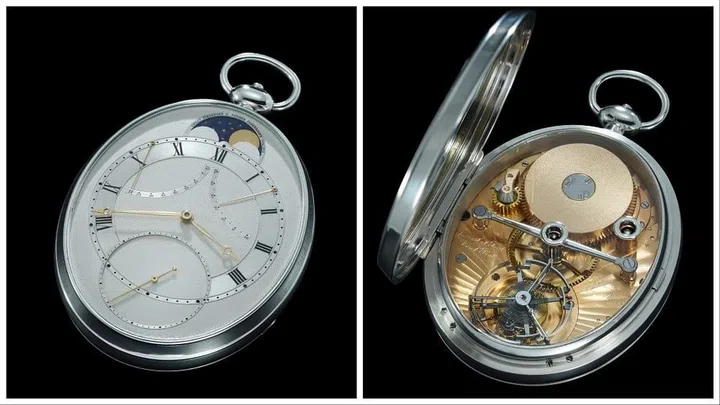
Oval pocket watch made by Derek Pratt for Urban Jurgensen up for auction at Reloaded (Photos: Phillips)
Have you noticed this attitude and trend fading away though?
Prices of some luxury sports watches peaked in 2022, but when they corrected over the past 12 or 18 months, many speculators have rapidly left the market. Instead, we’ve seen many new collectors coming in, who feel that “Finally, I can buy my dream watch”. And I enjoy it when collectors talk about the beauty of a timepiece rather than someone saying that their watch’s price increased by 20 per cent.
Your auctions are so charged because of this speculation, and how they now determine the value and the business decisions of watch brands. How do you prepare to step up to the podium?
It’s good to have adrenaline. Someone said that if you’re not nervous before an auction, then you shouldn’t be an auctioneer. I prepare by not only getting to know every single thing about all the watches for auction, but also every single client who will be attending. I’m so excited that I don’t sleep for four or five days before an auction. If you ask your favourite athlete what they think about before a game, they will tell you, “I don’t think”. Like them, I don’t think and I act on instinct.
What was your most unexpected experience?
During the pandemic, we couldn’t have viewings or gatherings, so I thought that that was the end of the auction industry, because auctions are living and breathing gatherings like rock concerts. Despite my pessimism, June 2020 was our most successful auction. It was a live auction with no live audience, but we sold a Patek Philippe 2523/1 online for close to CHF5 million. I was startled because what was exciting was the client had bought the watch online without having personally seen it.
The client had read the Phillips catalogue and knew me, which means he had bought that watch based on reputation and trust. How fabulous is that?
Have you observed changes in the demographics of bidders and auction attendees over the years?
Yes. I believe wholeheartedly that when I started, the average age of bidders was double of what it is today. Maybe it halved from 70 to 35? Secondly, the geography. Phillips was in about 10 countries in the 90s and now we are in 70 countries. This is because more and more people have discovered the beauty of fine watches.
That’s because you played a huge part in educating the public and advocating for transparency.
Today we have watch blogs, but back then, auction house catalogues printed the name of a watch next to a blurry photo. No archival information, no specs. I remember fighting with a colleague, telling him “I need more than one page to tell the story of a watch”, and he argued, “That’s a waste of paper.”
You cannot love something if you don’t understand it. How can you love a wine if you don’t taste it, a book if you don’t read it, a country if you don’t visit it?

F.P. Journe's Tourbillon Souverain a Remontoire d’Egalite, another highlight at Reloaded (Photo: Phillips)
Who do you look up to in the horology industry?
I think it’s in the nature of Asia as a continent to be the perfect bridge between tradition and future. It’s home to cultures that go thousands of years back. At the same time, it’s the fastest evolving continent in the world. I have noticed in the last 10 years that the average Asian watch collector is the fastest learner. Some have learnt in five years what I have taken 25 years to learn!
Unprecedented growth in Asia has empowered these collectors to be highly competitive, which is why the vast majority of auctioned watches have been competed for and often won by them. It’s been an incredible adventure, and I’m fortunate to be a part of this.
What are some of the marquee highlights of the upcoming Geneva Fall 2024 auctions?
One auction is called Reloaded because it is dedicated to the 1980s and 90s — what many call the renaissance of mechanical watches after the Quartz Crisis. We have the first wristwatch F.P. Journe ever sold, which is its Tourbillon a Remontoire d'Egalite 15/93, which is a prototype made entirely by hand because he had no machines.
Another top lot is “The Oval” pocket watch by Derek Pratt for Urban Jurgensen. This watch was considered insane by many before he even started working on it, because it’s a tourbillon with a constant force mechanism (which improves accuracy by ensuring even energy transmission) and a detent escapement (which allows the balance wheel to swing without disruption, friction, or need for oil).
Although the Rolex Daytona Ref. 16599SAAEC may look like your average Rolex “Rainbow”, the existence of this one was previously unknown. You and I can name many celebrities who have worn Rolex “Rainbows” but nobody knew that before the current ones, Rolex had made this one-off watch. Notably, its stones’ colour scheme is in the opposite direction. It is powered by the old Zenith El Primero movement, and presented on a leather strap instead of a gold Oyster bracelet.
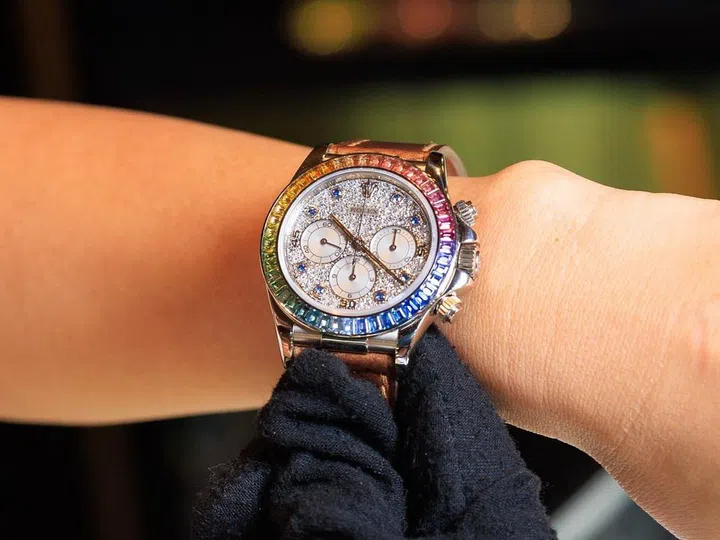
The first-ever Rolex "Rainbow" Daytona Ref. 16599 to be showcased at the Reloaded auction (Photo: Phillips)
Is it a good time for collectors to buy their dream watch now that prices are dipping?
I don’t know if it’s ever the best time, but yes, now is a much, much better time for buying certain models than in 2021, 2022 and 2023. In fact, we’ve been selling more watches at our auctions. More people are buying watches in 2024, because in the past two years, wait-lists were long and people didn’t even try. Now there is hope, so we have seen more people registering for our auctions.
As these prices dip, some people claim that brands have been intervening in the secondary market to boost their values.
You will be amazed to hear how seldom this happens. Phillips is selling maybe 1,500 watches a year. If I told you that brands bid on between 15 to 30 watches to add to their museums, that is one to two per cent of the lots. In my 30 years, I have rarely seen brands bidding on their own watches. It takes a lot to motivate brands to raise the paddle because they already have good museums, so this is an urban legend that I can factually dismiss.
What is your personal philosophy of value?
I will say some very shocking things: How do you assess watches, which unlike companies have no balance sheet and no earnings? A watch’s worth comes from supply and demand, and can go up and down.
Nobody needs a vintage collector’s watch, like how nobody needs a $20,000 handbag or to drink wine worth thousands of dollars. I take watches seriously, but maybe we shouldn’t take watches too seriously. However, hungry people need food, homeless people need shelter, and sick people need medicine.
If I ask you why you would pay a different price for coffee in a hotel than in a street cafe, you might realise that money in the industry is purely a means to give a notion of value to something. Do you know who the most powerful man in the room is? The most powerful man in the room can be determined by the smile of the woman next to him.
The greatest watch in the world is the one, when you pull back your sleeve, it makes you happy. And that’s priceless.