%22%3E%0A%3Cpath%20d%3D%22M412%20101.2H393.7C393.1%20101.2%20392.3%20100.9%20391.8%20100.5C377.3%2087.6004%20362.9%2074.6004%20348.4%2061.6004C344.8%2058.4004%20341.3%2055.2004%20337.7%2052.0004C337.1%2051.5004%20336.2%2051.1004%20335.5%2051.0004C334.2%2050.8004%20333%2051.0004%20331.5%2051.0004V101.1H316.7V0.100391H331.4V44.3004C331.9%2044.3004%20332.2%2044.4004%20332.5%2044.4004C334.9%2044.4004%20337.2%2044.5004%20339.6%2044.4004C340.4%2044.4004%20341.3%2044.0004%20341.8%2043.5004C351.6%2034.4004%20361.4%2025.2004%20371.1%2016.0004C376.5%2010.9004%20381.9%205.90039%20387.3%200.800391C387.9%200.200391%20388.5%200.000390626%20389.3%200.000390626H400.9C384.2%2015.8004%20367.8%2031.3004%20351.2%2047.0004C371.5%2065.0004%20391.8%2082.9004%20412.1%20100.9C412.1%20101%20412.1%20101.1%20412%20101.2ZM180.9%20101.2C184.1%2094.9004%20187.2%2088.9004%20190.3%2082.8004C198.3%2067.3004%20206.2%2051.8004%20214.2%2036.2004C220.3%2024.4004%20226.4%2012.5004%20232.4%200.700391C232.7%200.100391%20233%20-0.0996094%20233.7%20-0.0996094H248.1C248.8%20-0.0996094%20249.2%200.100391%20249.6%200.800391C256%2013.3004%20262.4%2025.7004%20268.8%2038.2004C279.3%2058.6004%20289.8%2079.0004%20300.3%2099.5004C300.5%20100%20300.8%20100.4%20301.1%20101.1C300.5%20101.1%20300.1%20101.2%20299.7%20101.2H286.5C285.6%20101.2%20285.1%20100.9%20284.7%20100.2C280.1%2091.3004%20275.4%2082.4004%20270.8%2073.4004C270.1%2072.1004%20269.3%2071.6004%20267.8%2071.6004H209.9C208.7%2071.6004%20208.1%2072.0004%20207.5%2073.1004C202.9%2082.1004%20198.2%2091.0004%20193.6%20100C193.1%20101%20192.6%20101.3%20191.5%20101.3C188.4%20101.2%20185.3%20101.3%20182.3%20101.3C182%20101.2%20181.6%20101.2%20180.9%20101.2ZM239.1%2011.4004C230%2029.2004%20221.1%2046.7004%20212.1%2064.3004H266.4C257.2%2046.7004%20248.2%2029.2004%20239.1%2011.4004ZM0%200.000390626H43.4C51.2%200.000390626%2058.7%201.20039%2065.7%204.80039C75.9%2010.0004%2078.9%2018.0004%2078.6%2027.4004C78.3%2034.3004%2076%2040.5004%2071.2%2045.5004C67.3%2049.6004%2062.4%2052.3004%2057.1%2054.3004C50.6%2056.7004%2043.9%2058.0004%2037.1%2058.6004C30.1%2059.2004%2023.1%2059.4004%2016.2%2059.7004C15.8%2059.7004%2015.3%2059.8004%2014.8%2059.8004V101.1H0.1C0%2067.4004%200%2033.8004%200%200.000390626ZM14.8%207.10039V52.2004C23.7%2052.4004%2032.6%2052.3004%2041.2%2050.1004C44.4%2049.3004%2047.6%2048.2004%2050.6%2046.7004C58.4%2043.0004%2062.3%2036.7004%2062.7%2028.0004C63%2019.9004%2059.5%2014.1004%2052.4%2010.5004C47.6%208.00039%2042.5%207.10039%2037.2%207.10039H14.8ZM95.9%20101.1V0.100391H167.3V7.20039H110.7V44.7004H158.1V51.9004H110.8V93.9004H171.1V101C146.1%20101.1%20121%20101.1%2095.9%20101.1Z%22%20fill%3D%22black%22%2F%3E%0A%3Cpath%20d%3D%22M35.0004%2025.7996H42.5004V20.6996H44.8004V33.1996H42.6004V27.5996H34.9004V33.2996H32.7004V20.7996H35.0004V25.7996ZM54.4004%2025.8996V27.2996H48.9004V31.6996H55.9004C55.9004%2032.1996%2056.0004%2032.5996%2056.0004%2033.0996H46.5004V20.5996H55.5004V21.8996H49.0004V25.7996C50.7004%2025.8996%2052.5004%2025.8996%2054.4004%2025.8996ZM25.9004%2033.0996H23.5004V21.9996H17.9004V20.6996H31.6004V22.0996H27.1004C26.2004%2022.0996%2025.9004%2022.2996%2025.9004%2023.1996C26.0004%2026.0996%2025.9004%2028.9996%2025.9004%2031.7996V33.0996Z%22%20fill%3D%22black%22%2F%3E%0A%3C%2Fg%3E%0A%3Cdefs%3E%0A%3CclipPath%20id%3D%22clip0_388_462%22%3E%0A%3Crect%20width%3D%22411%22%20height%3D%22101.2%22%20fill%3D%22white%22%2F%3E%0A%3C%2FclipPath%3E%0A%3C%2Fdefs%3E%0A%3C%2Fsvg%3E%0A)
How Bovet solved the world-time problem
A roller mechanism introduced in the Bovet Récital 28 Prowess 1 finally solves daylight saving time for world-time watches – and now also powers the slimmer Récital 30
By The Peak Singapore /

Share this article
Frequent fliers know the feeling. You land from a red-eye flight and suddenly juggle three clocks: home time, local time and the time at your final destination.
Then comes another complication – Daylight Saving Time (DST). In many countries, clocks shift forward in summer and back in winter; others ignore it entirely.
For decades, mechanical world-time watches have struggled with this reality. But not Bovet.
In 2024, after five years of research and development, the Swiss watchmaker unveiled the Bovet Récital 28 Prowess 1, the first mechanical watch designed to adapt to the world’s shifting daylight-saving schedules.
The breakthrough later earned the Mechanical Exception Prize at the 2024 edition of the Grand Prix d’Horlogerie de Genève, widely regarded as watchmaking’s highest honour.
A smarter world-time solution
For the Récital 28 Prowess 1, Bovet – available at Sincere Fine Watches and Sincere Haute Horlogerie – introduced an ingenious alternative to Swiss watchmaker Louis Cottier’s world-time mechanism from 1931.
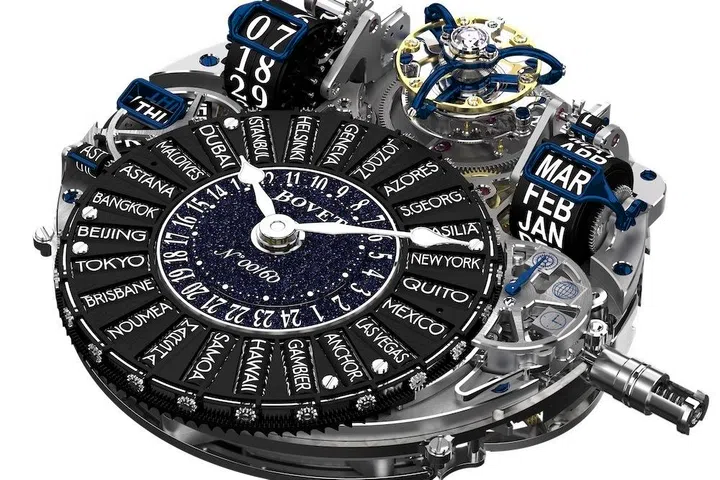
The Récital 28 Prowess 1 employs 26 tiny cylindrical rollers, each capable of rotating between three daylight saving time settings.
Instead of a fixed city ring, the watch employs 26 tiny cylindrical rollers, each capable of rotating between three daylight saving time settings – American Summer Time (AST), European and American Summer Time (EAS) and European Winter Time (EWT) – as well as Coordinated Universal Time (UTC), or what is known as standard time.
These settings reflect the different ways regions around the world apply DST.
It is a stroke of engineering ingenuity. At the push of a button, each roller rotates 90 degrees, aligning instantly with the correct seasonal time configuration across the globe.
As Pascal Raffy, Bovet’s owner and CEO, puts it: “I always think about useful and meaningful timepieces. On the wrist, we need to have the indication of time – and it’s more important than ever to have it linked to the world, which has become so small and accessible today.”
Daylight Saving Time, Explained
There are three main variations of Daylight Saving Time (DST): American Summer Time, European and American Summer Time and European Winter Time.
The US introduced the concept in 1918 but world-time watches have not managed to address it since then. Even Swiss watchmaker Louis Cottier’s world time system of 1931 – the standard 24-hour ring and a dial marked with key cities, used to this day – did not tackle the issue.
On watches using Cottier’s system, when you set your timepiece for DST, countries not observing it become off by one hour. Conversely, when you set your timepiece to standard time, DST countries become incorrect instead.
The everyday Récital 30
The Bovet Récital 28 Prowess 1 combines a world-time display, a perpetual calendar and a flying tourbillon regulator, all housed within Bovet’s signature “writing desk” case architecture.
The case slopes upwards so the dial tilts towards the wearer, much like a traditional writing desk designed for easier reading.
However, the Récital 28 is not exactly what you would call an everyday watch. Bovet therefore created something more practical: the Bovet Récital 30.
As with the Récital 28, each of the 26 rollers on the Récital 30 features four positions – UTC, AST, EAS and EWT – accounting for the different ways regions observe DST.
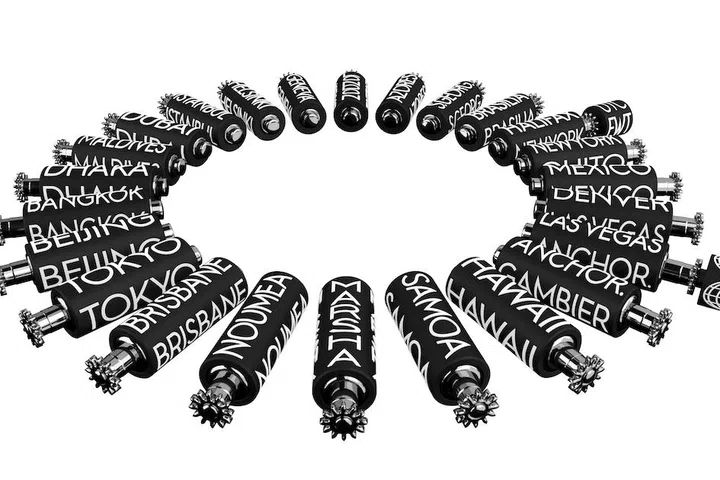
Bovet’s signature roller system allows the wearer to adjust to global daylight saving time changes at the push of a button.
The rollers are controlled by pushers on the side of the case. Press the pusher at 2 o’clock and each roller rotates 90 degrees, shifting all 24 time zones to the correct seasonal setting at once.
The pusher at 4 o’clock adjusts the central 24-hour world dial, advancing it by one hour with each press. The day-night indicator at the centre is linked to local time.
“I wanted to offer our collectors a wearable, very intuitive timepiece to guide them and remind them where they are from and where they are going,” Raffy says.

The Bovet Récital 30 pairs technical ingenuity with classic elegance, reflecting the maison’s dual identity as watchmaker and innovator.
Housed in Bovet’s Dimier case measuring 42mm in diameter, the watch is available in 18K red gold or grade 5 titanium, both with a sapphire exhibition caseback.
Production is not formally limited, though artisanal manufacturing naturally keeps numbers low. Only about 30 red gold pieces were produced in 2025.
Bovet: Fully integrated
In the Récital 28 and Récital 30, Bovet bridges 19th-century artistry with 21st-century engineering. Few brands operate convincingly across both domains – as a heritage maison and a modern engineering lab.
What’s more, Bovet is one of the few vertically integrated watchmakers, producing its own movements, dials, cases and even hairsprings – one of the most technically demanding components in horology.
That capability allows the brand to develop complex movements like those found in the Bovet Récital 28 Prowess 1 and Bovet Récital 30.
Rather than chase scale or hype, Bovet has spent the past two decades quietly rebuilding its watchmaking ecosystem. The approach appeals equally to modern collectors drawn to innovation, as it does to connoisseurs who value heritage.
The result is a new approach to world-time watchmaking – one that keeps accurate time wherever the journey leads.
Learn more about the Bovet watch collection. Or visit SHH (Sincere Haute Horlogerie) at The Shoppes at Marina Bay Sands #B2M-202, and Sincere Fine Watches, Takashimaya S.C. #02-12A/B/C.