%22%3E%0A%3Cpath%20d%3D%22M412%20101.2H393.7C393.1%20101.2%20392.3%20100.9%20391.8%20100.5C377.3%2087.6004%20362.9%2074.6004%20348.4%2061.6004C344.8%2058.4004%20341.3%2055.2004%20337.7%2052.0004C337.1%2051.5004%20336.2%2051.1004%20335.5%2051.0004C334.2%2050.8004%20333%2051.0004%20331.5%2051.0004V101.1H316.7V0.100391H331.4V44.3004C331.9%2044.3004%20332.2%2044.4004%20332.5%2044.4004C334.9%2044.4004%20337.2%2044.5004%20339.6%2044.4004C340.4%2044.4004%20341.3%2044.0004%20341.8%2043.5004C351.6%2034.4004%20361.4%2025.2004%20371.1%2016.0004C376.5%2010.9004%20381.9%205.90039%20387.3%200.800391C387.9%200.200391%20388.5%200.000390626%20389.3%200.000390626H400.9C384.2%2015.8004%20367.8%2031.3004%20351.2%2047.0004C371.5%2065.0004%20391.8%2082.9004%20412.1%20100.9C412.1%20101%20412.1%20101.1%20412%20101.2ZM180.9%20101.2C184.1%2094.9004%20187.2%2088.9004%20190.3%2082.8004C198.3%2067.3004%20206.2%2051.8004%20214.2%2036.2004C220.3%2024.4004%20226.4%2012.5004%20232.4%200.700391C232.7%200.100391%20233%20-0.0996094%20233.7%20-0.0996094H248.1C248.8%20-0.0996094%20249.2%200.100391%20249.6%200.800391C256%2013.3004%20262.4%2025.7004%20268.8%2038.2004C279.3%2058.6004%20289.8%2079.0004%20300.3%2099.5004C300.5%20100%20300.8%20100.4%20301.1%20101.1C300.5%20101.1%20300.1%20101.2%20299.7%20101.2H286.5C285.6%20101.2%20285.1%20100.9%20284.7%20100.2C280.1%2091.3004%20275.4%2082.4004%20270.8%2073.4004C270.1%2072.1004%20269.3%2071.6004%20267.8%2071.6004H209.9C208.7%2071.6004%20208.1%2072.0004%20207.5%2073.1004C202.9%2082.1004%20198.2%2091.0004%20193.6%20100C193.1%20101%20192.6%20101.3%20191.5%20101.3C188.4%20101.2%20185.3%20101.3%20182.3%20101.3C182%20101.2%20181.6%20101.2%20180.9%20101.2ZM239.1%2011.4004C230%2029.2004%20221.1%2046.7004%20212.1%2064.3004H266.4C257.2%2046.7004%20248.2%2029.2004%20239.1%2011.4004ZM0%200.000390626H43.4C51.2%200.000390626%2058.7%201.20039%2065.7%204.80039C75.9%2010.0004%2078.9%2018.0004%2078.6%2027.4004C78.3%2034.3004%2076%2040.5004%2071.2%2045.5004C67.3%2049.6004%2062.4%2052.3004%2057.1%2054.3004C50.6%2056.7004%2043.9%2058.0004%2037.1%2058.6004C30.1%2059.2004%2023.1%2059.4004%2016.2%2059.7004C15.8%2059.7004%2015.3%2059.8004%2014.8%2059.8004V101.1H0.1C0%2067.4004%200%2033.8004%200%200.000390626ZM14.8%207.10039V52.2004C23.7%2052.4004%2032.6%2052.3004%2041.2%2050.1004C44.4%2049.3004%2047.6%2048.2004%2050.6%2046.7004C58.4%2043.0004%2062.3%2036.7004%2062.7%2028.0004C63%2019.9004%2059.5%2014.1004%2052.4%2010.5004C47.6%208.00039%2042.5%207.10039%2037.2%207.10039H14.8ZM95.9%20101.1V0.100391H167.3V7.20039H110.7V44.7004H158.1V51.9004H110.8V93.9004H171.1V101C146.1%20101.1%20121%20101.1%2095.9%20101.1Z%22%20fill%3D%22black%22%2F%3E%0A%3Cpath%20d%3D%22M35.0004%2025.7996H42.5004V20.6996H44.8004V33.1996H42.6004V27.5996H34.9004V33.2996H32.7004V20.7996H35.0004V25.7996ZM54.4004%2025.8996V27.2996H48.9004V31.6996H55.9004C55.9004%2032.1996%2056.0004%2032.5996%2056.0004%2033.0996H46.5004V20.5996H55.5004V21.8996H49.0004V25.7996C50.7004%2025.8996%2052.5004%2025.8996%2054.4004%2025.8996ZM25.9004%2033.0996H23.5004V21.9996H17.9004V20.6996H31.6004V22.0996H27.1004C26.2004%2022.0996%2025.9004%2022.2996%2025.9004%2023.1996C26.0004%2026.0996%2025.9004%2028.9996%2025.9004%2031.7996V33.0996Z%22%20fill%3D%22black%22%2F%3E%0A%3C%2Fg%3E%0A%3Cdefs%3E%0A%3CclipPath%20id%3D%22clip0_388_462%22%3E%0A%3Crect%20width%3D%22411%22%20height%3D%22101.2%22%20fill%3D%22white%22%2F%3E%0A%3C%2FclipPath%3E%0A%3C%2Fdefs%3E%0A%3C%2Fsvg%3E%0A)
Hokusai’s The Great Wave sold for three times its estimate at Sotheby’s as its cultural significance fuels collector demand
The print sold for a record high of S$3.61 million, highlighting how cultural recognition, object scarcity, and historical significance can drive extraordinary demand in the art market.
By Jamie Wong JM /
Share this article
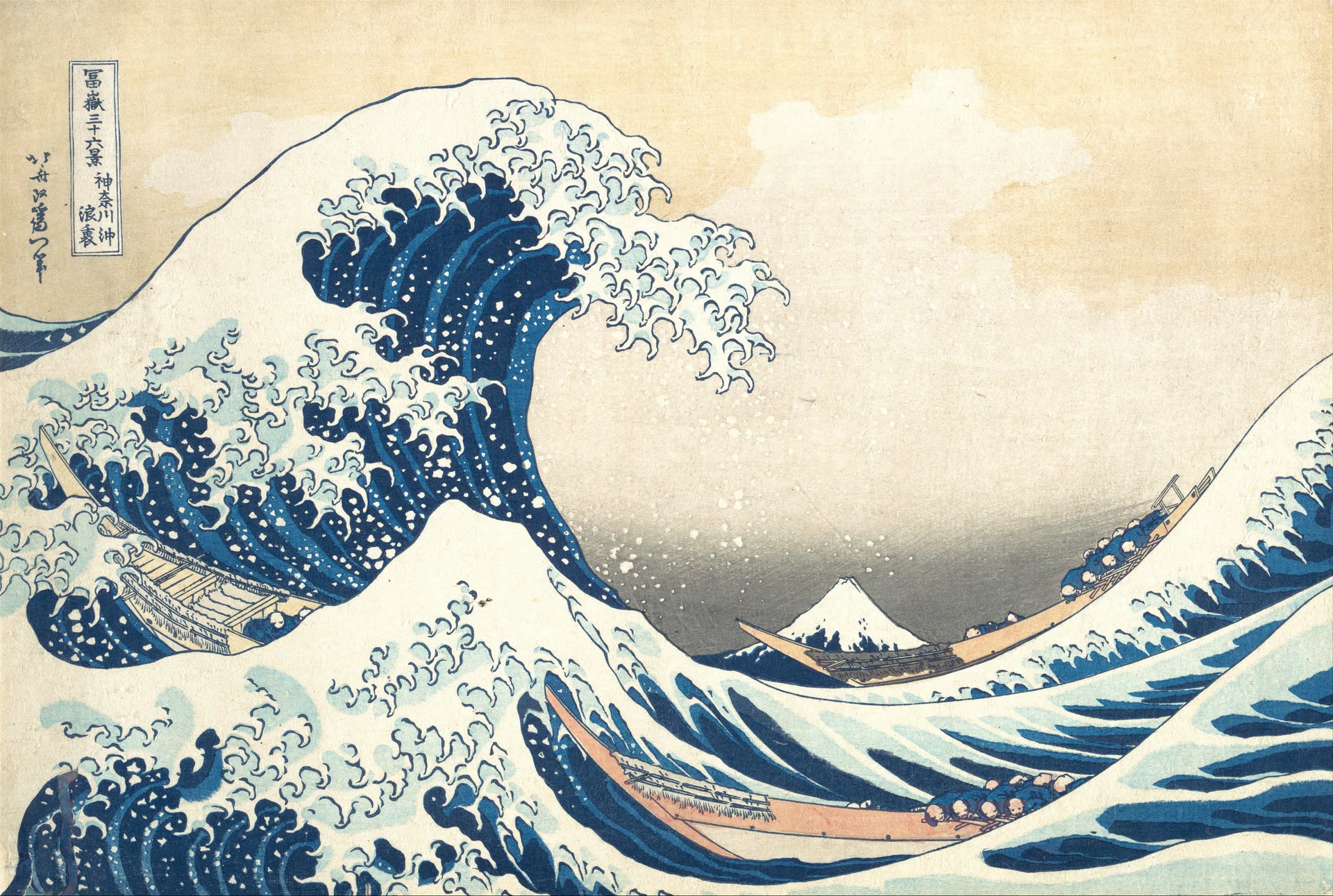
Whether or not you know the name, you’ve almost certainly seen it. The wave crashing over tiny boats has been immortalised on Uniqlo T-shirts across Singapore, inspired Impressionist painters like Monet and van Gogh, appeared on Japan’s new banknote, and even exists as an emoji. This is Katsushika Hokusai’s Under the Wave Off Kanagawa, colloquially known as The Great Wave. Recently, an original woodblock print of this iconic artwork sold at Sotheby’s Auction House in Hong Kong for a record HK$21.72 million (approximately S$3.61 million), three times its initial estimate.
Created between 1830-32, The Great Wave became a defining image of the Japanese Ukiyo-e movement. As a woodblock print, it was produced by carving the image into a wooden block, which could then be repeatedly inked and pressed onto paper. Each print is technically unique due to subtle variations in inking, and as a result of this replicable nature, The Great Wave has a number of versions existing around the world.
This may have contributed to The Great Wave’s enduring presence in people’s minds. This ubiquitous familiarity likely amplified its demand in the art market, allowing it to sell for higher than its initial estimate. For context, a full set of Hokusai’s series sold for US$3.5 million (approximately S$4.51 million) at Christie’s New York last year, while another version of The Great Wave sold in 2023 for US$2.76 million (approximately S$3.56 million).
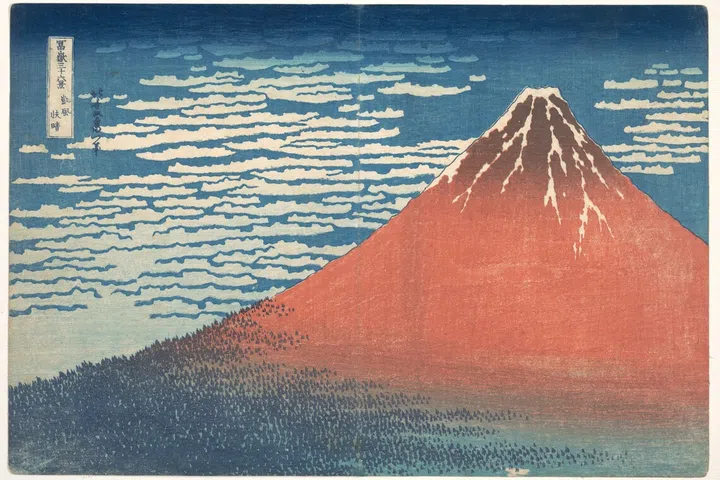
It is also part of Hokusai’s Thirty-six Views of Mount Fuji series, which also includes South Wind, Clear Sky (or Red Fuji).
This particular print was part of a larger sale of 125 Japanese artworks from the Okada Museum, curated by its founder, Kazu Okada. The collection attracted intense bidding and sold in its entirety for US$88 million (approximately S$113 million). While impressive, the dispersal of these works shifts cultural stewardship from a single institution to private collectors, highlighting the trade-offs between financial return and public access.
The works of renowned artists like Hokusai often transcend the singular object, speaking instead to broader cultural moments. The Great Wave is particularly notable for embedding itself so deeply in the collective consciousness that, even as multiple versions exist, individual prints still command prices far above their initial estimates, showcasing that its value resides in an intangible sphere of shared meaning as much as it does in the very tangible art market.