%22%3E%0A%3Cpath%20d%3D%22M412%20101.2H393.7C393.1%20101.2%20392.3%20100.9%20391.8%20100.5C377.3%2087.6004%20362.9%2074.6004%20348.4%2061.6004C344.8%2058.4004%20341.3%2055.2004%20337.7%2052.0004C337.1%2051.5004%20336.2%2051.1004%20335.5%2051.0004C334.2%2050.8004%20333%2051.0004%20331.5%2051.0004V101.1H316.7V0.100391H331.4V44.3004C331.9%2044.3004%20332.2%2044.4004%20332.5%2044.4004C334.9%2044.4004%20337.2%2044.5004%20339.6%2044.4004C340.4%2044.4004%20341.3%2044.0004%20341.8%2043.5004C351.6%2034.4004%20361.4%2025.2004%20371.1%2016.0004C376.5%2010.9004%20381.9%205.90039%20387.3%200.800391C387.9%200.200391%20388.5%200.000390626%20389.3%200.000390626H400.9C384.2%2015.8004%20367.8%2031.3004%20351.2%2047.0004C371.5%2065.0004%20391.8%2082.9004%20412.1%20100.9C412.1%20101%20412.1%20101.1%20412%20101.2ZM180.9%20101.2C184.1%2094.9004%20187.2%2088.9004%20190.3%2082.8004C198.3%2067.3004%20206.2%2051.8004%20214.2%2036.2004C220.3%2024.4004%20226.4%2012.5004%20232.4%200.700391C232.7%200.100391%20233%20-0.0996094%20233.7%20-0.0996094H248.1C248.8%20-0.0996094%20249.2%200.100391%20249.6%200.800391C256%2013.3004%20262.4%2025.7004%20268.8%2038.2004C279.3%2058.6004%20289.8%2079.0004%20300.3%2099.5004C300.5%20100%20300.8%20100.4%20301.1%20101.1C300.5%20101.1%20300.1%20101.2%20299.7%20101.2H286.5C285.6%20101.2%20285.1%20100.9%20284.7%20100.2C280.1%2091.3004%20275.4%2082.4004%20270.8%2073.4004C270.1%2072.1004%20269.3%2071.6004%20267.8%2071.6004H209.9C208.7%2071.6004%20208.1%2072.0004%20207.5%2073.1004C202.9%2082.1004%20198.2%2091.0004%20193.6%20100C193.1%20101%20192.6%20101.3%20191.5%20101.3C188.4%20101.2%20185.3%20101.3%20182.3%20101.3C182%20101.2%20181.6%20101.2%20180.9%20101.2ZM239.1%2011.4004C230%2029.2004%20221.1%2046.7004%20212.1%2064.3004H266.4C257.2%2046.7004%20248.2%2029.2004%20239.1%2011.4004ZM0%200.000390626H43.4C51.2%200.000390626%2058.7%201.20039%2065.7%204.80039C75.9%2010.0004%2078.9%2018.0004%2078.6%2027.4004C78.3%2034.3004%2076%2040.5004%2071.2%2045.5004C67.3%2049.6004%2062.4%2052.3004%2057.1%2054.3004C50.6%2056.7004%2043.9%2058.0004%2037.1%2058.6004C30.1%2059.2004%2023.1%2059.4004%2016.2%2059.7004C15.8%2059.7004%2015.3%2059.8004%2014.8%2059.8004V101.1H0.1C0%2067.4004%200%2033.8004%200%200.000390626ZM14.8%207.10039V52.2004C23.7%2052.4004%2032.6%2052.3004%2041.2%2050.1004C44.4%2049.3004%2047.6%2048.2004%2050.6%2046.7004C58.4%2043.0004%2062.3%2036.7004%2062.7%2028.0004C63%2019.9004%2059.5%2014.1004%2052.4%2010.5004C47.6%208.00039%2042.5%207.10039%2037.2%207.10039H14.8ZM95.9%20101.1V0.100391H167.3V7.20039H110.7V44.7004H158.1V51.9004H110.8V93.9004H171.1V101C146.1%20101.1%20121%20101.1%2095.9%20101.1Z%22%20fill%3D%22black%22%2F%3E%0A%3Cpath%20d%3D%22M35.0004%2025.7996H42.5004V20.6996H44.8004V33.1996H42.6004V27.5996H34.9004V33.2996H32.7004V20.7996H35.0004V25.7996ZM54.4004%2025.8996V27.2996H48.9004V31.6996H55.9004C55.9004%2032.1996%2056.0004%2032.5996%2056.0004%2033.0996H46.5004V20.5996H55.5004V21.8996H49.0004V25.7996C50.7004%2025.8996%2052.5004%2025.8996%2054.4004%2025.8996ZM25.9004%2033.0996H23.5004V21.9996H17.9004V20.6996H31.6004V22.0996H27.1004C26.2004%2022.0996%2025.9004%2022.2996%2025.9004%2023.1996C26.0004%2026.0996%2025.9004%2028.9996%2025.9004%2031.7996V33.0996Z%22%20fill%3D%22black%22%2F%3E%0A%3C%2Fg%3E%0A%3Cdefs%3E%0A%3CclipPath%20id%3D%22clip0_388_462%22%3E%0A%3Crect%20width%3D%22411%22%20height%3D%22101.2%22%20fill%3D%22white%22%2F%3E%0A%3C%2FclipPath%3E%0A%3C%2Fdefs%3E%0A%3C%2Fsvg%3E%0A)
Up close with Hong Kong restaurateur Alan Lo’s transnational Asian art collection
From childhood auction previews to shaping art communities across Hong Kong and Singapore, Lo, who is also Executive Vice Chairman of GP Energy Tech, reveals how architecture, hospitality, and a passion for contemporary Asian art converge in his ever-evolving collection.
By Aaron De Silva /
Share this article
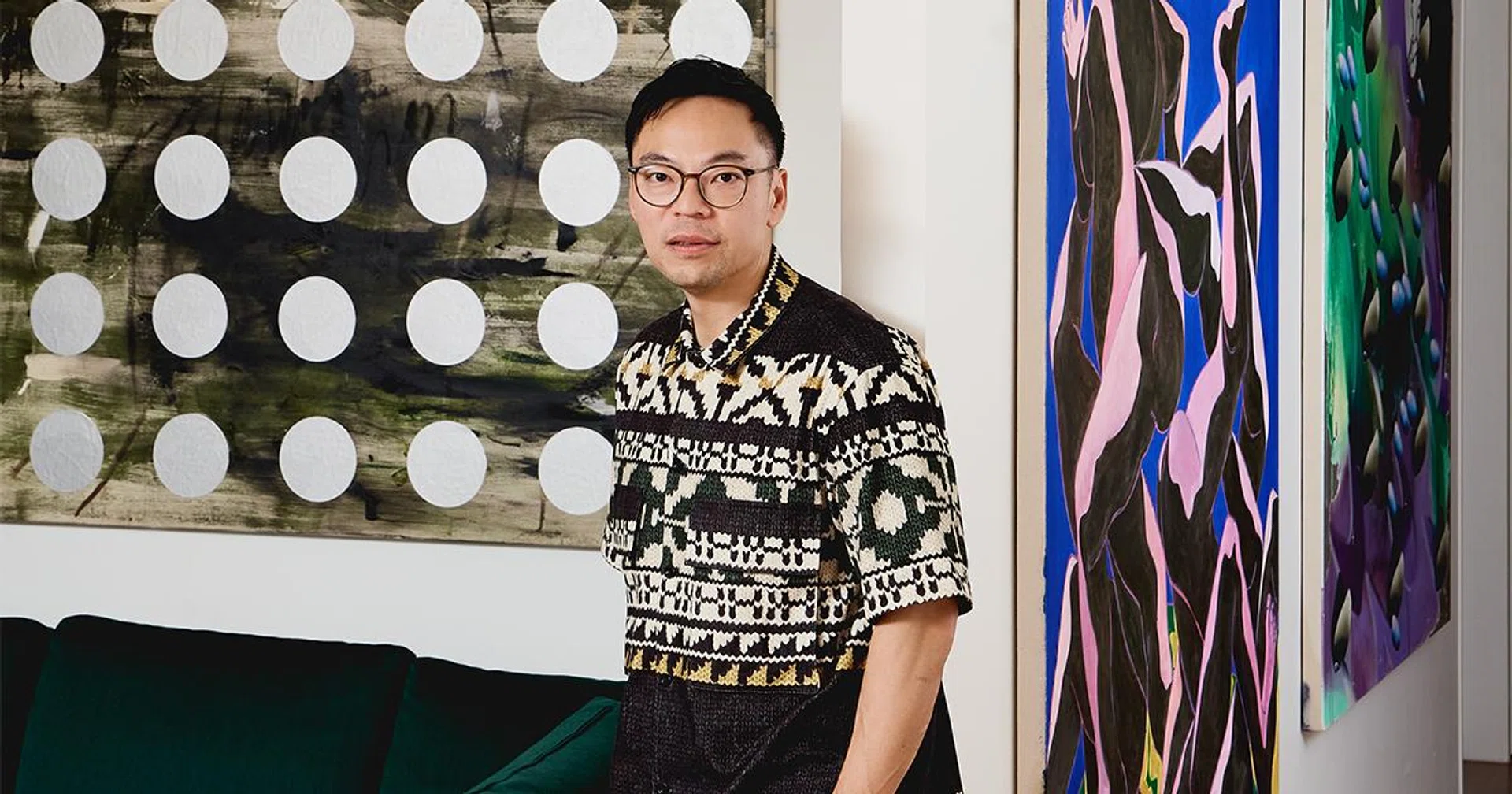
The first thing that grabs your attention as you set foot into Alan Lo’s home is the presence of two large-format contemporary artworks that dominate the foyer. The second thing you notice is the warmth with which he receives you.
“Hello! Come in. And please help yourself to some pastries,” he says, beckoning to the mouthwatering spread of baked goods laid out on the dining table. It’s patently obvious that hospitality courses run through Lo’s veins. But of course: Among his many roles, he’s the senior advisor to JIA Group, the Hong Kong-based F&B operator behind 10 award-winning restaurants and bars.
As you scan the rest of Lo’s River Valley apartment, your eyes come to rest on a series of small oil on canvas works by Chinese-American artist Homer Shew mounted in the dry kitchen. They are portraits of the artist’s friends, Lo explains. It’s as if, by extension, they are also Lo’s friends, gathering around the heart of the home.
All the artworks, Lo continues, are a “new hang” — the apartment, which he shares with his wife and the founder of JIA, Yenn Wong and their three sons — was recently refurbished. “It’s a work in progress,” he says. And, like a typical collector, “I’m sure we can find space for a couple more (artworks)!”
His collection spans between “150 to 200” works, split roughly equally between Singapore (home, office), Hong Kong (home, office, restaurants), and the US (a storage facility in Delaware). About “two dozen” live in his Singapore home.
Forging cultural connections
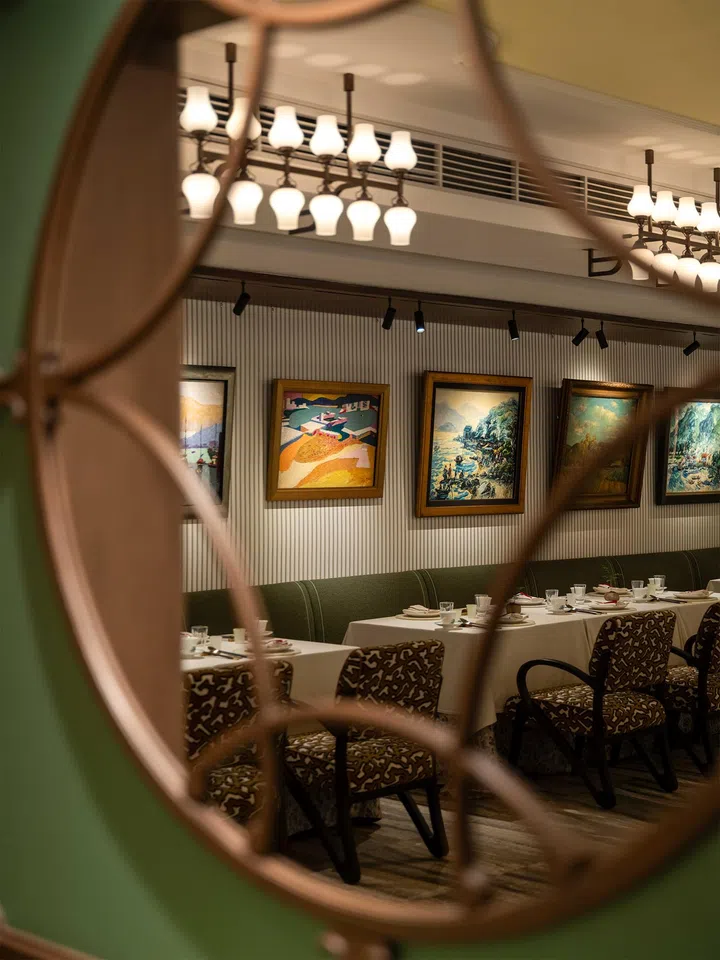
Moving fluidly between Hong Kong and Singapore, Lo has become a cultural connector — a tastemaker who blends food, art, and design into seamless, sensory experiences. His Singapore home is not the only one to be recently refurbished; the one-Michelin-starred Duddell’s in Hong Kong also underwent a remodel by Andre Fu and reopened in August.
Duddell’s rewrote Hong Kong’s dining script by pairing refined Cantonese cuisine with a gallery-calibre art programme, influencing other restaurateurs to reimagine their dining venues as cultural spaces, not just commercial ones.
“Duddell’s was the project where Yenn and I started working together as a couple,” says Lo, reminiscing (the pair wed in 2011; Duddell’s opened in 2013). “At the time, we were allowed to take up two floors above what was then the Shanghai Tang flagship. It was also when the entire art scene in Hong Kong was exploding.”
In 2013, Art Basel’s parent company, MCH Group, acquired the Hong Kong International Art Fair (Art HK) and subsequently rebranded it as Art Basel Hong Kong. “We felt at the time that Hong Kong needed a space where collectors or people who are professionally involved in the art world… could congregate.”
Art as an integral part of life
Since art is Lo’s passion, the F&B concept always takes the lead in conceiving new restaurants. When evaluating any layout, he naturally considers whether the space offers walls suitable for hanging artworks.
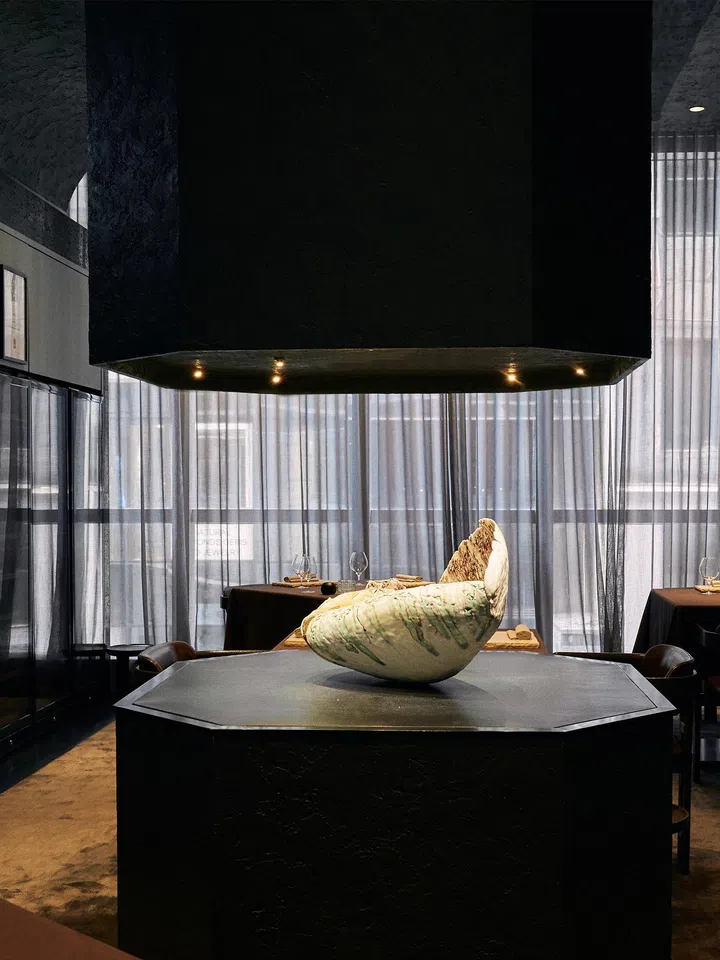
Naturally, there are exceptions. In the one-Michelin-starred Ando, Lo and interior designer Bobby Cheng decided early on to use architecture to create a focal point for an artwork. A ceramic sculpture by a Japanese artist now takes centre stage, with a dramatic, funnel-like column above drawing attention to it.
For Lo, the approach is typically effortless and organic. He doesn’t set out to promote the art; it’s simply woven into the space, as naturally as the food. It’s never a “come look at my art” statement — it just exists as part of the experience.
It’s the journey, not the destination
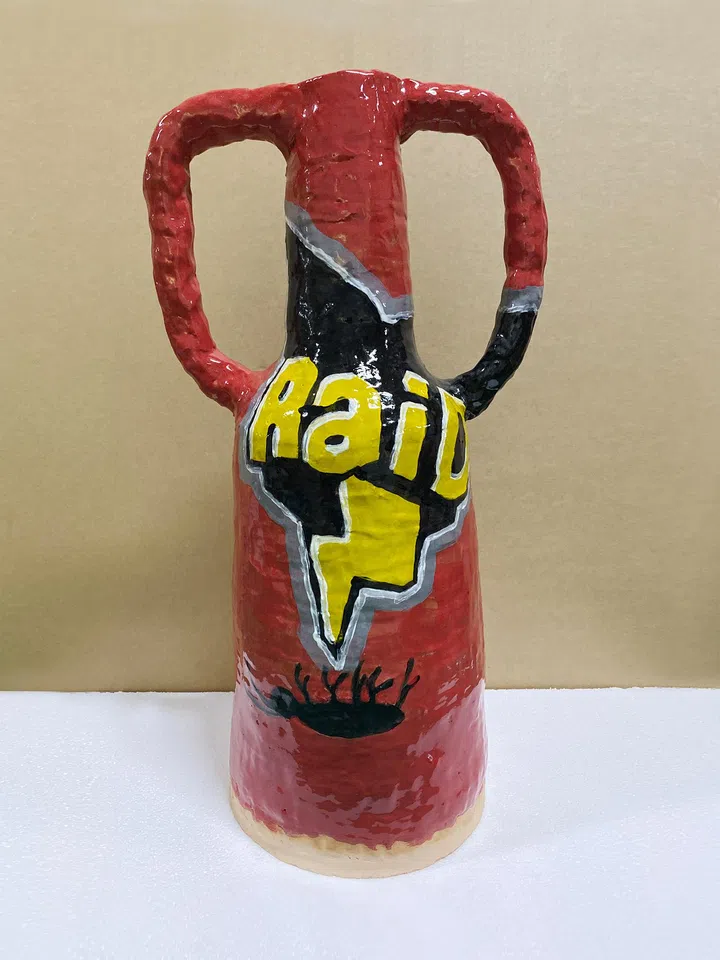
Trained in architecture at Princeton, Lo developed an early sensitivity to form, space, and visual rhythm — a foundation that naturally evolved into his eye for contemporary art. But in a way, collecting was inevitable: His father was a serious collector of 20th-century Chinese ink on paper.
At any given point, there were around a thousand works in the collection,” he recalls. “I grew up… not doing play dates with my friends (but) going to auction previews with my parents.”
His own collecting journey began in 2008, first through the auction market. His earliest buy was “an impulse purchase” of Chinese contemporary art — one he now laughs about: “I can’t say I’m very proud of it… but along the journey, you do make mistakes. That’s how you learn.”
The turning point came that same year with the launch of Art HK, the Hong Kong International Art Fair. “It brought in all the major dealers, all the major galleries… suddenly you’re exposed to global contemporary art.”
Since then, overseas trips have become art-led. Venice, for example, meant being at the Biennale during its opening week, meeting curators, museum directors, and fellow collectors. “Through these conversations, you learn so much… it opens up the horizon,” he reflects.
Third-culture leanings
His interests eventually coalesced around transnational Asian artists like Danh Vo, the Vietnamese conceptual artist raised in Denmark. “He’s one of the greatest conceptual artists of our generation… having done solo shows at the Guggenheim, and representing Denmark in Venice.” Lo is currently mounting a show with Vo at Duddell’s, using works on loan from local collectors — “a celebration of the community,” he notes.
While his father’s collecting was laser-focused, Lo admits his own was initially fluid. Only in the last four or five years has he become more strategic, with the emphasis on transnational Asian artists. He currently averages eight to ten acquisitions a year.
His shift toward transnational artists is both personal and aesthetic. “Being educated and having lived abroad as an Asian, it resonates with my experience. I’m seeing a new crop of artists making exceptional work, supported by top galleries and institutions worldwide… I felt compelled to be part of it.”
Funding the future
The pandemic proved to be a turning point. “There was a moment in early 2022 when things were in pretty bad shape in Hong Kong. So, Yenn, I, and the kids all came over to Singapore. We stayed for a few months, and obviously I was… bored.”
He began connecting with local figureheads, including Emi Eu, executive director of STPI. Concurrently, the idea of a physical space began to take shape. “I started toying with the idea of having a small space… that was the beginning of Kim Association, entirely supported by the Yenn and Alan Lo Foundation.”
The Foundation was established in 2023 to nurture transnational Asian contemporary art and also backs initiatives such as the SAM S.E.A. Focus Art Fund. Started by Eu, the Fund acquires works by young and emerging Southeast Asian artists for the Singapore Art Museum’s collection.
Although the Foundation’s three-year commitment (2023 to 2025) has concluded, Lo continues to personally support SAM by regularly donating works, demonstrating his dedication to Singapore’s art ecosystem.
Three treasured trophies
From a young transnational painter to a Korean master and a late LA-based conceptualist, these artists and their artworks are the ones Alan Lo returns to most often.
Vivien Zhang, Acid Alluvium, Cosmic Dunes, 2020, oil and spray paint on canvas, 170x150cm
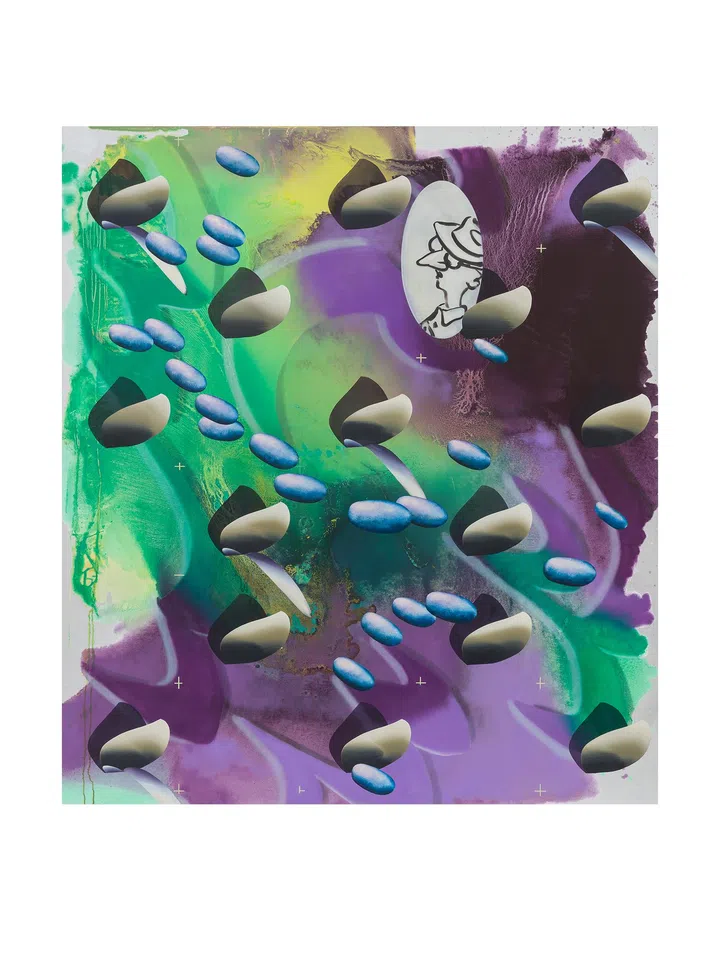
According to Lo, London-based artist Vivien Zhang is “a great example of a transnational Asian artist who’s been getting a lot of attention lately”.
Represented by Pilar Corrias and her eponymous gallery, the work was donated to Hong Kong’s Para Site charity auction, and snapped up by Lo; a moment made more meaningful as he now serves as the organisation’s Board Chair.
Kim Yong-Ik, Untitled, 1992, mixed media on canvas, 181.5x227cm
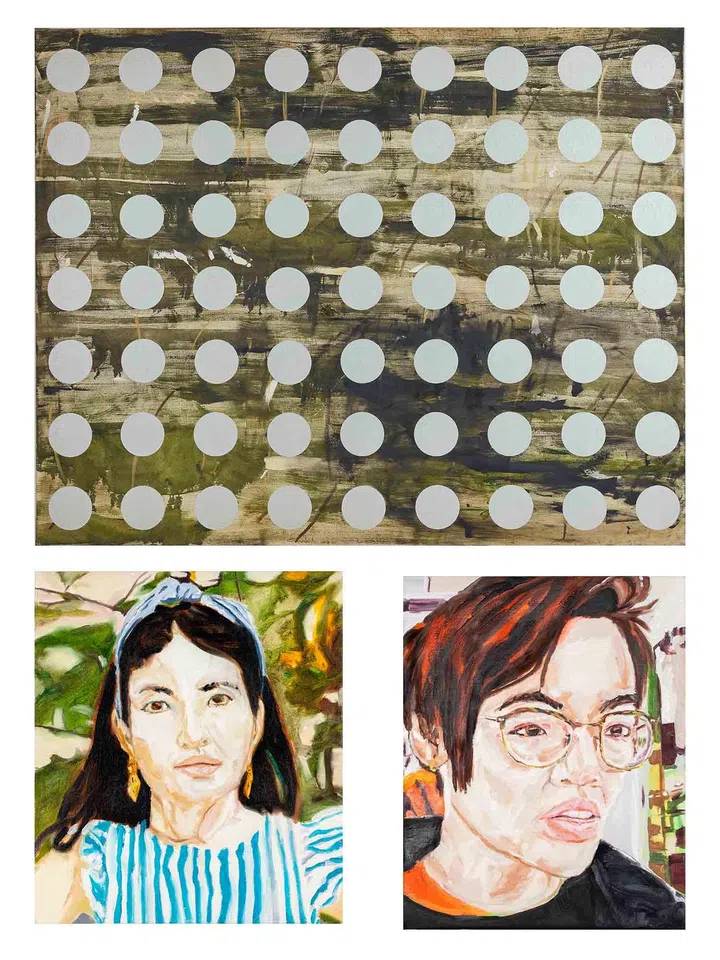
Another of Lo’s favourites is a large-format piece by well-respected Korean artist Kim Yong-Ik, known for his meditative polka-dot abstractions. “Even with all the dots, it’s so calm,” Lo says. Up close, the textured surface reveals an unexpected depth that keeps him returning to it. “I could stare at it for hours.”
The piece once hung in Ando but was brought to Singapore during the recent renovation of his home.
Silke Otto-Knapp, Flamingo III, 2000, watercolour on canvas, 50x50cm
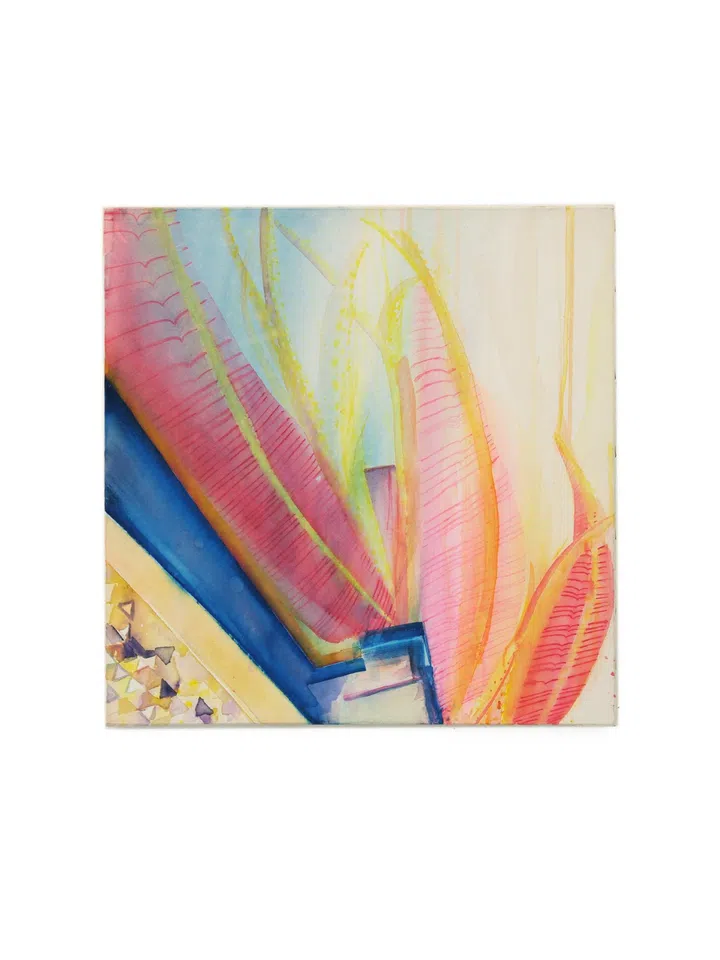
Known for her later monochromes, German artist Silke Otto-Knapp’s (1970-2022), Flamingo III is striking for its use of rich colours. It caught Lo’s eye from a tucked-away corner of the Taka Ishii Gallery in Tokyo.
“I didn’t even know exactly what I was looking at, but something drew me in,” he recalls. Trained as an architect, Lo was drawn to its interplay of geometry and organic softness — bright, joyous, yet tinged with an intensity bordering on tension.