%22%3E%0A%3Cpath%20d%3D%22M412%20101.2H393.7C393.1%20101.2%20392.3%20100.9%20391.8%20100.5C377.3%2087.6004%20362.9%2074.6004%20348.4%2061.6004C344.8%2058.4004%20341.3%2055.2004%20337.7%2052.0004C337.1%2051.5004%20336.2%2051.1004%20335.5%2051.0004C334.2%2050.8004%20333%2051.0004%20331.5%2051.0004V101.1H316.7V0.100391H331.4V44.3004C331.9%2044.3004%20332.2%2044.4004%20332.5%2044.4004C334.9%2044.4004%20337.2%2044.5004%20339.6%2044.4004C340.4%2044.4004%20341.3%2044.0004%20341.8%2043.5004C351.6%2034.4004%20361.4%2025.2004%20371.1%2016.0004C376.5%2010.9004%20381.9%205.90039%20387.3%200.800391C387.9%200.200391%20388.5%200.000390626%20389.3%200.000390626H400.9C384.2%2015.8004%20367.8%2031.3004%20351.2%2047.0004C371.5%2065.0004%20391.8%2082.9004%20412.1%20100.9C412.1%20101%20412.1%20101.1%20412%20101.2ZM180.9%20101.2C184.1%2094.9004%20187.2%2088.9004%20190.3%2082.8004C198.3%2067.3004%20206.2%2051.8004%20214.2%2036.2004C220.3%2024.4004%20226.4%2012.5004%20232.4%200.700391C232.7%200.100391%20233%20-0.0996094%20233.7%20-0.0996094H248.1C248.8%20-0.0996094%20249.2%200.100391%20249.6%200.800391C256%2013.3004%20262.4%2025.7004%20268.8%2038.2004C279.3%2058.6004%20289.8%2079.0004%20300.3%2099.5004C300.5%20100%20300.8%20100.4%20301.1%20101.1C300.5%20101.1%20300.1%20101.2%20299.7%20101.2H286.5C285.6%20101.2%20285.1%20100.9%20284.7%20100.2C280.1%2091.3004%20275.4%2082.4004%20270.8%2073.4004C270.1%2072.1004%20269.3%2071.6004%20267.8%2071.6004H209.9C208.7%2071.6004%20208.1%2072.0004%20207.5%2073.1004C202.9%2082.1004%20198.2%2091.0004%20193.6%20100C193.1%20101%20192.6%20101.3%20191.5%20101.3C188.4%20101.2%20185.3%20101.3%20182.3%20101.3C182%20101.2%20181.6%20101.2%20180.9%20101.2ZM239.1%2011.4004C230%2029.2004%20221.1%2046.7004%20212.1%2064.3004H266.4C257.2%2046.7004%20248.2%2029.2004%20239.1%2011.4004ZM0%200.000390626H43.4C51.2%200.000390626%2058.7%201.20039%2065.7%204.80039C75.9%2010.0004%2078.9%2018.0004%2078.6%2027.4004C78.3%2034.3004%2076%2040.5004%2071.2%2045.5004C67.3%2049.6004%2062.4%2052.3004%2057.1%2054.3004C50.6%2056.7004%2043.9%2058.0004%2037.1%2058.6004C30.1%2059.2004%2023.1%2059.4004%2016.2%2059.7004C15.8%2059.7004%2015.3%2059.8004%2014.8%2059.8004V101.1H0.1C0%2067.4004%200%2033.8004%200%200.000390626ZM14.8%207.10039V52.2004C23.7%2052.4004%2032.6%2052.3004%2041.2%2050.1004C44.4%2049.3004%2047.6%2048.2004%2050.6%2046.7004C58.4%2043.0004%2062.3%2036.7004%2062.7%2028.0004C63%2019.9004%2059.5%2014.1004%2052.4%2010.5004C47.6%208.00039%2042.5%207.10039%2037.2%207.10039H14.8ZM95.9%20101.1V0.100391H167.3V7.20039H110.7V44.7004H158.1V51.9004H110.8V93.9004H171.1V101C146.1%20101.1%20121%20101.1%2095.9%20101.1Z%22%20fill%3D%22black%22%2F%3E%0A%3Cpath%20d%3D%22M35.0004%2025.7996H42.5004V20.6996H44.8004V33.1996H42.6004V27.5996H34.9004V33.2996H32.7004V20.7996H35.0004V25.7996ZM54.4004%2025.8996V27.2996H48.9004V31.6996H55.9004C55.9004%2032.1996%2056.0004%2032.5996%2056.0004%2033.0996H46.5004V20.5996H55.5004V21.8996H49.0004V25.7996C50.7004%2025.8996%2052.5004%2025.8996%2054.4004%2025.8996ZM25.9004%2033.0996H23.5004V21.9996H17.9004V20.6996H31.6004V22.0996H27.1004C26.2004%2022.0996%2025.9004%2022.2996%2025.9004%2023.1996C26.0004%2026.0996%2025.9004%2028.9996%2025.9004%2031.7996V33.0996Z%22%20fill%3D%22black%22%2F%3E%0A%3C%2Fg%3E%0A%3Cdefs%3E%0A%3CclipPath%20id%3D%22clip0_388_462%22%3E%0A%3Crect%20width%3D%22411%22%20height%3D%22101.2%22%20fill%3D%22white%22%2F%3E%0A%3C%2FclipPath%3E%0A%3C%2Fdefs%3E%0A%3C%2Fsvg%3E%0A)
Are Singapore’s best dinners now happening at cocktail bars?
More cocktail bars in Singapore are upping their food game, offering well-thought-out menus and seriously good nosh to accompany a freewheeling night out.
By Dawson Tan /
Share this article
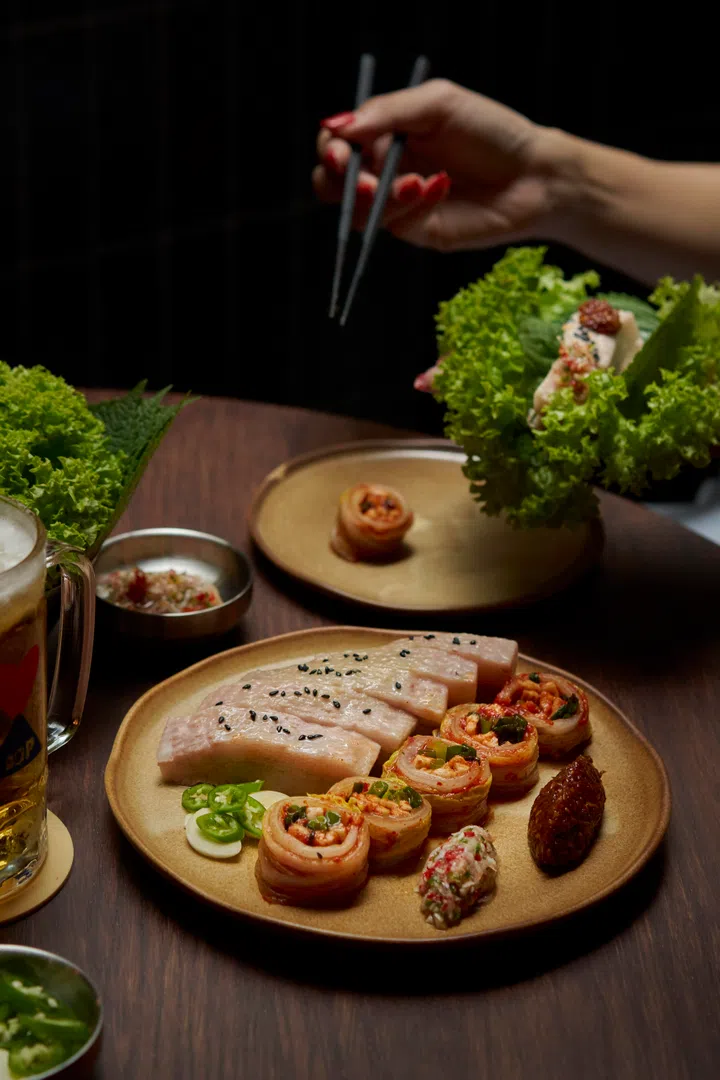
When Jigger & Pony Group, which runs some of Singapore’s most awarded cocktail bars, opened BOP, a Korean cocktail dining bar in February, it did something that would have been improbable five years ago.
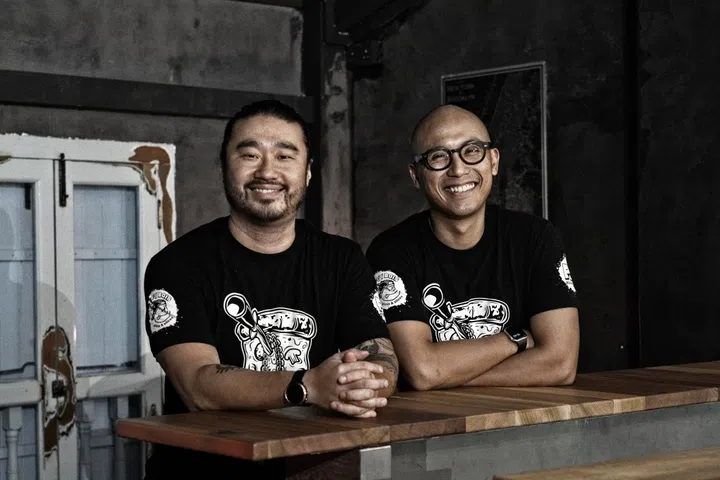
The group brought in chef Jason Oh, of Netflix cooking competition Culinary Class Wars fame, to build the bar’s food programme alongside Jigger & Pony Group executive chef David Tang.
“From the very beginning, BOP saw cocktails and food being developed together,” says Indra Kantono, founder and managing director of Jigger & Pony Group. Oh, and BOP’s head bartender, Uno Jang, who has known each other for over a decade, shares a deep affinity for Korean culture and values the inseparable link between drinking and eating.
“What we want to show guests is that the kitchen and the bar can speak the same language,” Kantono says.
“Jason brings an elevated culinary perspective that complements Uno’s approach to cocktails — both are very focused on flavour, clarity, and creating something that feels heartfelt rather than overly complicated.”
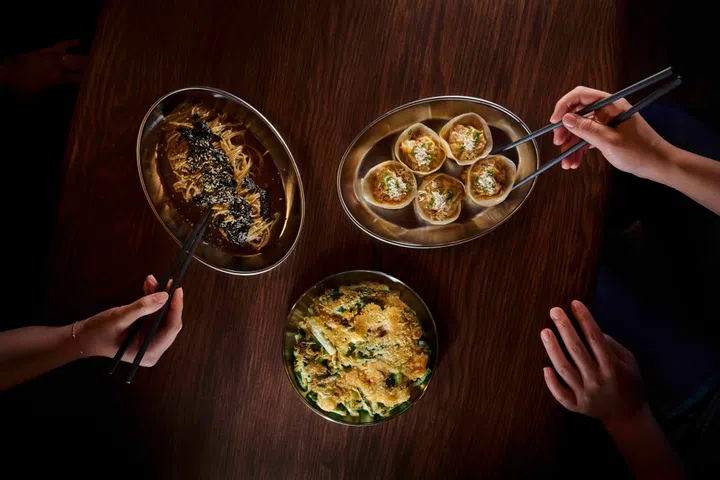
Dishes include spicy cucumber and squid muchim, tuna gimbap, and the signature Korean crispy fried chicken.
Over the past three years, a growing number of Singapore’s cocktail bars have been asserting that bar food is no longer a footnote to the drinks list. The best meals in this city right now are not all happening in restaurants — you could have them at bars too, alongside cocktails.
Night out with food
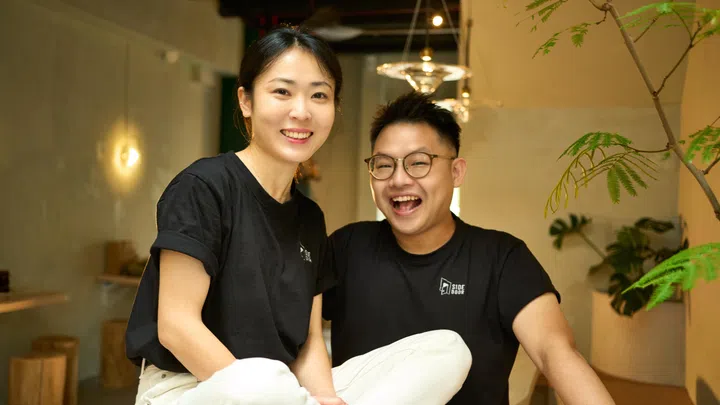
Bars are deepening their food programmes due to commercial and creative reasons. At the cosy bar run by husband-and-wife duo chef Tryson Quek and bartender Bannie Kang, food was never an afterthought. “The idea was to create a place where people could come for drinks, but stay because the food made them comfortable,” says Quek.
“Almost like how we hosted guests in our private home dining venture.”
Its menu says as much: fresh-from-market fried chicken, hearty steaks, Thai milk cream Swiss rolls — dishes that are, as Quek puts it plainly, “satisfying enough to stand on their own, and not just bar snacks”.
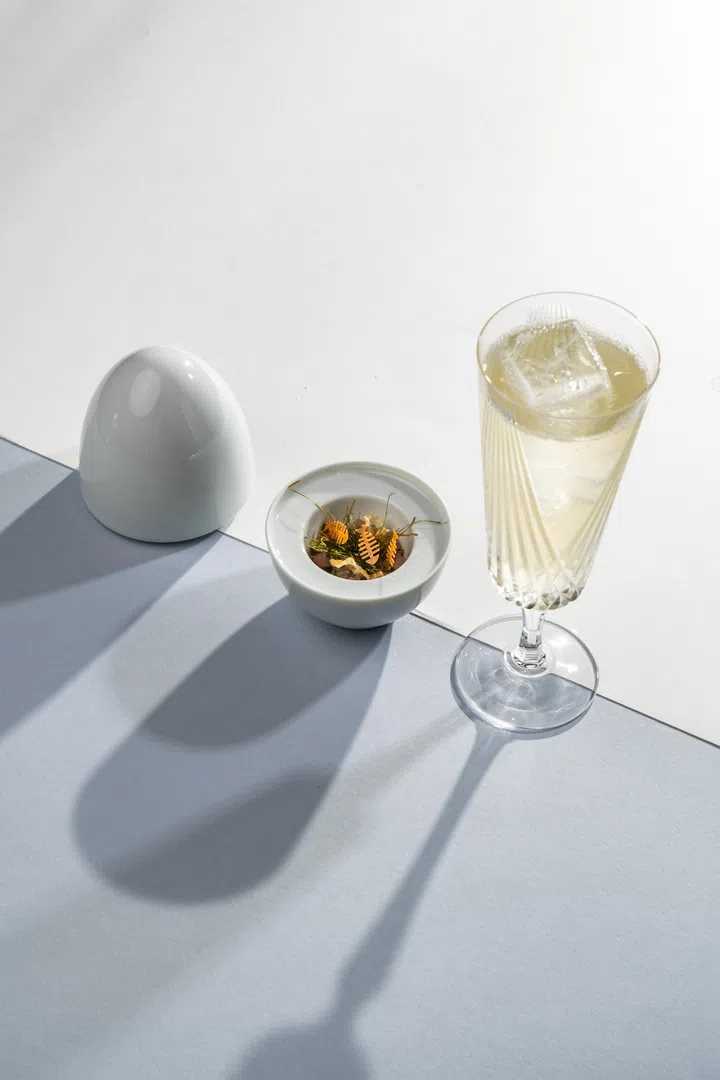
Kang knows exactly how the evening tends to unfold. “Someone might come in for a cocktail, then order fries, then another drink, then maybe a substantial dinner — pasta, steak, or dumplings. When in good company, people stay and end up having a good time.”
It involves less of a dining format and a natural drift, which precisely makes bar dining feel alive in ways that a structured restaurant service rarely does.
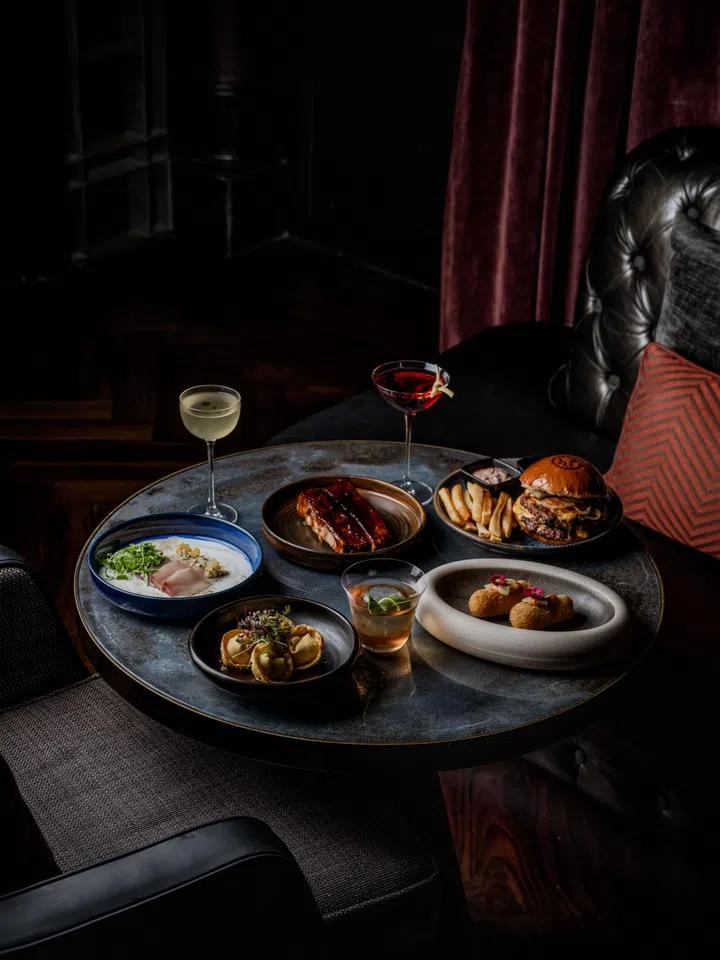
At Manhattan Bar at Conrad Singapore Orchard, beverage director Alexander Gilmour anchors the philosophy in a different tradition: the Golden Age New York bar, where people ate, lingered, and considered the evening well spent.
The street food-style lobster taco, housed in a crisp wonton shell, and the bourbon peach-glazed St. Louis pork ribs represent the menu’s imaginative approach to classic New York dishes.
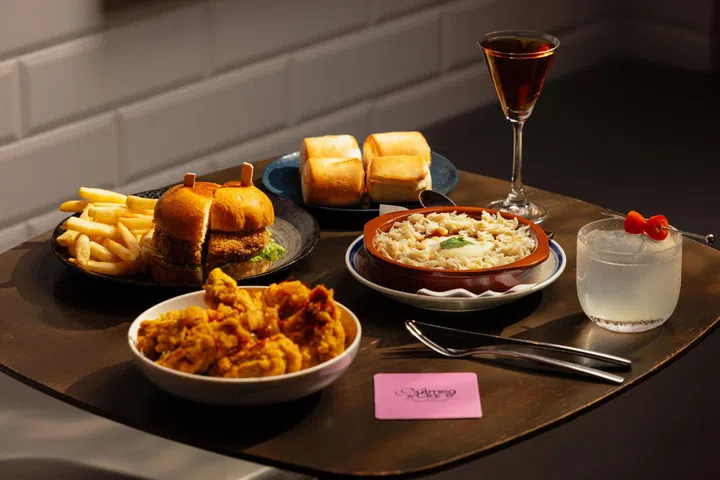
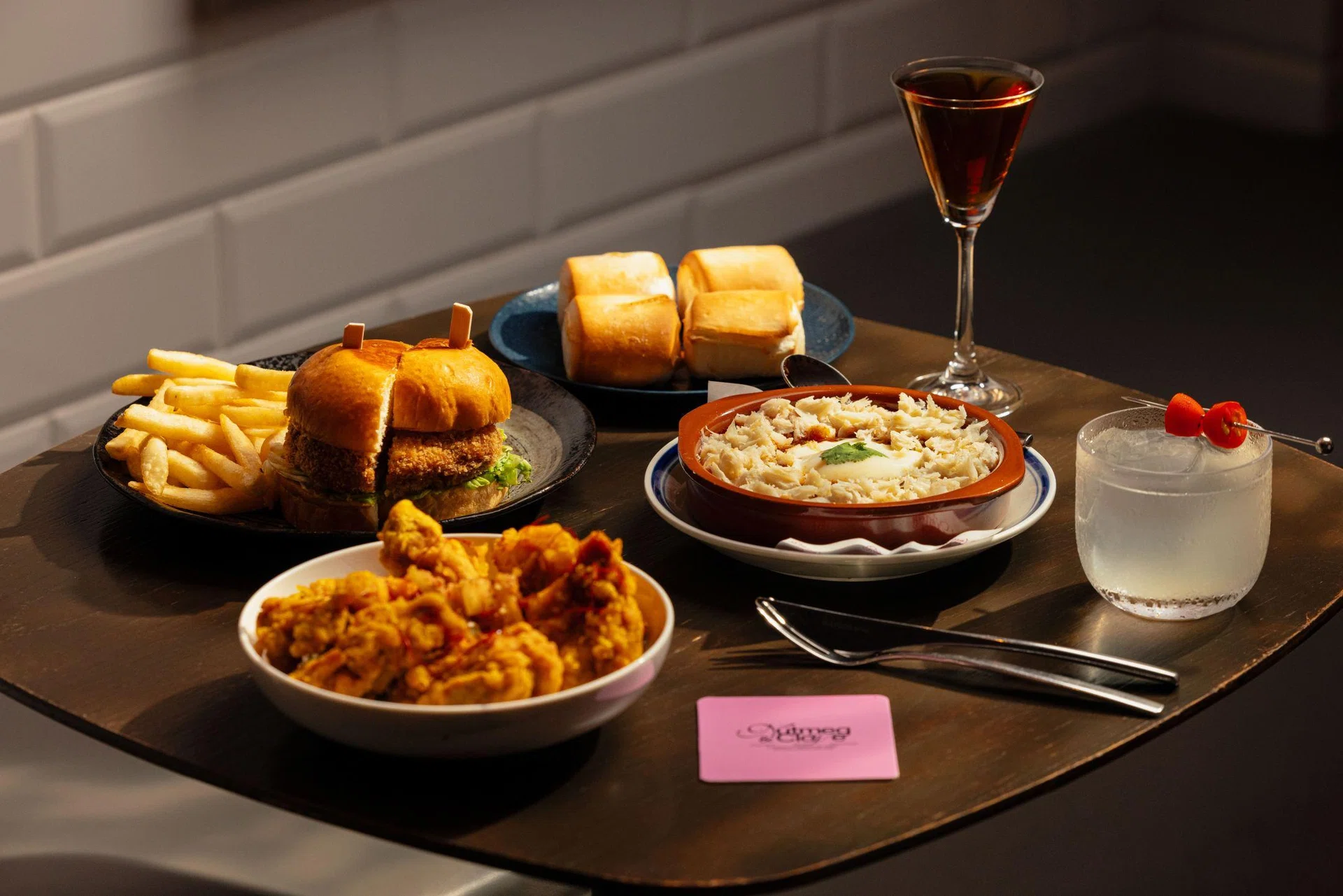
For Colin Chia, founder of Nutmeg & Clove, the pandemic crystallised what had perhaps always been possible. Forced to pair bottled cocktails with a small but creative food menu amidst restrictions, the team discovered that “guests had actually grown to enjoy having food at the bar,” Chia recalls.
The pandemic, for all its damage to the industry, compressed years of behavioural change into months — and trends that accelerated were genuinely worth keeping.
Sip and linger
What makes bar dining different from restaurant dining is not the absence of tablecloths or lengthy menus. It is a fundamentally different relationship between the guest, food, and how the evening pans out.
“Bars tend to be more fluid in their environment,” says Kang. “People might sit at the bar, move to a table, share plates, or just snack while drinking. There’s less pressure for a structured dining experience.”
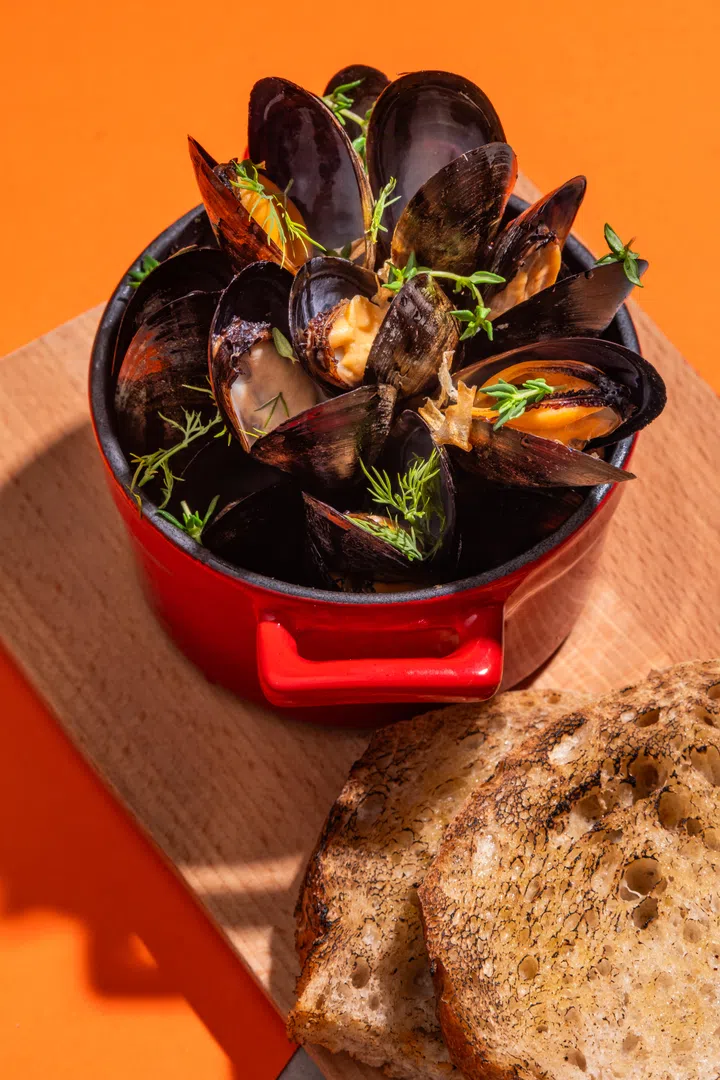
This looseness creates the conditions for a more focused, braver kitchen. And nowhere is this more distinctively Singaporean than at Puffy Bois, where founder Samuel Ng draws parallels to hawker stalls, which typically focus on a singular dish.
“In Singapore, most hawker stalls specialise in one dish, so a singular point of focus is not uncommon,” Ng says. “The fallacy is that the more you offer, the more people will want to come.”
His cocktail bar serves precisely five pizzas, including the signature Margherita. “The greatest part, and something we have always championed, is the removal of options.” In a city that often equates generosity with abundance, this is a provocation — and, given Puffy Bois’ cult following, it has become a rather successful one.
More food focus
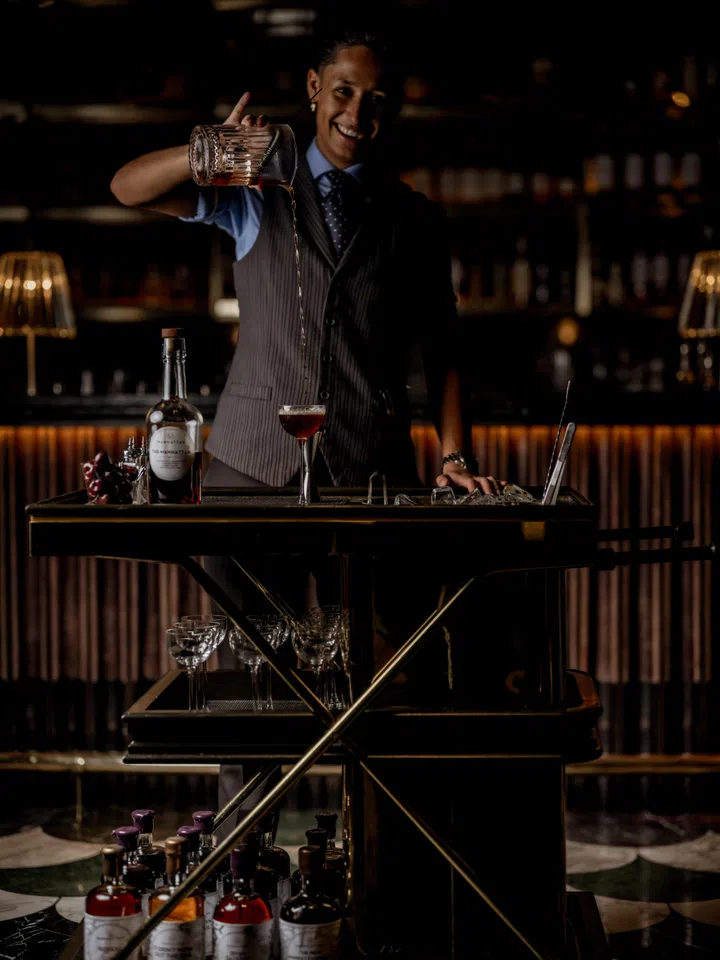
Bars that The Peak Singapore spoke to said 20 to 30 per cent of their guests order food during visits, with drinks remaining the primary draw.
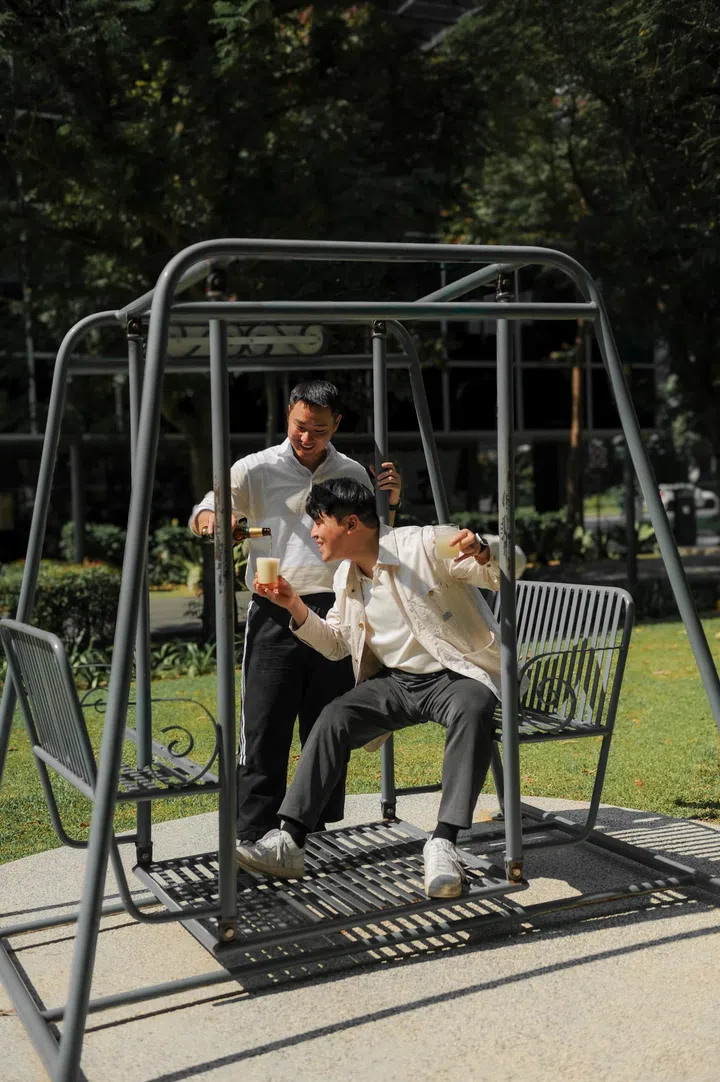
Gilmour estimates 90 per cent of Manhattan’s guests arrive with cocktails in mind first before slipping in food orders. At Side Door, the demand for food is almost on par with cocktails like the Non Fruit Beer, a fizzy soju bomb-inspired concoction.
Revenue-wise, food orders are increasingly making a dent. At Nutmeg & Clove, food now accounts for roughly 20 per cent of overall revenue. “Many guests are leaning toward lighter drinking, but dining is still a key part of their social experience,” Chia notes on the parallel shift.
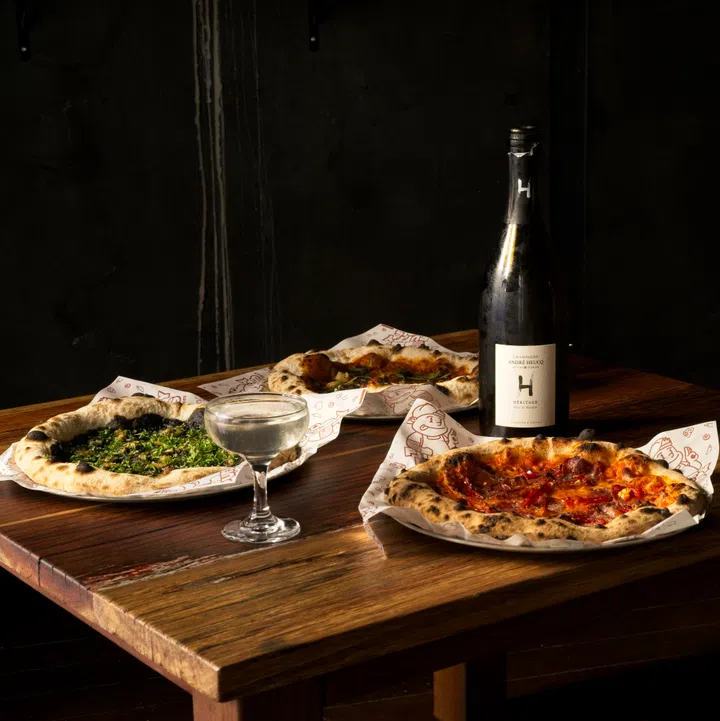
At Puffy Bois, the dining needle shifts further. “We have consistently seen guests who only come for our food every week,” says Ng — families, non-drinkers, the reliably pizza-devoted. The low-ABV drinker and the teetotaler are now a constituency worth feeding seriously.
The best bars are doing exactly that, with zero-proof programmes and food menus designed for everyone at the table, not only whoever orders a Negroni.
The hard part nobody orders
Running a serious kitchen inside a bar is, by unanimous agreement among bar owners, harder than it looks. While a lack of space is a perennial constraint, talent is a simmering problem.
“Many chefs are naturally drawn to further their careers in notable fine dining establishments rather than bars,” Chia observes, with the candour of someone who has done the recruiting.
The best culinary graduates still navigate their careers by Michelin stars. Shifting that instinct requires operators who can articulate a different — but equally compelling — kind of ambition. The BOP appointment carries a secondary message: that a bar kitchen can attract serious culinary talent.
And then there is the arithmetic few puts on the board. Ng shares that food costs increase by five to ten per cent each year, while alcohol costs rise by five per cent annually.
He says: “It’s a side most people don’t see, but as business owners, we have to constantly think about this and how to offer good but fair value to customers.” The presence of more food options in bars is a testament to operational discipline and a stubborn unwillingness to cut corners.
The kitchen isn’t going anywhere
Bar owners that The Peak Singapore spoke to believe that more players will continue to strengthen the food aspect. “What we’re seeing now isn’t bars trying to become restaurants,” says Kantono, “but bars discovering their own version of dining.”
The conversation has already crossed borders — think Bar Leone in Hong Kong, Funkytown in Bangkok, The Han-Jia in Tainan — each city finding its own answer to the same question.
What is happening in Singapore is not a local experiment. It is the leading edge of something the region is working out together.
At Side Door, Kang puts it with the quiet conviction of someone who has watched the shift happen from behind the bar: “Food will continue to be an equal part at many cocktail bars, especially in cities like Singapore where the dining culture is so strong.” Ng, characteristically, has the last word: “It’s in the name of our industry, after all. Food and beverage.”
The next time you are in search of an interesting nosh-driven night out, give restaurants a break and seek out the bars for a change.