%22%3E%0A%3Cpath%20d%3D%22M412%20101.2H393.7C393.1%20101.2%20392.3%20100.9%20391.8%20100.5C377.3%2087.6004%20362.9%2074.6004%20348.4%2061.6004C344.8%2058.4004%20341.3%2055.2004%20337.7%2052.0004C337.1%2051.5004%20336.2%2051.1004%20335.5%2051.0004C334.2%2050.8004%20333%2051.0004%20331.5%2051.0004V101.1H316.7V0.100391H331.4V44.3004C331.9%2044.3004%20332.2%2044.4004%20332.5%2044.4004C334.9%2044.4004%20337.2%2044.5004%20339.6%2044.4004C340.4%2044.4004%20341.3%2044.0004%20341.8%2043.5004C351.6%2034.4004%20361.4%2025.2004%20371.1%2016.0004C376.5%2010.9004%20381.9%205.90039%20387.3%200.800391C387.9%200.200391%20388.5%200.000390626%20389.3%200.000390626H400.9C384.2%2015.8004%20367.8%2031.3004%20351.2%2047.0004C371.5%2065.0004%20391.8%2082.9004%20412.1%20100.9C412.1%20101%20412.1%20101.1%20412%20101.2ZM180.9%20101.2C184.1%2094.9004%20187.2%2088.9004%20190.3%2082.8004C198.3%2067.3004%20206.2%2051.8004%20214.2%2036.2004C220.3%2024.4004%20226.4%2012.5004%20232.4%200.700391C232.7%200.100391%20233%20-0.0996094%20233.7%20-0.0996094H248.1C248.8%20-0.0996094%20249.2%200.100391%20249.6%200.800391C256%2013.3004%20262.4%2025.7004%20268.8%2038.2004C279.3%2058.6004%20289.8%2079.0004%20300.3%2099.5004C300.5%20100%20300.8%20100.4%20301.1%20101.1C300.5%20101.1%20300.1%20101.2%20299.7%20101.2H286.5C285.6%20101.2%20285.1%20100.9%20284.7%20100.2C280.1%2091.3004%20275.4%2082.4004%20270.8%2073.4004C270.1%2072.1004%20269.3%2071.6004%20267.8%2071.6004H209.9C208.7%2071.6004%20208.1%2072.0004%20207.5%2073.1004C202.9%2082.1004%20198.2%2091.0004%20193.6%20100C193.1%20101%20192.6%20101.3%20191.5%20101.3C188.4%20101.2%20185.3%20101.3%20182.3%20101.3C182%20101.2%20181.6%20101.2%20180.9%20101.2ZM239.1%2011.4004C230%2029.2004%20221.1%2046.7004%20212.1%2064.3004H266.4C257.2%2046.7004%20248.2%2029.2004%20239.1%2011.4004ZM0%200.000390626H43.4C51.2%200.000390626%2058.7%201.20039%2065.7%204.80039C75.9%2010.0004%2078.9%2018.0004%2078.6%2027.4004C78.3%2034.3004%2076%2040.5004%2071.2%2045.5004C67.3%2049.6004%2062.4%2052.3004%2057.1%2054.3004C50.6%2056.7004%2043.9%2058.0004%2037.1%2058.6004C30.1%2059.2004%2023.1%2059.4004%2016.2%2059.7004C15.8%2059.7004%2015.3%2059.8004%2014.8%2059.8004V101.1H0.1C0%2067.4004%200%2033.8004%200%200.000390626ZM14.8%207.10039V52.2004C23.7%2052.4004%2032.6%2052.3004%2041.2%2050.1004C44.4%2049.3004%2047.6%2048.2004%2050.6%2046.7004C58.4%2043.0004%2062.3%2036.7004%2062.7%2028.0004C63%2019.9004%2059.5%2014.1004%2052.4%2010.5004C47.6%208.00039%2042.5%207.10039%2037.2%207.10039H14.8ZM95.9%20101.1V0.100391H167.3V7.20039H110.7V44.7004H158.1V51.9004H110.8V93.9004H171.1V101C146.1%20101.1%20121%20101.1%2095.9%20101.1Z%22%20fill%3D%22black%22%2F%3E%0A%3Cpath%20d%3D%22M35.0004%2025.7996H42.5004V20.6996H44.8004V33.1996H42.6004V27.5996H34.9004V33.2996H32.7004V20.7996H35.0004V25.7996ZM54.4004%2025.8996V27.2996H48.9004V31.6996H55.9004C55.9004%2032.1996%2056.0004%2032.5996%2056.0004%2033.0996H46.5004V20.5996H55.5004V21.8996H49.0004V25.7996C50.7004%2025.8996%2052.5004%2025.8996%2054.4004%2025.8996ZM25.9004%2033.0996H23.5004V21.9996H17.9004V20.6996H31.6004V22.0996H27.1004C26.2004%2022.0996%2025.9004%2022.2996%2025.9004%2023.1996C26.0004%2026.0996%2025.9004%2028.9996%2025.9004%2031.7996V33.0996Z%22%20fill%3D%22black%22%2F%3E%0A%3C%2Fg%3E%0A%3Cdefs%3E%0A%3CclipPath%20id%3D%22clip0_388_462%22%3E%0A%3Crect%20width%3D%22411%22%20height%3D%22101.2%22%20fill%3D%22white%22%2F%3E%0A%3C%2FclipPath%3E%0A%3C%2Fdefs%3E%0A%3C%2Fsvg%3E%0A)
8 best restaurants for business lunch meetings in Singapore
We pick the top spots for lunch meetings at restaurants that offer set menus, breezy service and a dose of privacy for discussions with clients and business associates.
By Lu Yawen & Jodie Wong /
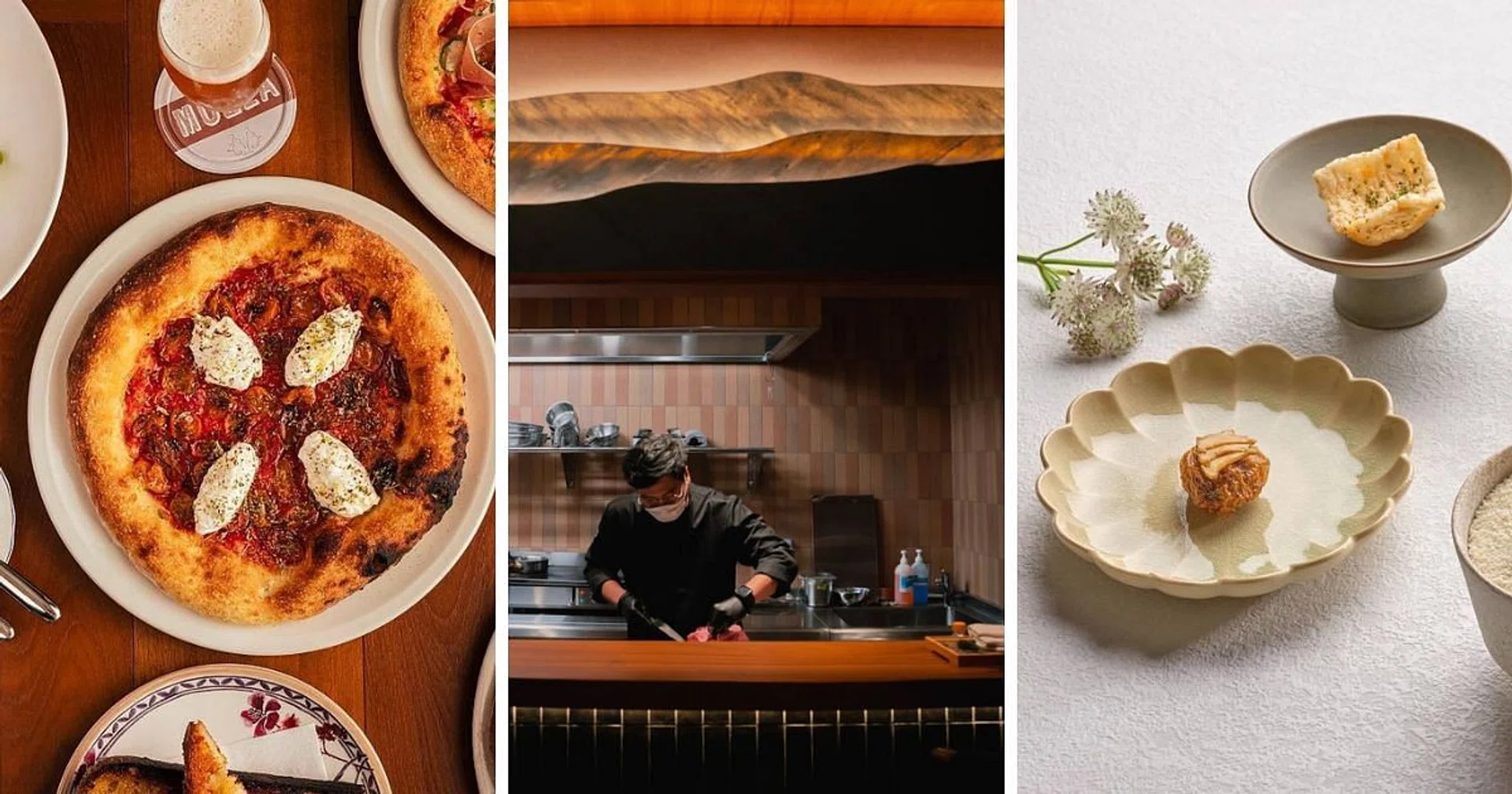
Mealtimes are, for the most part, social occasions and, in the professional sense, an opportunity for deal-making that’s sweetened with great food. From those conveniently located in the central business district (CBD) to those in spots that offer a little quiet or colour, here are eight restaurants to have your next business lunch meeting at.
Chef Simone Fraternali brings the flavours of his native Emilia-Romagna to Solo Ristorante after spending nearly three decades working in Michelin-starred kitchens across Northern Italy before moving to Singapore. Now the restaurant’s chef-partner, Fraternali emphasises quality ingredients and traditional Italian flavours in his cooking.
Housed in a restored shophouse on Amoy Street, Solo features an open kitchen where diners can watch dishes being prepared to order. For business lunches and corporate meetings, there is also a private dining room that seats up to 22 guests, offering a more discreet setting for discussions.
The restaurant has several lunch options, including a three-course executive set lunch ($39), a four-course menu ($49), a four-course sharing menu ($98 per person), and a five-course tasting menu ($148 per person). Depending on seasonal availability, highlights include house-made tagliolini with smoky uni sauce, tarragon, and lemon zest; gnocchi with Angus beef ragù alla Bolognese, burrata, and grilled octopus; and the restaurant’s tiramisu for a sweet finish.
Popular for both casual and business lunches, Solo has earned praise for its attentive service, relaxed atmosphere, and well-paced lunch menus.
Find out more here.
Third-generation chef Kentaro Chen carries forward one of Japanese Szechwan cuisine’s most influential culinary legacies. His grandfather, Chen Kenmin, is regarded as the “father of Szechwan cuisine” in Japan, while his father, Chen Kenichi, was the celebrity Iron Chef known as the “Szechwan Sage”.
Now leading Shisen Hanten in Singapore, Chen specialises in Chūka Szechwan Ryori, a refined interpretation of Szechwan cuisine adapted for Japanese palates.
Located on the 35th floor of Hilton Singapore Orchard, the restaurant offers sweeping views over Orchard Road and elegant contemporary interiors. Singapore’s only Michelin-starred Sichuan restaurant also has six private dining rooms, with the largest accommodating up to 30 guests.
Lunch options include seasonal set menus ranging from the Opulent Set Menu ($188 per guest) to the Lavish Set Menu ($388 per guest), alongside an à la carte menu. Signature dishes include Chen’s Mapo Doufu, Peking roast duck with homemade wrappers and Chen’s Original Spicy Noodle Soup.
Shisen Hanten has also earned praise for its attentive yet unobtrusive service and well-paced meals, making it a reliable choice for both business lunches and special occasions.
Find out more here.
“Torno Subito”, Italian for “I’ll be right back”, is the first Asian outpost of chef Massimo Bottura, whose three-Michelin-starred Osteria Francescana is widely regarded as one of the world’s best restaurants.
Opened in partnership with the COMO Group, the restaurant is led by executive chef Alessio Pirozzi, who brings Bottura’s “fine-casual” philosophy to life through fresh handmade pastas and regional Italian specialities.
Set within a restored heritage building in Dempsey Hill, Torno Subito pairs colourful interiors with views of the surrounding greenery. The relaxed atmosphere makes it well suited to business lunches centred around relationship building, while its location away from the CBD offers a quieter alternative for client meetings.
The restaurant offers a three-course lunch menu ($58 per person), where diners can choose from a selection of antipasti, mains and desserts. Signature dishes include tortellini with 36-month-aged Parmigiano Reggiano cream and braised beef, and its “Tiramisubito”, Bottura’s take on the classic tiramisu.
Find out more here.
Relocating from Hilton Singapore Orchard, the popular Cal-Italian restaurant is moving to Ion Orchard come August 2026. Available only during lunch are American chef Nancy Silverton’s famed wood-fired pizzas.
Made with an improved recipe comprising two kinds of King Arthur bread flour that’s mixed with spelt and rice flour, the puffy, perfectly charred sourdough pizzas are only available for lunch. Not your average dough, it’s left to ferment for three days before it’s cooked in the restaurant’s custom Wood Stone California almond wood-fired oven.
There are 10 flavours to choose from, including classics such as the Burrata with slow-roasted tomatoes and Sicilian oregano. Silverton has even created the Pizza Alla Benno, an homage to the uniquely American innovation of the Hawaiian pizza.
There are plenty of seating options as well: the Tuscan rustic-styled interiors are generously spaced out for 61 guests, the 59-seater outdoor terrace is surrounded by a herb garden, and a private dining room seats 10 (enquire for the minimum spend).
Find out more here.
Unassuming local chef Nicholas Tam holds his own at his first solo venture, Willow. Part of the Ebb and Flow Group, the fine-dining establishment leaves all pretentiousness at the door and is an unadulterated showcase of Tam’s prowess, honed over years at Esora, Robuchon, and Restaurant Zen.
His genre-bending cuisine, informed by his Singaporean heritage, is backed by an equally impressive young team and head pastry chef, Soh Hui Shan. The five-course lunch changes daily, depending on what produce Tam can get his hands on, but showcases the ease with which he uses a range of Japanese and European ingredients and flavours.
Mikan-fed sea bream, for example, is paired with rhubarb and umeboshi while foie gras stars in a long pepper ‘bolo bao’ with wild berry gel and aged vinegar.
The best seats in the house are by the 10-seater wood counter where you get full view of the team in action; otherwise, lower tables along the opposite wall and a private room (for a minimum spend of $2,300) with capacity for a maximum of 12 guests offer varying degrees of privacy.
Find out more here.
Like the parable of the prodigal son, Singaporean chef Jereme Leung returned home after opening nine restaurants around the world. To show for it, he opened this restaurant — Yi by Jereme Leung — which has now become a mainstay at Raffles Hotel Singapore for its impeccable Cantonese dim sum and dishes (not to mention that almost otherworldly entrance of white flowers and vines).
Comfort is key here with the interior’s earth-toned hues that are easy on the eyes and plush seating with armrests and banquette benches. There are three private dining rooms separated by frosted glass doors, which can seat eight to 10 guests for a minimum spend of $1,200.
For lunch, there are two set menus to choose from, ranging from nine- to 10-courses comprising appetisers such as Freshly-Made Marble Squid Ink Rice Rolls stuffed with Crispy Rice Cracker & Hokkaido Scallop, dim sum such as Chilli Crab Xiao Long Bao Dumpling, mains, carbs, and dessert.
Find out more here.
An extension of chef-owner Malcolm Lee’s exploration of his heritage from his one Michelin-starred Candlenut at Dempsey, his second restaurant calls Singapore’s UNESCO World Heritage Site home. Situated on a quieter side of the Botanic Gardens at the Gallop Extension, Pangium (the scientific name for buah keluak) is centrally located yet hidden enough to provide respite from the noise.
Contemporary Straits cuisine, a term he’s coined, is an experimental approach to recipes familiar to Lee. As he does at Candlenut, he laboriously prepares Southeast Asian traditional recipes from scratch but presents them in ways that appeal to the modern audience.
While he orchestrates from his first restaurant, the kitchen and front of house are run by a young team led by executive sous chef Lai Han Yang, who’s worked with him for almost a decade.
Highlights from the seven-course lunch menu. Look forward to dishes such as the bolo bun-lookalike, Pang Susi, a sweet potato bun with minced pork cheek seasoned with Kampot pepper from Cambodia, candied winter melon, and roasted coriander seed. A private dining room that seats eight is also available for a minimum spend of $2,000.
Find out more here.
Reviving the entertainment of tableside cooking, this new restaurant at Palais Renaissance specialises in teppanyaki with two open kitchens in the main dining area. With a concerted effort to import seasonal Japanese ingredients, co-founder Chi Pin Han leans into his previous sourcing connections as a chef at Keyaki to procure meat, seafood and vegetables lesser known to Singaporean diners.
The selection of ingredients changes every two weeks and ranges from rarer cuts of Australian wagyu flat iron from Austige cattle, free-range cows from Kumamoto prefecture, Australian lobsters and madai (sea bream) from the waters of Akashi, Hyogo. Even the basics of rice and eggs are imported from Ishinomaki and Aichi prefecture, respectively.
Proteins serve as the focus of the five lunch options available in the five-course business prix-fixe, and the six courses in different variations — rogama course, wagyu sukiyaki course, wagyu nanbuzara (slices of meat are served on an Iwate charcoal hot plate) course and the teppanyaki set. Additionally, wagyu dishes are sliced to order to maintain freshness.
Conversations by the teppan grill might get a little heated, literally, but all that cooking masks out any details you’d like to keep private. There’s also a private room at the back that seats a group of 10 with a minimum spend of $600.
Find out more here.