%22%3E%0A%3Cpath%20d%3D%22M412%20101.2H393.7C393.1%20101.2%20392.3%20100.9%20391.8%20100.5C377.3%2087.6004%20362.9%2074.6004%20348.4%2061.6004C344.8%2058.4004%20341.3%2055.2004%20337.7%2052.0004C337.1%2051.5004%20336.2%2051.1004%20335.5%2051.0004C334.2%2050.8004%20333%2051.0004%20331.5%2051.0004V101.1H316.7V0.100391H331.4V44.3004C331.9%2044.3004%20332.2%2044.4004%20332.5%2044.4004C334.9%2044.4004%20337.2%2044.5004%20339.6%2044.4004C340.4%2044.4004%20341.3%2044.0004%20341.8%2043.5004C351.6%2034.4004%20361.4%2025.2004%20371.1%2016.0004C376.5%2010.9004%20381.9%205.90039%20387.3%200.800391C387.9%200.200391%20388.5%200.000390626%20389.3%200.000390626H400.9C384.2%2015.8004%20367.8%2031.3004%20351.2%2047.0004C371.5%2065.0004%20391.8%2082.9004%20412.1%20100.9C412.1%20101%20412.1%20101.1%20412%20101.2ZM180.9%20101.2C184.1%2094.9004%20187.2%2088.9004%20190.3%2082.8004C198.3%2067.3004%20206.2%2051.8004%20214.2%2036.2004C220.3%2024.4004%20226.4%2012.5004%20232.4%200.700391C232.7%200.100391%20233%20-0.0996094%20233.7%20-0.0996094H248.1C248.8%20-0.0996094%20249.2%200.100391%20249.6%200.800391C256%2013.3004%20262.4%2025.7004%20268.8%2038.2004C279.3%2058.6004%20289.8%2079.0004%20300.3%2099.5004C300.5%20100%20300.8%20100.4%20301.1%20101.1C300.5%20101.1%20300.1%20101.2%20299.7%20101.2H286.5C285.6%20101.2%20285.1%20100.9%20284.7%20100.2C280.1%2091.3004%20275.4%2082.4004%20270.8%2073.4004C270.1%2072.1004%20269.3%2071.6004%20267.8%2071.6004H209.9C208.7%2071.6004%20208.1%2072.0004%20207.5%2073.1004C202.9%2082.1004%20198.2%2091.0004%20193.6%20100C193.1%20101%20192.6%20101.3%20191.5%20101.3C188.4%20101.2%20185.3%20101.3%20182.3%20101.3C182%20101.2%20181.6%20101.2%20180.9%20101.2ZM239.1%2011.4004C230%2029.2004%20221.1%2046.7004%20212.1%2064.3004H266.4C257.2%2046.7004%20248.2%2029.2004%20239.1%2011.4004ZM0%200.000390626H43.4C51.2%200.000390626%2058.7%201.20039%2065.7%204.80039C75.9%2010.0004%2078.9%2018.0004%2078.6%2027.4004C78.3%2034.3004%2076%2040.5004%2071.2%2045.5004C67.3%2049.6004%2062.4%2052.3004%2057.1%2054.3004C50.6%2056.7004%2043.9%2058.0004%2037.1%2058.6004C30.1%2059.2004%2023.1%2059.4004%2016.2%2059.7004C15.8%2059.7004%2015.3%2059.8004%2014.8%2059.8004V101.1H0.1C0%2067.4004%200%2033.8004%200%200.000390626ZM14.8%207.10039V52.2004C23.7%2052.4004%2032.6%2052.3004%2041.2%2050.1004C44.4%2049.3004%2047.6%2048.2004%2050.6%2046.7004C58.4%2043.0004%2062.3%2036.7004%2062.7%2028.0004C63%2019.9004%2059.5%2014.1004%2052.4%2010.5004C47.6%208.00039%2042.5%207.10039%2037.2%207.10039H14.8ZM95.9%20101.1V0.100391H167.3V7.20039H110.7V44.7004H158.1V51.9004H110.8V93.9004H171.1V101C146.1%20101.1%20121%20101.1%2095.9%20101.1Z%22%20fill%3D%22black%22%2F%3E%0A%3Cpath%20d%3D%22M35.0004%2025.7996H42.5004V20.6996H44.8004V33.1996H42.6004V27.5996H34.9004V33.2996H32.7004V20.7996H35.0004V25.7996ZM54.4004%2025.8996V27.2996H48.9004V31.6996H55.9004C55.9004%2032.1996%2056.0004%2032.5996%2056.0004%2033.0996H46.5004V20.5996H55.5004V21.8996H49.0004V25.7996C50.7004%2025.8996%2052.5004%2025.8996%2054.4004%2025.8996ZM25.9004%2033.0996H23.5004V21.9996H17.9004V20.6996H31.6004V22.0996H27.1004C26.2004%2022.0996%2025.9004%2022.2996%2025.9004%2023.1996C26.0004%2026.0996%2025.9004%2028.9996%2025.9004%2031.7996V33.0996Z%22%20fill%3D%22black%22%2F%3E%0A%3C%2Fg%3E%0A%3Cdefs%3E%0A%3CclipPath%20id%3D%22clip0_388_462%22%3E%0A%3Crect%20width%3D%22411%22%20height%3D%22101.2%22%20fill%3D%22white%22%2F%3E%0A%3C%2FclipPath%3E%0A%3C%2Fdefs%3E%0A%3C%2Fsvg%3E%0A)
Why renowned Bordeaux wine estate, Château Cos d’Estournel, has a strong connection with Asia
Blending cutting-edge innovation and a centuries-old connection to Asia, second-growth Château Cos d’Estournel is one of Bordeaux’s most distinctive estates — and a firm favourite among Singapore’s discerning wine lovers.
By Y-Jean Mun-Delsalle /
Share this article
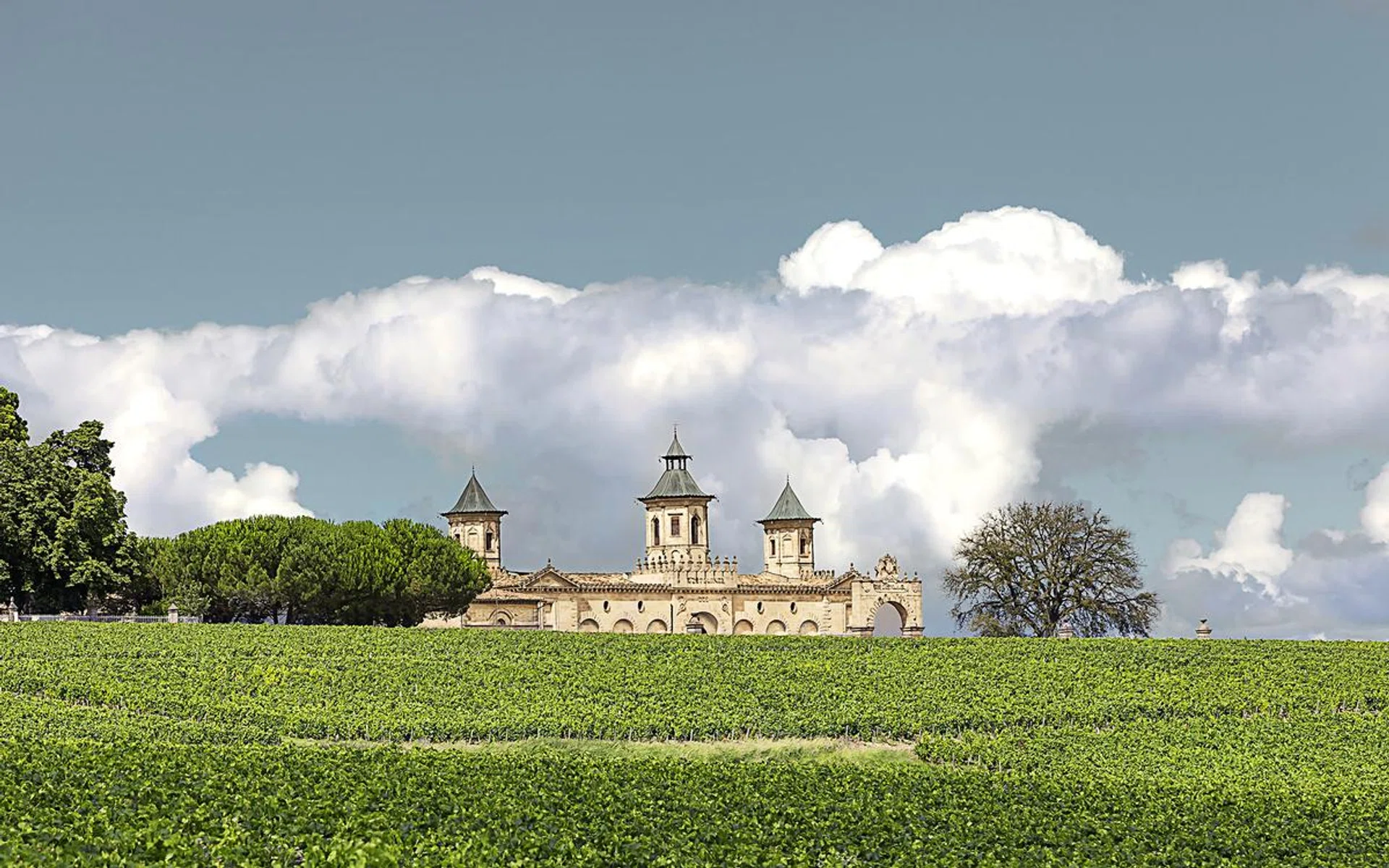
Three Chinese pagodas rise above the undulating gravel hill of the enigmatic Cos d’Estournel estate in Saint-Estèphe, Bordeaux, like sentinels from another continent — their pointed roofs topping turrets guarded by mighty dragons and imposing elephants in a flamboyant homage to founder Louis-Gaspard d’Estournel’s obsession with the East.
The winemaker earned the nickname “Maharajah of Saint-Estèphe” after he began shipping his robust reds to India and China and festooned his winemaking palace with architectural exotica that still surprises first-time visitors to the renowned second-growth Bordeaux winery today.
“Tasting a Cos d’Estournel wine is a sort of voyage,” proclaims its marketing and communication director, Géraldine Giroux, “and visiting Cos d’Estournel is also a journey because it’s a château unlike any other in Bordeaux.”
That sense of travel would prove prophetic for a house whose fortunes are now entwined with Asia more than ever.
A strong connection with Asia
Relentless in his ambition to expand the influence of his estate, Louis-Gaspard was the first to distribute his wines through trading houses in Africa, the Indian Ocean and China. As early as the 1830s, the nonconformist winemaker was already shipping bottled wine sealed with glass stoppers to Calcutta, Madras, and Bombay — a daring move at a time when most Bordeaux still travelled in barrels.
After the long journey, some of the bottles sailed back to France from India, the movement of the waves resulting in the wines gaining in elegance and richness. Returning bottles that had matured at sea were triumphantly labelled “Retour des Indes” (Return from the Indies) and fetched premium prices.
They were soon served at the tables of the Queen of England, the Emperor of Russia, and Baron de Rothschild, setting a trend that other wineries would follow. “The dream of Michel Reybier, the current owner of Cos d’Estournel — and I’m sure we will do it one day – is to send bottles to India and bring them back by boat, recreating that ‘Retour des Indes’ concept,” says Giroux about the prospect of a 21st-century voyage.
Gravity-flow wine cellar
When French entrepreneur Michel Reybier purchased Cos d’Estournel in 2000, he vowed to pair eye-catching interiors with state-of-the-art technology. Legendary French decorator Jacques Garcia infused the reception rooms with his signature opulent style, mixing rich textures, exotic furnishings and warm tones to echo the château’s oriental architecture and storied heritage.
At the same time, architect Jean-Michel Wilmotte built one of the world’s most efficient chais (wine sheds) and vat rooms, hailed as the region’s first wholly gravity-flow wine cellar. “Nowadays, all the châteaus use big names, but Reybier was one of the first to mix technical aspects and aesthetics in this way,” notes Giroux on the estate’s refurbishment that was completed in 2008.
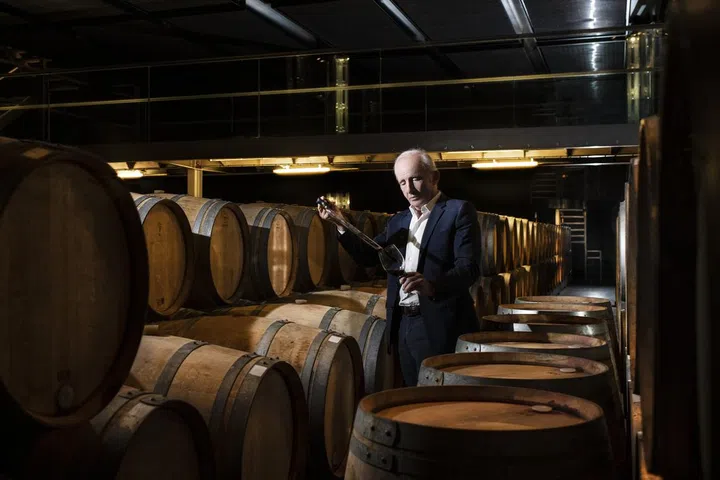
The gravity-fed system spans from grape reception to bottling, with vats gliding silently in glass elevators for transfers between the vat room and barrel cellar. Not a single pump is used so that the grapes and their juices are manipulated as delicately as possible, allowing for greater precision in the extraction of the tannins, colours and aromas naturally found in the skins and seeds. The gravity-flow cellar remains a reference for gentle extraction and pure fruit expression.
The same spirit of excellence drives Reybier’s wider empire: La Réserve hotels in Paris, Geneva and Zurich now host Cos d’Estournel masterclasses, transforming loyal wine collectors into luxury-lifestyle clients.
For those looking for a weekend escape, La Maison d’Estournel, once the private residence of Louis-Gaspard d’Estournel, is now a charming 14-room hotel welcoming guests of nearby Cos d’Estournel and neighbouring châteaus.
A light-touch approach in the vineyard
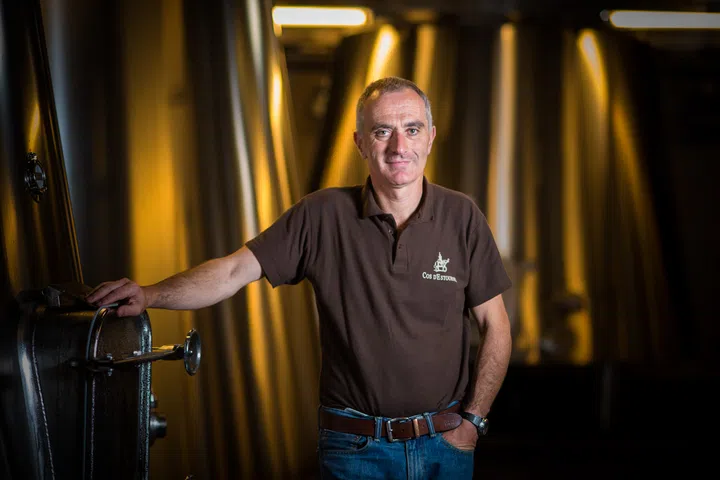
Innovation at the 100ha estate is today focused on sustainability. Cos d’Estournel is midway through organic conversion, and technical director Dominique Arangoïts spends one full day a week amidst the vines. “Organic conversion pushed us to be in the vineyard much more and to have a more intimate link with it, which wasn’t the case in the past because it wasn’t necessary,” he discloses.
“It helps us to understand each plot better and also the vintage.” In the pipeline is a lightweight tractor with caterpillar tracks that avoids compacting the soil to encourage the root development of young vines. “It’s about being gentle,” he explains, “just like the gravity flow in the cellar.”
Herbicides disappeared a decade ago; cover crops now foster mycorrhizal networks and cool the surface during Médoc heatwaves that arrive ever more frequently.
An adaptable terroir
Cos d’Estournel’s unique location — surrounded by the Gironde estuary, Atlantic Ocean and marshlands — naturally moderates extreme temperatures, helping the vineyard resist the impacts of global warming.
Reybier’s long-standing commitment to preserving old vineyards and using massal selection leverages the memory of deep-rooted vines to better adapt to evolving climate conditions. The estate’s patchwork of 19 different soil types, charted in exhaustive studies since 2001, acts as a climatic safety net.
“Cos d’Estournel’s terroir adapts, with always one part of the vineyard that performs well,” notes Arangoïts. “Last year, in a cold, late-ripening vintage, the warmer, gravel-rich soils outperformed the cooler clay soils. Maybe this year’s vintage will be the opposite, and for the great vintages, all the soils performed well. This estate always gives incredible surprises under difficult conditions.”
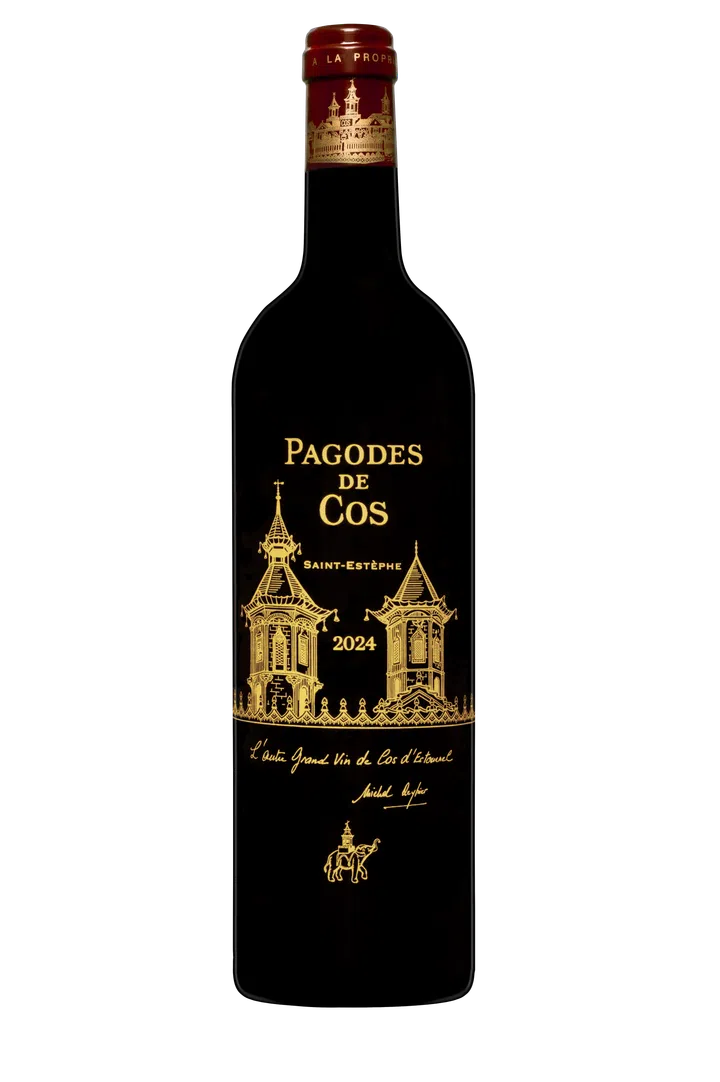
Cos d’Estournel’s devotion to precision parcelling is also behind the rise of Pagodes de Cos, the estate’s second wine that it fondly describes as “the other Grand Vin”. Crafted from dedicated plots, it turned 30 with the 2024 vintage and was released en primeur in an engraved anniversary bottle last April.
An everyday wine, the bottle will reach the market in 2027, by which time Singapore’s younger collectors — many first introduced to the brand via the more affordable G d’Estournel third wine — will be ready to trade up. “Cos d’Estournel is a discreet, contemplative wine that takes time to reveal itself — you need patience and focus to truly understand it,” shares Arangoïts.
“Unlike our other two wines that offer immediate pleasure, Cos d’Estournel slowly takes your hand and leads you to a deeper, more emotional experience.”
The Singapore connection
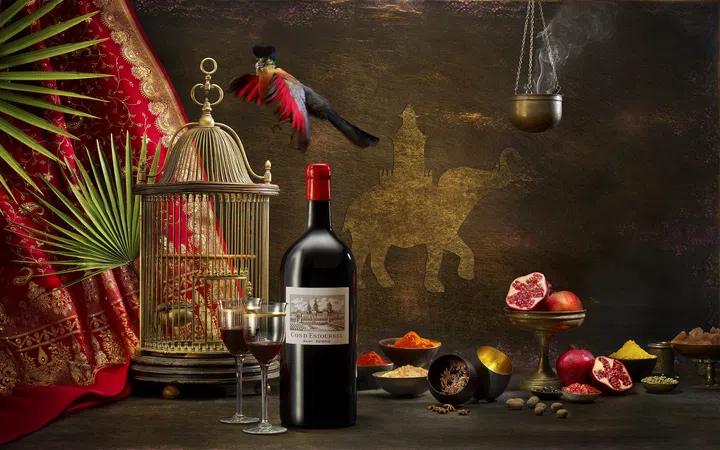
“Singapore is a crossroads of culture, and we thrive on our image as Bordeaux’s most exotic château linked to Asia and to travel,” states Alexis Thierriaz, Asia-Pacific regional director.
“Singapore is also an Asian centre for business travellers who often like to open a Bordeaux Grand Cru Classé during dinner, and our job is to make sure every restaurant that has a serious wine list can offer a bottle of our production.”
While Asia represents 25 per cent of Cos d’Estournel’s global market, Singapore ranks fourth for the estate’s sales in Asia, after China, Japan, and Hong Kong, but punches above its weight in prestige.
Hotels such as The Fullerton Hotel Singapore and The Edition Singapore, and French restaurants like Claudine, Les Ducs, and Maison Boulud stock the wine. Local palates, he adds, relish the “freshness coupled with the power of Saint-Estèphe and that recognisable spice”, which dovetails with Singapore’s layered cuisines.
Wine literacy also helps. “Singapore is considered one of the most mature markets for fine wine in Asia; collectors are very well educated and aware of our wines,” Thierriaz observes. Add a vibrant economy, high-end gastronomy and the country’s role as a logistics hub, and it is little wonder Cos d’Estournel chose to base its Asia office here in 2015.
A highlight in its calendar will be a private member dinner for up to 10 guests in December in Singapore. “We try to organise this event every 12 to 18 months to showcase drinkable vintages in an easygoing setting,” Thierriaz says. “Most attendees have already visited the château; they’re keen to retaste the wines and expand their network.”
Two centuries after Louis-Gaspard’s first shipments, Cos d’Estournel’s pagodas remain a beacon for Asian wine lovers. They are symbols of a house that has always looked East while staying rooted in Saint-Estèphe’s rugged gravels.
he estate continually reinvents itself without diluting its founding vision: to make exceptional wines that bring drinkers on a journey to distant lands full of exotic intrigue, creating memories that linger long after the last sip.