%22%3E%0A%3Cpath%20d%3D%22M412%20101.2H393.7C393.1%20101.2%20392.3%20100.9%20391.8%20100.5C377.3%2087.6004%20362.9%2074.6004%20348.4%2061.6004C344.8%2058.4004%20341.3%2055.2004%20337.7%2052.0004C337.1%2051.5004%20336.2%2051.1004%20335.5%2051.0004C334.2%2050.8004%20333%2051.0004%20331.5%2051.0004V101.1H316.7V0.100391H331.4V44.3004C331.9%2044.3004%20332.2%2044.4004%20332.5%2044.4004C334.9%2044.4004%20337.2%2044.5004%20339.6%2044.4004C340.4%2044.4004%20341.3%2044.0004%20341.8%2043.5004C351.6%2034.4004%20361.4%2025.2004%20371.1%2016.0004C376.5%2010.9004%20381.9%205.90039%20387.3%200.800391C387.9%200.200391%20388.5%200.000390626%20389.3%200.000390626H400.9C384.2%2015.8004%20367.8%2031.3004%20351.2%2047.0004C371.5%2065.0004%20391.8%2082.9004%20412.1%20100.9C412.1%20101%20412.1%20101.1%20412%20101.2ZM180.9%20101.2C184.1%2094.9004%20187.2%2088.9004%20190.3%2082.8004C198.3%2067.3004%20206.2%2051.8004%20214.2%2036.2004C220.3%2024.4004%20226.4%2012.5004%20232.4%200.700391C232.7%200.100391%20233%20-0.0996094%20233.7%20-0.0996094H248.1C248.8%20-0.0996094%20249.2%200.100391%20249.6%200.800391C256%2013.3004%20262.4%2025.7004%20268.8%2038.2004C279.3%2058.6004%20289.8%2079.0004%20300.3%2099.5004C300.5%20100%20300.8%20100.4%20301.1%20101.1C300.5%20101.1%20300.1%20101.2%20299.7%20101.2H286.5C285.6%20101.2%20285.1%20100.9%20284.7%20100.2C280.1%2091.3004%20275.4%2082.4004%20270.8%2073.4004C270.1%2072.1004%20269.3%2071.6004%20267.8%2071.6004H209.9C208.7%2071.6004%20208.1%2072.0004%20207.5%2073.1004C202.9%2082.1004%20198.2%2091.0004%20193.6%20100C193.1%20101%20192.6%20101.3%20191.5%20101.3C188.4%20101.2%20185.3%20101.3%20182.3%20101.3C182%20101.2%20181.6%20101.2%20180.9%20101.2ZM239.1%2011.4004C230%2029.2004%20221.1%2046.7004%20212.1%2064.3004H266.4C257.2%2046.7004%20248.2%2029.2004%20239.1%2011.4004ZM0%200.000390626H43.4C51.2%200.000390626%2058.7%201.20039%2065.7%204.80039C75.9%2010.0004%2078.9%2018.0004%2078.6%2027.4004C78.3%2034.3004%2076%2040.5004%2071.2%2045.5004C67.3%2049.6004%2062.4%2052.3004%2057.1%2054.3004C50.6%2056.7004%2043.9%2058.0004%2037.1%2058.6004C30.1%2059.2004%2023.1%2059.4004%2016.2%2059.7004C15.8%2059.7004%2015.3%2059.8004%2014.8%2059.8004V101.1H0.1C0%2067.4004%200%2033.8004%200%200.000390626ZM14.8%207.10039V52.2004C23.7%2052.4004%2032.6%2052.3004%2041.2%2050.1004C44.4%2049.3004%2047.6%2048.2004%2050.6%2046.7004C58.4%2043.0004%2062.3%2036.7004%2062.7%2028.0004C63%2019.9004%2059.5%2014.1004%2052.4%2010.5004C47.6%208.00039%2042.5%207.10039%2037.2%207.10039H14.8ZM95.9%20101.1V0.100391H167.3V7.20039H110.7V44.7004H158.1V51.9004H110.8V93.9004H171.1V101C146.1%20101.1%20121%20101.1%2095.9%20101.1Z%22%20fill%3D%22black%22%2F%3E%0A%3Cpath%20d%3D%22M35.0004%2025.7996H42.5004V20.6996H44.8004V33.1996H42.6004V27.5996H34.9004V33.2996H32.7004V20.7996H35.0004V25.7996ZM54.4004%2025.8996V27.2996H48.9004V31.6996H55.9004C55.9004%2032.1996%2056.0004%2032.5996%2056.0004%2033.0996H46.5004V20.5996H55.5004V21.8996H49.0004V25.7996C50.7004%2025.8996%2052.5004%2025.8996%2054.4004%2025.8996ZM25.9004%2033.0996H23.5004V21.9996H17.9004V20.6996H31.6004V22.0996H27.1004C26.2004%2022.0996%2025.9004%2022.2996%2025.9004%2023.1996C26.0004%2026.0996%2025.9004%2028.9996%2025.9004%2031.7996V33.0996Z%22%20fill%3D%22black%22%2F%3E%0A%3C%2Fg%3E%0A%3Cdefs%3E%0A%3CclipPath%20id%3D%22clip0_388_462%22%3E%0A%3Crect%20width%3D%22411%22%20height%3D%22101.2%22%20fill%3D%22white%22%2F%3E%0A%3C%2FclipPath%3E%0A%3C%2Fdefs%3E%0A%3C%2Fsvg%3E%0A)
Sustainability in seasonality: A crash course in Chinese fine-dining at Chef Tam’s Seasons x Lamdre Four-Hands
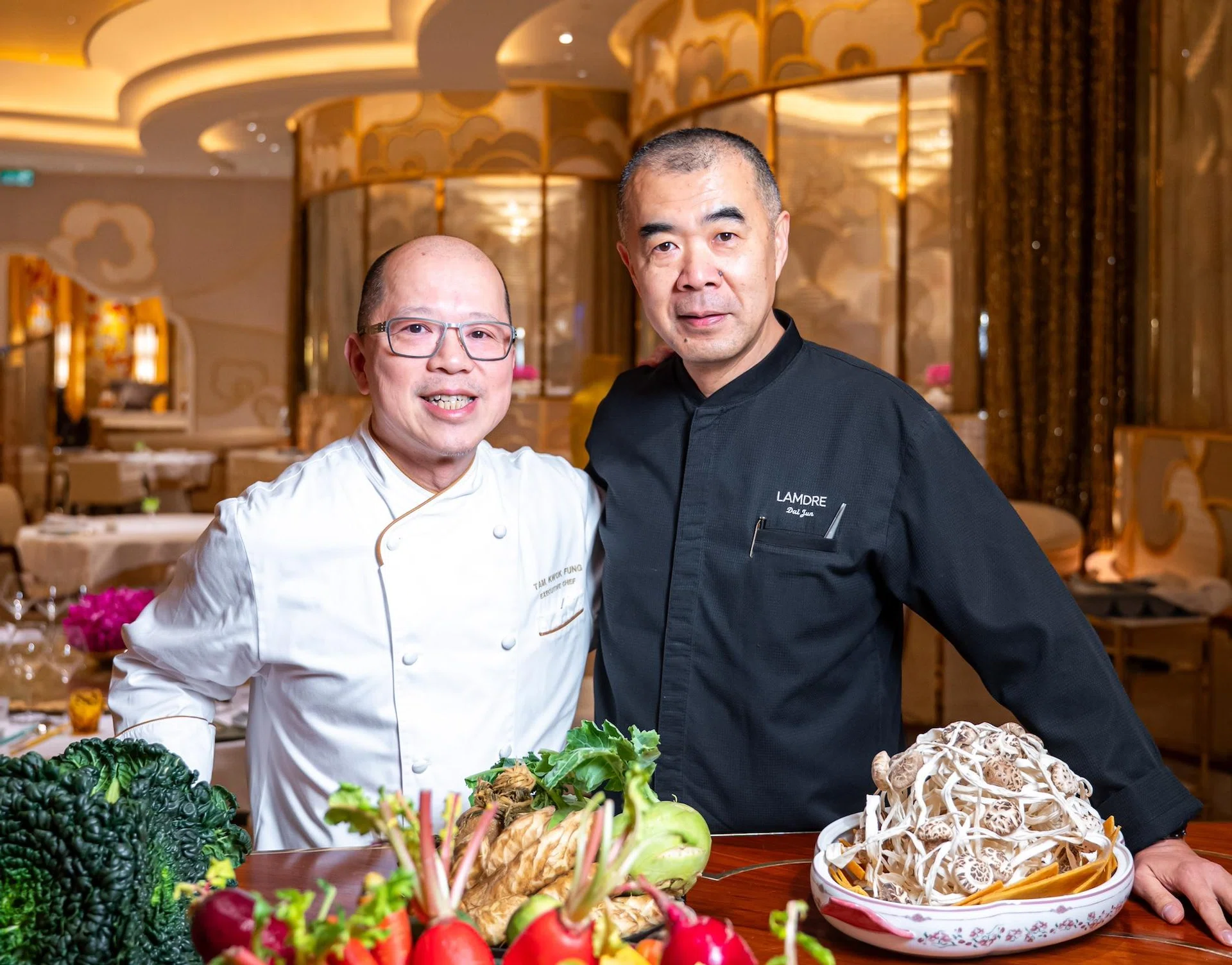
Two sides of the same coin, Michelin-starred chefs Tam Kwok Fung in Macau and Dai Jun from Beijing, exemplify how seasonal cuisine demands profound respect for nature.
By Lu Yawen /
Share this article
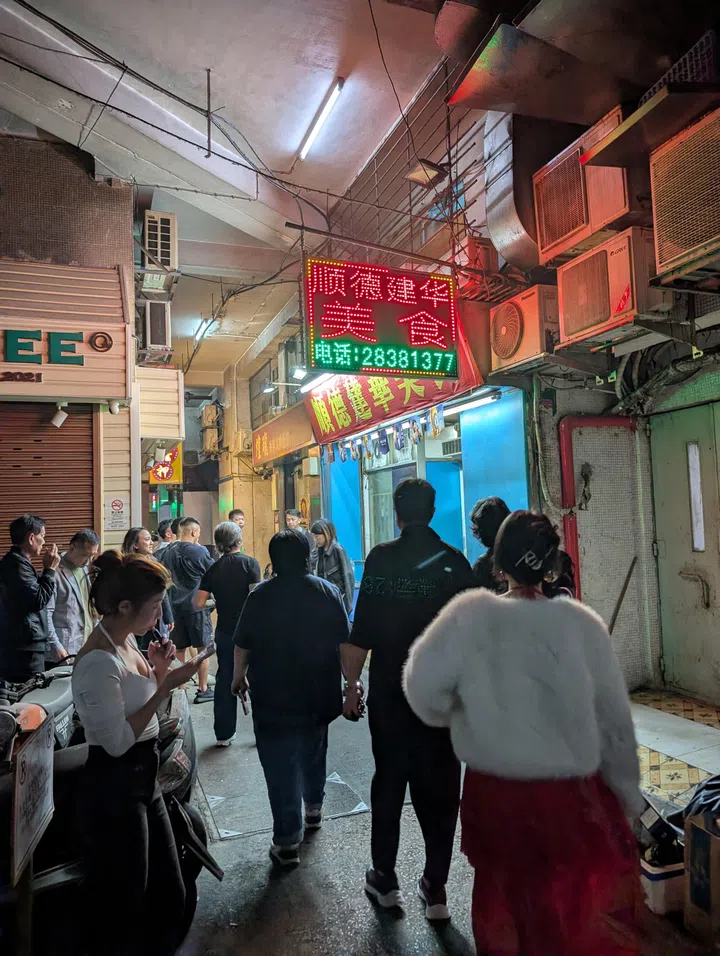
It was close to 11pm in Macau when the entire media entourage had been dropped off at a local eatery, a 20-minute drive from Wynn Palace in Cotai.
We’d come straight from dinner at the hotel’s SW Steakhouse to join Michelin-awarded masterchef Tam Kwok Fung of Chef Tam’s Seasons and guest chef, Dai Jun, from Beijing’s pioneering plant-based restaurant, Lamdre, for supper.
Past tanks of live seafood and up a narrow staircase, the chefs and their teams were already starting their late dinner as we made our greetings and settled in. They had finished prepping for the sold-out four-hands dinner to be held over the next two days at Tam’s restaurant.
As lo-fi as they come, champagne and white wine were poured into disposable plastic cups. At the same time, claypot braised mutton, crispy fried pig intestines, poached free-range chicken, stir-fried pig’s tongue, and a whole fried fish materialised on the lazy susan.
Everyone miraculously seemed to find more room in their stomachs for the simple, hearty, home-cooked cuisine.
I was almost at my limit when an unassuming claypot of kailan arrived. Tam came by the table to add his own twist on it — a generous drizzle of bourbon while the claypot was still hot. Reduced, the splash of alcohol gave the vegetables a complex, roasted, nutty afternote.
Beijing’s plant-based trailblazer
The highly anticipated four-hands is in part due to Lamdre’s (its name derived from the Tibetan Buddhist system of meditation and meaning “path” and “fruit”) first two Michelin stars in the Michelin Guide Beijing 2026, announced in October.
In the three years it’s been open, it has already made it onto Asia’s 50 Best Restaurants list and, within China, the Black Pearl Awards. No doubt a testament to owner Zhao Jia’s vision and Dai’s dedication.
Lamdre’s rise in popularity as an entirely plant-based restaurant in a city famed for its meat buns, pork dumplings and Peking duck indicates that consumers’ tastes are changing. Vegetarian cuisine is sought out not only for health or religious reasons but also appreciated for its novelty and culinary innovation.
Dai likens himself to a translator between people, terroir, and the seasons, to “acknowledge the inherent perfection of nature’s creations, and humbly use technique to highlight their true character rather than obscure or distort it”.
Even in presentation, the dishes’ vessels stay close to objects found in nature, from the skin of a fruit to a flower. He refers to the menu as an “edible terroir map” and a “seasonal journal”.
Though not a vegetarian or practising Buddhist himself, he distilled from the philosophy a stringent research process that includes curiosity about how and why ingredients develop their flavour and texture in different seasons and soils. After which, he decides what culinary techniques to use, with intentional restraint, to let them “transform on their own”.
Interestingly, Dai fell into vegetarian cuisine quite by accident in 2011, when he realised at a job interview that the two Michelin-starred restaurant, King’s Joy in Beijing, he was applying to was plant-based. Though vegetarian cuisine is admittedly more challenging, he’s since thrown himself into honing his culinary skills, tapping into his traditional background.
“My inspiration comes from continually exploring the inner core of tradition, then reinterpreting it within a contemporary context. Creation is a cycle… (and) tradition is not a constraint… (but) a foundation.”
Two sides of the same coin
In a delightful contrast, the four-hands was a juxtaposition of classic Cantonese cuisine from Tam and Dai’s almost abstract and contemporary creations.
The chefs’ first collaboration, a 10-course meal consisting only of early winter’s harvest of fruits, vegetables, mushrooms, and nuts (in line with Lamdre’s award-winning meat-free cuisine), was a display of delicate techniques and a deep knowledge of the best way to cook everyday ingredients.
Hosted in Chef Tam’s Seasons, a fine-dining restaurant the hotel created specifically for Tam to flex his creativity in micro-seasonal Cantonese cuisine, beautifully plated dishes were paired with Domaine des Arômes wines from a boutique biodynamic winemaker in Ningxia’s Helan Mountain.
Guest chef, Dai, treated us to iconic dishes from Lamdre, offering a peek into one of Beijing’s top vegetarian restaurants.
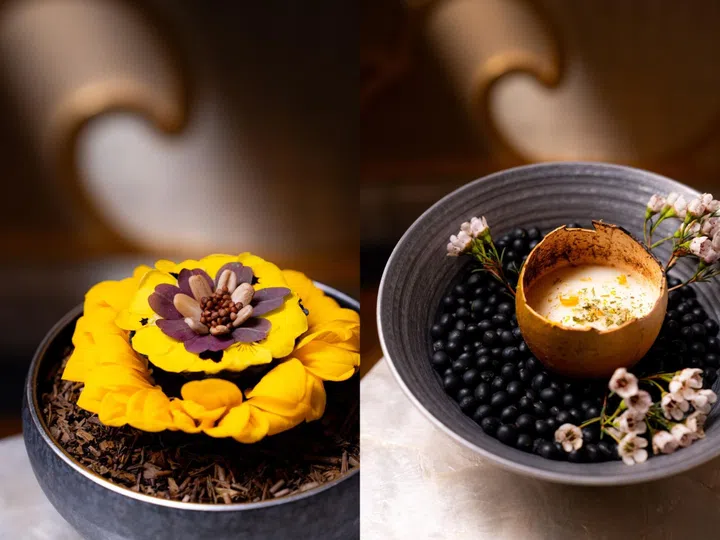
Some courses were clearly Dai’s, who has a Cantonese and Chaozhou (Teochew) culinary background, with texturally rich and dramatic presentations.
The Sunflower appetiser, for example, was a black sesame tart with hawthorn cake, slices of tart green apple, and sweet corn puree decorated with petals and seeds to look like an extension of the sunflower it came on.
And the Potato, the tuber presented in two ways, one of which was a light potato mousse perfumed with golden monkfruit (or luo han guo), mixed with lily bulbs, atop a base of snow lotus seeds, tangy preserved bergamot peel, and shredded fresh longan fruit — served in a dried shell of golden monkfruit decorated with lime zest, pomelo, and cardamom powder.
Whereas Tam’s expertise shone through courses that were presented more classically, allowing the ingredients to shine on their own. His cuisine isn’t typically meat-free, but he created vegetarian dishes specially for the collaboration.
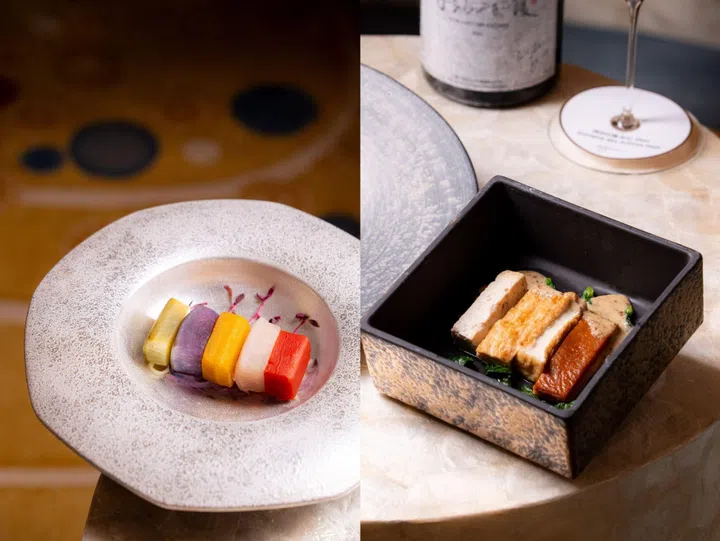
The course Five - Roots showcased radishes from five provinces in China, cooked gently in their juices until tender, revealing the vegetables’ subtle earthiness and sweetness. It was paired with a moreish walnut, basil, and chilli oil sauce we couldn’t get enough of.
All About Soy, likewise, was a flight of four soy products: beancurd skin, tofu, sweet beancurd skin, and house-made fermented tofu.
Only lightly seasoned and accompanied with a miso sauce made with fermented beancurd and mustard seeds, the dish’s austerity was an almost meditative enjoyment of the different tastes and textures.
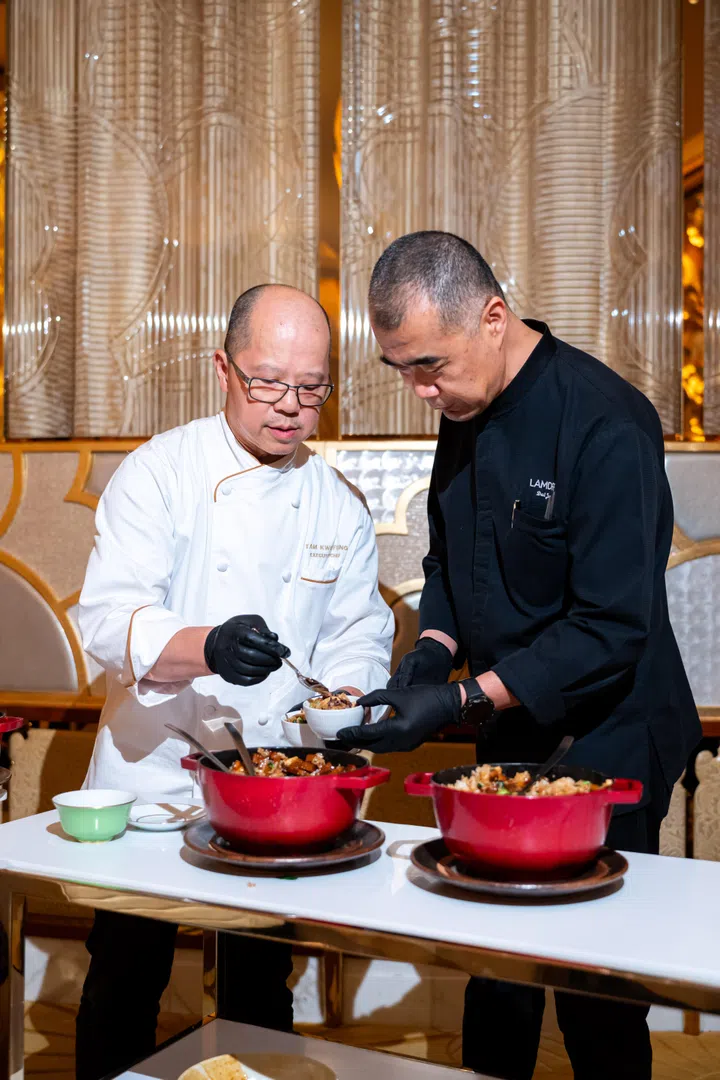
The final savoury course, an off-menu dish (a trend in fine-dining restaurants in China to make guests feel VVIP, we’re told), was claypot rice inspired by Taiwanese braised pork rice, or ru rou fan. Finished tableside, the two chefs mixed in braised beancurd cubes, toasted almonds, and puffed rice.
Served last were the best parts: browned, crunchy bits of toasted rice from the bottom of the claypot. Of all dishes, this was perhaps the most reminiscent of last night’s informal supper.
Putting Mother Nature first
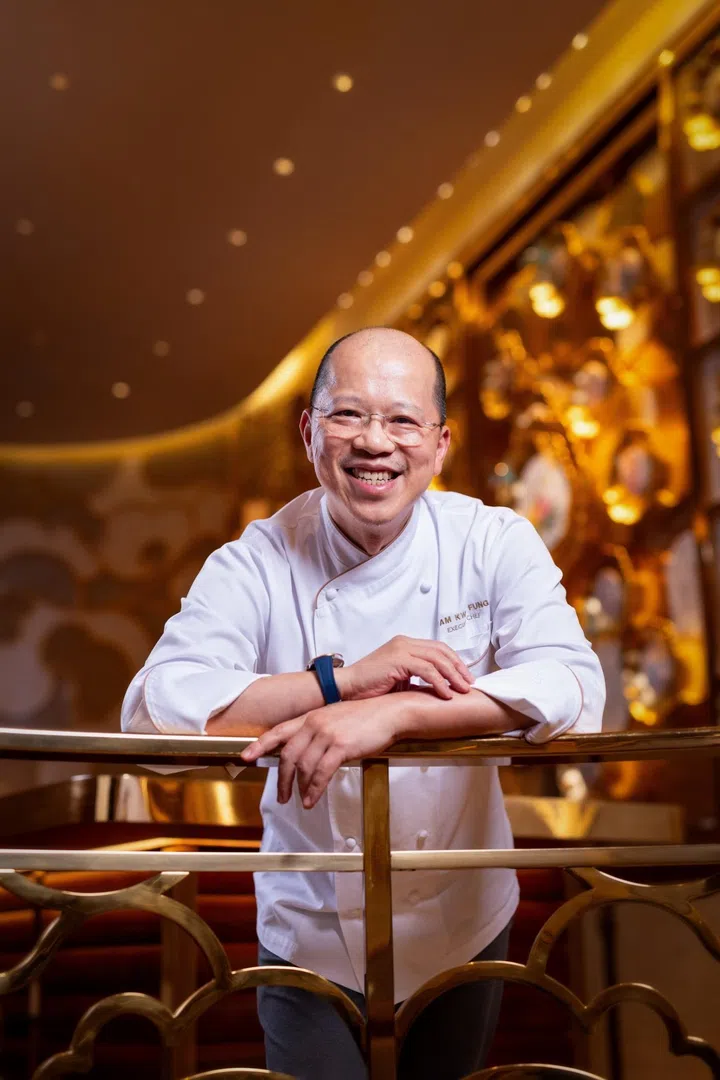
Evidently, both chefs have a high regard for seasonality. And as global culinary trends continue to move toward sustainability and hyperlocality, Dai and Tam remind us that traditional Chinese cooking has been doing just that for centuries.
For Tam, the first chef in Macau to earn Chef of the Year from the 2023 Black Pearl Restaurant Guide, his Cantonese cooking ethos at Chef Tam’s Seasons extends to educating guests through food, such as how the types of vegetables used can give a sense of time.
Double-boiled winter melon soup, for example, would signify summer was here. Or stir-fried kai lan would be a sign of the arrival of autumn or winter.
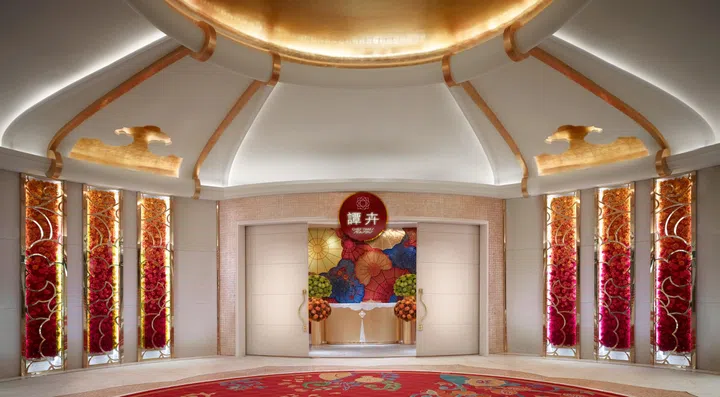
The restaurant’s menu refreshes every 15 days (or can be amended within 15 minutes to cater to guests with specific dietary restrictions), reflecting the 24 solar terms, the microseasons for farmers of the past, and showcasing the healing properties of ingredients with the help of traditional herbalists-turned-friends.
While at Lamdre, Dai wants to translate eastern philosophical principles, such as harmonious living between humans and nature, greater respect for farmers, and the importance of biodiversity.
To him, accolades are to “open doors to equal dialogue with leading international peers and forward-thinking minds” and mean a responsibility to “help guide the industry towards greater sustainability”.
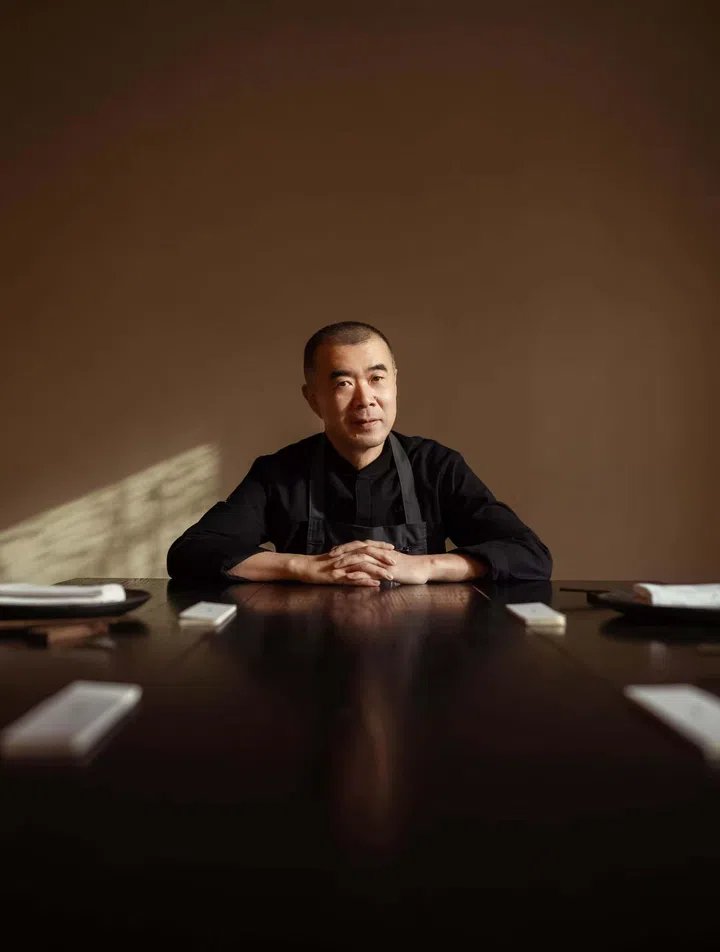
Though their presentations and techniques vary, both chefs share a sense of curiosity that drives them to discover new ingredients, whether through daily early-morning visits to the wet market or field trips to other regions of China. They understand that the best dish can only come from the freshest produce.
And if the measure of one’s prowess is in the ability to expound on the simplest, most overlooked ingredients, then both Dai and Tam are at the top of their game. Dai’s favourites to cook with are what he calls “living foundational ingredients” such as legumes and grains.
He explained, “They represent infinite potential for transformation and the essence of flavour itself. In the most basic things, I find the deepest worlds.”
He also praised Tam’s Five - Roots dish as a prime example of when a chef reaches their highest potential. Dai added, “The next stage is allowing dishes to speak for themselves, with the chef quietly receding into the background, but most importantly, they have to taste good.”