
The economics of running a home-based F&B business in Singapore
Starting a home-based food business in Singapore can be exciting and fun, but what should you consider? We speak to three business owners about their pain points and plus points.
By Karen Fong /
Share this article
It’s easy to think the Covid-19 pandemic started Singapore’s home-based business boom. At the time, with nowhere to go, many Singaporeans turned their baking and cooking passions into small businesses they could run from their home kitchens.
But the country has a long history of small home-based businesses. Whether it was tuition or sewing services, the government recognised it as a significant industry and implemented the Home-Based Business Scheme (HBBS) through HDB in 2001, starting with a pilot programme. From then onwards until 2003, this evolved to include more types of businesses and clearer guidelines.
What kind of businesses can you run from home?
While you can run a number of businesses from home, from hairdressing to photography, as well as facials, beauty, and sewing, the most popular among Singaporeans is food businesses.
This can include small-scale baking, private kitchens, and home cafes.
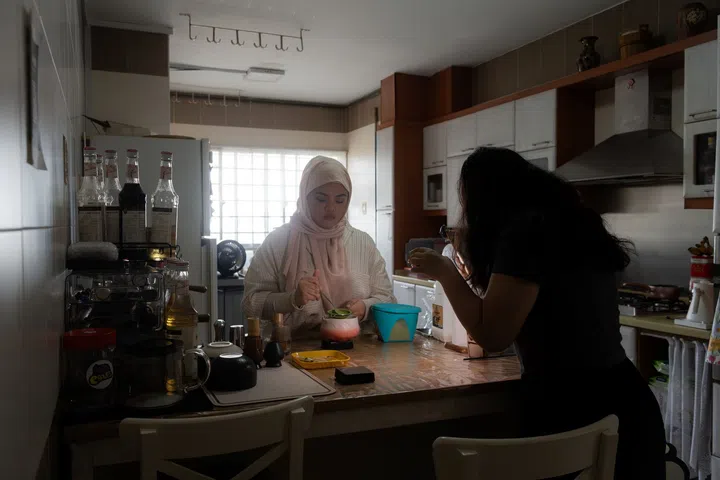
What are the official things you need to know about operating a food business from your home?
You must meet HDB’s basic requirements to run a food business from home. The full list can be found here, but here is a highlight of important points:
- The business must be operated by the homeowners, registered occupants or tenants
- No advertisement can be displayed at the flat
- Traffic should not be elevated or impact the neighbourhood by way of noise, smoke, smell or litter
- Food businesses must comply with rules and regulations of the Singapore Food Agency (SFA)
Nur Qistina, who started Brewprint Coffee with her brother Khairul from their HDB flat in Tampines in October 2024, emphasises the importance of cleanliness and hygiene in this case. “Unlike commercial F&B outlets, home-based setups are currently not licensed by SFA, nor are formal food safety certifications strictly mandatory under the scheme,” she says.
“Because of this, maintaining high hygiene standards falls entirely on the operator’s own accountability.” She and her brother both earned their WSQ (Workforce Skills Qualification) Food Safety Certification through their previous jobs, which she says immediately reassures customers.
What is most important when running a home-based food business?
When it comes to working with food, freshness and quality are naturally top of mind. Amrita Dhillon set up Amrita’s Artisan Bakeology in December 2019, after having been a primary school teacher for seven years.
Specialising in burnt cheesecakes, she branched out into classic cakes, festive hampers for Diwali, Christmas, and Chinese New Year, and baking workshops for kids and adults.
She sells roughly 40 to 60 cakes a month, though festive seasons like Diwali last October doubled that to 120. A five-inch Naked Burnt Cheesecake starts at $59, while a Victoria Sandwich Classic Dome Cake goes up to $228.

“You have to be careful with ingredients and how you store them to avoid,” she says, while also mentioning suppliers as something to consider cost-wise. “If you want wholesale rates, you usually need to be a registered business.
Sourcing high-quality ingredients at good prices takes time, but it protects your margins. And it only makes sense to buy in bulk if you’ve got order volume.” She warns against buying for value and not getting the orders. “Then everything goes to waste. You need a clear system for your ingredients and a lot of planning.”
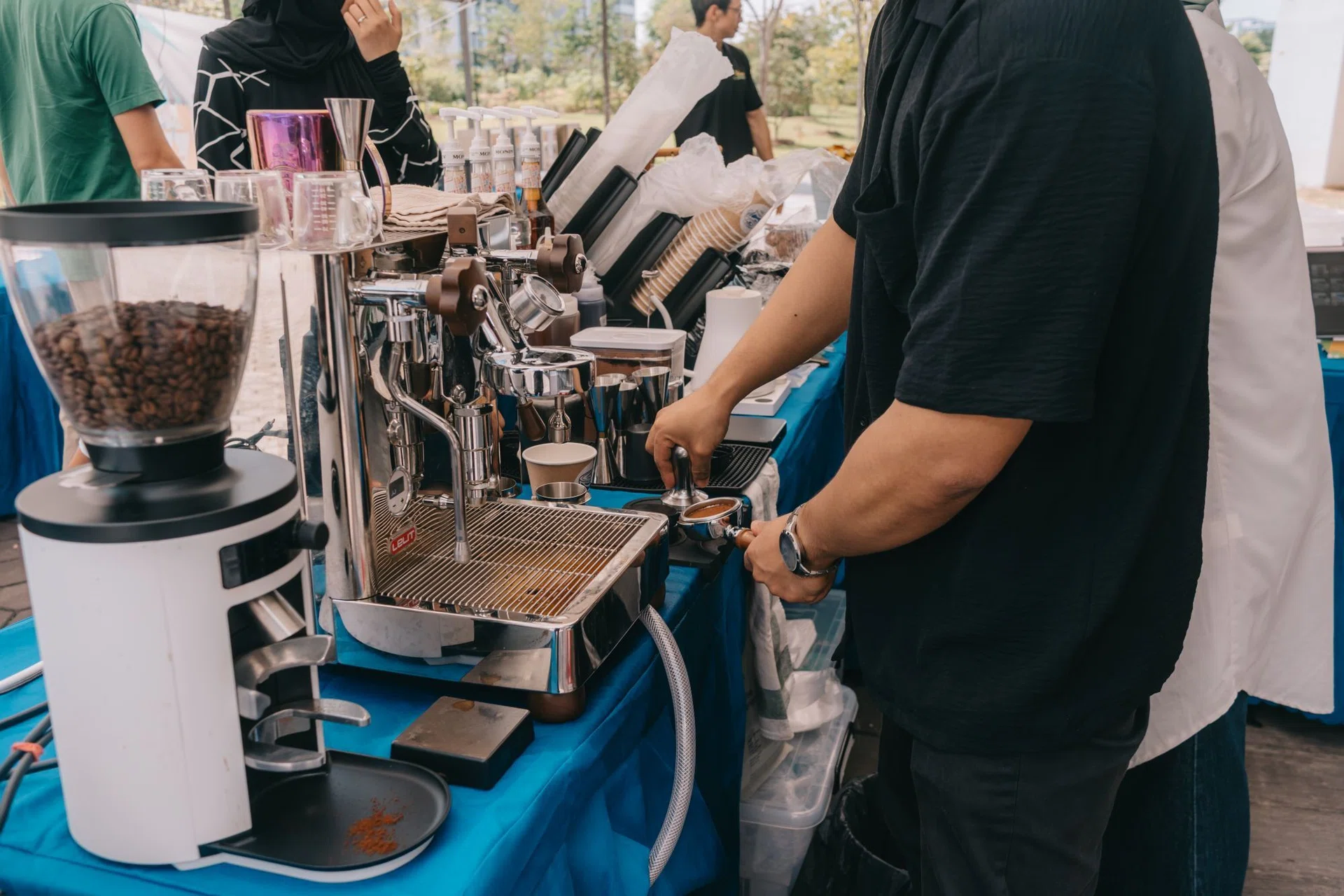
Equipment is definitely something to consider when running a home-based food business. “When we first started out, our budget was limited, so we bought a second-hand Breville Barista Pro off Carousell just to kickstart the business, never expecting we would receive such an overwhelming response from customers,” says Qistina.
“However, consumer-grade gear isn’t built for back-to-back high-volume extractions. The breaking point came during a busy shift when the machine short-circuited as we turned it on. That was our wake-up call to invest in a commercial-grade setup capable of handling continuous peak demand without compromising quality or safety.”
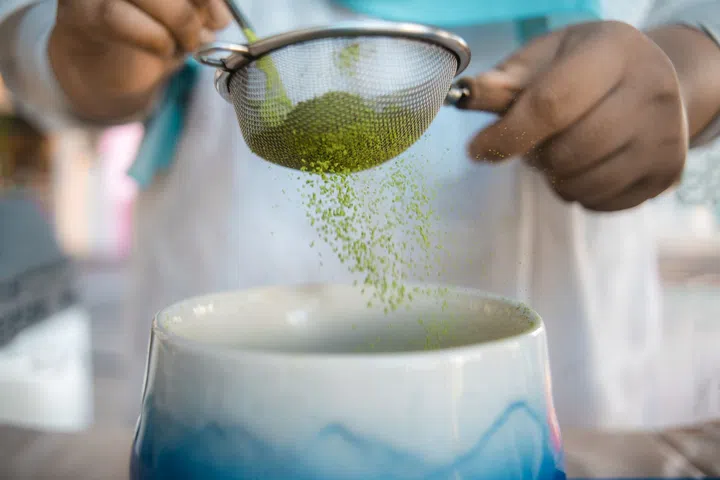
Their focus on craft beverages also means sourcing only high-grade ingredients, such as ceremonial matcha from China. “It makes up a sizable portion of our ingredient expenses per cup,” say Qistina.
Brewprint Coffee’s drinks range from $4 to about $7.20, with add-ons from ceremonial matcha to oat milk costing an additional $1. They sell about 10 cups a day.
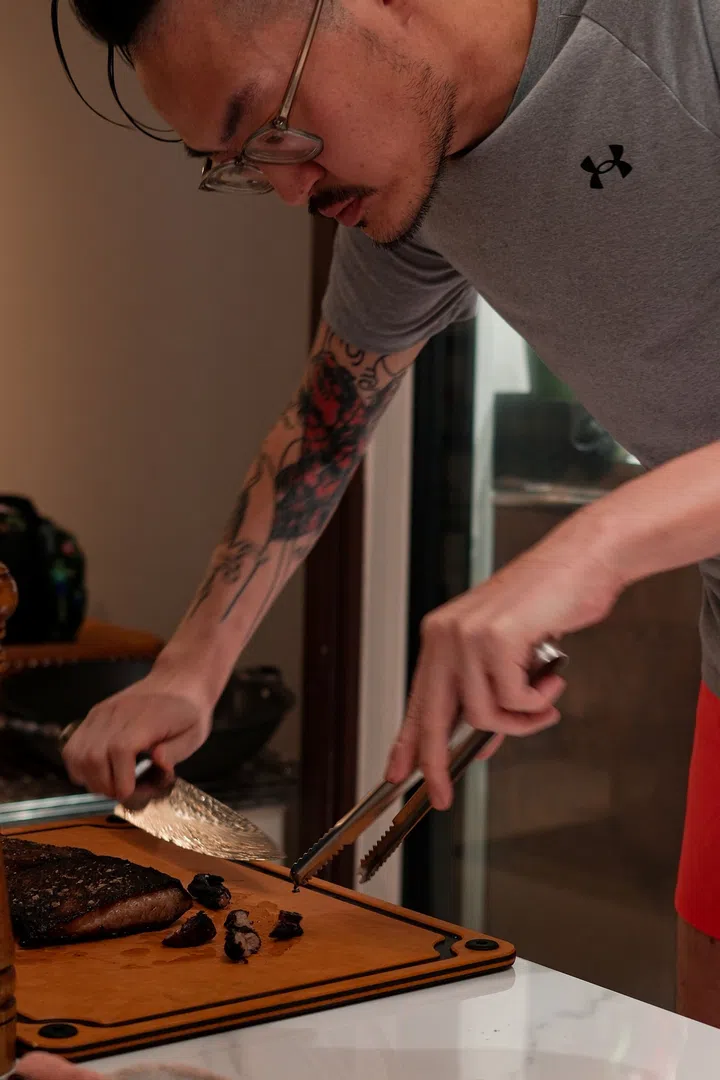
For Harris Ang, who runs angkongchef, a private kitchen out of his Tanah Merah terrace house, ingredient and equipment costs are major considerations. “We import our beef and seafood from Japan. However, we also work with my local wet market vendors who bring in special ingredients for me.
A kilogram of A5 Miyazaki can be over $300 a kg.” He adds that three fridges, a chest freezer and a dry ager have a big impact on his electricity bills. A six-course menu starts at $158 and features personal interpretations of his favourite dishes, including cod, steak, and risotto, plus a secret dish. Ang says he receives about seven to eight bookings a month.
What are some budget considerations when starting a home-based food business?
For Amrita, baking was an expensive hobby before it became a business, so she did not have to make any big purchases.
“I only needed a few more baking trays and some packaging, roughly $300. That first Christmas, a family member gave me a second KitchenAid mixer because my first one was being overused, and that’s worth about $700.”
Overall, she estimates it took about $1,000 to start the business, in addition to the cost of the WSQ Food Safety Course.

But while she didn’t have to buy much more equipment, she notes that subscription costs and other factors can add up. “Your online shop platform like Shopify, or web hosting, cloud storage, and the other apps you use to run things — these can quietly add up every month.” Marketing and promotions can add to that, too.
“If you have a great product but nobody knows about you, it makes things quite hard. When I started out, I wasn’t very consistent, but now I post regularly. You have to get comfortable showing up online, and good photos really make a difference.”
Qistina also highlights electrical load management and packaging. “Standard residential flats run on single-phase circuits. Running prosumer or commercial-grade espresso machines and grinders requires careful power management so you don’t overload or trip the power during peak orders,” she says.
For their packaging, Brewprint Coffee uses leak-proof, tamper-evident packaging, which can add to costs. They also invest in specialised water filtration and storage systems to ensure coffee and matcha quality remains consistent without compromising food safety during deliveries or pickups.
Qistina says their initial costs started around $2,000 for a coffee machine, grinder, kettle, and packaging.
Amrita also addresses pricing. “A lot of home bakers undercharge when they start because they don’t know their costs and don’t pay themselves for their time,” she says.
“You end up busy but actually losing money. Work out your costs, decide what you’ll pay yourself, and then set your price. I started with a good margin from day one, which is why I haven’t had to change my prices much in seven years.”
What should aspiring home-based food business owners look out for?
At the end of the day, a home-based food business is still a business, and budding business owners need to be aware of certain processes. “Spatial ergonomics matter just as much at home as in a commercial cafe,” says Qistina. “Streamlining your workflow so two people aren’t bumping into each other during peak pickup windows is critical.”
Harris also adds that running a private kitchen, while a creative and fulfilling experience for him, can take a toll on the family.
He says half-jokingly, “Test menus can be tiring for them, especially after asking them to taste the same risotto 20 times to get it perfect.” It’s also important to keep growing and evolving. “The first version of Angkongchef was a bespoke barbecue service,” Harris recalls.
“We elevated the traditional Singaporean-style barbecue into something beyond otah and satays. But over time — with requests from clients who wanted more intimate settings — we decided to open up our home to host.” To that end, he uses his basement to comfortably seat up to 12 guests. It also features a private alcohol room.
Amrita is also looking at ways to improve her business. “Right now, I am looking at ways to make it easier for offices to get cakes for birthdays, celebrations, and tea-time treats, possibly with a pickup point there, and maybe doing some pop-ups.”
She adds that starting her business brought some surprising benefits. “I didn’t expect how much this business would open up for me. Running Amrita’s Artisan Bakeology led me to start Founder’s Table, a community where female founders come together to share, support, and inspire one another. I also host content parties to help founders create content for their own businesses. It’s become a big part of my life alongside the cakes.”