%22%3E%0A%3Cpath%20d%3D%22M412%20101.2H393.7C393.1%20101.2%20392.3%20100.9%20391.8%20100.5C377.3%2087.6004%20362.9%2074.6004%20348.4%2061.6004C344.8%2058.4004%20341.3%2055.2004%20337.7%2052.0004C337.1%2051.5004%20336.2%2051.1004%20335.5%2051.0004C334.2%2050.8004%20333%2051.0004%20331.5%2051.0004V101.1H316.7V0.100391H331.4V44.3004C331.9%2044.3004%20332.2%2044.4004%20332.5%2044.4004C334.9%2044.4004%20337.2%2044.5004%20339.6%2044.4004C340.4%2044.4004%20341.3%2044.0004%20341.8%2043.5004C351.6%2034.4004%20361.4%2025.2004%20371.1%2016.0004C376.5%2010.9004%20381.9%205.90039%20387.3%200.800391C387.9%200.200391%20388.5%200.000390626%20389.3%200.000390626H400.9C384.2%2015.8004%20367.8%2031.3004%20351.2%2047.0004C371.5%2065.0004%20391.8%2082.9004%20412.1%20100.9C412.1%20101%20412.1%20101.1%20412%20101.2ZM180.9%20101.2C184.1%2094.9004%20187.2%2088.9004%20190.3%2082.8004C198.3%2067.3004%20206.2%2051.8004%20214.2%2036.2004C220.3%2024.4004%20226.4%2012.5004%20232.4%200.700391C232.7%200.100391%20233%20-0.0996094%20233.7%20-0.0996094H248.1C248.8%20-0.0996094%20249.2%200.100391%20249.6%200.800391C256%2013.3004%20262.4%2025.7004%20268.8%2038.2004C279.3%2058.6004%20289.8%2079.0004%20300.3%2099.5004C300.5%20100%20300.8%20100.4%20301.1%20101.1C300.5%20101.1%20300.1%20101.2%20299.7%20101.2H286.5C285.6%20101.2%20285.1%20100.9%20284.7%20100.2C280.1%2091.3004%20275.4%2082.4004%20270.8%2073.4004C270.1%2072.1004%20269.3%2071.6004%20267.8%2071.6004H209.9C208.7%2071.6004%20208.1%2072.0004%20207.5%2073.1004C202.9%2082.1004%20198.2%2091.0004%20193.6%20100C193.1%20101%20192.6%20101.3%20191.5%20101.3C188.4%20101.2%20185.3%20101.3%20182.3%20101.3C182%20101.2%20181.6%20101.2%20180.9%20101.2ZM239.1%2011.4004C230%2029.2004%20221.1%2046.7004%20212.1%2064.3004H266.4C257.2%2046.7004%20248.2%2029.2004%20239.1%2011.4004ZM0%200.000390626H43.4C51.2%200.000390626%2058.7%201.20039%2065.7%204.80039C75.9%2010.0004%2078.9%2018.0004%2078.6%2027.4004C78.3%2034.3004%2076%2040.5004%2071.2%2045.5004C67.3%2049.6004%2062.4%2052.3004%2057.1%2054.3004C50.6%2056.7004%2043.9%2058.0004%2037.1%2058.6004C30.1%2059.2004%2023.1%2059.4004%2016.2%2059.7004C15.8%2059.7004%2015.3%2059.8004%2014.8%2059.8004V101.1H0.1C0%2067.4004%200%2033.8004%200%200.000390626ZM14.8%207.10039V52.2004C23.7%2052.4004%2032.6%2052.3004%2041.2%2050.1004C44.4%2049.3004%2047.6%2048.2004%2050.6%2046.7004C58.4%2043.0004%2062.3%2036.7004%2062.7%2028.0004C63%2019.9004%2059.5%2014.1004%2052.4%2010.5004C47.6%208.00039%2042.5%207.10039%2037.2%207.10039H14.8ZM95.9%20101.1V0.100391H167.3V7.20039H110.7V44.7004H158.1V51.9004H110.8V93.9004H171.1V101C146.1%20101.1%20121%20101.1%2095.9%20101.1Z%22%20fill%3D%22black%22%2F%3E%0A%3Cpath%20d%3D%22M35.0004%2025.7996H42.5004V20.6996H44.8004V33.1996H42.6004V27.5996H34.9004V33.2996H32.7004V20.7996H35.0004V25.7996ZM54.4004%2025.8996V27.2996H48.9004V31.6996H55.9004C55.9004%2032.1996%2056.0004%2032.5996%2056.0004%2033.0996H46.5004V20.5996H55.5004V21.8996H49.0004V25.7996C50.7004%2025.8996%2052.5004%2025.8996%2054.4004%2025.8996ZM25.9004%2033.0996H23.5004V21.9996H17.9004V20.6996H31.6004V22.0996H27.1004C26.2004%2022.0996%2025.9004%2022.2996%2025.9004%2023.1996C26.0004%2026.0996%2025.9004%2028.9996%2025.9004%2031.7996V33.0996Z%22%20fill%3D%22black%22%2F%3E%0A%3C%2Fg%3E%0A%3Cdefs%3E%0A%3CclipPath%20id%3D%22clip0_388_462%22%3E%0A%3Crect%20width%3D%22411%22%20height%3D%22101.2%22%20fill%3D%22white%22%2F%3E%0A%3C%2FclipPath%3E%0A%3C%2Fdefs%3E%0A%3C%2Fsvg%3E%0A)
Tok Panjang and cassava leaf curry: A behind-the-scenes look at the Peranakan food in ‘Emerald Hill’
Chef Philip Chia, who is the food consultant of the hit drama series, shares the work behind whipping up salivating dining scenes in the show.
By Alethea Tan /

Share this article
In the first episode of Emerald Hill, the spin-off television drama series of the iconic The Little Nyonya, the kitchen of the wealthy Zhang family is bustling with activity as cooks, ma jie (Cantonese domestic helpers) and daughters-in-law busy with an exhaustive list of tasks that entail chopping, pounding and simmering a menu of dishes.
Helming the kitchen is a Hainanese chef, hired to oversee and organise the scale of prep and cooking required for an elaborate Peranakan meal — the Tok Panjang — usually arranged for momentous family events or celebrations.
It comes as no surprise that Peranakan cuisine is an integral element of Emerald Hill. The period drama, set from the 1950s to 1970s, chronicles life in a Peranakan household, played by up-and-coming actresses, Tasha Low, Chantelle Ng, and Ferlyn G. Household names such as Zoe Tay, Jesseca Liu, Shaun Chen and Romeo Tan also star in the blockbuster series.
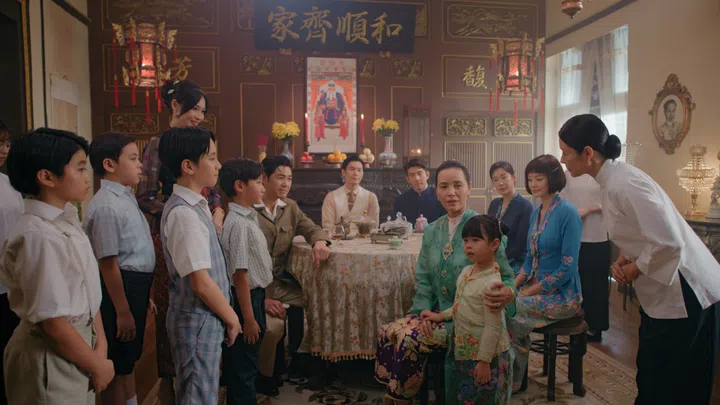
The 30-episode series, which premiered on Netflix Singapore on March 10, has drawn over 1.35 million views across platforms such as mewatch and Channel 8. It has since held its Top 10 spot on Netflix in Singapore and Malaysia.
We chat with the mastermind behind the salivating food scenes, veteran Peranakan chef Philip Chia, who was the food consultant for Emerald Hill. The Culinary Director of Golden Dragon C&C is a fourth-generation Baba who has ran numerous Peranakan cooking promotions with hotels and authored Peranakan cookbooks.
Actors underwent six to eight hours of culinary training
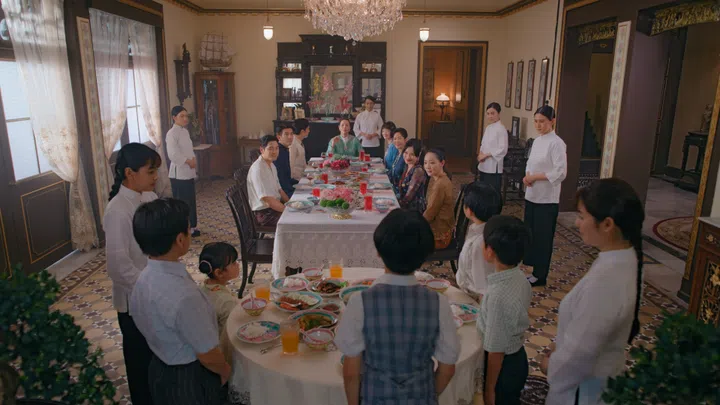
Tok Panjang in Emerald Hill is delineated by a sweeping table exquisitely set and laid out with dishes such as ayam buah keluak, buah keluak fried rice, babi pongtay, nyonya chap chye, and, of course, the iconic gulai daun singkong (cassava leaf curry) prepared by the Zhangs’ eldest daughter-in-law, Li Shu Yu, played by Malaysian actress Jojo Goh.

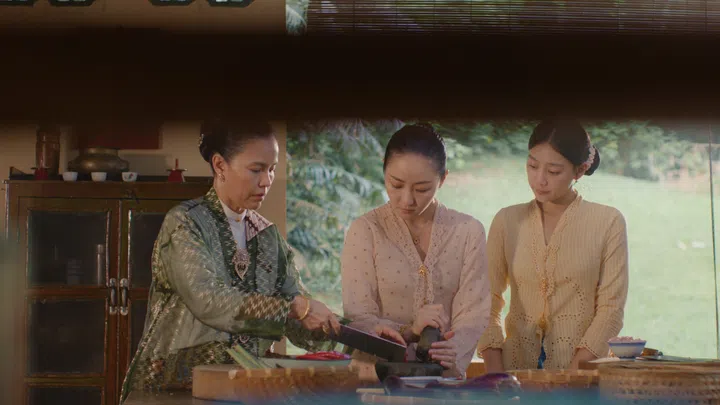
On-screen, Goh appeared to be right at home in the kitchen, pounding spices in a lesung batu (traditional stone mortar and pestle) to wok-frying the rempah herself, but these were skills that Goh was not equipped with prior to the show.
She, along with other key actresses, had to undergo hours of culinary training ahead of filming.
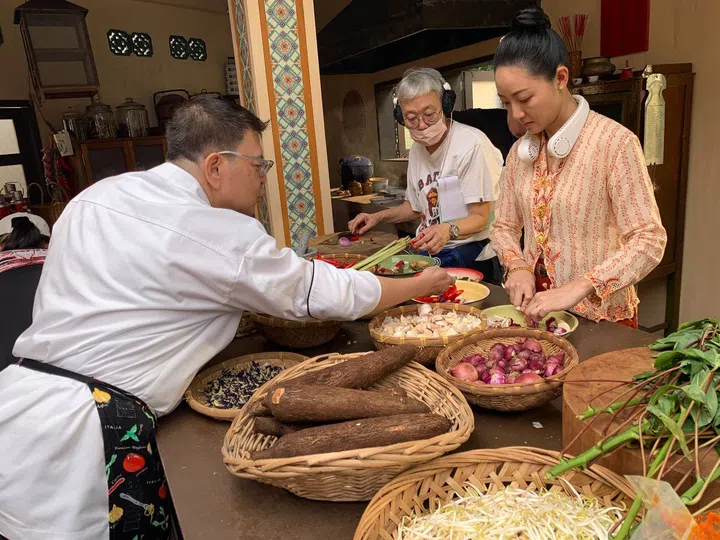
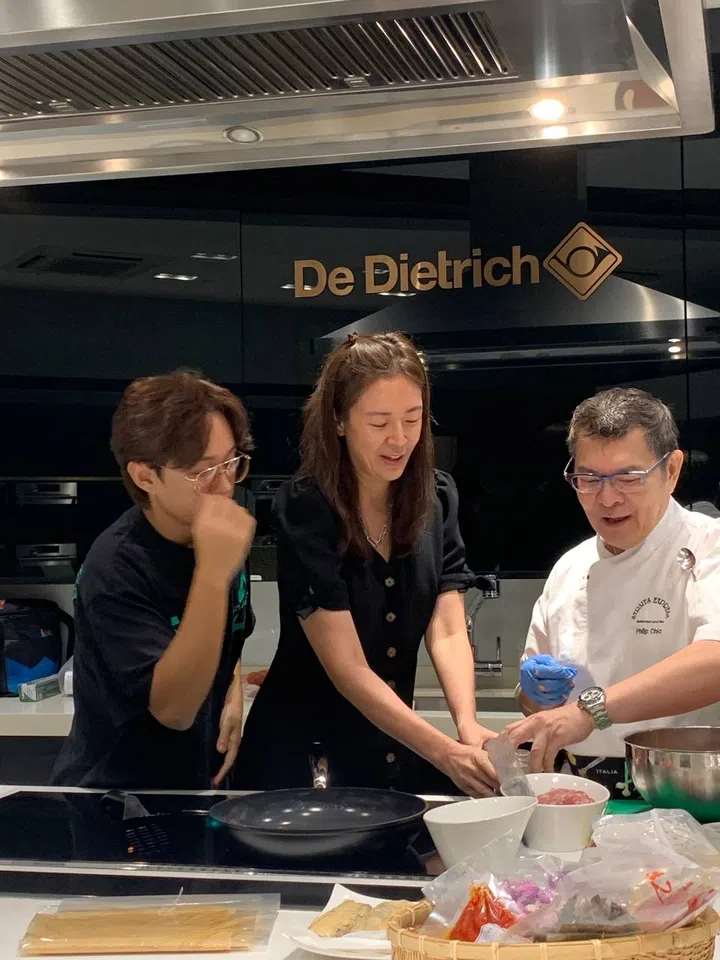
“We had to train Jesseca Liu, Chantalle Ng, Tasha Low, Jojo Goh, Ferlyn Wong, and many others months ahead of filming,” says Chia when we asked about his work with the cast. “We taught them how to pound and cook the spices correctly, the steps taken to arrive at the finished dishes, and each actress had to undergo at least six to eight hours of culinary training with me.”
They also got to learn how to make some of the Nyonya kueh, such as kueh salat, featured on the show, he adds.
Ensuring that the food scenes fit the plot
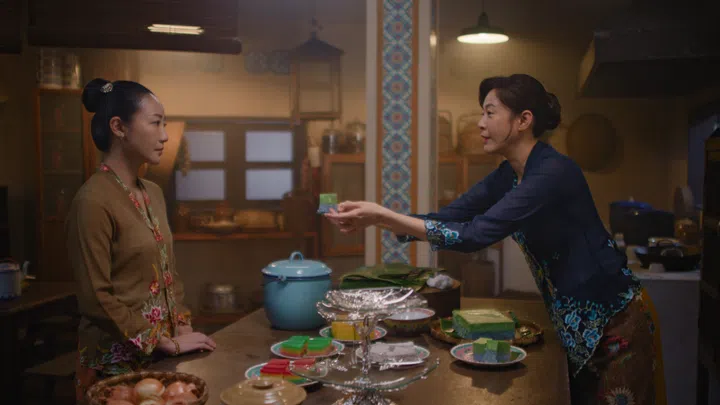
Chia’s work with Emerald Hill doesn’t stop at training. He was also closely consulted on food scenes that fit the plot and worked directly on the set, preparing food in an on-site makeshift kitchen and making sure that the layout of the dishes, plating, tableware from Golden Dragon C&C’s private collection, and tablecloths used are precisely portrayed and authentic. He also taught the actors how to eat the traditional Baba Nyonya way with their hands.
“The entire script stretched over three decades, and so all the dishes and appearances had to fit a timeline,” Chia explains. “Some of the biggest challenges were coordinating with the directors to produce the rare dishes and how they would appear on camera. We also had to procure ingredients that could no longer be found in Singapore and replicate cooking methods of the past.”
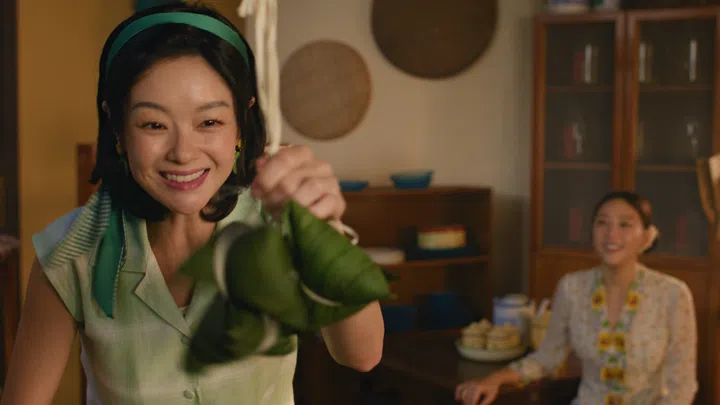
These include making Nyonya Bak Zhang (stuffed glutinous rice dumplings) in Episode 12. The dumplings had to be tied with bamboo strings as dictated by tradition. “Using bamboo strings for the bak zhang was tremendously difficult because they kept breaking. This is why we use raffia strings today,” Chia shares.
“The actresses really struggled with this during the training sessions.”To make the process more time-efficient, the dumplings were steamed with modern raffia strings and simply replaced with bamboo strings for the show.
Another uphill task was securing cassava leaves to whip up Gulai Daun Singkong in Episode 1. “Cassava leaves are unavailable locally these days due to the lack of demand, so the props team from Mediacorp had to go to Malaysia to search for it and courier them back.”
“As for the Sambal Udang Belimbing,” he adds, “I had to handpick the belimbing from trees grown in the gardens of my relatives in Singapore.” This is due to dwindling availability of the small, sour fruit in local markets.
“Once these old mavens pass away, their properties will be sold and these high-maintenance belimbing trees will be gone,” Chia says sadly.
Whipping up memories onscreen

Chia had, himself, been adopted into a Peranakan household and started helping out in the kitchen when he was a child. His story occurred in Joo Chiat in the 1960s, where he learnt the ins and outs of Peranakan cuisine. “By the time I turned six, I was pounding rempah,” he recounts. “Reading the script of Emerald Hill made me reminisce about my childhood, and many of the dishes featured were inspired by my own experiences.”
For example, all the dishes showcased in Emerald Hill’s Tok Panjang are produced from recipes passed from Chia’s adoptive mother and older Bibiks. The traditional Tok Panjang was rare for his generation, but cooking remained a steadfast part of his Peranakan household.
Today, Chia is a gatekeeper of traditional Peranakan recipes, a cookbook author of three Peranakan recipe books, and a consultant for Peranakan cuisine. Emerald Hill is, however, not his first TV consulting rodeo. The chef was also the food consultant on The Little Nyonya series that aired in 2008 and its 2020 remake on China Central Television.
When asked about the difference in his work scope between The Little Nyonya and Emerald Hill, he says, “In the first show, the producers did not anticipate the full cultural impact of the show.”
“Then, the directors did not really know what should go on camera, so there was a lot of trial and error that took up a lot of time despite fewer scenes for food. After listening to audience feedback and seeing the example set by the International Edition that came after, there was a greater emphasis on Peranakan cuisine for Emerald Hill.”
This culminated in a mouth-watering and riveting TV drama series. Nyonyas and Babas in Singapore will be pleased to see Mediacorp’s gallant attempt to do their cuisine justice, thanks in no small part to Chia and his team.
Emerald Hill can be streamed on Netflix and mewatch.