%22%3E%0A%3Cpath%20d%3D%22M412%20101.2H393.7C393.1%20101.2%20392.3%20100.9%20391.8%20100.5C377.3%2087.6004%20362.9%2074.6004%20348.4%2061.6004C344.8%2058.4004%20341.3%2055.2004%20337.7%2052.0004C337.1%2051.5004%20336.2%2051.1004%20335.5%2051.0004C334.2%2050.8004%20333%2051.0004%20331.5%2051.0004V101.1H316.7V0.100391H331.4V44.3004C331.9%2044.3004%20332.2%2044.4004%20332.5%2044.4004C334.9%2044.4004%20337.2%2044.5004%20339.6%2044.4004C340.4%2044.4004%20341.3%2044.0004%20341.8%2043.5004C351.6%2034.4004%20361.4%2025.2004%20371.1%2016.0004C376.5%2010.9004%20381.9%205.90039%20387.3%200.800391C387.9%200.200391%20388.5%200.000390626%20389.3%200.000390626H400.9C384.2%2015.8004%20367.8%2031.3004%20351.2%2047.0004C371.5%2065.0004%20391.8%2082.9004%20412.1%20100.9C412.1%20101%20412.1%20101.1%20412%20101.2ZM180.9%20101.2C184.1%2094.9004%20187.2%2088.9004%20190.3%2082.8004C198.3%2067.3004%20206.2%2051.8004%20214.2%2036.2004C220.3%2024.4004%20226.4%2012.5004%20232.4%200.700391C232.7%200.100391%20233%20-0.0996094%20233.7%20-0.0996094H248.1C248.8%20-0.0996094%20249.2%200.100391%20249.6%200.800391C256%2013.3004%20262.4%2025.7004%20268.8%2038.2004C279.3%2058.6004%20289.8%2079.0004%20300.3%2099.5004C300.5%20100%20300.8%20100.4%20301.1%20101.1C300.5%20101.1%20300.1%20101.2%20299.7%20101.2H286.5C285.6%20101.2%20285.1%20100.9%20284.7%20100.2C280.1%2091.3004%20275.4%2082.4004%20270.8%2073.4004C270.1%2072.1004%20269.3%2071.6004%20267.8%2071.6004H209.9C208.7%2071.6004%20208.1%2072.0004%20207.5%2073.1004C202.9%2082.1004%20198.2%2091.0004%20193.6%20100C193.1%20101%20192.6%20101.3%20191.5%20101.3C188.4%20101.2%20185.3%20101.3%20182.3%20101.3C182%20101.2%20181.6%20101.2%20180.9%20101.2ZM239.1%2011.4004C230%2029.2004%20221.1%2046.7004%20212.1%2064.3004H266.4C257.2%2046.7004%20248.2%2029.2004%20239.1%2011.4004ZM0%200.000390626H43.4C51.2%200.000390626%2058.7%201.20039%2065.7%204.80039C75.9%2010.0004%2078.9%2018.0004%2078.6%2027.4004C78.3%2034.3004%2076%2040.5004%2071.2%2045.5004C67.3%2049.6004%2062.4%2052.3004%2057.1%2054.3004C50.6%2056.7004%2043.9%2058.0004%2037.1%2058.6004C30.1%2059.2004%2023.1%2059.4004%2016.2%2059.7004C15.8%2059.7004%2015.3%2059.8004%2014.8%2059.8004V101.1H0.1C0%2067.4004%200%2033.8004%200%200.000390626ZM14.8%207.10039V52.2004C23.7%2052.4004%2032.6%2052.3004%2041.2%2050.1004C44.4%2049.3004%2047.6%2048.2004%2050.6%2046.7004C58.4%2043.0004%2062.3%2036.7004%2062.7%2028.0004C63%2019.9004%2059.5%2014.1004%2052.4%2010.5004C47.6%208.00039%2042.5%207.10039%2037.2%207.10039H14.8ZM95.9%20101.1V0.100391H167.3V7.20039H110.7V44.7004H158.1V51.9004H110.8V93.9004H171.1V101C146.1%20101.1%20121%20101.1%2095.9%20101.1Z%22%20fill%3D%22black%22%2F%3E%0A%3Cpath%20d%3D%22M35.0004%2025.7996H42.5004V20.6996H44.8004V33.1996H42.6004V27.5996H34.9004V33.2996H32.7004V20.7996H35.0004V25.7996ZM54.4004%2025.8996V27.2996H48.9004V31.6996H55.9004C55.9004%2032.1996%2056.0004%2032.5996%2056.0004%2033.0996H46.5004V20.5996H55.5004V21.8996H49.0004V25.7996C50.7004%2025.8996%2052.5004%2025.8996%2054.4004%2025.8996ZM25.9004%2033.0996H23.5004V21.9996H17.9004V20.6996H31.6004V22.0996H27.1004C26.2004%2022.0996%2025.9004%2022.2996%2025.9004%2023.1996C26.0004%2026.0996%2025.9004%2028.9996%2025.9004%2031.7996V33.0996Z%22%20fill%3D%22black%22%2F%3E%0A%3C%2Fg%3E%0A%3Cdefs%3E%0A%3CclipPath%20id%3D%22clip0_388_462%22%3E%0A%3Crect%20width%3D%22411%22%20height%3D%22101.2%22%20fill%3D%22white%22%2F%3E%0A%3C%2FclipPath%3E%0A%3C%2Fdefs%3E%0A%3C%2Fsvg%3E%0A)
Mealworms and jellyfish in cocktails: Welcome to the future at Fura, Asia’s Most Sustainable Bar 2024
In less than a year, Fura has established itself as one of Asia’s brightest bars by serving a taste of a more sustainable future.
By Ben Chin /
Share this article
Jellyfish, cell-cultured Japanese quail, and locust garum seem like they belong to a futuristic science fiction novel, but these are just some of the fascinating ingredients across Fura’s forward-thinking menu.
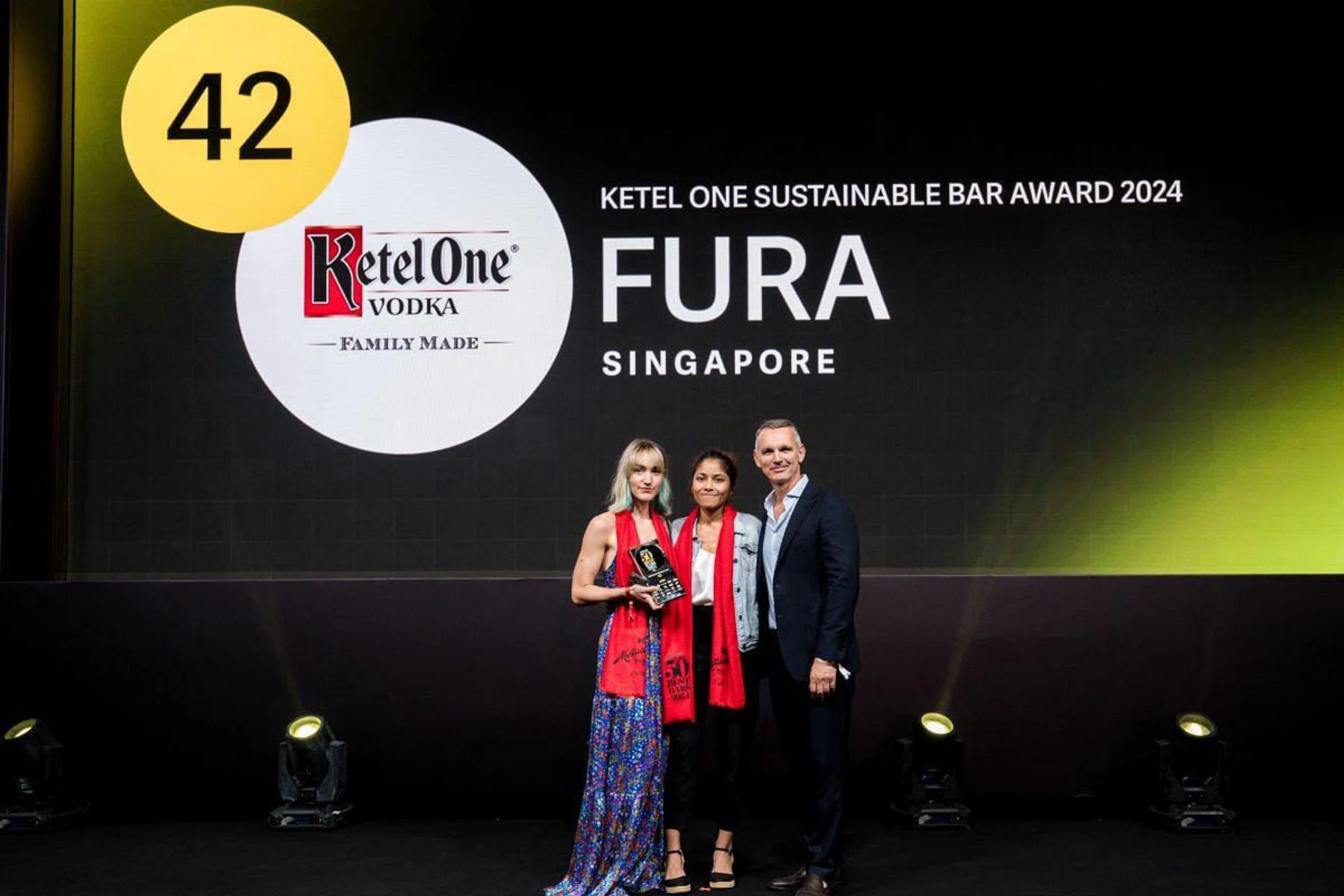
It’s all in the name of sustainability; invasive jellyfish, for instance, can be disruptive to coastal ecosystems, so why not pluck them out of the water and plonk them in a gin martini? Such progressive ponderations by founders Sasha Wijidessa and Christina Rasmussen quickly caught the attention of Asia’s 50 Best Bars committee, clinching them the 42nd spot on the coveted list and the Ketel One Sustainable Bar Award in July.
While these accolades might seem to come right out the gate, the road to Fura was a long and winding one. The journey began with Mallow, a plant-forward pocket bar concept at InterContinental Singapore Robertson Quay, launched in March 2022 in partnership with pastry chef Janice Wong.
“Mallow happened more out of necessity,” admits Wijidessa. Danish-American Rasmussen, former head forager of Noma, had been looking for something in Singapore to get her hands in, and Mallow presented an opportunity for both of them to work together.
“By June, however, we both started to feel it wasn’t enough. We felt very limited by the cards we were dealt — the workspace, the equipment, the budget — and we couldn’t work with the farmers we wanted to.”
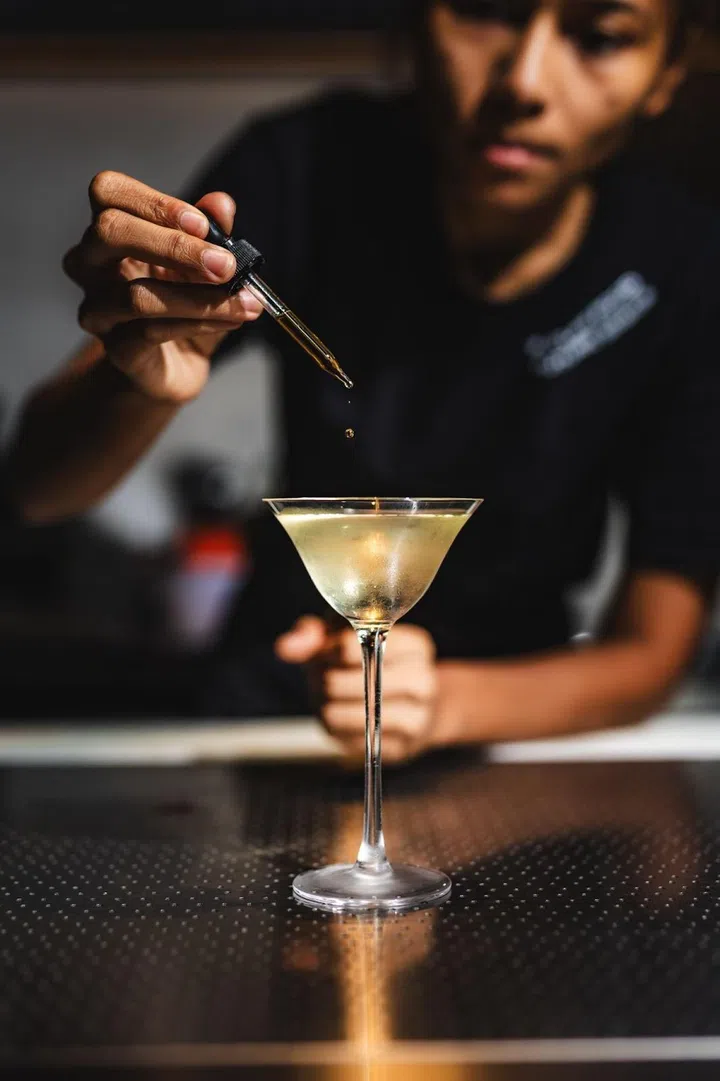
Jellyfish Martini. (Photo: Fura Singapore)
After Mallow closed in December 2022, getting Fura off the ground was not without its challenges. “It took nearly five months before we had anything tangible to show for our efforts in fundraising, designing, and brainstorming,” Rasmussen reveals. Once they were ready, they realised not everyone else was.
Singapore Food Agency (SFA) initially announced last year that 16 species of insects would be approved for human consumption by the second half of 2023; however, the approval was only finalised this July.
The delay meant that Fura (which means pine in Swedish) had to shelf their insect-based creations, such as the Pumpkin Layers, which included locust garum, a variation of a fermented fish sauce widely used in ancient Rome. Though the unused inventory cost Fura about $1,000, they weren’t too fazed.

Fura’s interior. (Photo: Fura Singapore)
“We did the best we could given the circumstances. Keeping the items on the menu with a ‘coming soon’ note sparked great conversations with guests, allowing us to share our ideas and goals. I think we’d enticed guests to return and try them, which is a win for us.”
Unexpectedly, dealing with the Urban Redevelopment Authority proved to be more stressful. “We found out a week before we were supposed to open that the previous owner of the shophouse had illegally removed the air well, an essential historical feature,” Rasmussen sighs.
“We were required to remain closed for two months until a decision was made about whether we needed to remove half of our seating. Even though we had a structural engineer come to ensure the safety of the building, they still would not let us open. It was extremely difficult, frustrating, and disheartening, as we lost a lot of income and had to adjust our projections.”
New rituals of dining
One challenge Wijidessa did relish was establishing new dining rituals. For her, Fura represented an opportunity to reexamine our relationship with food. “Moving back from Denmark, we realised that how we eat and drink, especially for this part of the world, is very generational. My mum’s Teochew, and my dad is Sri Lankan, so we ate what my mum ate and who ate what her mum ate. Yet, the reality is our food resources are very different now. We wanted to create a space for new rituals of eating and drinking that makes sense for the current climate.”
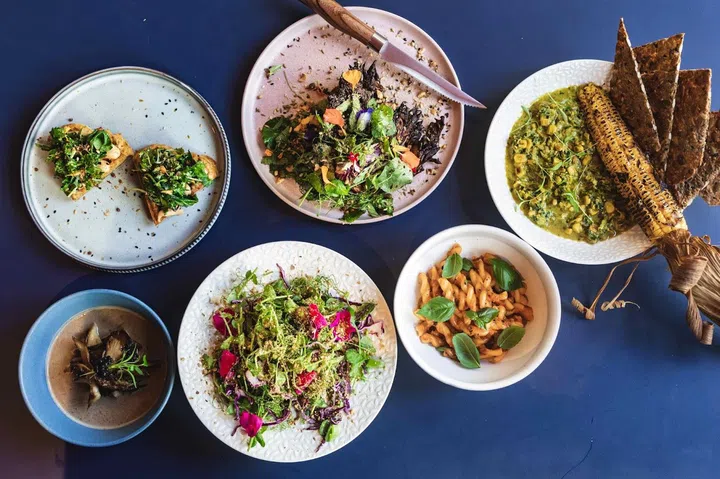
Fura’s plates are mostly plant-based. (Photo: Fura Singapore)
With that in mind, Fura’s menu is stuffed with climate-conscious ingredients — essentially “a journal of future food”. Beans, which have one of the lowest carbon emissions, feature in the quirkily-named cocktail “Beans, Beans, The Musical Fruit”, which uses tonka bean, butter bean koji, and pea shoots.
A Quail Walks Into A Bar highlights forged parfait, a premium cell-cultured Japanese quail product with a texture miraculously similar to pâté, while the cell-cultured milk in the drink Got Milk? provides a cleaner backdrop (than, say, almond milk) for Wijidessa, head bartender at the now-defunct Operation Dagger, to layer complex flavours.
“There’s usually a stigma with lab-grown anything. People think it’s fake, full of strange ingredients or bad for us,” muses Rasmussen. “But the reality is we’ve come so far. And overall, land resources and energy usage are reduced with cell culture (compared to traditional farming).”
Of course, there’s also plenty of love for farmers here. Ever conscious of minimising their carbon footprint, Fura sources their produce locally as much as possible. “If we can support local farmers who share our values, why wouldn't we invest in our economy?” asks Wijidessa.
“It’s all the small guys that are working towards making the difference.” Her mezcal-based ‘Make Local Tomatoes Great Again’ eschews imported heirloom tomatoes, preferring instead to coax flavour out of garden variety hydroponic specimens through finesse and fermentation techniques.
Besides working with homegrown farms like GreenLoopFarms and mushroom grower Bewilder Farms, they’re also growing aromatics like rosemary, lemon balm, and mint, as well as figs and lemons, in their edible garden out back.
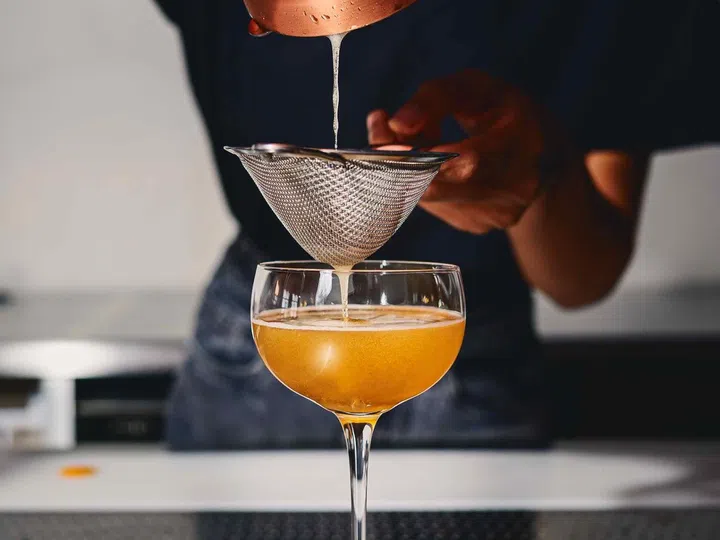
“Get The Worm”, Fura’s mealworm margarita. (Photo: Fura Singapore)
And then there’s the matter of the mealworm. Well, it’s not just a gimmick. “Sasha always had this tagline of ‘trend versus intention’,” smiles Rasmussen. “We’re using insects and other ‘novel’ ingredients because they align with our philosophy of ‘future food’, and not because it’s trending on TikTok or whatever.”
In case you’re apprehensive about being confronted by a full-sized grub at the bottom of your glass, rest assured. Fura’s approach is much subtler. “We’re trying to break down where people have hesitations consuming insects — visually, texturally, and mentally. We want it to be more approachable,” she continues.
“With sustainability, there are no hard and fast rules. It’s always choosing the lesser of two evils. Awareness matters, being an advocate matters, and education matters. Everyone’s efforts, small or large, matter. Be more conscious on all fronts, and we really can make a change.”
Bring a slice of sustainability home
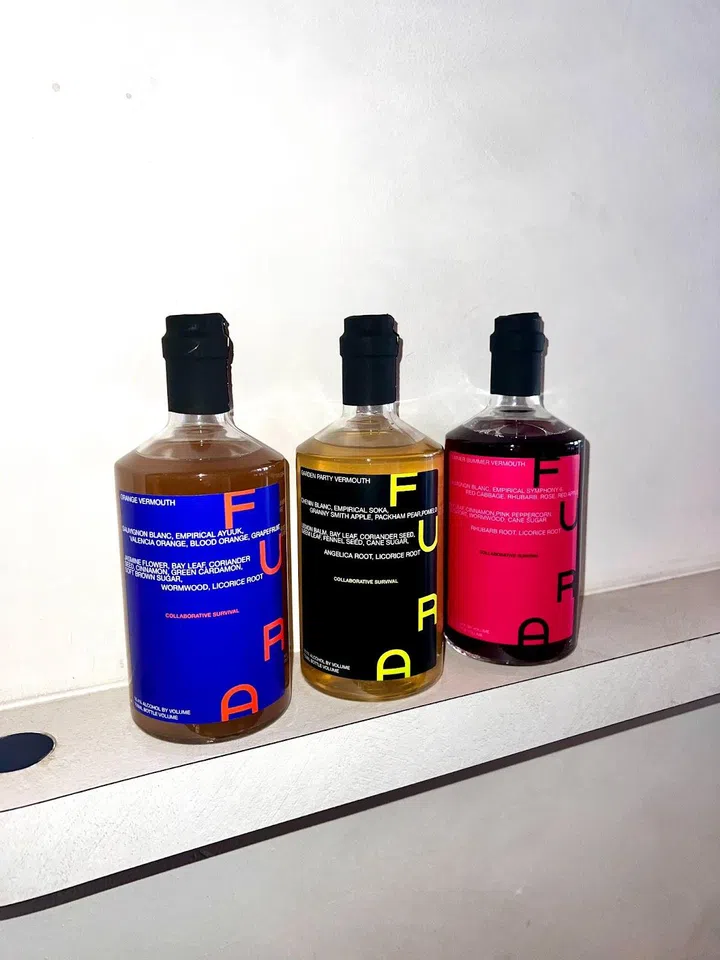
Fura vermouths. (Photo: Fura Singapore)
Fura is extending its commitment to sustainability beyond the bar with a newly launched line of merchandise. Admire their eco-friendly Scandi-chic homeware? Now, guests can take some of them home for a price. The naturalistic travertine-like coasters, made from oyster shells collected from friend and neighbour bar Humpback, go for $38 for a set of two.
After launching its line of house-made vermouths, we hear that Fura “coffee”, a more resource-friendly espresso blend made with malt grains, pu er tea, hemp, and burdock root, may soon be available for retail as well. Coffee is notoriously water-intensive, and climate change continues to impact yield negatively.