%22%3E%0A%3Cpath%20d%3D%22M412%20101.2H393.7C393.1%20101.2%20392.3%20100.9%20391.8%20100.5C377.3%2087.6004%20362.9%2074.6004%20348.4%2061.6004C344.8%2058.4004%20341.3%2055.2004%20337.7%2052.0004C337.1%2051.5004%20336.2%2051.1004%20335.5%2051.0004C334.2%2050.8004%20333%2051.0004%20331.5%2051.0004V101.1H316.7V0.100391H331.4V44.3004C331.9%2044.3004%20332.2%2044.4004%20332.5%2044.4004C334.9%2044.4004%20337.2%2044.5004%20339.6%2044.4004C340.4%2044.4004%20341.3%2044.0004%20341.8%2043.5004C351.6%2034.4004%20361.4%2025.2004%20371.1%2016.0004C376.5%2010.9004%20381.9%205.90039%20387.3%200.800391C387.9%200.200391%20388.5%200.000390626%20389.3%200.000390626H400.9C384.2%2015.8004%20367.8%2031.3004%20351.2%2047.0004C371.5%2065.0004%20391.8%2082.9004%20412.1%20100.9C412.1%20101%20412.1%20101.1%20412%20101.2ZM180.9%20101.2C184.1%2094.9004%20187.2%2088.9004%20190.3%2082.8004C198.3%2067.3004%20206.2%2051.8004%20214.2%2036.2004C220.3%2024.4004%20226.4%2012.5004%20232.4%200.700391C232.7%200.100391%20233%20-0.0996094%20233.7%20-0.0996094H248.1C248.8%20-0.0996094%20249.2%200.100391%20249.6%200.800391C256%2013.3004%20262.4%2025.7004%20268.8%2038.2004C279.3%2058.6004%20289.8%2079.0004%20300.3%2099.5004C300.5%20100%20300.8%20100.4%20301.1%20101.1C300.5%20101.1%20300.1%20101.2%20299.7%20101.2H286.5C285.6%20101.2%20285.1%20100.9%20284.7%20100.2C280.1%2091.3004%20275.4%2082.4004%20270.8%2073.4004C270.1%2072.1004%20269.3%2071.6004%20267.8%2071.6004H209.9C208.7%2071.6004%20208.1%2072.0004%20207.5%2073.1004C202.9%2082.1004%20198.2%2091.0004%20193.6%20100C193.1%20101%20192.6%20101.3%20191.5%20101.3C188.4%20101.2%20185.3%20101.3%20182.3%20101.3C182%20101.2%20181.6%20101.2%20180.9%20101.2ZM239.1%2011.4004C230%2029.2004%20221.1%2046.7004%20212.1%2064.3004H266.4C257.2%2046.7004%20248.2%2029.2004%20239.1%2011.4004ZM0%200.000390626H43.4C51.2%200.000390626%2058.7%201.20039%2065.7%204.80039C75.9%2010.0004%2078.9%2018.0004%2078.6%2027.4004C78.3%2034.3004%2076%2040.5004%2071.2%2045.5004C67.3%2049.6004%2062.4%2052.3004%2057.1%2054.3004C50.6%2056.7004%2043.9%2058.0004%2037.1%2058.6004C30.1%2059.2004%2023.1%2059.4004%2016.2%2059.7004C15.8%2059.7004%2015.3%2059.8004%2014.8%2059.8004V101.1H0.1C0%2067.4004%200%2033.8004%200%200.000390626ZM14.8%207.10039V52.2004C23.7%2052.4004%2032.6%2052.3004%2041.2%2050.1004C44.4%2049.3004%2047.6%2048.2004%2050.6%2046.7004C58.4%2043.0004%2062.3%2036.7004%2062.7%2028.0004C63%2019.9004%2059.5%2014.1004%2052.4%2010.5004C47.6%208.00039%2042.5%207.10039%2037.2%207.10039H14.8ZM95.9%20101.1V0.100391H167.3V7.20039H110.7V44.7004H158.1V51.9004H110.8V93.9004H171.1V101C146.1%20101.1%20121%20101.1%2095.9%20101.1Z%22%20fill%3D%22black%22%2F%3E%0A%3Cpath%20d%3D%22M35.0004%2025.7996H42.5004V20.6996H44.8004V33.1996H42.6004V27.5996H34.9004V33.2996H32.7004V20.7996H35.0004V25.7996ZM54.4004%2025.8996V27.2996H48.9004V31.6996H55.9004C55.9004%2032.1996%2056.0004%2032.5996%2056.0004%2033.0996H46.5004V20.5996H55.5004V21.8996H49.0004V25.7996C50.7004%2025.8996%2052.5004%2025.8996%2054.4004%2025.8996ZM25.9004%2033.0996H23.5004V21.9996H17.9004V20.6996H31.6004V22.0996H27.1004C26.2004%2022.0996%2025.9004%2022.2996%2025.9004%2023.1996C26.0004%2026.0996%2025.9004%2028.9996%2025.9004%2031.7996V33.0996Z%22%20fill%3D%22black%22%2F%3E%0A%3C%2Fg%3E%0A%3Cdefs%3E%0A%3CclipPath%20id%3D%22clip0_388_462%22%3E%0A%3Crect%20width%3D%22411%22%20height%3D%22101.2%22%20fill%3D%22white%22%2F%3E%0A%3C%2FclipPath%3E%0A%3C%2Fdefs%3E%0A%3C%2Fsvg%3E%0A)
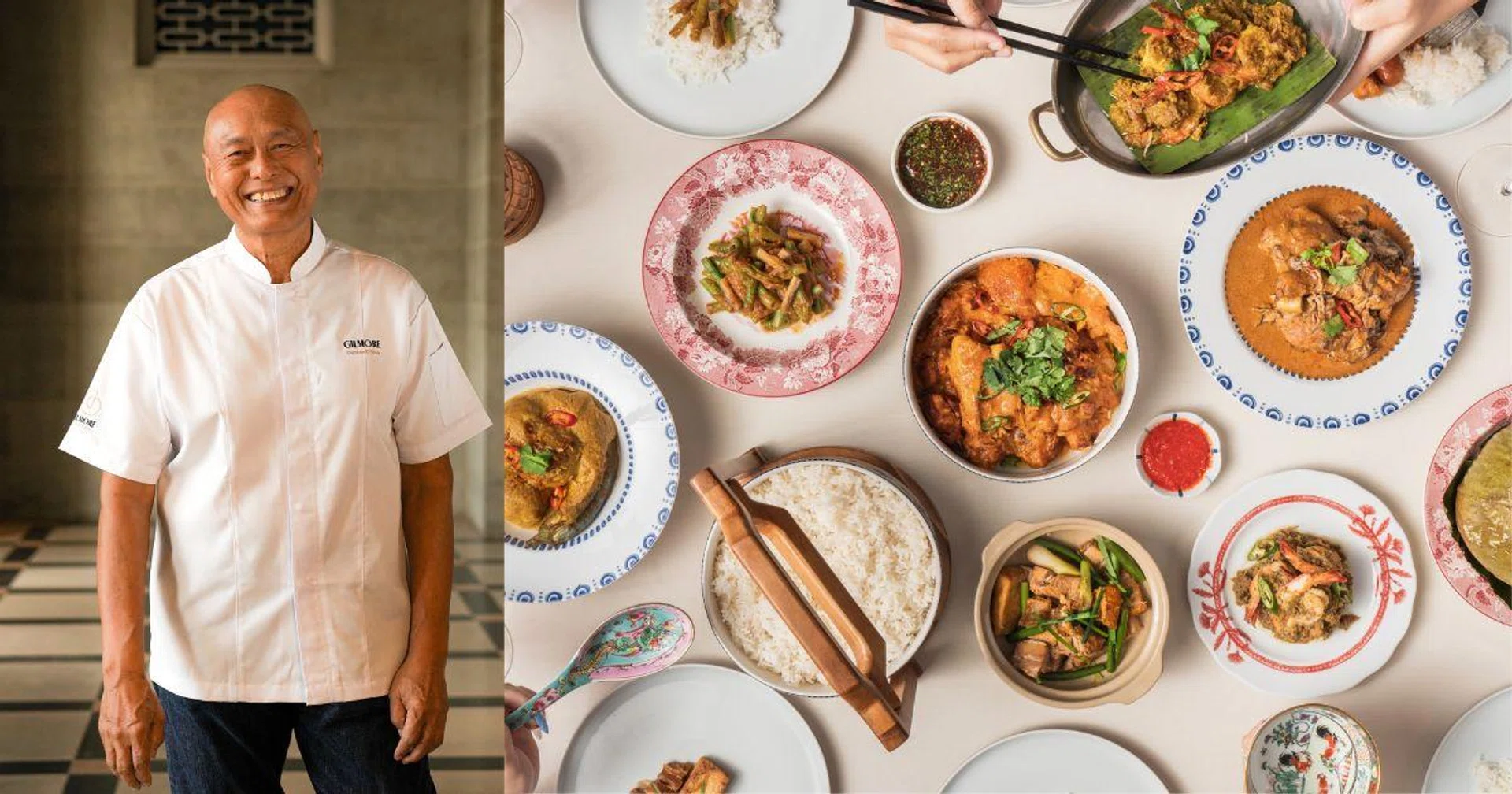
Chef Damian D’Silva crafts his most personal restaurant to date — an homage to Pop Gilmore
For him, opening at the National Gallery is a homecoming. The MasterChef Singapore judge and heritage chef reflects on his Eurasian roots and his grandfather’s culinary legacy as the former Supreme Court custodian.
By June Lee /
Share this article
Elbows off the dining table, no chewing with your mouth open, and don’t even think about clanking cutlery against your plate. Raised in the 1960s by a strict Eurasian paternal grandfather, chef Damian D’Silva recalls with alacrity that he grew up “prim and proper”. “If you visited someone, you had to be attired properly in socks and shoes — no sandals or slippers. What I am today, 95 per cent of it is granddad’s DNA,” he muses.
Eurasians, a small but notable ethnic group in Singapore and Southeast Asia, can trace their descent to the early 19th century, through the intermarriage of European and Asian lineages, with predominant Portuguese, Dutch, Chinese, Malay, and Indian cultures.
Each family’s diaspora would uniquely determine the dishes you find on their table, as the Eurasians were adept at gathering cuisine from all over.
It is against this social milieu that young Damian learned to observe, prepare, and memorise the Eurasian dishes served by his granddad, Gilmore, an avid and meticulous cook, alongside his diverse interests in golf, billiards, and bird-rearing.
The Eurasian table
Eurasian cuisine followed the seasons and ingredients, and the most anticipated feast of the year would be Christmas, Damian recounts.
“On regular days, we ate mostly seafood, such as fresh fish, salted fish and vegetables. On Sundays, we would have what we call the Russian or Sunday Salad. It comprised boiled vegetables such as beetroot, potatoes and asparagus, with a dressing made from Crosse & Blackwell salad cream, condensed milk, and vinegar. During Christmas, you would have more meat dishes, because it was a grand occasion, and we would have a whole barrage of dishes which were served to whoever came to the house.”
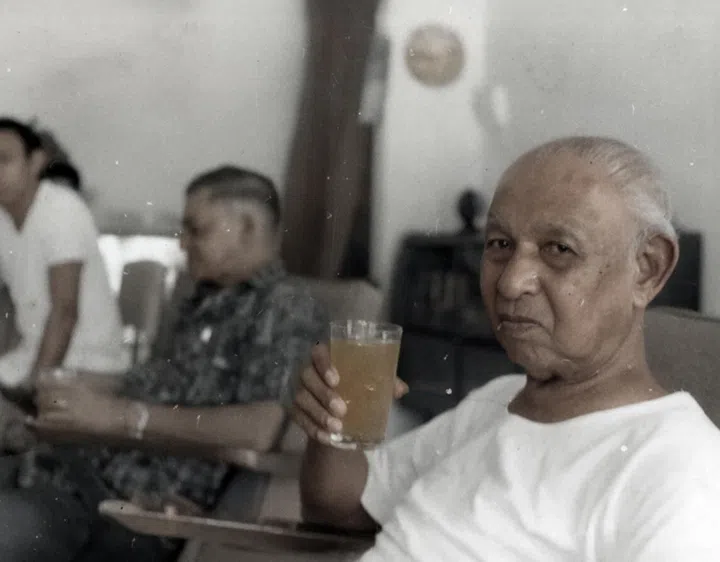
Pop Gilmore would go to the market as early as six months before December to pick out geese and turkeys, which would be reared in their backyard kandang (shed) together with ducks and chickens to fatten the fowl for the feast.
Painstakingly prepared dishes such as feng, a dry curry made with offal, would appear once a year at Christmas — if he was lucky. “People can cook it any time these days, but feng was something you anticipated as the days got closer to Christmas. When you see your aunties start preparing the offal at least two days earlier, you’d be so happy. You weren’t so excited for kari debal, or devil’s curry, as you know that pot of leftovers will always appear on Boxing Day. But you wouldn’t know whether there will be feng,” laughs Damian.
For a few formative years from nine years old, Damian was Pop’s preferred helper in the kitchen, learning intricate skills: how to cook over a charcoal fire, the nuances of cooking rempah halus (fine spice blend) over a coarser rempah, and cleaning offal.
Pop would occasionally surprise the family with game that he had shot himself, such as flying fox in a dry curry, or musang (civet cat). Damian recalls having cootie pie, or kutti pi, twice. This extremely rare Anglo-Indian dish is cooked with goat fetus, which only happens if the mother goat was killed with an unborn fetus.
When quizzed by Pop about his observations, astute young Damian answered that he liked the dish because there were a lot of tasty gelatinous parts. However, there were complex pieces of bone as well, thus continually earning granddad’s approval.
A joyous homecoming
Although Damian has incorporated personal favourite Eurasian dishes in his restaurants over the years, such as sambal bendi (okra sambal) at Kin, seybak (braised pork) at Immigrants, and singgang (wolf herring curry, but without its notorious tiny bones, just how his father preferred it) at Soul Kitchen, he has been chiefly known by the public for Peranakan cuisine, which he had learnt from his equally meticulous maternal grandmother.
Fast forward to 2025, and Damian knew precisely how he would pay homage to his Pop as soon as he was invited to open a restaurant in the current National Gallery. The building was once the Supreme Court, where Pop Gilmore worked and lived as the building’s first and only custodian before and after World War II.
In fact, Damian and his family spent their first two years living together in granddad’s upstairs quarters in the building while awaiting the construction of their home in Opera Estate. It was a full circle waiting to be completed.
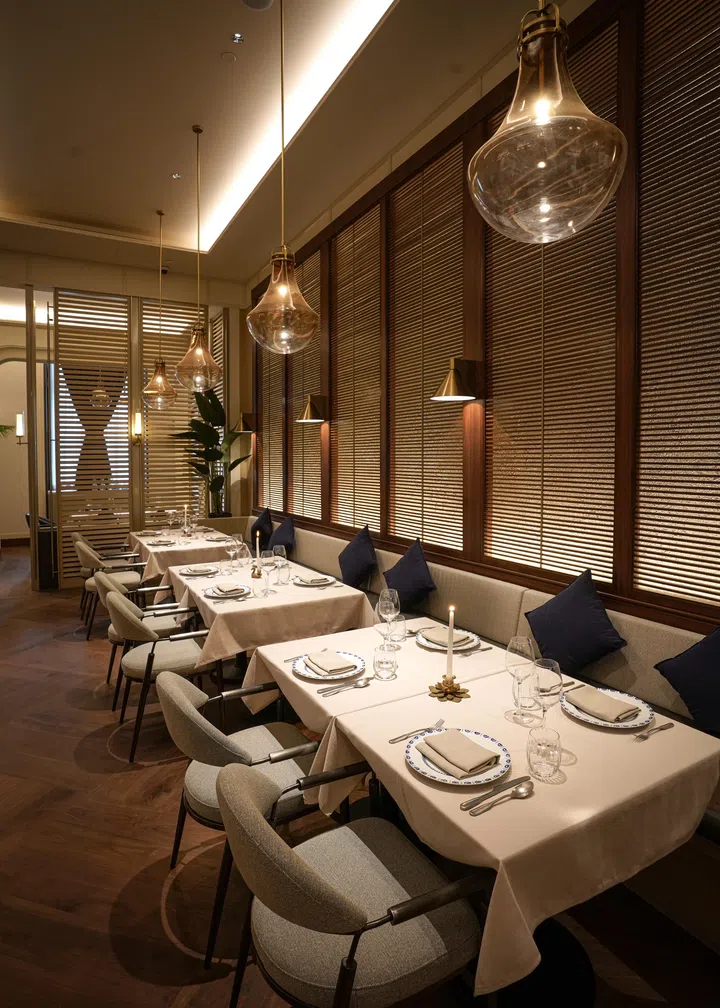
At Gilmore & Damian D’Silva, the cool marble neoclassicism of the building lends its gravitas even as warm timbered surfaces evoke old-world charm and invite you to linger over the stories within. Tucked into nooks and crannies are beloved keepsakes celebrating Gilmore himself, from framed portraits to vintage crockery and turn-of-the-century furniture.
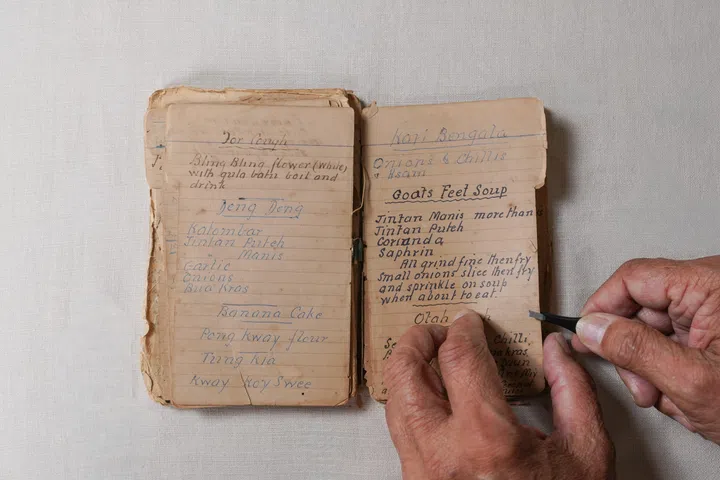
Pop passed away in 1977, leaving behind a well-worn personal recipe book. “The book is easily 85 years old, and its pages are disintegrating as you turn them. More than recipes, granddad included practical remedies such as treatments for sore throats and snake bites. I haven’t been bitten by a snake yet, so I don’t know if it works,” Damian deadpans.
Still, the physical recipe book, while a treasured reminder of Pop and a record of his meticulous penmanship in India ink, isn’t paramount to chef Damian.
“I have a relationship with Pop where I knew what to prepare as we cooked together. I reference the recipes once in a while, but mostly I cook it from memory. I’m blessed to have the taste and knowledge of the dish, and I cook from that,” he details.
Damian has ruminated on missing his granddad over the years. “Why didn’t I ask him this or that? You do wish you could have spent more time together. More important than recipes is the information and stories granddad left me. What’s the origin of the dish, and where did it come from? That’s what I want to ask him. Till today, I’ve not met anybody who knows cowdang, a dish I’ve put on the menu,” he guffaws. “I’m just happy it’s not a beef dish, you know? Because of the name.”
A tale of three dishes
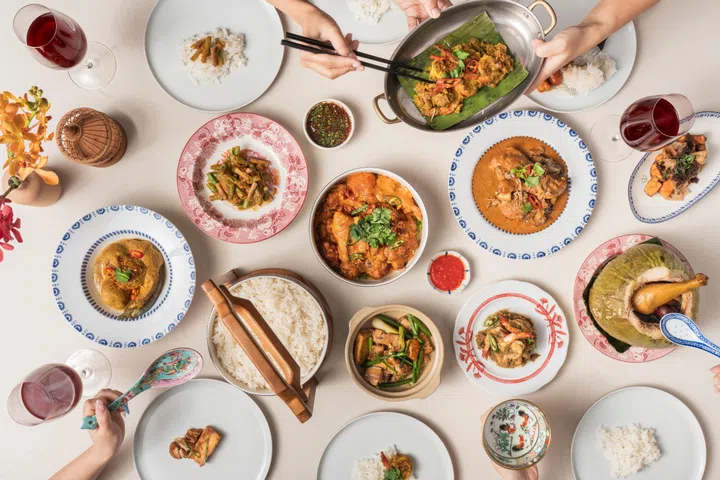
Kachang Ambiler ($18)
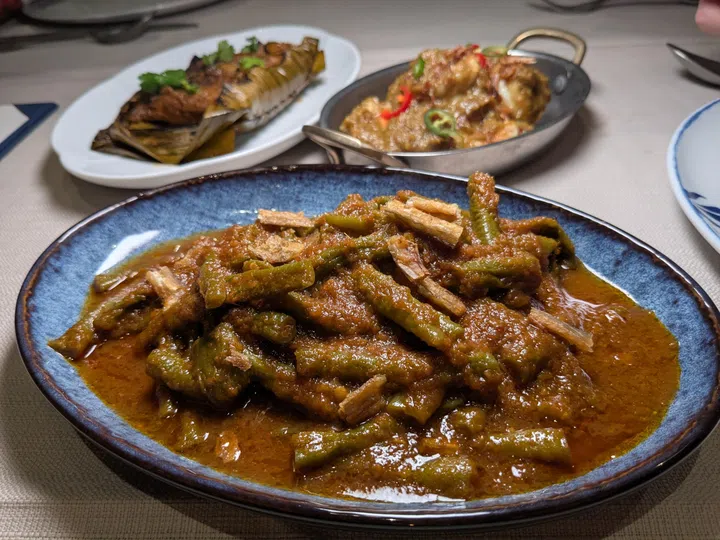
Stir-fried long beans and salted fish were a staple of Damian’s childhood, explicitly made with salted fish from Bombay duck (which has an audaciously saltier, concentrated twang).
This deceptively simple sauteed vegetables calls for sambal halus, sauteed till fragrant, balanced with the sourness from tamarind and long beans that absorb all the appetising flavours without being overcooked.
Cowdang ($22)
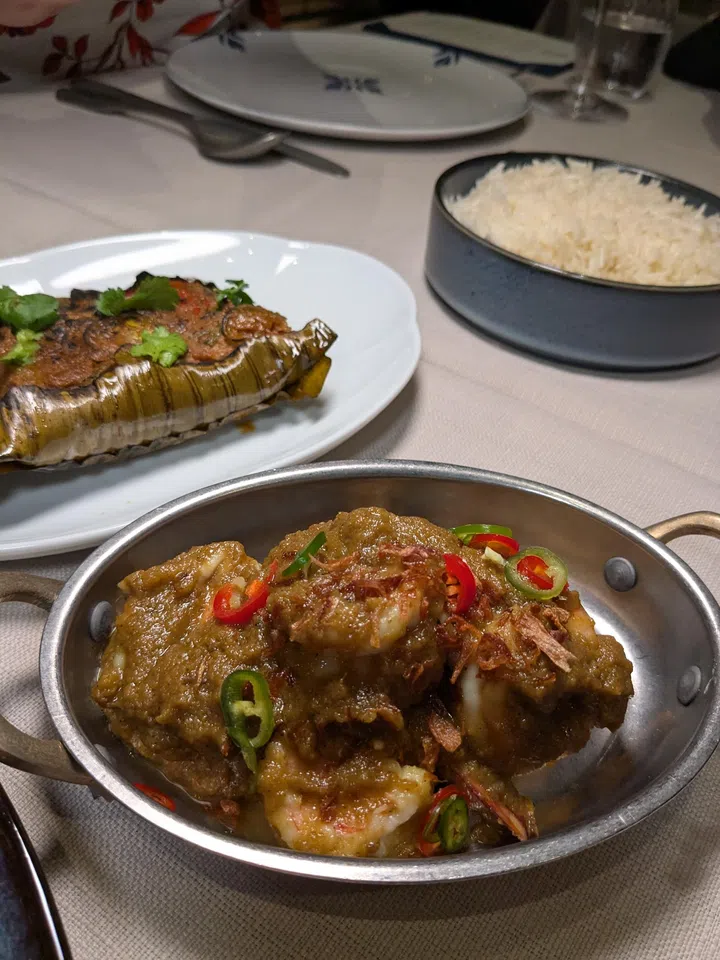
The origin of Gilmore’s stewed coconut prawn dish, and the meaning of its name, remains a mystery. This may be a family recipe from the D’Silva heritage. Wild-caught (ang kar) prawns are simmered in a paste of ginger flower, ginger, garlic, green chillies, and onions, with coconut milk stirred in at the end.
Christmas Debal ($48, serves 3 to 4)
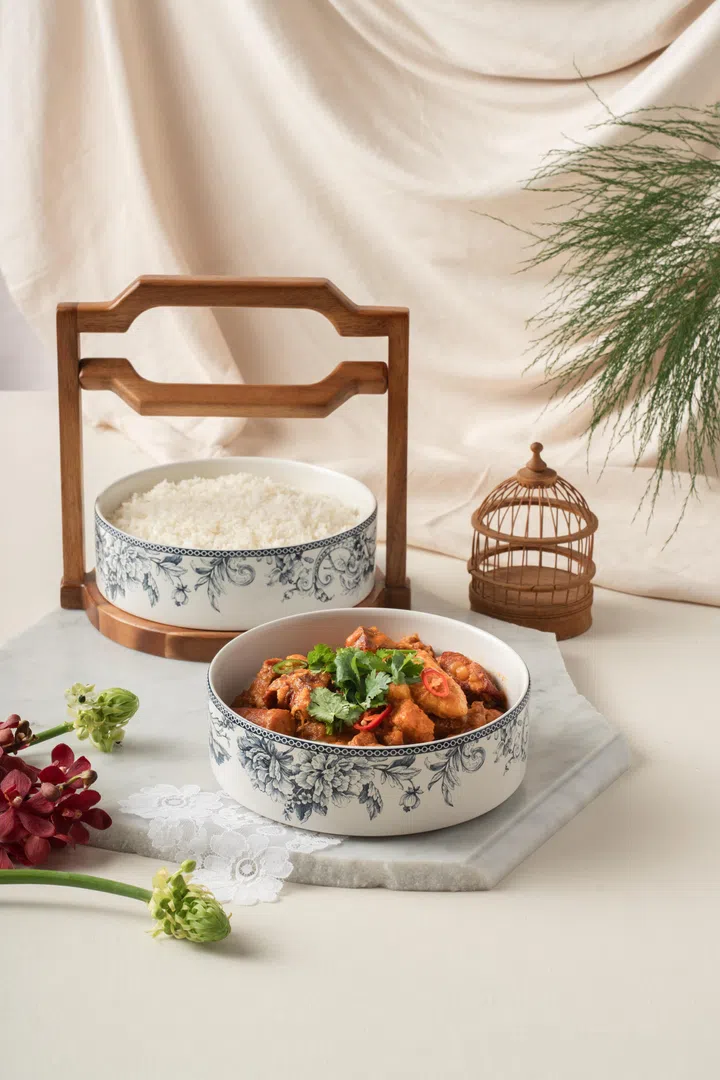
Served on Boxing Day, debal is a Kristang spicy stew made with leftovers from the Christmas table, such as smoked ham, bacon bones, roast pork, and chicken.
The addition of spam or sausages became commonplace after World War II, when meat was scarce. Homemade vegetable achar (pickles) is a must.