%22%3E%0A%3Cpath%20d%3D%22M412%20101.2H393.7C393.1%20101.2%20392.3%20100.9%20391.8%20100.5C377.3%2087.6004%20362.9%2074.6004%20348.4%2061.6004C344.8%2058.4004%20341.3%2055.2004%20337.7%2052.0004C337.1%2051.5004%20336.2%2051.1004%20335.5%2051.0004C334.2%2050.8004%20333%2051.0004%20331.5%2051.0004V101.1H316.7V0.100391H331.4V44.3004C331.9%2044.3004%20332.2%2044.4004%20332.5%2044.4004C334.9%2044.4004%20337.2%2044.5004%20339.6%2044.4004C340.4%2044.4004%20341.3%2044.0004%20341.8%2043.5004C351.6%2034.4004%20361.4%2025.2004%20371.1%2016.0004C376.5%2010.9004%20381.9%205.90039%20387.3%200.800391C387.9%200.200391%20388.5%200.000390626%20389.3%200.000390626H400.9C384.2%2015.8004%20367.8%2031.3004%20351.2%2047.0004C371.5%2065.0004%20391.8%2082.9004%20412.1%20100.9C412.1%20101%20412.1%20101.1%20412%20101.2ZM180.9%20101.2C184.1%2094.9004%20187.2%2088.9004%20190.3%2082.8004C198.3%2067.3004%20206.2%2051.8004%20214.2%2036.2004C220.3%2024.4004%20226.4%2012.5004%20232.4%200.700391C232.7%200.100391%20233%20-0.0996094%20233.7%20-0.0996094H248.1C248.8%20-0.0996094%20249.2%200.100391%20249.6%200.800391C256%2013.3004%20262.4%2025.7004%20268.8%2038.2004C279.3%2058.6004%20289.8%2079.0004%20300.3%2099.5004C300.5%20100%20300.8%20100.4%20301.1%20101.1C300.5%20101.1%20300.1%20101.2%20299.7%20101.2H286.5C285.6%20101.2%20285.1%20100.9%20284.7%20100.2C280.1%2091.3004%20275.4%2082.4004%20270.8%2073.4004C270.1%2072.1004%20269.3%2071.6004%20267.8%2071.6004H209.9C208.7%2071.6004%20208.1%2072.0004%20207.5%2073.1004C202.9%2082.1004%20198.2%2091.0004%20193.6%20100C193.1%20101%20192.6%20101.3%20191.5%20101.3C188.4%20101.2%20185.3%20101.3%20182.3%20101.3C182%20101.2%20181.6%20101.2%20180.9%20101.2ZM239.1%2011.4004C230%2029.2004%20221.1%2046.7004%20212.1%2064.3004H266.4C257.2%2046.7004%20248.2%2029.2004%20239.1%2011.4004ZM0%200.000390626H43.4C51.2%200.000390626%2058.7%201.20039%2065.7%204.80039C75.9%2010.0004%2078.9%2018.0004%2078.6%2027.4004C78.3%2034.3004%2076%2040.5004%2071.2%2045.5004C67.3%2049.6004%2062.4%2052.3004%2057.1%2054.3004C50.6%2056.7004%2043.9%2058.0004%2037.1%2058.6004C30.1%2059.2004%2023.1%2059.4004%2016.2%2059.7004C15.8%2059.7004%2015.3%2059.8004%2014.8%2059.8004V101.1H0.1C0%2067.4004%200%2033.8004%200%200.000390626ZM14.8%207.10039V52.2004C23.7%2052.4004%2032.6%2052.3004%2041.2%2050.1004C44.4%2049.3004%2047.6%2048.2004%2050.6%2046.7004C58.4%2043.0004%2062.3%2036.7004%2062.7%2028.0004C63%2019.9004%2059.5%2014.1004%2052.4%2010.5004C47.6%208.00039%2042.5%207.10039%2037.2%207.10039H14.8ZM95.9%20101.1V0.100391H167.3V7.20039H110.7V44.7004H158.1V51.9004H110.8V93.9004H171.1V101C146.1%20101.1%20121%20101.1%2095.9%20101.1Z%22%20fill%3D%22black%22%2F%3E%0A%3Cpath%20d%3D%22M35.0004%2025.7996H42.5004V20.6996H44.8004V33.1996H42.6004V27.5996H34.9004V33.2996H32.7004V20.7996H35.0004V25.7996ZM54.4004%2025.8996V27.2996H48.9004V31.6996H55.9004C55.9004%2032.1996%2056.0004%2032.5996%2056.0004%2033.0996H46.5004V20.5996H55.5004V21.8996H49.0004V25.7996C50.7004%2025.8996%2052.5004%2025.8996%2054.4004%2025.8996ZM25.9004%2033.0996H23.5004V21.9996H17.9004V20.6996H31.6004V22.0996H27.1004C26.2004%2022.0996%2025.9004%2022.2996%2025.9004%2023.1996C26.0004%2026.0996%2025.9004%2028.9996%2025.9004%2031.7996V33.0996Z%22%20fill%3D%22black%22%2F%3E%0A%3C%2Fg%3E%0A%3Cdefs%3E%0A%3CclipPath%20id%3D%22clip0_388_462%22%3E%0A%3Crect%20width%3D%22411%22%20height%3D%22101.2%22%20fill%3D%22white%22%2F%3E%0A%3C%2FclipPath%3E%0A%3C%2Fdefs%3E%0A%3C%2Fsvg%3E%0A)
How American brand, 1 Hotel Tokyo, scored Japan’s highest environmental rating even before its opening
Amid the relentless pursuit of the new, 1 Hotel Tokyo arrives with a refreshing proposition: Luxury can be built on the concept of less.
By Tan Pin Yen /
Share this article
Few cities evolve luxury hospitality as rapidly as Tokyo. Amid this relentless pursuit of the new, 1 Hotel Tokyo arrives with a refreshing proposition: Luxury can be built on the concept of less.
Occupying the 38th to 43rd floors of Akasaka Trust Tower, the property, developed with Mori Trust, marks the American brand’s Japanese debut and the latest expression of Barry Sternlicht’s hospitality vision.
The entrepreneur behind W Hotels and St. Regis believes luxury can evolve through greater consciousness — a conviction that gave rise to 1 Hotels, a model built on natural materials, environmental stewardship, and the belief that those who travel the world should also care for it.
But bringing a sustainability-led luxury concept to Japan is less about introducing new ideas than recognising values that have long existed here: mottainai, the reluctance to waste; satoyama, the harmonious relationship between people and nature; and wabi-sabi, a deep respect for materials that gain beauty through age and use.
The transition begins before check-in. Akasaka is one of Tokyo’s most energetic business districts, where suited office workers stream between towers and traffic pulses relentlessly below. Passing through the entrance doors, however, the atmosphere shifts with the grounding warmth of sandalwood.
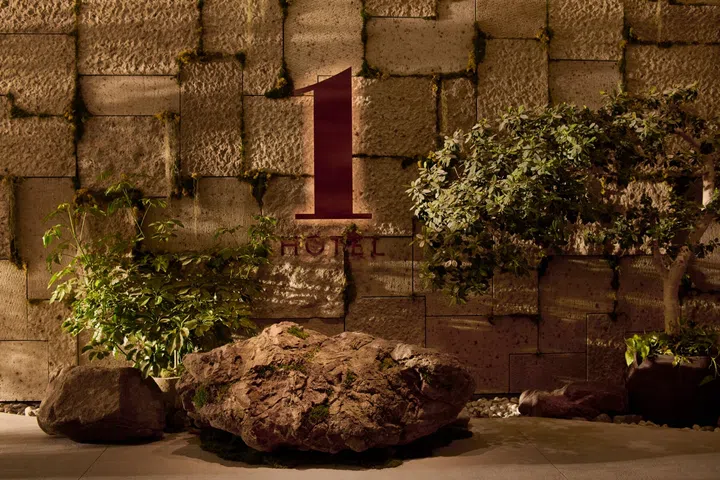
When the elevator arrives on the 38th floor, the 1 Hotel sign I came face to face with is dressed with greens and set against a wall of Oya stone, an igneous rock quarried exclusively near Oya, north of Tokyo, revered for its porous, uneven beauty.
“In my travels to Japan over the decades, I’ve been struck by the extraordinary beauty of its gardens, the serenity of its parks, and the enduring respect for nature,” says Barry Sternlicht, founder of 1 Hotels and Chairman of Starwood Hotels. “With the design of 1 Hotel Tokyo, our first property in this amazing city, we wanted to capture some of that harmonious tranquillity.
The public spaces: A sanctuary in the sky
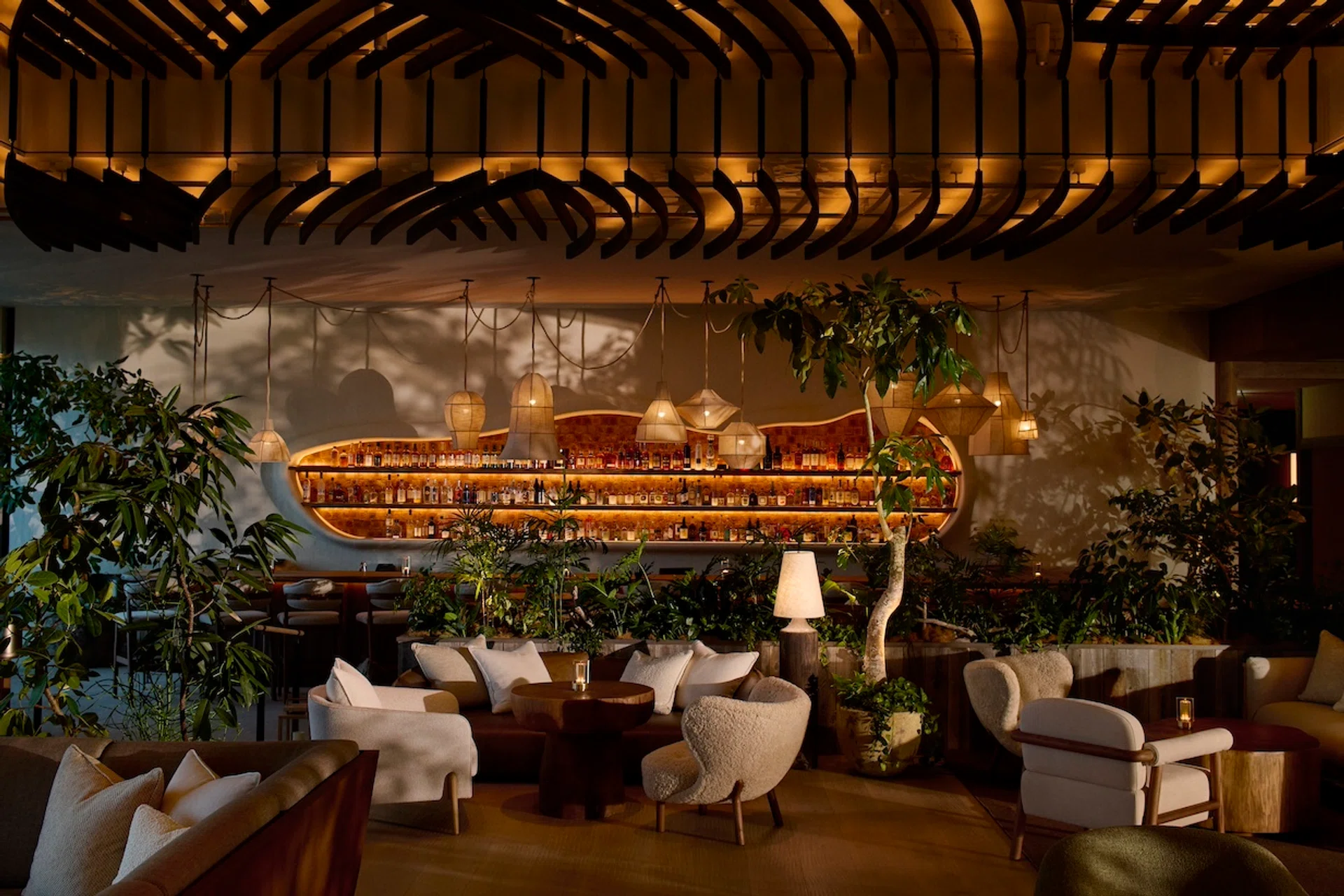
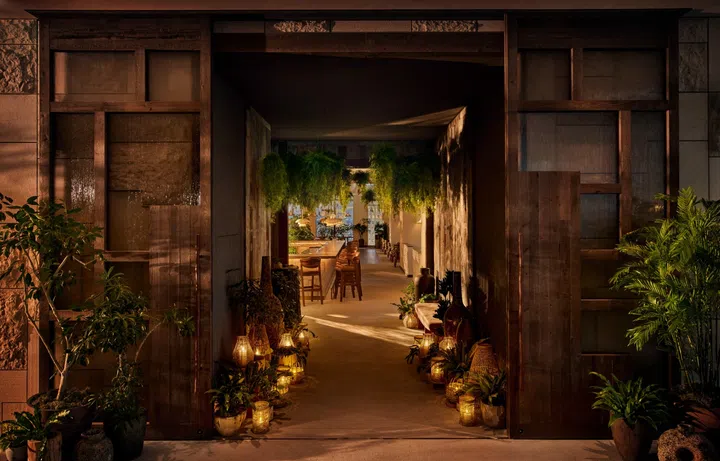
Designed by Brooklyn studio CRÈME and led by Japanese-born founder Jun Aizaki, the arrival lobby feels like a woodland sanctuary suspended above Tokyo.
Natural materials dominate the public areas without feeling rustic. A dark, rough-hewn reception desk carries the subtle imperfections of reclaimed wood; an elevated lounge is enveloped by a miniature Japanese garden. Overhead, a ceiling installation inspired by raked sand gardens adds a subtle sense of motion. With over 1,500 plants integrated throughout the property, greenery becomes living design.
“For us, nature isn’t something we add at the end of the design process; it’s where we start,” says general manager Masato Kominami. “Even though we’re in the middle of Tokyo, we want the hotel to feel like a place where guests can take a breath and slow down.”
Public spaces here want to do more than serve as a passage with constant movement. The central lobby houses Spotted Stone, a bar with an extensive selection of Japanese craft gin and botanical cocktails. During the day, a “farm stand” offers guests fresh fruit. Neighbours Cafe, a grab-and-go concept, sits alongside the main restaurant.
Abundant textures in rooms
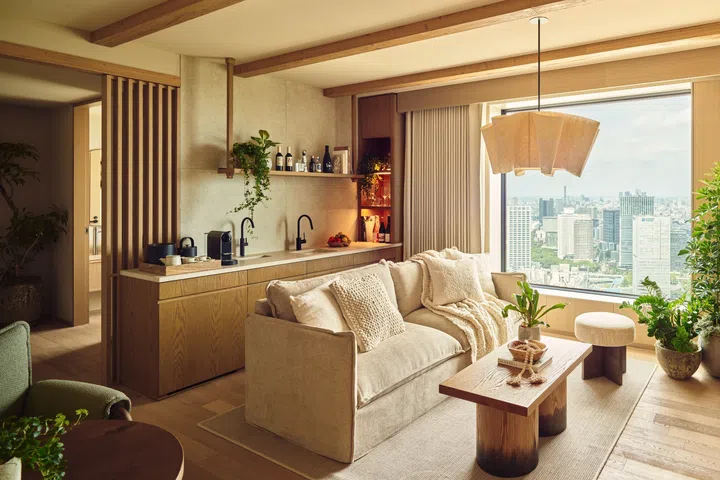
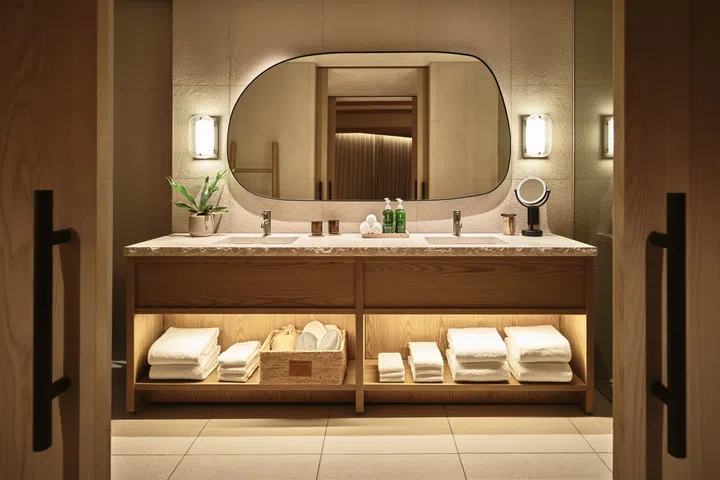
In my 398.2 sq ft Tower King room on the 43rd floor, Tokyo Tower rises in the distance. Azabudai Hills’ undulating sea of terraced green roofs and vertical gardens reminds me I am in the heart of the city, yet in each of the hotel’s 211 rooms, guests are cocooned in a palette of warm wood millwork, washi paper, handcrafted plaster, and textured tile bath walls.
Sculptural trees emerge from planter-style consoles, while reclaimed scaffold boards with moss installations add artful layers to the walls. These natural textures seem to absorb the city’s relentless hum, inviting a quiet that feels almost foreign in a city that never seems to pause.
As someone who has spent time travelling through Japan, I understand that luxury has never been about abundance but about restraint: materials that show up with age, the difficult concept of imperfect beauty, and spaces designed to soothe rather than impress.
“Ten years ago, luxury was often about having more — more space, more decoration, more amenities. Today, many of our guests are looking for something different. They want to spend time in a space that feels genuine,” says Kominami.
Sustainability without sacrifice
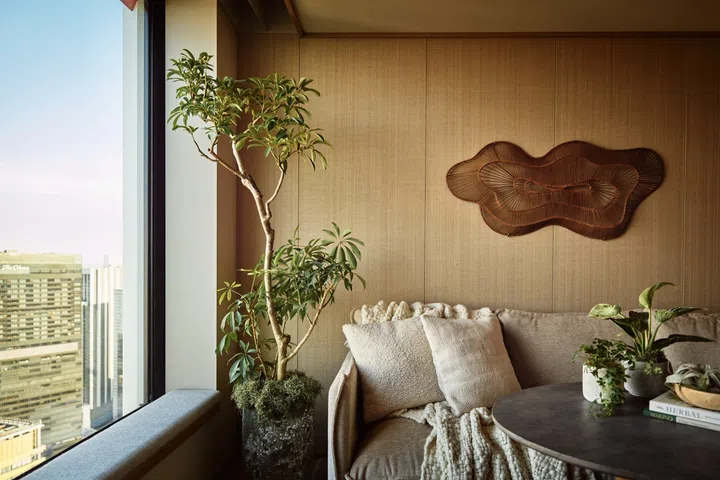
Nothing feels overly precious, and the pieces and materials speak for themselves. It is so unusual to see the roughened textures of cotton linen as bedding in luxury hotels, but it has its place here. Nearby, hangers made from recycled materials and laundry bags made from corn, thistle, and sunflower fibres offer another reminder that luxury can exist entirely outside the paradigm of disposable synthetic waste.
In the bathroom, environmental virtues and considered options appear as toothbrushes made from mosu bamboo, cups made of repurposed glass and a segment of a tree trunk living a second life as a vanity item. Bulk toiletry dispensers cut out single-use plastics entirely.
“We don’t believe sustainability should feel like giving something up,” Kominami says. “If guests enjoy their stay without even noticing that we’ve reduced waste or sourced more responsibly, we’ve done our job well.”
Rituals of daily routine are subtly reframed. A tiny hourglass mounted inside the shower registers the passing minutes but also shows how easily time and water can disappear while my mind wanders away from the now. On the raw stone coffee table in the living area rests a handwritten note in flowing cursive from Kominami: “Welcome home!”
The paper feels fibrous, and at the bottom, a reveal of its dual existence: “First life: delivering this message. Second life: making beautiful things grow. When you are done, plant this paper in soil and water.”
Almost an instruction, it points to how departure can become an act of giving rather than consumption. Another wooden block comes with a message to donate clothing no longer needed to a local charity. “1 Less Thing is one programme we’re especially proud of. It’s a simple idea, but it gives guests an easy way to contribute to the local community while they’re travelling,” says Kominami.
Meanwhile, the brand’s Mission Membership reimagines loyalty: one per cent of qualifying stay spend supports environmental organisations, while new members fund tree planting through the Arbor Day Foundation. These meaningful rhythms reflect 1 Hotel Tokyo’s sustainability philosophy, made tangible in guest-centric ways and recognised with CASBEE S certification, Japan’s highest environmental rating.
At NiNi Restaurant, seasonal Tokyo produce sourced from partners like Tokyo NEO-FARMERS! — a collective redefining urban agriculture through traditional knowledge and innovation, meets the light flavours of the French Riviera. Even waste is reconsidered: My ice cream is made from spent coffee grounds.
More than showcasing Japanese craftsmanship, the hotel connects guests with those preserving it. Sashiko Gals hosts workshops that celebrate repair as both craft and philosophy. Organic tea masters from THE MATCHA TOKYO introduce contemporary matcha culture through seasonal tastings, while sustainable fashion labels extend conscious living beyond the hotel.
Not quite perfect
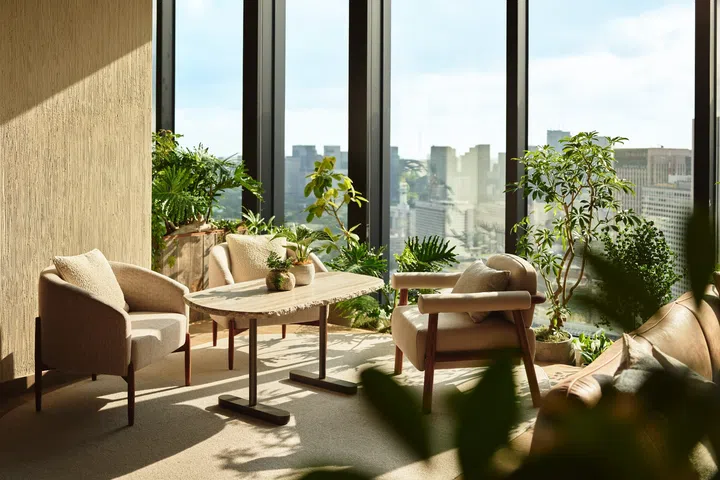
For all its thoughtful design, there are a few compromises. My beautifully conceived room felt slightly compact by international luxury standards, particularly for a stay of several nights. The wardrobe could have been more generous: With much of its space occupied by robes and an ironing board, there was little room for Tokyo’s sweltering summer attire, let alone the layers winter would demand.
Rates begin at around ¥95,000 (approximately $762) a night — a premium reflecting investment in sustainable materials, CASBEE S certification, and the operational discipline behind the hotel’s exacting standards. Still, with breakfast and dinner bustling, guests seem to be embracing the experience.
The hotel’s complimentary Audi Q6 e-tron, its fully electric house car, goes some way towards justifying the premium. One morning, Yamazaki-san flawlessly executed my excursion to Kiyosumi, an understated neighbourhood in Koto Ward.
Here, Tokyo reveals a quieter side: independent galleries and lingering cafes. It reminded me that the hotel’s greatest luxury lies not in retreating from the city, but in helping guests discover a different rhythm within it.