%22%3E%0A%3Cpath%20d%3D%22M412%20101.2H393.7C393.1%20101.2%20392.3%20100.9%20391.8%20100.5C377.3%2087.6004%20362.9%2074.6004%20348.4%2061.6004C344.8%2058.4004%20341.3%2055.2004%20337.7%2052.0004C337.1%2051.5004%20336.2%2051.1004%20335.5%2051.0004C334.2%2050.8004%20333%2051.0004%20331.5%2051.0004V101.1H316.7V0.100391H331.4V44.3004C331.9%2044.3004%20332.2%2044.4004%20332.5%2044.4004C334.9%2044.4004%20337.2%2044.5004%20339.6%2044.4004C340.4%2044.4004%20341.3%2044.0004%20341.8%2043.5004C351.6%2034.4004%20361.4%2025.2004%20371.1%2016.0004C376.5%2010.9004%20381.9%205.90039%20387.3%200.800391C387.9%200.200391%20388.5%200.000390626%20389.3%200.000390626H400.9C384.2%2015.8004%20367.8%2031.3004%20351.2%2047.0004C371.5%2065.0004%20391.8%2082.9004%20412.1%20100.9C412.1%20101%20412.1%20101.1%20412%20101.2ZM180.9%20101.2C184.1%2094.9004%20187.2%2088.9004%20190.3%2082.8004C198.3%2067.3004%20206.2%2051.8004%20214.2%2036.2004C220.3%2024.4004%20226.4%2012.5004%20232.4%200.700391C232.7%200.100391%20233%20-0.0996094%20233.7%20-0.0996094H248.1C248.8%20-0.0996094%20249.2%200.100391%20249.6%200.800391C256%2013.3004%20262.4%2025.7004%20268.8%2038.2004C279.3%2058.6004%20289.8%2079.0004%20300.3%2099.5004C300.5%20100%20300.8%20100.4%20301.1%20101.1C300.5%20101.1%20300.1%20101.2%20299.7%20101.2H286.5C285.6%20101.2%20285.1%20100.9%20284.7%20100.2C280.1%2091.3004%20275.4%2082.4004%20270.8%2073.4004C270.1%2072.1004%20269.3%2071.6004%20267.8%2071.6004H209.9C208.7%2071.6004%20208.1%2072.0004%20207.5%2073.1004C202.9%2082.1004%20198.2%2091.0004%20193.6%20100C193.1%20101%20192.6%20101.3%20191.5%20101.3C188.4%20101.2%20185.3%20101.3%20182.3%20101.3C182%20101.2%20181.6%20101.2%20180.9%20101.2ZM239.1%2011.4004C230%2029.2004%20221.1%2046.7004%20212.1%2064.3004H266.4C257.2%2046.7004%20248.2%2029.2004%20239.1%2011.4004ZM0%200.000390626H43.4C51.2%200.000390626%2058.7%201.20039%2065.7%204.80039C75.9%2010.0004%2078.9%2018.0004%2078.6%2027.4004C78.3%2034.3004%2076%2040.5004%2071.2%2045.5004C67.3%2049.6004%2062.4%2052.3004%2057.1%2054.3004C50.6%2056.7004%2043.9%2058.0004%2037.1%2058.6004C30.1%2059.2004%2023.1%2059.4004%2016.2%2059.7004C15.8%2059.7004%2015.3%2059.8004%2014.8%2059.8004V101.1H0.1C0%2067.4004%200%2033.8004%200%200.000390626ZM14.8%207.10039V52.2004C23.7%2052.4004%2032.6%2052.3004%2041.2%2050.1004C44.4%2049.3004%2047.6%2048.2004%2050.6%2046.7004C58.4%2043.0004%2062.3%2036.7004%2062.7%2028.0004C63%2019.9004%2059.5%2014.1004%2052.4%2010.5004C47.6%208.00039%2042.5%207.10039%2037.2%207.10039H14.8ZM95.9%20101.1V0.100391H167.3V7.20039H110.7V44.7004H158.1V51.9004H110.8V93.9004H171.1V101C146.1%20101.1%20121%20101.1%2095.9%20101.1Z%22%20fill%3D%22black%22%2F%3E%0A%3Cpath%20d%3D%22M35.0004%2025.7996H42.5004V20.6996H44.8004V33.1996H42.6004V27.5996H34.9004V33.2996H32.7004V20.7996H35.0004V25.7996ZM54.4004%2025.8996V27.2996H48.9004V31.6996H55.9004C55.9004%2032.1996%2056.0004%2032.5996%2056.0004%2033.0996H46.5004V20.5996H55.5004V21.8996H49.0004V25.7996C50.7004%2025.8996%2052.5004%2025.8996%2054.4004%2025.8996ZM25.9004%2033.0996H23.5004V21.9996H17.9004V20.6996H31.6004V22.0996H27.1004C26.2004%2022.0996%2025.9004%2022.2996%2025.9004%2023.1996C26.0004%2026.0996%2025.9004%2028.9996%2025.9004%2031.7996V33.0996Z%22%20fill%3D%22black%22%2F%3E%0A%3C%2Fg%3E%0A%3Cdefs%3E%0A%3CclipPath%20id%3D%22clip0_388_462%22%3E%0A%3Crect%20width%3D%22411%22%20height%3D%22101.2%22%20fill%3D%22white%22%2F%3E%0A%3C%2FclipPath%3E%0A%3C%2Fdefs%3E%0A%3C%2Fsvg%3E%0A)
This 495-room Kowloon hotel is making a serious case for vertical urbanism — starting at the rooftop
At Kimpton Tsim Sha Tsui Hong Kong, rooftop programming, harbour framing, and layered interiors define a new model of lifestyle luxury.
By Zat Astha /
Share this article
When a 495-room hotel opens in Tsim Sha Tsui East, scale can easily overshadow intent. What steadies Kimpton Tsim Sha Tsui Hong Kong is the consistency of its architectural references and the discipline with which they carry through from the facade to the furniture.
For Mathew Lui, partner at HBA Hong Kong, the project’s starting point was clear.
“From the very beginning, the late Dr Walter Kwok personally devised the hotel’s design concepts to connect to the site’s immediate neighbour — the Signal Hill Tower and its surrounding garden. This idea guided me through quite a lot of design decisions throughout the project.”
That connection is most evident in the lobby’s brick-tiled walls, which reference the historic Signal Tower next door. In the guestrooms, the narrative becomes more restrained.
“While the brick-tiled walls in the lobbies make a more direct architectural reference to the facade of Signal Hill Tower, the guestrooms tell a more subtle story,” Lui says.
“The materials and colours — seen in the bird and botanical motifs on the cushion fabrics and the middle layer of the chair backs, as well as the soft green wallpaper behind the headboard — were carefully selected to echo the natural tone and environment of Signal Hill Garden.”
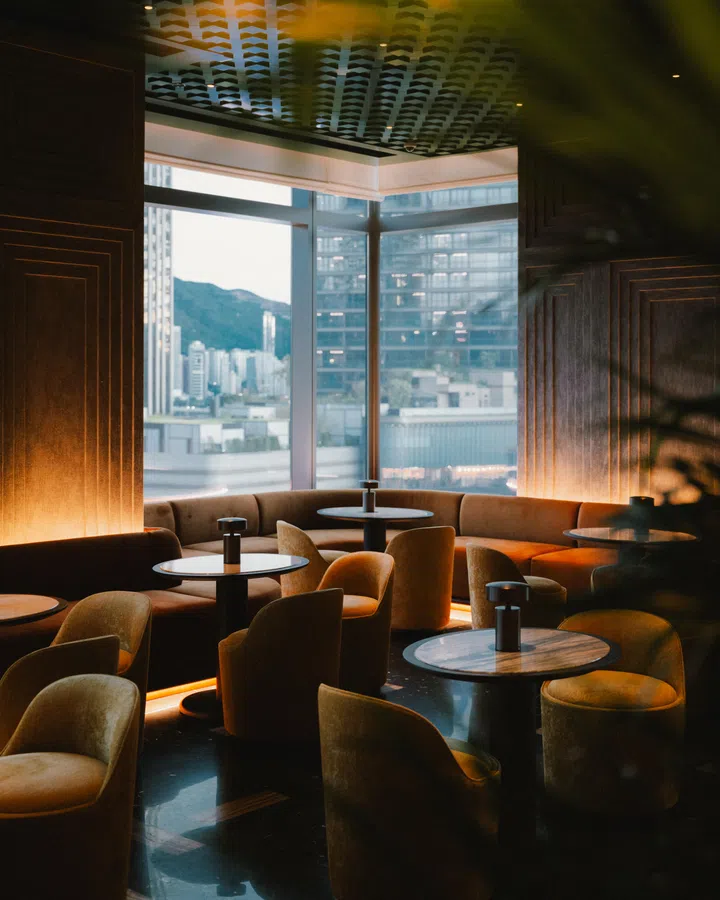
He describes this as “a hidden narrative… that guests may not consciously recognise”.
Inside the suites, that subtlety translates into planning efficiency. The rooms are not oversized, yet they feel composed. The shower and WC are aligned along one side, consolidating services and freeing the remaining footprint for a living area and a harbour-facing bed.
The marble-framed plunge bath, positioned beside the glazing, initially catches the eye. In practice, it works. Wet and dry zones remain controlled, even as the bath occupies the room’s most privileged edge.
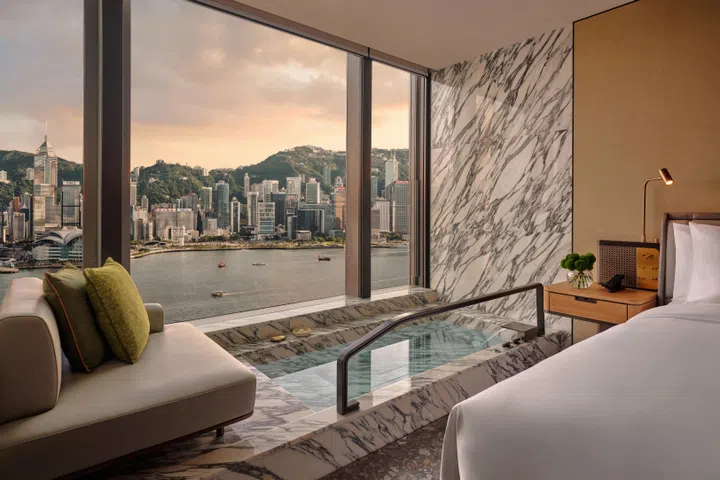
Material choices reinforce cohesion. Rattan appears throughout, applied with precision rather than nostalgia. Wood panelling tempers the stone. In the bathroom, green “Kit Kat” tiles shift the palette without overwhelming it. Manual switches introduce a tactile counterpoint to the otherwise contemporary setting.
Programming the panorama
Heidi Chan, director of Design at Steve Leung Hospitality, frames the project through the lens of experience.
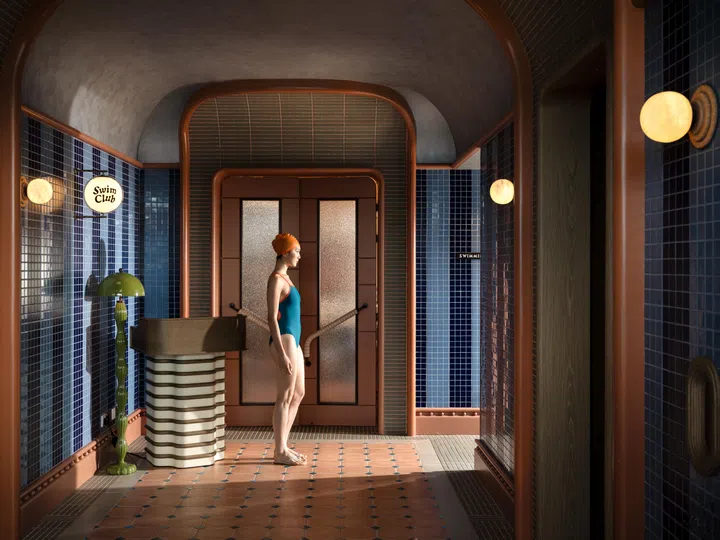
“Guests may have overlooked the variety and mix of tiles used in the 50th-floor lobby of the skyline pool bar Swim Club, on both the floor and walls. The alignment of the tiles creates a humble yet cinematic effect… allowing guests to immediately transition from the Hong Kong urban hustle into the stylish and playful social vibes of Swim Club.”
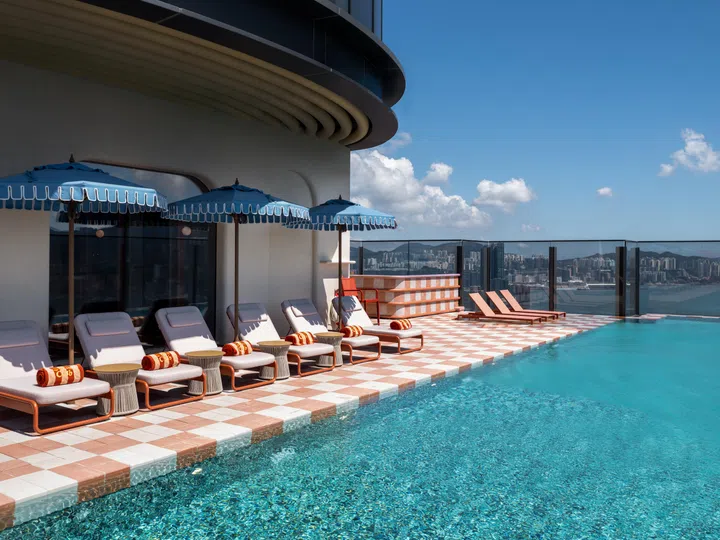
She adds that the team crafted the experience “thoughtfully, down to the tiniest details”.
On the rooftop, that attention is evident in the 20m heated pool, which frames a 360-degree view of the harbour. Chan cites Hoshinoya Fuji as an influence: “Its entire layout and experience are humble, focused entirely on how one interacts with nature and the surrounding scenery.”
At Swim Club, she explains, “We consistently considered how to frame the Victoria Harbour view and designed elements to interact with that exterior vista.” Even the diving-themed wallpaper in the VIP room was conceived to create “a humorous visual tension” with the harbour outside.
If granted more time, Chan would refine function rather than form. “If I were given an extra 30 days, I would further explore how the outdoor BBQ and cooking station can be made to operate effectively under high-wind conditions.” Her instinct underscores how tightly programming and architecture interlock here.
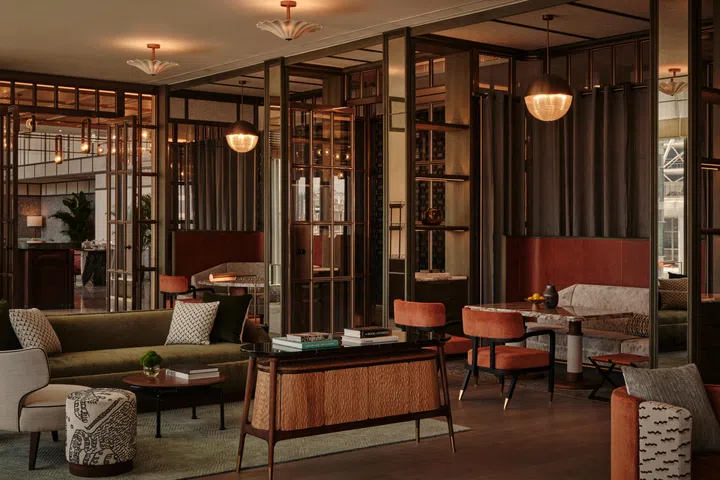
Lui, meanwhile, would turn to the lobby’s FF&E. He speaks fondly of the curated photography and artefacts tied to Hong Kong’s film and music history and notes, “With a bit more time, I’d love to fine-tune the FF&E to strengthen this narrative… allowing the space to feel more layered and culturally resonant.”
That layering already registers. A feature wall inspired by Hong Kong’s typhoon signals greets arrivals. Whimsical clocks animate the wall opposite the reception. Staff uniforms, graphic and purple, read as part of the interior language rather than an afterthought.
Elevating the social core
For hotel manager Pingping Patty Mao, the rooftop consolidates the property’s identity. “Guests absolutely have to visit and experience our poolside, rooftop bar, and Swim Club. It’s the rockstar of our property and a great reflection of our creative culinary experiences… Not to mention, 360-degree sweeping views of Hong Kong.”
She situates the hotel within “the lifestyle luxury segment,” where a “hyper-curated lifestyle programme” drives the guest experience.
The most meaningful feedback, she says, came from a guest who described the hotel as “an exceptional hotel that is not only unique, but one that they have not seen offered in the Hong Kong marketplace”. For Mao, that affirmed the ambition to build “a communal hub that attracts a diverse customer base”.
Kimpton Tsim Sha Tsui builds its argument incrementally — through brick that references Signal Hill, green tones that echo the garden, rattan that nods to local craft, and a rooftop programmed as both a vantage point and a venue. The architecture does not rely on a singular flourish. It depends instead on coherence.