
Meet Artery: A non-profit using venture capital to fund the next gen of artists
A new accelerator is bringing private philanthropy into the space between public funding and institutional patronage — betting that Singapore’s artists need staying power, not one-off support.
By Zawani Abdul Ghani /
Share this article
Backing individual artists directly, over years rather than a one-off gift, is relatively new territory. Enter Artery, a non-profit arts accelerator that launched in July with a S$10 million programme and an unusual premise: borrow from venture capital to build Singapore’s next generation of artists with real staying power.
It’s positioning itself as a “Y Combinator for artists”, after the accelerator that helped launch Airbnb and Reddit.
Artery is founded by Singaporean philanthropist Danny Yong, who chairs its three-member board alongside former National Gallery Singapore chairman Hsieh Fu Hua (founder of BinjaiTree) and DP Architects executive chairman Angelene Chan.
Together, the board brings philanthropy, business, and institutional art experience — a cross-sector perspective that shapes Artery’s role as a complement to existing funding models, not a replacement.

Although Singapore’s public funding system reaches both ends of the scale — well-resourced grants from national institutions and smaller schemes that reach neighbourhood arts groups — the middle ground remains underserved. Even in private philanthropy, grants and funding tend to be one-off affairs funnelled to organisations rather than individuals.
To survive, artists bridge the gap with day jobs, or leave the sector altogether — an attrition that traditional metrics fail to capture, but that costs Singapore artistic talent all the same.
“While public funding builds the foundation, private capital can fill the gaps by providing unrestricted support and grants,” says Yong. “Artery is focused on helping these artists attain sustainable careers and further growing the art ecosystem in Singapore.”
Supporting the artists
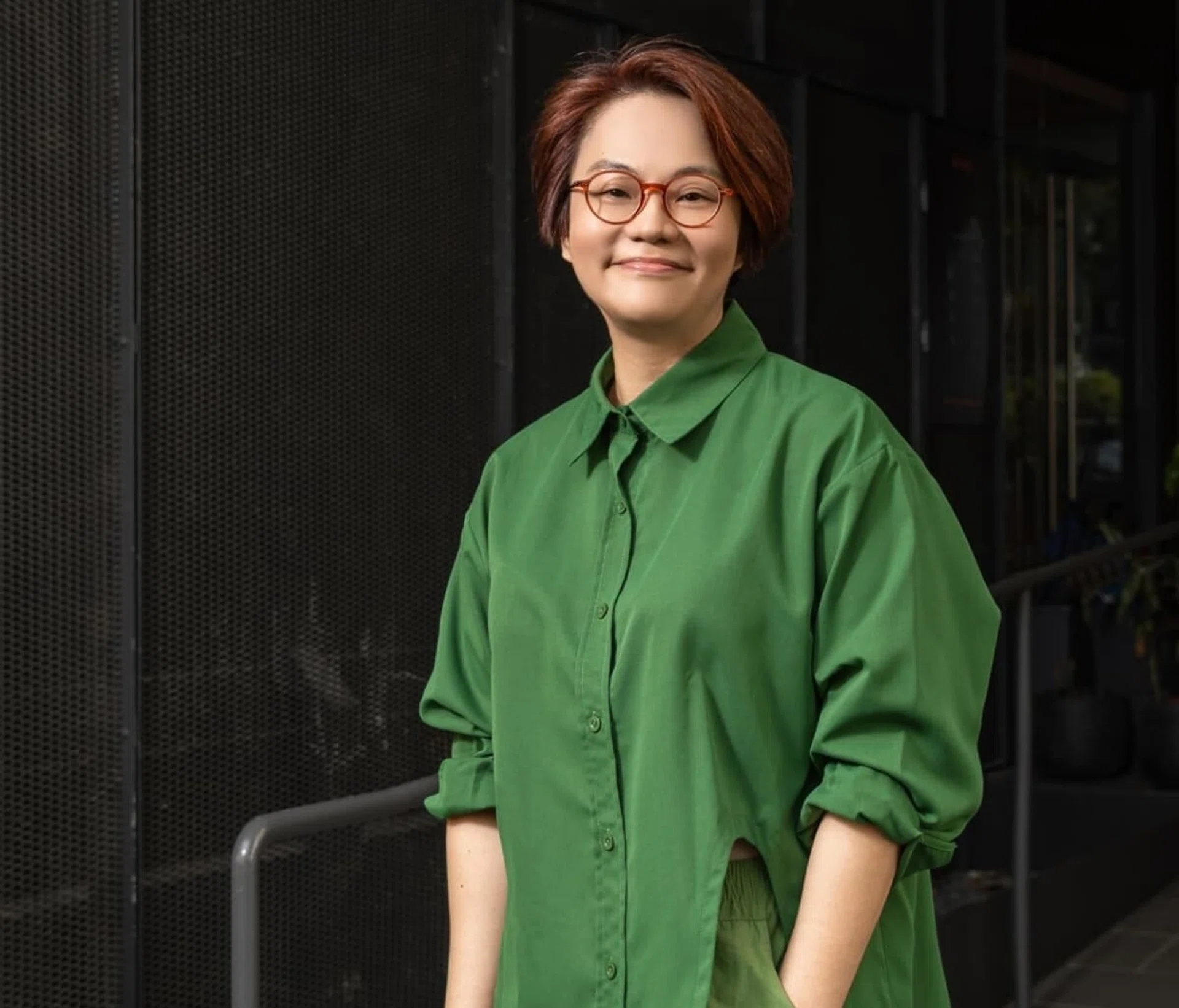
The non-profit is helmed by CEO Belinda Ang, a multi-disciplinary entrepreneur with two decades across the arts, technology and communications sectors, alongside head of curation Joyce Toh, a former senior curator at the Singapore Art Museum with more than 20 years in the field.
Ang’s background across such different industries is central to Artery’s operation. Much of her job is translation, pitching the same idea in different registers to a gallery, a curator, a bank’s HR department, or a founder weighing patronage.
She moves fluidly between those worlds, borrowing language and models from each, which is part of why Artery’s patron model reads more like a startup pitch than a fundraising ask.
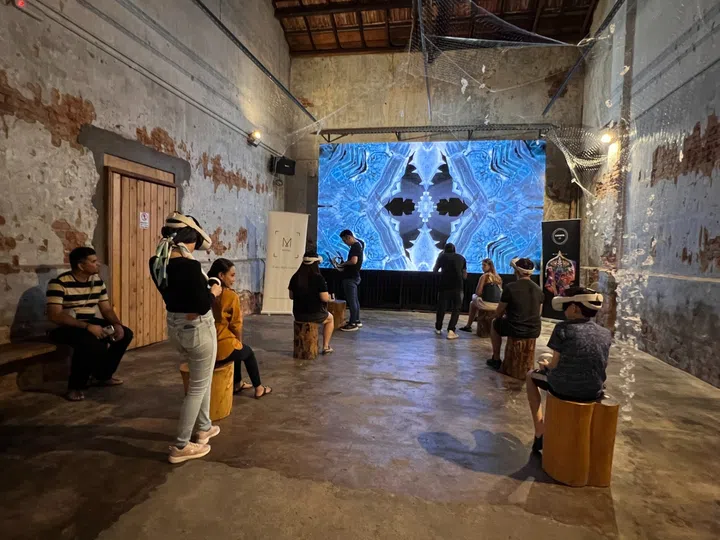
At the core of Artery’s model is the five-year Artist Accelerator Programme (AAA), split into two phases built on a simple idea: give an artist enough runway, for long enough, that they stop treating art as the thing they squeeze in around paying work.
AAA Programme Phase One (12 months)
- Accepted participants receive a monthly stipend of up to $2,000 to enable them to free up work gigs to commit more time to their practice
- Artery commits to purchasing selected works from the artists up to a designated financial quantum
- Artists receive all-around business, legal, and marketing support that will best help them advance their objectives
- Participants gain opportunities to exhibit at partner galleries
- Participants get complimentary use of designated artist studio spaces
- The artist remains obliged to deliver creative output in accordance with the agreed work plan
AAA Programme Phase Two (Four years)
- Selected individuals gain the opportunity to receive sponsorship for suitable overseas residency programmes
- Artery allocates a set number of annual curatorial hours to guide ongoing artistic development
- Participants receive credits worth $10,000 valid for four years to procure professional services across business, legal or marketing sectors
- Artery remains the Artist’s first collector with first right of refusal to the Artist’s works
Depending on the artist’s track, institutional or conceptual practitioners would be guided toward biennales and museums, those with more collectable work toward galleries, and anything with commercial or IP potential toward brand tie-ups, said Ang.
“It’s hard being in such a pragmatic society,” Ang says. “In Indonesia, you can retreat to Bandung, but here, living costs are the same everywhere. Our artists work five or six days a week, and on the one day they have in the studio, they stare into blank air. It’s a lonely journey.”
“If we leave artists to do what they do best, can we remove the barriers so they produce deeper work?” adds Ang, noting that full-year stipended residencies aren’t unusual in South Korea, Taiwan, or parts of Europe. “Can we give them mind space — not just to produce, but to research, dream, experiment? We’re already seeing our artists smile more.”
Building the eco-system
Beyond the AAA, Artery runs a parallel Patron Programme designed to make corporate and philanthropic giving to the arts more accessible and sustained — “a form of creative giving,” Ang calls it, and a break from how it’s traditionally been done here.
“Traditionally, giving to the arts means signing a $50,000 cheque and getting a plaque, and then thank you very much,” Ang says. In her conversations with corporates, cash donations have gotten harder to come by, even as more patrons come forward. “What if corporate money for the arts came as an exchange of services instead?”
Its flagship offering, Patron-as-a-Service (PaaS), borrows a subscription model from the software industry: companies pay a tiered monthly fee for curated artworks displayed in communal office spaces, workshops, talks with artists, and annual signed prints and tokens.
The pitch targets budgets large companies already have for staff engagement and interior design, including Artery’s collection on office walls and workshops that use art to spark conversations on mental health or social issues.
Artery is now in early talks with MNCs, tech firms and finance institutions — sectors where, Ang has found, plenty of Singaporeans want to engage with the arts but rarely have time to get to a gallery or museum.
Their offices tend to be large, well-designed and busy, which suits a curated collection and puts it in front of more people. She’s also looking at hotels and private members’ clubs, though steering away from restaurants and F&B, where display conditions are harder to control.
The intent is to “expand appreciation, and expand giving at the lowest barrier possible,” Ang says.

Two other tracks round out the programme: Space-as-Giving turns underused commercial or industrial space into venues for exhibitions and artist development, with Artery curating the programming; In-Kind Giving covers non-cash support like logistics, artwork handling and storage, and legal and marketing expertise.
For instance, Lotus Fine Arts has joined Artery as its official handling and storage partner.
“I see art as something that should no longer be confined to isolated production or periodic visibility,” says board member Angelene Chan. “It needs to exist as a continuous practice embedded in systems of support, so artists can sustain depth over time, rather than be defined by episodic opportunity.”
The inaugural cohort
Artery’s first cohort spans six visual artists aged 24 to 56, with two cohorts of around six onboarded each year going forward. They claim no restrictions are in place on topics or subject matter and “want to engage with artists that seek to take on and explore topics with sophistication, nuance and dimensional thinking, rather than polemics or diatribe”.
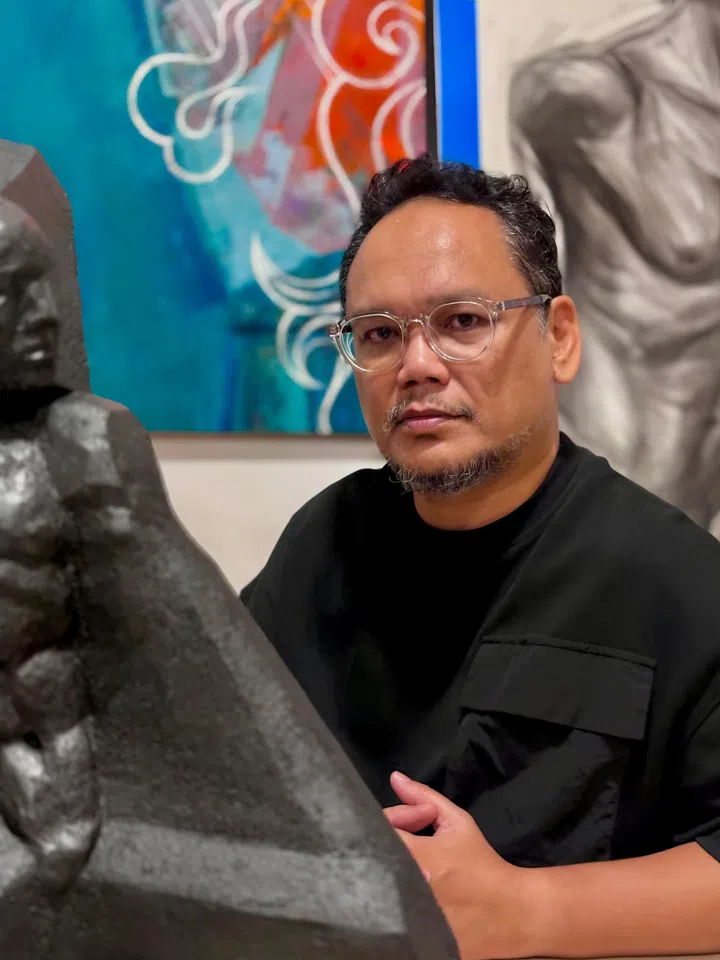
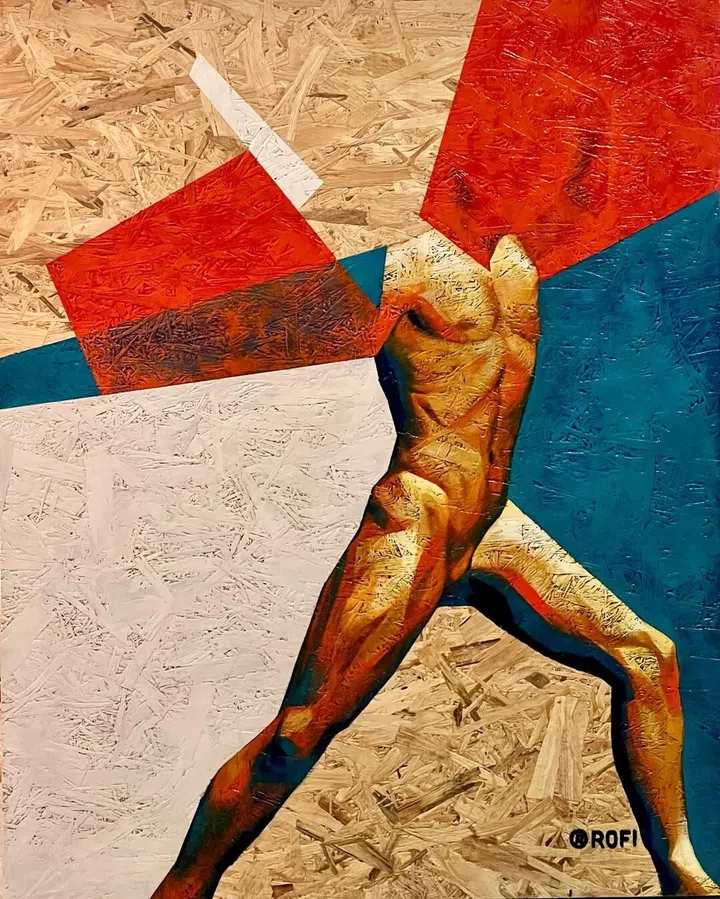
For self-taught artist Rofizano Zaino, whose work draws on Silat and Malay cultural identity, Artery’s backing means his first real shot at working full-time as an artist. “Now, I can do art and not feel guilty about it,” he says. The father of two teenagers is shifting from thinking of painting as a craft to working with ideas alongside curators, developing a series of figurative paintings around the philosophy of silat.
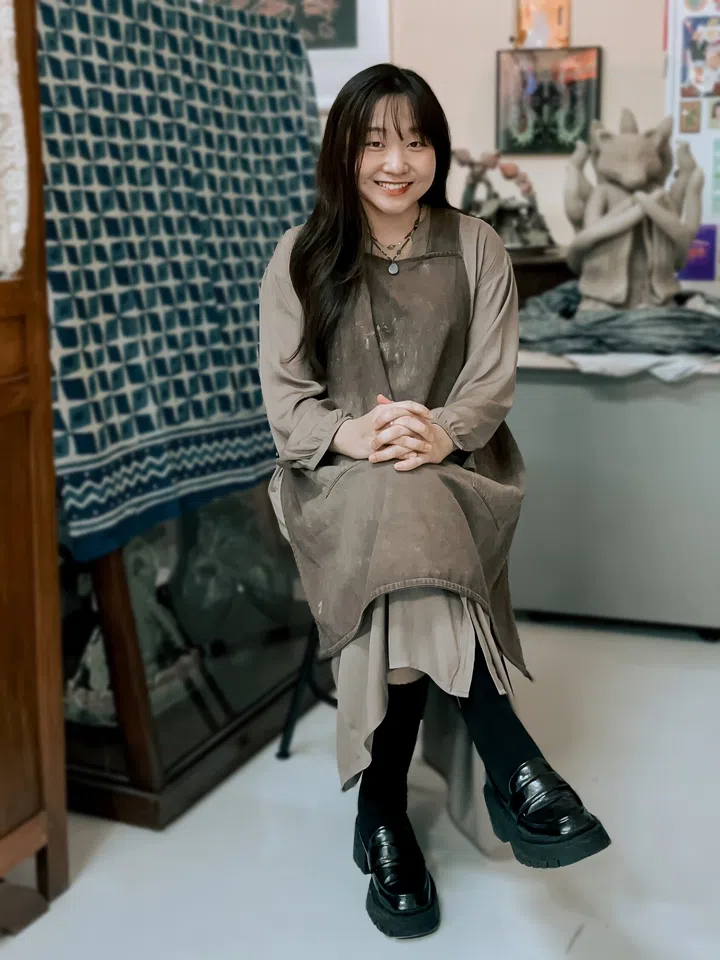
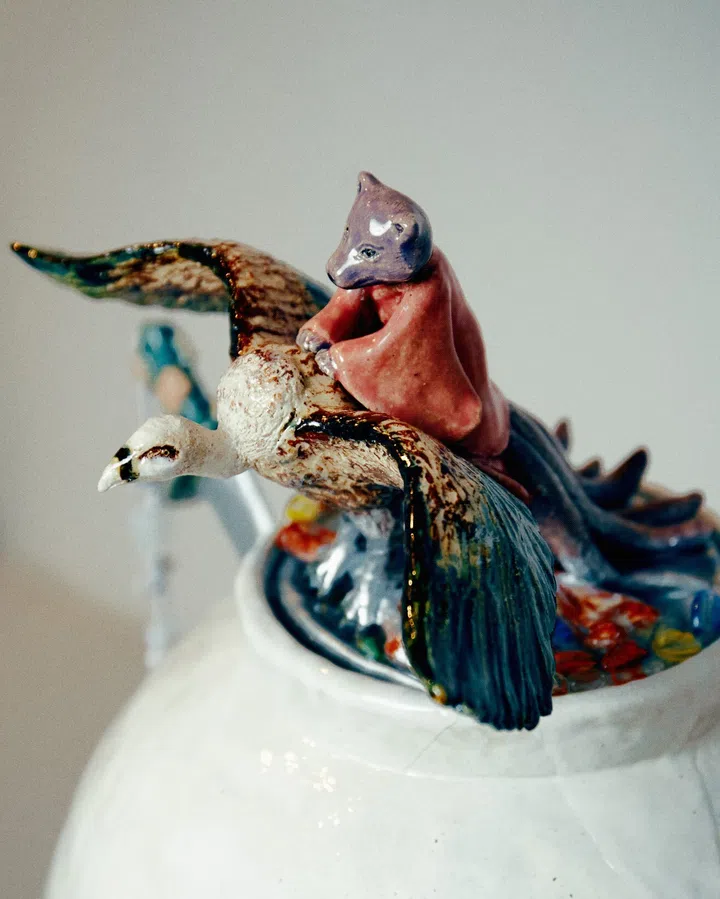
Ceramic artist Shayne Phua, 29, whose clay sculptures draw on Asian folklore, was juggling three jobs at once — including teaching and a stint at the zoo — before joining AAA.
Under Artery, she’s cut her teaching week from five days to two, dedicating the coming year to an upcoming solo while hunting for a bigger studio.
Forty-one-year-old Joanne Lim’s path into the cohort is one of the more unusual ones: she studied law before turning to art after realising it was where her interests lay, later completing a master’s in fine arts with distinction.
Her work takes data from long-running community projects and reworks it into sculpture, installation and performance, probing themes of surveillance, presentation, and tracking.
Working towards the bigger picture
Independently funded by its board and not tied to public grants, Artery can set its own targets and timelines. The longer-term goal is a deeper bench of Singapore artistic talent — enough to build a cultural legacy the country can point to globally.
“We want to reach a point where, if artists are accepted into AAA, there’s a common consensus in the industry that they’re the cream of the crop,” she says.
Ang points to South Korea as a model of a more mature patronage scene. After visiting the National Museum of Modern and Contemporary Art, she came away struck by how strongly the country’s commercial and institutional art infrastructure worked in tandem.
Corporate-run cultural foundations in South Korea spent more than one trillion won ($689 million) over the last decade to promote arts and culture, according to Arts Council Korea data.
“We may be one of the first here to try these ideas, but I doubt we’ll be the last,” Ang says. “Where I hope we’re heading is a place where we see art and culture not as a donation, but as an investment in legacy, in identity, the same way we invest in education.”
”If we’re building an inclusive society, artists are part of that. They’re mental health and spiritual workers too, and in a world this divided, art matters even more in binding people together. It invites questions more than it gives answers, but it helps people find meaning and identity. Those are the intangible things that hold people together, and no civilisation is complete without them.”