%22%3E%0A%3Cpath%20d%3D%22M412%20101.2H393.7C393.1%20101.2%20392.3%20100.9%20391.8%20100.5C377.3%2087.6004%20362.9%2074.6004%20348.4%2061.6004C344.8%2058.4004%20341.3%2055.2004%20337.7%2052.0004C337.1%2051.5004%20336.2%2051.1004%20335.5%2051.0004C334.2%2050.8004%20333%2051.0004%20331.5%2051.0004V101.1H316.7V0.100391H331.4V44.3004C331.9%2044.3004%20332.2%2044.4004%20332.5%2044.4004C334.9%2044.4004%20337.2%2044.5004%20339.6%2044.4004C340.4%2044.4004%20341.3%2044.0004%20341.8%2043.5004C351.6%2034.4004%20361.4%2025.2004%20371.1%2016.0004C376.5%2010.9004%20381.9%205.90039%20387.3%200.800391C387.9%200.200391%20388.5%200.000390626%20389.3%200.000390626H400.9C384.2%2015.8004%20367.8%2031.3004%20351.2%2047.0004C371.5%2065.0004%20391.8%2082.9004%20412.1%20100.9C412.1%20101%20412.1%20101.1%20412%20101.2ZM180.9%20101.2C184.1%2094.9004%20187.2%2088.9004%20190.3%2082.8004C198.3%2067.3004%20206.2%2051.8004%20214.2%2036.2004C220.3%2024.4004%20226.4%2012.5004%20232.4%200.700391C232.7%200.100391%20233%20-0.0996094%20233.7%20-0.0996094H248.1C248.8%20-0.0996094%20249.2%200.100391%20249.6%200.800391C256%2013.3004%20262.4%2025.7004%20268.8%2038.2004C279.3%2058.6004%20289.8%2079.0004%20300.3%2099.5004C300.5%20100%20300.8%20100.4%20301.1%20101.1C300.5%20101.1%20300.1%20101.2%20299.7%20101.2H286.5C285.6%20101.2%20285.1%20100.9%20284.7%20100.2C280.1%2091.3004%20275.4%2082.4004%20270.8%2073.4004C270.1%2072.1004%20269.3%2071.6004%20267.8%2071.6004H209.9C208.7%2071.6004%20208.1%2072.0004%20207.5%2073.1004C202.9%2082.1004%20198.2%2091.0004%20193.6%20100C193.1%20101%20192.6%20101.3%20191.5%20101.3C188.4%20101.2%20185.3%20101.3%20182.3%20101.3C182%20101.2%20181.6%20101.2%20180.9%20101.2ZM239.1%2011.4004C230%2029.2004%20221.1%2046.7004%20212.1%2064.3004H266.4C257.2%2046.7004%20248.2%2029.2004%20239.1%2011.4004ZM0%200.000390626H43.4C51.2%200.000390626%2058.7%201.20039%2065.7%204.80039C75.9%2010.0004%2078.9%2018.0004%2078.6%2027.4004C78.3%2034.3004%2076%2040.5004%2071.2%2045.5004C67.3%2049.6004%2062.4%2052.3004%2057.1%2054.3004C50.6%2056.7004%2043.9%2058.0004%2037.1%2058.6004C30.1%2059.2004%2023.1%2059.4004%2016.2%2059.7004C15.8%2059.7004%2015.3%2059.8004%2014.8%2059.8004V101.1H0.1C0%2067.4004%200%2033.8004%200%200.000390626ZM14.8%207.10039V52.2004C23.7%2052.4004%2032.6%2052.3004%2041.2%2050.1004C44.4%2049.3004%2047.6%2048.2004%2050.6%2046.7004C58.4%2043.0004%2062.3%2036.7004%2062.7%2028.0004C63%2019.9004%2059.5%2014.1004%2052.4%2010.5004C47.6%208.00039%2042.5%207.10039%2037.2%207.10039H14.8ZM95.9%20101.1V0.100391H167.3V7.20039H110.7V44.7004H158.1V51.9004H110.8V93.9004H171.1V101C146.1%20101.1%20121%20101.1%2095.9%20101.1Z%22%20fill%3D%22black%22%2F%3E%0A%3Cpath%20d%3D%22M35.0004%2025.7996H42.5004V20.6996H44.8004V33.1996H42.6004V27.5996H34.9004V33.2996H32.7004V20.7996H35.0004V25.7996ZM54.4004%2025.8996V27.2996H48.9004V31.6996H55.9004C55.9004%2032.1996%2056.0004%2032.5996%2056.0004%2033.0996H46.5004V20.5996H55.5004V21.8996H49.0004V25.7996C50.7004%2025.8996%2052.5004%2025.8996%2054.4004%2025.8996ZM25.9004%2033.0996H23.5004V21.9996H17.9004V20.6996H31.6004V22.0996H27.1004C26.2004%2022.0996%2025.9004%2022.2996%2025.9004%2023.1996C26.0004%2026.0996%2025.9004%2028.9996%2025.9004%2031.7996V33.0996Z%22%20fill%3D%22black%22%2F%3E%0A%3C%2Fg%3E%0A%3Cdefs%3E%0A%3CclipPath%20id%3D%22clip0_388_462%22%3E%0A%3Crect%20width%3D%22411%22%20height%3D%22101.2%22%20fill%3D%22white%22%2F%3E%0A%3C%2FclipPath%3E%0A%3C%2Fdefs%3E%0A%3C%2Fsvg%3E%0A)
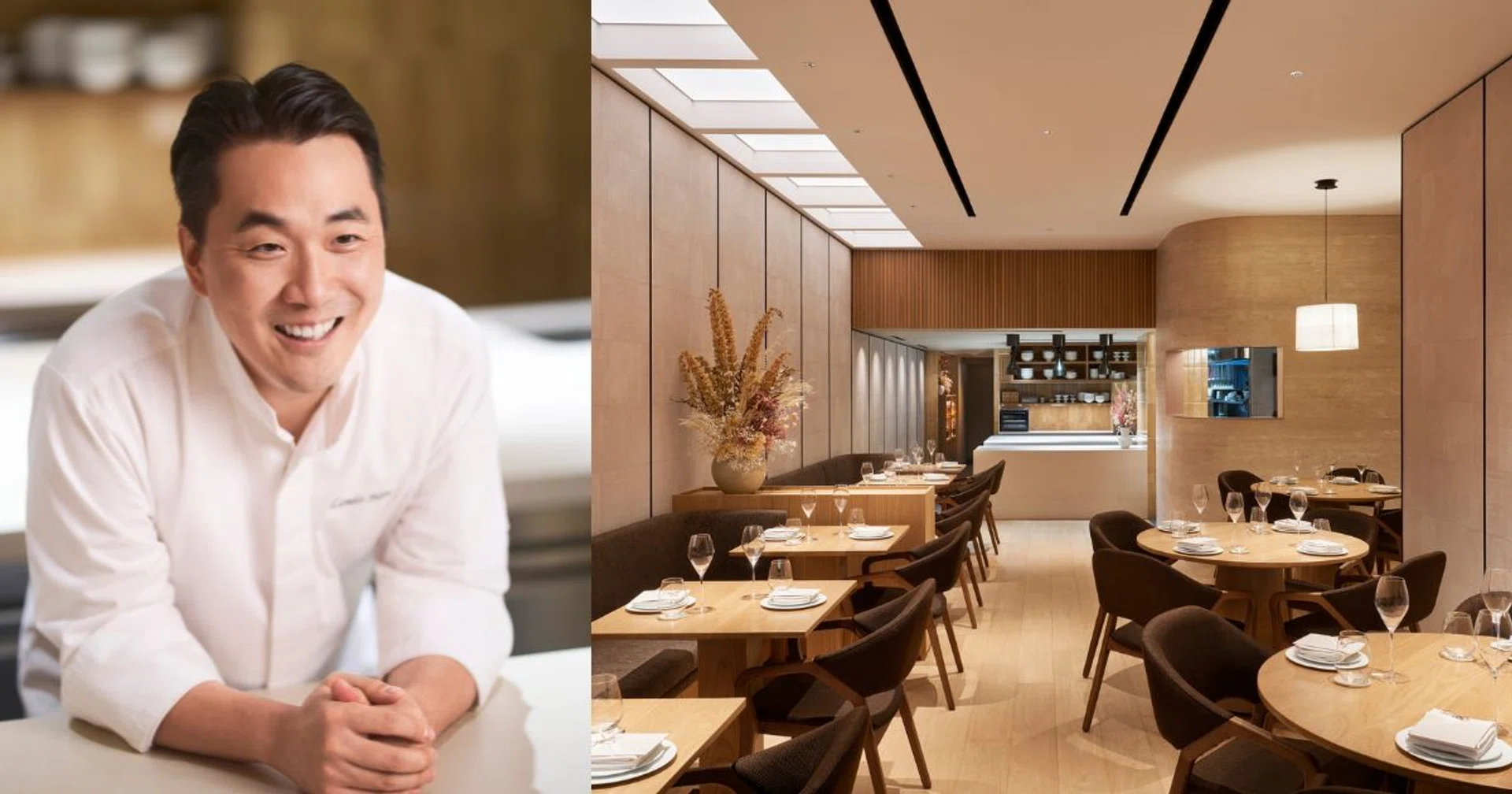
Chef Louis Han’s worldly experiences fuel one-Michelin-starred Nae:um’s revamp
The South Korean chef-owner of Nae:um reflects on his culinary journey with a major renovation of his four-year-old restaurant.
By Kenneth SZ Goh /
Share this article
From a young age, chef Louis Han had a strong urge to travel the world. Growing up in Seoul, the 35-year-old Korean did not speak much English, so venturing abroad was a sure-fire way to pick up the language and immerse in other cultures.
And travel, he did. First, to Lebanon, as part of an eight-month stint as a cook with the United Nations Peacekeeping Force, which was part of his national service.
Abu Dhabi soon followed, where he spent a year cooking at an Italian fine-dining restaurant in a hotel.
And finally, he landed in Singapore in 2016, as part of the opening team of Meta restaurant. What started as a two-year cooking stint extended to almost a decade, in which he opened Nae:um, a one-Michelin-starred contemporary Korean restaurant in 2021.
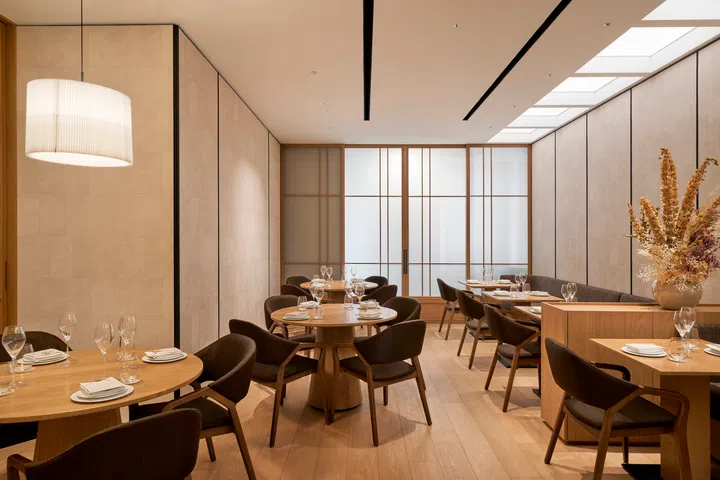
After four years, Nae:um is ready to shed its cosy chogajib (mudhouse in Korean) look for a more elegant and upmarket ambience, reminiscent of a giwajib, the stately homes of Korea’s noble class. After a two-month renovation, the 24-seat restaurant sports a more clean-cut look with Hanji paper-like textured walls, earth-toned furnishings, and soft Barrisol lighting.
“The restaurant looks more graceful now. It also reflects how my culinary approach has evolved, which is more playful, inspirational and mature.” He injects with a laugh: “It’s like becoming more well-fermented.
Dishing out life experiences
Han is channelling his colourful life experiences in Nae:um’s revamped menu, which takes on a retrospective “storybook” format. Each dish represents a chapter of his life, an ode to the restaurant’s nostalgia-laden name.
Previously, the restaurant ran nine episodic menus, each centred on a memory of growing up in South Korea, from home barbecues to exploring Jeju’s shores. “Nae:um was focused on creating modern versions of Korean dishes. I have also grown as a chef and want to include more global perspectives into my cuisine,” he says.
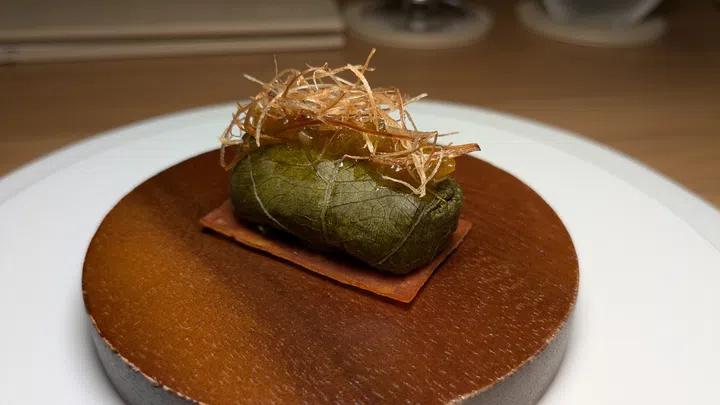
One of the opening snacks in the revamped menu, Sokkori, does just that. The bite-sized snack is inspired by shawarma, his comfort food while working in Abu Dhabi. As a young and lowly-paid chef, his “economy meal” was a foot-long shawarma, which he ate for three meals in a day.
For the sokkori, he packed the elements of a shawarma into a petite perilla leaf parcel. The moreish package is loaded with braised oxtail and mashed potatoes, balanced by acidity from pickled bell peppers, and served on a lavash cracker.
The dish reminds him of his youth — as the only Korean in the workers’ dormitory, he became more adaptable and open to socialising with fellow residents from all walks of life.
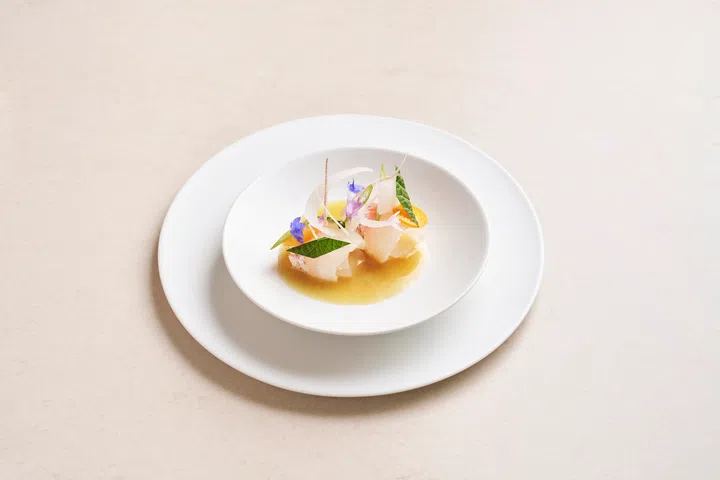
One of the appetisers, domi is built around sun-drenched memories of savouring freshly-slaughtered raw fish hwae) by the beach, a must-have during seaside trips. At Nae:um, Han ages the seabream for greater depth of flavour and garnishes it with typical condiments such as daikon and leeks.
The slabs of seabream are perched on a pool of bright yellow lemon soy vinaigrette. “I want it to feel like being at the beach,” he says. “Bright, colourful, and full of zest.”
The hansang platter is a vegetable-centric rice course that is an ode to his first meal whenever he returns home in Seoul. “My grandmother or mother would prepare a simple meal of chilled banchan, such as kimchi and salads with rice. There is nothing fancy, but it gives me a lot of comfort.”
His taste of home is reinterpreted as Korean short-grain rice cooked in a cast-iron “sot” mixed with greens like napa cabbage, chives, seaweed, and topped with grilled gochujang-marinated deodeok (mountain root vegetable), and accompanied by banchan.
One of his favourite banchan is oijangajji, or salted cucumber pickles. “I hated it when I was young; it was served at home every day until now!” he reflects. “But, now I love the texture and marination.”
“However, I noticed that the flavours are not the same. Perhaps my grandmother is getting older. It’s sad to realise that time is passing, and the flavours only live in my memory,” he adds poignantly.
Han has retained two signature dishes from the previous menus and combined them into a course. In Memilmyeon & Mandu’, the cold Korean buckwheat noodles is tossed in fragrant perilla oil dressing and white kimchi, and adorned with petal-shaped sweet mountain turnip. While the mandu is reimagined as a grilled morel mushroom stuffed with rice cake and duck meat patty.
Serving memories
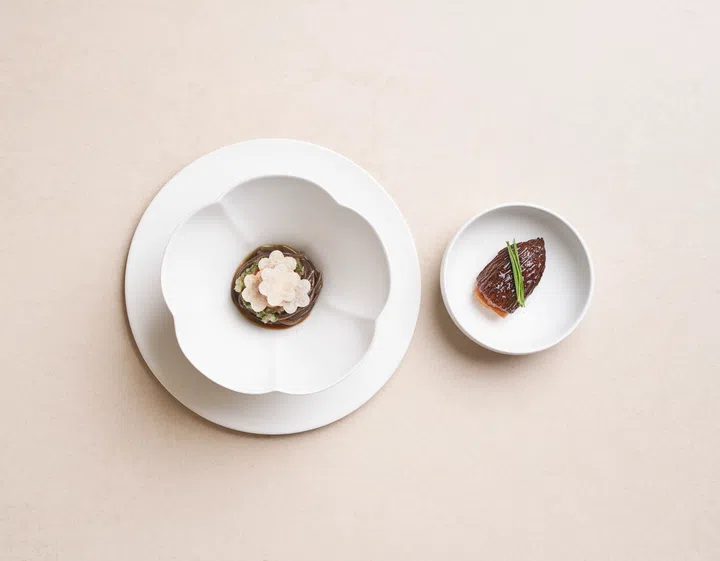
Armed with more culinary confidence, Han isn’t afraid to bare them all on pristine white ceramic plates by Korean tableware maker, KwangJuYo. He says: “I used to have garnishes such as flowers, but now I focus more on the ingredients. With white plates, you need to be very controlled and precise when it comes to plating.”
Other memories that might make it to future iterations of Nae:um’s menu include his national service stint in Lebanon, following the footsteps of his grandfather, who passed away shortly after he started the national service duty at 20. He recalls: “It was a fun experience; being part of a team of six cooks cooking for around 300 soldiers in the Korean Army daily.”

After 10 years in Singapore, Han has inevitably absorbed some influences from his second home. He says: “Some of the dishes have heavy flavours, but they are always paired with some form of acidity, such as green chilli.”
Mastering a balance of flavours has also seeped into his culinary approach at Nae:um. “I usually play with umami, sweet, spicy, and sour flavours, and ensure that my dishes incorporate these elements.”
Over the years, he has developed a fondness for local dishes, such as fried yang zhou noodles, which is also a favourite of his Singaporean wife. The couple now manages Nae:um Group, which includes a modern contemporary Korean grill restaurant, Gu:um and a private dining space, Hideaway, which is located above Nae:um.
On his decision to stay in Singapore, Han, who has also worked in three-starred Mosu in Seoul before striking out on his own, shares: “In Singapore, the amount of effort that you put in translates to the amount of opportunities — that’s why I stayed on.”
With refreshed interiors and a renewed zeal to enhance the dining experience at the hanok-inspired restaurant on Telok Ayer Street, he says: “Like the restaurant’s name, which means ‘a fragrance that evokes memories’ in Korean, I want diners here to have special memories. The unique dishes are a representation of myself. We are not only a Korean restaurant, but one that incorporates memories and diverse cultures that cannot be found elsewhere.”