%22%3E%0A%3Cpath%20d%3D%22M412%20101.2H393.7C393.1%20101.2%20392.3%20100.9%20391.8%20100.5C377.3%2087.6004%20362.9%2074.6004%20348.4%2061.6004C344.8%2058.4004%20341.3%2055.2004%20337.7%2052.0004C337.1%2051.5004%20336.2%2051.1004%20335.5%2051.0004C334.2%2050.8004%20333%2051.0004%20331.5%2051.0004V101.1H316.7V0.100391H331.4V44.3004C331.9%2044.3004%20332.2%2044.4004%20332.5%2044.4004C334.9%2044.4004%20337.2%2044.5004%20339.6%2044.4004C340.4%2044.4004%20341.3%2044.0004%20341.8%2043.5004C351.6%2034.4004%20361.4%2025.2004%20371.1%2016.0004C376.5%2010.9004%20381.9%205.90039%20387.3%200.800391C387.9%200.200391%20388.5%200.000390626%20389.3%200.000390626H400.9C384.2%2015.8004%20367.8%2031.3004%20351.2%2047.0004C371.5%2065.0004%20391.8%2082.9004%20412.1%20100.9C412.1%20101%20412.1%20101.1%20412%20101.2ZM180.9%20101.2C184.1%2094.9004%20187.2%2088.9004%20190.3%2082.8004C198.3%2067.3004%20206.2%2051.8004%20214.2%2036.2004C220.3%2024.4004%20226.4%2012.5004%20232.4%200.700391C232.7%200.100391%20233%20-0.0996094%20233.7%20-0.0996094H248.1C248.8%20-0.0996094%20249.2%200.100391%20249.6%200.800391C256%2013.3004%20262.4%2025.7004%20268.8%2038.2004C279.3%2058.6004%20289.8%2079.0004%20300.3%2099.5004C300.5%20100%20300.8%20100.4%20301.1%20101.1C300.5%20101.1%20300.1%20101.2%20299.7%20101.2H286.5C285.6%20101.2%20285.1%20100.9%20284.7%20100.2C280.1%2091.3004%20275.4%2082.4004%20270.8%2073.4004C270.1%2072.1004%20269.3%2071.6004%20267.8%2071.6004H209.9C208.7%2071.6004%20208.1%2072.0004%20207.5%2073.1004C202.9%2082.1004%20198.2%2091.0004%20193.6%20100C193.1%20101%20192.6%20101.3%20191.5%20101.3C188.4%20101.2%20185.3%20101.3%20182.3%20101.3C182%20101.2%20181.6%20101.2%20180.9%20101.2ZM239.1%2011.4004C230%2029.2004%20221.1%2046.7004%20212.1%2064.3004H266.4C257.2%2046.7004%20248.2%2029.2004%20239.1%2011.4004ZM0%200.000390626H43.4C51.2%200.000390626%2058.7%201.20039%2065.7%204.80039C75.9%2010.0004%2078.9%2018.0004%2078.6%2027.4004C78.3%2034.3004%2076%2040.5004%2071.2%2045.5004C67.3%2049.6004%2062.4%2052.3004%2057.1%2054.3004C50.6%2056.7004%2043.9%2058.0004%2037.1%2058.6004C30.1%2059.2004%2023.1%2059.4004%2016.2%2059.7004C15.8%2059.7004%2015.3%2059.8004%2014.8%2059.8004V101.1H0.1C0%2067.4004%200%2033.8004%200%200.000390626ZM14.8%207.10039V52.2004C23.7%2052.4004%2032.6%2052.3004%2041.2%2050.1004C44.4%2049.3004%2047.6%2048.2004%2050.6%2046.7004C58.4%2043.0004%2062.3%2036.7004%2062.7%2028.0004C63%2019.9004%2059.5%2014.1004%2052.4%2010.5004C47.6%208.00039%2042.5%207.10039%2037.2%207.10039H14.8ZM95.9%20101.1V0.100391H167.3V7.20039H110.7V44.7004H158.1V51.9004H110.8V93.9004H171.1V101C146.1%20101.1%20121%20101.1%2095.9%20101.1Z%22%20fill%3D%22black%22%2F%3E%0A%3Cpath%20d%3D%22M35.0004%2025.7996H42.5004V20.6996H44.8004V33.1996H42.6004V27.5996H34.9004V33.2996H32.7004V20.7996H35.0004V25.7996ZM54.4004%2025.8996V27.2996H48.9004V31.6996H55.9004C55.9004%2032.1996%2056.0004%2032.5996%2056.0004%2033.0996H46.5004V20.5996H55.5004V21.8996H49.0004V25.7996C50.7004%2025.8996%2052.5004%2025.8996%2054.4004%2025.8996ZM25.9004%2033.0996H23.5004V21.9996H17.9004V20.6996H31.6004V22.0996H27.1004C26.2004%2022.0996%2025.9004%2022.2996%2025.9004%2023.1996C26.0004%2026.0996%2025.9004%2028.9996%2025.9004%2031.7996V33.0996Z%22%20fill%3D%22black%22%2F%3E%0A%3C%2Fg%3E%0A%3Cdefs%3E%0A%3CclipPath%20id%3D%22clip0_388_462%22%3E%0A%3Crect%20width%3D%22411%22%20height%3D%22101.2%22%20fill%3D%22white%22%2F%3E%0A%3C%2FclipPath%3E%0A%3C%2Fdefs%3E%0A%3C%2Fsvg%3E%0A)
Veuve Clicquot's youngest winemaker on how the La Grande Dame 2015 adds colour to champagne
Veuve Clicquot’s La Grande Dame 2015 is dressed in shades of optimism and hope — qualities shared by its youngest winemaker in the team, the sunny Marie Charlemagne.
By June Lee /

Share this article
As the Pantone Color Institute has long taught us, colours can change our moods, emotions, and even behaviour. Further research shows that yellow is deemed the colour of happiness and optimism, and is coincidentally one that most vinophiles readily associate with the recognisable livery of champagne house Maison Veuve Clicquot.
For the latest vintage release of La Grande Dame 2015 however, six nuanced pastel hues — specially chosen and blended by ‘paper clay’ Italian artist Paola Paronetto — are taking centrestage on the label and the packaging. This soft look represents optimism and hope in our post-COVID era while also contrasting the brighter artwork of the 2012 edition by Yayoi Kusuma.
But more importantly to collectors and drinkers, how does the latest prestige cuvée taste?
Related: Why Champagne Bollinger is renowned for its Blanc de Noir champagne
What makes good champagne
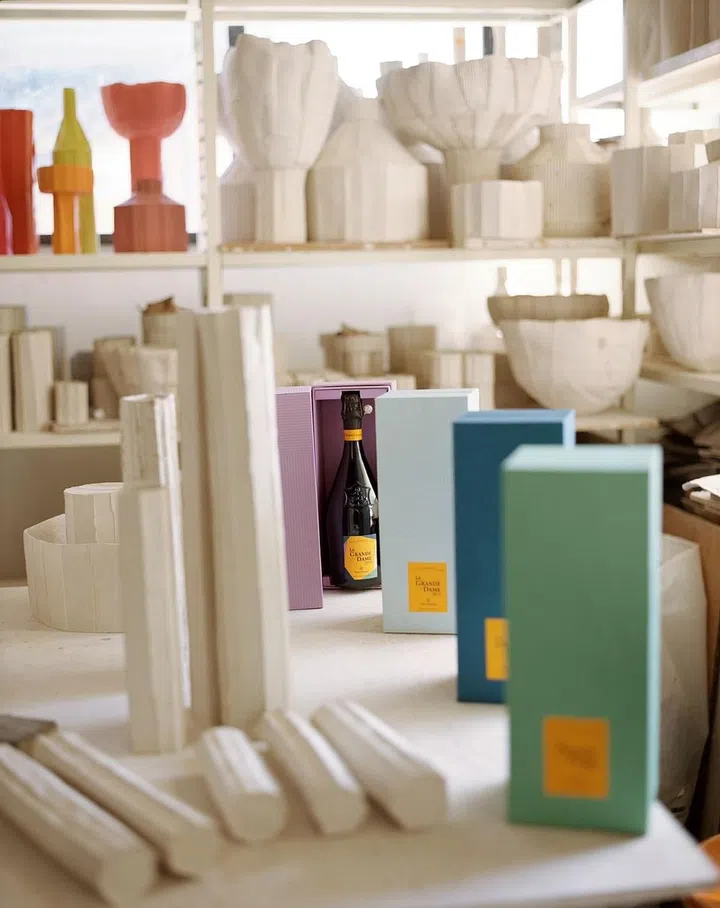
Paola Paronetto's gift boxes for La Grande Dame. (Photo: Veuve Clicquot)
Handily, winemaker Marie Charlemagne was in town recently to launch the 2015 vintage and to take our questions.
As the Maison’s prestige cuvée, La Grande Dame is made only in good years. In particular, it can only be made in good years for pinot noir, as the blend is made up of 90 per cent pinot noir and 10 per cent chardonnay.
Charlemagne shares: “Not all grape varieties are great in the same year, so we have to select the best fruit coming from our historical Grand Crus such as Verzenay, Verzy, Ambonnay and Mesnil-sur-Oger.” Coincidentally, that last village is where the self-professed countryside girl grew up.
2015 was considered an exceptional year for Champagne. The La Grande Dame is taut and crisp, with freshness and minerality in evidence. “It has been mistaken for a Blancs de Blancs (made from chardonnay) in blind tastings,” she notes. This makes it a markedly different vintage from the most recent 2012, which was more generous and fleshy.
Ask Charlemagne about her favourite vintage and she says she “goes crazy” for 1990. “You have all the complexity, spice, brioche, and evolved aromas that are so complex and intense. It’s an aromatic bomb in the nose, yet still full of energy and freshness in the mouth. It is my favourite vintage although I wasn’t even born yet!”
Related: What went on at the Ordre Des Coteaux De Champagne’s Singapore Grand Chapitre 2023
A young upstart in the champagne world
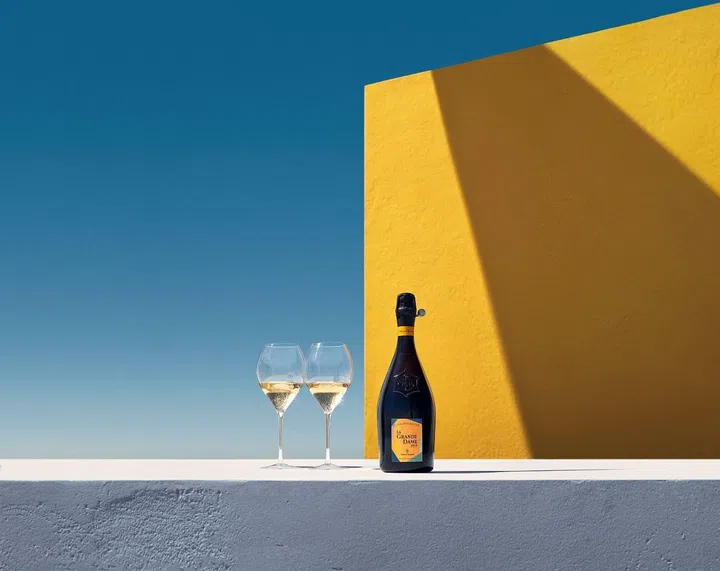
La Grande Dame 2015. (Photo: Veuve Clicquot)
At 29, Charlemagne is the youngest winemaker on the team at Veuve Clicquot. While she joined the company in 2019, she does not lack experience in the least. She grew up in a family of Champagne growers (her surname gives it away), and her father, mother, and sister are all working at Champagne houses. Given that she’s seen the whole process from grape to glass, she decided to do two degrees — oenology and agronomy engineering — to get a background on how viticulture works. “It is the starting point,” she shares sagely.
Post graduation, she worked and travelled through Margaret River, Oregon, South Africa, and Burgundy, landing at Domaine Dujac specifically to gain more experience in red winemaking. That’s why Veuve Clicquot was keen to rope her in when she returned to Champagne in 2019; the Maison specialises in pinot noir, which gives its blends their signature power and richness. The widow Clicquot was, in fact, the first Champagne winemaker to study red wine and blend it with white to make rosé.
Charlemagne is part of the Development, Innovation, and Communications team headed by Gaälle Goossens. “You can really see that women are getting more involved in the industry. There are two tasting committees: expert and junior. The senior committee is made up of five men, while the junior team comprises three women.” Charlemagne explains that it takes 10 years to gain entry into the senior committee, which is a goal she has set for herself.
“We taste 20 to 25 wines a day, with 30 seconds each to judge the wine on every technical aspect such as structure, complexity, and ageing potential.” There is a screen at the end of the session to display the consensus of the committee to determine if the wines are suitable for Yellow Label. “It’s important to have the organisation in this way in order not to lose the savoir-faire of the wine. That way, the experts can transmit their knowledge to the younger generation,” she elaborates.
Related: Forget tasting notes, Champagne Krug releases a Ryuichi Sakamoto symphony for its 2008 cuvées
Winemaking across generations
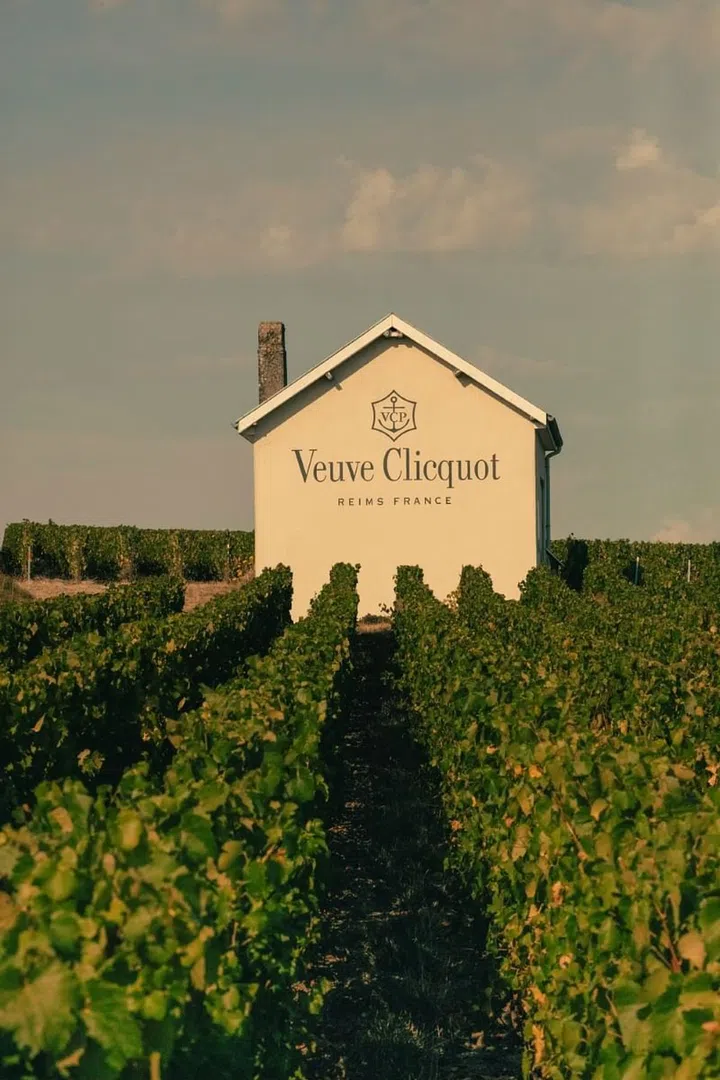
Veuve Clicquot vineyard. (Photo: Veuve Clicquot)
For a winemaker born in the 1990s, there is no more pressing issue today than climate change. “In my father’s generation, I doubt they thought about this too much,” she laughs.
As the Champagne region was cooler in the 1970s and 80s, the focus was on quantity and ripening the grapes. Another ‘trend’ today is terroir, to identify parcel selections and vinify the plots separately to get more precise expressions and results. One advantage of this is getting to know which parts of the vineyards react better to colder and warmer weather, which contributes to building the vineyards’ resilience to climate change.
“I also notice that customers want more transparency,” Charlemagne adds. “Each part matters more now, even in the packaging, whether it is recycled and part of the circular economy.”
One might wonder if she ever calls her parents for advice. She laughs — indeed. Dad gets the SOS for troubleshooting in the vineyards, while mom dishes out tips for presentations and communications.
Since she joined Veuve Clicquot, 2021 has been the only difficult year. She confides that there are high expectations for the potential trilogy of 2018-2019-2020 vintages, which could be the successor to the legendary 1988-1989-1990 trio. Three exceptional vintages in a row are extremely rare in Champagne.
“At Veuve Clicquot, we describe the ability to age as the verticality of the pinot. It has to display purity, freshness, and elegance that will last a long time. We have to be visionary because when we put the wine in bottles, we have to imagine what it will become in close to 10 years when it’s released — and maybe another 30 years before it drinks in the same way I find the 1990 today!” she projects.
La Grande Dame 2015 ($348) is available at lerougesg.com.