%22%3E%0A%3Cpath%20d%3D%22M412%20101.2H393.7C393.1%20101.2%20392.3%20100.9%20391.8%20100.5C377.3%2087.6004%20362.9%2074.6004%20348.4%2061.6004C344.8%2058.4004%20341.3%2055.2004%20337.7%2052.0004C337.1%2051.5004%20336.2%2051.1004%20335.5%2051.0004C334.2%2050.8004%20333%2051.0004%20331.5%2051.0004V101.1H316.7V0.100391H331.4V44.3004C331.9%2044.3004%20332.2%2044.4004%20332.5%2044.4004C334.9%2044.4004%20337.2%2044.5004%20339.6%2044.4004C340.4%2044.4004%20341.3%2044.0004%20341.8%2043.5004C351.6%2034.4004%20361.4%2025.2004%20371.1%2016.0004C376.5%2010.9004%20381.9%205.90039%20387.3%200.800391C387.9%200.200391%20388.5%200.000390626%20389.3%200.000390626H400.9C384.2%2015.8004%20367.8%2031.3004%20351.2%2047.0004C371.5%2065.0004%20391.8%2082.9004%20412.1%20100.9C412.1%20101%20412.1%20101.1%20412%20101.2ZM180.9%20101.2C184.1%2094.9004%20187.2%2088.9004%20190.3%2082.8004C198.3%2067.3004%20206.2%2051.8004%20214.2%2036.2004C220.3%2024.4004%20226.4%2012.5004%20232.4%200.700391C232.7%200.100391%20233%20-0.0996094%20233.7%20-0.0996094H248.1C248.8%20-0.0996094%20249.2%200.100391%20249.6%200.800391C256%2013.3004%20262.4%2025.7004%20268.8%2038.2004C279.3%2058.6004%20289.8%2079.0004%20300.3%2099.5004C300.5%20100%20300.8%20100.4%20301.1%20101.1C300.5%20101.1%20300.1%20101.2%20299.7%20101.2H286.5C285.6%20101.2%20285.1%20100.9%20284.7%20100.2C280.1%2091.3004%20275.4%2082.4004%20270.8%2073.4004C270.1%2072.1004%20269.3%2071.6004%20267.8%2071.6004H209.9C208.7%2071.6004%20208.1%2072.0004%20207.5%2073.1004C202.9%2082.1004%20198.2%2091.0004%20193.6%20100C193.1%20101%20192.6%20101.3%20191.5%20101.3C188.4%20101.2%20185.3%20101.3%20182.3%20101.3C182%20101.2%20181.6%20101.2%20180.9%20101.2ZM239.1%2011.4004C230%2029.2004%20221.1%2046.7004%20212.1%2064.3004H266.4C257.2%2046.7004%20248.2%2029.2004%20239.1%2011.4004ZM0%200.000390626H43.4C51.2%200.000390626%2058.7%201.20039%2065.7%204.80039C75.9%2010.0004%2078.9%2018.0004%2078.6%2027.4004C78.3%2034.3004%2076%2040.5004%2071.2%2045.5004C67.3%2049.6004%2062.4%2052.3004%2057.1%2054.3004C50.6%2056.7004%2043.9%2058.0004%2037.1%2058.6004C30.1%2059.2004%2023.1%2059.4004%2016.2%2059.7004C15.8%2059.7004%2015.3%2059.8004%2014.8%2059.8004V101.1H0.1C0%2067.4004%200%2033.8004%200%200.000390626ZM14.8%207.10039V52.2004C23.7%2052.4004%2032.6%2052.3004%2041.2%2050.1004C44.4%2049.3004%2047.6%2048.2004%2050.6%2046.7004C58.4%2043.0004%2062.3%2036.7004%2062.7%2028.0004C63%2019.9004%2059.5%2014.1004%2052.4%2010.5004C47.6%208.00039%2042.5%207.10039%2037.2%207.10039H14.8ZM95.9%20101.1V0.100391H167.3V7.20039H110.7V44.7004H158.1V51.9004H110.8V93.9004H171.1V101C146.1%20101.1%20121%20101.1%2095.9%20101.1Z%22%20fill%3D%22black%22%2F%3E%0A%3Cpath%20d%3D%22M35.0004%2025.7996H42.5004V20.6996H44.8004V33.1996H42.6004V27.5996H34.9004V33.2996H32.7004V20.7996H35.0004V25.7996ZM54.4004%2025.8996V27.2996H48.9004V31.6996H55.9004C55.9004%2032.1996%2056.0004%2032.5996%2056.0004%2033.0996H46.5004V20.5996H55.5004V21.8996H49.0004V25.7996C50.7004%2025.8996%2052.5004%2025.8996%2054.4004%2025.8996ZM25.9004%2033.0996H23.5004V21.9996H17.9004V20.6996H31.6004V22.0996H27.1004C26.2004%2022.0996%2025.9004%2022.2996%2025.9004%2023.1996C26.0004%2026.0996%2025.9004%2028.9996%2025.9004%2031.7996V33.0996Z%22%20fill%3D%22black%22%2F%3E%0A%3C%2Fg%3E%0A%3Cdefs%3E%0A%3CclipPath%20id%3D%22clip0_388_462%22%3E%0A%3Crect%20width%3D%22411%22%20height%3D%22101.2%22%20fill%3D%22white%22%2F%3E%0A%3C%2FclipPath%3E%0A%3C%2Fdefs%3E%0A%3C%2Fsvg%3E%0A)
Why young Singapore chefs are taking part in international cooking competitions
The Peak gets a ringside seat at the Asia final of the S.Pellegrino Young Chef Academy Competition 2024-25 in Hong Kong.
By Kenneth SZ Goh /
Share this article
It was a nail-biting scene reminiscent of the hit Netflix culinary cooking Culinary Class Wars. The heat was on at the Asia finals of the S.Pellegrino Young Chef Academy Competition 2024-25, where 10 young chefs from the region, aged 18 to 30, cooked under the intense glare of scrutiny in Hong Kong in late October.
A flurry of kitchen action unfolded in the competition arena. The chefs chopped furiously at their booths, intently checked the temperature of their dishes as their mentors looked on and offered advice.
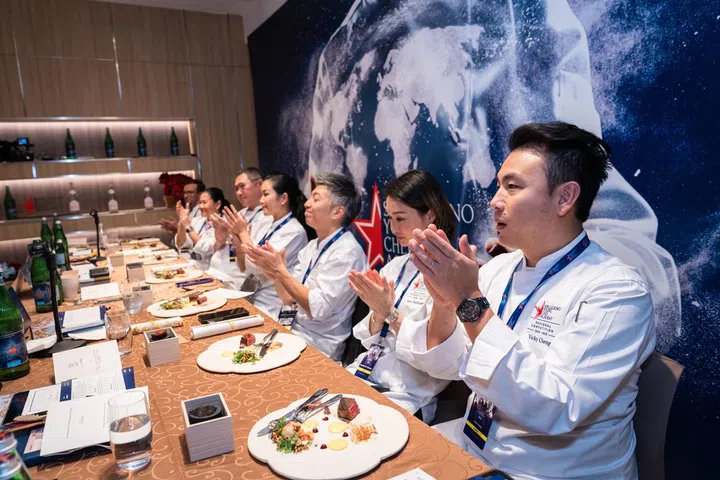
The panel of judges comprises award-winning chefs in Asia. (Photo: S.Pellegrino)
The goal? Whip up 10 servings of a dish that best represents their creativity, technical skills, and personal vision of gastronomy within five hours. Later, the chefs served and presented their dishes in front of a panel of award-winning chefs, including Hong Kong’s Vicky Lau of Tate Dining Room, Thailand’s Chudaree ‘Tam’ Debhakam of Baan Tepa Culinary Space, and Johanne Siy of Lolla in Singapore, who tasted and critiqued their dishes a la minute.
The bi-annual cooking competition, organised by the Italian beverage giant, aims to recognise and nurture the next generation of culinary talents. Previous finalists of the gruelling competition include Kevin Wong, chef-owner of one-Michelin-starred modern Southeast Asian restaurant Seroja, who was also a guest chef at this year’s ceremony.
After a presentation (which included a barrage of plating action and questions from the judges), Ardy Ferguson of French fine-dining restaurant Belon in Hong Kong emerged as the winner.
The Indonesian-Canadian chef, who beat participants from countries such as Singapore, Maldives, South Korea and Thailand, won with his multicultural dish, Nasi Tempung, an Indonesian communal rice dish served with meat and vegetables at celebrations.
The star of his dish is a Hong Kong-style roast duck, first scalded and lacquered in red wine vinegar before being smoked in sugarcane for a sweet and smoky flavour. Ferguson will present Asia in the grand finals in Milan next October alongside winners of the 14 other regional finals.
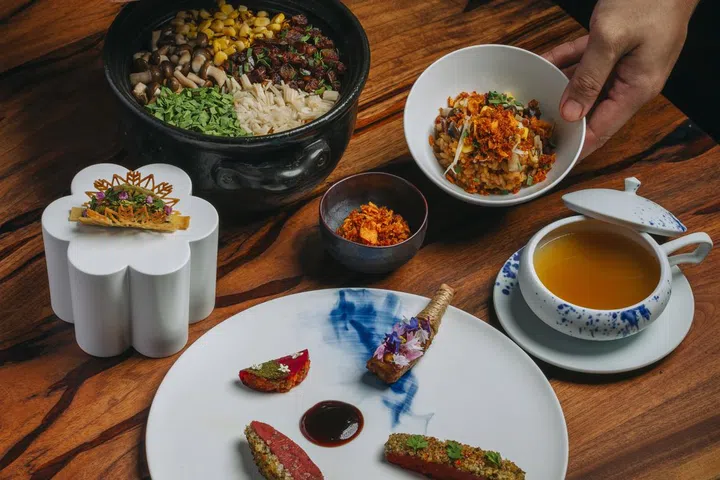
Chef William Yee’s dish, Dai Pai Dong. (Photo: S.Pellegrino)
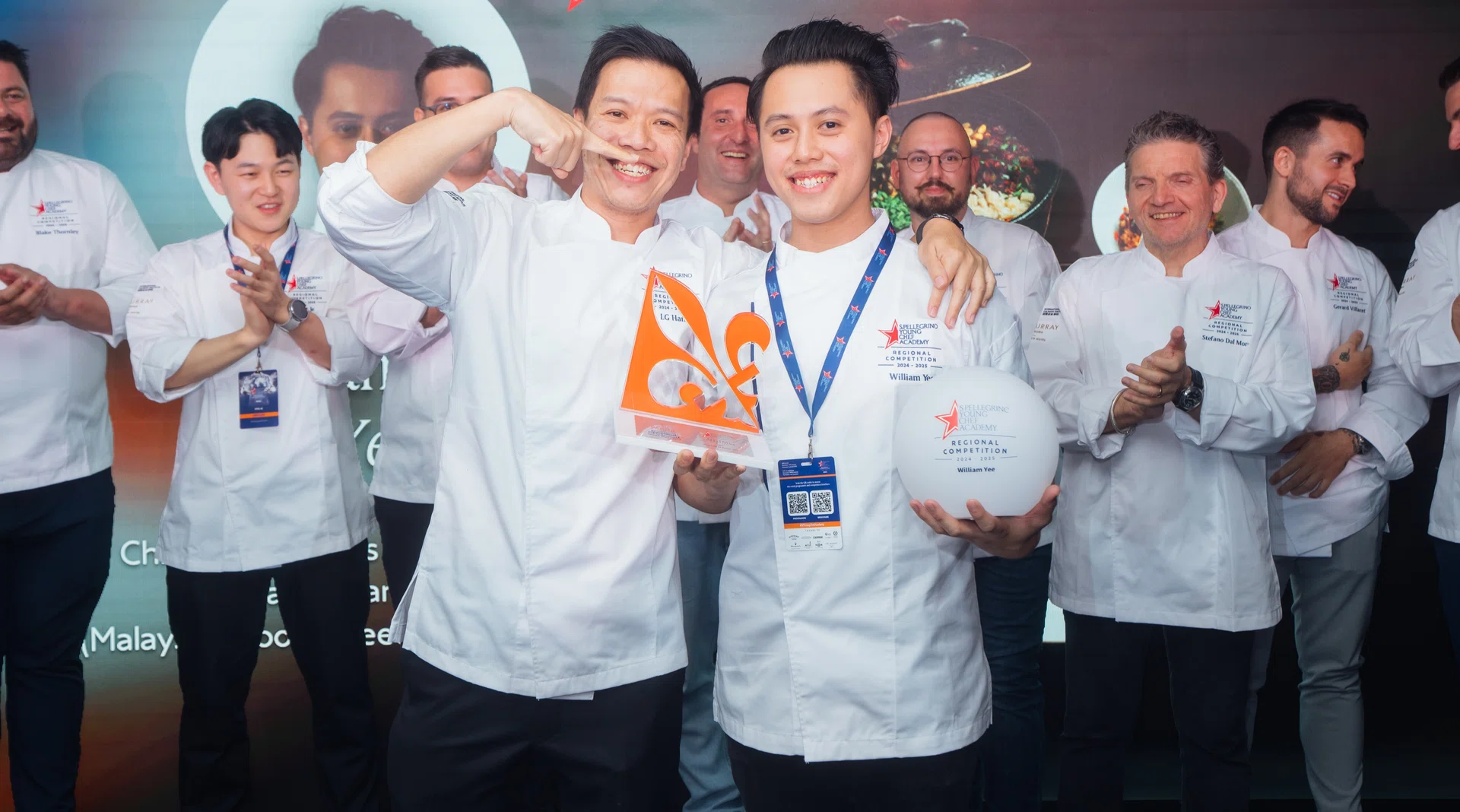
Flying the Singapore flag were two chefs. One of them is William Yee, junior sous chef of contemporary Singapore restaurant Labyrinth, who won the Connection in Gastronomy Award for his dish, Dai Pai Dong (Malaysian-style food street). The dish is an elevated take on hawker food featuring claypot rice and pigeon.
He adopted a zero-waste approach to the pigeon: a pepper-crusted pigeon breast on pumpkin puree, pigeon leg satay, achar, and bak kut teh-style broth, and the bird’s odds and ends were made into a mixed vegetable stew.
Yee, who also competed in the competition in 2022, says: “Going the traditional route allows me to get in touch with my heritage, such as how I was able to incorporate a chilli sauce by my father, who runs a casual eatery in Kuala Lumpur.”
On his biggest takeaway from his mentor, Han Liguang, chef-owner of one-Michelin-starred contemporary Singapore restaurant Labyrinth, Yee says: “Tasting a dish is very important, as not everything can be measured. As a chef, it is important not to over-rely on recipes and have alternatives to them.”
Besides learning about time management, the 26-year-old thinks such competitions are a great way to network with fellow chefs from other countries.
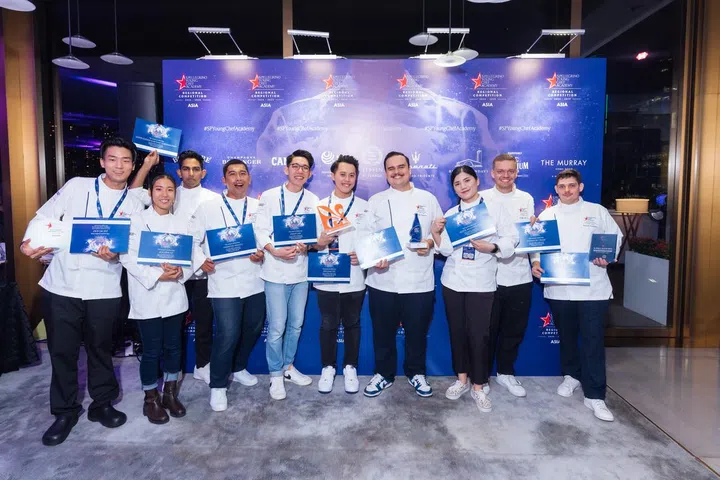
Chef Law Jia-jun (fifth from left) is one of the two Singapore representatives in the competition, with the winner, Hong Kong’s Ardy Ferguson (fourth from right). (Photo: S.Pellegrino)
The other Singapore representative was Law Jia-Jun, chef-owner of contemporary Southeast Asian restaurant, Province. He presented a dish inspired by his grand aunt’s roast and braised duck recipes.
Law, who is big on exploring the diversity of Southeast Asian ingredients and flavours, switched to using grain-fed ducks from Hong Kong instead of Long Island ducks from Johor. The Hong Kong duck was roasted and basted with hot oil and served with pear and duck jus with galangal, lemongrass, and a nasi ulam donabe.
On adapting his dish with local ingredients, he turned 30 on the day of the competition and said: “I wanted to put what I’ve practised at Province for this competition. After studying the duck’s anatomy, I adapted my technical skills and took a risk.”
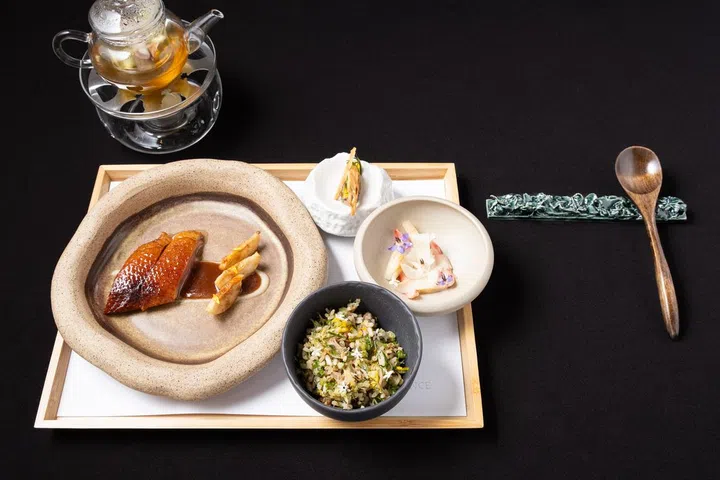
Chef Law Jia-jun’s competition dish is inspired by his grand-aunt’s braise and roast duck recipes. (Photo: S.Pellegrino)
Being a chef-owner, Law, who worked at Manresa and Atelier Crenn in California before starting his restaurant, learned about down-to-the-minute time management and the importance of serving food hot at precise timings on heated plates.
Through participating in this competition, Law wants to show the importance of embracing his Singaporean identity through food. He says: “As Singaporeans, we always try to fit in, but it is important to believe in ourselves and do what means a lot to us.”