%22%3E%0A%3Cpath%20d%3D%22M412%20101.2H393.7C393.1%20101.2%20392.3%20100.9%20391.8%20100.5C377.3%2087.6004%20362.9%2074.6004%20348.4%2061.6004C344.8%2058.4004%20341.3%2055.2004%20337.7%2052.0004C337.1%2051.5004%20336.2%2051.1004%20335.5%2051.0004C334.2%2050.8004%20333%2051.0004%20331.5%2051.0004V101.1H316.7V0.100391H331.4V44.3004C331.9%2044.3004%20332.2%2044.4004%20332.5%2044.4004C334.9%2044.4004%20337.2%2044.5004%20339.6%2044.4004C340.4%2044.4004%20341.3%2044.0004%20341.8%2043.5004C351.6%2034.4004%20361.4%2025.2004%20371.1%2016.0004C376.5%2010.9004%20381.9%205.90039%20387.3%200.800391C387.9%200.200391%20388.5%200.000390626%20389.3%200.000390626H400.9C384.2%2015.8004%20367.8%2031.3004%20351.2%2047.0004C371.5%2065.0004%20391.8%2082.9004%20412.1%20100.9C412.1%20101%20412.1%20101.1%20412%20101.2ZM180.9%20101.2C184.1%2094.9004%20187.2%2088.9004%20190.3%2082.8004C198.3%2067.3004%20206.2%2051.8004%20214.2%2036.2004C220.3%2024.4004%20226.4%2012.5004%20232.4%200.700391C232.7%200.100391%20233%20-0.0996094%20233.7%20-0.0996094H248.1C248.8%20-0.0996094%20249.2%200.100391%20249.6%200.800391C256%2013.3004%20262.4%2025.7004%20268.8%2038.2004C279.3%2058.6004%20289.8%2079.0004%20300.3%2099.5004C300.5%20100%20300.8%20100.4%20301.1%20101.1C300.5%20101.1%20300.1%20101.2%20299.7%20101.2H286.5C285.6%20101.2%20285.1%20100.9%20284.7%20100.2C280.1%2091.3004%20275.4%2082.4004%20270.8%2073.4004C270.1%2072.1004%20269.3%2071.6004%20267.8%2071.6004H209.9C208.7%2071.6004%20208.1%2072.0004%20207.5%2073.1004C202.9%2082.1004%20198.2%2091.0004%20193.6%20100C193.1%20101%20192.6%20101.3%20191.5%20101.3C188.4%20101.2%20185.3%20101.3%20182.3%20101.3C182%20101.2%20181.6%20101.2%20180.9%20101.2ZM239.1%2011.4004C230%2029.2004%20221.1%2046.7004%20212.1%2064.3004H266.4C257.2%2046.7004%20248.2%2029.2004%20239.1%2011.4004ZM0%200.000390626H43.4C51.2%200.000390626%2058.7%201.20039%2065.7%204.80039C75.9%2010.0004%2078.9%2018.0004%2078.6%2027.4004C78.3%2034.3004%2076%2040.5004%2071.2%2045.5004C67.3%2049.6004%2062.4%2052.3004%2057.1%2054.3004C50.6%2056.7004%2043.9%2058.0004%2037.1%2058.6004C30.1%2059.2004%2023.1%2059.4004%2016.2%2059.7004C15.8%2059.7004%2015.3%2059.8004%2014.8%2059.8004V101.1H0.1C0%2067.4004%200%2033.8004%200%200.000390626ZM14.8%207.10039V52.2004C23.7%2052.4004%2032.6%2052.3004%2041.2%2050.1004C44.4%2049.3004%2047.6%2048.2004%2050.6%2046.7004C58.4%2043.0004%2062.3%2036.7004%2062.7%2028.0004C63%2019.9004%2059.5%2014.1004%2052.4%2010.5004C47.6%208.00039%2042.5%207.10039%2037.2%207.10039H14.8ZM95.9%20101.1V0.100391H167.3V7.20039H110.7V44.7004H158.1V51.9004H110.8V93.9004H171.1V101C146.1%20101.1%20121%20101.1%2095.9%20101.1Z%22%20fill%3D%22black%22%2F%3E%0A%3Cpath%20d%3D%22M35.0004%2025.7996H42.5004V20.6996H44.8004V33.1996H42.6004V27.5996H34.9004V33.2996H32.7004V20.7996H35.0004V25.7996ZM54.4004%2025.8996V27.2996H48.9004V31.6996H55.9004C55.9004%2032.1996%2056.0004%2032.5996%2056.0004%2033.0996H46.5004V20.5996H55.5004V21.8996H49.0004V25.7996C50.7004%2025.8996%2052.5004%2025.8996%2054.4004%2025.8996ZM25.9004%2033.0996H23.5004V21.9996H17.9004V20.6996H31.6004V22.0996H27.1004C26.2004%2022.0996%2025.9004%2022.2996%2025.9004%2023.1996C26.0004%2026.0996%2025.9004%2028.9996%2025.9004%2031.7996V33.0996Z%22%20fill%3D%22black%22%2F%3E%0A%3C%2Fg%3E%0A%3Cdefs%3E%0A%3CclipPath%20id%3D%22clip0_388_462%22%3E%0A%3Crect%20width%3D%22411%22%20height%3D%22101.2%22%20fill%3D%22white%22%2F%3E%0A%3C%2FclipPath%3E%0A%3C%2Fdefs%3E%0A%3C%2Fsvg%3E%0A)
How Ron & Rich reinvented a family tailoring business with a suitcase, an iPad, and a quiet rebellion
Aaron Fan had no intention of discarding the tailoring traditions his father spent decades mastering. He simply believed they needed a new audience.
By Azimin Saini /
Share this article
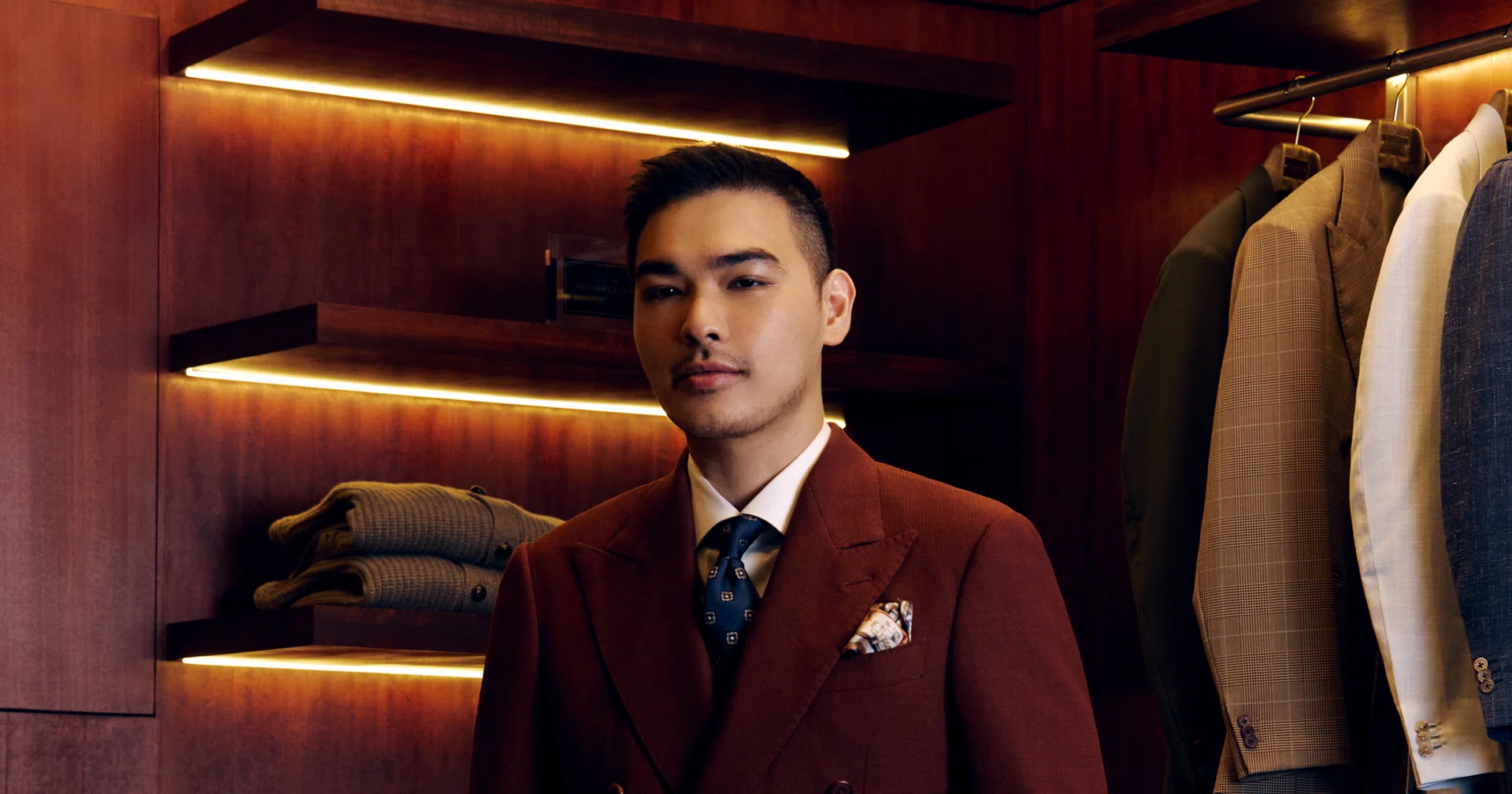
Aaron Fan still remembers the first jacket he created that his father objected to.
He had recently returned from Melbourne and joined the family tailoring business, convinced that Singaporean men wanted a different silhouette from the heavily structured suits his father had spent four decades making.
The criticism was harsh and swift. Standing in the workshop, his father and uncle pointed to everything they hated about it: “The shoulders are too soft,” said his father. “The construction is too light,” interjects his uncle. “Nobody wants jackets that way — forget it!”
For Aaron, the disagreement exposed a problem many second-generation successors eventually face. How do you bring new ideas into a company built by someone who has spent decades believing their way works? After all, altering the cut of a jacket was easy. Altering the cut of a business was another matter.
His father, Richard, had founded and run Richmen Tailors, a successful tailoring boutique in Peninsula Plaza, for nearly 40 years. Businessmen and political officials came by to commission suits, and they trusted Richard to decide the details. Conversations centred on practicality and durability rather than style, and many placed bulk orders of 10 or 20 suits at a time.
The men Aaron encountered after returning from Australia belonged to a different generation. They saved screenshots from Instagram or Pinterest, knew the names of Italian cloth mills and wanted to discuss shoulder construction, trouser proportions, and fabric composition. Suits were not just for work, but an expression of personal style. He also knew that his dad’s generation of clients were reaching retirement age and no longer needed suits.
“I wasn’t trying to change tailoring for the sake of changing it,” explains Aaron. “I genuinely believed there was a new generation of customers who wanted something different, and I felt that if we didn’t speak to them, someone else would.”
The disagreement over one jacket raised a larger question. If the customers who had sustained Singapore’s tailoring houses for generations were changing, what happens to a craft and a family business when the people who support it begin to dwindle?
A city of tailors
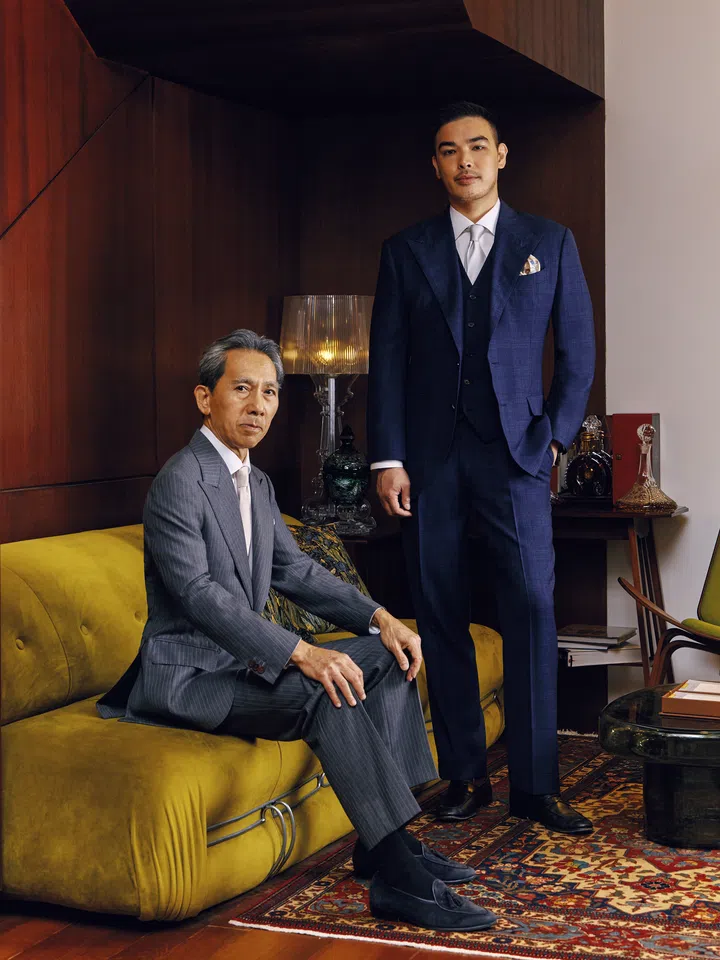
At the centre of Richmen Tailoring was Richard himself. Beyond being the business owner, he was also its cutter, often regarded as the fashion world’s intellectual centre.
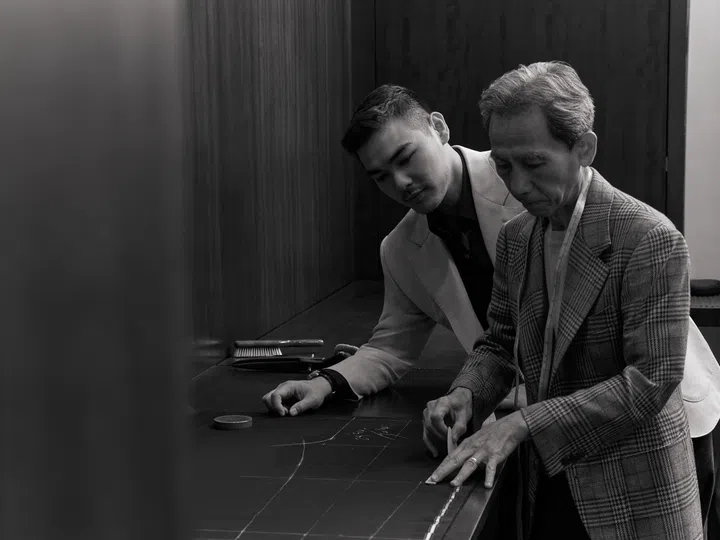
While jacket makers, trouser makers and seamstresses handle construction, the cutter interprets a client’s posture, proportions, and measurements before turning them into paper patterns from which fabric is cut and a garment is stitched. A suit’s success is often determined long before the first stitch is sewn.
“A lot of the bespoke process involves cutting more so than making,” Aaron quips. “Making is what makes the garment beautiful, obviously. But when we talk about bespoke, it’s really bespoke cutting.”
It is a skill you can’t easily learn from textbooks. “You have to be under a master, to be hands-on and to really understand what happens in the real world, because you’re meeting people of all sorts of different postures and figures, and that’s not something school can teach you.”
That knowledge belonged to a tradition stretching back generations to Singapore’s British colonial history. “My dad was very much trained in the British cut,” Aaron explains. “Even up to today, he’s still using the methods of the British ways, but incorporated into what we do.”
As the city developed into a financial powerhouse, places such as Peninsula Plaza and International Plaza became home to clusters of suit tailoring houses run by craftsmen who had learnt their trade through apprenticeship rather than formal education. Here, masters passed skills to apprentices, and relationships between tailor and client often lasted decades.
By the time Aaron entered the business, many of those tailoring houses were gradually disappearing. Richmen Tailors eventually moved to International Plaza in Tanjong Pagar. Their customers remained loyal, but they were also growing older and starting to retire. The methods that had sustained the trade for decades no longer guaranteed new clients, and Aaron watched tailoring shops around Singapore lower their shutters for the last time, one by one.
“Their lack of ability to put themselves out there on social media and speak to younger professionals was huge,” says Aaron. “That was the biggest challenge.”
A theory in a suitcase
He believed the trade still had a future, but the difficulty was convincing his father that another generation of customers existed. He decided to test his theory and get his own customers the only way he knew how: by working out of a suitcase.
He packed fabric swatches, a measuring tape, and an iPad into his luggage and drove across Singapore, wheeling it to appointments wherever clients agreed to meet him. His tailoring house essentially became something that fit into the boot of his car.
Some consultations took place in offices between meetings. Others happened in private homes after work. Boardrooms, living rooms, and dining tables became temporary fitting rooms.
The work itself was rarely glamorous. He would sometimes drive across Singapore, only to discover that a client had changed his mind. Hours could disappear between appointments. He was young, unknown, and asking strangers to spend four figures on a promise.
“You could travel all the way to someone’s place, make all the explanations and sometimes they might not make a purchase,” he says. “People couldn’t see what Ron & Rich had done before because they were the first few customers. The only thing they could really rely on was that my dad was the master tailor.”
One of his earliest appointments was with a lawyer who agreed to meet him at home. Looking back, Aaron still remembers the order: two suits and a sports jacket. It was a considerable commission for a business that effectively existed out of a suitcase.
“He decided to give me a shot because he could see that I was very sincere,” Aaron says.
Yet the meetings revealed something that mattered far more than convenience. The customers Aaron encountered were remarkably similar to the ones he had theorised. They were younger professionals building careers in law, finance, and business. They cared about how their clothes looked. They asked questions, wanted opinions, and most importantly, they were willing to pay for tailoring that felt relevant to their needs.
What began as a hunch gradually became evidence. Some clients returned for additional garments. Others introduced friends and colleagues. With every commission, Aaron became a little more convinced that the future he had imagined for the business was not wishful thinking after all. Convincing new customers proved easier than convincing his father, and each new customer strengthened his case at home.
“When you’re working with someone who has been cutting a certain way for 40 years, it’s very difficult,” Aaron says.
Aaron laughs as he recalls his quiet rebellion, “I had to go behind my dad’s back and speak to the workers doing the jackets and say, ‘Do it my way.’”
As more customers returned asking for the same style of tailoring, the arguments gradually gave way to acceptance. “Once he saw the business picking up,” Aaron recounts, “he told me, ‘Okay, we change it to your style.’”
After months of driving from appointment to appointment and wondering if it would bear fruit, Ron & Rich, as their customers know it today, was born.
Cleaning house
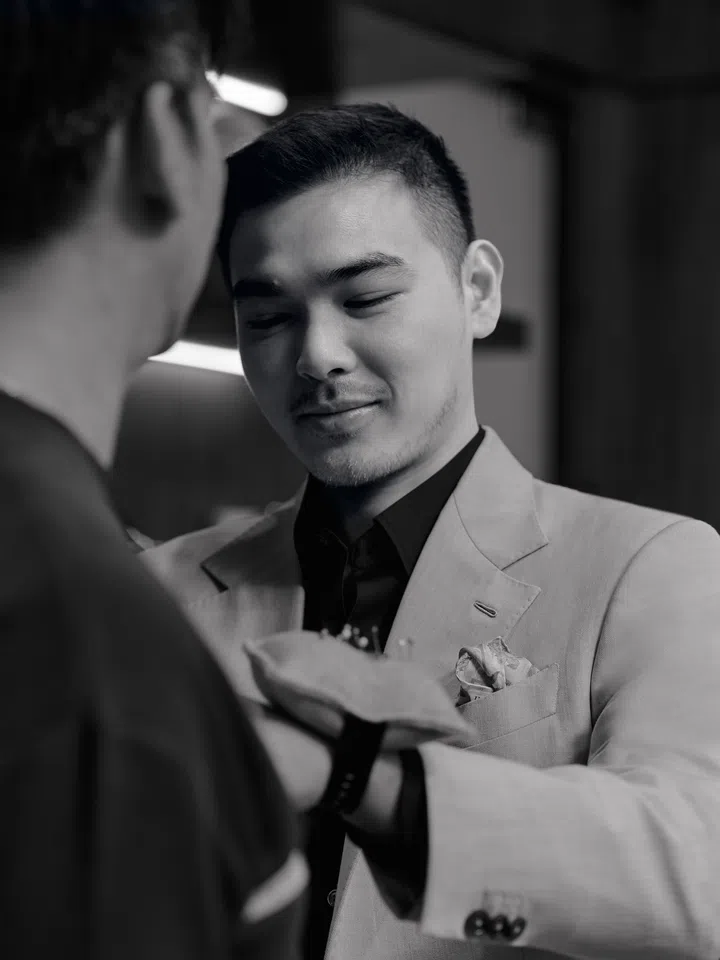
The name combined father and son, shortened from Aaron and Richard. Winning over customers and his father was one thing. Creating a tailoring house that reflected the business he was building was another.
Aaron had begun to realise that the physical space no longer matched the experience he wanted to offer. Much of the shop was devoted to storing fabric, leaving little room for the lengthy conversations that had become central to his approach. These bolts of cloth had become geological layers of the business’s history, representing years of purchasing decisions, customer preferences, and accumulated knowledge about what men wanted to wear.
Still, as consultations became more detailed and customers arrived with increasingly specific ideas, the traditional tailoring shop began to feel less like an asset and more like a constraint.
“My dad had just too many fabrics in store,” he opines. “There wasn’t enough space for a proper consultation.”
Gradually, they worked through and replaced the old inventory. A client who worked in interior design helped rethink the space, while friends pitched in with the refurbishment. Instead of walking into a shop crammed with inventory, customers would be invited to sit down, spend time and have conversations — an approach that reflected the younger professionals Aaron had spent months meeting across Singapore.
The tailoring house on Tras Street
Even as the business grew, Aaron never imagined that International Plaza would be its permanent home. He understood what it represented and appreciated the clients who had followed his father there for years, though he struggled to imagine the business’ next chapter unfolding in the same surroundings.
“I’ve always wanted Tras Street,” he says. “I’ve always known I wanted to be in a shophouse.”
The opportunity came unexpectedly. His business partner, Scott, happened to be walking through the neighbourhood when a property agent approached him about a unit that hadn’t even been listed. The pair had originally been looking for a much smaller space, though the additional room made possible something Aaron had long wanted: several consultation rooms where clients could spend time discussing garments without feeling hurried.
The move also showed that the bet Aaron had made years earlier was paying off. The younger customers he had imagined while arguing with his father in the workshop now form the bulk, if not all, of their clientele.
Today, the tailoring house employs 14 full-time staff, supported by a network of specialist partners and freelancers. Yet Aaron believes the next chapter of the business may prove even more significant than the one that brought Ron & Rich to Tras Street.
Later this year, the company will launch Assay, a ready-to-wear label developed with business partners Scott and Sean. If bespoke tailoring helped Aaron prove that a new generation of customers existed, Assay is designed to reach them at a larger scale.
For years, growth depended on a simple equation: one consultation, one customer, one garment at a time. It’s successful, and operations are smooth, but it limits the business at an artisanal level.
Ready-to-wear opens up a different possibility altogether, allowing the house’s approach to tailoring to scale and reach customers who may never have considered commissioning a bespoke suit — even those abroad. For years, every garment began with a handshake. Assay allows the house to reach customers it may never meet.
“My dream is world domination,” Aaron laughs.
Yet even as the business expands into new territory, the foundation remains unchanged. Richard is still closely involved as the master cutter, though he increasingly spends his time mentoring younger cutters, passing on the knowledge he first acquired through apprenticeship decades ago.
Father and son now occupy different roles within the business. Aaron continues to look for new customers, new ideas and new ways to grow the company. Richard, meanwhile, helps ensure that the specialised knowledge at the centre of the craft survives beyond his own generation.
The tailoring house may look very different from the one he built in Peninsula Plaza: the customers have changed, the clothes have changed, and the business model is changing, too.
Yet, what remains is the knowledge itself. Years earlier, Richard had looked at his son’s first jacket and declared that nobody wanted tailoring done that way. Today, he spends his time ensuring there will still be people capable of making it.
Photography: Athirah Annissa
Art direction: Fazlie Hashim
Styling: Dolphin Yeo
Grooming: Zhou Aiyi, using Shiseido and Revlon Professional