%22%3E%0A%3Cpath%20d%3D%22M412%20101.2H393.7C393.1%20101.2%20392.3%20100.9%20391.8%20100.5C377.3%2087.6004%20362.9%2074.6004%20348.4%2061.6004C344.8%2058.4004%20341.3%2055.2004%20337.7%2052.0004C337.1%2051.5004%20336.2%2051.1004%20335.5%2051.0004C334.2%2050.8004%20333%2051.0004%20331.5%2051.0004V101.1H316.7V0.100391H331.4V44.3004C331.9%2044.3004%20332.2%2044.4004%20332.5%2044.4004C334.9%2044.4004%20337.2%2044.5004%20339.6%2044.4004C340.4%2044.4004%20341.3%2044.0004%20341.8%2043.5004C351.6%2034.4004%20361.4%2025.2004%20371.1%2016.0004C376.5%2010.9004%20381.9%205.90039%20387.3%200.800391C387.9%200.200391%20388.5%200.000390626%20389.3%200.000390626H400.9C384.2%2015.8004%20367.8%2031.3004%20351.2%2047.0004C371.5%2065.0004%20391.8%2082.9004%20412.1%20100.9C412.1%20101%20412.1%20101.1%20412%20101.2ZM180.9%20101.2C184.1%2094.9004%20187.2%2088.9004%20190.3%2082.8004C198.3%2067.3004%20206.2%2051.8004%20214.2%2036.2004C220.3%2024.4004%20226.4%2012.5004%20232.4%200.700391C232.7%200.100391%20233%20-0.0996094%20233.7%20-0.0996094H248.1C248.8%20-0.0996094%20249.2%200.100391%20249.6%200.800391C256%2013.3004%20262.4%2025.7004%20268.8%2038.2004C279.3%2058.6004%20289.8%2079.0004%20300.3%2099.5004C300.5%20100%20300.8%20100.4%20301.1%20101.1C300.5%20101.1%20300.1%20101.2%20299.7%20101.2H286.5C285.6%20101.2%20285.1%20100.9%20284.7%20100.2C280.1%2091.3004%20275.4%2082.4004%20270.8%2073.4004C270.1%2072.1004%20269.3%2071.6004%20267.8%2071.6004H209.9C208.7%2071.6004%20208.1%2072.0004%20207.5%2073.1004C202.9%2082.1004%20198.2%2091.0004%20193.6%20100C193.1%20101%20192.6%20101.3%20191.5%20101.3C188.4%20101.2%20185.3%20101.3%20182.3%20101.3C182%20101.2%20181.6%20101.2%20180.9%20101.2ZM239.1%2011.4004C230%2029.2004%20221.1%2046.7004%20212.1%2064.3004H266.4C257.2%2046.7004%20248.2%2029.2004%20239.1%2011.4004ZM0%200.000390626H43.4C51.2%200.000390626%2058.7%201.20039%2065.7%204.80039C75.9%2010.0004%2078.9%2018.0004%2078.6%2027.4004C78.3%2034.3004%2076%2040.5004%2071.2%2045.5004C67.3%2049.6004%2062.4%2052.3004%2057.1%2054.3004C50.6%2056.7004%2043.9%2058.0004%2037.1%2058.6004C30.1%2059.2004%2023.1%2059.4004%2016.2%2059.7004C15.8%2059.7004%2015.3%2059.8004%2014.8%2059.8004V101.1H0.1C0%2067.4004%200%2033.8004%200%200.000390626ZM14.8%207.10039V52.2004C23.7%2052.4004%2032.6%2052.3004%2041.2%2050.1004C44.4%2049.3004%2047.6%2048.2004%2050.6%2046.7004C58.4%2043.0004%2062.3%2036.7004%2062.7%2028.0004C63%2019.9004%2059.5%2014.1004%2052.4%2010.5004C47.6%208.00039%2042.5%207.10039%2037.2%207.10039H14.8ZM95.9%20101.1V0.100391H167.3V7.20039H110.7V44.7004H158.1V51.9004H110.8V93.9004H171.1V101C146.1%20101.1%20121%20101.1%2095.9%20101.1Z%22%20fill%3D%22black%22%2F%3E%0A%3Cpath%20d%3D%22M35.0004%2025.7996H42.5004V20.6996H44.8004V33.1996H42.6004V27.5996H34.9004V33.2996H32.7004V20.7996H35.0004V25.7996ZM54.4004%2025.8996V27.2996H48.9004V31.6996H55.9004C55.9004%2032.1996%2056.0004%2032.5996%2056.0004%2033.0996H46.5004V20.5996H55.5004V21.8996H49.0004V25.7996C50.7004%2025.8996%2052.5004%2025.8996%2054.4004%2025.8996ZM25.9004%2033.0996H23.5004V21.9996H17.9004V20.6996H31.6004V22.0996H27.1004C26.2004%2022.0996%2025.9004%2022.2996%2025.9004%2023.1996C26.0004%2026.0996%2025.9004%2028.9996%2025.9004%2031.7996V33.0996Z%22%20fill%3D%22black%22%2F%3E%0A%3C%2Fg%3E%0A%3Cdefs%3E%0A%3CclipPath%20id%3D%22clip0_388_462%22%3E%0A%3Crect%20width%3D%22411%22%20height%3D%22101.2%22%20fill%3D%22white%22%2F%3E%0A%3C%2FclipPath%3E%0A%3C%2Fdefs%3E%0A%3C%2Fsvg%3E%0A)
How entrepreneur Jayanthi Elan Goven reinvented the 24-hour prata house with Srisun Express
A 10-cent price increase at her mother’s stall sparked an idea about how people value everyday food. Years later, Jayanthi Elan Goven turned that insight into a thriving business.
By Azimin Saini /

Share this article
When one thinks of a 24-hour prata eatery in Singapore, the image is usually familiar: bright fluorescent lights, stackable plastic chairs, comforting dishes arriving in rapid succession for supper seekers.
But at Srisun Express in Serangoon Gardens, the scene feels noticeably different.
Here, warm timber panels and bright colours soften the dining room, while long banquettes allow groups to settle in comfortably. The atmosphere feels closer to a polished restaurant than a typical supper stop — except that the food is reassuringly familiar, the service casual, and the convivial culture of the prata house is intact.
This environment is deliberate and part of Jayanthi Elan Goven’s strategy. For decades, the late-night prata shop has functioned as an informal gathering space — a place where students linger over teh tarik after midnight, taxi drivers stop between shifts, and friends gather around plastic tables long after dinner hours have passed.
Wallet-friendly, filling and endlessly customisable, prata is also one of the city’s most democratic foods, eaten across every stratum of society, from migrant construction workers ending a shift to office workers and CEOs grabbing supper after a late night.
But that familiarity also shapes expectations. Diners still demand prices from a decade ago, even as the costs of running a restaurant continue to rise.
For Jayanthi, 40, it’s all about branding. She describes Srisun Express as something of a third-wave prata house — a place that keeps the accessibility of a neighbourhood eatery while rethinking the experience.
“When you think about a prata shop, immediately you think of bright lights and oily tables. It’s a place you just want to eat and go,” she says. “I wanted to change that idea. I want people to actually sit down in a really nice space and enjoy their prata.”
The caveat? She has almost no experience running an F&B business. In fact, Jayanthi studied English Literature and briefly worked as a teacher before entering the dining scene. But the moment that clarified her thinking came much earlier, while helping at her mother’s stall in a neighbourhood coffee shop.
It was a lesson that cost just 10 cents.
The 10-cent lesson
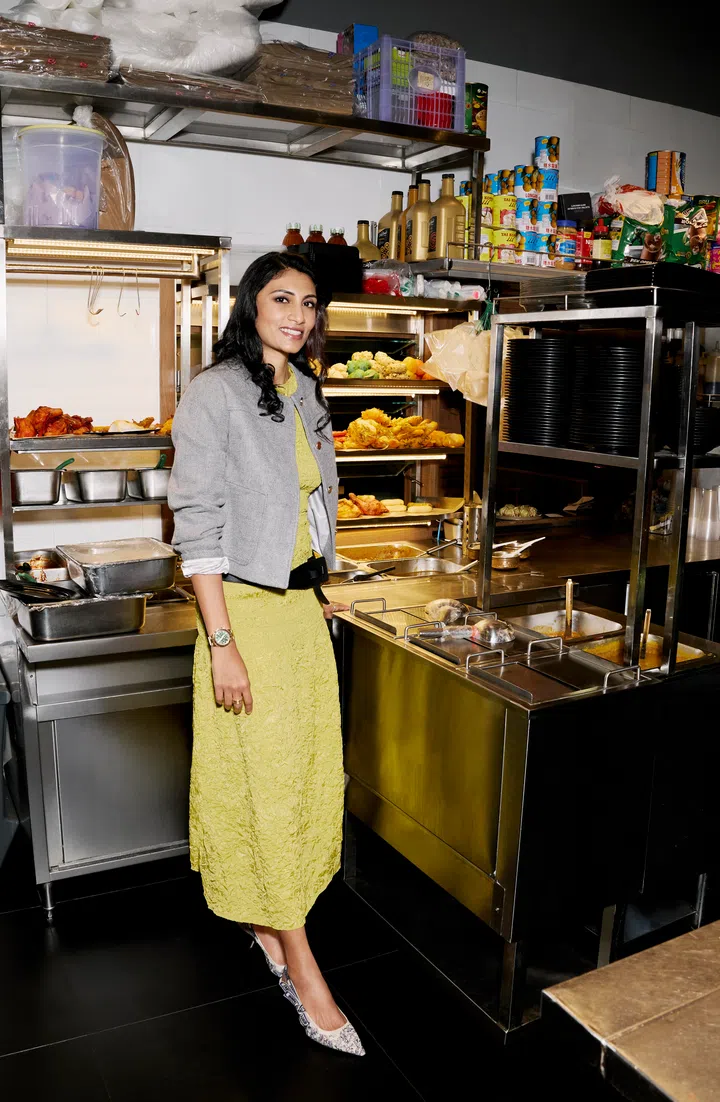
Jayanthi recalls the defining moment clearly. She was helping out at her mother’s stall in a neighbourhood coffee shop at the time.
“There was once we had to increase the price of the prata, and customers were really upset — it was just 10 cents!” she exclaims. “Then it got me thinking: How come in the malls you’ve got two pieces of prata with chicken curry selling at $8.90, and people are willing to pay?”
The contrast stayed with her. The food itself is exactly the same, but what was different was the setting, the space, the presentation, the way the experience was delivered. That moment revealed something fundamental about the economics of everyday food: Value is rarely determined by ingredients alone, but by context, industry perception and customer expectations.
Years later, that realisation would become the foundation of Srisun Express. For the entrepreneur, building the business meant rethinking what a prata house could be — not just a place to eat, but a modern brand.
Starting out in Kovan
In 2014, an opportunity arose in Kovan. A small Indian-Muslim restaurant space had become available after changing hands several times. Jayanthi saw it as a chance to test the theory she had been carrying since that ten-cent moment.
“When I took over the place, it was running at a loss. So I told myself, you know what, I’ve got a month. I’m going to work on it. I’m going to come up with a new menu.”
At one point, she even toyed with a diner-style theme, borrowing cues from American eateries to give the restaurant a distinct identity.
“I wanted people to walk in and ask themselves, ‘Is this really a prata shop?’” she says.
What she was trying to prove was simple: when the experience around a dish as familiar as prata changes, people will begin to look at it differently. A prata shop would then become something more than a late-night convenience.
That belief became a matter of survival. At the time, Jayanthi was only 25. She had no investors, no bank loan and little experience in the food business. The restaurant lost money in the early stages — as much as $30,000 a month at one point.
Running a prata shop, Jayanthi explains, is far more demanding than most diners realise. From the customer’s point of view, it looks effortless — cooks stretching dough, flipping prata on sizzling griddles, and sending plates out in quick succession — but behind that speed lies years of skill and muscle memory.
The dough must be stretched paper-thin, flipped, folded, and cooked on a hot griddle at precisely the right moment, all while keeping pace with a constant stream of orders. During peak periods, a single cook may handle multiple pieces of prata at once, turning them in rapid succession while monitoring curries simmering nearby.
Diners expect their food to arrive within minutes, yet the craft itself cannot be rushed. “People think prata is easy,” Jayanthi says. “But to do it well and fast at the same time takes a lot of practice.” For operators, the challenge lies in maintaining that speed and consistency hour after hour, particularly in a business that runs 24 hours, seven days a week.
At Srisun Express, she adds, prata is not left sitting around. It is cooked to order, then beaten into that crisp, fluffy finish diners expect. She cites numbers to back her claim: “The cooking time for a plain prata is from three to five minutes. An egg prata, maybe about seven minutes — and that’s just the cooking time, not the time it takes to prepare the dough, let it rest, flip it and shape it before cooking.”
“After five months, I thought, ‘You know what, I can’t do this anymore’,” she reveals. She even told contacts in the market that the shop was available for takeover.
Finding her path forward
One evening, sitting outside the quiet restaurant, she seriously considered giving up entirely. But a member of her staff urged her to hold on.
That small vote of confidence pushed her to try one more round of ideas, including reaching out to food bloggers and experimenting with new menu concepts.
Jayanthi applied for halal certification — a step she believed would make the restaurant accessible to a wider range of diners. At the same time, she began experimenting with marketing when Singapore’s food blogging scene was just beginning to take off.
“I reached out to a halal food blog,” she recalls. “They only had about 6,000 followers then, but I just wanted people to know about the brand.”
She tried everything she could think of to draw attention to the restaurant, from promotional deals on Groupon to inviting bloggers to try the menu. The goal was simple: get people through the door.
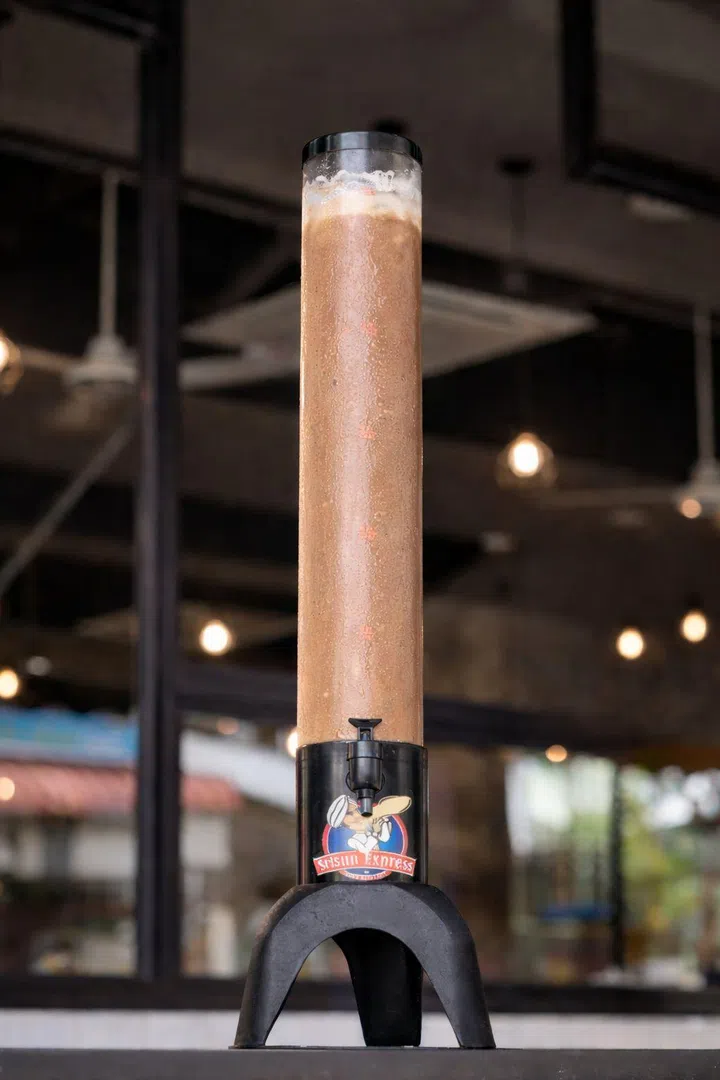
Then came the iced Milo towers.
Inspired by beer towers commonly seen in bars, Jayanthi wondered why the same idea could not work with local drinks. Srisun began serving towering dispensers filled with beverages like iced Milo and teh tarik — an unusual sight in a neighbourhood prata shop.
It proved to be a turning point. A photo of the Milo tower circulated widely online, drawing curious diners eager to see it for themselves. Crowds began forming outside the restaurant, and the once-struggling outlet slowly found its footing. The attention brought its share of criticism, but Jayanthi remained unfazed.
“Any publicity is good publicity,” she laughs.
More importantly, the surge in interest confirmed the idea she had been testing since that 10-cent moment: When the experience around a familiar dish changes, people begin to look at it differently, even if it was a drink.
For the first time, the experiment at Kovan started to look like a viable business.
The realities of the trade
The success of the Kovan outlet gave Jayanthi the confidence to expand.
Customers were travelling across the island to eat there — some from neighbourhoods at the other end of Singapore. It was a signal that the concept might work elsewhere.
The second Srisun Express opened in Serangoon Gardens in 2016. But expansion brought a new set of challenges. Running a prata restaurant, she quickly realised, was as much about discipline as it was about creativity.
At the same time, prices remain tightly constrained. Prata may be one of Singapore’s most beloved foods, but it is also one of the most price-sensitive. Diners often expect it to remain affordable even as operating costs climb. The result is a constant balancing act between volume and margins. Even small inefficiencies can quickly erode profits.
“You’re dealing with manpower, rent, utilities, ingredients — everything goes up,” she says. “But customers still expect the same prices.”
As Srisun Express grew, so did its number of outlets. Another problem emerged: consistency. Different cooks produced slightly different gravies. Recipes varied subtly from outlet to outlet. Customers noticed.
“They would say the masala potato here looks different from the one at another outlet,” she recalls. For a brand built on recognisable experience, that inconsistency posed a serious risk.
The solution was a central kitchen.
Jayanthi invested heavily in building a facility to prepare core menu components — curry bases, sauces, and other staples — before distributing them to individual outlets. The investment was significant, costing at least half a million dollars, but it allowed the brand to standardise flavours and streamline operations across multiple locations.
Instead of each outlet improvising its own recipes, the central kitchen ensured that customers would encounter the same taste and quality wherever they visited.
The facility also gave Jayanthi the confidence to expand further. By consolidating preparation and quality control at a single production point, the restaurants could focus on speed, service, and the theatre of prata-making — while the backbone of the menu remained consistent.
The third-wave prata house
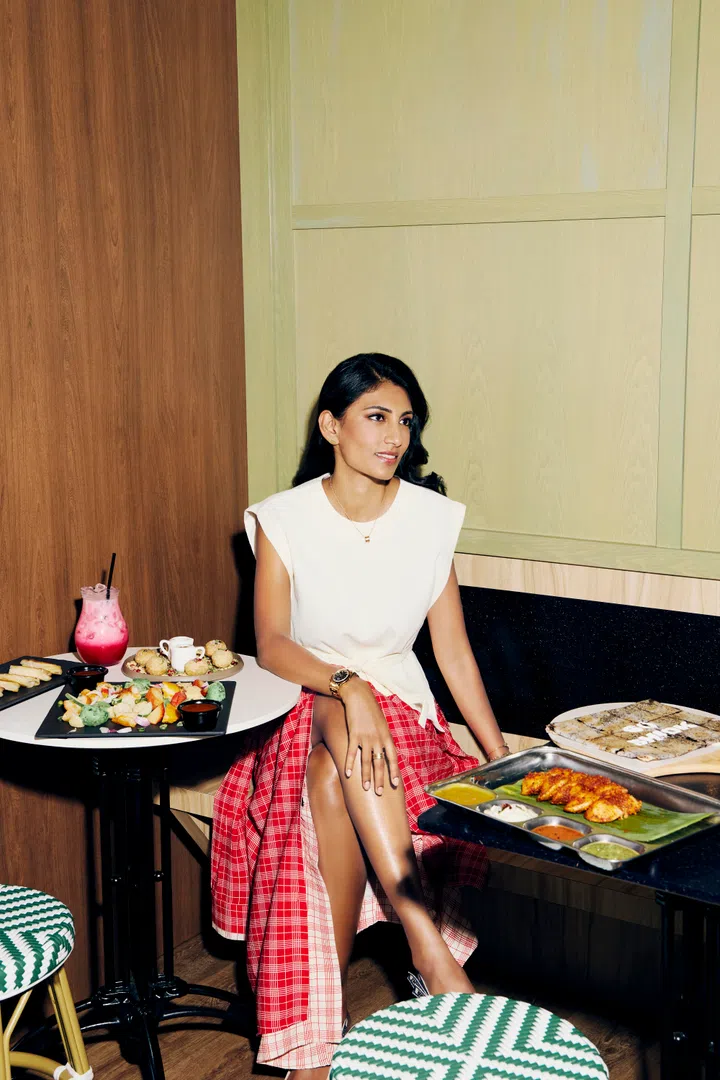
If the early years of Srisun Express were about survival and experimentation, the redesign of its Serangoon Gardens outlet marked something different: a chance to fully articulate what Jayanthi had been trying to build all along.
By then, the brand had weathered expansion, manpower constraints and the operational complexities of running multiple outlets. The central kitchen had stabilised production. The business was no longer an experiment.
Now it was about the experience.
For inspiration, she looked beyond the world of prata shops. One place that caught her attention was New Bahru, the lifestyle destination housed in a former school compound in River Valley. What struck her was the atmosphere.
“There were so many people there just sitting down, people-watching, hanging out,” she explains. “And I thought: Why can’t a prata shop feel like that?”
The redesign of the Serangoon Gardens outlet was her attempt to answer that question. Warm timber panels and bold colours replaced the more utilitarian interiors typical of late-night eateries. Banquette seating encouraged groups to linger. The layout invited diners to stay rather than simply eat and leave.
For Jayanthi, the change was not about turning prata into something exclusive. Instead, it was about giving one of Singapore’s most familiar foods a setting that lets people experience it differently.
“I’d like to think of Srisun as a third-wave prata house,” she relates, where the food remains accessible while prices remain within reach. But the experience around it — the space, the design, the energy of the room — is something she believes can continue evolving.
Today, the Serangoon Gardens outlet has become a gathering place in its own right. Groups linger over drinks long after finishing their meals. Others drop in after workouts or evening walks, settling into the banquettes to talk or watch the crowd pass by.
The next step may take the concept in a different direction altogether. Jayanthi is now exploring smaller quick-service stalls at shopping mall basements, focused on Indian rojak — a format that would allow the brand to operate with fewer staff while reaching new neighbourhoods and new customers.
For someone who began by puzzling over a 10-cent price increase at her mother’s stall, the journey has been anything but predictable.
Looking back, she laughs at how far the idea has travelled.
“Every day there’s a new problem,” she says with a shrug. “But you just keep working on it. You just have to remember why you started.”
Photography: Athirah Annissa
Art direction: Fazlie Hashim
Styling: Dolphin Yeo
Makeup: Ginger Lynette using MAC cosmetics
Hair: Grego Oh, using Revlon Professional Singapore