%22%3E%0A%3Cpath%20d%3D%22M412%20101.2H393.7C393.1%20101.2%20392.3%20100.9%20391.8%20100.5C377.3%2087.6004%20362.9%2074.6004%20348.4%2061.6004C344.8%2058.4004%20341.3%2055.2004%20337.7%2052.0004C337.1%2051.5004%20336.2%2051.1004%20335.5%2051.0004C334.2%2050.8004%20333%2051.0004%20331.5%2051.0004V101.1H316.7V0.100391H331.4V44.3004C331.9%2044.3004%20332.2%2044.4004%20332.5%2044.4004C334.9%2044.4004%20337.2%2044.5004%20339.6%2044.4004C340.4%2044.4004%20341.3%2044.0004%20341.8%2043.5004C351.6%2034.4004%20361.4%2025.2004%20371.1%2016.0004C376.5%2010.9004%20381.9%205.90039%20387.3%200.800391C387.9%200.200391%20388.5%200.000390626%20389.3%200.000390626H400.9C384.2%2015.8004%20367.8%2031.3004%20351.2%2047.0004C371.5%2065.0004%20391.8%2082.9004%20412.1%20100.9C412.1%20101%20412.1%20101.1%20412%20101.2ZM180.9%20101.2C184.1%2094.9004%20187.2%2088.9004%20190.3%2082.8004C198.3%2067.3004%20206.2%2051.8004%20214.2%2036.2004C220.3%2024.4004%20226.4%2012.5004%20232.4%200.700391C232.7%200.100391%20233%20-0.0996094%20233.7%20-0.0996094H248.1C248.8%20-0.0996094%20249.2%200.100391%20249.6%200.800391C256%2013.3004%20262.4%2025.7004%20268.8%2038.2004C279.3%2058.6004%20289.8%2079.0004%20300.3%2099.5004C300.5%20100%20300.8%20100.4%20301.1%20101.1C300.5%20101.1%20300.1%20101.2%20299.7%20101.2H286.5C285.6%20101.2%20285.1%20100.9%20284.7%20100.2C280.1%2091.3004%20275.4%2082.4004%20270.8%2073.4004C270.1%2072.1004%20269.3%2071.6004%20267.8%2071.6004H209.9C208.7%2071.6004%20208.1%2072.0004%20207.5%2073.1004C202.9%2082.1004%20198.2%2091.0004%20193.6%20100C193.1%20101%20192.6%20101.3%20191.5%20101.3C188.4%20101.2%20185.3%20101.3%20182.3%20101.3C182%20101.2%20181.6%20101.2%20180.9%20101.2ZM239.1%2011.4004C230%2029.2004%20221.1%2046.7004%20212.1%2064.3004H266.4C257.2%2046.7004%20248.2%2029.2004%20239.1%2011.4004ZM0%200.000390626H43.4C51.2%200.000390626%2058.7%201.20039%2065.7%204.80039C75.9%2010.0004%2078.9%2018.0004%2078.6%2027.4004C78.3%2034.3004%2076%2040.5004%2071.2%2045.5004C67.3%2049.6004%2062.4%2052.3004%2057.1%2054.3004C50.6%2056.7004%2043.9%2058.0004%2037.1%2058.6004C30.1%2059.2004%2023.1%2059.4004%2016.2%2059.7004C15.8%2059.7004%2015.3%2059.8004%2014.8%2059.8004V101.1H0.1C0%2067.4004%200%2033.8004%200%200.000390626ZM14.8%207.10039V52.2004C23.7%2052.4004%2032.6%2052.3004%2041.2%2050.1004C44.4%2049.3004%2047.6%2048.2004%2050.6%2046.7004C58.4%2043.0004%2062.3%2036.7004%2062.7%2028.0004C63%2019.9004%2059.5%2014.1004%2052.4%2010.5004C47.6%208.00039%2042.5%207.10039%2037.2%207.10039H14.8ZM95.9%20101.1V0.100391H167.3V7.20039H110.7V44.7004H158.1V51.9004H110.8V93.9004H171.1V101C146.1%20101.1%20121%20101.1%2095.9%20101.1Z%22%20fill%3D%22black%22%2F%3E%0A%3Cpath%20d%3D%22M35.0004%2025.7996H42.5004V20.6996H44.8004V33.1996H42.6004V27.5996H34.9004V33.2996H32.7004V20.7996H35.0004V25.7996ZM54.4004%2025.8996V27.2996H48.9004V31.6996H55.9004C55.9004%2032.1996%2056.0004%2032.5996%2056.0004%2033.0996H46.5004V20.5996H55.5004V21.8996H49.0004V25.7996C50.7004%2025.8996%2052.5004%2025.8996%2054.4004%2025.8996ZM25.9004%2033.0996H23.5004V21.9996H17.9004V20.6996H31.6004V22.0996H27.1004C26.2004%2022.0996%2025.9004%2022.2996%2025.9004%2023.1996C26.0004%2026.0996%2025.9004%2028.9996%2025.9004%2031.7996V33.0996Z%22%20fill%3D%22black%22%2F%3E%0A%3C%2Fg%3E%0A%3Cdefs%3E%0A%3CclipPath%20id%3D%22clip0_388_462%22%3E%0A%3Crect%20width%3D%22411%22%20height%3D%22101.2%22%20fill%3D%22white%22%2F%3E%0A%3C%2FclipPath%3E%0A%3C%2Fdefs%3E%0A%3C%2Fsvg%3E%0A)
Qarbotech wants plants to be more efficient at photosynthesis
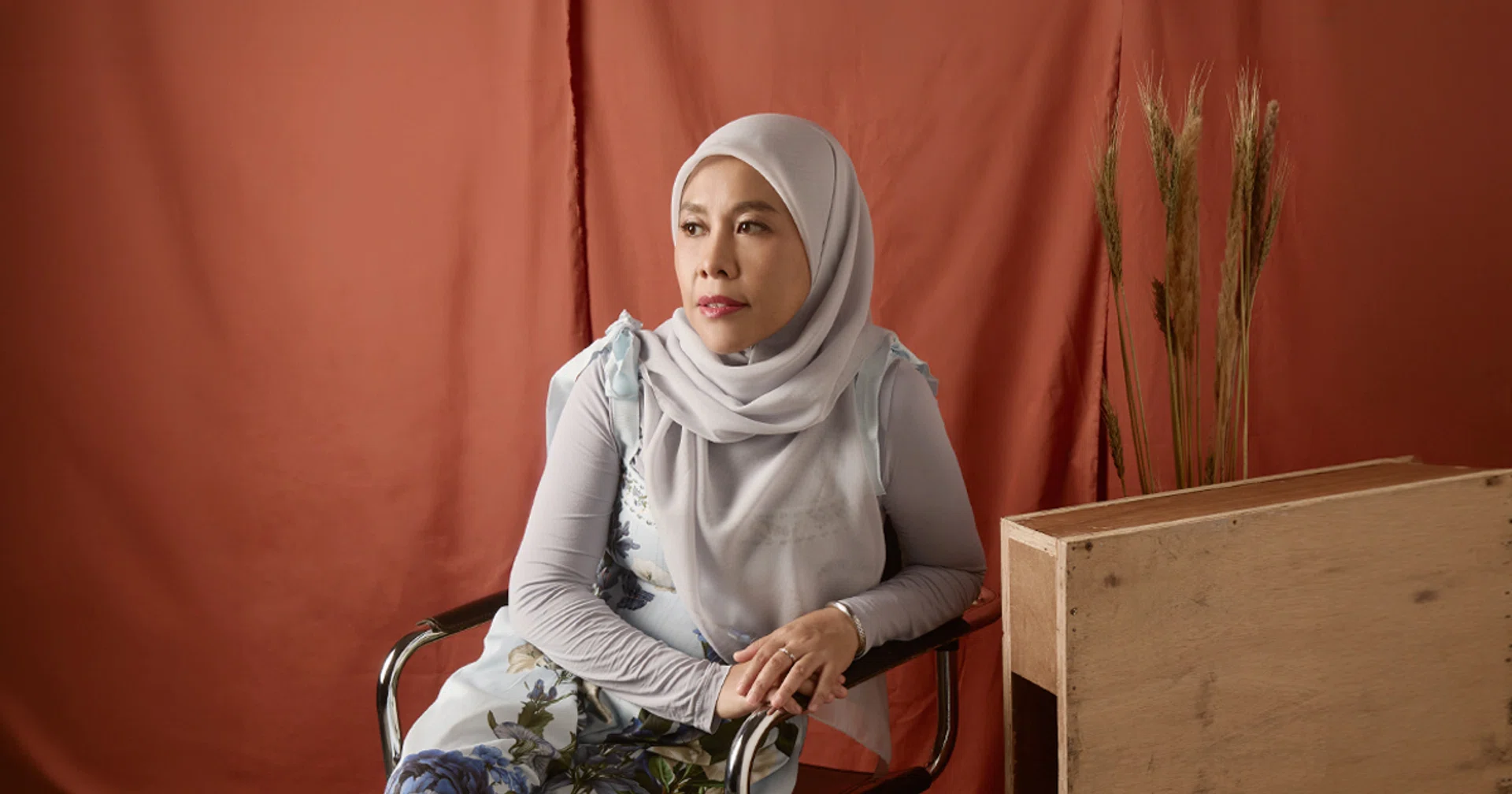
Dr Suraya Rashid believes Qarbotech’s light-harnessing technology can help farmers raise yields without adding more agricultural inputs.
By Zat Astha /
Share this article
The history of modern agriculture is a chronicle of accumulation. For nearly a century, feeding a growing population meant applying more: more synthetic nitrogen, more aggressive pesticides, more water, and more cleared land.
This model of brute force has brought the planet to ecological exhaustion. To suggest that this paradigm can be upended not by changing what we put into the soil, but by altering how crops interact with the sky, sounds like the high-tech alchemy routinely pitched to venture capitalists.
Yet, sitting at the intersection of deep-tech innovation and agrarian reality is Dr Suraya Rashid, founder and chief scientist of Qarbotech. A Malaysian deep-tech spin-off, Qarbotech, has developed a patented biocompatible solution using carbon quantum dots to enhance a plant’s photosynthetic capabilities.
Dr Suraya’s inclusion in this year’s Power List, under the theme A New Form, recognises her ability to navigate this friction. And while agriculture was never her initial destination, she preserved her scientific conviction while completely reshaping the delivery around it.
A laboratory vs the field
The transition from academic isolation to marketplace pragmatism is rarely linear. Dr Suraya was not a frustrated agronomist, but a materials scientist captivated by light.
“When I began this research, I wasn’t trying to solve a problem in agriculture,” she notes, her voice carrying the precision of the laboratory. “I was studying carbon quantum dots and exploring where they could create the greatest impact. During that journey, we discovered their ability to enhance photosynthesis, and that changed the direction of my research.”
Still, proving a mechanism in a controlled environment is miles away from persuading a risk-averse industry to adopt it. “At first, my focus was on answering a scientific question: could we improve one of nature’s most fundamental processes? Years of research showed that we could,” she observes. But abstract data collided with economic reality when she met actual growers: “Once we started working with farmers, I realised that scientific success and real-world impact are not the same thing.”
Farmers, whose livelihood depends on a single harvest, are rarely moved by quantum mechanics. “Farmers don’t start by asking how the technology works. They start by asking what problem it solves,” Dr Suraya explains. “Will it improve yield? Will it make better use of the inputs they’ve already invested in?” This forced a total rewiring of her operational philosophy. “That shifted my perspective,” she says.
“Today, I spend as much time understanding farmers’ needs as I do explaining the science. Science gave us the technology. Farmers teach us how to make it relevant.”
The geometry of efficiency
To appreciate Dr Suraya’s approach is to question the conventional wisdom of agricultural productivity, which treats nature as a bottleneck to be bypassed chemically. Qarbotech counters that the bottleneck is an efficiency problem solvable at the molecular level.
“For many years, increasing agricultural productivity has largely meant adding more — more fertiliser, more pesticides, more water or more land,” Dr Suraya points out, challenging the old industry framework. “I believe the next leap in agriculture will come from using what we already have more efficiently.” Every crop depends on photosynthesis, she notes, yet plants convert only a small fraction of sunlight into biomass. “If we can help plants use light more efficiently, we create value throughout the system.”

While young Southeast Asian startups often retreat into comfortable domestic niches, Dr Suraya rejected a provincial growth strategy, expanding Qarbotech’s corporate form to an international scale from day one. “The decision that changed the direction of the business was deciding to build a global company from the very beginning,” she reflects. “The challenge we were addressing — improving photosynthesis to increase agricultural productivity — is a global one.”
This meant uprooting local comfort zones. “Instead of asking, ‘How do we grow in Malaysia?’ we began asking, ‘Where can our technology make the greatest impact?’” Dr Suraya recalls. It required securing corporate autonomy early on, “including acquiring our intellectual property so we had the freedom to build international partnerships and scale with confidence”.
The global gamble altered the company’s entire structural DNA, pushing it to think bigger and reminding it that if a technology solves an important problem, its impact shouldn’t be limited by geography.
Finding the light
Commercialising deep tech requires a personal evolution, forcing a scientist who thrives on absolute metrics to become a leader comfortable with ambiguity. Dr Suraya had to deliberately alter her intellectual framework.
“The biggest change has been our perspective,” she muses. “When I started, my focus was proving the science. Today, we are building a company that works with farmers, governments, distributors and partners across different countries. We have had to learn about markets, regulations, manufacturing, fundraising, and international expansion.”
Amid this institutional rewriting, Dr Suraya has maintained a rigid stance on scientific truth, protecting her enterprise from the contemporary trap of greenwashing. “What hasn’t changed is the culture we want to build,” she states. “At Qarbotech, we talk a lot about our R.I.C.E. values: Respect, Integrity, Communication, Excellence.”
She insists that “culture doesn’t scale by accident,” extending that rigour to corporate claims. “We only make claims that we can support with evidence. Our credibility is one of our greatest assets, and we intend to protect it.”
The true hurdle of deep tech remains psychological — bridging the gap between a lab report and market trust. “Many people assume that the biggest challenge is developing the technology. In reality, that is only the beginning,” Dr Suraya says. “Once you have shown that something works, the real challenge is helping people feel confident enough to use it.” Trust must be engineered meticulously: “Science gives people a reason to be interested. Trust gives them the confidence to act.”
This demanded an uncomfortable shift from her academic training. “Growth has taught me that leadership is very different from research,” she confesses. “As a researcher, I was trained to gather as much evidence as possible before reaching a conclusion. As a founder, I’ve learned that decisions often need to be made before every answer is available.” Yet her internal compass remains fixed, “grounded in the same principles that guided me as a scientist: integrity, curiosity and a commitment to making a meaningful difference”.
Ultimately, Dr Suraya embodies A New Form because her final destination lies beyond agriculture. Farming was simply the initial proof of concept for a grander mastery of light. “I hope our greatest contribution won’t be a single product or even a single industry. I hope it changes the way we think about light,” she says. “Our brand slogan is simple: Harnessing Light. Enriching Lives.”
Hers is a rare corporate transformation: changing the entire delivery machinery while staying fiercely loyal to the original spark of discovery. “If our work succeeds, I hope it inspires people to see light as one of nature’s greatest resources for solving some of humanity’s biggest challenges. That is the future I hope we can help create.”
Art direction: Ashruddin Sani
Photography: Lawrence Teo
Styling: Dolphin Yeo
Grooming: Ginger Lynette, using Narse

For more stories on The Peak Power List, visit here.