%22%3E%0A%3Cpath%20d%3D%22M412%20101.2H393.7C393.1%20101.2%20392.3%20100.9%20391.8%20100.5C377.3%2087.6004%20362.9%2074.6004%20348.4%2061.6004C344.8%2058.4004%20341.3%2055.2004%20337.7%2052.0004C337.1%2051.5004%20336.2%2051.1004%20335.5%2051.0004C334.2%2050.8004%20333%2051.0004%20331.5%2051.0004V101.1H316.7V0.100391H331.4V44.3004C331.9%2044.3004%20332.2%2044.4004%20332.5%2044.4004C334.9%2044.4004%20337.2%2044.5004%20339.6%2044.4004C340.4%2044.4004%20341.3%2044.0004%20341.8%2043.5004C351.6%2034.4004%20361.4%2025.2004%20371.1%2016.0004C376.5%2010.9004%20381.9%205.90039%20387.3%200.800391C387.9%200.200391%20388.5%200.000390626%20389.3%200.000390626H400.9C384.2%2015.8004%20367.8%2031.3004%20351.2%2047.0004C371.5%2065.0004%20391.8%2082.9004%20412.1%20100.9C412.1%20101%20412.1%20101.1%20412%20101.2ZM180.9%20101.2C184.1%2094.9004%20187.2%2088.9004%20190.3%2082.8004C198.3%2067.3004%20206.2%2051.8004%20214.2%2036.2004C220.3%2024.4004%20226.4%2012.5004%20232.4%200.700391C232.7%200.100391%20233%20-0.0996094%20233.7%20-0.0996094H248.1C248.8%20-0.0996094%20249.2%200.100391%20249.6%200.800391C256%2013.3004%20262.4%2025.7004%20268.8%2038.2004C279.3%2058.6004%20289.8%2079.0004%20300.3%2099.5004C300.5%20100%20300.8%20100.4%20301.1%20101.1C300.5%20101.1%20300.1%20101.2%20299.7%20101.2H286.5C285.6%20101.2%20285.1%20100.9%20284.7%20100.2C280.1%2091.3004%20275.4%2082.4004%20270.8%2073.4004C270.1%2072.1004%20269.3%2071.6004%20267.8%2071.6004H209.9C208.7%2071.6004%20208.1%2072.0004%20207.5%2073.1004C202.9%2082.1004%20198.2%2091.0004%20193.6%20100C193.1%20101%20192.6%20101.3%20191.5%20101.3C188.4%20101.2%20185.3%20101.3%20182.3%20101.3C182%20101.2%20181.6%20101.2%20180.9%20101.2ZM239.1%2011.4004C230%2029.2004%20221.1%2046.7004%20212.1%2064.3004H266.4C257.2%2046.7004%20248.2%2029.2004%20239.1%2011.4004ZM0%200.000390626H43.4C51.2%200.000390626%2058.7%201.20039%2065.7%204.80039C75.9%2010.0004%2078.9%2018.0004%2078.6%2027.4004C78.3%2034.3004%2076%2040.5004%2071.2%2045.5004C67.3%2049.6004%2062.4%2052.3004%2057.1%2054.3004C50.6%2056.7004%2043.9%2058.0004%2037.1%2058.6004C30.1%2059.2004%2023.1%2059.4004%2016.2%2059.7004C15.8%2059.7004%2015.3%2059.8004%2014.8%2059.8004V101.1H0.1C0%2067.4004%200%2033.8004%200%200.000390626ZM14.8%207.10039V52.2004C23.7%2052.4004%2032.6%2052.3004%2041.2%2050.1004C44.4%2049.3004%2047.6%2048.2004%2050.6%2046.7004C58.4%2043.0004%2062.3%2036.7004%2062.7%2028.0004C63%2019.9004%2059.5%2014.1004%2052.4%2010.5004C47.6%208.00039%2042.5%207.10039%2037.2%207.10039H14.8ZM95.9%20101.1V0.100391H167.3V7.20039H110.7V44.7004H158.1V51.9004H110.8V93.9004H171.1V101C146.1%20101.1%20121%20101.1%2095.9%20101.1Z%22%20fill%3D%22black%22%2F%3E%0A%3Cpath%20d%3D%22M35.0004%2025.7996H42.5004V20.6996H44.8004V33.1996H42.6004V27.5996H34.9004V33.2996H32.7004V20.7996H35.0004V25.7996ZM54.4004%2025.8996V27.2996H48.9004V31.6996H55.9004C55.9004%2032.1996%2056.0004%2032.5996%2056.0004%2033.0996H46.5004V20.5996H55.5004V21.8996H49.0004V25.7996C50.7004%2025.8996%2052.5004%2025.8996%2054.4004%2025.8996ZM25.9004%2033.0996H23.5004V21.9996H17.9004V20.6996H31.6004V22.0996H27.1004C26.2004%2022.0996%2025.9004%2022.2996%2025.9004%2023.1996C26.0004%2026.0996%2025.9004%2028.9996%2025.9004%2031.7996V33.0996Z%22%20fill%3D%22black%22%2F%3E%0A%3C%2Fg%3E%0A%3Cdefs%3E%0A%3CclipPath%20id%3D%22clip0_388_462%22%3E%0A%3Crect%20width%3D%22411%22%20height%3D%22101.2%22%20fill%3D%22white%22%2F%3E%0A%3C%2FclipPath%3E%0A%3C%2Fdefs%3E%0A%3C%2Fsvg%3E%0A)
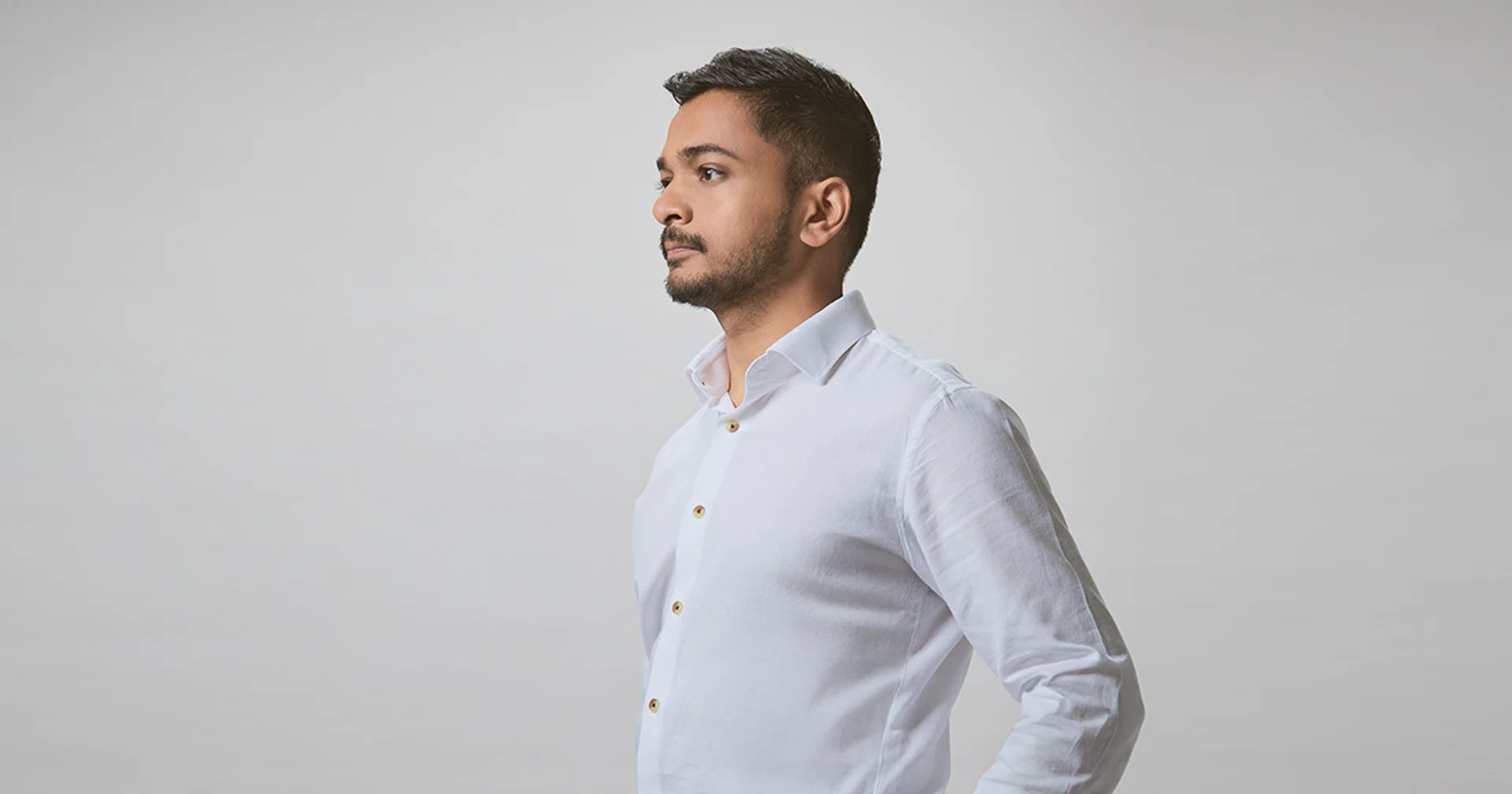
Inspired by nature and powered by artificial intelligence, drone whisperer and CEO of Polybee is on a quest to rethink pollination
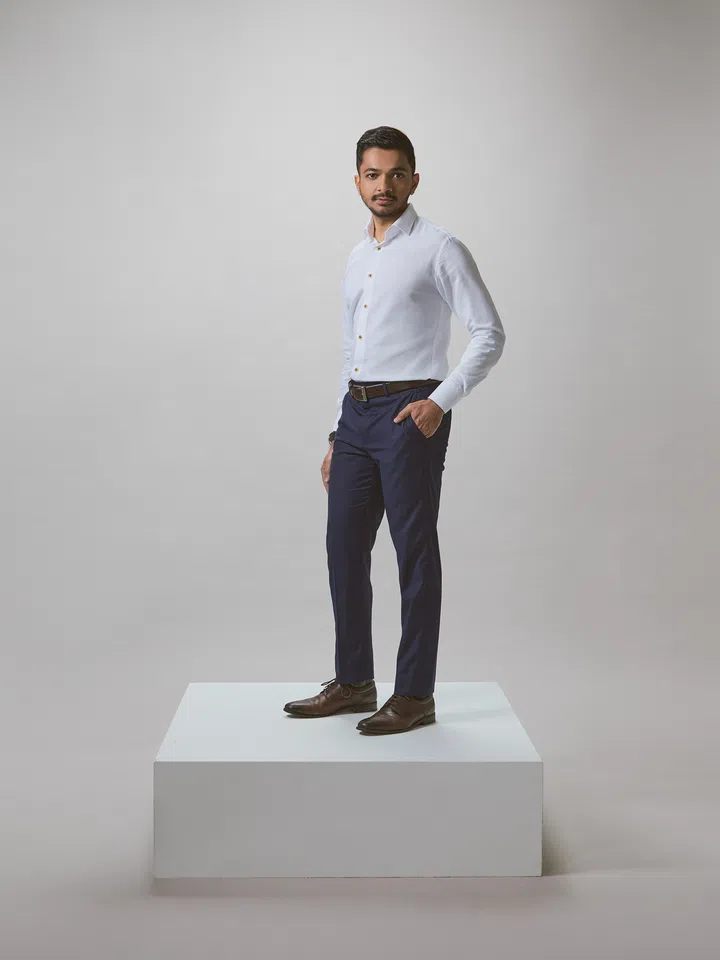
Siddharth Jadhav is helping farmers manage the wild uncertainties of climate change while reshaping modern food production.
By Lyn Chan /
Share this article
The story of agricultural innovation often begins in unexpected places. For Polybee’s Siddharth Jadhav, it started with a curiosity that ran deeper than most: a blend of technological prowess and an almost poetic appreciation for the intricate dance of nature. The 31-year-old has been rewriting how we approach farming, food security and ecological sustainability for the past six years.
While immersed in aerial robotics research at the National University of Singapore in 2018, he stumbled into the Lean Launchpad programme. The initiative, designed to encourage researchers to explore the commercial applications of their expertise, pushed him to think beyond his academic projects.
“I was looking for industries where we could solve big, hair-on-fire problems at scale,” explains the founder and chief executive officer of Polybee.
At the time, Singapore’s growing emphasis on food security drew him to agriculture, an industry ripe for innovation. Initially, he focused on automating pollination in indoor farms, where traditional methods involving bees were impractical.
“As I learned more about the industry,” he reflects, “I realised the opportunity to solve problems in agriculture with automation and intelligence goes way beyond indoor farms.”

This curiosity laid the foundation for Polybee, a Temasek-backed startup at the crossroads of robotics, agriculture and artificial intelligence. Today, its technology concentrates on two critical issues: pollination and yield forecasting.
Innovating pollination for a changing world
Pollination, a natural process that has supported agriculture for millennia, is facing significant challenges. Bee populations are declining globally due to habitat loss, disease and environmental changes. “Bees are wild animals,” Jadhav points out.
“Their activity is subject to environmental conditions. Moreover, bees in managed hives often face shorter lifespans, poorer nutrition and non-ideal conditions. The world needs alternatives to bees in agriculture, and Polybee is building one.”
Polybee’s drones are designed to complement — not supplant — natural pollinators. Drawing inspiration from bumblebees, they vibrate flowers using airflow from their propellers to release pollen. This technique ensures consistency, particularly when bees are less active in suboptimal weather. “We’re not replacing bees,” he staunchly clarifies. “We’re covering for them where they can’t do the job well.”
The company’s yield forecasting solution adds another layer of precision for growers. By capturing high-resolution images of crops, Polybee’s drones provide data on fruit count and other yield-related features.
Advanced artificial intelligence (AI) models process this information, combining it with weather data to make accurate predictions. “We help growers answer two simple questions: what’s the best time to harvest for optimal quality, and how much yield there will be,” says Jadhav.
This data-driven approach addresses the uncertainties that plague agriculture, particularly in an era of climate change. “As extreme weather events become more frequent, uncertainty in pollination and crop forecasts will only get worse,” he explains.
“Our product directly tackles this by bringing more predictability to farming through autonomous pollination and intelligent crop forecasts.”
Despite the technological sophistication of Polybee’s solutions, the former researcher quickly highlights the practical nature of their applications. He brushes away the notion that farmers are slow to adopt innovation.
“The job of a farmer requires the highest calibre of decision-making under uncertainty, all while running a thin-margin business,” he argues. “If a product truly creates value — by reducing uncertainty, improving yield, or cutting costs — farmers will not only embrace it but also champion it.”
Overcoming challenges in AI and crop adaptation
Building solutions for diverse crops and climates is not without its bumps. Training AI models for new crops require significant adaptation. “While we don’t always start from scratch, there’s some work involved in customising our systems,” Jadhav admits. “But we thrive on this challenge — developing cutting-edge yield forecasting models quickly and with minimal resources is incredibly rewarding.”
An unexpected perk of his work is the deepening of his appreciation for the intricacies of nature. He describes fig pollination as one of the most fascinating phenomena. “It’s a unique partnership between figs and tiny wasps,” he says. “The female wasps enter the fig, lay their eggs, and pollinate the flowers.

The eggs grow into larvae, while the flowers turn into seeds. The male wasps mate inside the fig and die there, while the females leave to find new figs. It’s bizarre and tightly interconnected.”
In its relatively short existence, Polybee has already made an impact, forecasting yields for over 100 acres of open-field farms in a month. However, Jadhav remains grounded, focusing on his agritech’s primary mission: enhancing and securing the food supply.
“We’re not a drone company,” he emphasises. “Drones are just a means to an end. We’re obsessed with solving problems for our customers, and I’ll develop any technology that serves this purpose.”
Mastering the art of building a startup
Jadhav has had to learn many skills to steer Polybee’s growth. “As a first-time founder with no corporate work experience, I’ve had to figure out everything on the go: raising capital, hiring talent, building strategy, finding customers. It’s been a steep learning curve, but I wouldn’t have it any other way.”
Reflecting on his motivations, Jadhav speaks of an enduring curiosity about nature, physics, and technology. “I’ve always been fascinated by how things work,” he mulls. “Polybee brings together agriculture, robotics, and biology in a way that constantly fuels my curiosity. It’s incredibly fulfilling.”
Whether visiting rolling farmlands in Tasmania or developing algorithms for a new crop, Jadhav’s work is driven by the belief that agriculture and technology can coexist harmoniously. “Our drones have been named Maverick and Goose (from Top Gun) by one of our customers,” he shares. “That tells me we’re not just building tools — we’re creating a connection with the people who use them.”