%22%3E%0A%3Cpath%20d%3D%22M412%20101.2H393.7C393.1%20101.2%20392.3%20100.9%20391.8%20100.5C377.3%2087.6004%20362.9%2074.6004%20348.4%2061.6004C344.8%2058.4004%20341.3%2055.2004%20337.7%2052.0004C337.1%2051.5004%20336.2%2051.1004%20335.5%2051.0004C334.2%2050.8004%20333%2051.0004%20331.5%2051.0004V101.1H316.7V0.100391H331.4V44.3004C331.9%2044.3004%20332.2%2044.4004%20332.5%2044.4004C334.9%2044.4004%20337.2%2044.5004%20339.6%2044.4004C340.4%2044.4004%20341.3%2044.0004%20341.8%2043.5004C351.6%2034.4004%20361.4%2025.2004%20371.1%2016.0004C376.5%2010.9004%20381.9%205.90039%20387.3%200.800391C387.9%200.200391%20388.5%200.000390626%20389.3%200.000390626H400.9C384.2%2015.8004%20367.8%2031.3004%20351.2%2047.0004C371.5%2065.0004%20391.8%2082.9004%20412.1%20100.9C412.1%20101%20412.1%20101.1%20412%20101.2ZM180.9%20101.2C184.1%2094.9004%20187.2%2088.9004%20190.3%2082.8004C198.3%2067.3004%20206.2%2051.8004%20214.2%2036.2004C220.3%2024.4004%20226.4%2012.5004%20232.4%200.700391C232.7%200.100391%20233%20-0.0996094%20233.7%20-0.0996094H248.1C248.8%20-0.0996094%20249.2%200.100391%20249.6%200.800391C256%2013.3004%20262.4%2025.7004%20268.8%2038.2004C279.3%2058.6004%20289.8%2079.0004%20300.3%2099.5004C300.5%20100%20300.8%20100.4%20301.1%20101.1C300.5%20101.1%20300.1%20101.2%20299.7%20101.2H286.5C285.6%20101.2%20285.1%20100.9%20284.7%20100.2C280.1%2091.3004%20275.4%2082.4004%20270.8%2073.4004C270.1%2072.1004%20269.3%2071.6004%20267.8%2071.6004H209.9C208.7%2071.6004%20208.1%2072.0004%20207.5%2073.1004C202.9%2082.1004%20198.2%2091.0004%20193.6%20100C193.1%20101%20192.6%20101.3%20191.5%20101.3C188.4%20101.2%20185.3%20101.3%20182.3%20101.3C182%20101.2%20181.6%20101.2%20180.9%20101.2ZM239.1%2011.4004C230%2029.2004%20221.1%2046.7004%20212.1%2064.3004H266.4C257.2%2046.7004%20248.2%2029.2004%20239.1%2011.4004ZM0%200.000390626H43.4C51.2%200.000390626%2058.7%201.20039%2065.7%204.80039C75.9%2010.0004%2078.9%2018.0004%2078.6%2027.4004C78.3%2034.3004%2076%2040.5004%2071.2%2045.5004C67.3%2049.6004%2062.4%2052.3004%2057.1%2054.3004C50.6%2056.7004%2043.9%2058.0004%2037.1%2058.6004C30.1%2059.2004%2023.1%2059.4004%2016.2%2059.7004C15.8%2059.7004%2015.3%2059.8004%2014.8%2059.8004V101.1H0.1C0%2067.4004%200%2033.8004%200%200.000390626ZM14.8%207.10039V52.2004C23.7%2052.4004%2032.6%2052.3004%2041.2%2050.1004C44.4%2049.3004%2047.6%2048.2004%2050.6%2046.7004C58.4%2043.0004%2062.3%2036.7004%2062.7%2028.0004C63%2019.9004%2059.5%2014.1004%2052.4%2010.5004C47.6%208.00039%2042.5%207.10039%2037.2%207.10039H14.8ZM95.9%20101.1V0.100391H167.3V7.20039H110.7V44.7004H158.1V51.9004H110.8V93.9004H171.1V101C146.1%20101.1%20121%20101.1%2095.9%20101.1Z%22%20fill%3D%22black%22%2F%3E%0A%3Cpath%20d%3D%22M35.0004%2025.7996H42.5004V20.6996H44.8004V33.1996H42.6004V27.5996H34.9004V33.2996H32.7004V20.7996H35.0004V25.7996ZM54.4004%2025.8996V27.2996H48.9004V31.6996H55.9004C55.9004%2032.1996%2056.0004%2032.5996%2056.0004%2033.0996H46.5004V20.5996H55.5004V21.8996H49.0004V25.7996C50.7004%2025.8996%2052.5004%2025.8996%2054.4004%2025.8996ZM25.9004%2033.0996H23.5004V21.9996H17.9004V20.6996H31.6004V22.0996H27.1004C26.2004%2022.0996%2025.9004%2022.2996%2025.9004%2023.1996C26.0004%2026.0996%2025.9004%2028.9996%2025.9004%2031.7996V33.0996Z%22%20fill%3D%22black%22%2F%3E%0A%3C%2Fg%3E%0A%3Cdefs%3E%0A%3CclipPath%20id%3D%22clip0_388_462%22%3E%0A%3Crect%20width%3D%22411%22%20height%3D%22101.2%22%20fill%3D%22white%22%2F%3E%0A%3C%2FclipPath%3E%0A%3C%2Fdefs%3E%0A%3C%2Fsvg%3E%0A)
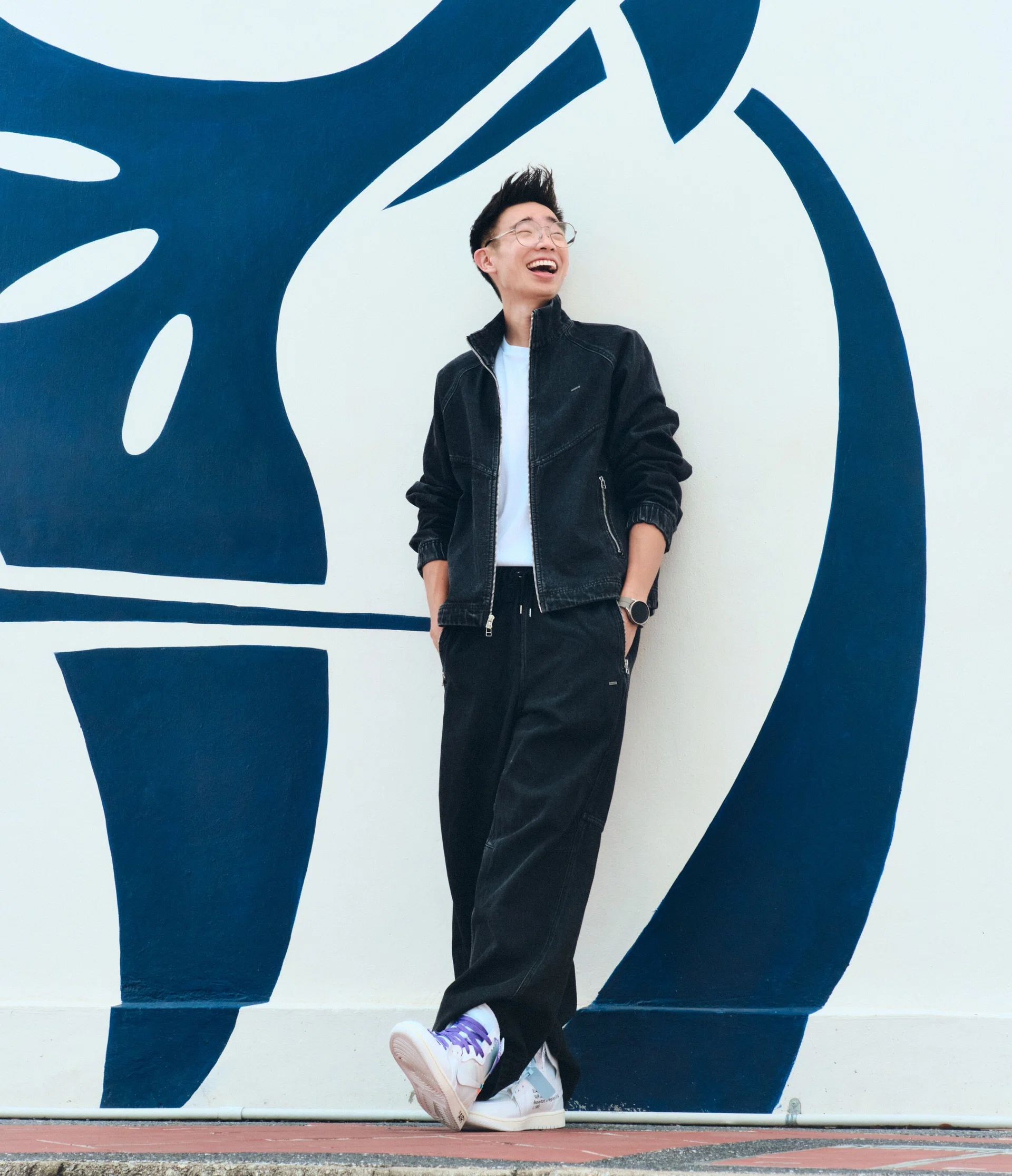
Ask Tobyato what people know him for, and he politely declines the premise.
“I think this is a question best answered by other people,” he offers, before reaching for a restaurant analogy. “Much like how the best-selling signature dish of a restaurant is decided by customers, I think people know me for different things depending on what they like from my work.”
Some recognise the murals. Others know the commercial collaborations. There are art toys, sculptures, and “everything in between”.
This could sound like an artist hedging against definition. In Tobyato’s case, definition itself may be the thing he distrusts.
The Singapore artist, whose real name is Toby Tan, has become particularly visible through his exuberant public murals, where Asian imagery, graphic characters and contemporary visual language regularly collide. His work has travelled well beyond Singapore, including murals in Jakarta, Paris, and Los Angeles, while collaborations have ranged from Nike to Samsung.
On staying playful
Still, the job title he reaches for remains deliberately broad: visual artist. Outside that, things become less formal. “I always playfully say I’m just a kid, running around, trying to smile and lead life as playfully and creatively as I can.”
Playfulness recurs often when Tobyato talks about himself, though it disguises something considerably more severe.
Behind what he calls his “default smile” sits “the silent, stubborn, resilient grind”: late-night runs to clear his head, climbing scaffolding while painting enormous walls, the anxiety of client deadlines, and the loneliness that comes with operating as a one-man team for nine years.
The contradiction suits him. Tobyato likes things that coexist without necessarily resolving neatly. Art and running have done so for years. But he makes no grand claim that one somehow improves his technical ability in the other.
“I’m not the fastest runner, nor the best artist,” he concedes. “But they coexist for me with the same mindset of doing it and improving at it because I genuinely enjoy it.”
The similarity appears instead at the unpleasant end of both pursuits. “The gritty last metres of a run feel familiar to the midnight oil burn of the last client changes to an artwork. It trains me to know that I can do it, I will do it, again and again if I must.”
There is discipline beneath the whimsy, then, and perhaps considerably more anxiety than the cheerful surfaces suggest. “I actually overthink quite deeply about a lot of things,” Tobyato admits. “I don’t always get the chance to share or speak about it, but my mind is usually quite a cluttered room.”
Movement as method
His career appears to function partly as a way of keeping that room moving.
Murals lead to objects. Objects lead to collaborations. Commercial briefs produce unexpected visual problems. Running takes him somewhere else entirely. He has learnt, he explains, that “as a creative that needs to keep moving”, movement can mean shifting between projects and disciplines as much as traversing physical and digital spaces.
There is another, less philosophical reason. “I learnt that I get bored more easily than I thought, so I consciously seek out new things, which helps me expand my breadth of work.”
Boredom, in this formulation, becomes useful information. It also explains his reluctance to settle too comfortably inside any particular description of Tobyato. A recognisable visual language can become an artist’s greatest commercial advantage; people know what they are commissioning. It can also quietly become a perimeter.
“A singular label can be quite restrictive,” he argues. “Almost like an unspoken boundary or expectation keeping you from exploring and experiencing other things a creative career or life has to offer.”
Then comes the Tobyato version of the argument: “Also, life is more playful if you don’t fit in!”
Range as permission
Samsung has already encountered that instinct firsthand. For the launch of its Galaxy Z Flip5 and Galaxy Watch6 in Singapore in 2023, Tobyato created “Folding Phone, Hidden Dragon”, a CASETiFY design that turned the fold’s mechanics into part of the artwork: a dragon appeared to weave through windows across the device.
It is an unusually appropriate collaboration for an artist who dislikes fixed boundaries. With Samsung’s new Galaxy Z Fold8, the conceit feels newly pertinent: a single object can alter its physical form according to what the user needs. Tobyato’s own range follows a similarly elastic logic — murals need not preclude toys, sculpture need not invalidate commercial work, and an artist does not need to become progressively easier to categorise as his career matures.
For him, having range does not mean demonstrating mastery over everything. Rather, it means permission. “Range means being open to trying everything you might enjoy, and then caring enough to improve on it, whatever it might be. Running faster, drawing better, living more creatively, and more playfully.”
Several future selves are already waiting for an opening. Tobyato keeps what amounts to a mental holding pen called “when I finally get time”. Inside it: properly learning the piano, returning to skateboarding, and brewing his own craft beer.
Even that last ambition comes with an insistence. “Yes, it has to be sour beer, specifically.”
Perhaps that is the most useful explanation of Tobyato’s range. The instinct is expansive, but never indiscriminate. He wants to try everything. He simply reserves the right to be particular.
This story is brought to you in partnership with Samsung Singapore.