%22%3E%0A%3Cpath%20d%3D%22M412%20101.2H393.7C393.1%20101.2%20392.3%20100.9%20391.8%20100.5C377.3%2087.6004%20362.9%2074.6004%20348.4%2061.6004C344.8%2058.4004%20341.3%2055.2004%20337.7%2052.0004C337.1%2051.5004%20336.2%2051.1004%20335.5%2051.0004C334.2%2050.8004%20333%2051.0004%20331.5%2051.0004V101.1H316.7V0.100391H331.4V44.3004C331.9%2044.3004%20332.2%2044.4004%20332.5%2044.4004C334.9%2044.4004%20337.2%2044.5004%20339.6%2044.4004C340.4%2044.4004%20341.3%2044.0004%20341.8%2043.5004C351.6%2034.4004%20361.4%2025.2004%20371.1%2016.0004C376.5%2010.9004%20381.9%205.90039%20387.3%200.800391C387.9%200.200391%20388.5%200.000390626%20389.3%200.000390626H400.9C384.2%2015.8004%20367.8%2031.3004%20351.2%2047.0004C371.5%2065.0004%20391.8%2082.9004%20412.1%20100.9C412.1%20101%20412.1%20101.1%20412%20101.2ZM180.9%20101.2C184.1%2094.9004%20187.2%2088.9004%20190.3%2082.8004C198.3%2067.3004%20206.2%2051.8004%20214.2%2036.2004C220.3%2024.4004%20226.4%2012.5004%20232.4%200.700391C232.7%200.100391%20233%20-0.0996094%20233.7%20-0.0996094H248.1C248.8%20-0.0996094%20249.2%200.100391%20249.6%200.800391C256%2013.3004%20262.4%2025.7004%20268.8%2038.2004C279.3%2058.6004%20289.8%2079.0004%20300.3%2099.5004C300.5%20100%20300.8%20100.4%20301.1%20101.1C300.5%20101.1%20300.1%20101.2%20299.7%20101.2H286.5C285.6%20101.2%20285.1%20100.9%20284.7%20100.2C280.1%2091.3004%20275.4%2082.4004%20270.8%2073.4004C270.1%2072.1004%20269.3%2071.6004%20267.8%2071.6004H209.9C208.7%2071.6004%20208.1%2072.0004%20207.5%2073.1004C202.9%2082.1004%20198.2%2091.0004%20193.6%20100C193.1%20101%20192.6%20101.3%20191.5%20101.3C188.4%20101.2%20185.3%20101.3%20182.3%20101.3C182%20101.2%20181.6%20101.2%20180.9%20101.2ZM239.1%2011.4004C230%2029.2004%20221.1%2046.7004%20212.1%2064.3004H266.4C257.2%2046.7004%20248.2%2029.2004%20239.1%2011.4004ZM0%200.000390626H43.4C51.2%200.000390626%2058.7%201.20039%2065.7%204.80039C75.9%2010.0004%2078.9%2018.0004%2078.6%2027.4004C78.3%2034.3004%2076%2040.5004%2071.2%2045.5004C67.3%2049.6004%2062.4%2052.3004%2057.1%2054.3004C50.6%2056.7004%2043.9%2058.0004%2037.1%2058.6004C30.1%2059.2004%2023.1%2059.4004%2016.2%2059.7004C15.8%2059.7004%2015.3%2059.8004%2014.8%2059.8004V101.1H0.1C0%2067.4004%200%2033.8004%200%200.000390626ZM14.8%207.10039V52.2004C23.7%2052.4004%2032.6%2052.3004%2041.2%2050.1004C44.4%2049.3004%2047.6%2048.2004%2050.6%2046.7004C58.4%2043.0004%2062.3%2036.7004%2062.7%2028.0004C63%2019.9004%2059.5%2014.1004%2052.4%2010.5004C47.6%208.00039%2042.5%207.10039%2037.2%207.10039H14.8ZM95.9%20101.1V0.100391H167.3V7.20039H110.7V44.7004H158.1V51.9004H110.8V93.9004H171.1V101C146.1%20101.1%20121%20101.1%2095.9%20101.1Z%22%20fill%3D%22black%22%2F%3E%0A%3Cpath%20d%3D%22M35.0004%2025.7996H42.5004V20.6996H44.8004V33.1996H42.6004V27.5996H34.9004V33.2996H32.7004V20.7996H35.0004V25.7996ZM54.4004%2025.8996V27.2996H48.9004V31.6996H55.9004C55.9004%2032.1996%2056.0004%2032.5996%2056.0004%2033.0996H46.5004V20.5996H55.5004V21.8996H49.0004V25.7996C50.7004%2025.8996%2052.5004%2025.8996%2054.4004%2025.8996ZM25.9004%2033.0996H23.5004V21.9996H17.9004V20.6996H31.6004V22.0996H27.1004C26.2004%2022.0996%2025.9004%2022.2996%2025.9004%2023.1996C26.0004%2026.0996%2025.9004%2028.9996%2025.9004%2031.7996V33.0996Z%22%20fill%3D%22black%22%2F%3E%0A%3C%2Fg%3E%0A%3Cdefs%3E%0A%3CclipPath%20id%3D%22clip0_388_462%22%3E%0A%3Crect%20width%3D%22411%22%20height%3D%22101.2%22%20fill%3D%22white%22%2F%3E%0A%3C%2FclipPath%3E%0A%3C%2Fdefs%3E%0A%3C%2Fsvg%3E%0A)
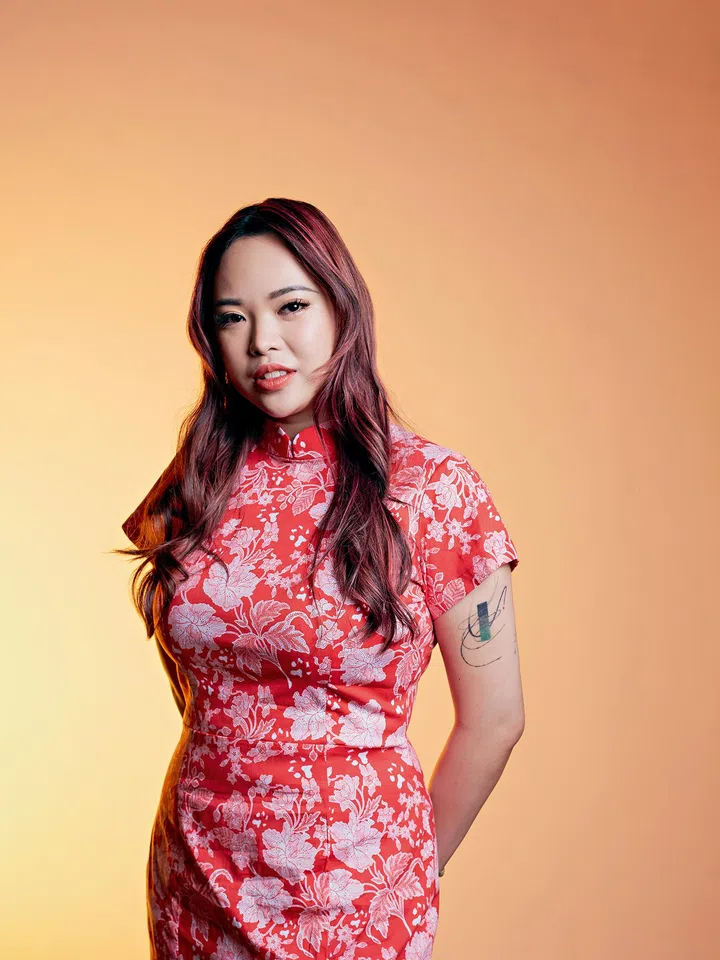
At just 28, Valery Tan wants to change how Singapore talks about menopause
When the Surety co-founder entered the menopause space in her 20s, the assumptions came quickly. What followed was a harder task: earning trust across generations through listening rather than lived experience.
By Lyn Chan /

Share this article
When the Surety co-founder, Valery Tan, entered the menopause space in her 20s, the assumptions came quickly. What followed was a complex challenge: earning trust across generations through listening rather than lived experience.
The assumption comes before the introduction. In your 20s, as you step into the menopause conversation, the question comes early and often: What makes you qualified?
Surety’s co-founder, Valery Tan, has heard it more times than she can count. “You’re too young.” “You won’t get it.” Early on, she responded by over-explaining: her intentions, her research, her story, her why.
After a while, she caught herself thinking, “What for?” Because even if you answer perfectly, some people will still decide who you are before you speak.
“I learned to keep my response human and light, not defensive,” the 28-year-old says. If someone questions her understanding, she’ll acknowledge plainly that her lived experience is different, then reframe what she is committing to: listening closely, building with the people living it, and creating a space that’s culturally relevant and safe.
Earning authority differently
But credibility, she realised, was never the real starting point. It was something more personal and unresolved: How do I create a space where midlife conversations can exist without shame, confusion, or isolation, and where people actually know what to do next?
She was an only child, in university, exploring entrepreneurship, when she suddenly noticed her mother’s changes affecting her mood, their relationship, and the texture of daily life at home.
Tan had no words for what was happening. “I remember feeling lost, mentally drained, and honestly scared,” she says. “Not just for her, but because I realised how unprepared families can be when this happens.”
That sense of disorientation pushed her to start looking outward. In her attempt to understand what was happening with her mother, Tan found that most resources were Western and didn’t always reflect how Asian families speak, cope, or stay silent. “That disconnect made me want to build something culturally relevant,” she says. “Not in a theoretical way, but in a practical, day-to-day way that women here could actually relate to.”
That gap would become the foundation of Surety. But getting there required something that frameworks and strategy decks couldn’t provide.
Frameworks help you organise decisions, Tan learned. Listening tells you what is truly needed. As she began speaking with women, she noticed something unexpected. Many weren’t asking for a solution first. They were asking for language and a safe space to understand not only themselves but others as well.
“They wanted someone to take them seriously, not dismiss symptoms as ‘just stress’ or ‘just ageing’,” Tan says.
As Surety started building community spaces like Pause & Sip, Tan watched how quickly “I thought I was the only one” turned into “I finally feel normal” when women were given psychological safety, not just information. “That kind of insight can’t be downloaded,” she says. “You earn it by showing up, holding space, and letting people lead you to what matters.”
In time, that listening recalibrated her understanding of credibility itself. “I’ve learned credibility isn’t a single thing,” she says. “It’s a combination of how well you listen, how responsibly you translate what you hear, and whether you build with people instead of speaking over them.”
Instead of debating perceptions, she lets the work speak for itself. Surety ran Singapore’s first Menopause Festival in November 2024 and has kept showing up through recurring community spaces.
She also relies on the ecosystem around her: clinicians, partners, and the community. “Surety was never meant to be ‘me as the expert’,” she says. “It’s meant to connect people to credible support and real conversations.”
Health conversations, closer to home
Before Surety, Tan treated health conversations as an information exchange. She had completed a Diploma in Pharmaceutical Sciences and worked full-time as a pharmacy technician, where most conversations stayed in a practical lane: what medicine to take, what side effects to watch for, when to follow up. Helpful, but transactional.
Creating Surety stretched that way of thinking. Once she started hearing women talk about midlife changes, it became clear that what they needed wasn’t only information. “They needed someone to understand what the experience was doing to their confidence, their relationships, their work, and their sense of self,” she says.
At home, it changed her the most. She interprets mood shifts and tension differently now. Instead of thinking, “Someone is being difficult”, she reads it as a signal: something feels off, and support or understanding is needed.
“That shift from reacting to responding made these conversations feel much closer to home in the most human way,” she says, “especially because Surety was inspired by candid conversations about my mother’s perimenopause in the first place.”
Now, when these conversations happen, she doesn’t lead with solutions. She leads with presence. “I’m more likely to ask, ‘What part of today feels the hardest?’ or ‘What kind of support would actually help right now?’” she says. “And that’s not just how I work, it’s how I try to be as a daughter, and as someone building a platform that’s meant to make people feel less alone.”
Widening the circle
That shift in mindset also revealed a larger cultural pattern. The unspoken rule that feels hardest to shift, Tan says, is the belief that “good women endure quietly”. In Singapore, a significant portion of women say stigma prevents them from openly discussing symptoms and seeking support at work. These silences persist because of conservatism, productivity culture, and the fear of being judged as “too emotional”, “too old”, or “less capable”.
Surety is now expanding its midlife management to include a broader range. The people around women are often men: partners, brothers, colleagues, managers. When those men don’t know what’s happening, they may react with impatience or silence, making the experience heavier for everyone. “That’s why the work naturally expanded from ‘support women’ to ‘build a shared language across genders’,” she says.
Menopause remains the core anchor, but they widen the circle, so support actually holds in real life. “It’s not ‘women talking about women problems,’” she says. “It’s building a community and a culture where everyone around her understands enough to respond with dignity.”
Years from now, all the uncertainty and effort would be worthwhile, she says, “if a woman can say ‘I think I’m in perimenopause’ without shame, and her family and workplace respond with calm, not confusion. And if managers know how to support without judgement, and women stop leaving roles they worked hard to earn because they felt alone or misunderstood.”