%22%3E%0A%3Cpath%20d%3D%22M412%20101.2H393.7C393.1%20101.2%20392.3%20100.9%20391.8%20100.5C377.3%2087.6004%20362.9%2074.6004%20348.4%2061.6004C344.8%2058.4004%20341.3%2055.2004%20337.7%2052.0004C337.1%2051.5004%20336.2%2051.1004%20335.5%2051.0004C334.2%2050.8004%20333%2051.0004%20331.5%2051.0004V101.1H316.7V0.100391H331.4V44.3004C331.9%2044.3004%20332.2%2044.4004%20332.5%2044.4004C334.9%2044.4004%20337.2%2044.5004%20339.6%2044.4004C340.4%2044.4004%20341.3%2044.0004%20341.8%2043.5004C351.6%2034.4004%20361.4%2025.2004%20371.1%2016.0004C376.5%2010.9004%20381.9%205.90039%20387.3%200.800391C387.9%200.200391%20388.5%200.000390626%20389.3%200.000390626H400.9C384.2%2015.8004%20367.8%2031.3004%20351.2%2047.0004C371.5%2065.0004%20391.8%2082.9004%20412.1%20100.9C412.1%20101%20412.1%20101.1%20412%20101.2ZM180.9%20101.2C184.1%2094.9004%20187.2%2088.9004%20190.3%2082.8004C198.3%2067.3004%20206.2%2051.8004%20214.2%2036.2004C220.3%2024.4004%20226.4%2012.5004%20232.4%200.700391C232.7%200.100391%20233%20-0.0996094%20233.7%20-0.0996094H248.1C248.8%20-0.0996094%20249.2%200.100391%20249.6%200.800391C256%2013.3004%20262.4%2025.7004%20268.8%2038.2004C279.3%2058.6004%20289.8%2079.0004%20300.3%2099.5004C300.5%20100%20300.8%20100.4%20301.1%20101.1C300.5%20101.1%20300.1%20101.2%20299.7%20101.2H286.5C285.6%20101.2%20285.1%20100.9%20284.7%20100.2C280.1%2091.3004%20275.4%2082.4004%20270.8%2073.4004C270.1%2072.1004%20269.3%2071.6004%20267.8%2071.6004H209.9C208.7%2071.6004%20208.1%2072.0004%20207.5%2073.1004C202.9%2082.1004%20198.2%2091.0004%20193.6%20100C193.1%20101%20192.6%20101.3%20191.5%20101.3C188.4%20101.2%20185.3%20101.3%20182.3%20101.3C182%20101.2%20181.6%20101.2%20180.9%20101.2ZM239.1%2011.4004C230%2029.2004%20221.1%2046.7004%20212.1%2064.3004H266.4C257.2%2046.7004%20248.2%2029.2004%20239.1%2011.4004ZM0%200.000390626H43.4C51.2%200.000390626%2058.7%201.20039%2065.7%204.80039C75.9%2010.0004%2078.9%2018.0004%2078.6%2027.4004C78.3%2034.3004%2076%2040.5004%2071.2%2045.5004C67.3%2049.6004%2062.4%2052.3004%2057.1%2054.3004C50.6%2056.7004%2043.9%2058.0004%2037.1%2058.6004C30.1%2059.2004%2023.1%2059.4004%2016.2%2059.7004C15.8%2059.7004%2015.3%2059.8004%2014.8%2059.8004V101.1H0.1C0%2067.4004%200%2033.8004%200%200.000390626ZM14.8%207.10039V52.2004C23.7%2052.4004%2032.6%2052.3004%2041.2%2050.1004C44.4%2049.3004%2047.6%2048.2004%2050.6%2046.7004C58.4%2043.0004%2062.3%2036.7004%2062.7%2028.0004C63%2019.9004%2059.5%2014.1004%2052.4%2010.5004C47.6%208.00039%2042.5%207.10039%2037.2%207.10039H14.8ZM95.9%20101.1V0.100391H167.3V7.20039H110.7V44.7004H158.1V51.9004H110.8V93.9004H171.1V101C146.1%20101.1%20121%20101.1%2095.9%20101.1Z%22%20fill%3D%22black%22%2F%3E%0A%3Cpath%20d%3D%22M35.0004%2025.7996H42.5004V20.6996H44.8004V33.1996H42.6004V27.5996H34.9004V33.2996H32.7004V20.7996H35.0004V25.7996ZM54.4004%2025.8996V27.2996H48.9004V31.6996H55.9004C55.9004%2032.1996%2056.0004%2032.5996%2056.0004%2033.0996H46.5004V20.5996H55.5004V21.8996H49.0004V25.7996C50.7004%2025.8996%2052.5004%2025.8996%2054.4004%2025.8996ZM25.9004%2033.0996H23.5004V21.9996H17.9004V20.6996H31.6004V22.0996H27.1004C26.2004%2022.0996%2025.9004%2022.2996%2025.9004%2023.1996C26.0004%2026.0996%2025.9004%2028.9996%2025.9004%2031.7996V33.0996Z%22%20fill%3D%22black%22%2F%3E%0A%3C%2Fg%3E%0A%3Cdefs%3E%0A%3CclipPath%20id%3D%22clip0_388_462%22%3E%0A%3Crect%20width%3D%22411%22%20height%3D%22101.2%22%20fill%3D%22white%22%2F%3E%0A%3C%2FclipPath%3E%0A%3C%2Fdefs%3E%0A%3C%2Fsvg%3E%0A)
Why the co-founder of House of ANON keeps a bad design, an old report book, and a watch he no longer wears
Leonard Lee has spent much of his career designing things meant to last. The objects he keeps reveal something more complicated.
By Zat Astha /

Share this article
Private Collection looks beyond status and acquisition to the objects leaders have carried through different chapters of their lives — possessions shaped by memory, family, ambition, loss, and change, and the stories they reveal about the people who keep them.
Leonard Lee keeps things. He keeps the stone candle holder from his first hotel design, a Panerai watch, sketches of failed projects, his drafting pens, a leadership book, and a primary-school report book his father returned to him. “I generally take very good care of my things,” says the founder & creative director of O37 and co-founder of Singapore fashion label, House of ANON. “If you buy something, you should take care of it.”
But the things Lee has kept are interesting for reasons beyond their cost. They reveal how an object’s meaning changes as its owner does.
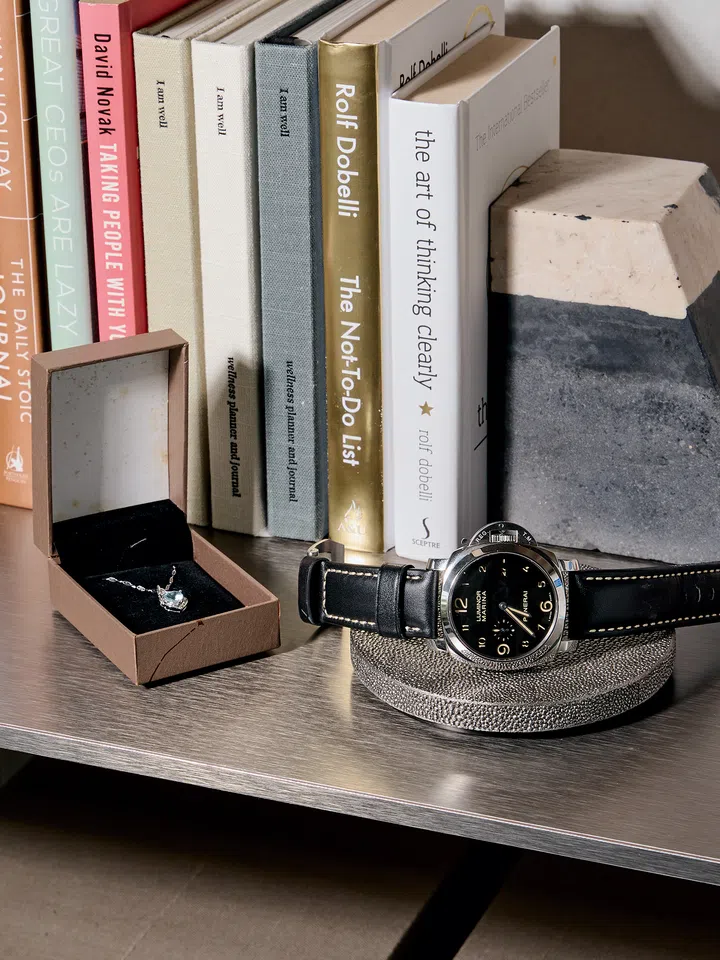
The Panerai, bought in 2010, is a clear example. Lee grew up in a family where “everything was very performance-based”, and effort wasn’t rewarded — results were. With siblings who were academically stronger, Lee internalised his role: “I was like the black sheep of the family, so to speak.” By his 30s, however, his interior design career was taking off.
“I guess when I got this job, I had something to prove,” he says. “So to me, this was, in a way, proving to myself that I actually sort of can make it.”
He bought the watch, but when the pandemic arrived, his mindset shifted. “For those few years you don’t need to wear anything,” he says. “Then when time came for us to go back out, then I found myself, ‘Hey, actually, I don’t need it.’”
Permission to fail
The same instinct applies to his primary-school report book. Lee’s father kept his records — “from secondary school, everything” — and returned them when Lee was in his twenties. Looking back, Lee remembers himself as a child always falling short.
“In fact, in secondary school, my mom had to quit her job to make sure I passed my O-Levels.” Even then, passing grades weren’t enough. “Even if I got, say, 90-something out of 100, it wasn’t good enough.”

Today, that book means the exact opposite of what it once did. “That’s why I wanted to keep this, because it’s a reminder for me that it’s really not about the results. It’s really the effort.” Now a father, he questions the intense engineering of modern childhoods. “We have a lot of friends whose kids at an early age are doing so much,” he says. “I feel like it takes the fun out of learning.”
Lee’s own education happened on the job, shaped heavily by a former managing director. One surviving 2007 sketch for a project called Tiara explains why. It showed a dramatic, two-storey faceted wall — ambitious, but expensive and technically flawed. His mentor let him present it anyway. “The client liked the idea,” Lee laughs. “And it got built.”
When the flaws eventually surfaced during construction, straining budgets and contractors, his mentor explained the lesson. “He told me that he allows me to make mistakes because that’s the only way I can learn,” Lee recalls. “Back then, it didn’t quite sink in. But later on, when I think about it, it makes a lot of sense.”
The long view
Failure takes quieter forms in his collection, too. Lee still sketches with unremarkable Pentel pens to control line thickness, preferring paper over digital drafting. “Till today, I still believe in sketching because you’re less precious about things,” he says. “If you sketch something and you don’t like it, you just crush it and throw it away.”
Digital work creates the opposite effect. “On a computer, yes, you can delete it for sure, but I find people more rigid, more precious about what they’ve already done.”
Sometimes, letting go of ego and definitions of success is easier than letting go of people. A necklace passed down from his mother holds complex memories. “I wouldn’t say I’m very close with my mother — but closer than my father, for sure,” he offers. “It was always a love-hate relationship. Sometimes I saw them a lot. Then I pulled away.”
Only after she passed did he take full account of her quiet interventions on his behalf. At her funeral, he broke down. “She did so much for me, including leaving a high-flying career in finance.” His ultimate takeaway is one of gratitude and grief: “I never got to actually thank her myself. So in that way, you know, that’s my regret.”
His young son noticed his tears and asked why. “I try to explain to him, but I think he doesn’t quite grasp the explanation yet,” Lee says. “This is definitely a conversation I plan to revisit with him when he is older. I just want him to understand what my journey was, and then it’s up to him to make his own choices.”
Even objects tied to his greatest achievements carry the memory of uncertainty. Early in his career, he designed a custom candle holder for the Conrad Bangkok. “A lot of people say it wouldn’t work,” he remembers. He grew accustomed to that resistance.
“People tend to be resistant to something new because they’ve not seen it before, or no one has ever tried it,” he says. “Then they are not willing to take the risk, right? Until someone does it, then they say, ‘Oh yeah, it can work.’”
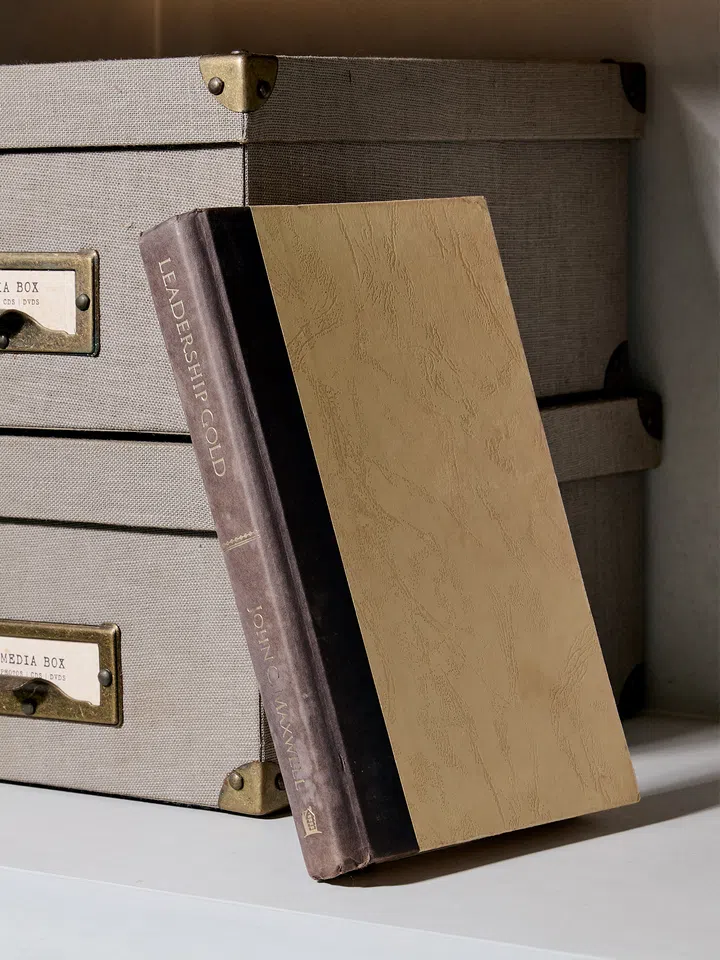
That philosophy of quiet, enduring resilience is captured in an old copy of John C. Maxwell’s The 21 Irrefutable Laws of Leadership. Initially, Lee didn’t think he needed it. “I always believed in my own capabilities, and I never thought that I needed to read a book to help me grow that way.”
Now, he returns to it constantly. “Depending on the season that you’re in, when you reread a book again, different things jump out at you.”
The same applies to his collection. The objects haven’t changed, but Leonard Lee certainly has.
THE OBJECTS
Conrad Bangkok candle holder
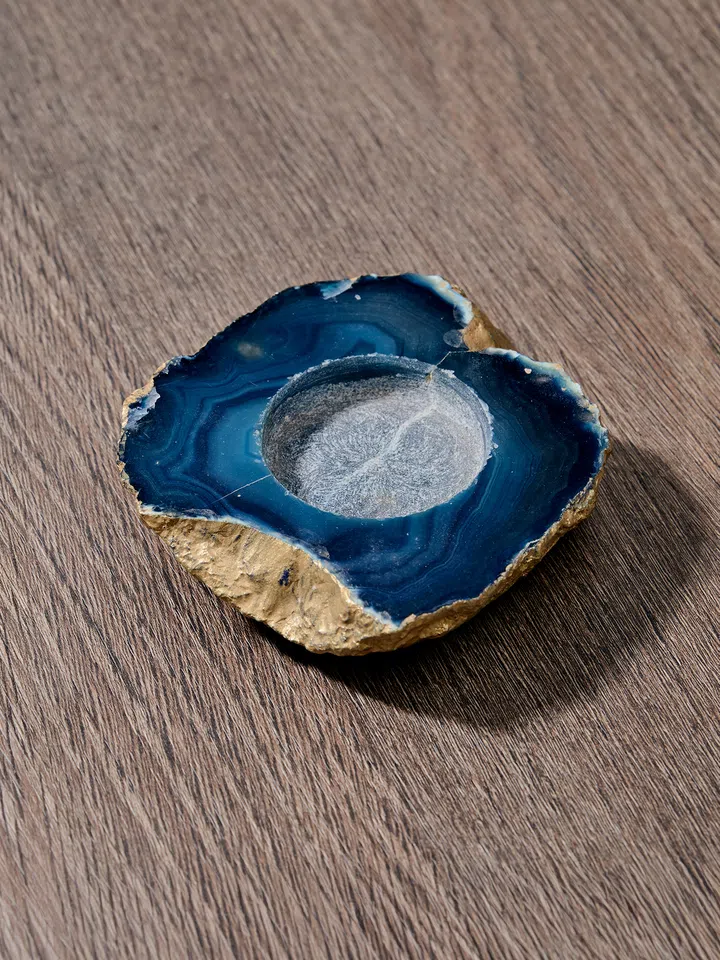
Made from stone with a metal insert and gold-leaf detailing, the candle holder came from Conrad Bangkok, Lee’s first hotel project. He kept one of the mock-ups despite technically not being allowed to take it — “smuggled it,” he jokes. The object represents an early willingness to pursue unfamiliar ideas at a time when “a lot of people said it wouldn’t work”.
Conrad Bangkok remains the project he is most proud of, partly because the design endured for more than a decade before refurbishment. “It proves that the design was relevant and quite timeless.”
Panerai watch
Lee bought the watch in 2010 as his first significant personal purchase. At the time, it represented something larger than taste. Growing up, he says, “Everything was very performance-based. You don’t reward the effort. You reward the results”, and with academically stronger siblings, he saw himself as “the black sheep of the family, so to speak”. Buying the Panerai became its own declaration.
Report book
Lee’s father kept his school records and passed them back to him in his twenties. Tucked inside this primary-school report book was also a photograph of a young Lee, which prompted another memory: his parents’ insistence on dressing well. “My mom always dressed us up,” he says. “If anything, I learned the importance of dressing up from them.”
Christmas and special occasions meant the family dressed accordingly: “My dad will always be in a suit. My mom, in her best dress.” The report book itself carries a more complicated legacy. Lee remembers an education shaped by comparison and expectation, and now keeps it “as a reminder for me that it’s really not about the results. It’s really the effort.”
Sketch of Tiara United Towers
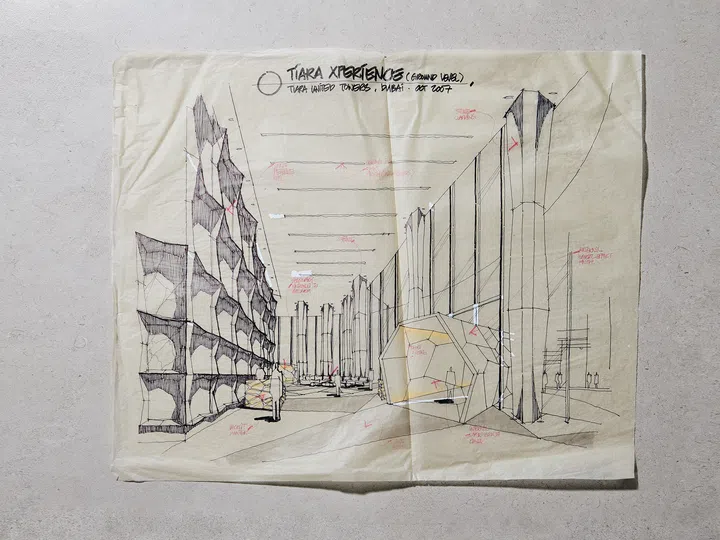
Drawn in 2007, the sketch depicts an ambitious faceted wall inspired by a crown, but the design proved expensive, heavy, and difficult to construct. Lee’s mentor suspected the idea would fail but allowed him to present it anyway because, Lee says, “he allows me to make mistakes because that’s the only way I can learn”. The client unexpectedly liked the proposal, and the wall got built, magnifying the problems.
Necklace
Passed from Lee’s maternal great-grandmother to his mother and eventually to Lee and his wife, Rachel, the necklace acquired greater emotional weight after his mother died. Their relationship had not always been straightforward. “It was always a love-hate relationship,” he says.
Pentel pens
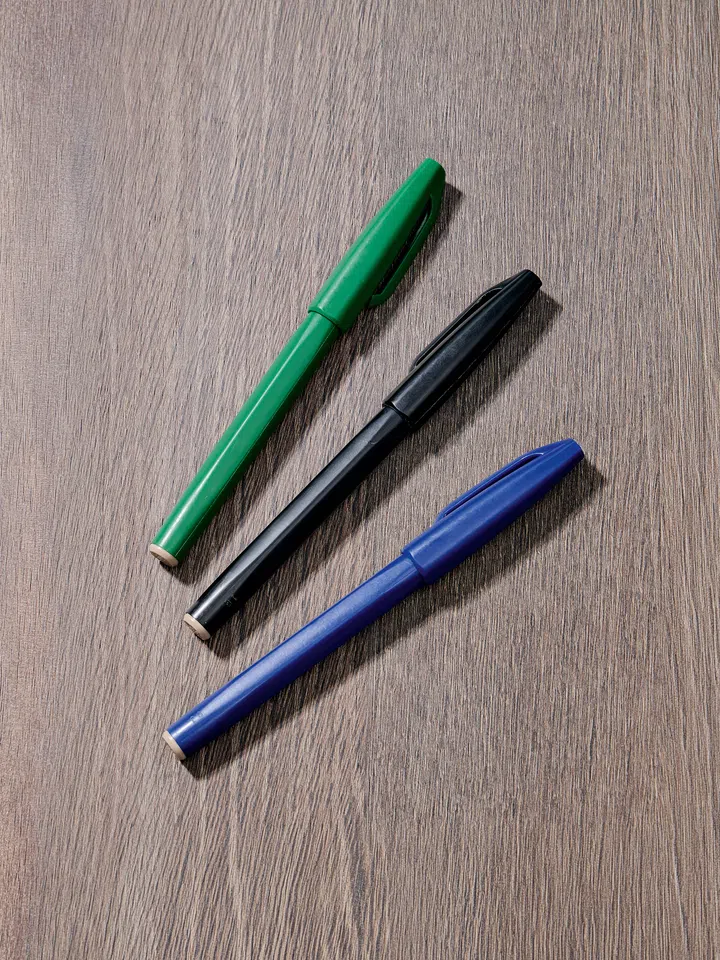
Lee continues to sketch by hand for both interior and fashion design, using these Pentel pens because they give him control over line thickness. More importantly, paper lets him let go of ideas more easily. “Till today, I still believe in sketching because you’re less precious about things.”
John C. Maxwell book
Lee repeatedly returns to John C. Maxwell’s The 21 Irrefutable Laws of Leadership, a book Rachel first introduced him to. Re-reading has since become part of the appeal. “Depending on the season that you’re in,” he says, “when you re-read a book again, different things jump out at you.”
Photography: Angela Guo
Art direction: Ashruddin Sani
Grooming: Angel Gwee
Clothes: Leonard’s own