%22%3E%0A%3Cpath%20d%3D%22M412%20101.2H393.7C393.1%20101.2%20392.3%20100.9%20391.8%20100.5C377.3%2087.6004%20362.9%2074.6004%20348.4%2061.6004C344.8%2058.4004%20341.3%2055.2004%20337.7%2052.0004C337.1%2051.5004%20336.2%2051.1004%20335.5%2051.0004C334.2%2050.8004%20333%2051.0004%20331.5%2051.0004V101.1H316.7V0.100391H331.4V44.3004C331.9%2044.3004%20332.2%2044.4004%20332.5%2044.4004C334.9%2044.4004%20337.2%2044.5004%20339.6%2044.4004C340.4%2044.4004%20341.3%2044.0004%20341.8%2043.5004C351.6%2034.4004%20361.4%2025.2004%20371.1%2016.0004C376.5%2010.9004%20381.9%205.90039%20387.3%200.800391C387.9%200.200391%20388.5%200.000390626%20389.3%200.000390626H400.9C384.2%2015.8004%20367.8%2031.3004%20351.2%2047.0004C371.5%2065.0004%20391.8%2082.9004%20412.1%20100.9C412.1%20101%20412.1%20101.1%20412%20101.2ZM180.9%20101.2C184.1%2094.9004%20187.2%2088.9004%20190.3%2082.8004C198.3%2067.3004%20206.2%2051.8004%20214.2%2036.2004C220.3%2024.4004%20226.4%2012.5004%20232.4%200.700391C232.7%200.100391%20233%20-0.0996094%20233.7%20-0.0996094H248.1C248.8%20-0.0996094%20249.2%200.100391%20249.6%200.800391C256%2013.3004%20262.4%2025.7004%20268.8%2038.2004C279.3%2058.6004%20289.8%2079.0004%20300.3%2099.5004C300.5%20100%20300.8%20100.4%20301.1%20101.1C300.5%20101.1%20300.1%20101.2%20299.7%20101.2H286.5C285.6%20101.2%20285.1%20100.9%20284.7%20100.2C280.1%2091.3004%20275.4%2082.4004%20270.8%2073.4004C270.1%2072.1004%20269.3%2071.6004%20267.8%2071.6004H209.9C208.7%2071.6004%20208.1%2072.0004%20207.5%2073.1004C202.9%2082.1004%20198.2%2091.0004%20193.6%20100C193.1%20101%20192.6%20101.3%20191.5%20101.3C188.4%20101.2%20185.3%20101.3%20182.3%20101.3C182%20101.2%20181.6%20101.2%20180.9%20101.2ZM239.1%2011.4004C230%2029.2004%20221.1%2046.7004%20212.1%2064.3004H266.4C257.2%2046.7004%20248.2%2029.2004%20239.1%2011.4004ZM0%200.000390626H43.4C51.2%200.000390626%2058.7%201.20039%2065.7%204.80039C75.9%2010.0004%2078.9%2018.0004%2078.6%2027.4004C78.3%2034.3004%2076%2040.5004%2071.2%2045.5004C67.3%2049.6004%2062.4%2052.3004%2057.1%2054.3004C50.6%2056.7004%2043.9%2058.0004%2037.1%2058.6004C30.1%2059.2004%2023.1%2059.4004%2016.2%2059.7004C15.8%2059.7004%2015.3%2059.8004%2014.8%2059.8004V101.1H0.1C0%2067.4004%200%2033.8004%200%200.000390626ZM14.8%207.10039V52.2004C23.7%2052.4004%2032.6%2052.3004%2041.2%2050.1004C44.4%2049.3004%2047.6%2048.2004%2050.6%2046.7004C58.4%2043.0004%2062.3%2036.7004%2062.7%2028.0004C63%2019.9004%2059.5%2014.1004%2052.4%2010.5004C47.6%208.00039%2042.5%207.10039%2037.2%207.10039H14.8ZM95.9%20101.1V0.100391H167.3V7.20039H110.7V44.7004H158.1V51.9004H110.8V93.9004H171.1V101C146.1%20101.1%20121%20101.1%2095.9%20101.1Z%22%20fill%3D%22black%22%2F%3E%0A%3Cpath%20d%3D%22M35.0004%2025.7996H42.5004V20.6996H44.8004V33.1996H42.6004V27.5996H34.9004V33.2996H32.7004V20.7996H35.0004V25.7996ZM54.4004%2025.8996V27.2996H48.9004V31.6996H55.9004C55.9004%2032.1996%2056.0004%2032.5996%2056.0004%2033.0996H46.5004V20.5996H55.5004V21.8996H49.0004V25.7996C50.7004%2025.8996%2052.5004%2025.8996%2054.4004%2025.8996ZM25.9004%2033.0996H23.5004V21.9996H17.9004V20.6996H31.6004V22.0996H27.1004C26.2004%2022.0996%2025.9004%2022.2996%2025.9004%2023.1996C26.0004%2026.0996%2025.9004%2028.9996%2025.9004%2031.7996V33.0996Z%22%20fill%3D%22black%22%2F%3E%0A%3C%2Fg%3E%0A%3Cdefs%3E%0A%3CclipPath%20id%3D%22clip0_388_462%22%3E%0A%3Crect%20width%3D%22411%22%20height%3D%22101.2%22%20fill%3D%22white%22%2F%3E%0A%3C%2FclipPath%3E%0A%3C%2Fdefs%3E%0A%3C%2Fsvg%3E%0A)
Tiffany & Co. reclaims its place in watchmaking — and its unique proposition is hard to beat
The jeweller’s latest launches reveal a clearer strategy: reconnecting its Swiss watchmaking roots, jewellery expertise, and design icons into a distinct horological identity.
By Yanni Tan /
Share this article
For much of its modern history, Tiffany & Co. has been better known for the jewels that emerged from its famous Fifth Avenue flagship than for the watches that bore its name. Yet, watchmaking has long been woven into the American house’s story.
Tiffany sold timepieces as early as the 1840s, established a watchmaking manufacture in Geneva in 1874, and produced everything from chronographs to calendar watches during the late 19th century.
In recent years, however, Tiffany’s watch division has undergone a notable transformation. Backed by renewed investment and focus following the jeweller’s acquisition by LVMH, the brand has been steadily rebuilding its horological identity.
Rather than attempting to compete directly with established Swiss watch specialists on technical prowess alone, Tiffany has increasingly drawn upon the assets that make it unique: its watchmaking heritage, its mastery of gemstones, and an archive of designs that have shaped the house for generations.
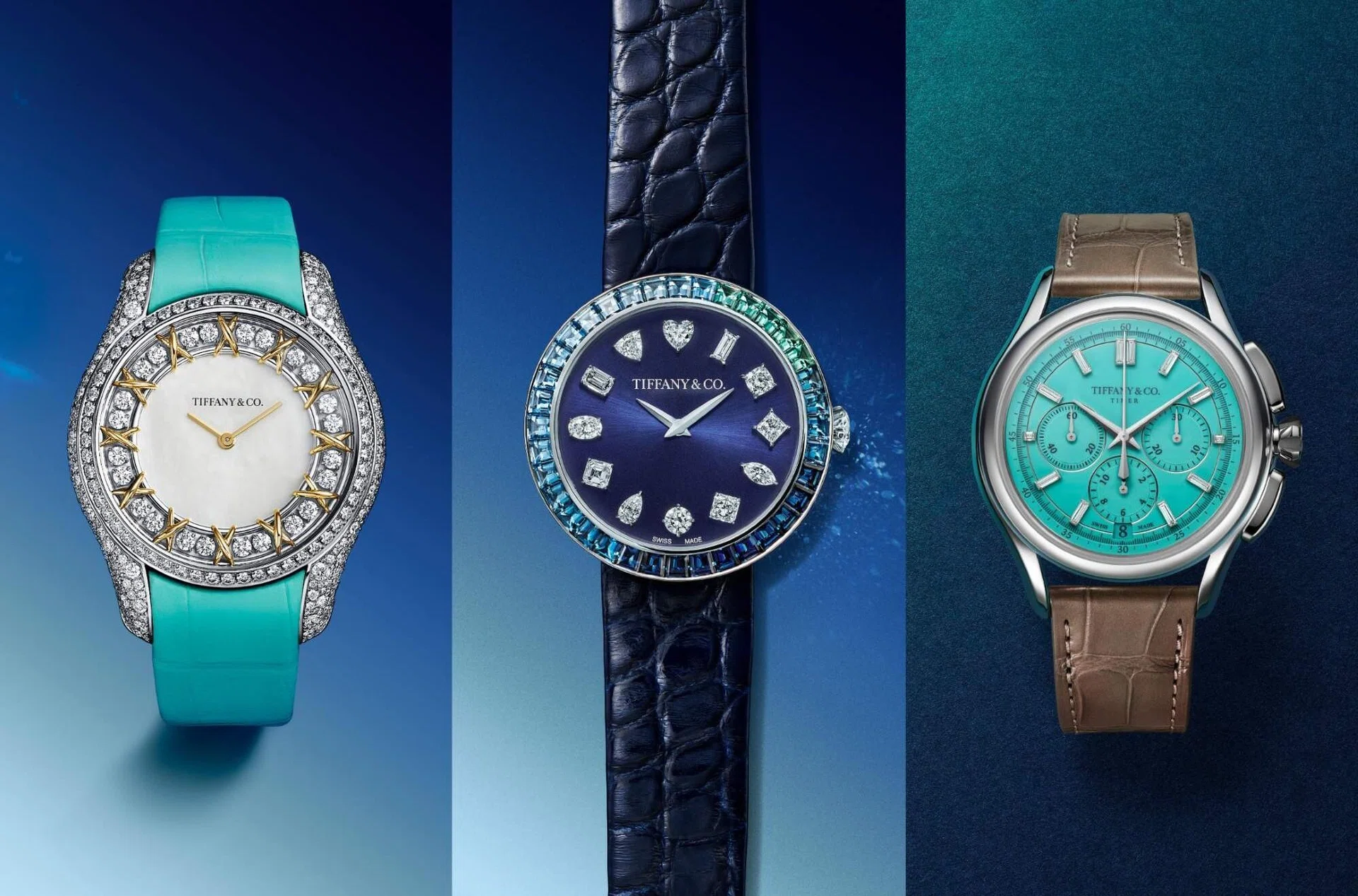
The latest launches offer perhaps the clearest expression yet of that strategy. From a chronograph that revives Tiffany’s earliest timing instruments to gem-set creations inspired by its jewellery codes and the enduring legacy of Jean Schlumberger, each watch reinforces a different pillar of modern Tiffany watchmaking.
Return of Tiffany & Co., the watchmaker
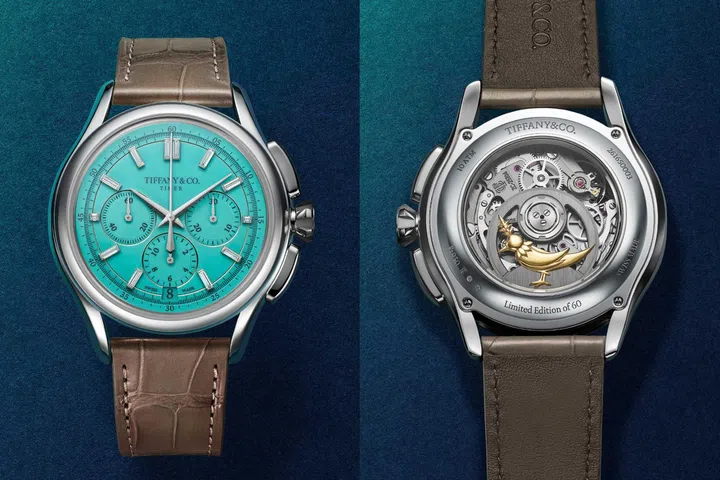
Among the new releases, the Tiffany Timer is arguably the most significant. While its Tiffany Blue dial and diamond-set details immediately signal the house’s jewellery credentials, the watch’s real purpose is to remind collectors that Tiffany’s watchmaking story extends far beyond decorative dress watches.
The 60-piece limited edition marks the 160th anniversary of the Tiffany & Co. Timing Watch, introduced in 1866 as a pocket watch designed for scientific, engineering, and sporting applications. Renamed the Tiffany Timer two years later when the house launched its Swiss watch assembly workshop, it is widely regarded as Tiffany’s first stopwatch and an important milestone in the brand’s horological development.
That journey accelerated in 1874 with the establishment of a Geneva manufactory, where Tiffany produced increasingly sophisticated timepieces and secured patents on movement construction and hand-setting systems. The new Timer draws directly from that heritage, translating it into a contemporary 40mm platinum chronograph.
Its lacquered Tiffany Blue dial is paired with 12 baguette-cut diamond hour markers, while the faceted crown references the iconic Tiffany Setting engagement ring. The dial itself requires approximately 50 hours of painstaking varnishing and lacquering to achieve its depth and lustre.
Powering the watch is a customised version of Zenith’s legendary El Primero 400 movement. Introduced in 1969, the El Primero remains one of the most celebrated automatic chronograph calibres ever produced, making it an appropriate choice for a watch intended to underscore Tiffany’s horological credibility.
Yet, the house’s jewellery DNA is never far away. Visible through the sapphire caseback is a hand-sculpted yellow-gold Bird on a Rock mounted on the rotor, transforming a purely mechanical component into a miniature work of art.
When jewellery becomes the design language
If the Tiffany Timer speaks to the house’s watchmaking heritage, the new Eternity Baguette models demonstrate how effectively Tiffany can translate its jewellery expertise into watch design.
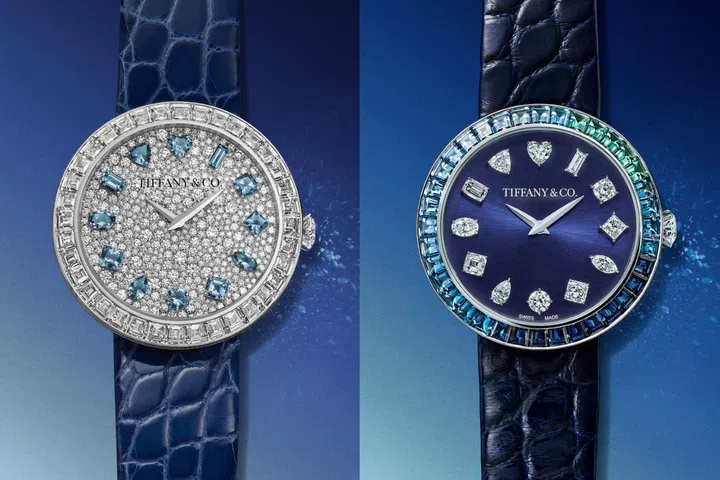
The collection takes inspiration from 1960s Tiffany advertisements that showcased engagement rings in a variety of diamond cuts. Rather than using gemstones simply as decoration, the watches place those cuts at the centre of the design.
Each hour marker represents a different shape, including round brilliant, baguette, cushion, Tiffany True, marquise, Asscher, heart, pear, oval, emerald, triangle, and princess cuts.
It is a distinctly Tiffany approach. Few jewellers possess the authority to turn gemstone cuts themselves into a visual language, yet the concept feels entirely natural for a house whose reputation was built upon diamonds.
The bezel continues the theme with an uninterrupted ring of baguette-cut stones that subtly references the eternity ring. Two versions are offered.
The Eternity Baguette Diamond features a bezel set with 36 baguette-cut diamonds framing a snow-set diamond dial accented by aquamarine hour markers. The Eternity Baguette Blue Gradient adopts a more colourful approach, combining sapphires, topazes, and emeralds to create a seamless transition of blue tones around a navy-blue dial.
Both 36mm watches are housed in snow-set white gold cases, with their surfaces almost entirely covered in diamonds to create a continuous play of light. They are finished with a solitaire diamond crown inspired by the six-prong Tiffany Setting and powered by Swiss self-winding movements, making them the first non-limited Eternity models to feature an automatic calibre.
Building watch icons from jewellery legends
The third pillar of Tiffany’s strategy lies in its ability to transform jewellery icons into timeless watch collections.
Jean Schlumberger remains one of the most important creative figures in Tiffany’s history. Since joining the house in 1956, his fantastical designs have become some of its most recognisable creations, from Bird on a Rock to the Sixteen Stone collection. Naturally, the house is looking to this rich archive as a source of inspiration for its watches.
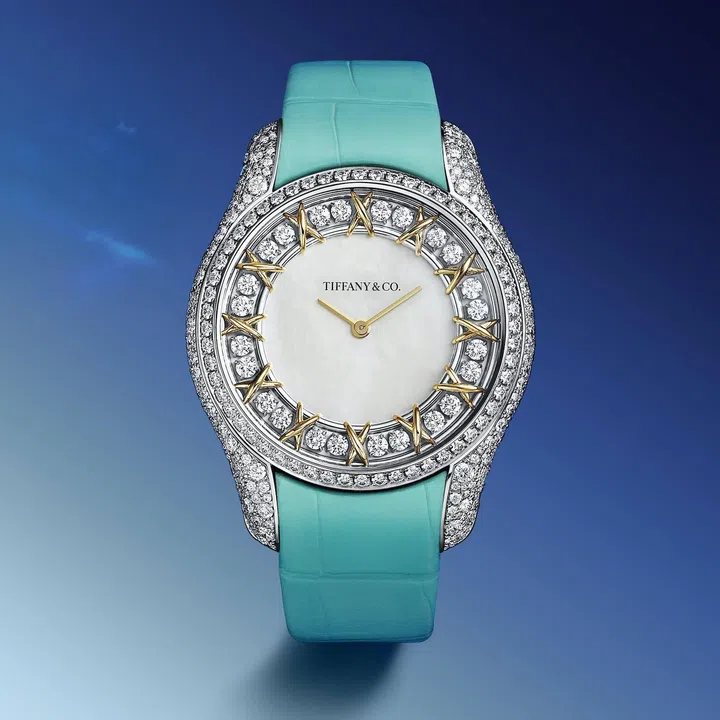
The new Sixteen Stone Mother-of-Pearl watch continues that approach. First introduced as a jewellery collection in 1959, Sixteen Stone drew inspiration from Schlumberger’s family background in the textile industry. The collection’s distinctive yellow-gold X motifs evoke cross-stitch embroidery, while the diamonds held between them symbolise strength, love, and enduring connection.
For the watch, those signatures are reimagined within a 36mm white gold case set with 433 diamonds totalling more than 3.88 carats. At its centre sits a mother-of-pearl dial, surrounded by a rotating outer ring decorated with Schlumberger’s characteristic cross-stitch motif and round brilliant diamonds.
The ring moves freely with the wearer’s motions, introducing a sense of animation and playfulness that recalls the dynamic nature of Schlumberger’s jewellery creations. The feature is paired with a snow-set diamond case, a diamond-set buckle, and an engraved caseback inspired by the designer’s Floral Arrows brooch.
Viewed individually, each of these watches tells a different story. Together, however, they reveal that Tiffany is no longer trying to define itself as simply a jeweller that happens to make watches.
Instead, it is building a watchmaking identity around three strengths few competitors can claim simultaneously: a genuine Swiss horological heritage, world-class expertise in gemstones, and a catalogue of design icons recognised far beyond the jewellery world.