%22%3E%0A%3Cpath%20d%3D%22M412%20101.2H393.7C393.1%20101.2%20392.3%20100.9%20391.8%20100.5C377.3%2087.6004%20362.9%2074.6004%20348.4%2061.6004C344.8%2058.4004%20341.3%2055.2004%20337.7%2052.0004C337.1%2051.5004%20336.2%2051.1004%20335.5%2051.0004C334.2%2050.8004%20333%2051.0004%20331.5%2051.0004V101.1H316.7V0.100391H331.4V44.3004C331.9%2044.3004%20332.2%2044.4004%20332.5%2044.4004C334.9%2044.4004%20337.2%2044.5004%20339.6%2044.4004C340.4%2044.4004%20341.3%2044.0004%20341.8%2043.5004C351.6%2034.4004%20361.4%2025.2004%20371.1%2016.0004C376.5%2010.9004%20381.9%205.90039%20387.3%200.800391C387.9%200.200391%20388.5%200.000390626%20389.3%200.000390626H400.9C384.2%2015.8004%20367.8%2031.3004%20351.2%2047.0004C371.5%2065.0004%20391.8%2082.9004%20412.1%20100.9C412.1%20101%20412.1%20101.1%20412%20101.2ZM180.9%20101.2C184.1%2094.9004%20187.2%2088.9004%20190.3%2082.8004C198.3%2067.3004%20206.2%2051.8004%20214.2%2036.2004C220.3%2024.4004%20226.4%2012.5004%20232.4%200.700391C232.7%200.100391%20233%20-0.0996094%20233.7%20-0.0996094H248.1C248.8%20-0.0996094%20249.2%200.100391%20249.6%200.800391C256%2013.3004%20262.4%2025.7004%20268.8%2038.2004C279.3%2058.6004%20289.8%2079.0004%20300.3%2099.5004C300.5%20100%20300.8%20100.4%20301.1%20101.1C300.5%20101.1%20300.1%20101.2%20299.7%20101.2H286.5C285.6%20101.2%20285.1%20100.9%20284.7%20100.2C280.1%2091.3004%20275.4%2082.4004%20270.8%2073.4004C270.1%2072.1004%20269.3%2071.6004%20267.8%2071.6004H209.9C208.7%2071.6004%20208.1%2072.0004%20207.5%2073.1004C202.9%2082.1004%20198.2%2091.0004%20193.6%20100C193.1%20101%20192.6%20101.3%20191.5%20101.3C188.4%20101.2%20185.3%20101.3%20182.3%20101.3C182%20101.2%20181.6%20101.2%20180.9%20101.2ZM239.1%2011.4004C230%2029.2004%20221.1%2046.7004%20212.1%2064.3004H266.4C257.2%2046.7004%20248.2%2029.2004%20239.1%2011.4004ZM0%200.000390626H43.4C51.2%200.000390626%2058.7%201.20039%2065.7%204.80039C75.9%2010.0004%2078.9%2018.0004%2078.6%2027.4004C78.3%2034.3004%2076%2040.5004%2071.2%2045.5004C67.3%2049.6004%2062.4%2052.3004%2057.1%2054.3004C50.6%2056.7004%2043.9%2058.0004%2037.1%2058.6004C30.1%2059.2004%2023.1%2059.4004%2016.2%2059.7004C15.8%2059.7004%2015.3%2059.8004%2014.8%2059.8004V101.1H0.1C0%2067.4004%200%2033.8004%200%200.000390626ZM14.8%207.10039V52.2004C23.7%2052.4004%2032.6%2052.3004%2041.2%2050.1004C44.4%2049.3004%2047.6%2048.2004%2050.6%2046.7004C58.4%2043.0004%2062.3%2036.7004%2062.7%2028.0004C63%2019.9004%2059.5%2014.1004%2052.4%2010.5004C47.6%208.00039%2042.5%207.10039%2037.2%207.10039H14.8ZM95.9%20101.1V0.100391H167.3V7.20039H110.7V44.7004H158.1V51.9004H110.8V93.9004H171.1V101C146.1%20101.1%20121%20101.1%2095.9%20101.1Z%22%20fill%3D%22black%22%2F%3E%0A%3Cpath%20d%3D%22M35.0004%2025.7996H42.5004V20.6996H44.8004V33.1996H42.6004V27.5996H34.9004V33.2996H32.7004V20.7996H35.0004V25.7996ZM54.4004%2025.8996V27.2996H48.9004V31.6996H55.9004C55.9004%2032.1996%2056.0004%2032.5996%2056.0004%2033.0996H46.5004V20.5996H55.5004V21.8996H49.0004V25.7996C50.7004%2025.8996%2052.5004%2025.8996%2054.4004%2025.8996ZM25.9004%2033.0996H23.5004V21.9996H17.9004V20.6996H31.6004V22.0996H27.1004C26.2004%2022.0996%2025.9004%2022.2996%2025.9004%2023.1996C26.0004%2026.0996%2025.9004%2028.9996%2025.9004%2031.7996V33.0996Z%22%20fill%3D%22black%22%2F%3E%0A%3C%2Fg%3E%0A%3Cdefs%3E%0A%3CclipPath%20id%3D%22clip0_388_462%22%3E%0A%3Crect%20width%3D%22411%22%20height%3D%22101.2%22%20fill%3D%22white%22%2F%3E%0A%3C%2FclipPath%3E%0A%3C%2Fdefs%3E%0A%3C%2Fsvg%3E%0A)
What I learnt at a Chopard L.U.C watchmaking masterclass
The experience of dismantling and reassembling a Chopard L.U.C training movement made us appreciate the maison’s celebrated L.U.C calibres and the profession of watchmaking so much more.
By Yanni Tan /
Share this article
For many watch enthusiasts, the true magic of mechanical watchmaking lies hidden beneath the dial. We admire movements through sapphire casebacks, discuss finishing techniques, and marvel at complications, but few of us ever get the opportunity to handle the tiny components that bring a watch to life.
That changed for me during a recent watchmaking masterclass hosted by Chopard, where I spent a morning dismantling and reassembling a Calibre 63.03-C training movement.
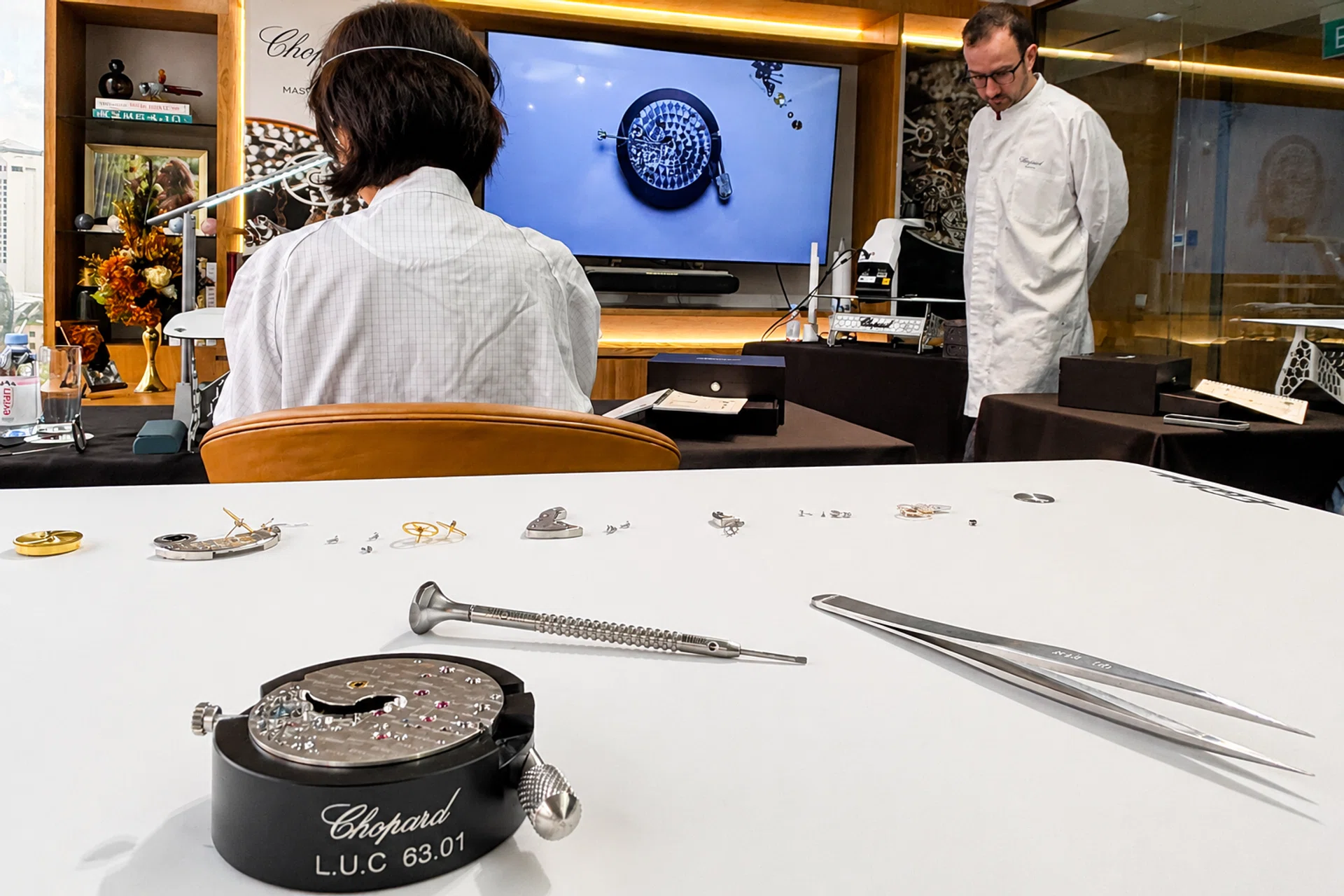
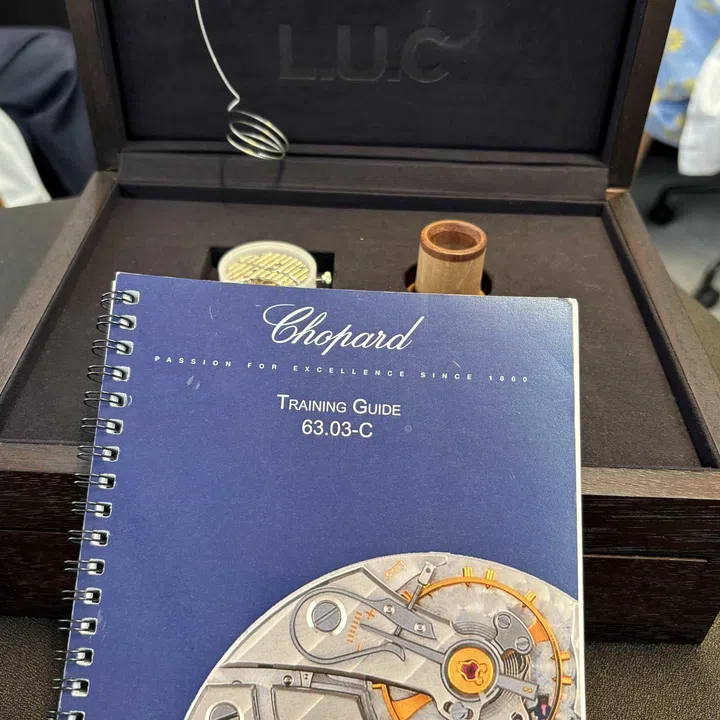
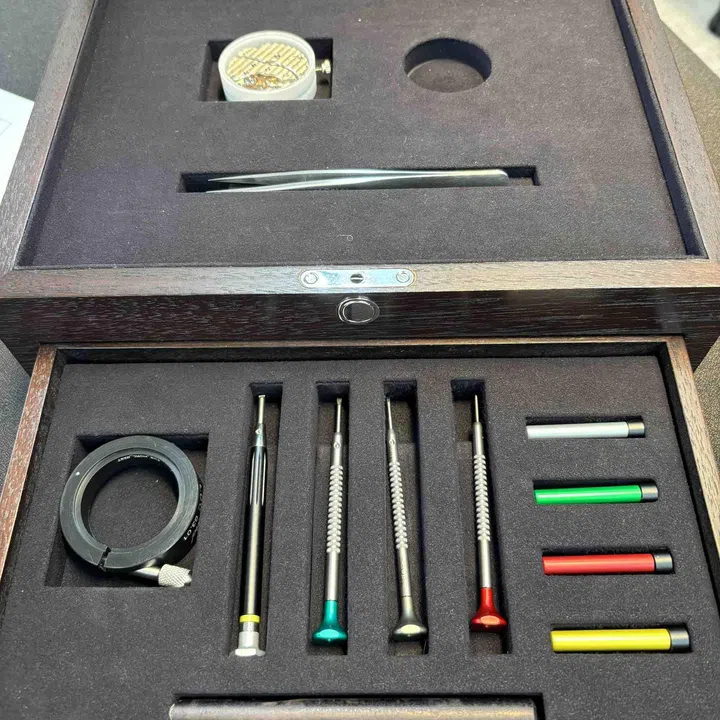
The setting was intimate. Just six participants sat at our individual workbenches, each equipped with a work stand, a complete set of tools, and an illustrated training guide. Leading the session were two instructors, who patiently demonstrated every step of the process on a projector screen and then circulated around the room, offering guidance and assistance whenever needed.
The anatomy of a L.U.C movement
The movement chosen for the class was no ordinary training calibre. The Calibre 63.03-C is fully decorated, despite being destined for repeated use by amateur hands. Although traces of previous students could be spotted in the form of minor marks on the movement, its finishing remained impressive.
This exercise also offered a rare glimpse into the philosophy behind Chopard’s L.U.C manufacture. Named after founder Louis-Ulysse Chopard, the L.U.C collection was launched in 1996 when Chopard established its manufacture in Fleurier under the vision and close personal involvement of co-president Karl-Friedrich Scheufele.
At a time when Swiss mechanical watchmaking was not just emerging from the shadow of the Quartz Crisis but orchestrating a dramatic renaissance, Chopard made the ambitious decision to develop its own in-house movements, beginning with the landmark L.U.C 96.01-L micro-rotor calibre.
Three decades later, L.U.C has evolved into one of contemporary watchmaking’s most respected collections. The manufacture now produces everything entirely in-house, from elegant ultra-thin dress watch movements to tourbillons, perpetual calendars, and minute repeaters.
Along the way, it has accumulated 22 patents and earned a reputation for combining technical innovation with traditional finishing. Many L.U.C movements carry COSC chronometer certification, while others bear the prestigious Poincon de Geneve, one of the industry’s highest standards of craftsmanship and decoration. All of this was impressive in theory. The masterclass would reveal what it means in practice.
The first lesson was surprisingly fundamental. Before we even touched the movement, we were taught how to properly hold a screwdriver and a pair of tweezers. It quickly became apparent that these were not tools to be gripped firmly but extensions of the fingertips, requiring control, delicacy, and patience.
Soon enough, we were removing components that measured mere millimetres in length and thickness. I was instructed to arrange every part in an orderly sequence directly in front of me. This organisation would later prove invaluable when the time came to put everything back together. Even so, there was a constant awareness that one careless movement could send a component flying, which happened to another participant.
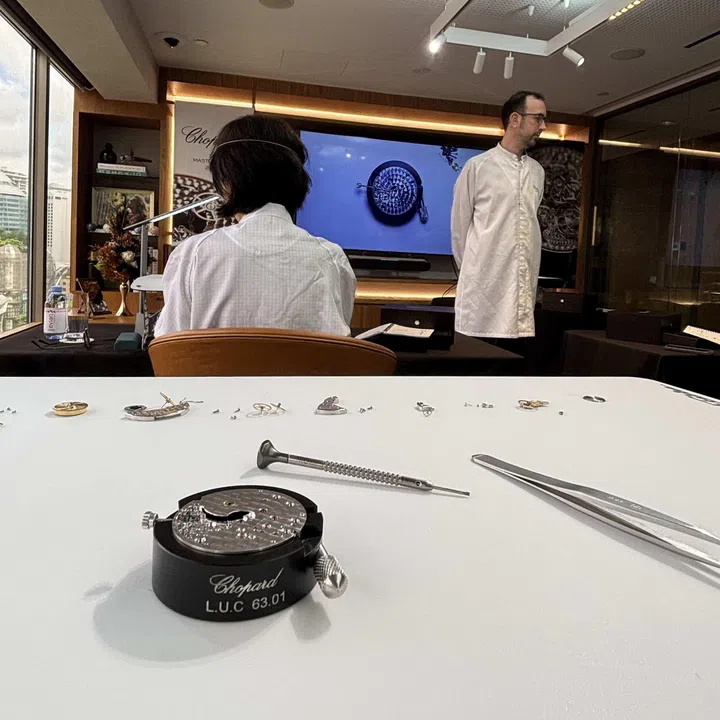
Wearing a watchmaker’s loupe with a wire headband, components that appeared microscopic became clear and manageable. Working through the magnification also revealed details I would never normally notice: the tiny pivots on which wheels rotate, the polished surfaces of screws, and the delicate interaction between the components.
The physical posture of watchmaking was another unexpected revelation. We worked at chin level with our arms raised, maintaining a remarkably straight-backed sitting position throughout. Yet while the posture was surprisingly disciplined, the constant downward tilt of the head soon made itself felt. By the end of the session, I had developed a newfound appreciation for the physical endurance required of professional watchmakers.
The moment that comes alive
As the movement gradually came apart, the process felt surprisingly manageable. Taking a movement apart, it turns out, is far easier than putting one back together.
Reassembly demanded an entirely different level of concentration. Wheels had to be carefully positioned beneath other wheels. Tiny pivots needed to sit perfectly within jewels that were barely visible to the naked eye. Screws, perhaps the most deceptively challenging components of all, required patience and steady hands.
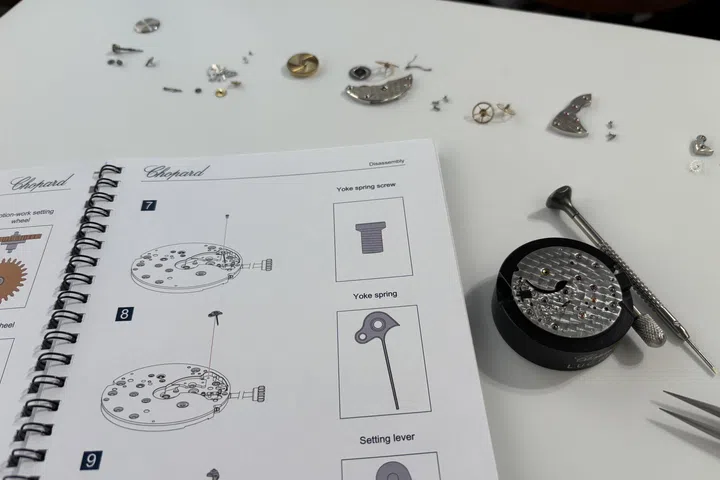
More than once, I found myself grateful for the white lab coat we had been given. Watchmakers wear them for good reason, as any dropped component is far easier to locate against a white surface than a dark one.
Then came the moment every participant was waiting for. After carefully securing the winding stem and replacing the final components, I gave the balance wheel a gentle flick. Instantly, the movement sprang to life. Wheels began turning. Energy flowed through the gear train. The mechanism that had existed moments earlier as dozens of disconnected parts was suddenly operating as a coherent whole once more.
Watching the calibre come alive was deeply satisfying, but it was also illuminating. Collectors often speak about finishing, power reserves, accuracy, and complications, yet these qualities ultimately depend on hundreds of tiny components working together in perfect harmony. Seeing that process firsthand revealed just how much expertise, patience, and dexterity are required to create a fine mechanical movement.
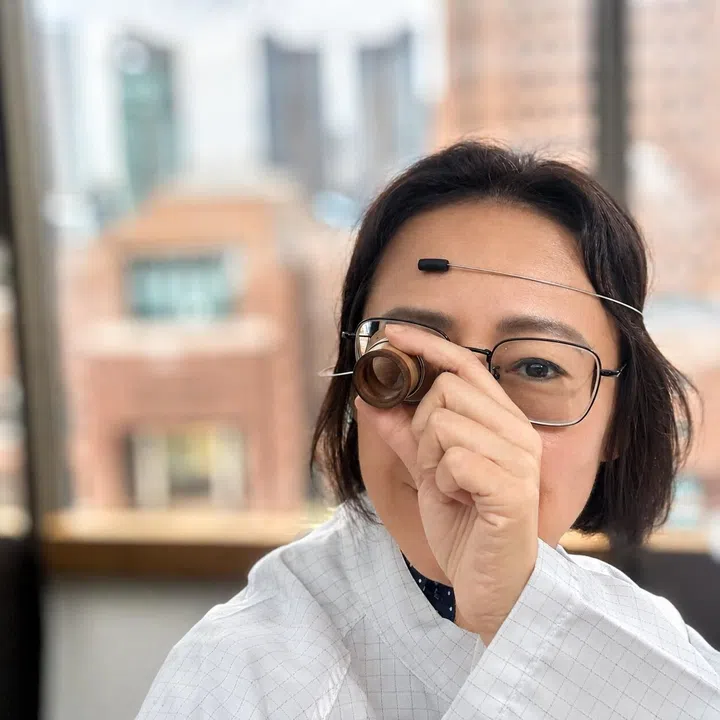
I left the masterclass with no illusions about becoming a watchmaker, but full of profound respect for the men and women who dedicate their lives to mastering this craft. Every finely finished L.U.C movement represents not only technical innovation and traditional craftsmanship, but countless hours spent assembling, adjusting, and perfecting components that most owners will never see.
Spending a morning in a watchmaker’s seat made me appreciate that achievement far more than any specification sheet ever could.