%22%3E%0A%3Cpath%20d%3D%22M412%20101.2H393.7C393.1%20101.2%20392.3%20100.9%20391.8%20100.5C377.3%2087.6004%20362.9%2074.6004%20348.4%2061.6004C344.8%2058.4004%20341.3%2055.2004%20337.7%2052.0004C337.1%2051.5004%20336.2%2051.1004%20335.5%2051.0004C334.2%2050.8004%20333%2051.0004%20331.5%2051.0004V101.1H316.7V0.100391H331.4V44.3004C331.9%2044.3004%20332.2%2044.4004%20332.5%2044.4004C334.9%2044.4004%20337.2%2044.5004%20339.6%2044.4004C340.4%2044.4004%20341.3%2044.0004%20341.8%2043.5004C351.6%2034.4004%20361.4%2025.2004%20371.1%2016.0004C376.5%2010.9004%20381.9%205.90039%20387.3%200.800391C387.9%200.200391%20388.5%200.000390626%20389.3%200.000390626H400.9C384.2%2015.8004%20367.8%2031.3004%20351.2%2047.0004C371.5%2065.0004%20391.8%2082.9004%20412.1%20100.9C412.1%20101%20412.1%20101.1%20412%20101.2ZM180.9%20101.2C184.1%2094.9004%20187.2%2088.9004%20190.3%2082.8004C198.3%2067.3004%20206.2%2051.8004%20214.2%2036.2004C220.3%2024.4004%20226.4%2012.5004%20232.4%200.700391C232.7%200.100391%20233%20-0.0996094%20233.7%20-0.0996094H248.1C248.8%20-0.0996094%20249.2%200.100391%20249.6%200.800391C256%2013.3004%20262.4%2025.7004%20268.8%2038.2004C279.3%2058.6004%20289.8%2079.0004%20300.3%2099.5004C300.5%20100%20300.8%20100.4%20301.1%20101.1C300.5%20101.1%20300.1%20101.2%20299.7%20101.2H286.5C285.6%20101.2%20285.1%20100.9%20284.7%20100.2C280.1%2091.3004%20275.4%2082.4004%20270.8%2073.4004C270.1%2072.1004%20269.3%2071.6004%20267.8%2071.6004H209.9C208.7%2071.6004%20208.1%2072.0004%20207.5%2073.1004C202.9%2082.1004%20198.2%2091.0004%20193.6%20100C193.1%20101%20192.6%20101.3%20191.5%20101.3C188.4%20101.2%20185.3%20101.3%20182.3%20101.3C182%20101.2%20181.6%20101.2%20180.9%20101.2ZM239.1%2011.4004C230%2029.2004%20221.1%2046.7004%20212.1%2064.3004H266.4C257.2%2046.7004%20248.2%2029.2004%20239.1%2011.4004ZM0%200.000390626H43.4C51.2%200.000390626%2058.7%201.20039%2065.7%204.80039C75.9%2010.0004%2078.9%2018.0004%2078.6%2027.4004C78.3%2034.3004%2076%2040.5004%2071.2%2045.5004C67.3%2049.6004%2062.4%2052.3004%2057.1%2054.3004C50.6%2056.7004%2043.9%2058.0004%2037.1%2058.6004C30.1%2059.2004%2023.1%2059.4004%2016.2%2059.7004C15.8%2059.7004%2015.3%2059.8004%2014.8%2059.8004V101.1H0.1C0%2067.4004%200%2033.8004%200%200.000390626ZM14.8%207.10039V52.2004C23.7%2052.4004%2032.6%2052.3004%2041.2%2050.1004C44.4%2049.3004%2047.6%2048.2004%2050.6%2046.7004C58.4%2043.0004%2062.3%2036.7004%2062.7%2028.0004C63%2019.9004%2059.5%2014.1004%2052.4%2010.5004C47.6%208.00039%2042.5%207.10039%2037.2%207.10039H14.8ZM95.9%20101.1V0.100391H167.3V7.20039H110.7V44.7004H158.1V51.9004H110.8V93.9004H171.1V101C146.1%20101.1%20121%20101.1%2095.9%20101.1Z%22%20fill%3D%22black%22%2F%3E%0A%3Cpath%20d%3D%22M35.0004%2025.7996H42.5004V20.6996H44.8004V33.1996H42.6004V27.5996H34.9004V33.2996H32.7004V20.7996H35.0004V25.7996ZM54.4004%2025.8996V27.2996H48.9004V31.6996H55.9004C55.9004%2032.1996%2056.0004%2032.5996%2056.0004%2033.0996H46.5004V20.5996H55.5004V21.8996H49.0004V25.7996C50.7004%2025.8996%2052.5004%2025.8996%2054.4004%2025.8996ZM25.9004%2033.0996H23.5004V21.9996H17.9004V20.6996H31.6004V22.0996H27.1004C26.2004%2022.0996%2025.9004%2022.2996%2025.9004%2023.1996C26.0004%2026.0996%2025.9004%2028.9996%2025.9004%2031.7996V33.0996Z%22%20fill%3D%22black%22%2F%3E%0A%3C%2Fg%3E%0A%3Cdefs%3E%0A%3CclipPath%20id%3D%22clip0_388_462%22%3E%0A%3Crect%20width%3D%22411%22%20height%3D%22101.2%22%20fill%3D%22white%22%2F%3E%0A%3C%2FclipPath%3E%0A%3C%2Fdefs%3E%0A%3C%2Fsvg%3E%0A)
Share this article
Contemporary chefs are expected to have opinions about themselves. A plate can no longer simply be good. It must express identity, retrieve memory, interrogate heritage or announce some new culinary philosophy. The chef has become author, narrator and occasionally protagonist, obliged to explain what a dish “means” with almost as much conviction as what it tastes like.
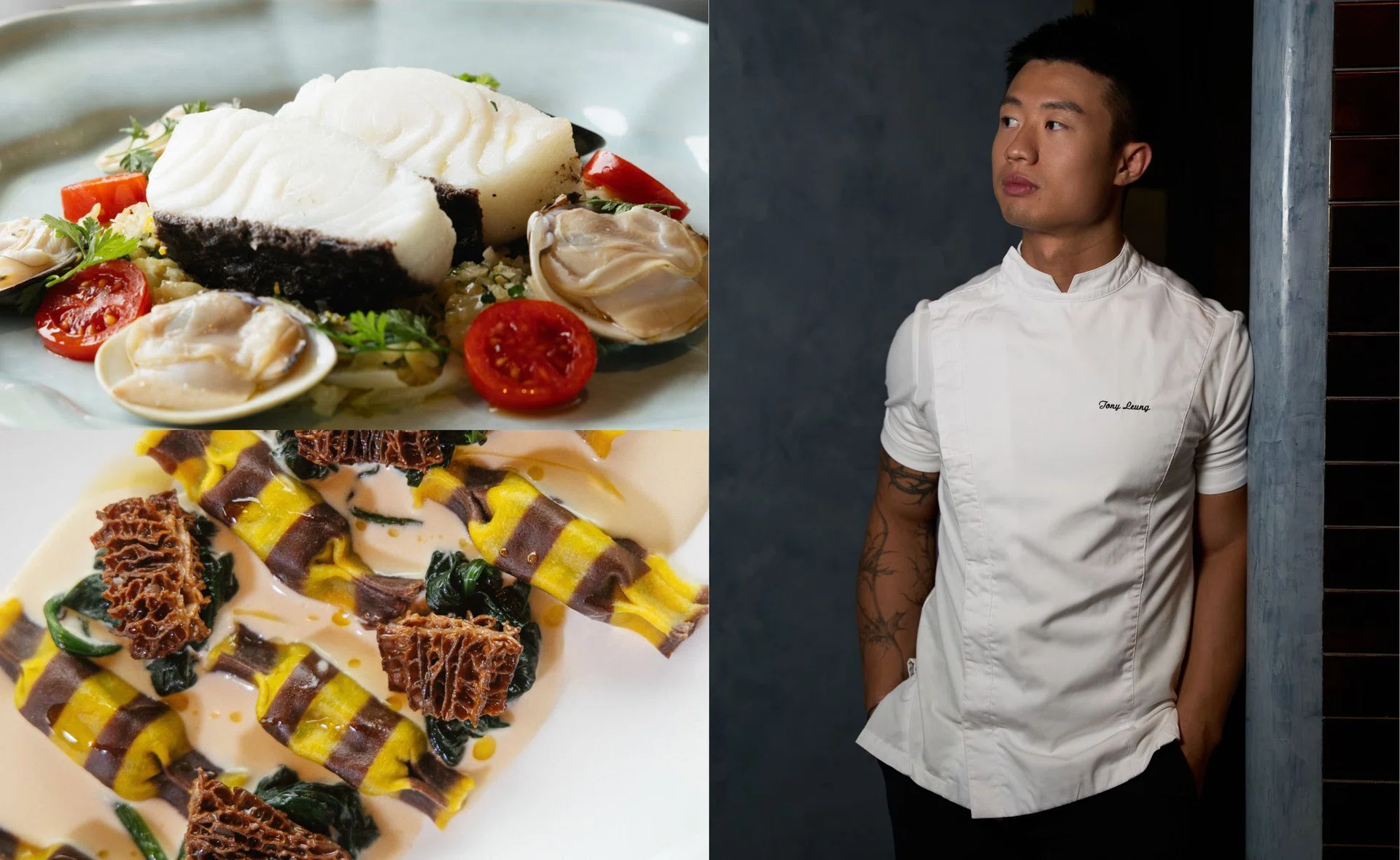
Tony Leung seems faintly suspicious of this arrangement. The executive sous chef of Upper House Hong Kong does not reject originality. His objection is subtler: originality, in his cooking, does not appear to deserve automatic moral superiority over familiarity.
Asked how he distinguishes meaningful reinterpretation from the rather less noble act of making everyday Hong Kong food look expensive, Leung offers an answer that borders on unfashionable. “The technique and presentation may change,” he says, “but the memory of the dish should still be there.”
This sounds obvious until one considers how much of contemporary restaurant culture depends on making the recognisable newly strange. Chefs deconstruct, reinvent, subvert, elevate, and reimagine. The vocabulary itself betrays a certain anxiety. To leave something largely intact can feel like an admission of insufficient imagination.
But novelty and improvement are not the same thing — a distinction that appears repeatedly in Leung’s food.
Negotiating with tradition
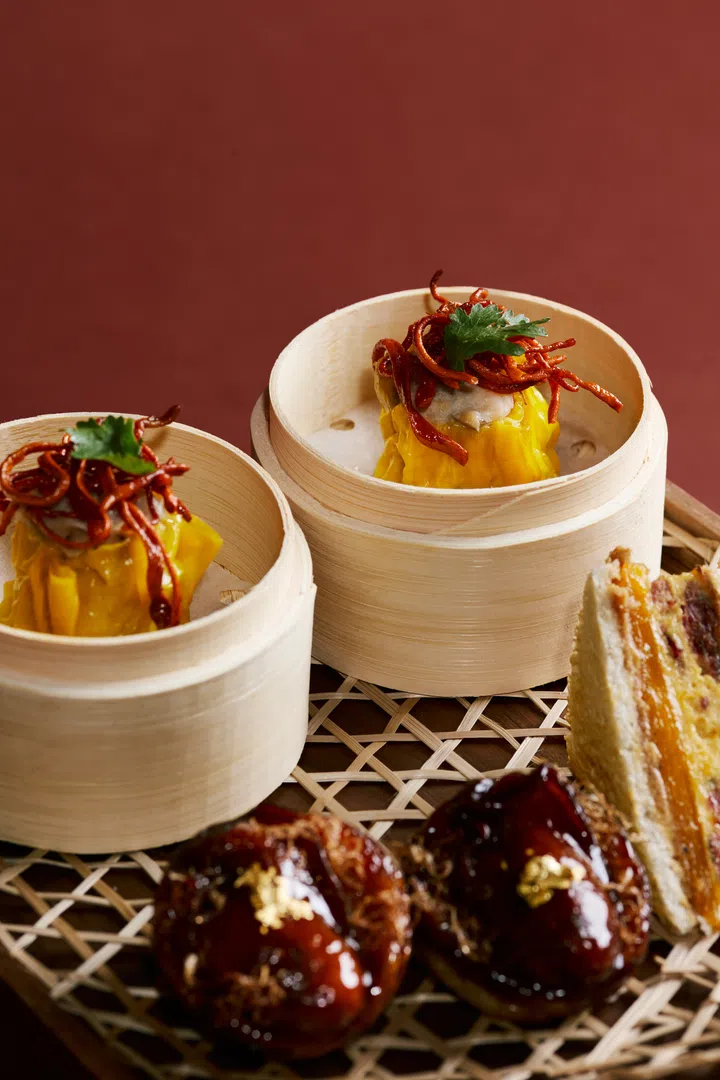
At Salisterra, his siu mai remains legibly siu mai even after he recalibrates it with locally sourced black pork, shrimp, and house-made mushroom XO sauce. Golden oyster, a traditional ingredient he says appears less often in Hong Kong markets today, becomes a caramelised oyster-and-ginger tarte tatin inspired by a Salisterra signature.
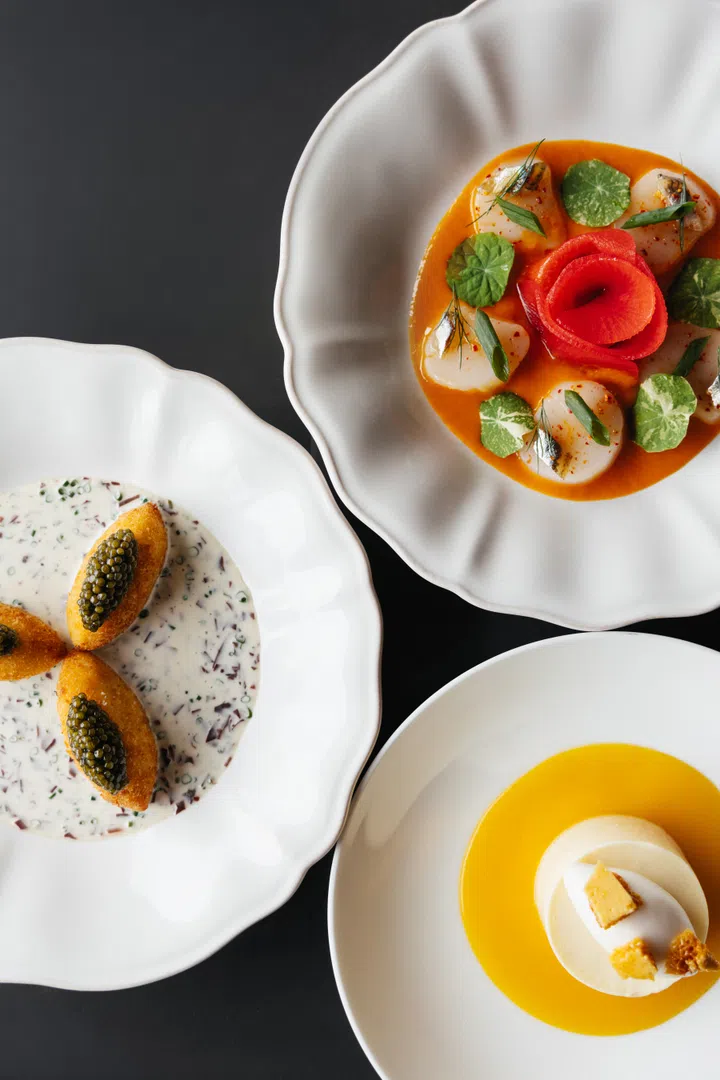
There is invention here, but very little iconoclasm. Leung, it appears, has no interest in defeating the original dish. He wants to negotiate with it. And that may be the more interesting form of authorship.
Before Salisterra, Leung worked at TATE Dining Room and in UK kitchens, environments he describes as more structured and rooted in fine-dining discipline. Salisterra gave him more room to experiment. Yet with that freedom, he found himself gravitating toward fermentation, classic dishes, and time-honoured techniques.
The paradox is worth dwelling on. We tend to imagine creative maturity as a progressive escape from influence: learn the rules, absorb the masters, then finally become yourself. Leung’s trajectory suggests something less heroic. Perhaps maturity does not arrive when a chef stops borrowing from tradition, but when he develops enough judgment to know what tradition can survive.
The chef, in this reading, becomes less auteur than editor.
An editor does not prove originality by destroying the source material. The work lies in discrimination: knowing what to emphasise, what to remove, what can withstand alteration, and what collapses the moment one interferes with it. This may also explain why Leung talks about taste in ways that sound almost hostile to certainty.
As a younger chef, he says, he believed that following a recipe precisely would produce the correct result. Experience disabused him of that idea. Ingredients change. Conditions change. “A recipe can guide you,” he says, “but you still have to taste, pay attention and respond to what is in front of you.”
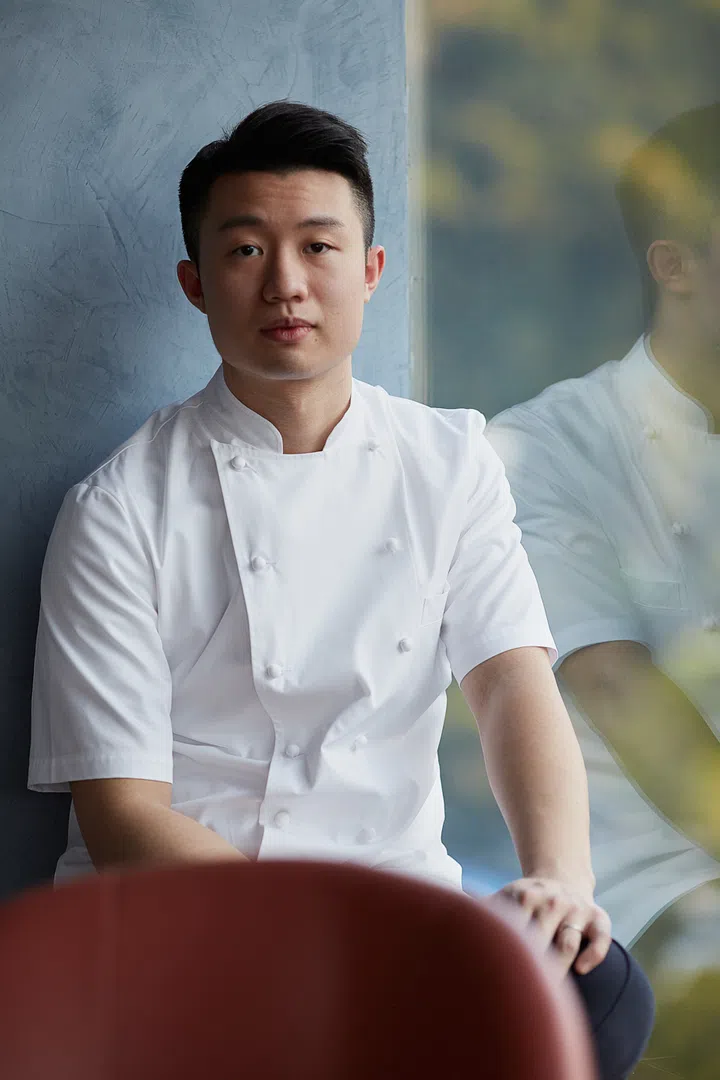
A cook can learn temperatures, timings, ratios, and processes. Taste develops through repetition, error, and comparison, until something that once required conscious thought becomes closer to instinct. Leung condenses this neatly: “Technique can teach you how to make a dish. Taste tells you when it is ready.”
Cooking inside the machine
And perhaps that is the problem with originality. Originality is conspicuous. Judgment often is not. The unusual ingredient can be named on a menu. The sculptural presentation photographs well. The conceptual premise makes excellent copy. Restraint leaves less evidence behind.
The contradiction becomes even more pronounced inside a luxury hotel.
A restaurant like Salisterra doesn't function as an independent creative laboratory. Leung must serve local regulars and international travellers, maintain consistency, work around fluctuating supplies, and consider how ingredients might work across Salisterra, in-room dining, and Green Room.
Luxury promises singularity to the guest while depending on standardisation behind the scenes. The experience should feel spontaneous but the operation cannot be. For a chef, this creates an unusual kind of freedom: creativity exercised inside a machine that must remain reliable.
Leung argues that these restrictions have made him more inventive. That is plausible, though perhaps for a less romantic reason than chefs usually give. Constraints eliminate possibilities and force inevitable decisions. In that sense, good cooking may depend as much on refusing possibilities as pursuing them.
This is where Leung becomes most interesting. Asked where Tony Leung himself appears on the plate, he gives remarkably little away. Instead, he talks about familiar flavours, small refinements, repeated tasting, and adjustments made until a dish feels balanced.
The self recedes. For a profession increasingly encouraged to convert personality into cuisine, that almost feels transgressive. Perhaps a chef does not always need to make food more personal. Perhaps the more difficult achievement is developing enough taste to know when your personality has begun getting in the way.