%22%3E%0A%3Cpath%20d%3D%22M412%20101.2H393.7C393.1%20101.2%20392.3%20100.9%20391.8%20100.5C377.3%2087.6004%20362.9%2074.6004%20348.4%2061.6004C344.8%2058.4004%20341.3%2055.2004%20337.7%2052.0004C337.1%2051.5004%20336.2%2051.1004%20335.5%2051.0004C334.2%2050.8004%20333%2051.0004%20331.5%2051.0004V101.1H316.7V0.100391H331.4V44.3004C331.9%2044.3004%20332.2%2044.4004%20332.5%2044.4004C334.9%2044.4004%20337.2%2044.5004%20339.6%2044.4004C340.4%2044.4004%20341.3%2044.0004%20341.8%2043.5004C351.6%2034.4004%20361.4%2025.2004%20371.1%2016.0004C376.5%2010.9004%20381.9%205.90039%20387.3%200.800391C387.9%200.200391%20388.5%200.000390626%20389.3%200.000390626H400.9C384.2%2015.8004%20367.8%2031.3004%20351.2%2047.0004C371.5%2065.0004%20391.8%2082.9004%20412.1%20100.9C412.1%20101%20412.1%20101.1%20412%20101.2ZM180.9%20101.2C184.1%2094.9004%20187.2%2088.9004%20190.3%2082.8004C198.3%2067.3004%20206.2%2051.8004%20214.2%2036.2004C220.3%2024.4004%20226.4%2012.5004%20232.4%200.700391C232.7%200.100391%20233%20-0.0996094%20233.7%20-0.0996094H248.1C248.8%20-0.0996094%20249.2%200.100391%20249.6%200.800391C256%2013.3004%20262.4%2025.7004%20268.8%2038.2004C279.3%2058.6004%20289.8%2079.0004%20300.3%2099.5004C300.5%20100%20300.8%20100.4%20301.1%20101.1C300.5%20101.1%20300.1%20101.2%20299.7%20101.2H286.5C285.6%20101.2%20285.1%20100.9%20284.7%20100.2C280.1%2091.3004%20275.4%2082.4004%20270.8%2073.4004C270.1%2072.1004%20269.3%2071.6004%20267.8%2071.6004H209.9C208.7%2071.6004%20208.1%2072.0004%20207.5%2073.1004C202.9%2082.1004%20198.2%2091.0004%20193.6%20100C193.1%20101%20192.6%20101.3%20191.5%20101.3C188.4%20101.2%20185.3%20101.3%20182.3%20101.3C182%20101.2%20181.6%20101.2%20180.9%20101.2ZM239.1%2011.4004C230%2029.2004%20221.1%2046.7004%20212.1%2064.3004H266.4C257.2%2046.7004%20248.2%2029.2004%20239.1%2011.4004ZM0%200.000390626H43.4C51.2%200.000390626%2058.7%201.20039%2065.7%204.80039C75.9%2010.0004%2078.9%2018.0004%2078.6%2027.4004C78.3%2034.3004%2076%2040.5004%2071.2%2045.5004C67.3%2049.6004%2062.4%2052.3004%2057.1%2054.3004C50.6%2056.7004%2043.9%2058.0004%2037.1%2058.6004C30.1%2059.2004%2023.1%2059.4004%2016.2%2059.7004C15.8%2059.7004%2015.3%2059.8004%2014.8%2059.8004V101.1H0.1C0%2067.4004%200%2033.8004%200%200.000390626ZM14.8%207.10039V52.2004C23.7%2052.4004%2032.6%2052.3004%2041.2%2050.1004C44.4%2049.3004%2047.6%2048.2004%2050.6%2046.7004C58.4%2043.0004%2062.3%2036.7004%2062.7%2028.0004C63%2019.9004%2059.5%2014.1004%2052.4%2010.5004C47.6%208.00039%2042.5%207.10039%2037.2%207.10039H14.8ZM95.9%20101.1V0.100391H167.3V7.20039H110.7V44.7004H158.1V51.9004H110.8V93.9004H171.1V101C146.1%20101.1%20121%20101.1%2095.9%20101.1Z%22%20fill%3D%22black%22%2F%3E%0A%3Cpath%20d%3D%22M35.0004%2025.7996H42.5004V20.6996H44.8004V33.1996H42.6004V27.5996H34.9004V33.2996H32.7004V20.7996H35.0004V25.7996ZM54.4004%2025.8996V27.2996H48.9004V31.6996H55.9004C55.9004%2032.1996%2056.0004%2032.5996%2056.0004%2033.0996H46.5004V20.5996H55.5004V21.8996H49.0004V25.7996C50.7004%2025.8996%2052.5004%2025.8996%2054.4004%2025.8996ZM25.9004%2033.0996H23.5004V21.9996H17.9004V20.6996H31.6004V22.0996H27.1004C26.2004%2022.0996%2025.9004%2022.2996%2025.9004%2023.1996C26.0004%2026.0996%2025.9004%2028.9996%2025.9004%2031.7996V33.0996Z%22%20fill%3D%22black%22%2F%3E%0A%3C%2Fg%3E%0A%3Cdefs%3E%0A%3CclipPath%20id%3D%22clip0_388_462%22%3E%0A%3Crect%20width%3D%22411%22%20height%3D%22101.2%22%20fill%3D%22white%22%2F%3E%0A%3C%2FclipPath%3E%0A%3C%2Fdefs%3E%0A%3C%2Fsvg%3E%0A)
These chefs from China are driving the evolution of Singapore’s Chinese fine-dining scene
A slate of new restaurants helmed by Chinese chefs is reshaping the local haute Chinese dining scene with regional and authentic flavours, bringing fresh perspectives to the competitive landscape.
By Tan Pin Yen /
Share this article
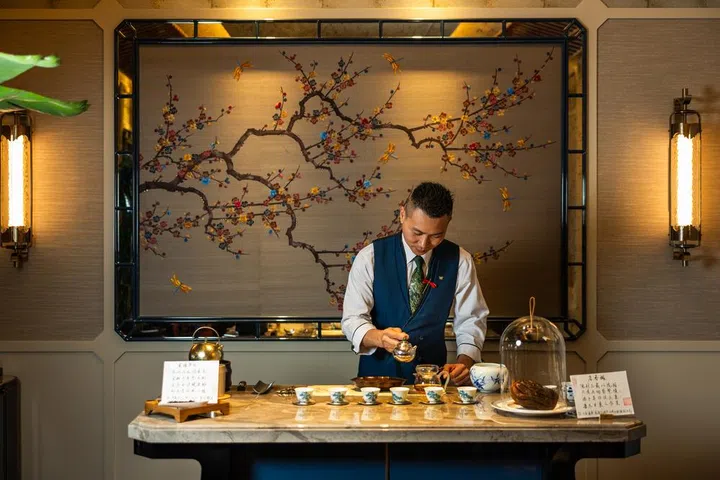
The honeyed, medicinal aroma of aged Buddha’s hand (lao xiang huang) punches the air as Jin Ting Wan’s head tea master, Jacky Zhao Gang, lifts the display case to reveal this “black gold”.
One of Chaoshan’s “Three Treasures,” this health-preserving, finger-like citron has been aged for at least five years and undergoes nine cycles of steaming and sun‑drying, with herbs such as aged tangerine peel.
“A diner flew in on a private jet recently and took six fruits home,” Zhao recalls. At home, I might sparingly peel a sliver from my 18-year-old treasure to nibble after a rich meal, but Zhao had it brewed into a luscious, soul‑soothing tea.
Rustic yet luxurious, it stands apart even among Jin Ting Wan’s exceptional teas — alongside rarities like 1950s Wuyi “Qizhong” and hand‑blended floral selections.
The inclusion of aged Buddha’s hand on the tea menu reflects the evolving spirit of Chinese fine-dining in Singapore — a demand for greater diversity and sophistication in every detail, down to the beverage programme.
While many fine-dining establishments in the city-state shuttered over the past year, a movement led by chefs and artisans from Mainland China is quietly redefining the haute Chinese dining experience here.
They introduced a new paradigm, one rooted in regional depth, heritage, and a sophistication previously unseen here.
Architects of the new wave
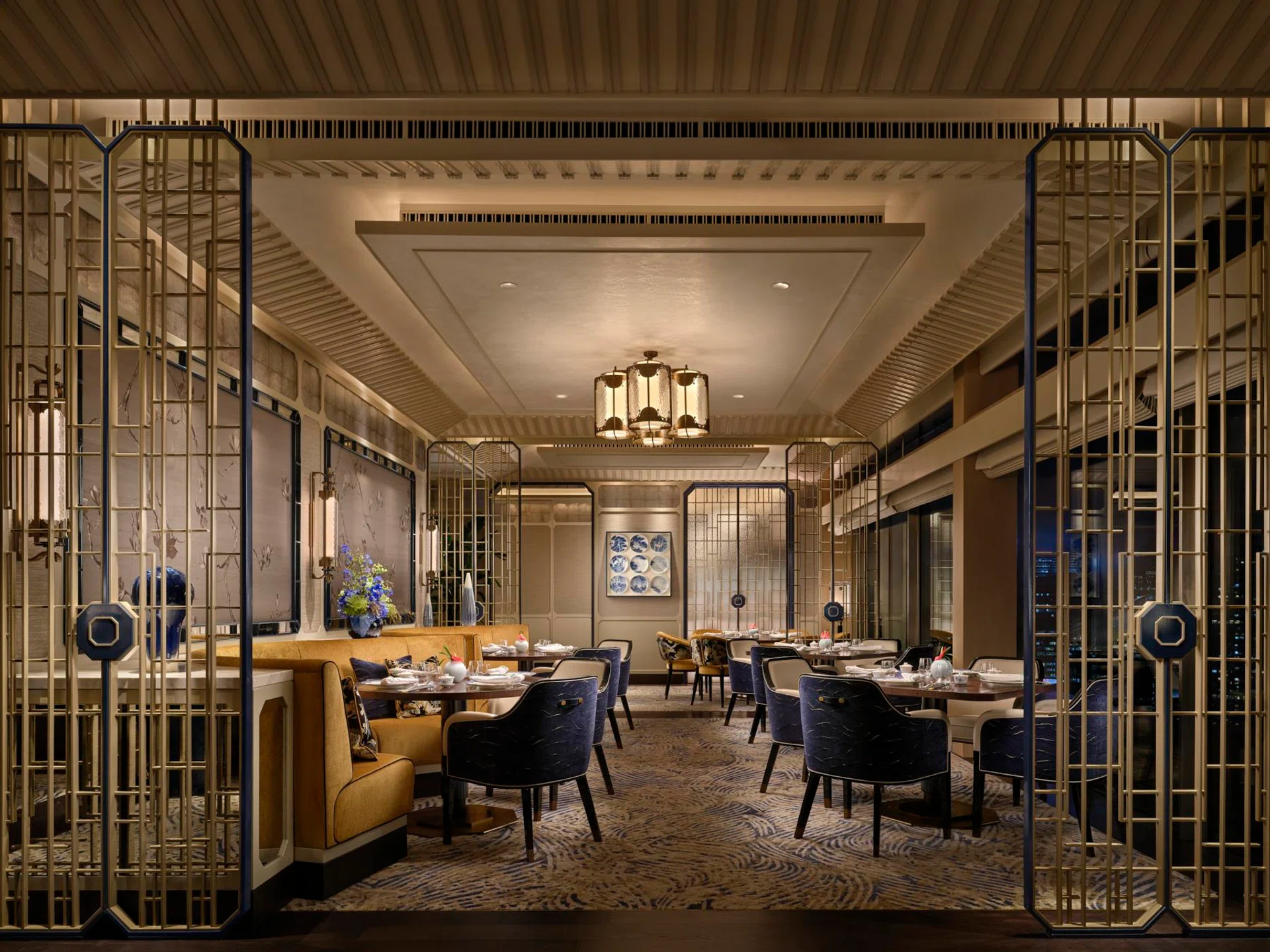
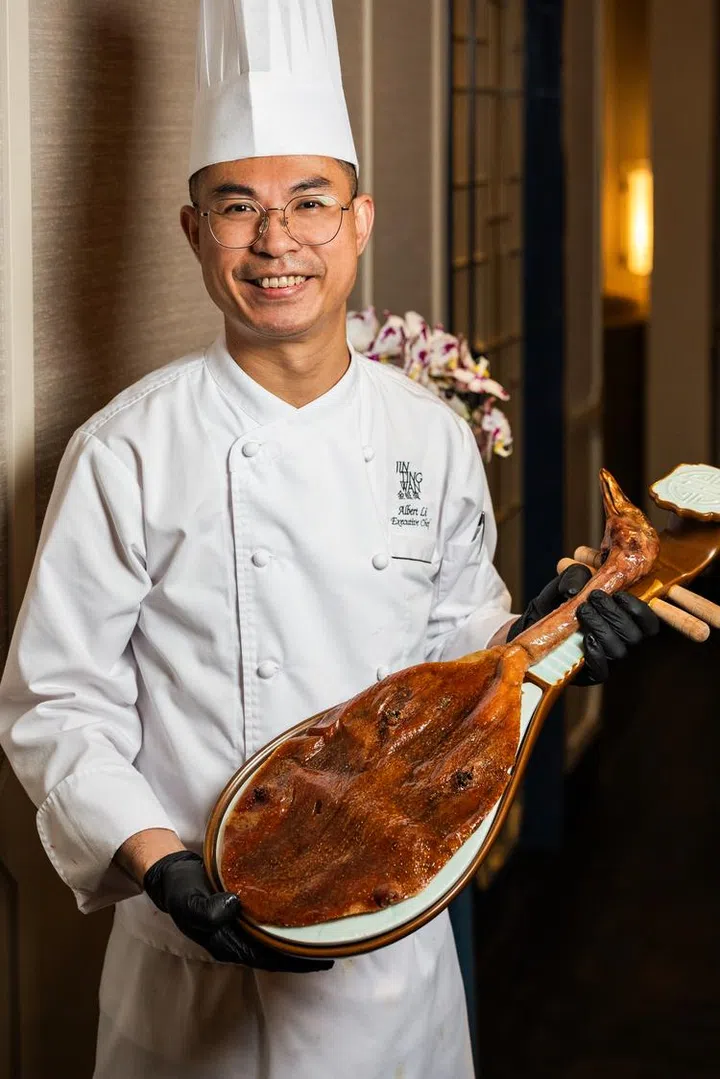
At the crest of this wave stands Jin Ting Wan, a Cantonese restaurant perched on the 55th floor of Marina Bay Sands. Executive chef Albert Li, formerly of Shanghai’s two‑Michelin‑starred Imperial Treasure and Tianjin’s Black Pearl‑rated Jin House, guides a refined and progressive interpretation of Cantonese cuisine here.
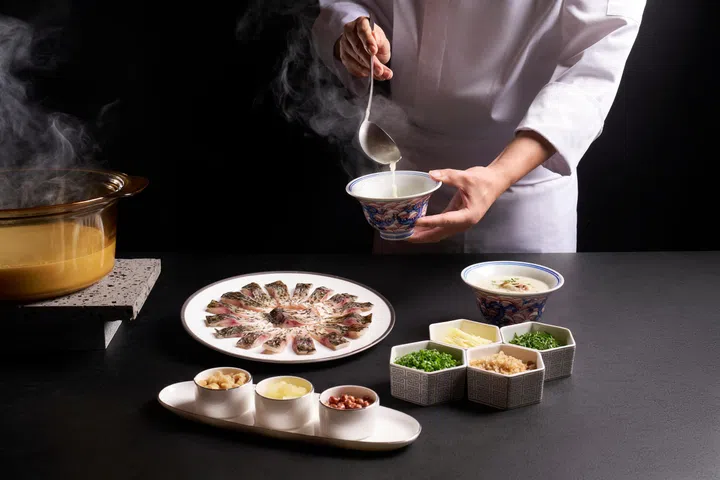
His cuisine — much like his demeanour — melds seasoned skill with quiet elegance, best seen in his tableside service where delicate broths are prepared with precision.
On one occasion, a five‑hour seafood broth was poured over delicate Hokkaido geoduck and seaweed, cooking them gently at the table. Another afternoon, he poached wild coral grouper to exacting doneness in a silky lobster‑prawn broth, revealing the hidden craft of Cantonese soup‑making directly to diners.
Behind the scenes, most of the work was already done — lobster shells and prawn heads seared for aroma and colour, then simmered till every hint of sweetness and umami glowed in the golden broth.
While Cantonese cuisine, or guang fu cai, anchors 70 per cent of the menu, Li weaves in the lightness of Chaozhou food, the hearty depth of Hakka fare, and Shunde techniques to more accurately reflect Guangdong’s culinary traditions.
Jin Ting Wan stakes its reputation on Li’s kung fu, or signature dishes like the roasted pipa duck with tangerine peel and water chestnut.
An homage to Shunde’s culinary pride, Li elevated it by deboning a 90-day-old Irish duck, marinating its meat with chestnuts for sweetness and 15-year-aged tangerine peel for complexity, then returning the meat to the skin and roasting it over lychee wood.
The Confucian tenet, “eat only what is in season”, is the guiding principle for high‑end Chinese cuisine. Li celebrated autumn with air‑flown Yunnanese treasures such as matsutake, golden fungus, and porcini.
Last November, he imported Yangcheng Lake hairy crabs and transformed them into seasonal specialities such as crab roe claypot rice and crispy yellow croaker rolls — sparing diners the laborious task of shelling and allowing the crab’s full, luxurious flavour to be savoured.
The culinary narrative was capped by an exceptional 2009 Dong Qu yellow wine. Exclusive to Jin Ting Wan, this amber-hued, rare vintage, crafted by heritage keeper Pan Xing Xiang, was presented by head sommelier Joe Yang, who served it from traditional clay vessels, accompanied by a touch of storytelling.
Premium global ingredients such as Australian scallop, Hokkaido geoduck, and Alaskan King Crab refresh Guangdong classics, but Li ensures the Chinese terroir remains distinct.
He does this with minced pigeon stir-fried with olives or Angus short rib braised with nine‑cycle‑steamed preserved mustard greens and a host of other geographically indicated ingredients such as Lanzhou’s nine-year lily bulbs and Zhejiang Jinhua ham.

This drive for authenticity is also reflected at Cherry Garden by Chef Fei in Mandarin Oriental Singapore. Chef Fei, whose real name is Huang Jing Hui, has a following that includes tycoons and celebrities such as Karen Mok and Tony Leung.
At his Singapore flagship, Huang has infused the menu with the distinctive flavours of his Chaoshan roots. As the hotel group’s consultant chef for Chinese cuisine, he oversees seven venues across Asia, including The China House in Bangkok and Li Feng in Jakarta.
“True Chaoshan luxury lies in authentic local ingredients,” Huang notes, sourcing specialities like grass carp directly from his hometown. His signature modern Chaoshan‑style smoked threadfin fish, a deconstruction of the classic Chaoshan Yu Fan and boneless crucian carp congee reflect this ethos.
Festive traditions are also reimagined — his Lunar New Year Yusheng features lobster paired with a Chaoshan‑inspired sauce, crafted from sour plums, blended with chilli and shredded lemon.
Fish, once simply steamed Hong Kong‑style, now takes on a deeper character — stewed with preserved radish, braised with pickled vegetables and plum sauce, or steamed with aged tangerine peel and fermented soybean.
Sea whelk is either charcoal‑roasted or blanched with basil and chilli in chicken broth, each dish thoughtfully refined for today’s table while preserving the soul of Chaoshan.
Last November, Ban Lan, a Michelin-Selected Fujian restaurant from Suzhou, opened at Scotts Square with an ambition to deepen Singapore’s appreciation for Fujian cuisine.
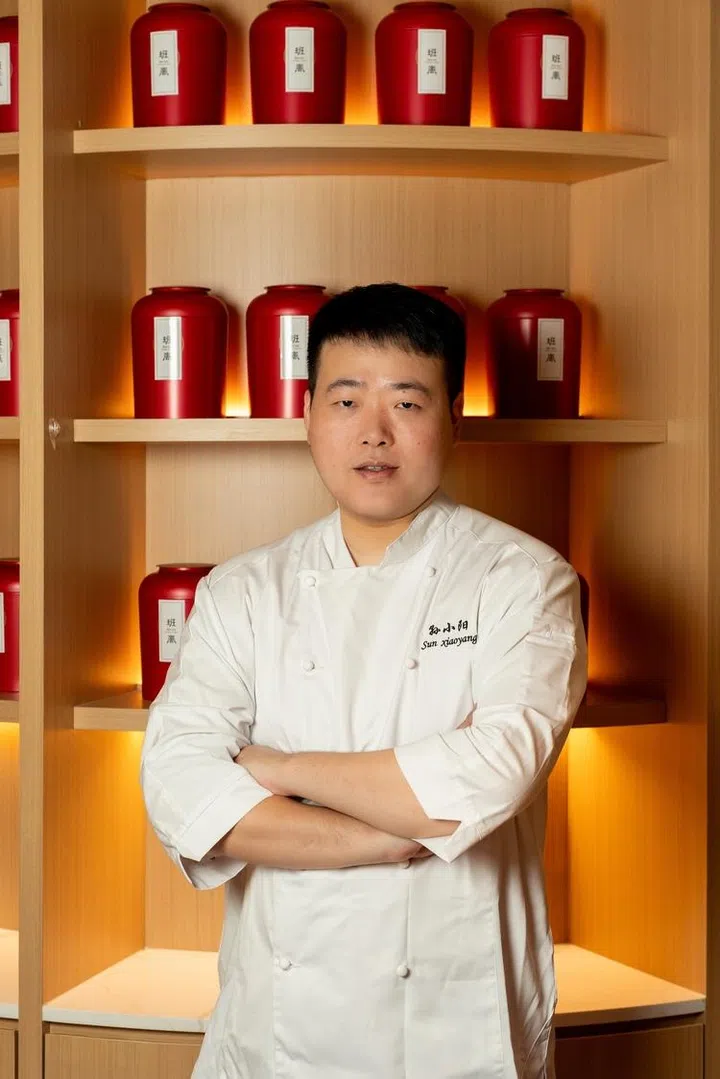
Founder and chef-owner Sun Xiao Yang is mentored by top chef Wu Rong, who earned Fujian cuisine its first Michelin star at Shanghai’s Meet The Bund.
Ban Lan’s dedication to authentic regional flavours shines through in both its Fujian specialities and its homelike comforts. Buddha Jumps Over the Wall — simmered for 24 hours, rested, then steamed under a lotus leaf to impart a delicate fragrance — and the coastal celebratory dish, Steamed Crab with Glutinous Rice Cake, dazzles.
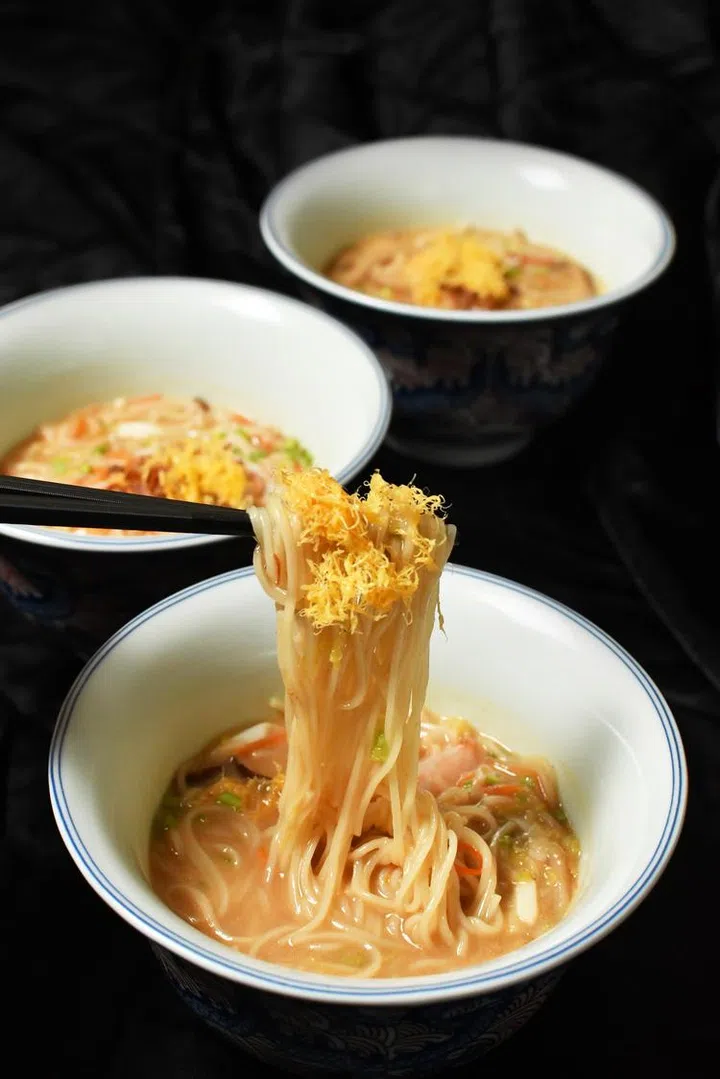
More homelike dishes include Quanzhou braised noodles, Traditional Fire-cooked Tofu with Sanming Red Mushrooms, and Steamed Mindong Yellow Croaker featuring fermented Yong’an Yellow Chilli, each equally compelling and grounding the experience in genuine Fujian tradition.
Lure of the cosmopolitan gateway
Born in Quanzhou, Sun says Ban Lan’s origins in Suzhou’s Singapore‑linked industrial park made expansion here a natural step. “There has been a tradition of people coming from Fujian to Singapore, that bond left a deep impression on us growing up,” he shares.
“Against the backdrop of shifting dining policies in China — such as recent alcohol restrictions — Singapore offers both opportunity and a meaningful audience.” He currently oversees four Fujian brands with nine outlets in Suzhou.
Huang of Cherry Garden by Chef Fei highlights Singapore’s deep‑rooted Chinese culinary culture and the growing demand for authentic Chinese regional flavours. “The large Chinese community here has a natural affinity for Chinese cuisine,” he notes.
“With a visa‑free policy, more Chinese enterprises and visitors have arrived, creating a discerning clientele that seeks genuine flavours beyond localised adaptations. We’re here precisely for them.”
He observes that Singaporean diners are well-travelled and have high expectations. “Succeeding in this international culinary capital means our brand has passed the market’s rigorous test, laying a solid foundation for further expansion.”
Chefs interviewed by The Peak Singapore note that this pursuit of authenticity brings significant challenges — from high costs and limited access to ingredients to air‑freighting key components, deploying chefs from China, and continuously adapting recipes.
Despite these hurdles, they remain committed to delivering genuine regional fine‑dining experiences.
New elements arriving from culinary collaborations
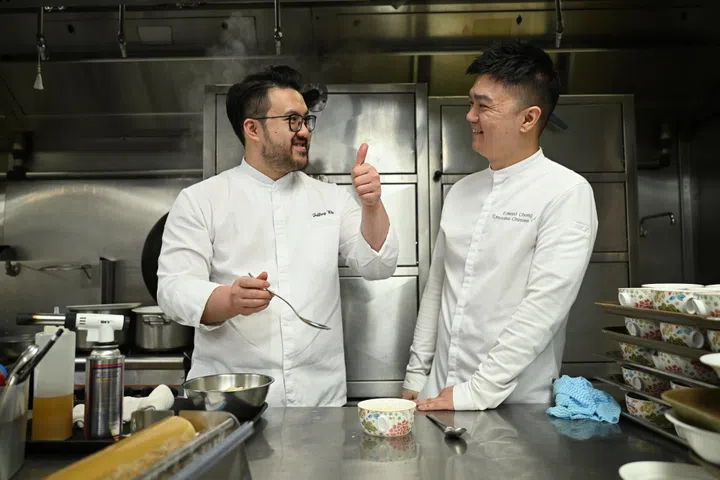
Beyond new openings, hotel‑driven chef collaborations continue to push Chinese cuisine beyond everyday familiarity.
Peach Blossoms’ executive chef Edward Chong has collaborated with Black Pearl Award-winning kitchens such as Meet The Bund and Ensue, seeing such exchanges as essential to bringing new techniques, storytelling, and craftsmanship to help the local scene evolve.
He recalls a highlight: “pine crane” pigeon fish needle in herbal broth, a sustainable creation featuring deboned pigeon stuffed with rare fish needles, each extracted individually from Lingnan bighead carp, in the Ensue collaboration last September.
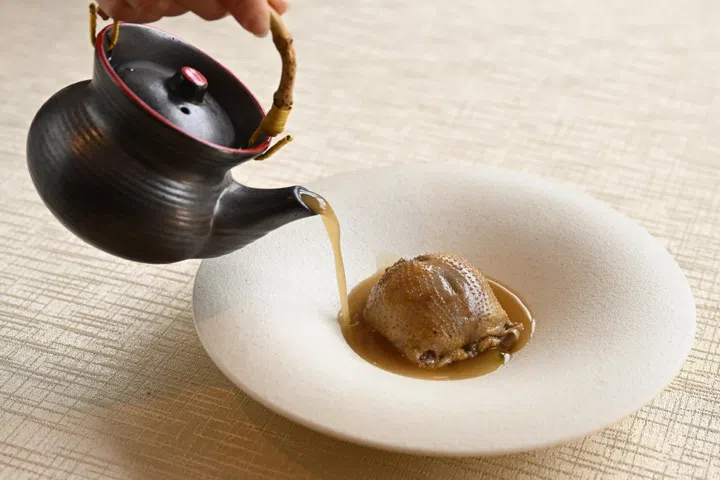
Major hotel groups have been strategically amplifying Chinese fine-dining through culinary showcases. Marriott International’s “Imperial 4-Hands Encounter” last August united chefs from Yan Ting and Shanghai’s one‑Michelin‑starred Jin Xuan, who presented dishes such as Shunde Crispy Golden Crab Cake and White Pepper Chicken Soup with Qing Dynasty origins.
Petr Raba, Vice President of F&B for Asia Pacific (excluding China) at Marriott, says such collaborations reflect insights from their Future of Food 2026 report, pointing to rising regional demand for experiences that blend cultural authenticity with refined comfort and creativity.
“Chinese cuisine, with its rich heritage and adaptability, is at the forefront of this movement.”
Last year, Hilton’s chef exchange program brought together chef Du Guo Jin of Waldorf Astoria Xiamen’s Hokklo and chef Liu Ching Hai of Summer Palace at Conrad Orchard, both one‑Michelin‑starred restaurants.
Du showcased his “Shanhai” (mountain‑sea) philosophy, introducing Fujian ingredients such as Yongchun vinegar and serving refined modern interpretations of classics, including Fujian seaworm jelly (tusun dong), ginger-braised duck, and Buddha Jumps Over the Wall, thereby elevating Chinese fine-dining beyond rustic stereotypes.
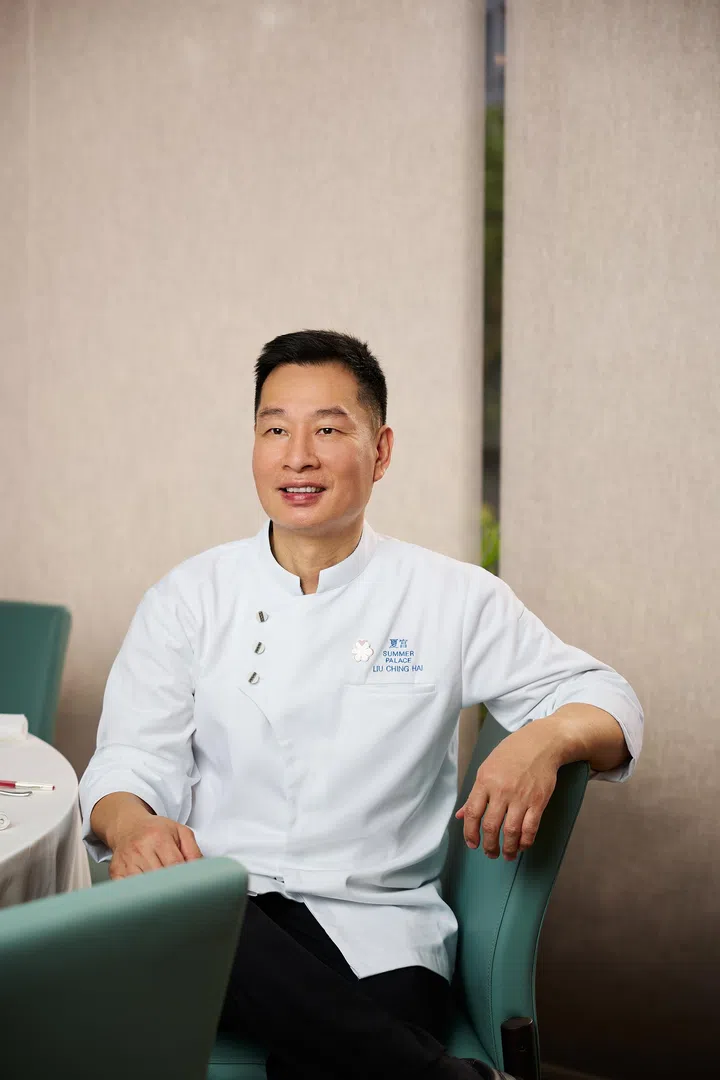
In December, Liu also collaborated with chef Alan Gan of Wai King Kok at Waldorf Astoria Shanghai to explore the culinary ties between Cantonese and Hakka heritage.
Visiting Singapore for the first time, Gan expressed enthusiasm for learning from local ingredients and flavours, while Liu highlighted how chefs from China enrich the scene — bringing seasonality, rare ingredients like whampee, and refined techniques to the table.
“Our chef exchange program empowers chefs to grow, refine their vision, and return with renewed energy,” says Marvin Albali, Hilton Asia Pacific’s Vice President of Food & Beverage.
He describes it as one of Hilton’s most impactful talent investments, aimed at building a stronger, more connected culinary community across Asia Pacific.
Competition as community
What’s vital is how this diversity, brought in by mainland Chinese chefs, is valued by Singapore’s own culinary masters, who recognise that true growth emerges through vigorous exchange.
Chong at Peach Blossoms notes that these exchanges enrich guests and provide his team with insights while driving the evolution of modern Chinese cuisine.
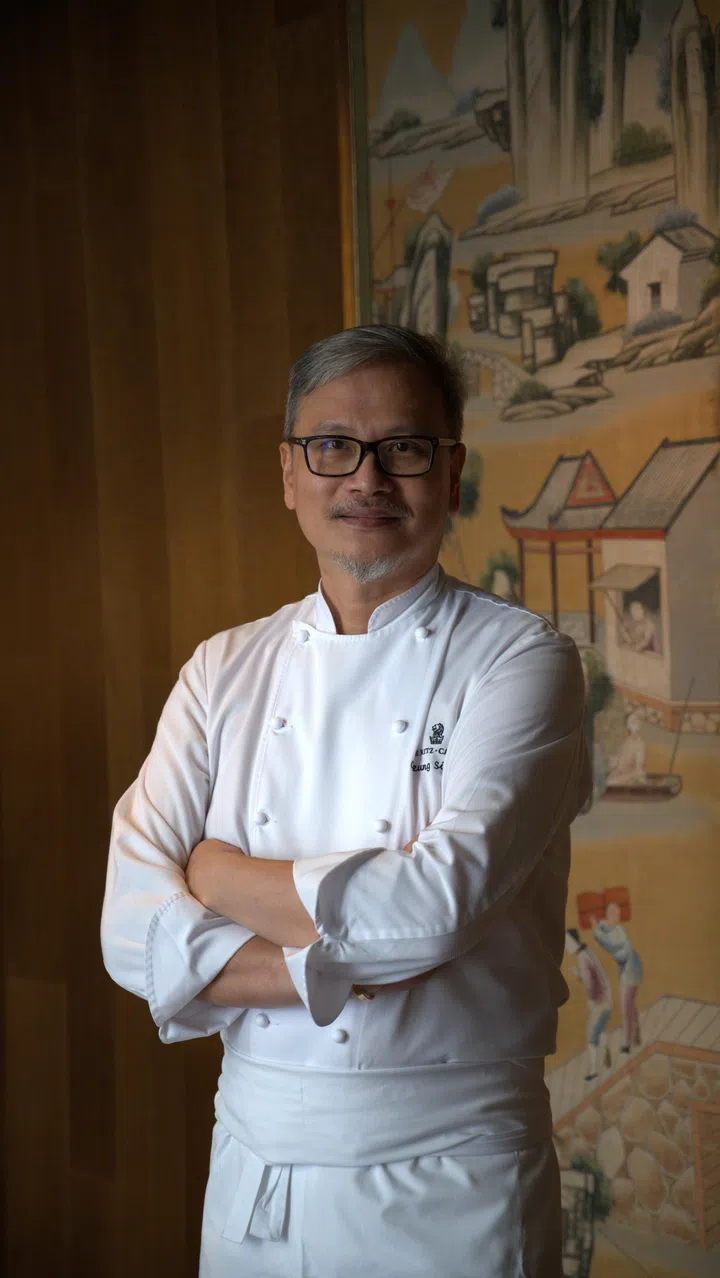
“Without this diversity, people might assume all Chinese food is the same,” says Summer Pavilion’s executive chef Cheung Siu Kong, who has collaborated with Yong Fu and Grand Majestic Sichuan in Hong Kong.
“The arrival of regional cuisines helps diners appreciate what makes Cantonese cuisine unique.”
He believes competition deepens collective appreciation for Chinese gastronomy as a whole. “It keeps us sharp,” he adds, advocating for a community mindset where “one of us thrives, we all thrive”.
On April 10, Four Seasons Hotel Singapore will host the spectacular “Symphony of Eight Hands: A Showcase of Michelin-Recognised Restaurants” guest chef promotion featuring highly acclaimed chefs Adam Wong Lung, of Hong Kong’s three-Michelin-star Forum, chef Chan Yan Tak of Lung King Heen (two-Michelin-star) and chef Matt Chen of GEN Taiwan (one Michelin star), together with chef Alan Chan of Jiang-Nan Chun.
This one-night-only event forms part of “Passages of Spring”, a region-wide culinary initiative that highlights the depth, diversity, and artistry of Chinese cuisine across 14 Chinese restaurants at Four Seasons properties in Asia Pacific.
In June, the spotlight will turn to Jin Jing Ge (Four Seasons Suzhou) and Yu Yue Heen (Four Seasons Guangzhou), continuing the celebration of Chinese gastronomic excellence.
Four Seasons Hotel Singapore says these showcases aim to give diners here access to exceptional Chinese culinary voices, introducing fresh energy and new elements by showcasing the depth and innovation within Chinese cuisine.