
Desa Potato Head Bali’s idea of wellness goes beyond the surface into spirituality
The Merasa Origins series examines the roots of Balinese well-being from its Hindu-Buddhist lineage to the indigenous Javanese traditions.
By Lu Yawen /
Share this article
Wellness and longevity have long been at the centre of conversations. From the dark, bass-heavy rooms of spin classes to the grimey CrossFit gyms optimised for Hyrox, the idea of wellness has broadened in recent years to include a more holistic approach with infrared saunas, cold baths, and hot magnesium pools.
Even the Singapore Tourism Board wants a piece of the pie. Last November, it awarded Therme Group the tender to build a seven-storey wellness facility at Marina South, a $1 billion project spanning 720,000 sq ft. Modelled after wellness resorts in Europe, it will be the country’s first-ever attempt at “democratising wellness”.
And yet, in this climate of wars, virtual silos, and environmental destruction, people are seeking more. Beyond fancy technology and the latest workout fad, the need for community has grown increasingly urgent.
Third spaces, places where like-minded people get to meet organically in an environment of leisure, have been growing in popularity. Paid subscription apps such as Timeleft and Oddtable gather groups of users who have similar interests to meet over a coffee or meal.
And for others, the call goes even deeper. As philosopher Friedrich Nietzsche wrote: Humans have a profound need for meaning and ritual (outside orthodox religion) or risk falling into nihilism.
The new spiritual ideal emerges when an individual undergoes an inward transformation, creates their own values, and eventually adopts the attitude of Amor Fati (the love of one’s fate).
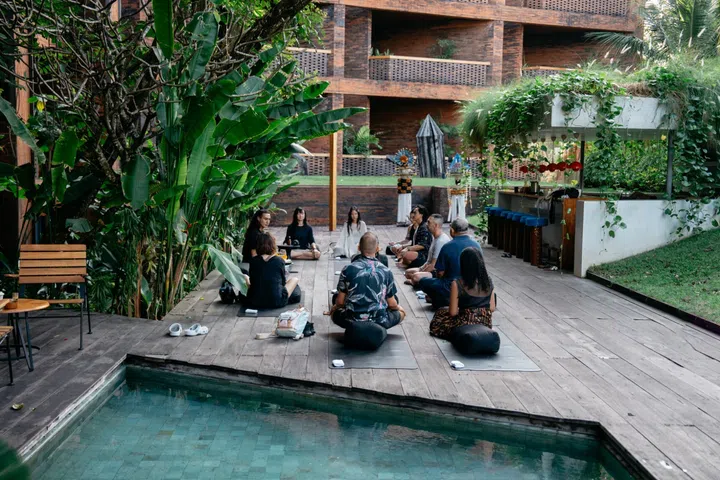
With this in mind, I attended “Merasa Origins: Java”, the second instalment of an immersive well-being trilogy tracing the cultural roots of Bali’s wellness practices across India, Java, and Bali. Held over three nights in September at Desa Potato Head Bali, I dove into a crash course on Kebatinan, Javanese traditional folk religion.
A hands-on approach to lessons
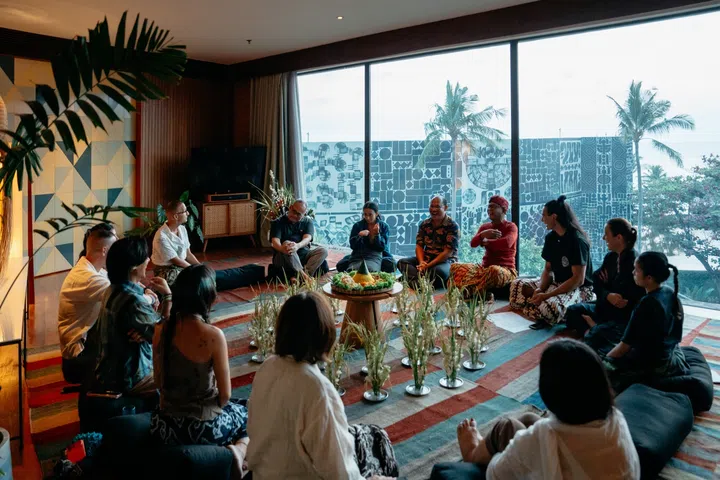
Set across various locations around the Desa compound and marked by elaborate gebogan (ceremonial arrangements on a stand), the sessions were led by Tantric priest Pak Sugeng from Sukuh Temple in Mount Lawu, who spoke only Javanese, with his personal translator and spiritual anthropologist, Londoner Serj Hunt.
The participants, some of whom already knew each other from the previous India series, were a mixed bag of nationalities, from South American to Australian. Warmly welcomed by Kim Herben, the hotel's head of well-being, everyone seemed to slip easily into vulnerability as Hunt asked us about our intentions for the next few days.
Later, as we shared tumpeng, a symbolic dish signifying gratitude, Thai musician and returning participant Notep looked at me and said, “This experience will change you.” I didn’t have to announce my scepticism; it was apparently loud enough.
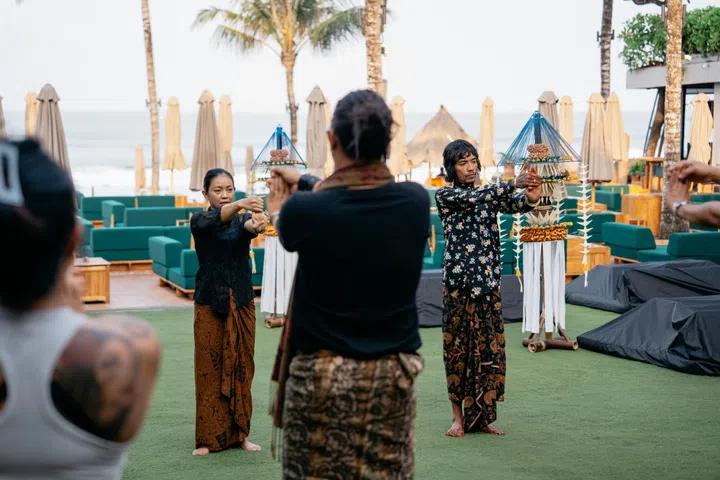
Over the next few days, we skimmed the surface of Javanese folk religion after beginning each day with a morning physical practice, from the slow, controlled movements of traditional Javanese dance taught by Aloysia Neneng from dance studio Abyakta Budaya to meditation and mantra chanting.
Kebatinan, a mystical and spiritual tradition that focuses on the inner self and harmony with the universe and a higher being, is one of the many Javanese folk practices that was only recently officially recognised by the Indonesian Constitutional Court in 2017.
Pak Sugeng walked us through the core ideas of animism, Buddhism, Hinduism, and Islam, organised around three concepts: Tattva vs Tutur (ontological truth versus generational wisdom); Susila (moral behaviour); and Upacara (sacred offerings).
Lessons on theology were brief, and the language barrier was a hindrance, but we were an eager audience. Hunt continually called on us to tap into our ancestral knowledge (Tutur) to remind us of our roots, while a 24-hour fast of our choice gave us a glimpse into the sometimes extreme meditative rituals practitioners use to come out of the raga (physical body) into the rasa (chest, where intuitive feeling and emotional intelligence reside).
Finding personal meaning
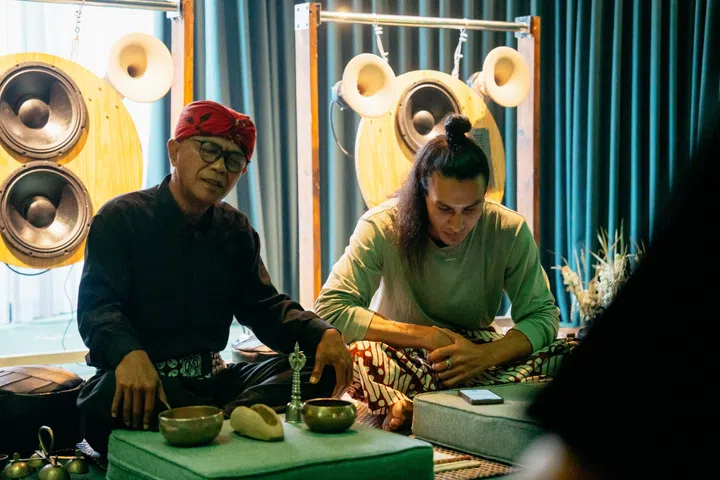
As formalities gave way to deeper conversations about happiness and self-discovery, our little group began to feel somewhat familial. In one of the last few workshops, Pak Sugeng shared that Javanese astrology, like most of Kebatinan, comes from an amalgamation of indigenous market days, the Hindu-Buddhist Pawukon system, and the Islamic seven-day week.
While he gave general readings based on our birthdays, the mood lightened, and we giggled at characteristics that sounded perhaps all too accurate. Astrology, it seemed, is a language anyone can understand.
On the last day, in the closing ceremony, we picked out our banten (offering) and sat in front of an old sacred tree. I let Pak Sugeng’s chants wash over me as I felt the sun and breeze on my skin, and the smell of incense in the air. I was sleep-deprived and exhausted, but maybe one step closer to shedding my scepticism and surrendering to my rasa.
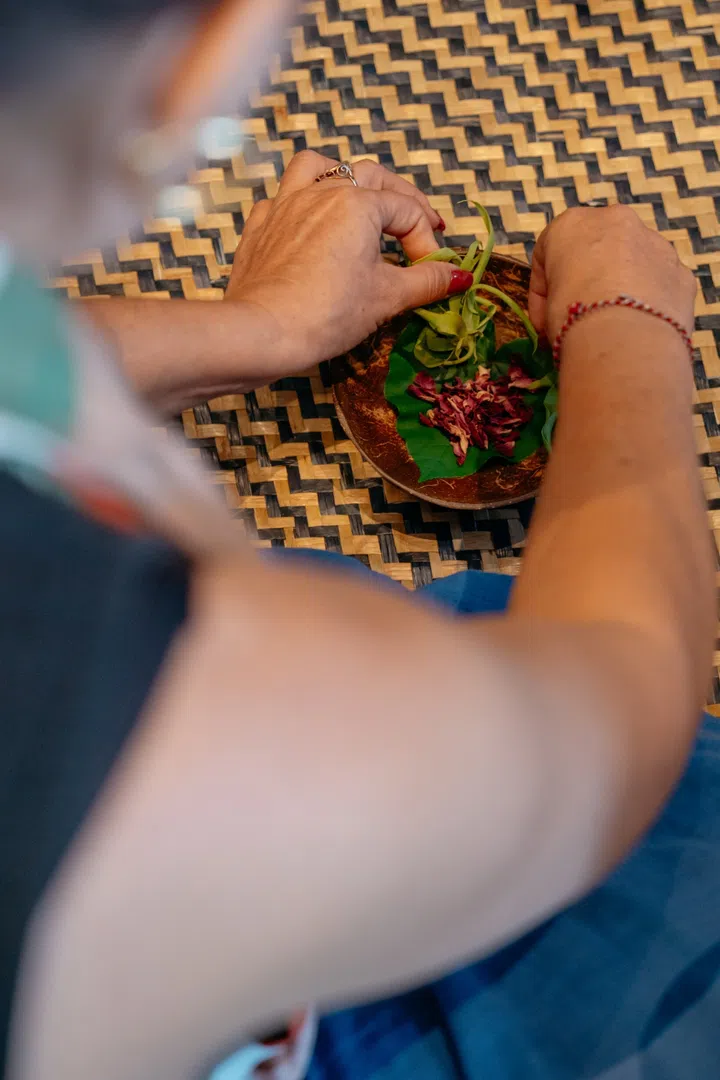
The monumental change some in the group spoke of might have eluded me, but there was something freeing in staying open to unknown rituals, without bias or judgment. In an earlier workshop, a participant spontaneously shared a moving poem he had written the night before.
Brought up in a strict Christian household, Kebatinan’s polytheistic nature felt more accepting to me by comparison. Its animistic elements remind me to walk through life with more reverence and humility; a good starting point for discovering the values I want to live by.