%22%3E%0A%3Cpath%20d%3D%22M412%20101.2H393.7C393.1%20101.2%20392.3%20100.9%20391.8%20100.5C377.3%2087.6004%20362.9%2074.6004%20348.4%2061.6004C344.8%2058.4004%20341.3%2055.2004%20337.7%2052.0004C337.1%2051.5004%20336.2%2051.1004%20335.5%2051.0004C334.2%2050.8004%20333%2051.0004%20331.5%2051.0004V101.1H316.7V0.100391H331.4V44.3004C331.9%2044.3004%20332.2%2044.4004%20332.5%2044.4004C334.9%2044.4004%20337.2%2044.5004%20339.6%2044.4004C340.4%2044.4004%20341.3%2044.0004%20341.8%2043.5004C351.6%2034.4004%20361.4%2025.2004%20371.1%2016.0004C376.5%2010.9004%20381.9%205.90039%20387.3%200.800391C387.9%200.200391%20388.5%200.000390626%20389.3%200.000390626H400.9C384.2%2015.8004%20367.8%2031.3004%20351.2%2047.0004C371.5%2065.0004%20391.8%2082.9004%20412.1%20100.9C412.1%20101%20412.1%20101.1%20412%20101.2ZM180.9%20101.2C184.1%2094.9004%20187.2%2088.9004%20190.3%2082.8004C198.3%2067.3004%20206.2%2051.8004%20214.2%2036.2004C220.3%2024.4004%20226.4%2012.5004%20232.4%200.700391C232.7%200.100391%20233%20-0.0996094%20233.7%20-0.0996094H248.1C248.8%20-0.0996094%20249.2%200.100391%20249.6%200.800391C256%2013.3004%20262.4%2025.7004%20268.8%2038.2004C279.3%2058.6004%20289.8%2079.0004%20300.3%2099.5004C300.5%20100%20300.8%20100.4%20301.1%20101.1C300.5%20101.1%20300.1%20101.2%20299.7%20101.2H286.5C285.6%20101.2%20285.1%20100.9%20284.7%20100.2C280.1%2091.3004%20275.4%2082.4004%20270.8%2073.4004C270.1%2072.1004%20269.3%2071.6004%20267.8%2071.6004H209.9C208.7%2071.6004%20208.1%2072.0004%20207.5%2073.1004C202.9%2082.1004%20198.2%2091.0004%20193.6%20100C193.1%20101%20192.6%20101.3%20191.5%20101.3C188.4%20101.2%20185.3%20101.3%20182.3%20101.3C182%20101.2%20181.6%20101.2%20180.9%20101.2ZM239.1%2011.4004C230%2029.2004%20221.1%2046.7004%20212.1%2064.3004H266.4C257.2%2046.7004%20248.2%2029.2004%20239.1%2011.4004ZM0%200.000390626H43.4C51.2%200.000390626%2058.7%201.20039%2065.7%204.80039C75.9%2010.0004%2078.9%2018.0004%2078.6%2027.4004C78.3%2034.3004%2076%2040.5004%2071.2%2045.5004C67.3%2049.6004%2062.4%2052.3004%2057.1%2054.3004C50.6%2056.7004%2043.9%2058.0004%2037.1%2058.6004C30.1%2059.2004%2023.1%2059.4004%2016.2%2059.7004C15.8%2059.7004%2015.3%2059.8004%2014.8%2059.8004V101.1H0.1C0%2067.4004%200%2033.8004%200%200.000390626ZM14.8%207.10039V52.2004C23.7%2052.4004%2032.6%2052.3004%2041.2%2050.1004C44.4%2049.3004%2047.6%2048.2004%2050.6%2046.7004C58.4%2043.0004%2062.3%2036.7004%2062.7%2028.0004C63%2019.9004%2059.5%2014.1004%2052.4%2010.5004C47.6%208.00039%2042.5%207.10039%2037.2%207.10039H14.8ZM95.9%20101.1V0.100391H167.3V7.20039H110.7V44.7004H158.1V51.9004H110.8V93.9004H171.1V101C146.1%20101.1%20121%20101.1%2095.9%20101.1Z%22%20fill%3D%22black%22%2F%3E%0A%3Cpath%20d%3D%22M35.0004%2025.7996H42.5004V20.6996H44.8004V33.1996H42.6004V27.5996H34.9004V33.2996H32.7004V20.7996H35.0004V25.7996ZM54.4004%2025.8996V27.2996H48.9004V31.6996H55.9004C55.9004%2032.1996%2056.0004%2032.5996%2056.0004%2033.0996H46.5004V20.5996H55.5004V21.8996H49.0004V25.7996C50.7004%2025.8996%2052.5004%2025.8996%2054.4004%2025.8996ZM25.9004%2033.0996H23.5004V21.9996H17.9004V20.6996H31.6004V22.0996H27.1004C26.2004%2022.0996%2025.9004%2022.2996%2025.9004%2023.1996C26.0004%2026.0996%2025.9004%2028.9996%2025.9004%2031.7996V33.0996Z%22%20fill%3D%22black%22%2F%3E%0A%3C%2Fg%3E%0A%3Cdefs%3E%0A%3CclipPath%20id%3D%22clip0_388_462%22%3E%0A%3Crect%20width%3D%22411%22%20height%3D%22101.2%22%20fill%3D%22white%22%2F%3E%0A%3C%2FclipPath%3E%0A%3C%2Fdefs%3E%0A%3C%2Fsvg%3E%0A)
From fine-dining to cafe: Chefs Russell Nathan and Sarah Shum open a pay-as-you-wish zero-waste cafe, Bricolage
In a bid to foster a sense of community and promote responsible living amidst blind consumerism, the founders of Bricolage start by challenging the way we think about food.
By Lu Yawen /
Share this article
Food security has long been an issue in Singapore, with more than 90 per cent of our food imported. In 2019, the government launched a “30 by 30” policy to become self-sufficient for 30 per cent of our food needs by 2030.
Ambitious to say the least, the pandemic made things even more difficult, and at the end of last year, an improved policy was announced. The new targets: produce 30 per cent of our nutritional needs — 20 per cent of fibre and 30 per cent of protein — by 2035.
For most Singaporeans, food resilience and the larger issue of supply chains, land scarcity and financial overheads remain rather abstract concepts. Food is viewed simultaneously as essential for survival and entertainment.
In the broader context, however, what we eat offers more than sustenance; it’s a vital tool for maintaining social fabric and a way we socialise, bond and connect.
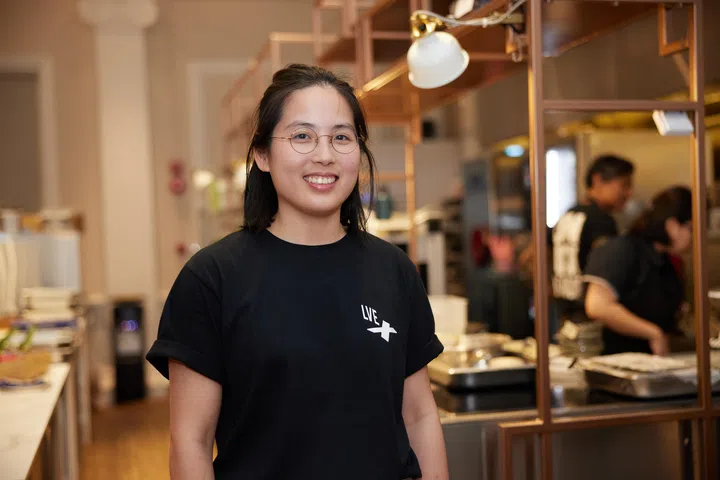
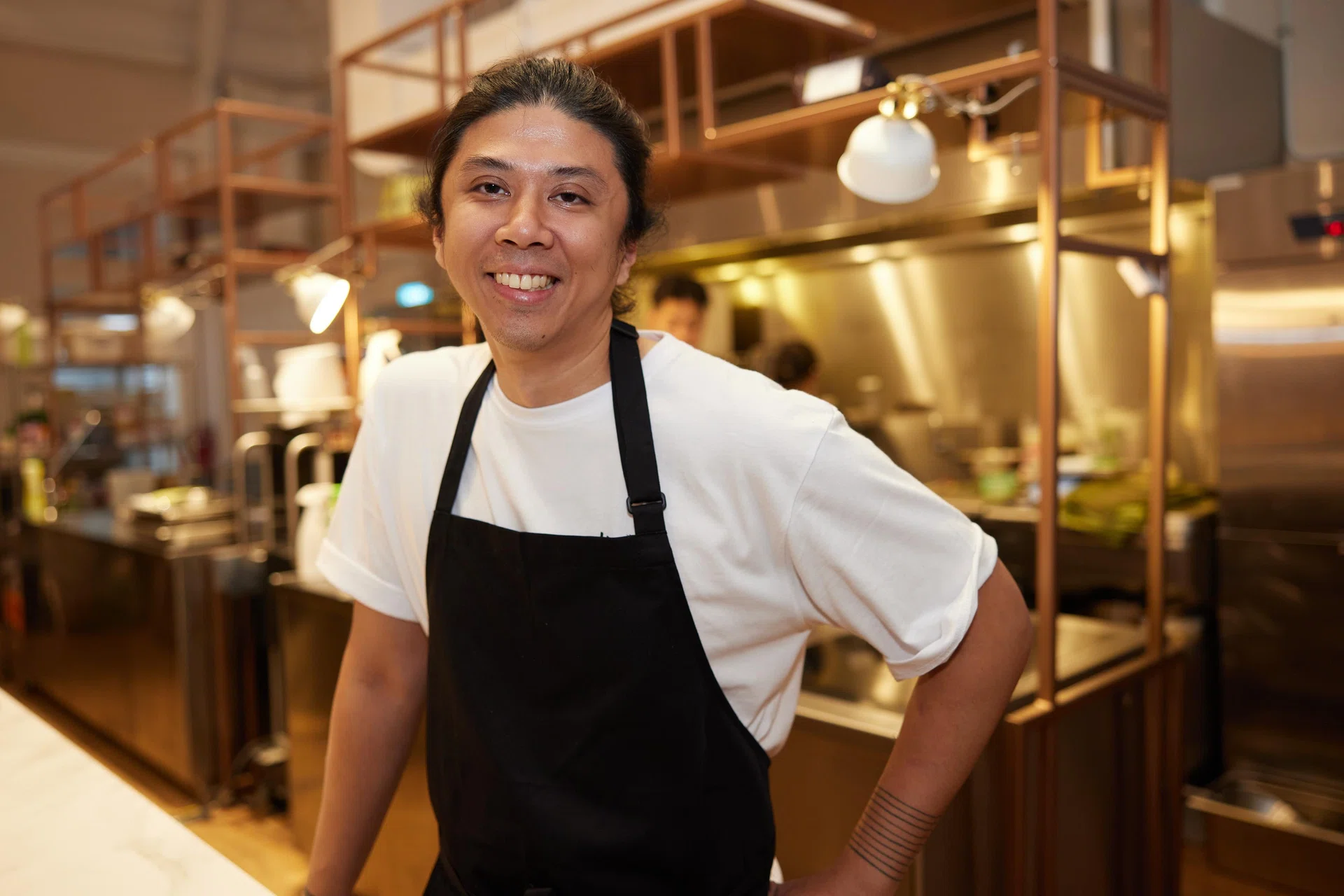
Opened in August 2025, Bricolage at The Arts House is trying to remind us of just that. Founded by chefs Russell Nathan, 38, and Sarah Shum, 33, both formerly from fine-dining backgrounds, including stints at Nouri and Bacchanalia, the cafe creates weekly menus from surplus produce from regionally sourced farms and offers its dishes on a pay-as-you-wish policy.
A community-first cafe
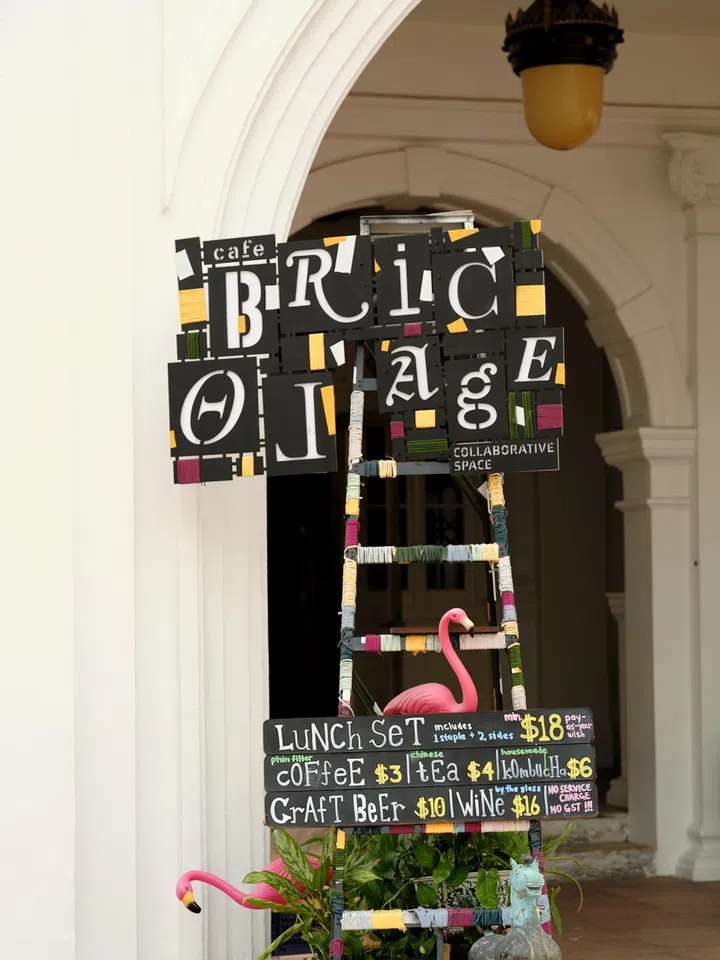
Bricolage was founded on three pillars — community, culture, and collaboration — and the space was offered by SATS as a two-year residency. “We wanted to see food as more than transactional… and contribute a space for Singaporeans,” Nathan shares.
As its name suggests, the cafe’s furnishings are a mishmash of different chairs, a sofa, upcycled wooden shelves that hold cutlery and books, and an open kitchen half obscured by a letterboard with the week’s menu.
It’s reminiscent of a living room or lounge, where you’ll find teenagers playing on the game console or people doing work on their laptops.
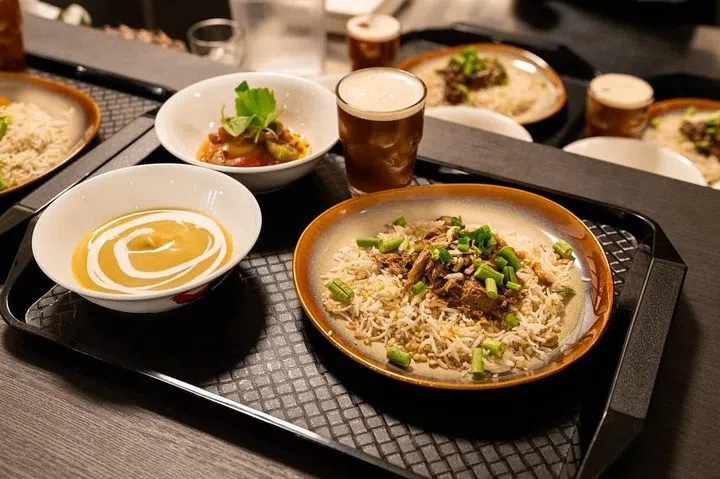
Everything is self-service. The food comes in two sets, one vegetarian and one not. You order at the counter and pay what you want (there are suggested prices), take your cutlery and water from the shelves, and collect your food when your name is called.
When done, dispose of food waste in the labelled bucket and plates in another. There’s a sign that says “Questions? Ask chef Russ”, which is your cue to ask him about the food you just ate.
“The food we cook here is deliberately approachable and recognisable. We want the customer to feel this is something they could eat every day, something they would cook for themselves,” he adds.
The dishes are simple, and everything is made in-house from scratch, including miso and shoyu. Putting their culinary experience to use, both Nathan and Shum utilise all parts of produce sourced from farms in the Cameron Highlands or from Singapore Agro-Food Enterprises Federation (SAFEF), using preservation and fermentation techniques learnt from fine-dining kitchens, such as lacto-fermentation and dehydration.
A load of 18kg of bananas, for example, sourced recently from sustainability-focused social enterprise MoNo, which champions zero waste, was used to make banana skin kimchi, banana jerky, and banana caramel.
“I love banana bread, don’t get me wrong, but it’s such a cop out.” The rest of the food waste goes into a compost bin, which is collected every two to three months by Project Black Gold or “compost artisan” Cuifen Pui.
And in the spirit of collaboration, the pair hosted a six-weekend-long series of workshops called Makan with Change before Bricolage officially opened.
A multitude of panel discussions and cooking demonstrations featured a variety of voices in the sustainability scene, including Nouri’s chef-owner Ivan Brehm, culinary anthropologist Nithiya Laila, and the CEOs and co-founders of FeedBank, Sean Tan and Zachary Hoe, as well as other chefs, bartenders, grassroots leaders, scientists, and farmers.
When I visited, Bricolage featured an Edible Plant Library installation by art and research collective Gastrogeography of Singapore (GOS) and Urban Jungle Folks. An archive of over 80 botanical ingredients preserved in glass bottles, some introduced from overseas and some native, that are used in contemporary cooking.
They also work with Freestyle Farmers, an organisation that holds urban farming workshops, which helped set up the display planter at the cafe’s front.
The cafe has regularly offered its space for independent art events, including the Singapore Writers’ Festival, publishing houses such as Ethos Books, and an upcoming Chess and Go gathering organised by social app Snowball.
Seeing the bigger picture
Running a sustainable food programme takes a community, and while the ecosystem might look as though it’s thriving from Bricolage’s activities, there’s still plenty to do to spread the message to the average consumer.
Their challenge: “How to reach a larger audience without compromising and without sounding preachy?”
Nathan’s aware that, for most Singaporeans, a zero-food-waste philosophy might still sound like a foreign concept, even though such practices have been in place for years. Although western chefs might be responsible for elevating them on a global stage, and techniques have been finessed in fine-dining kitchens, food preservation has always been utilised when scarcity looms.
It doesn’t help that spaces where sustainability is discussed have also been exclusive, whether financially or intellectually.
“I don’t see it as Western ideology. I see it as a return to an understanding and relationship that we have with food. We treat it as something novel when it should be something normal.”
The solution, he believes, is mindfully and intentionally using all parts of the animal or vegetable; the antidote to overconsumption. The first step — “think about and afford respect to the things we consume”. Think about the farmer who’s taken months to grow the vegetable to full size, the journey it’s taken to get to where it is, and the chefs who’ve prepared it, all before it arrives on the plate.
He knows changing habits is not going to be easy. In Singapore alone, the country generated 700,000 tonnes of food waste last year. But he wants to challenge our definition of “waste”. He explains, “It’s not that we cannot utilise it, it’s just that we don’t want to. We don’t have the time and the space.”
And perhaps a visit to Bricolage can renew our approach to not just consuming food but to everything else, or inspire us to create our own community to keep us accountable in bettering our part of the world. After all, as Nathan says, “We’re all together in this boat called the human condition. Be nice.”
Bricolage will be participating in the Menu 2037 Supernutrition series of test kitchens, organised by creative data consultancy, Synthesis. Menu 2037 is Synthesis’ investigation into the future of food, which extends to test kitchens in Singapore, Melbourne, San Sebastian and more. The Singapore test kitchens are held on April 29 and May 6. The series is focused on nutrition and based on interviews with scientists, F&B leaders, policymakers and nutritionists, and data. More information can be found here.