%22%3E%0A%3Cpath%20d%3D%22M412%20101.2H393.7C393.1%20101.2%20392.3%20100.9%20391.8%20100.5C377.3%2087.6004%20362.9%2074.6004%20348.4%2061.6004C344.8%2058.4004%20341.3%2055.2004%20337.7%2052.0004C337.1%2051.5004%20336.2%2051.1004%20335.5%2051.0004C334.2%2050.8004%20333%2051.0004%20331.5%2051.0004V101.1H316.7V0.100391H331.4V44.3004C331.9%2044.3004%20332.2%2044.4004%20332.5%2044.4004C334.9%2044.4004%20337.2%2044.5004%20339.6%2044.4004C340.4%2044.4004%20341.3%2044.0004%20341.8%2043.5004C351.6%2034.4004%20361.4%2025.2004%20371.1%2016.0004C376.5%2010.9004%20381.9%205.90039%20387.3%200.800391C387.9%200.200391%20388.5%200.000390626%20389.3%200.000390626H400.9C384.2%2015.8004%20367.8%2031.3004%20351.2%2047.0004C371.5%2065.0004%20391.8%2082.9004%20412.1%20100.9C412.1%20101%20412.1%20101.1%20412%20101.2ZM180.9%20101.2C184.1%2094.9004%20187.2%2088.9004%20190.3%2082.8004C198.3%2067.3004%20206.2%2051.8004%20214.2%2036.2004C220.3%2024.4004%20226.4%2012.5004%20232.4%200.700391C232.7%200.100391%20233%20-0.0996094%20233.7%20-0.0996094H248.1C248.8%20-0.0996094%20249.2%200.100391%20249.6%200.800391C256%2013.3004%20262.4%2025.7004%20268.8%2038.2004C279.3%2058.6004%20289.8%2079.0004%20300.3%2099.5004C300.5%20100%20300.8%20100.4%20301.1%20101.1C300.5%20101.1%20300.1%20101.2%20299.7%20101.2H286.5C285.6%20101.2%20285.1%20100.9%20284.7%20100.2C280.1%2091.3004%20275.4%2082.4004%20270.8%2073.4004C270.1%2072.1004%20269.3%2071.6004%20267.8%2071.6004H209.9C208.7%2071.6004%20208.1%2072.0004%20207.5%2073.1004C202.9%2082.1004%20198.2%2091.0004%20193.6%20100C193.1%20101%20192.6%20101.3%20191.5%20101.3C188.4%20101.2%20185.3%20101.3%20182.3%20101.3C182%20101.2%20181.6%20101.2%20180.9%20101.2ZM239.1%2011.4004C230%2029.2004%20221.1%2046.7004%20212.1%2064.3004H266.4C257.2%2046.7004%20248.2%2029.2004%20239.1%2011.4004ZM0%200.000390626H43.4C51.2%200.000390626%2058.7%201.20039%2065.7%204.80039C75.9%2010.0004%2078.9%2018.0004%2078.6%2027.4004C78.3%2034.3004%2076%2040.5004%2071.2%2045.5004C67.3%2049.6004%2062.4%2052.3004%2057.1%2054.3004C50.6%2056.7004%2043.9%2058.0004%2037.1%2058.6004C30.1%2059.2004%2023.1%2059.4004%2016.2%2059.7004C15.8%2059.7004%2015.3%2059.8004%2014.8%2059.8004V101.1H0.1C0%2067.4004%200%2033.8004%200%200.000390626ZM14.8%207.10039V52.2004C23.7%2052.4004%2032.6%2052.3004%2041.2%2050.1004C44.4%2049.3004%2047.6%2048.2004%2050.6%2046.7004C58.4%2043.0004%2062.3%2036.7004%2062.7%2028.0004C63%2019.9004%2059.5%2014.1004%2052.4%2010.5004C47.6%208.00039%2042.5%207.10039%2037.2%207.10039H14.8ZM95.9%20101.1V0.100391H167.3V7.20039H110.7V44.7004H158.1V51.9004H110.8V93.9004H171.1V101C146.1%20101.1%20121%20101.1%2095.9%20101.1Z%22%20fill%3D%22black%22%2F%3E%0A%3Cpath%20d%3D%22M35.0004%2025.7996H42.5004V20.6996H44.8004V33.1996H42.6004V27.5996H34.9004V33.2996H32.7004V20.7996H35.0004V25.7996ZM54.4004%2025.8996V27.2996H48.9004V31.6996H55.9004C55.9004%2032.1996%2056.0004%2032.5996%2056.0004%2033.0996H46.5004V20.5996H55.5004V21.8996H49.0004V25.7996C50.7004%2025.8996%2052.5004%2025.8996%2054.4004%2025.8996ZM25.9004%2033.0996H23.5004V21.9996H17.9004V20.6996H31.6004V22.0996H27.1004C26.2004%2022.0996%2025.9004%2022.2996%2025.9004%2023.1996C26.0004%2026.0996%2025.9004%2028.9996%2025.9004%2031.7996V33.0996Z%22%20fill%3D%22black%22%2F%3E%0A%3C%2Fg%3E%0A%3Cdefs%3E%0A%3CclipPath%20id%3D%22clip0_388_462%22%3E%0A%3Crect%20width%3D%22411%22%20height%3D%22101.2%22%20fill%3D%22white%22%2F%3E%0A%3C%2FclipPath%3E%0A%3C%2Fdefs%3E%0A%3C%2Fsvg%3E%0A)
Film director Wong Kar Wai sets the mood for Prada’s restaurant and cafe in Shanghai
Set in an early 20th-century villa, Mi Shang Prada Rong Zhai is a dream for the cinephile who’s a fan of the auteur’s lush, atmospheric worlds.
By Luo Jingmei /
Share this article
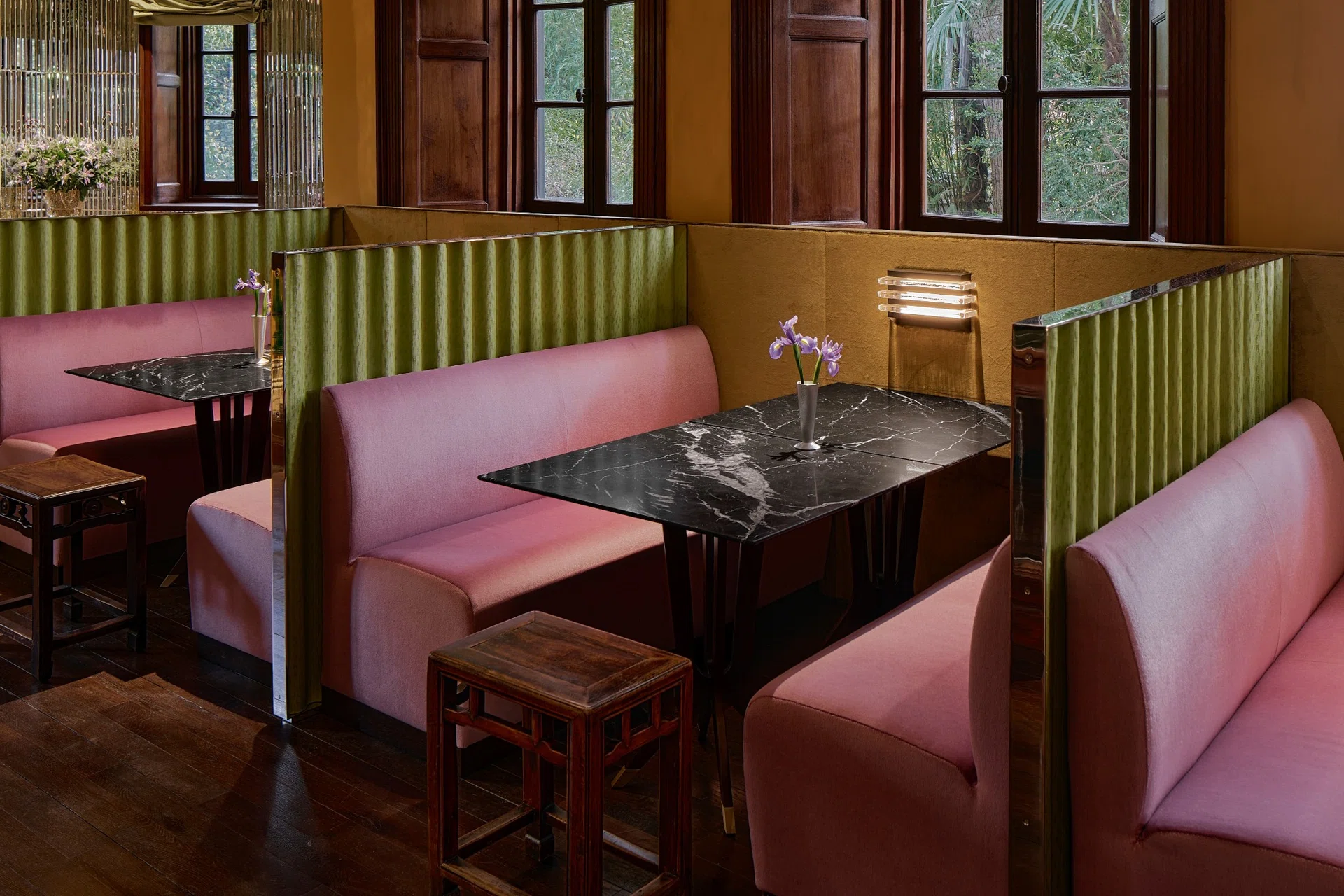
The sun is beginning to set, and the light from the window casts a dreamy orange glow onto lime-green and lilac-coloured booth seats. I am in Mi Shang Prada Rong Zhai (迷上Prada荣宅) having dinner by myself, but I do not mind at all, as I am accompanied by dusks’ visceral theatrics, commingled with texture, colour and candlelight.
This creative delight is the work of the famed Hong Kong film director Wong Kar Wai, in collaboration with Prada. The restaurant-and-cafe opened this year on March 31 in a cultural venue set within an early 20th-century villa in Shanghai’s affluent Jing’an district.
Worshipped for generation-defining films like In the Mood for Love and Chungking Express, Wong gleaned ideas from film art as well as the building’s rich history.

A historied villa
The villa belonged to Chinese tycoon Rong Zongjing (nicknamed the “Flour King of China”), who resided here in the 1920s and 1930s with his wife and seven children.
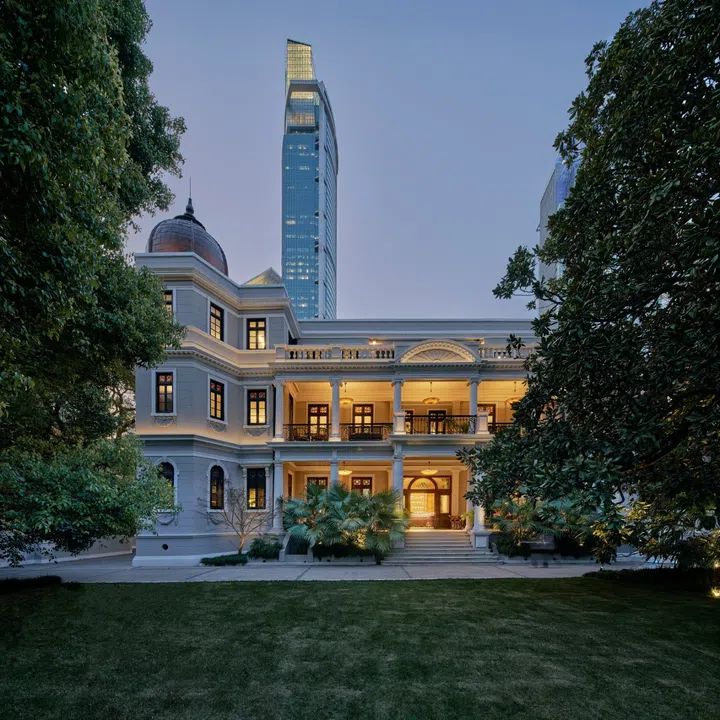
The Wuxi-born self-made entrepreneur led his business empire from this Western-style villa that he had purchased in 1918 and got noted designer Chen Chunjiang to renovate.
Christened Rong Zhai (meaning “Rong Residence”), the villa’s eclectic architecture is capped by a red dome and surrounded by sprawling gardens. Rong combined work, play and family life here; there were rooms to hold meetings as well as a ballroom (now an exhibition space), where a sunburst stained glass ceiling brings everlasting shine.
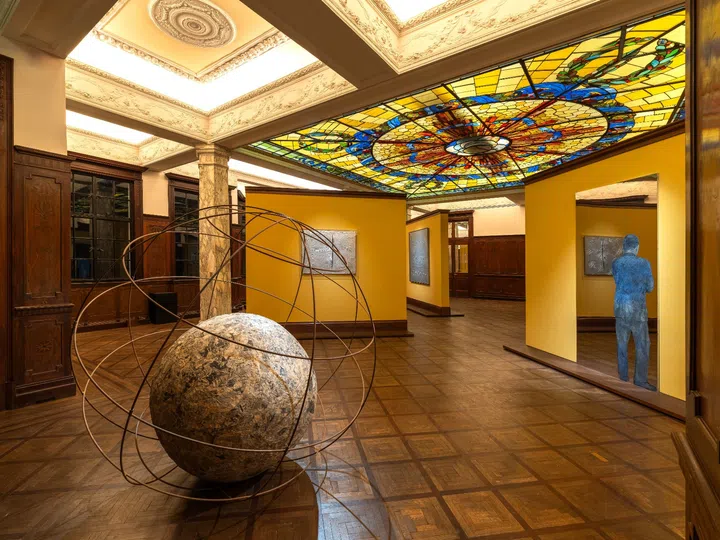
Behind closed doors in some of the rooms, Prada VIPs can also enjoy a personalised retail experience called The Apartment.
The best artisans have made their mark here, as I observe the patterned tiled floors, ceiling mouldings, and robust timber staircase balustrades and wall panelling with intricate carvings reminiscent of Islamic and European precedents.
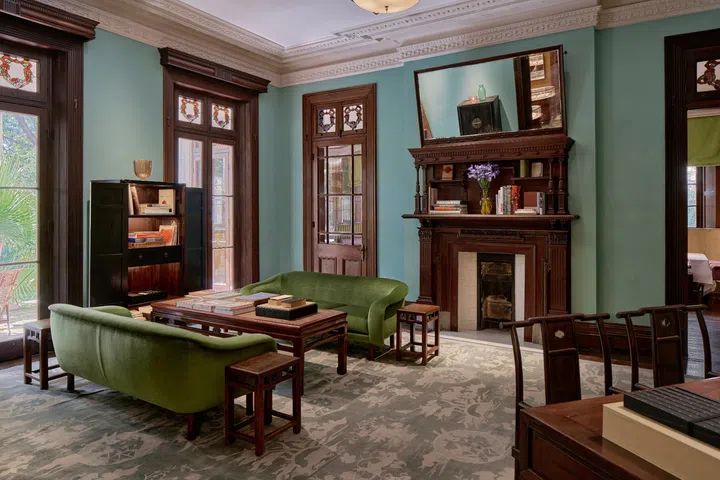
Prada’s appreciation of this heritage resulted in the luxury fashion house renting, refurbishing, and then opening in 2017 after architect Roberto Baciocchi and a team of Italian craftsmen brought the delicate gem back to life.
“Prada Rong Zhai is a unique environment, a restored villa from the early 20th century that differs significantly from a conventional exhibition space. When programming our activities, we must always keep this in mind, as this space becomes one of the actors playing a starring role; the feeling is domestic but at the same time, majestic, when you notice all the incredibly refined architectural and decorative elements,” says Chiara Costa, head of Programs Fondazione Prada, an institution founded by Miuccia Prada and Patrizio Bertelli in 1993 to promote art and culture.
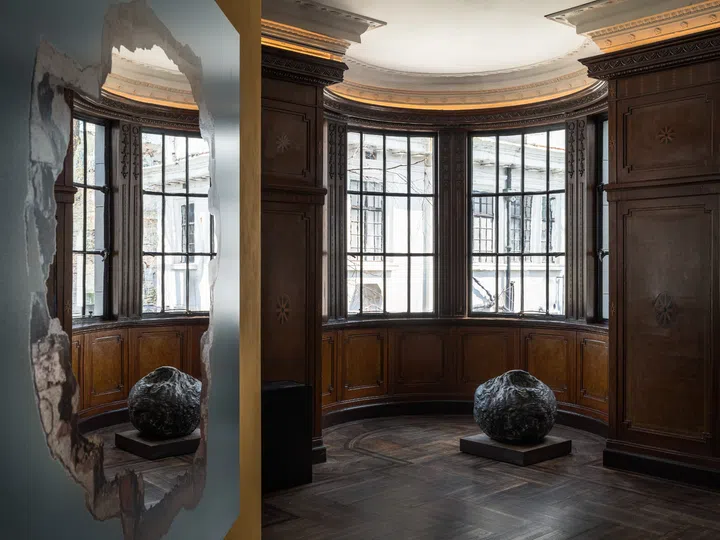
Mi Shang Prada Rong Zhai is one of Fondazione Prada’s five cultural venues, where the brand organises two exhibitions annually. The second for the year will be “A Kind of Language: Storyboards and Other Renderings for Cinema”, which was first shown in Milan.
It explores the complex creative process behind filmmaking through mood boards, sketches, annotated scripts, and other tools. It will display more than a thousand items created from 1930 to 2024 by over 50 creatives from the film industry. The exhibition will run from November 2025 through January 2026.
The Wong Kar Wai touch
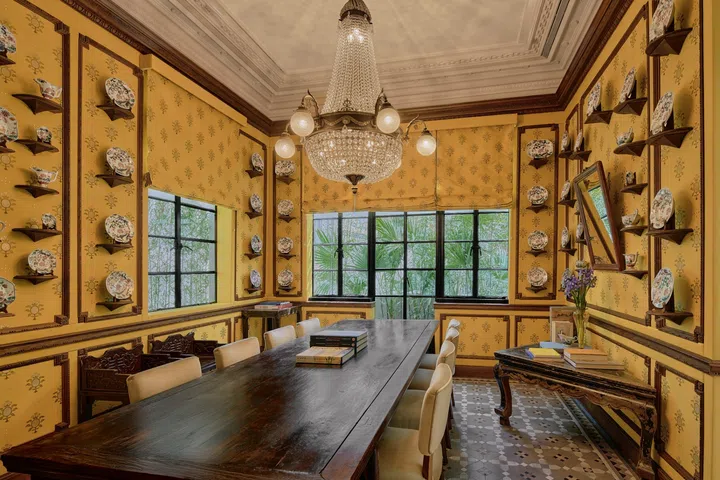
Wong’s poetic touch for Mi Shang drew on the philatelic concept of tête-bêche, which refers to a pair of stamps joined together with one inverted or mirrored in relation to the other.
The film director curated Mi Shang as a visually evocative series of sequences, beginning with The Pastry Shop, decked out with handcrafted cherry wood and brass furnishings, as a tribute to Prada’s first Milan store, which opened in the Galleria Vittoria Emanuele in 1913.
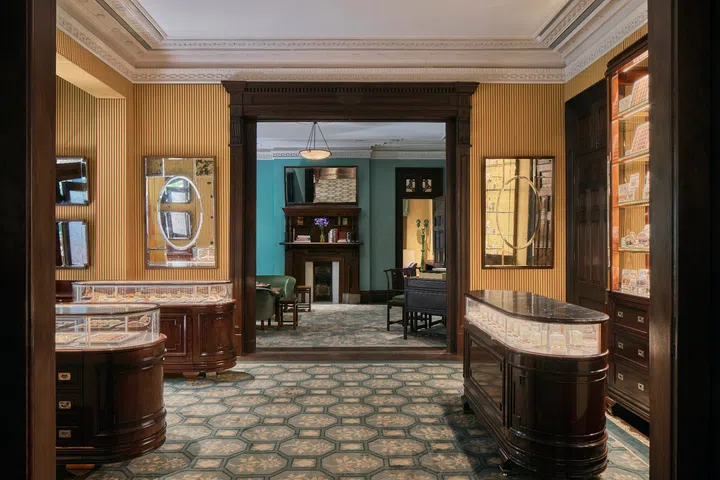
Here, glassed displays entice with pretty confectioneries like cassata, delizia al limone and nocciolina, crafted by Diego Crosar — the creative pastry director of Marchesi 1824 pastry shop in Milan (a brand under the Prada Group).
Visitors can enjoy these sweet treats with coffee in The Caffè — an Art Deco-inflected space — and lunch and dinner set menus in The Study. In the Library, they can browse a curated book collection spanning topics such as Chinese craftsmanship, the decorative arts, and Italian design.
This is the prelude to The Dining Room, where I had dinner, and where booth seats recall the meeting of lovelorn Tony Leung and Maggie Cheng over tea in the film, In the Mood for Love.
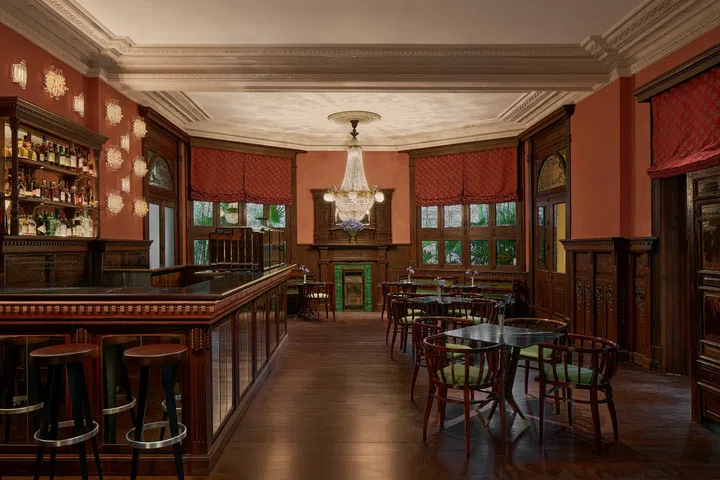
Mirrored panels, antique furniture, and gentle hues juxtapose with the villa’s extraordinary features, such as two sets of stained-glass windows.
One set depicts two junks and a pagoda (suggested by Prada as a reference to Rong and his brother’s building of a pagoda in their homeland to honour their mother), and the other features a European castle and windmill (possibly representing Rong’s flour and cotton empire on the Suzhou River banks).
All the world’s a stage
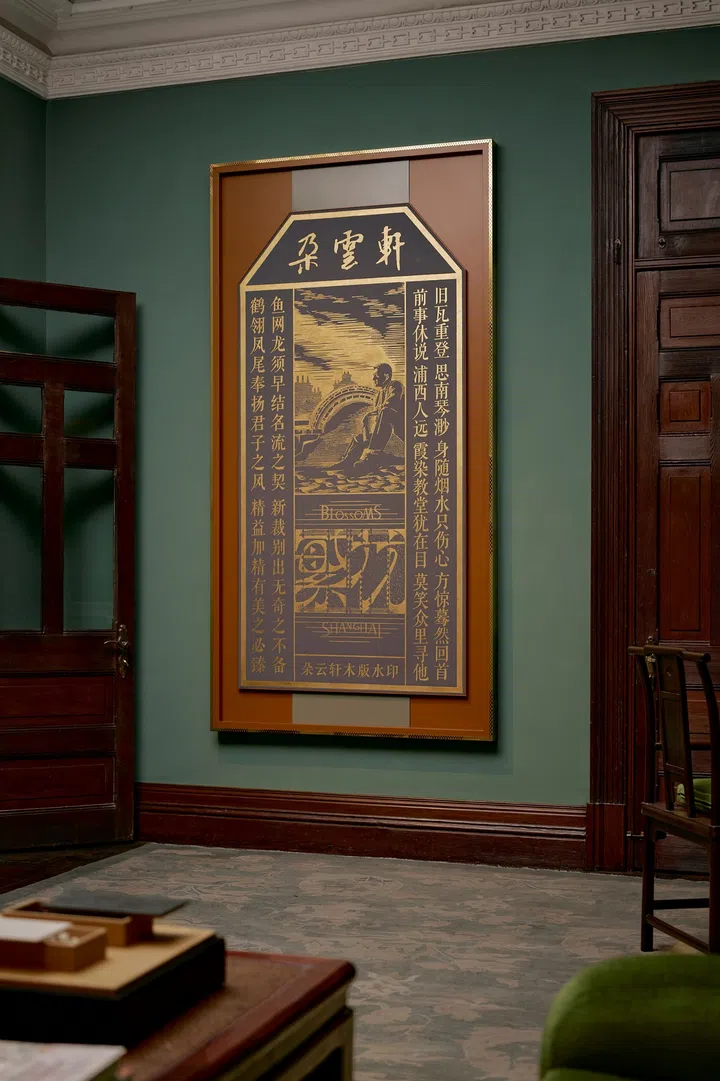
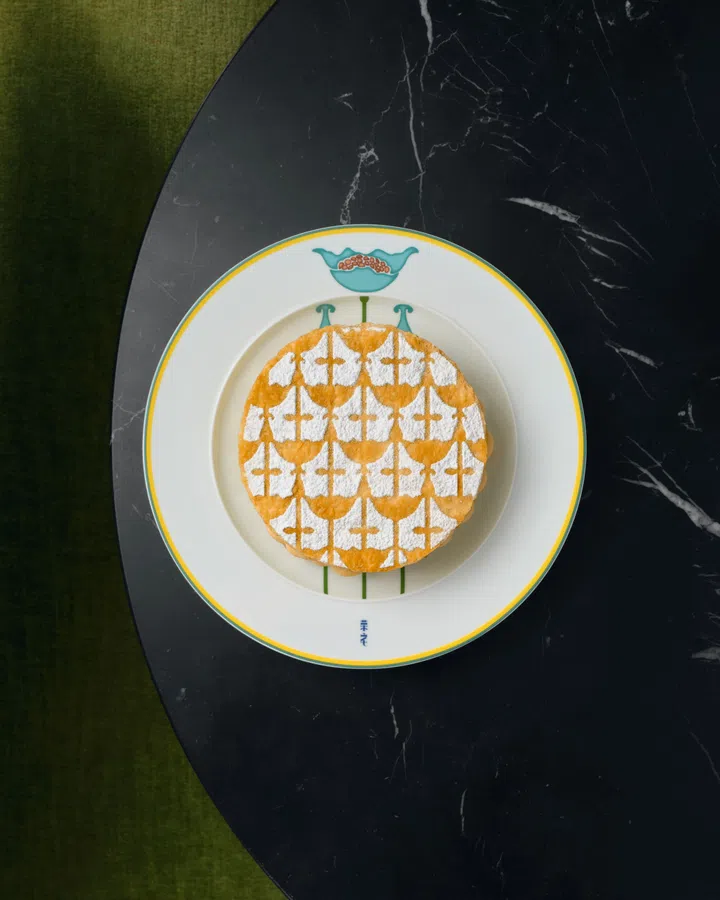
Everything at Mi Shang is considered a stage set, even the custom plates graced by the pattern of lotus that come from the ceramic tiles of the bedroom of Rong’s twin daughters.
Executive chef Lorenzo Lunghi of Ristorante Torre’s menu is equally poignant and hearty. “Mi Shang’s cuisine starts with an Italian foundation, which we have interpreted on the menu with twists using Chinese techniques and ingredients, such as citrus-glazed duck or pak choy with cacio e pepe sauce,” explains chef Lunghi.
“This is the soul of Mi Shang — a fusion of two cultures.”
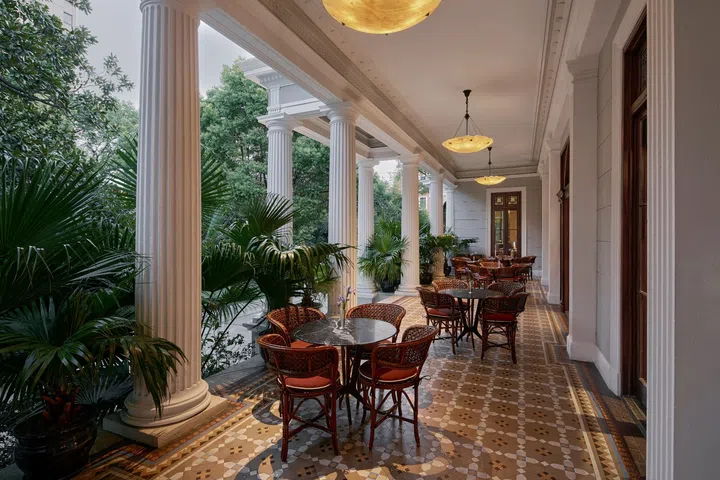
Mi Shang’s final act takes place at The Terrace, furnished with 1930s Italian bamboo furniture. This lounge space, overlooking the garden, was inspired by Arcadia Hall, Shanghai’s first open-air lounge in Zhang Yuan, which welcomed female patrons from the early 19th century onwards.
The insertion of these culinary concepts into the villa lets visitors linger and pretend for a while how it was to be a protagonist in these storied spaces — real and imagined, enduring and transient.