%22%3E%0A%3Cpath%20d%3D%22M412%20101.2H393.7C393.1%20101.2%20392.3%20100.9%20391.8%20100.5C377.3%2087.6004%20362.9%2074.6004%20348.4%2061.6004C344.8%2058.4004%20341.3%2055.2004%20337.7%2052.0004C337.1%2051.5004%20336.2%2051.1004%20335.5%2051.0004C334.2%2050.8004%20333%2051.0004%20331.5%2051.0004V101.1H316.7V0.100391H331.4V44.3004C331.9%2044.3004%20332.2%2044.4004%20332.5%2044.4004C334.9%2044.4004%20337.2%2044.5004%20339.6%2044.4004C340.4%2044.4004%20341.3%2044.0004%20341.8%2043.5004C351.6%2034.4004%20361.4%2025.2004%20371.1%2016.0004C376.5%2010.9004%20381.9%205.90039%20387.3%200.800391C387.9%200.200391%20388.5%200.000390626%20389.3%200.000390626H400.9C384.2%2015.8004%20367.8%2031.3004%20351.2%2047.0004C371.5%2065.0004%20391.8%2082.9004%20412.1%20100.9C412.1%20101%20412.1%20101.1%20412%20101.2ZM180.9%20101.2C184.1%2094.9004%20187.2%2088.9004%20190.3%2082.8004C198.3%2067.3004%20206.2%2051.8004%20214.2%2036.2004C220.3%2024.4004%20226.4%2012.5004%20232.4%200.700391C232.7%200.100391%20233%20-0.0996094%20233.7%20-0.0996094H248.1C248.8%20-0.0996094%20249.2%200.100391%20249.6%200.800391C256%2013.3004%20262.4%2025.7004%20268.8%2038.2004C279.3%2058.6004%20289.8%2079.0004%20300.3%2099.5004C300.5%20100%20300.8%20100.4%20301.1%20101.1C300.5%20101.1%20300.1%20101.2%20299.7%20101.2H286.5C285.6%20101.2%20285.1%20100.9%20284.7%20100.2C280.1%2091.3004%20275.4%2082.4004%20270.8%2073.4004C270.1%2072.1004%20269.3%2071.6004%20267.8%2071.6004H209.9C208.7%2071.6004%20208.1%2072.0004%20207.5%2073.1004C202.9%2082.1004%20198.2%2091.0004%20193.6%20100C193.1%20101%20192.6%20101.3%20191.5%20101.3C188.4%20101.2%20185.3%20101.3%20182.3%20101.3C182%20101.2%20181.6%20101.2%20180.9%20101.2ZM239.1%2011.4004C230%2029.2004%20221.1%2046.7004%20212.1%2064.3004H266.4C257.2%2046.7004%20248.2%2029.2004%20239.1%2011.4004ZM0%200.000390626H43.4C51.2%200.000390626%2058.7%201.20039%2065.7%204.80039C75.9%2010.0004%2078.9%2018.0004%2078.6%2027.4004C78.3%2034.3004%2076%2040.5004%2071.2%2045.5004C67.3%2049.6004%2062.4%2052.3004%2057.1%2054.3004C50.6%2056.7004%2043.9%2058.0004%2037.1%2058.6004C30.1%2059.2004%2023.1%2059.4004%2016.2%2059.7004C15.8%2059.7004%2015.3%2059.8004%2014.8%2059.8004V101.1H0.1C0%2067.4004%200%2033.8004%200%200.000390626ZM14.8%207.10039V52.2004C23.7%2052.4004%2032.6%2052.3004%2041.2%2050.1004C44.4%2049.3004%2047.6%2048.2004%2050.6%2046.7004C58.4%2043.0004%2062.3%2036.7004%2062.7%2028.0004C63%2019.9004%2059.5%2014.1004%2052.4%2010.5004C47.6%208.00039%2042.5%207.10039%2037.2%207.10039H14.8ZM95.9%20101.1V0.100391H167.3V7.20039H110.7V44.7004H158.1V51.9004H110.8V93.9004H171.1V101C146.1%20101.1%20121%20101.1%2095.9%20101.1Z%22%20fill%3D%22black%22%2F%3E%0A%3Cpath%20d%3D%22M35.0004%2025.7996H42.5004V20.6996H44.8004V33.1996H42.6004V27.5996H34.9004V33.2996H32.7004V20.7996H35.0004V25.7996ZM54.4004%2025.8996V27.2996H48.9004V31.6996H55.9004C55.9004%2032.1996%2056.0004%2032.5996%2056.0004%2033.0996H46.5004V20.5996H55.5004V21.8996H49.0004V25.7996C50.7004%2025.8996%2052.5004%2025.8996%2054.4004%2025.8996ZM25.9004%2033.0996H23.5004V21.9996H17.9004V20.6996H31.6004V22.0996H27.1004C26.2004%2022.0996%2025.9004%2022.2996%2025.9004%2023.1996C26.0004%2026.0996%2025.9004%2028.9996%2025.9004%2031.7996V33.0996Z%22%20fill%3D%22black%22%2F%3E%0A%3C%2Fg%3E%0A%3Cdefs%3E%0A%3CclipPath%20id%3D%22clip0_388_462%22%3E%0A%3Crect%20width%3D%22411%22%20height%3D%22101.2%22%20fill%3D%22white%22%2F%3E%0A%3C%2FclipPath%3E%0A%3C%2Fdefs%3E%0A%3C%2Fsvg%3E%0A)
The world’s most beautiful restaurants according to Prix Versailles
Ranging from a rock-like dining space in the Egyptian desert to a futuristic cocktail bar in Hong Kong, these 16 restaurants were awarded the prestigious UNESCO-supported awards on June 1.
By Luo Jingmei /
Share this article
What do Akira Back, Hana no Kumo, and Peridot have in common? They are all restaurants located in The Henderson, Hong Kong — a skyscraper designed by Zaha Hadid Architects. They are also all included in the World’s Most Beautiful Restaurants List 2026, published by Prix Versailles and announced on June 1, 2026.
There are 16 winners in all. At the end of the year, three of the restaurants will further receive a World Title, either Prix Versailles Interior or Exterior.
The awards, started in 2015, are presented at UNESCO’s French headquarters at the end of the year. It aims to highlight excellent architectural and interior design projects worldwide with superior sustainability, cultural, and contextual credentials.
“The world encompasses such an immense variety of flavours that it continuously compels us to expand our vision of culinary heritage. And architecture both serves and is inspired by that vision, inviting us on succulent new journeys from Hong Kong to Los Angeles, by way of Helsinki and Cape Town,” Jérôme Gouadain, secretary general of the Prix Versailles.
He adds, “Whether part of a protected building or an emporium, towering over an urban landscape or melding with the surrounding scenery, the décor at these sixteen establishments is imbued with an array of styles and colours that put each one in perfect harmony with its environments…and its menu. Here, the art of hospitality goes hand in hand with the art of cultivating unforgettable experiences.”
The list is the third to be released by the organisation after the museums and hotels categories. The list of airports was announced on June 15, and the emporiums, campuses, passenger stations, and sports category winners will be announced over the next few months.
The restaurant winners are:
- Nobu One Za’abeel in Dubai, United Arab Emirates
- Le Fou in Vienna, Austria
- Monti in Gstaad, Switzerland
- Akira Back in Hong Kong, China
- Hana no Kumo in Hong Kong, China
- Peridot in Hong Kong, China
- Monsieur Dior by Anne-Sophie Pic in Beijing, China
- Escā Playa in Ras El Hekma, Egypt
- Finlandia Bistro in Helsinki, Finland
- Carbone in London, United Kingdom
- Rosso in Hinganigada, India
- Marlow in Monaco, Monaco
- Lucia in Los Angeles, United States
- Monsieur Dior by Dominique Crenn in Beverly Hills, United States
- Mottai in Coral Gables, United States
- Amura by Ángel León in Cape Town, South Africa
Here are some highlights:
Monsieur Dior by Anne-Sophie Pic in Beijing, China
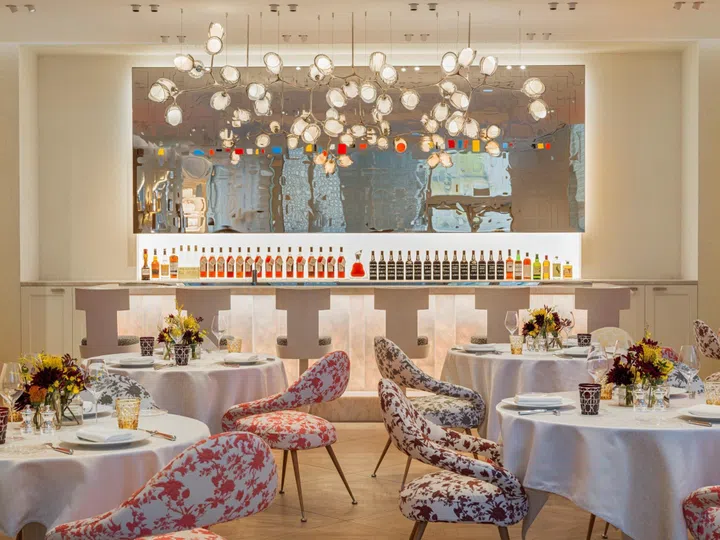
Monsieur Dior by Anne-Sophie Pic is located in architect Christian de Portzamparc’s petal-like House of Dior in Beijing.
Its interior traces the architecture’s feminine character but balances it with romantic black-and-white photographs and bold artworks. These include a reproduction of René Bouché’s painting of Christian Dior and commissioned pieces by Chinese artist Hong Hao that pay tribute to the red “colour of life” that the late fashion designer adored.
Delicate decorative motifs on the furnishings reflect chef Pic’s culinary presentations, often described as embroidered art.
Peridot in Hong Kong, China
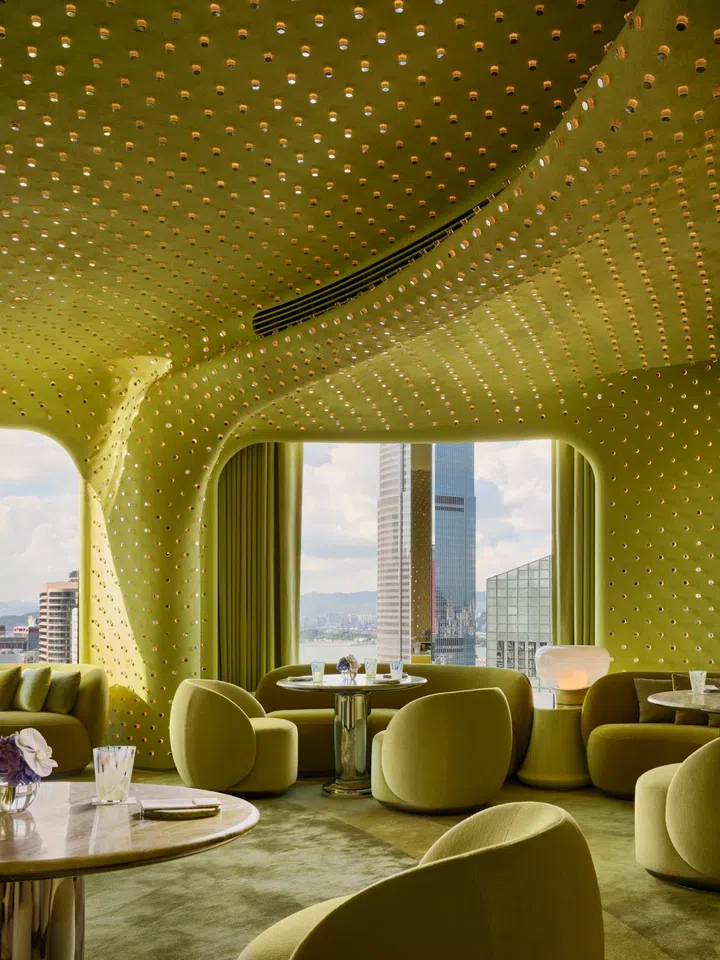
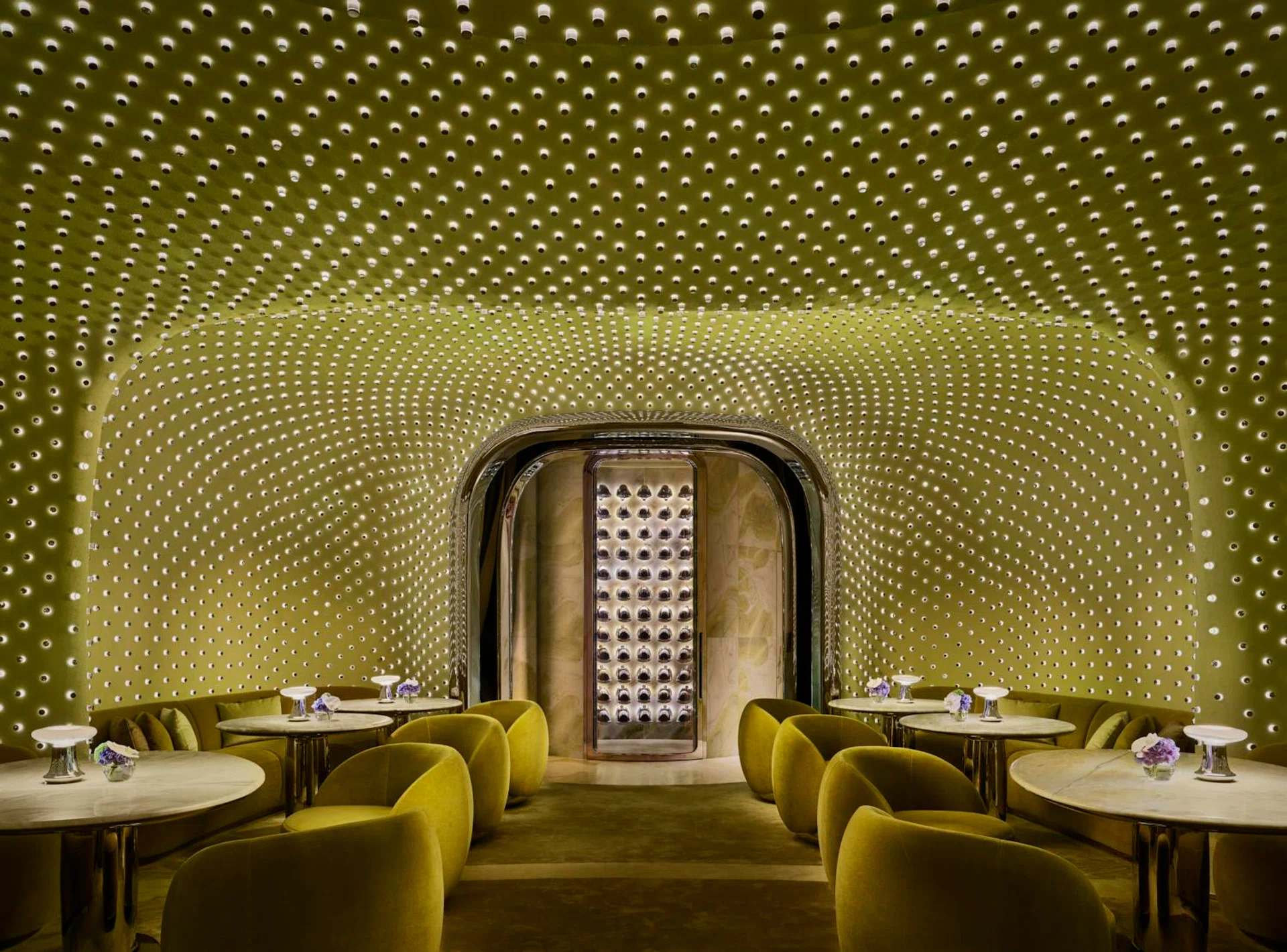
Cocktail bar and restaurant Peridot is located in The Henderson by Zaha Hadid Architects in Central, Hong Kong.
Studio Paolo Ferrari expressed the theme of “Natural Futurism” through chrome elements, fluid lines that mimic the architecture’s curved forms, and over 20,000 handcrafted lights embedded in the surfaces.
Theatricality meets sensuality at thresholds that frame the enigmatic city skyline like a proscenium. These two different worlds combine in surreal tension, smoothed over by a distinctive moss-green shade, which suits the vegan (plant-based) dishes by culinary artist Lisandro Illa.
Hana no Kumo in Hong Kong, China
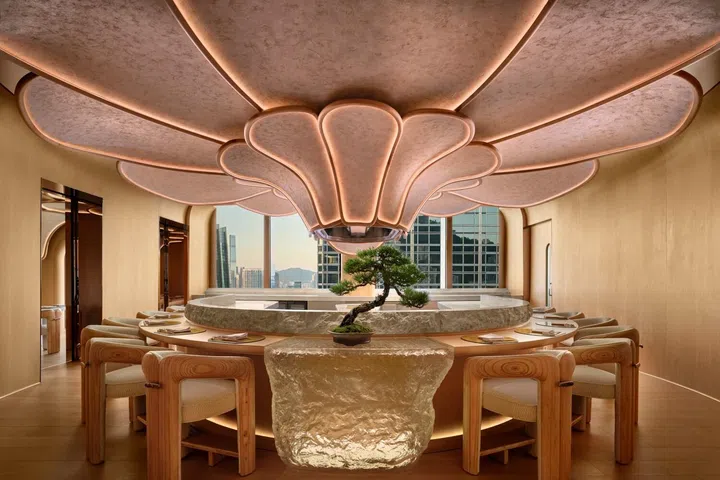
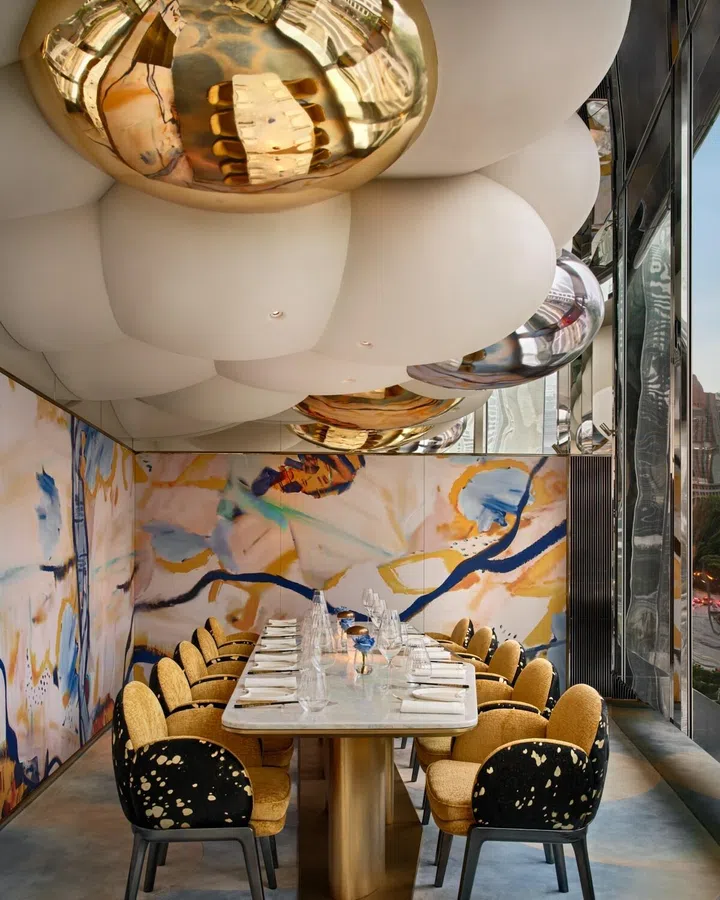
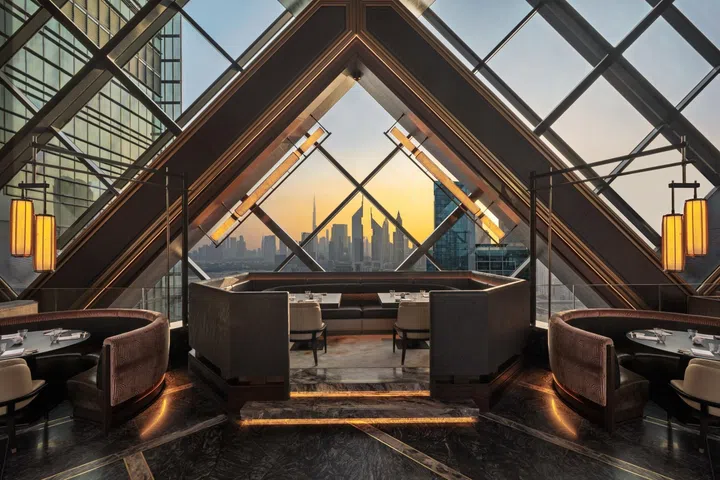
Designed by HBA (Hirsch Bedner Associates) for chef Ogawa Masaru, Hana no Kumo (“flower of the cloud” in Japanese) is a spectacular 24-seater dining destination for the views out from the 38th storey of The Henderson building, designed by Zaha Hadid Architects, as well as the dramatic sakura ‘blooms’ at the ceiling.
The restaurant’s shokunin spirit — lifelong and almost-spiritual dedication to a craft — transcends both the kappo cuisine and the tactile palette of timber, washi paper, and stone.
The designers’ mastery of materials comes to the fore, marrying bold proportions with delicate forms.
Finlandia Bistro in Helsinki, Finland
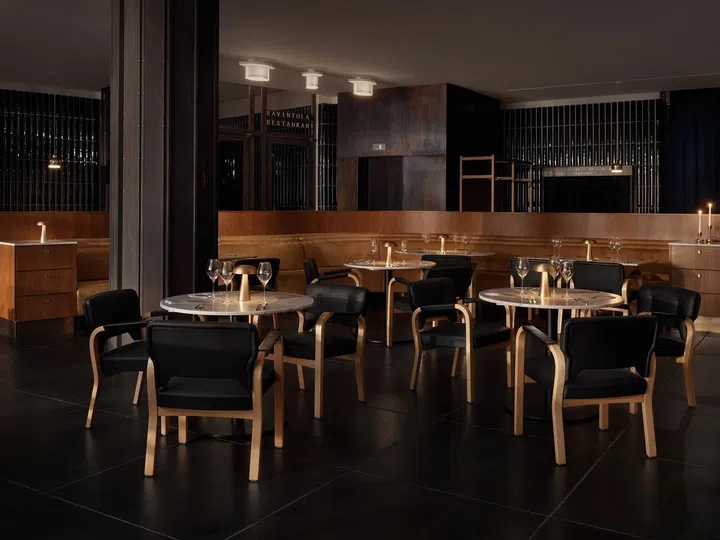
In 1971, Finnish modernist maverick Alvar Aalto completed the Finlandia Hall. The performance and conventional centre facing Töölönlahti Bay completed a comprehensive renovation in 2025.
Design agency Fyra reworked the dining spaces served by head chef Mikko Puuronen and his team. Muted tones create a subdued environment for pre-show or after-show contemplation, while Aalto’s iconic furniture and other Scandinavian designs feature as the protagonists.
It takes a keen understanding of Aalto’s ethos and restraint to create a space that does not overpower the iconic furniture while expressing the use of natural materials as the famous architect and designer did. In this, Fyra has done well.
Le Fou in Vienna, Austria
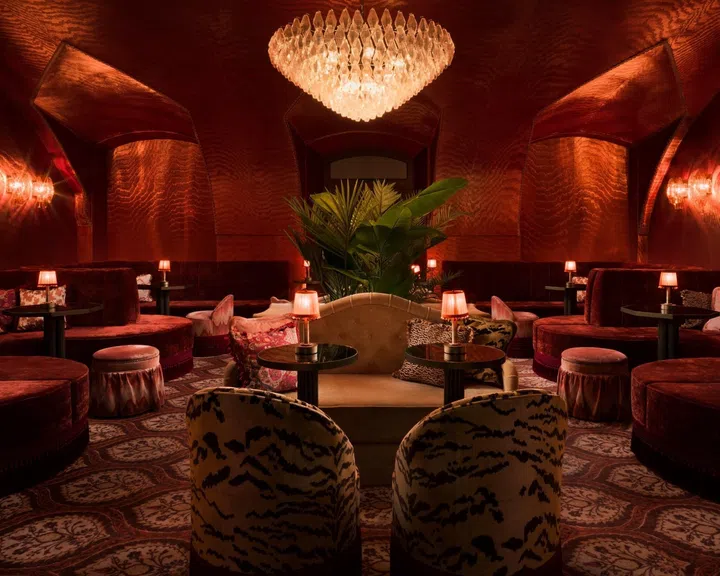
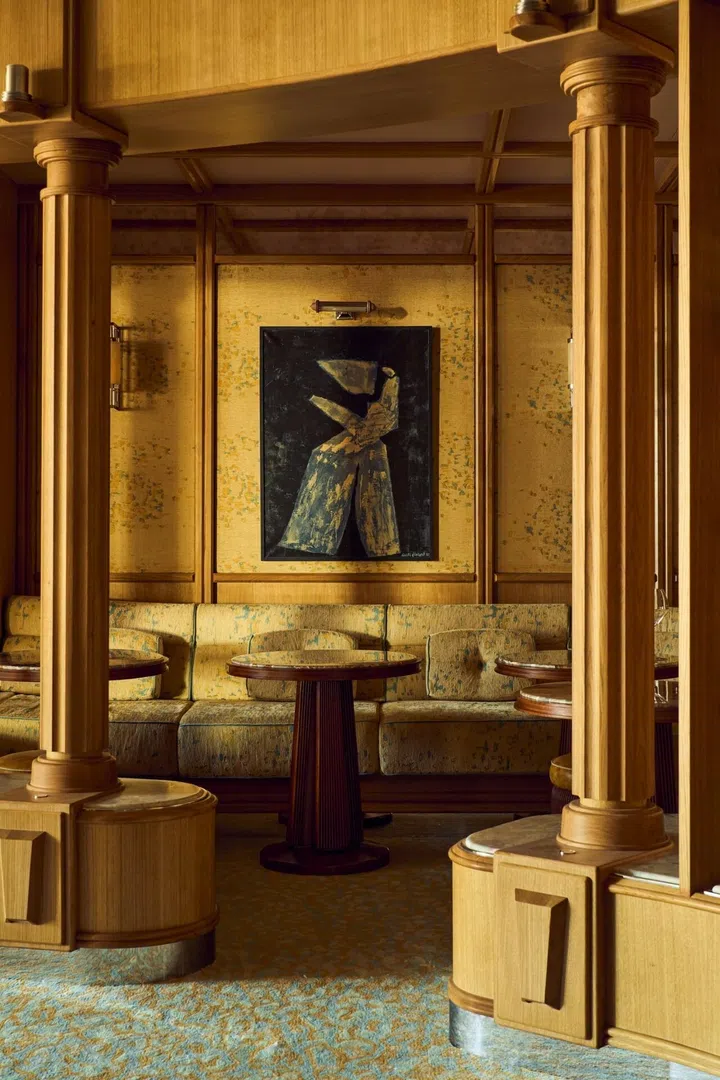
Parisian nightlife inspired the cocktail bar and restaurant Le Fou (“the fool”). Located within The Leo Grand boutique hotel, interior designer Theresa Obermoser created sensual, layered and evocative interconnected rooms using silk, mohair velvet, natural stone, and patinated metal.
In the main lounge, rust and terracotta shades, floral motifs, velvet lounges, and mosaic set recall old-world glamour. In the golden lounge, gold finishes, leopard prints, and patterned marble tables create a distinct theatrical mood.
Dining is not only about sustenance but also about life, joy, drama, and storytelling. Le Fou is a good example of that.
Escā Playa in Ras El Hekma, Egypt
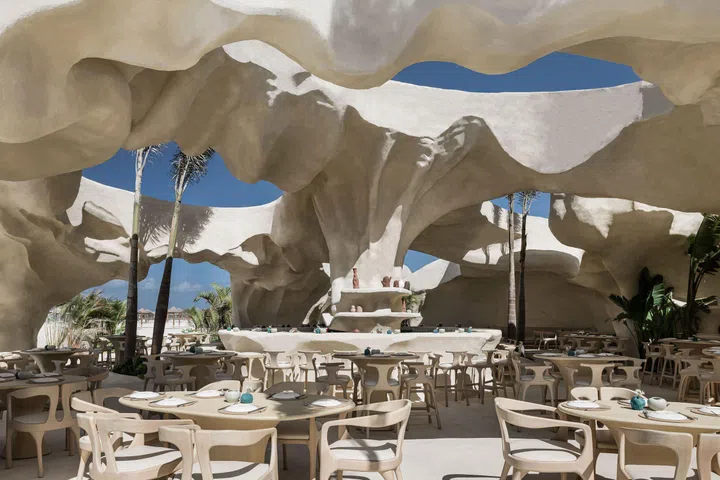
Cairo-based architect Mohamed Badie’s restaurant on Egypt’s North Coast appears as part of the desert. Sand and sky are framed through curvy openings in the rock-like volume that frames the distinctive environment.
The building’s mineral coatings and coral aggregations reinforce the connection to nature. The restaurant turns into a nightlife venue after the sun disappears behind the dunes.
Creating a space and building in such a setting is challenging enough. That Escā Playa feels like it has always been here makes it a worthy winner of the prize.