%22%3E%0A%3Cpath%20d%3D%22M412%20101.2H393.7C393.1%20101.2%20392.3%20100.9%20391.8%20100.5C377.3%2087.6004%20362.9%2074.6004%20348.4%2061.6004C344.8%2058.4004%20341.3%2055.2004%20337.7%2052.0004C337.1%2051.5004%20336.2%2051.1004%20335.5%2051.0004C334.2%2050.8004%20333%2051.0004%20331.5%2051.0004V101.1H316.7V0.100391H331.4V44.3004C331.9%2044.3004%20332.2%2044.4004%20332.5%2044.4004C334.9%2044.4004%20337.2%2044.5004%20339.6%2044.4004C340.4%2044.4004%20341.3%2044.0004%20341.8%2043.5004C351.6%2034.4004%20361.4%2025.2004%20371.1%2016.0004C376.5%2010.9004%20381.9%205.90039%20387.3%200.800391C387.9%200.200391%20388.5%200.000390626%20389.3%200.000390626H400.9C384.2%2015.8004%20367.8%2031.3004%20351.2%2047.0004C371.5%2065.0004%20391.8%2082.9004%20412.1%20100.9C412.1%20101%20412.1%20101.1%20412%20101.2ZM180.9%20101.2C184.1%2094.9004%20187.2%2088.9004%20190.3%2082.8004C198.3%2067.3004%20206.2%2051.8004%20214.2%2036.2004C220.3%2024.4004%20226.4%2012.5004%20232.4%200.700391C232.7%200.100391%20233%20-0.0996094%20233.7%20-0.0996094H248.1C248.8%20-0.0996094%20249.2%200.100391%20249.6%200.800391C256%2013.3004%20262.4%2025.7004%20268.8%2038.2004C279.3%2058.6004%20289.8%2079.0004%20300.3%2099.5004C300.5%20100%20300.8%20100.4%20301.1%20101.1C300.5%20101.1%20300.1%20101.2%20299.7%20101.2H286.5C285.6%20101.2%20285.1%20100.9%20284.7%20100.2C280.1%2091.3004%20275.4%2082.4004%20270.8%2073.4004C270.1%2072.1004%20269.3%2071.6004%20267.8%2071.6004H209.9C208.7%2071.6004%20208.1%2072.0004%20207.5%2073.1004C202.9%2082.1004%20198.2%2091.0004%20193.6%20100C193.1%20101%20192.6%20101.3%20191.5%20101.3C188.4%20101.2%20185.3%20101.3%20182.3%20101.3C182%20101.2%20181.6%20101.2%20180.9%20101.2ZM239.1%2011.4004C230%2029.2004%20221.1%2046.7004%20212.1%2064.3004H266.4C257.2%2046.7004%20248.2%2029.2004%20239.1%2011.4004ZM0%200.000390626H43.4C51.2%200.000390626%2058.7%201.20039%2065.7%204.80039C75.9%2010.0004%2078.9%2018.0004%2078.6%2027.4004C78.3%2034.3004%2076%2040.5004%2071.2%2045.5004C67.3%2049.6004%2062.4%2052.3004%2057.1%2054.3004C50.6%2056.7004%2043.9%2058.0004%2037.1%2058.6004C30.1%2059.2004%2023.1%2059.4004%2016.2%2059.7004C15.8%2059.7004%2015.3%2059.8004%2014.8%2059.8004V101.1H0.1C0%2067.4004%200%2033.8004%200%200.000390626ZM14.8%207.10039V52.2004C23.7%2052.4004%2032.6%2052.3004%2041.2%2050.1004C44.4%2049.3004%2047.6%2048.2004%2050.6%2046.7004C58.4%2043.0004%2062.3%2036.7004%2062.7%2028.0004C63%2019.9004%2059.5%2014.1004%2052.4%2010.5004C47.6%208.00039%2042.5%207.10039%2037.2%207.10039H14.8ZM95.9%20101.1V0.100391H167.3V7.20039H110.7V44.7004H158.1V51.9004H110.8V93.9004H171.1V101C146.1%20101.1%20121%20101.1%2095.9%20101.1Z%22%20fill%3D%22black%22%2F%3E%0A%3Cpath%20d%3D%22M35.0004%2025.7996H42.5004V20.6996H44.8004V33.1996H42.6004V27.5996H34.9004V33.2996H32.7004V20.7996H35.0004V25.7996ZM54.4004%2025.8996V27.2996H48.9004V31.6996H55.9004C55.9004%2032.1996%2056.0004%2032.5996%2056.0004%2033.0996H46.5004V20.5996H55.5004V21.8996H49.0004V25.7996C50.7004%2025.8996%2052.5004%2025.8996%2054.4004%2025.8996ZM25.9004%2033.0996H23.5004V21.9996H17.9004V20.6996H31.6004V22.0996H27.1004C26.2004%2022.0996%2025.9004%2022.2996%2025.9004%2023.1996C26.0004%2026.0996%2025.9004%2028.9996%2025.9004%2031.7996V33.0996Z%22%20fill%3D%22black%22%2F%3E%0A%3C%2Fg%3E%0A%3Cdefs%3E%0A%3CclipPath%20id%3D%22clip0_388_462%22%3E%0A%3Crect%20width%3D%22411%22%20height%3D%22101.2%22%20fill%3D%22white%22%2F%3E%0A%3C%2FclipPath%3E%0A%3C%2Fdefs%3E%0A%3C%2Fsvg%3E%0A)
The Buying Guide: Top tips for your next gold jewellery purchase in Singapore
With gold hitting record peaks in a volatile market, jewellery is being redefined as wearable wealth. This guide explores the world of investment-grade jewellery and how to choose pieces in Singapore that combine beauty with lasting value.
By Louisa Lim /
Share this article
Gold is having a moment. Prices have surged by nearly 50 per cent over the past few years, peaking at a record US$4,528 (around $5,820) per ounce by end-December 2025. The rally has reignited global fascination with the precious metal — and not just among seasoned investors.
Interest in investment-grade jewellery has grown as consumers become more aware of gold’s potential for value appreciation. They’re increasingly viewing jewellery purchases as part adornment, part investment — a balance between beauty and financial prudence.
Unlike gold bullions, which are regarded as a safer store of value, jewellery introduces variables such as design, craftsmanship, and brand provenance that can influence both appreciation and resale potential.
For those who do buy, experts agree that gold weight is the most consistent determinant of value. Vihari Sheth, managing director of Vihari Jewels, points out, not all gold is the same — and understanding purity is key.
In Malaysia and Singapore, gold is often referred to by its fineness — that is, the number of parts of pure gold per 1,000. Gold indicated as 999, for example, contains 99.9 per cent pure gold, which is equivalent to 24-karat gold, the standard for bullion bars and coins.
916 gold, on the other hand, is 91.6 per cent pure and roughly equivalent to 22-karat gold. That is a popular choice for jewellery in Asia due to its warm yellow tone and slightly greater durability.
Sheth explains that most fine jewellery, especially luxury creations from global houses, is typically made from 18-karat gold, which translates to 750 gold (75 per cent pure). The trade-off, however, is that these alloys mean 18k gold has a lower resale value per gram than 24k bullion.
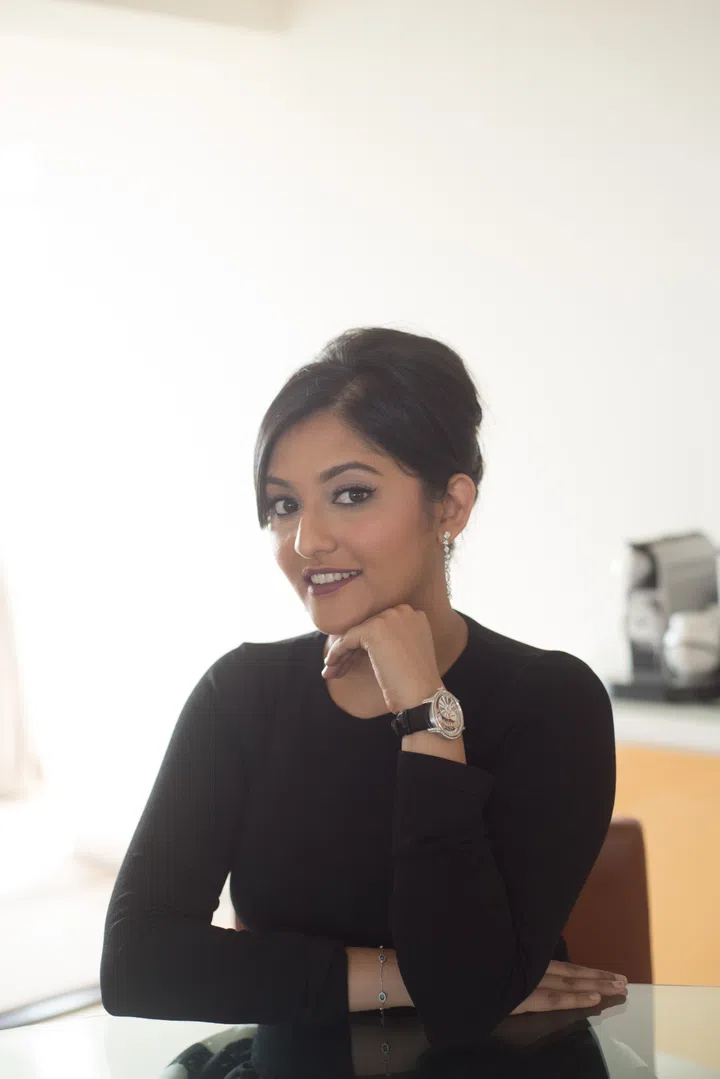
According to Angela Loh, founder of UltraLuxe, an annual luxury jewellery and watch event in Singapore, this is because perceptions of gold differ sharply across cultures.
European jewellery houses historically refined 18k gold to balance durability and artistry, reflecting a focus on craftsmanship rather than metal value. Asian consumers, in contrast, have long viewed gold as a form of wealth preservation, where purity mattered more than design — a mindset that has only begun to shift in recent decades.
Choosing the right gold jewellery
Loh notes that while gold weight remains the primary determinant of value, design, artistry, and the rarity of gemstones play an equally significant role.
“Consider the works of renowned designers such as Joel Arthur Rosenthal (JAR), one of the most celebrated contemporary jewellers of the 21st century, or Wallace Chan, the world-renowned Chinese jewellery artist and sculptor,” adds Loh.
“These are creators regarded as artists more than jewellers — and their pieces can generate higher returns over time, especially when they achieve collector desirability.”
Many buyers assume that a higher price tag automatically signals higher investment value — but that’s not always true.
“Design and brand value are both forms of intellectual property — intangible yet powerful,” Sheth explains. “Their worth depends on perception rather than quantifiable metrics.”

Heritage maisons like Cartier, Van Cleef & Arpels, Bvlgari, and Graff offer more substantial investment value, thanks to their craftsmanship, archival icons, and established resale markets. Their pieces, especially high jewellery, hold or appreciate steadily over time, supported by auction demand and proven authenticity.
If you’re thinking of buying gold jewellery with investment value in mind, Sheth recommends starting with one golden rule: always buy from a reputable and trustworthy source. “Ensure the gold is properly hallmarked — whether it’s 18k, 916, or 999 — and understand what those marks mean,” she says.
She also advises focusing on workmanship and timeless design. “Pieces that are beautifully made and can be worn across generations preserve appeal over time,” she elaborates.
When asked about timing purchases, Loh’s advice is philosophical yet practical. “Prices will always go up and down. Take a long-term view and have faith in your perspective on investing in precious items. Jewellery investment shouldn’t be purely monetary — life should be more than investing for money alone.”
At a glance
For the entry-level gold buyer: Poh Heng Dazzle Dew Earrings
For the vintage horology investor: Rolex Ladies 18K Bracelet Watch (1953) by Bakhache
For the archival collector: Tiffany & Co. Elsa Peretti Bone Cuff
The Peak Singapore’s top 10 gold jewellery picks for investors
For the entry-level gold buyer: Poh Heng Dazzle Dew Earrings
Price: $1,010
Material: 999 gold
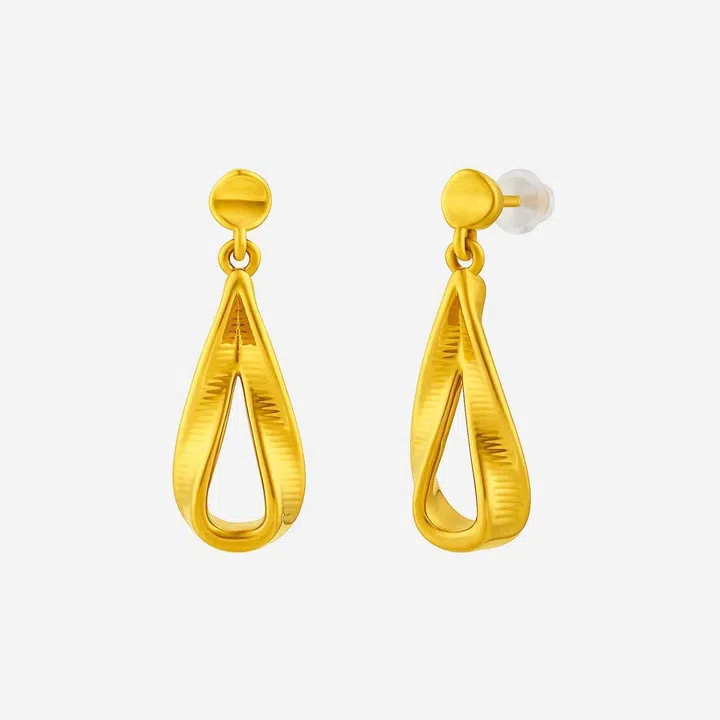
These earrings from Poh Heng represent an accessible and elegant entry point into gold jewellery investment. Crafted in pure gold, these earrings hold near-bullion purity — meaning most of their value is tied directly to the gold itself rather than markups for brand name or complex design.
Their lightweight and minimalist design makes them ideal for buyers who want to own physical gold in a form that’s versatile and liquid, with easy resale potential in the local market. While they may not appreciate as much as limited or design-heavy collections, they provide steady value retention and a subtle aesthetic charm.
For the mid-tier buyer: Chow Tai Fook Palace Museum 999 Gold Diamond Earrings
Price: $1,800
Material: 999 gold with diamond detailing
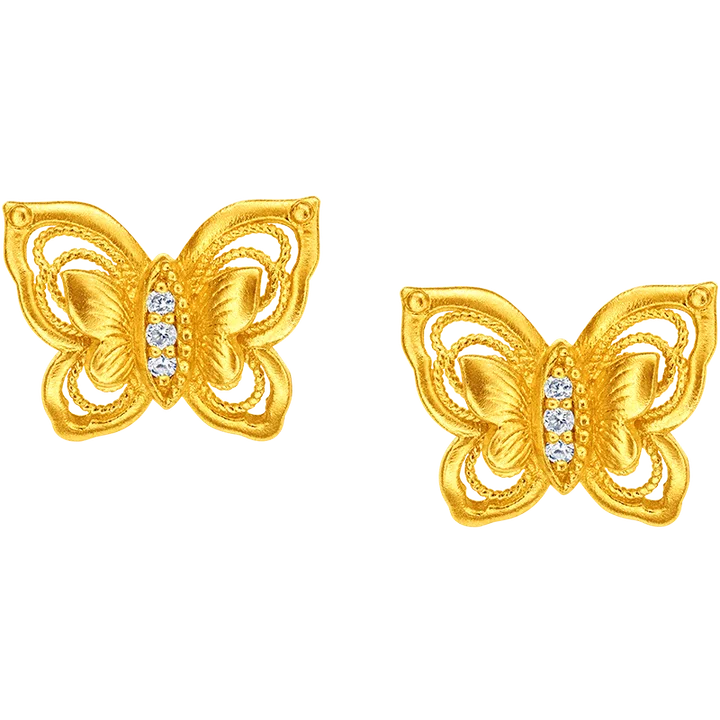
A collaboration between Chow Tai Fook and The Palace Museum in Beijing and Hong Kong, this newly launched pair of diamond earrings stands out as one of the brand’s most refined cultural creations. Made of bullion-grade gold, they combine intrinsic value with exquisite craftsmanship and a strong storytelling element, making them a rarity among pure-gold pieces.
Their value extends beyond the gold itself: The Palace Museum partnership adds heritage credibility and collectable appeal, elevating these earrings above standard bullion jewellery. As part of a limited run, they also benefit from high resale liquidity in Asian markets, where Chow Tai Fook collaboration pieces are in strong demand.
Expect modest appreciation of around 10 to 20 per cent over time, driven by collector interest and cultural significance.
For the discreet luxury investor: Laurence Graff Signature Bangle
Price: $11,700
Material: 18k yellow gold
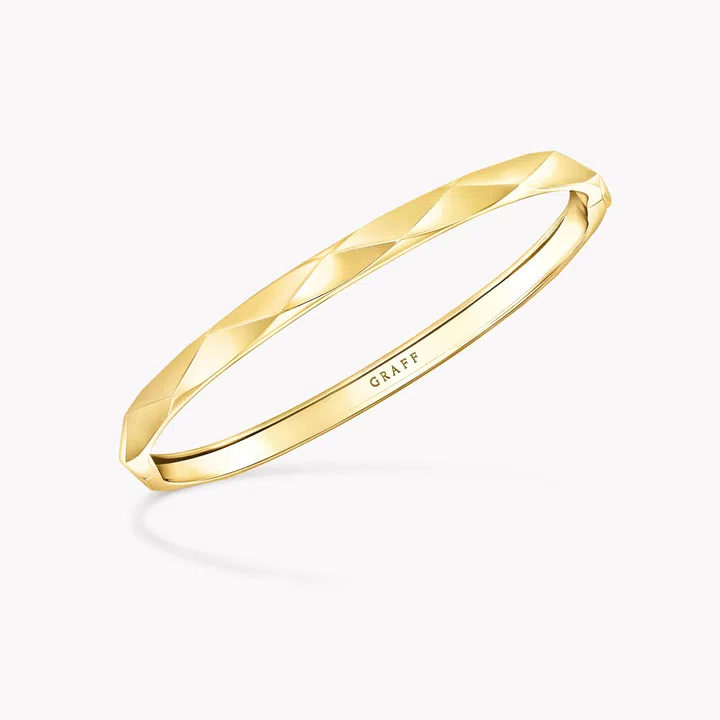
Part of the Laurence Graff Signature collection, this bangle embodies the maison’s diamond-cutting heritage through its distinctive faceted design. Each angular plane is hand-polished in-house to achieve a mirror-like brilliance — a nod to Graff’s precision craftsmanship and sculptural minimalism.
It’s the ultimate expression of “quiet wealth” — defined not by logos or stones, but by gold volume, form, and finish. While Graff’s high retail pricing and limited production mean resale liquidity is slower, pieces from this line often retain 70 per cent or more of their retail value due to exceptional craftsmanship and intrinsic gold weight.
Buy this piece if you value heirloom-grade solidity, prefer architectural simplicity over overt branding, and are comfortable with a longer resale horizon.
For the collector of craft: Buccellati Torsadé Yellow Gold Ring
Price: $7,100 (incl. GST)
Material: 18k yellow gold
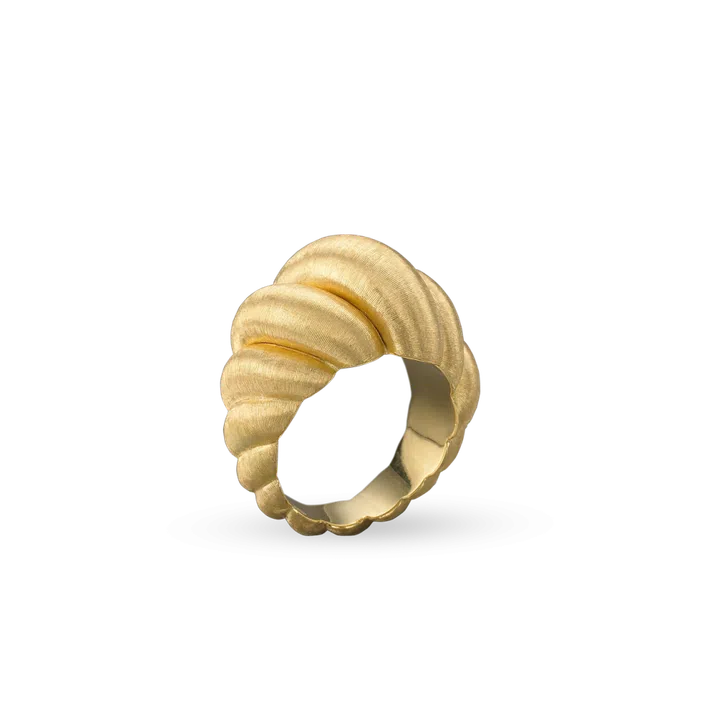
This ring exemplifies the Italian maison’s devotion to handcraft, as each piece is sculpted, engraved, and polished using century-old goldsmithing techniques practised by few ateliers today.
Its twisted, rope-like form is deceptively simple yet intensely labour-intensive to achieve Buccellati’s trademark interplay of matte and shine. Each piece carries a built-in scarcity premium: no two rings are identical, and few goldsmiths today can replicate its tactile finesse.
This is haute craft rather than logo-led luxury. Buccellati’s low production and Richemont-backed global revival have been raising collector awareness and resale interest, particularly for hand-engraved classics. Over time, as the Italian maison’s heritage narrative gains momentum, this ring may well transition from quiet luxury to collector-grade gold art.
Expect a five to 10-year appreciation potential, driven more by rising recognition of artisanal rarity than by fashion cycles.
For heritage lovers: Fabergé Treillage Brushed Heart Surprise Locket
Price: Approx. $22,500
Material: 18k yellow gold with emerald and pavé diamonds
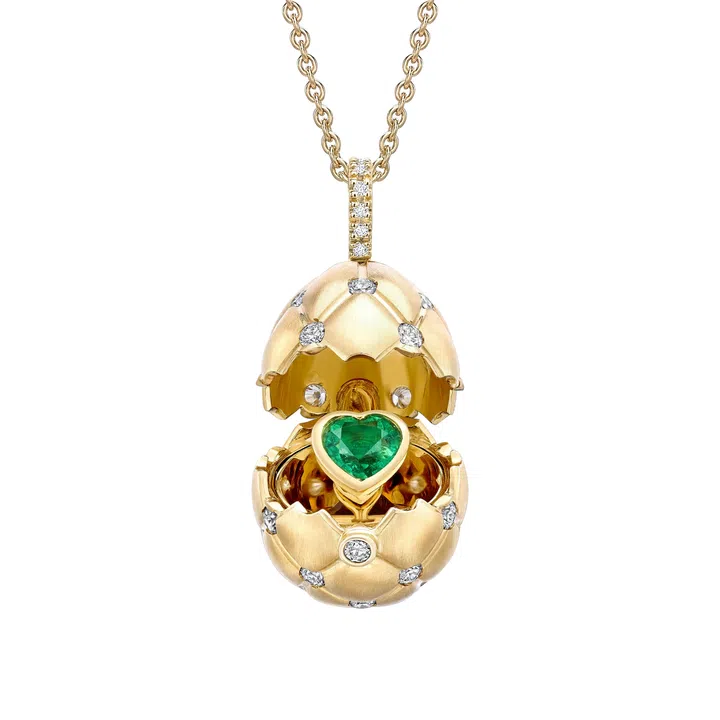
This locket captures the spirit of one of history’s most storied jewellery houses — once jeweller to the Russian Imperial Court and now revitalised under Gemfields’ ownership. Part of the Treillage collection, it draws direct inspiration from the 1892 Diamond Trellis Egg, one of Fabergé’s most important Imperial masterpieces.
Mechanically ingenious, the miniature hinged egg opens to reveal a three-dimensional rotating emerald heart, a contemporary nod to Fabergé’s famed surprise eggs from the late 19th century. Its hand-brushed matte finish contrasts elegantly with pavé-set diamonds, combining old-world craftsmanship with modern refinement.
Among Fabergé’s current creations, the Treillage collection stands out as its most collectable modern line, merging Imperial heritage, mechanical craft, and everyday wearability. These pieces consistently outperform Fabergé’s simpler enamel offerings in secondary markets, maintaining near-stable resale value with moderate appreciation potential as the house continues to rebuild prestige post-revival.
For the established collector: Van Cleef & Arpels Vintage Alhambra Pendant, Guilloché
Price: $6,100
Material: 18k yellow gold (guilloché finish)
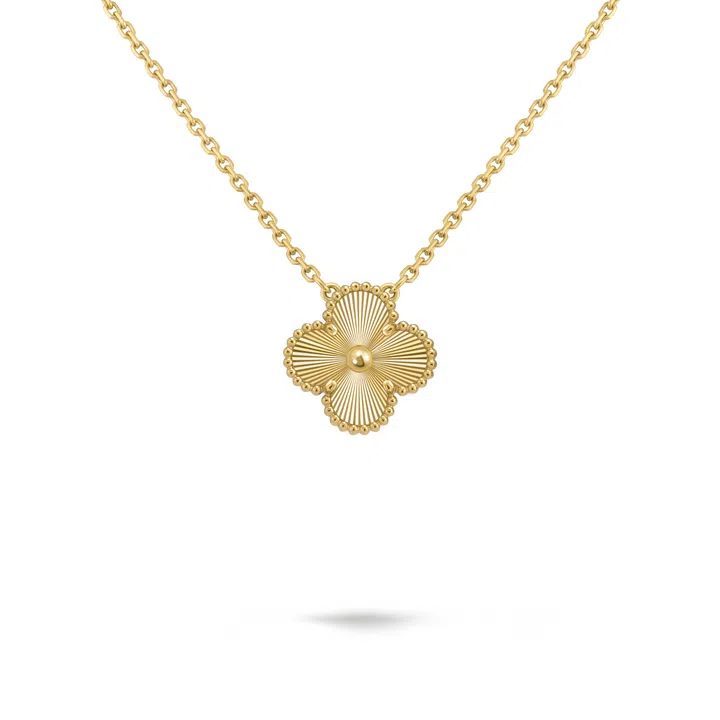
Within Van Cleef & Arpels’ iconic Alhambra collection, the guilloché pendant sits at the pinnacle of craftsmanship. It forgoes stone inlay for an all-metal execution, where artistry replaces material opulence. The surface is engraved using an engine-turning process that creates microscopic sun-ray lines, giving the gold a mesmerising shimmer that changes with every angle of light.
Each motif is individually machined and polished — not cast or stamped — before being framed by the Alhambra’s signature golden bead border, a process that mirrors the 1968 original design. The result is a pendant that looks gem-set yet is entirely metal, embodying the maison’s technical mastery.
Because it is both timeless and highly recognisable, the guilloché Alhambra maintains strong resale liquidity. On secondary markets, resale pieces often hold 65 to 80 per cent of retail value, sometimes higher for limited-run editions.
For the vintage horology investor: Vacheron Constantin Women’s Watch, circa 1950s
Price: €16,707 ($25,720)
Material: 18k yellow gold with hand-wound mechanical movement
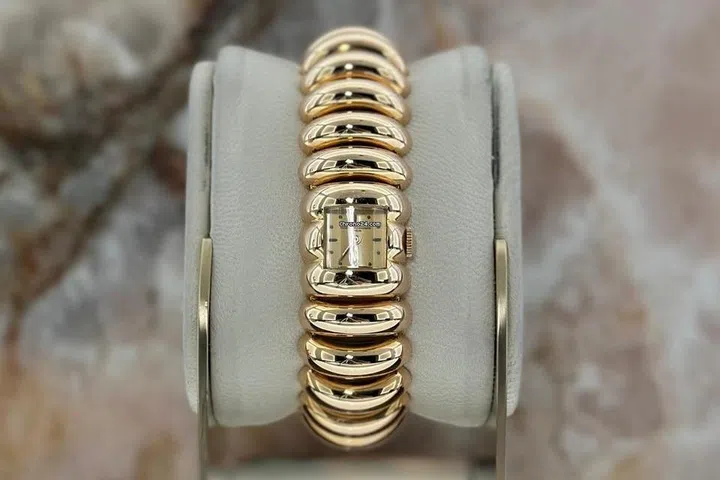
This watchmaker-certified vintage timepiece occupies a rare intersection of jewellery and horology, equal parts precious metal and mechanical heritage. Unlike contemporary fashion watches, it carries intrinsic value through both gold weight and brand legacy, making it a tangible, enduring asset.
Its appreciation potential comes primarily from two drivers: the continued strength of demand for such rare historical Vacheron Constantin creations, and the long-term inflationary rise of gold.
Servicing costs mean it isn’t a fast-flipping piece, but it excels as a quiet hedge within a jewellery-investment portfolio — understated, materially substantial, and historically rich.
For the glamour archivist: Tiffany & Co. Elsa Peretti Bone Cuff
Price: Approx. $30,600
Material: 18k yellow gold
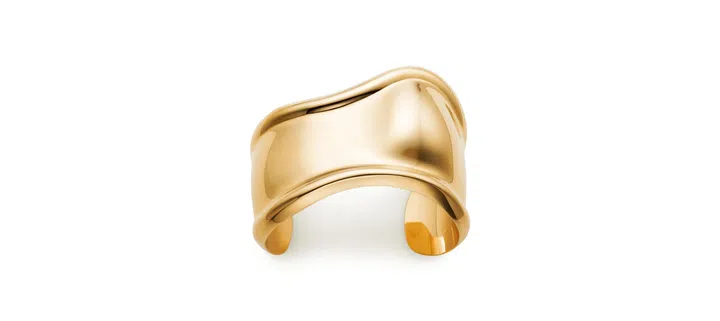
A defining piece of 20th-century jewellery design, the bone cuff represents the pinnacle of Tiffany’s sculptural artistry. First introduced in the 1970s, the cuff’s fluid, anatomical contours reimagined how jewellery interacts with the body — transforming gold into wearable art.
As the flagship of the Peretti line, created in 1974 by Elsa Peretti, a former model and sculptor for US brand Halston, it carries significant design and cultural prestige. It has been featured in major museum retrospectives and the MoMA Permanent Collection.
On the secondary market, it has a strong track record: for example, an 18K gold Bone Cuff achieved US$22,680 at Christie’s Online, illustrating robust demand for the design. Resale records suggest many vintage or discontinued versions of the Bone Cuff fetch around 50 to 70 per cent of their original retail, with special editions or rare sizes occasionally exceeding retail as collector demand intensifies.
For the collector of timeless symbols: Cartier Panthère de Cartier Necklace
Price: $32,400
Material: 18k yellow gold set with tsavorite garnets and onyx
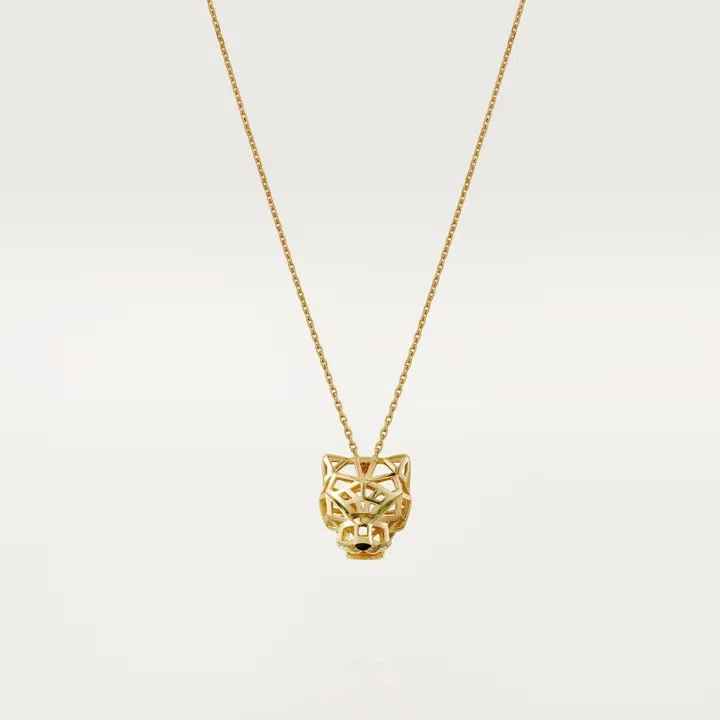
This necklace sits at the upper tier of wearable investment jewellery — combining strong intrinsic gold value, historical symbolism, and global brand liquidity. The Panthère has been Cartier’s signature emblem since 1914, immortalised by creative director Jeanne Toussaint, affectionately known as “La Panthère”.
This contemporary version reimagines the house icon with open-work geometry, a sculpted onyx nose, and tsavorite eyes — a modern architectural update to an Art Deco legend. As both motif and masterpiece, it straddles the line between fine art and fine jewellery, embodying Cartier’s century-long legacy of design innovation.
On the resale market, the Panthère continues to prove its strength. For example, a comparable Panthère necklace achieved HK$177,800 (about $31,000) at Phillips Hong Kong, versus the Cartier Singapore retail price of $32,400 — roughly 95 per cent retention on that sale.
For the iconic design investor: Bvlgari Serpenti Tubogas Necklace
Price: $52,300
Material: 18k yellow gold with demi pavé diamonds and black onyx eyes
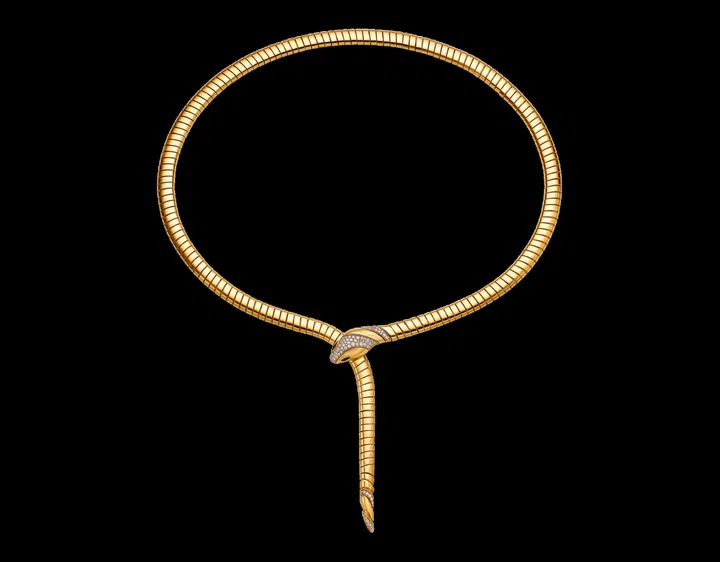
First appearing in the 1940s, the Serpenti is Bvlgari’s most recognisable masterpiece, often worn by A-list collectors and frequently reissued in limited variations.
This necklace’s signature Tubogas construction is a feat of goldsmith engineering: each coiled segment is hand-formed without solder, relying instead on precise tension and interlocking geometry. This technique, revived by Bvlgari mid-century and now mastered by only a few artisans, gives the necklace its distinctive fluidity and weight.
High intrinsic gold content, strong brand equity, and global cultural recognition make it both a status symbol and an investment-grade asset. Its resale performance remains robust, typically holding 70 to 85 per cent of retail, with limited-edition pavé or enamel versions occasionally appreciating.
This article contains affiliate links. If you buy through these links, we may earn a small commission.