%22%3E%0A%3Cpath%20d%3D%22M412%20101.2H393.7C393.1%20101.2%20392.3%20100.9%20391.8%20100.5C377.3%2087.6004%20362.9%2074.6004%20348.4%2061.6004C344.8%2058.4004%20341.3%2055.2004%20337.7%2052.0004C337.1%2051.5004%20336.2%2051.1004%20335.5%2051.0004C334.2%2050.8004%20333%2051.0004%20331.5%2051.0004V101.1H316.7V0.100391H331.4V44.3004C331.9%2044.3004%20332.2%2044.4004%20332.5%2044.4004C334.9%2044.4004%20337.2%2044.5004%20339.6%2044.4004C340.4%2044.4004%20341.3%2044.0004%20341.8%2043.5004C351.6%2034.4004%20361.4%2025.2004%20371.1%2016.0004C376.5%2010.9004%20381.9%205.90039%20387.3%200.800391C387.9%200.200391%20388.5%200.000390626%20389.3%200.000390626H400.9C384.2%2015.8004%20367.8%2031.3004%20351.2%2047.0004C371.5%2065.0004%20391.8%2082.9004%20412.1%20100.9C412.1%20101%20412.1%20101.1%20412%20101.2ZM180.9%20101.2C184.1%2094.9004%20187.2%2088.9004%20190.3%2082.8004C198.3%2067.3004%20206.2%2051.8004%20214.2%2036.2004C220.3%2024.4004%20226.4%2012.5004%20232.4%200.700391C232.7%200.100391%20233%20-0.0996094%20233.7%20-0.0996094H248.1C248.8%20-0.0996094%20249.2%200.100391%20249.6%200.800391C256%2013.3004%20262.4%2025.7004%20268.8%2038.2004C279.3%2058.6004%20289.8%2079.0004%20300.3%2099.5004C300.5%20100%20300.8%20100.4%20301.1%20101.1C300.5%20101.1%20300.1%20101.2%20299.7%20101.2H286.5C285.6%20101.2%20285.1%20100.9%20284.7%20100.2C280.1%2091.3004%20275.4%2082.4004%20270.8%2073.4004C270.1%2072.1004%20269.3%2071.6004%20267.8%2071.6004H209.9C208.7%2071.6004%20208.1%2072.0004%20207.5%2073.1004C202.9%2082.1004%20198.2%2091.0004%20193.6%20100C193.1%20101%20192.6%20101.3%20191.5%20101.3C188.4%20101.2%20185.3%20101.3%20182.3%20101.3C182%20101.2%20181.6%20101.2%20180.9%20101.2ZM239.1%2011.4004C230%2029.2004%20221.1%2046.7004%20212.1%2064.3004H266.4C257.2%2046.7004%20248.2%2029.2004%20239.1%2011.4004ZM0%200.000390626H43.4C51.2%200.000390626%2058.7%201.20039%2065.7%204.80039C75.9%2010.0004%2078.9%2018.0004%2078.6%2027.4004C78.3%2034.3004%2076%2040.5004%2071.2%2045.5004C67.3%2049.6004%2062.4%2052.3004%2057.1%2054.3004C50.6%2056.7004%2043.9%2058.0004%2037.1%2058.6004C30.1%2059.2004%2023.1%2059.4004%2016.2%2059.7004C15.8%2059.7004%2015.3%2059.8004%2014.8%2059.8004V101.1H0.1C0%2067.4004%200%2033.8004%200%200.000390626ZM14.8%207.10039V52.2004C23.7%2052.4004%2032.6%2052.3004%2041.2%2050.1004C44.4%2049.3004%2047.6%2048.2004%2050.6%2046.7004C58.4%2043.0004%2062.3%2036.7004%2062.7%2028.0004C63%2019.9004%2059.5%2014.1004%2052.4%2010.5004C47.6%208.00039%2042.5%207.10039%2037.2%207.10039H14.8ZM95.9%20101.1V0.100391H167.3V7.20039H110.7V44.7004H158.1V51.9004H110.8V93.9004H171.1V101C146.1%20101.1%20121%20101.1%2095.9%20101.1Z%22%20fill%3D%22black%22%2F%3E%0A%3Cpath%20d%3D%22M35.0004%2025.7996H42.5004V20.6996H44.8004V33.1996H42.6004V27.5996H34.9004V33.2996H32.7004V20.7996H35.0004V25.7996ZM54.4004%2025.8996V27.2996H48.9004V31.6996H55.9004C55.9004%2032.1996%2056.0004%2032.5996%2056.0004%2033.0996H46.5004V20.5996H55.5004V21.8996H49.0004V25.7996C50.7004%2025.8996%2052.5004%2025.8996%2054.4004%2025.8996ZM25.9004%2033.0996H23.5004V21.9996H17.9004V20.6996H31.6004V22.0996H27.1004C26.2004%2022.0996%2025.9004%2022.2996%2025.9004%2023.1996C26.0004%2026.0996%2025.9004%2028.9996%2025.9004%2031.7996V33.0996Z%22%20fill%3D%22black%22%2F%3E%0A%3C%2Fg%3E%0A%3Cdefs%3E%0A%3CclipPath%20id%3D%22clip0_388_462%22%3E%0A%3Crect%20width%3D%22411%22%20height%3D%22101.2%22%20fill%3D%22white%22%2F%3E%0A%3C%2FclipPath%3E%0A%3C%2Fdefs%3E%0A%3C%2Fsvg%3E%0A)
The Rolex Oyster turns 100: A century of waterproof watchmaking culminates in a magnificent celebratory collection
As Rolex marks the centenary of its waterproof Oyster case, this year’s new watches continue its enduring legacy of excellence.
By Yanni Tan /
Share this article
In 1926, Rolex introduced the Oyster, the world’s first waterproof wristwatch. Conceived at a time when timepieces were vulnerable to dust and moisture, it represented a decisive shift in watchmaking history: a sealed case architecture that protected the movement within, while opening the way for the modern wristwatch as we know it today.
A century on, the Rolex Oyster remains the foundation upon which Rolex continues to build its world. And for 2026, the brand places the Oyster at the centre of its new releases. Rather than producing a single commemorative piece, Rolex instead revisits some of its most enduring Oyster Perpetual models through new materials, dials, colours, and technical developments.
Across the collection, references to original Oyster designs appear in subtle but deliberate ways: special inscriptions, new combinations of metals, reinterpretations of historic motifs, and an even more exacting Superlative Chronometer certification.
Indeed, the Oyster continues as a living platform for evolution — one that still embodies, in Rolex’s own words, “the connection between past accomplishments and future realisations”.

Rolex Oyster Perpetual Day-Date 40
The Day-Date has, since its launch in 1956, been crafted exclusively in precious metals — either 18ct gold or 950 platinum. For this milestone centenary, an entirely new 18ct gold alloy developed and produced in-house makes its debut on this model.
Named Jubilee Gold, it features tones of tender yellow, warm grey, and soft pink, differentiating itself from the brand’s existing yellow, white, and Everose gold alloys. Marking the brand’s first new gold alloy since the Everose in 2005, it elevates the new Oyster Perpetual Day-Date 40 as one of the most exceptional and luxurious watches not only among Rolex’s new collection, but within Watches and Wonders 2026’s line-up.
The beauty of Jubilee Gold harmonises with a dial cut from light green aventurine, a natural stone from the quartz family, whose captivating character is enhanced with 10 baguette-cut diamonds as hour markers.

Powered by Calibre 3255, the 40mm watch is paired with a fluted bezel and the emblematic President bracelet with concealed Crownclasp.
Within the Oyster narrative, the Day-Date holds a historically important place. At its launch, it was the first calendar wristwatch to display both the date and the day of the week spelt out in full. Even more remarkable is that the day display remains available in 26 languages.
Over the decades, the watch became associated with political figures, directors, and visionaries, earning the informal nickname of the “presidents’ watch”.
Rolex Oyster Perpetual Cosmograph Daytona
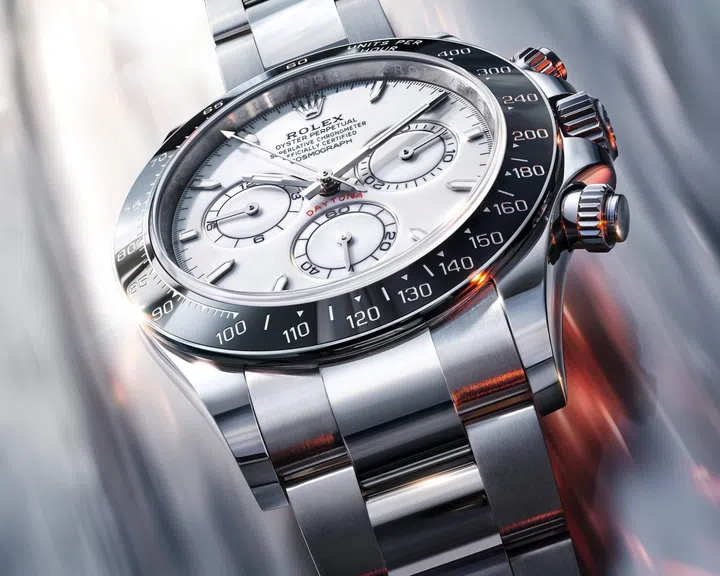
The iconic Cosmograph Daytona now showcases a brand-new expression that combines platinum, ceramic, and enamel in ways not previously seen on the model. Rather than revisiting the Daytona through nostalgia alone, Rolex explores what it calls “new alliances” between materials, reflections, and finishes.
The 40mm Rolesium watch pairs a white enamel dial with an anthracite Cerachrom bezel, combining Oystersteel construction with platinum accents. The ceramic bezel incorporates an innovative composition enriched with tungsten carbide, imparting a distinctive metallic sheen while retaining the scratch-resistant and corrosion-resistant qualities associated with Cerachrom.
The tachymetric scale itself has also been redesigned, with horizontal numerals inspired by the original 1963 Cosmograph Daytona.
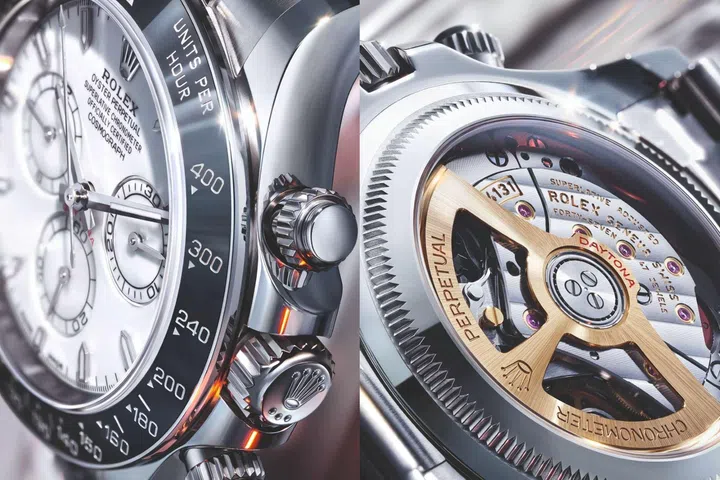
Both the main dial and the counters are also crafted in enamel, with Rolex employing the ancestral grand feu enamel technique requiring firing at temperatures exceeding 800 deg C. The enamel components are assembled onto a brass base before mounting, preserving the crisp white appearance and visual depth associated with traditional enamel craftsmanship.
For the first time on a Rolesium Daytona fitted with an Oystersteel bracelet, Rolex introduces a transparent case back, revealing calibre 4131 and its cut-out oscillating weight in yellow gold. The movement incorporates the Rolex Côtes de Genève decoration and the patented Chronergy escapement, while continuing to deliver the chronograph performance expected of the Daytona line.
Like the rest of the 2026 collection, the Oyster Perpetual Cosmograph Daytona carries the strengthened Superlative Chronometer certification introduced this year, reinforcing Rolex’s emphasis on precision and performance as central pillars of the Oyster’s next century.
Rolex Oyster Perpetual 41
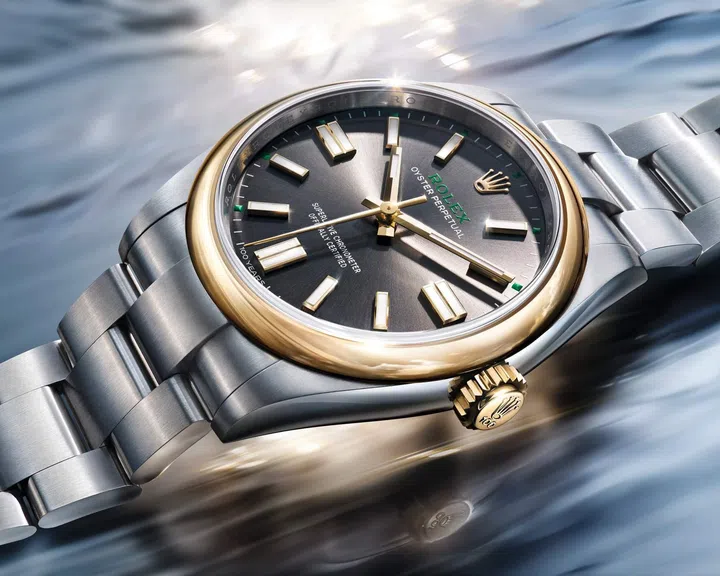
The symbolic heart of the centenary celebrations, the Oyster Perpetual 41 is presented for the first time in yellow Rolesor. It combines a 41mm Oystersteel case and bracelet with a yellow gold bezel and winding crown, creating a new interpretation of a two-material aesthetic deeply rooted in Rolex history.
What distinguishes this watch, however, is the details that directly reference the Oyster’s 100th anniversary. The winding crown bears the number “100” in relief. On the slate dial, which is a new colour within the Oyster Perpetual range, the usual “Swiss Made” signature at 6 o’clock is replaced by the inscription “100 years”.
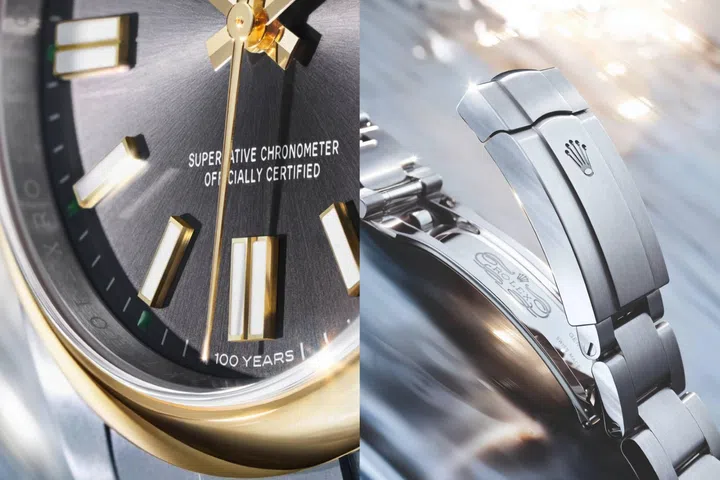
Around the minute track, each five-minute interval is marked by a small green square, while the “Rolex” name is pad-printed in the brand’s emblematic green.
A showpiece of restrained elegance, the watch is still kept firmly within the codes of the Oyster Perpetual: clean, highly legible, and free of unnecessary embellishment. Beating within is calibre 3230, a self-winding mechanical movement introduced in 2020, fitted with the Chronergy escapement, and backed by the enhanced Superlative Chronometer certification.

Rolex Oyster Perpetual 36
If the Oyster Perpetual 41 reflects the Oyster’s purest qualities, the Oyster Perpetual 36 reveals Rolex at its most playful and graphically expressive.
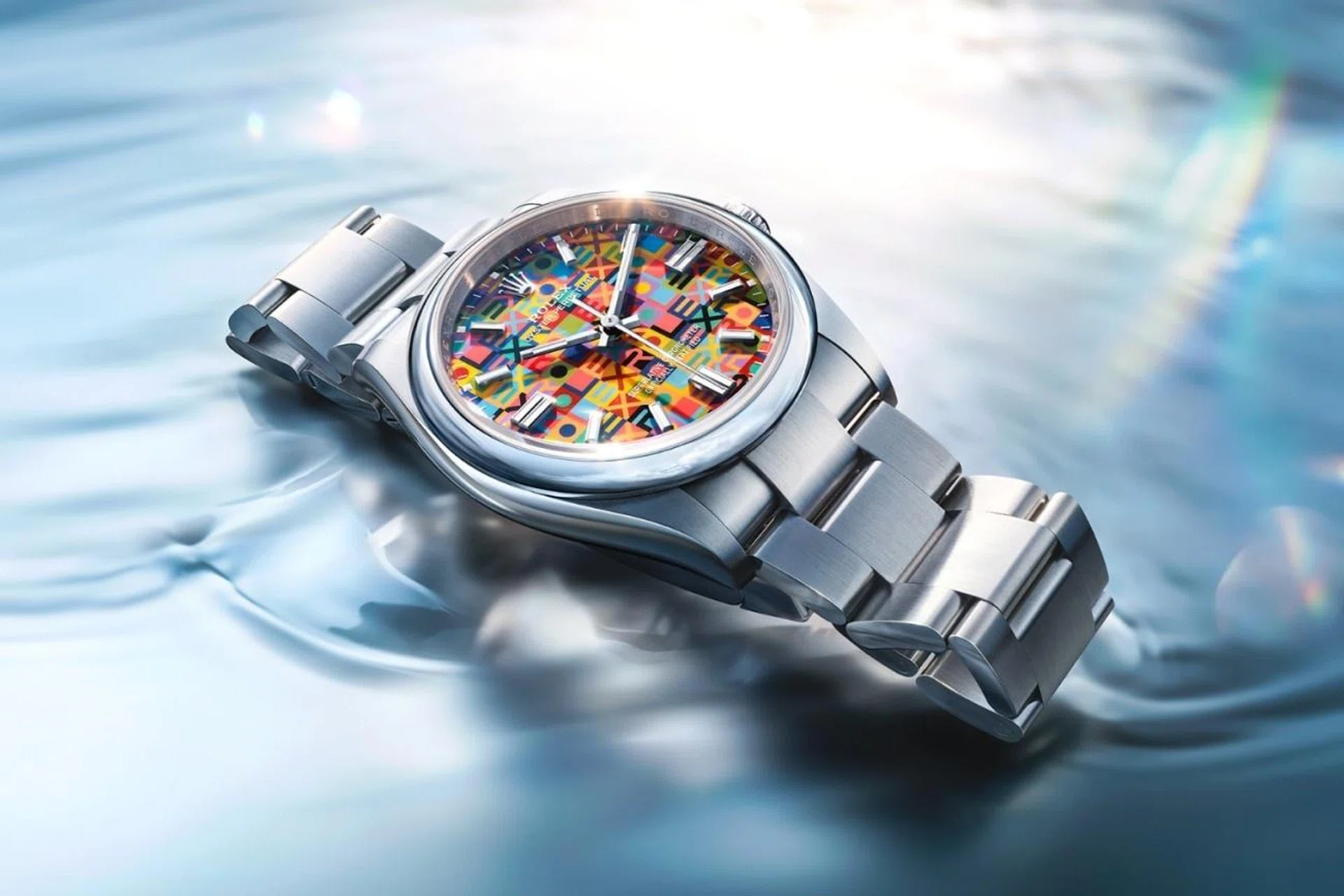
Crafted in Oystersteel, the watch introduces a vivid multi-coloured dial decorated with a reimagined Jubilee motif. Originally introduced at the end of the 1970s, the Jubilee pattern is transformed here into a dynamic composition of colours and typography, with the letters of the Rolex name rendered in no fewer than 10 contrasting colours.
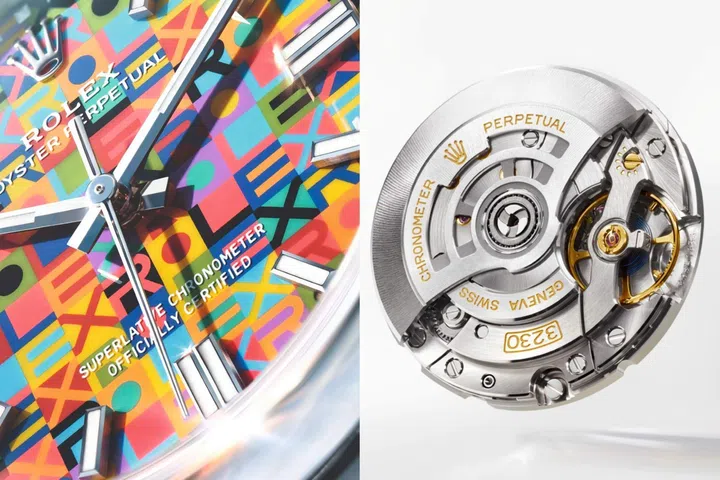
In a technical feat, the colours are not applied simultaneously, but one after the other, requiring exceptional precision to ensure perfect alignment of every shape and letter.
Despite its exuberance, the watch still remains grounded within the architecture of the Oyster Perpetual. The 36mm Oyster case retains its familiar domed bezel and Oyster bracelet, while the dial contrasts sharply against the steel exterior. Powered by calibre 3230, it also carries the updated Superlative Chronometer certification.
With dial design and movement engineering executed with the same rigour, this contemporary creation reaffirms the Oyster Perpetual’s role as a canvas for experimentation within the brand’s most essential line.

Rolex Oyster Perpetual 28 and 34
Even for the smallest and most charming Oyster Perpetual models, the occasion calls for a novel refresh. Precious metals are introduced to the Oyster Perpetual 28 and 34: 18ct yellow gold for the former, and 18ct Everose gold for the latter.
On both the lacquered dials, in green and blue stone hues respectively, are natural stone hour markers at 3, 6 and 9 o’clock — a first for Rolex.
For the Oyster Perpetual 28, the markers are crafted from heliotrope, an ornamental gemstone displaying varying green tones. The upper surface receives an ogive cut to highlight its structure and colour while preventing reflections.
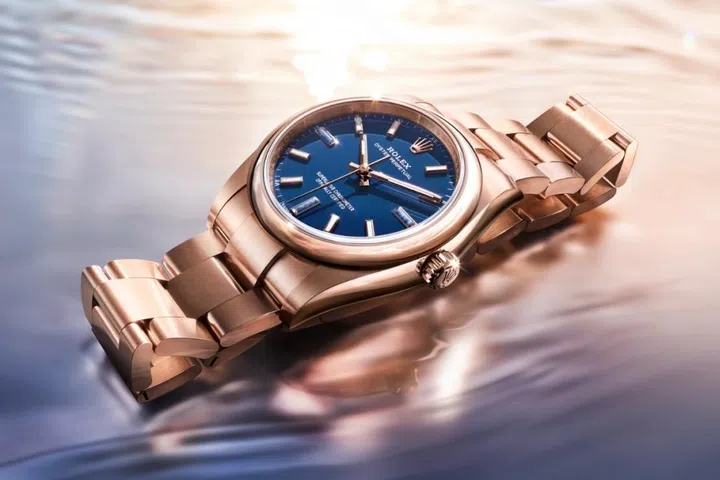
The Oyster Perpetual 34 features dumortierite, a rare decorative hardstone characterised by pale and deeper blue clusters distributed across its surface. Again, the ogive cut accentuates the stone’s natural texture and colour gradation.
These hues and materials contrast beautifully with Rolex’s proprietary gold alloys. The 28 demonstrates the brand’s ability to cast its own 18ct yellow gold alloys in its in-house foundry, while the 34 highlights its patented Everose gold alloy, introduced in 2005, to preserve the colour stability of its pink gold watches over time.
Both models are powered by calibre 2232, a self-winding movement fitted with the patented Syloxi silicon hairspring, which boasts resistance to magnetic fields and temperature variations, as well as the ability to remain significantly more precise than a traditional hairspring in the event of shocks.

Rolex Oyster Perpetual Datejust 41
The Datejust has long occupied a defining position within the Oyster story. Introduced in 1945 as the first self-winding waterproof chronometer wristwatch to display the date in a window on the dial, it remains one of Rolex’s most recognisable creations.
This year, the brand revisits it through a striking new green lacquer ombre dial. Presented in white Rolesor, which is a combination of Oystersteel and white gold, the Datejust 41 pairs its new dial with a fluted bezel and Oyster bracelet.
The dial itself marks an important development: It is the first ombre dial to be entirely lacquered since Rolex reintroduced the ombre design in 2019.
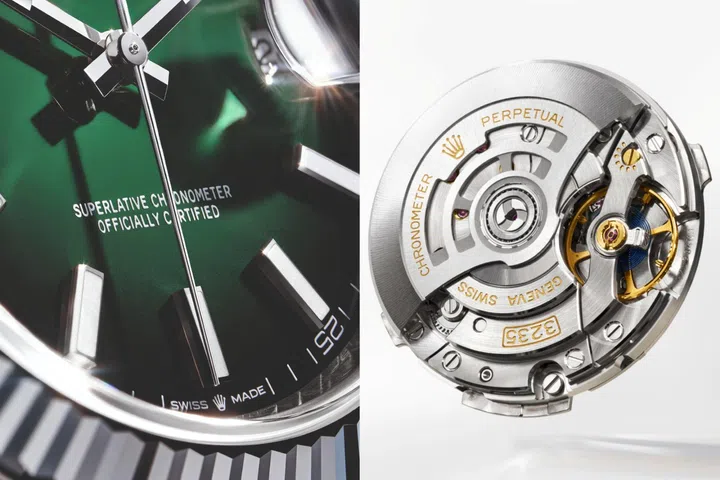
Green lacquer is first applied to the base plate, then black lacquer is sprayed in concentric circles to create a gradient effect. The white inscriptions stand out sharply against the darker outer edge, while Chromalight index hour markers maintain legibility.
Offering a visual contrast is the fluted bezel, which is as refined as it is functional — allowing the bezel to be screwed onto the case tightly to ensure waterproofness. Over time, it has evolved into one of Rolex’s defining aesthetic signatures.
This 41mm watch is powered by calibre 3235, Rolex’s self-winding movement for date-displaying models now boasting the newly strengthened Superlative Chronometer certification.

Rolex Oyster Perpetual Yacht-Master II
Perhaps the boldest statement in the 2026 collection is the complete redesign of the Yacht-Master II.
First launched in 2007, this unique chronograph returns in a thoroughly revised form, available in Oystersteel or 18ct yellow gold. Sleek, simplified, and modernised, it showcases a countdown function redesigned to more effectively assist sailors during regatta starts.
The most significant change lies in the operation of the countdown itself. On the previous model, the Ring Command bezel played a central role in programming the countdown. The new Yacht-Master II eliminates this complexity.
Instead, the countdown is programmed directly through the lower pusher, making the watch more intuitive to use. Rolex has filed a patent application for this new mechanism.

Rolex Oyster Perpetual Yacht-Master II in yellow gold with white dial, blue Cerachrom bezel and Oyster bracelet.
The countdown scale now appears on a flange rather than directly on the dial, improving legibility. The countdown minute and seconds hands rotate counterclockwise — a first for Rolex — allowing the wearer to read the remaining time towards zero more naturally during race starts.
The watch is powered by calibre 4162, an evolution of calibre 4161 that now incorporates the Chronergy escapement and new aesthetic finishes, including Rolex Côtes de Genève decoration and a cut-out oscillating weight.
At 44mm, the Yacht-Master II remains imposing, but Rolex has refined the proportions by broadening the bracelet slightly and slimming the Oysterlock clasp. The result is still a robust watch that preserves the dramatic character of the original while appearing notably more coherent and contemporary.