%22%3E%0A%3Cpath%20d%3D%22M412%20101.2H393.7C393.1%20101.2%20392.3%20100.9%20391.8%20100.5C377.3%2087.6004%20362.9%2074.6004%20348.4%2061.6004C344.8%2058.4004%20341.3%2055.2004%20337.7%2052.0004C337.1%2051.5004%20336.2%2051.1004%20335.5%2051.0004C334.2%2050.8004%20333%2051.0004%20331.5%2051.0004V101.1H316.7V0.100391H331.4V44.3004C331.9%2044.3004%20332.2%2044.4004%20332.5%2044.4004C334.9%2044.4004%20337.2%2044.5004%20339.6%2044.4004C340.4%2044.4004%20341.3%2044.0004%20341.8%2043.5004C351.6%2034.4004%20361.4%2025.2004%20371.1%2016.0004C376.5%2010.9004%20381.9%205.90039%20387.3%200.800391C387.9%200.200391%20388.5%200.000390626%20389.3%200.000390626H400.9C384.2%2015.8004%20367.8%2031.3004%20351.2%2047.0004C371.5%2065.0004%20391.8%2082.9004%20412.1%20100.9C412.1%20101%20412.1%20101.1%20412%20101.2ZM180.9%20101.2C184.1%2094.9004%20187.2%2088.9004%20190.3%2082.8004C198.3%2067.3004%20206.2%2051.8004%20214.2%2036.2004C220.3%2024.4004%20226.4%2012.5004%20232.4%200.700391C232.7%200.100391%20233%20-0.0996094%20233.7%20-0.0996094H248.1C248.8%20-0.0996094%20249.2%200.100391%20249.6%200.800391C256%2013.3004%20262.4%2025.7004%20268.8%2038.2004C279.3%2058.6004%20289.8%2079.0004%20300.3%2099.5004C300.5%20100%20300.8%20100.4%20301.1%20101.1C300.5%20101.1%20300.1%20101.2%20299.7%20101.2H286.5C285.6%20101.2%20285.1%20100.9%20284.7%20100.2C280.1%2091.3004%20275.4%2082.4004%20270.8%2073.4004C270.1%2072.1004%20269.3%2071.6004%20267.8%2071.6004H209.9C208.7%2071.6004%20208.1%2072.0004%20207.5%2073.1004C202.9%2082.1004%20198.2%2091.0004%20193.6%20100C193.1%20101%20192.6%20101.3%20191.5%20101.3C188.4%20101.2%20185.3%20101.3%20182.3%20101.3C182%20101.2%20181.6%20101.2%20180.9%20101.2ZM239.1%2011.4004C230%2029.2004%20221.1%2046.7004%20212.1%2064.3004H266.4C257.2%2046.7004%20248.2%2029.2004%20239.1%2011.4004ZM0%200.000390626H43.4C51.2%200.000390626%2058.7%201.20039%2065.7%204.80039C75.9%2010.0004%2078.9%2018.0004%2078.6%2027.4004C78.3%2034.3004%2076%2040.5004%2071.2%2045.5004C67.3%2049.6004%2062.4%2052.3004%2057.1%2054.3004C50.6%2056.7004%2043.9%2058.0004%2037.1%2058.6004C30.1%2059.2004%2023.1%2059.4004%2016.2%2059.7004C15.8%2059.7004%2015.3%2059.8004%2014.8%2059.8004V101.1H0.1C0%2067.4004%200%2033.8004%200%200.000390626ZM14.8%207.10039V52.2004C23.7%2052.4004%2032.6%2052.3004%2041.2%2050.1004C44.4%2049.3004%2047.6%2048.2004%2050.6%2046.7004C58.4%2043.0004%2062.3%2036.7004%2062.7%2028.0004C63%2019.9004%2059.5%2014.1004%2052.4%2010.5004C47.6%208.00039%2042.5%207.10039%2037.2%207.10039H14.8ZM95.9%20101.1V0.100391H167.3V7.20039H110.7V44.7004H158.1V51.9004H110.8V93.9004H171.1V101C146.1%20101.1%20121%20101.1%2095.9%20101.1Z%22%20fill%3D%22black%22%2F%3E%0A%3Cpath%20d%3D%22M35.0004%2025.7996H42.5004V20.6996H44.8004V33.1996H42.6004V27.5996H34.9004V33.2996H32.7004V20.7996H35.0004V25.7996ZM54.4004%2025.8996V27.2996H48.9004V31.6996H55.9004C55.9004%2032.1996%2056.0004%2032.5996%2056.0004%2033.0996H46.5004V20.5996H55.5004V21.8996H49.0004V25.7996C50.7004%2025.8996%2052.5004%2025.8996%2054.4004%2025.8996ZM25.9004%2033.0996H23.5004V21.9996H17.9004V20.6996H31.6004V22.0996H27.1004C26.2004%2022.0996%2025.9004%2022.2996%2025.9004%2023.1996C26.0004%2026.0996%2025.9004%2028.9996%2025.9004%2031.7996V33.0996Z%22%20fill%3D%22black%22%2F%3E%0A%3C%2Fg%3E%0A%3Cdefs%3E%0A%3CclipPath%20id%3D%22clip0_388_462%22%3E%0A%3Crect%20width%3D%22411%22%20height%3D%22101.2%22%20fill%3D%22white%22%2F%3E%0A%3C%2FclipPath%3E%0A%3C%2Fdefs%3E%0A%3C%2Fsvg%3E%0A)
Paper on watch dials? Vacheron Constantin brings the fragile material and more into high horology
For its new Métiers d’Art Tribute to the Animal Kingdom collection, Vacheron Constantin turns paper, feathers, glass, gold embroidery, wood marquetry and micro-origami into six extraordinary watch dials inspired by wildlife.
By Yanni Tan /
Share this article
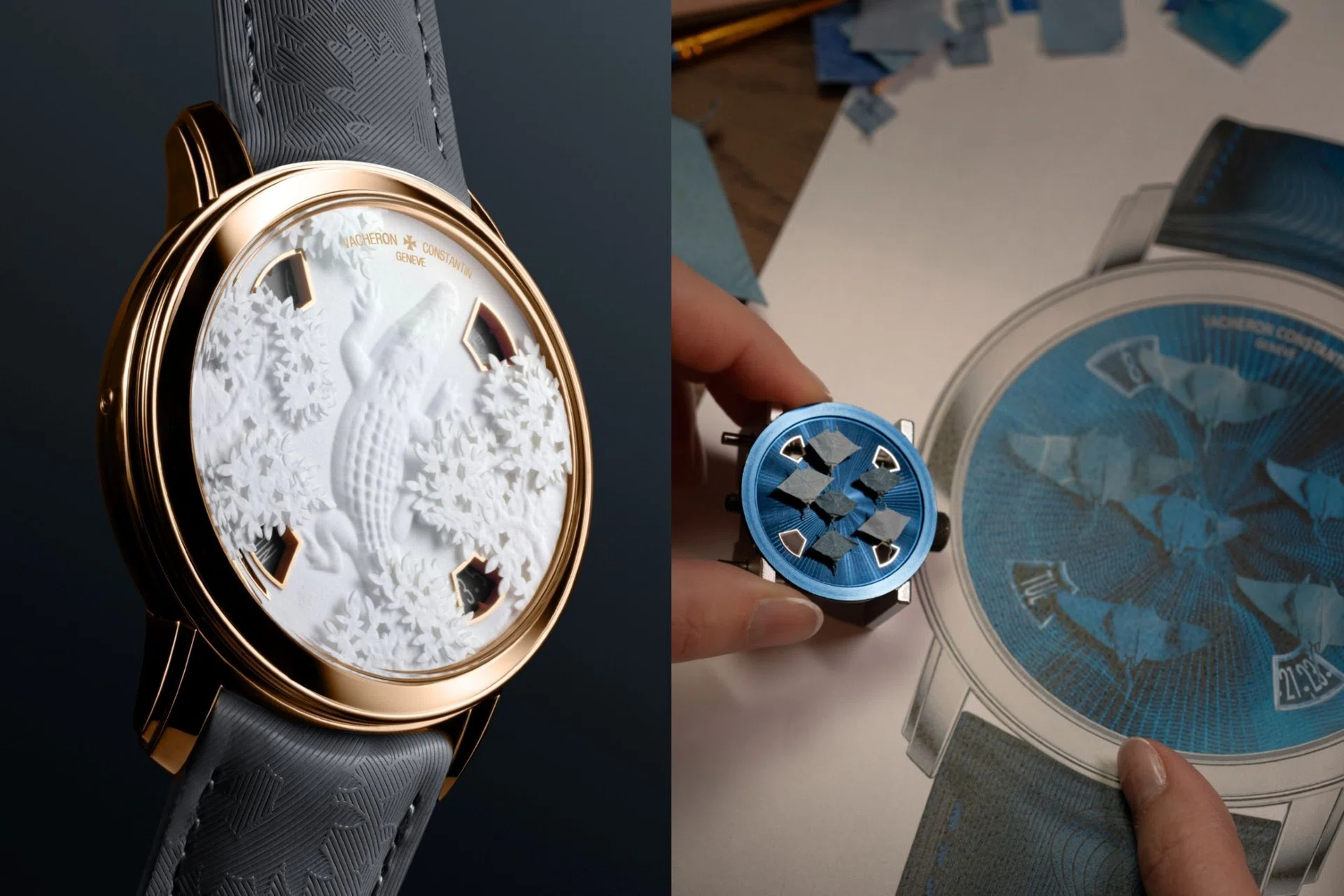
There are certain materials you expect to find on the dial of a Vacheron Constantin watch: gold, enamel, gemstones, perhaps even wood. Yet an intricately sculpted crocodile made entirely from white cotton paper is among the extraordinary creations in the new Vacheron Constantin Métiers d’Art Tribute to the Animal Kingdom series.
Most certainly, it is an apt expression of the manufacture’s “Explore All Ways Possible” philosophy. To that end, Vacheron Constantin has invited six independent artisans working outside traditional watchmaking métiers d’art to rethink their respective crafts at the microscopic scale of a watch dial.
The result is six concept watches encompassing paper sculpting, micro-origami, featherwork, glass sculpting, gold embroidery and three-dimensional wood marquetry — very much a continuation of the creative and technical flex that accompanied Vacheron Constantin’s 270th anniversary celebrations in 2025.
Having spent its milestone year demonstrating what more than two and a half centuries of accumulated watchmaking knowledge can achieve, the maison is now applying that prowess somewhere rather unexpected. This time, the challenge is not primarily to build a more complicated movement, but to ask what else can conceivably become part of a mechanical watch.
Six crafts that don’t normally belong on a watch
The Métiers d’Art Tribute to the Animal Kingdom was developed under Vacheron Constantin’s “One of Not Many Crafts Programme”, an initiative intended to foster the future of craftsmanship by bringing disciplines from outside traditional horology into watchmaking.
The premise sounds simple. Take six artists, each accomplished in a different discipline, and ask them to create a dial. The reality was anything but.
None had previously worked with this combination of scale and volume. Everything had to fit inside a 42mm watch case, with no more than 4mm between the dial surface and sapphire crystal. Techniques normally employed on much larger works therefore required years of research, prototypes, new processes and, in some cases, entirely new tools.
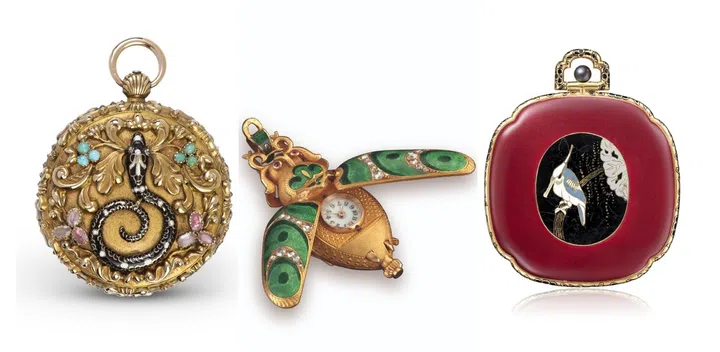
Animals provide the common subject matter. Fauna has appeared on Vacheron Constantin creations for centuries, from an enamelled serpent on an 1826 pocket watch to its 1996 series of enamelled watches inspired by John James Audubon’s Birds of America. For this collection, however, familiar subject matter becomes the testing ground for unfamiliar techniques.
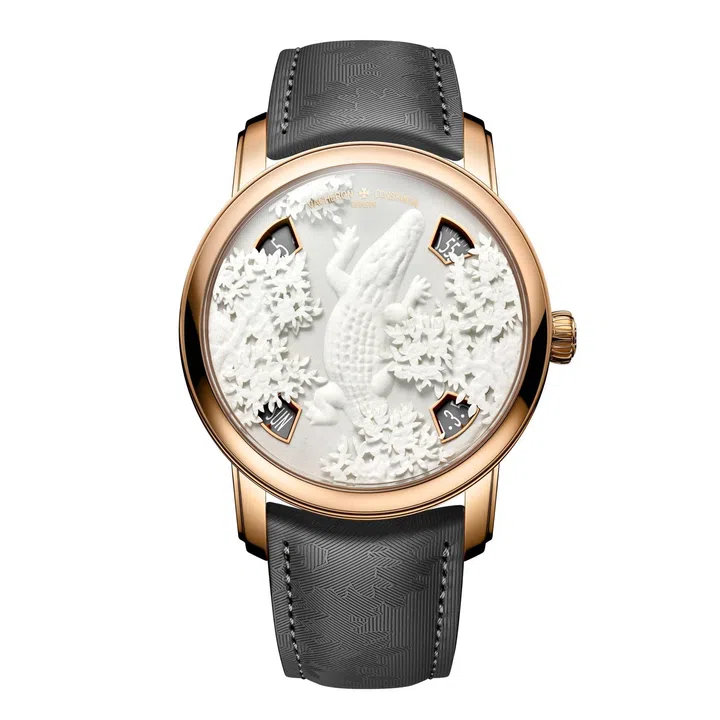
Papercroc: Yes, that crocodile really is made from paper
The watch most likely to provoke a double take is this Papercroc. At first glance, its monochromatic crocodile and surrounding vegetation could be mistaken for finely carved ivory or perhaps ceramic. In fact, the entire scene is fashioned from acid-free white cotton paper.
Paris-based paper artist Marianne Guély and her studio worked with sheets weighing 250g and 300g, combining embossing, laser cutting and hand assembly to create a composition only 3mm high. Bespoke brass embossing matrices engraved with crocodile scales and foliage were heated to between 60 and 70 deg C before being pressed into the paper.

Finding the right material was itself a challenge: It needed sufficient texture and softness while surviving the embossing process without tearing or warping. Then, layering created the shadows and depth that made the crocodile appear three-dimensional, after which the four time and calendar apertures were incorporated into the scene.
Guély had apparently imagined bringing paper into watchmaking for years. The collaboration gave her an opportunity to challenge the material’s associations with impermanence and fragility and position it instead as an artistic material worthy of haute horlogerie. Framing this spectacle is a 42mm pink gold case.
Oraygami: Six manta rays folded from Japanese paper
Paper makes a second, very different appearance in Oraygami, created with Germany-based micro-origami artisan Anja Midori.
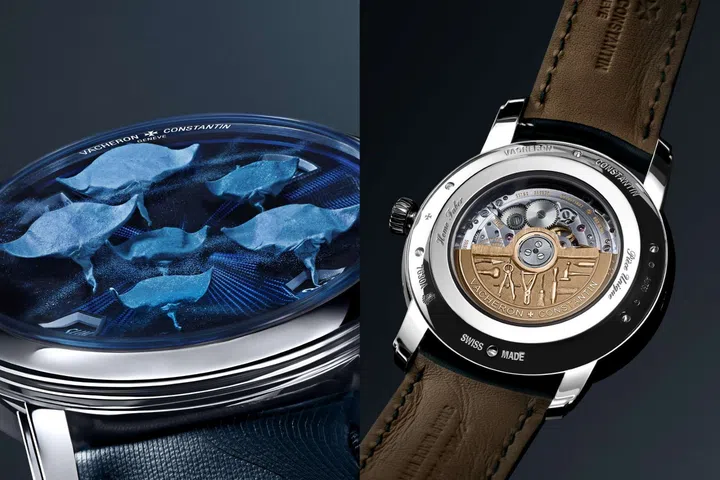
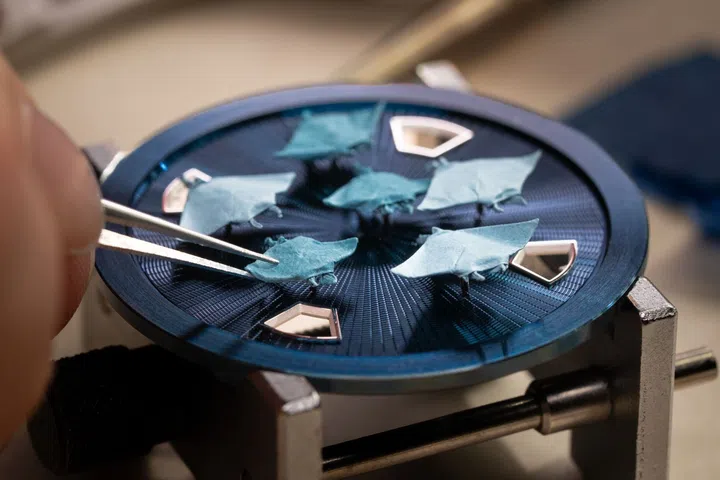
Six tiny manta rays appear to swim above a blue hand-guilloché gold dial. Each is folded from specially hand-coloured Japanese paper and mounted on slender brass stems at different heights, creating the impression that the creatures are suspended underwater. A moiré effect incorporated into the crystal further mimics shifting underwater light.
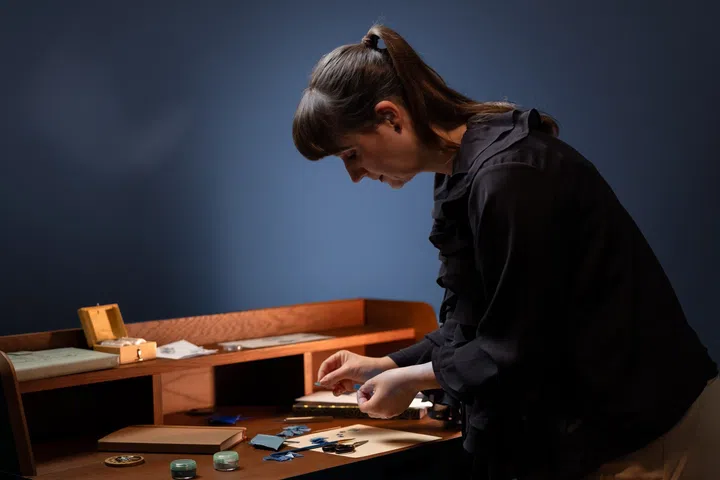
The paper weighs just 20g, around a quarter the thickness of standard copier paper. Midori developed a new folding sequence after studying photographs and videos of real manta rays, then folded the tiny creatures using only her fingers, fingernails and the tip of a toothpick. Before folding, the pieces of paper measured just 9mm to 12mm.
The project took more than two years from the first discussions in 2024 to completion in 2026. Oraygami is housed in a 42mm white gold case.
Feathersnake: More than 200 pieces of feather
If paper seems delicate, Feathersnake introduces another material that hardly lends itself naturally to microscopic watchmaking.
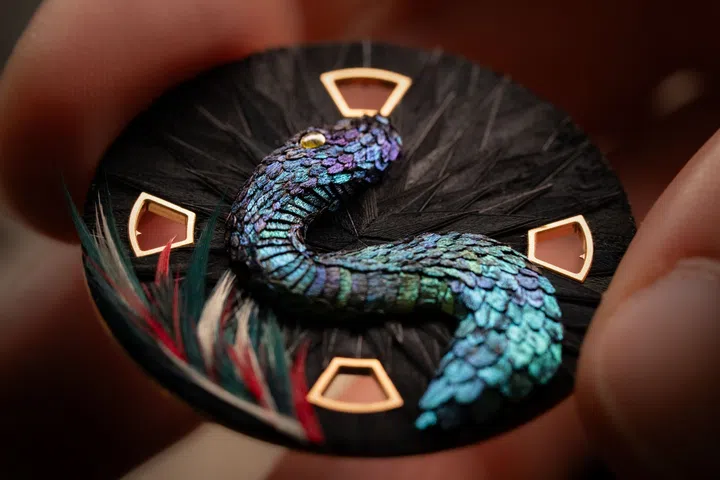
French artist Julien Vermeulen created its fantastical serpent using more than 200 tiny pieces cut from seven rare lophophore feathers, whose natural iridescence produces the creature’s shimmering blue-green scales. The surrounding vegetation is then crafted from goose feathers, which had to be mounted onto silk paper so that they could be cut precisely enough for the composition.
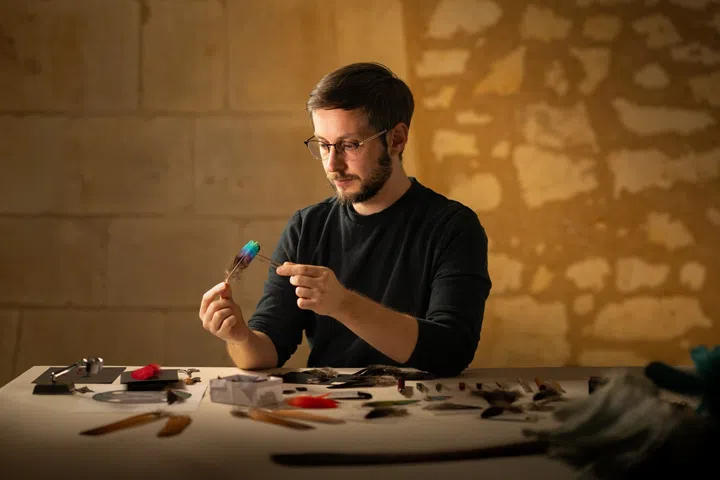
Because conventional tools were simply too large, Vermeulen fashioned a micro-scalpel from a reshaped needle and modified another sewing needle to deposit microscopic quantities of glue. The approximately 250-hour process, including research and prototyping, became so exacting that the artist says he could work for no more than four hours a day.
The snake’s eye provides the only conventional precious-material flourish: It is made from gold and enamel, on a 42mm watch encased in white gold.
Glassoctopus: Glassmaking shrunk to millimetres
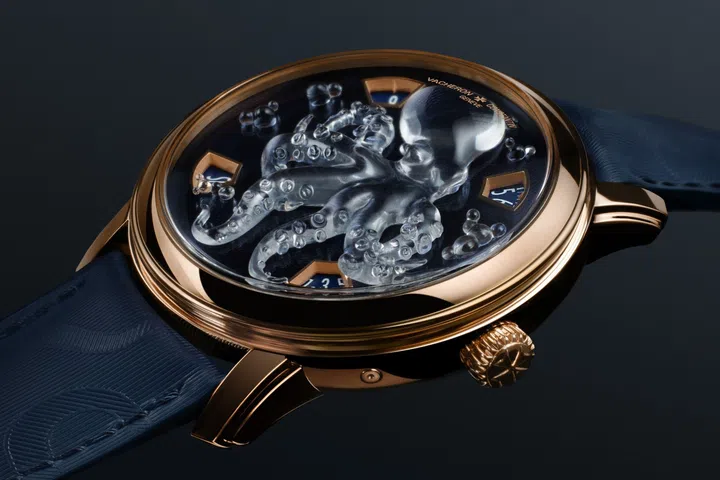
Glassoctopus takes a craft usually associated with dramatically larger objects and compresses it to just a few millimetres.
Italian glass artist Simone Crestani, from Venice of course, sculpted the transparent octopus entirely from glass, with the finished creature rising only 3.5mm above the dial.
Tiny glass rods were melted and manipulated with specially created tungsten tools, building the creature piece by piece in a process Vacheron Constantin likens to a highly manual form of 3D printing. Even the individual suckers on its tentacles had to be constructed dot by dot.
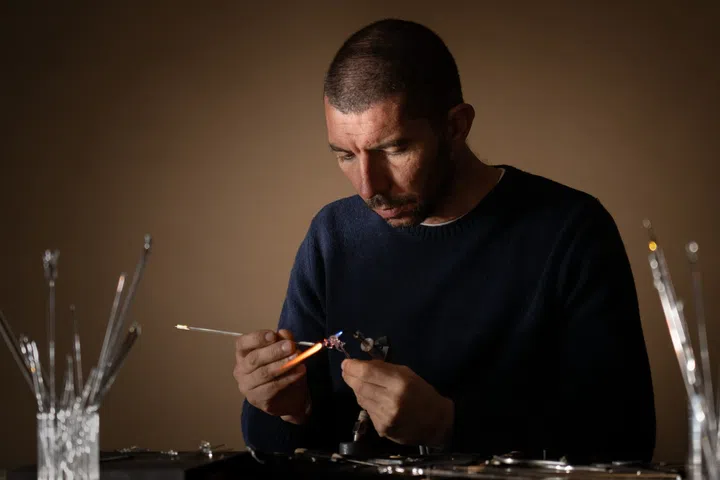
Transparency made the exercise even more difficult because different thicknesses, overlaps and refractions can distort whatever sits beneath. The positioning of the tentacles consequently incorporates optical illusions while navigating the four display apertures.
The glass octopus floats over a dark blue, hand-guilloché gold base inside a 42mm pink gold case. Development took more than a year, with four subtly different final octopuses produced before the final one was selected.
Tigerbroidery: Painting a tiger with gold thread
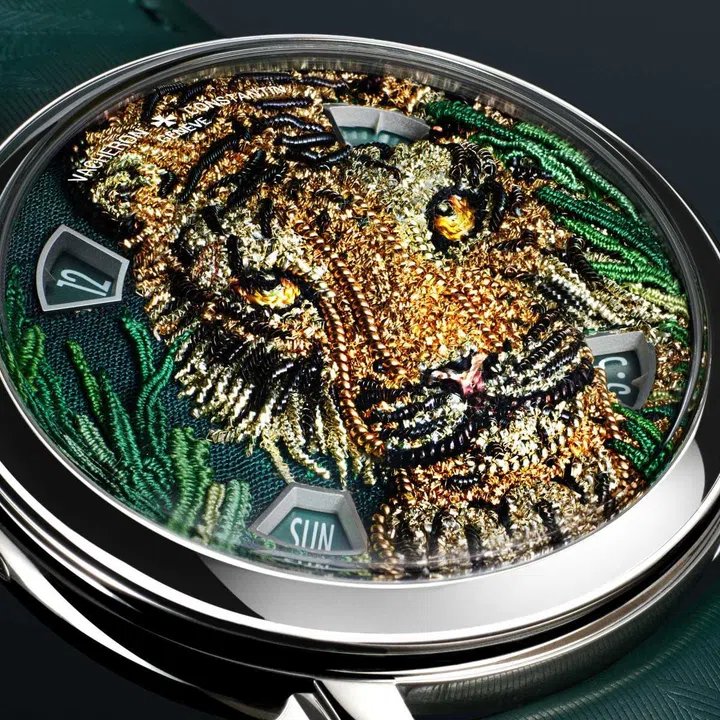
For Tigerbroidery, Vacheron Constantin turns to a technique with much stronger associations with fashion and textiles than watchmaking: goldwork embroidery.
British artist Laura Baverstock depicts a tiger prowling through vegetation using 9k yellow and white gold embroidery wires, with specially developed ceramic-coated black wires creating its stripes. The surrounding landscape is stitched onto custom-dyed green silk, while the animal’s eyes alone use 10 different shades of silk.

Making gold suitable for embroidery at this scale presented its own problem. Increasing the gold content changes the wire’s flexibility, requiring new tools to twist and coil it into sufficiently fine strands. Individual pieces making up the tiger’s body measure less than a millimetre, while bespoke needles as fine as 0.25mm were developed for the work.
The finished dial took approximately 210 hours and sits within a 42mm white gold case.
Woodenwings: 12 species of wood for one tiny falcon
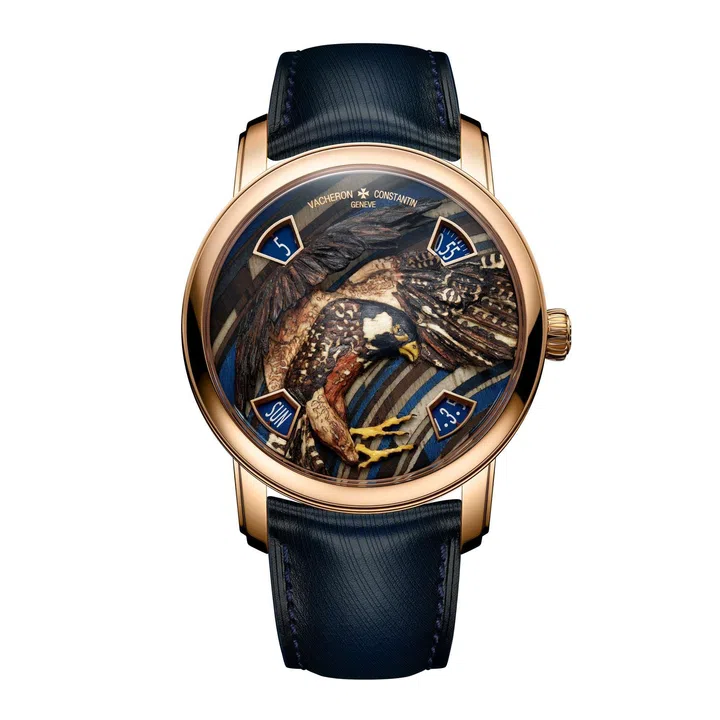
Finally, Woodenwings explores three-dimensional wood marquetry through a falcon that appears ready to launch itself from the dial.
French artisan Anna Le Corno used 12 different species of wood, selected not simply for colour and grain but also for how well they could withstand sculpting at such tiny dimensions. Three marquetry techniques build up the scene, including a newly developed “feather-by-feather” method for the bird’s wing.
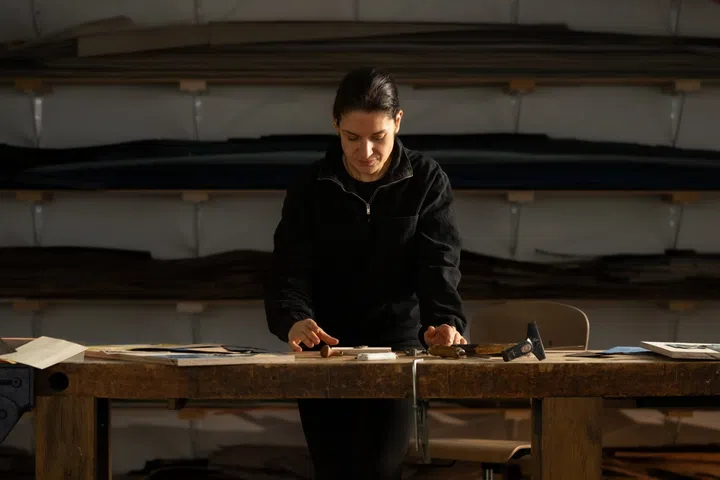
At only 3mm high, the work rendered traditional woodworking tools useless. Surgical-style scalpels, microscopic carbide bits and handmade sanding tools replaced them, while much of the sculpting was performed under binocular magnification. The tips of the cantilevered wing feathers sit almost at the limit of contact with the sapphire crystal.
The falcon and its abstract marquetry landscape are housed in a 42mm pink gold case.
Calibre 2460 G4 turns the entire dial into a canvas
Making these six experiments possible is an existing Vacheron Constantin movement particularly well suited to métiers d’art: the automatic Calibre 2460 G4.
Instead of putting conventional hands across the centre of the dial, it displays the hours, minutes, day and date through four apertures around its perimeter. That leaves virtually the entire central surface available to the artist, whether the subject is a paper crocodile, embroidered tiger or glass octopus.
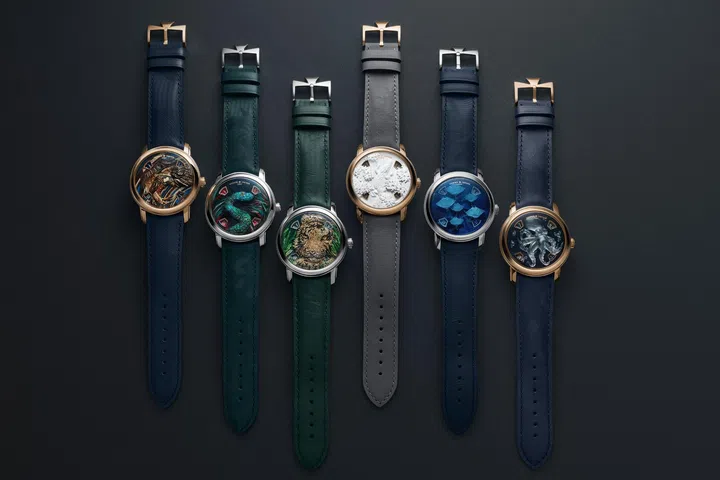
Across all six watches, the movement measures 31mm by 6.05mm, comprises 237 components, runs at 4Hz and provides a 40-hour power reserve. A specially designed 22k gold oscillating weight is hand-engraved with motifs inspired by artisans’ tools, while the sapphire caseback allows it to be seen. The watches are all 42mm in diameter, 12.9mm thick and water-resistant to 30m.
There is a certain dissonance in placing something as seemingly vulnerable as paper inside the highly controlled environment of a mechanical watch. That tension, however, is exactly what makes the Vacheron Constantin Métiers d’Art Tribute to the Animal Kingdom mind-blowing. These six concept watches simply test how far the definition of watchmaking craft can stretch.
After 270 years, Vacheron Constantin evidently still has a few ways left to explore.