%22%3E%0A%3Cpath%20d%3D%22M412%20101.2H393.7C393.1%20101.2%20392.3%20100.9%20391.8%20100.5C377.3%2087.6004%20362.9%2074.6004%20348.4%2061.6004C344.8%2058.4004%20341.3%2055.2004%20337.7%2052.0004C337.1%2051.5004%20336.2%2051.1004%20335.5%2051.0004C334.2%2050.8004%20333%2051.0004%20331.5%2051.0004V101.1H316.7V0.100391H331.4V44.3004C331.9%2044.3004%20332.2%2044.4004%20332.5%2044.4004C334.9%2044.4004%20337.2%2044.5004%20339.6%2044.4004C340.4%2044.4004%20341.3%2044.0004%20341.8%2043.5004C351.6%2034.4004%20361.4%2025.2004%20371.1%2016.0004C376.5%2010.9004%20381.9%205.90039%20387.3%200.800391C387.9%200.200391%20388.5%200.000390626%20389.3%200.000390626H400.9C384.2%2015.8004%20367.8%2031.3004%20351.2%2047.0004C371.5%2065.0004%20391.8%2082.9004%20412.1%20100.9C412.1%20101%20412.1%20101.1%20412%20101.2ZM180.9%20101.2C184.1%2094.9004%20187.2%2088.9004%20190.3%2082.8004C198.3%2067.3004%20206.2%2051.8004%20214.2%2036.2004C220.3%2024.4004%20226.4%2012.5004%20232.4%200.700391C232.7%200.100391%20233%20-0.0996094%20233.7%20-0.0996094H248.1C248.8%20-0.0996094%20249.2%200.100391%20249.6%200.800391C256%2013.3004%20262.4%2025.7004%20268.8%2038.2004C279.3%2058.6004%20289.8%2079.0004%20300.3%2099.5004C300.5%20100%20300.8%20100.4%20301.1%20101.1C300.5%20101.1%20300.1%20101.2%20299.7%20101.2H286.5C285.6%20101.2%20285.1%20100.9%20284.7%20100.2C280.1%2091.3004%20275.4%2082.4004%20270.8%2073.4004C270.1%2072.1004%20269.3%2071.6004%20267.8%2071.6004H209.9C208.7%2071.6004%20208.1%2072.0004%20207.5%2073.1004C202.9%2082.1004%20198.2%2091.0004%20193.6%20100C193.1%20101%20192.6%20101.3%20191.5%20101.3C188.4%20101.2%20185.3%20101.3%20182.3%20101.3C182%20101.2%20181.6%20101.2%20180.9%20101.2ZM239.1%2011.4004C230%2029.2004%20221.1%2046.7004%20212.1%2064.3004H266.4C257.2%2046.7004%20248.2%2029.2004%20239.1%2011.4004ZM0%200.000390626H43.4C51.2%200.000390626%2058.7%201.20039%2065.7%204.80039C75.9%2010.0004%2078.9%2018.0004%2078.6%2027.4004C78.3%2034.3004%2076%2040.5004%2071.2%2045.5004C67.3%2049.6004%2062.4%2052.3004%2057.1%2054.3004C50.6%2056.7004%2043.9%2058.0004%2037.1%2058.6004C30.1%2059.2004%2023.1%2059.4004%2016.2%2059.7004C15.8%2059.7004%2015.3%2059.8004%2014.8%2059.8004V101.1H0.1C0%2067.4004%200%2033.8004%200%200.000390626ZM14.8%207.10039V52.2004C23.7%2052.4004%2032.6%2052.3004%2041.2%2050.1004C44.4%2049.3004%2047.6%2048.2004%2050.6%2046.7004C58.4%2043.0004%2062.3%2036.7004%2062.7%2028.0004C63%2019.9004%2059.5%2014.1004%2052.4%2010.5004C47.6%208.00039%2042.5%207.10039%2037.2%207.10039H14.8ZM95.9%20101.1V0.100391H167.3V7.20039H110.7V44.7004H158.1V51.9004H110.8V93.9004H171.1V101C146.1%20101.1%20121%20101.1%2095.9%20101.1Z%22%20fill%3D%22black%22%2F%3E%0A%3Cpath%20d%3D%22M35.0004%2025.7996H42.5004V20.6996H44.8004V33.1996H42.6004V27.5996H34.9004V33.2996H32.7004V20.7996H35.0004V25.7996ZM54.4004%2025.8996V27.2996H48.9004V31.6996H55.9004C55.9004%2032.1996%2056.0004%2032.5996%2056.0004%2033.0996H46.5004V20.5996H55.5004V21.8996H49.0004V25.7996C50.7004%2025.8996%2052.5004%2025.8996%2054.4004%2025.8996ZM25.9004%2033.0996H23.5004V21.9996H17.9004V20.6996H31.6004V22.0996H27.1004C26.2004%2022.0996%2025.9004%2022.2996%2025.9004%2023.1996C26.0004%2026.0996%2025.9004%2028.9996%2025.9004%2031.7996V33.0996Z%22%20fill%3D%22black%22%2F%3E%0A%3C%2Fg%3E%0A%3Cdefs%3E%0A%3CclipPath%20id%3D%22clip0_388_462%22%3E%0A%3Crect%20width%3D%22411%22%20height%3D%22101.2%22%20fill%3D%22white%22%2F%3E%0A%3C%2FclipPath%3E%0A%3C%2Fdefs%3E%0A%3C%2Fsvg%3E%0A)
From Louvre to wrist: Four ancient monuments now rendered in carved stone on Vacheron Constantin watch dials
The titans of antiquity are miniaturised into modern artistic wonders through Vacheron Constantin’s latest partnership with the museum.
By Yanni Tan /
Share this article
If you remember walking the halls of the Louvre and being awestruck by the grandest of ancient sculptures and statues, wait until you come face-to-face with Vacheron Constantin’s latest homage watches.
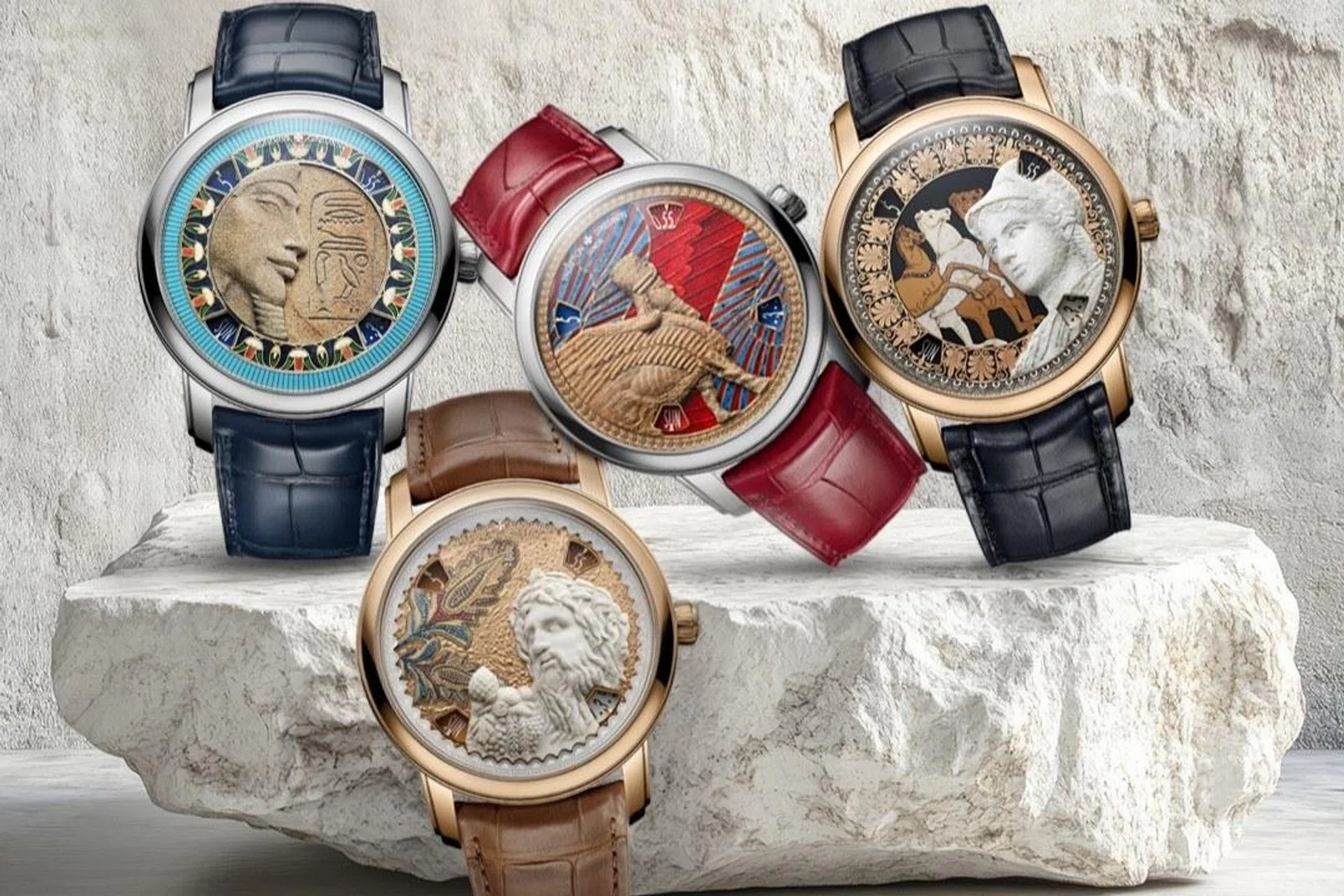
What the Swiss maison has achieved with the new Metiers d’Art Tribute to Great Civilisations collection, unveiled at the recent Watches and Wonders 2026, is a compression of scale that retains these monuments’ splendour with extraordinary stylistic and material fidelity.
Created in collaboration with the Louvre in Paris, this latest chapter builds on a partnership that began in 2019, grounded in a shared commitment to preserving and transmitting artistic knowledge. While the debut 2022 series translated such artefacts into sculpted gold dials, this new collection takes an even more exacting approach.
The entire visual and symbolic worlds of Pharaonic Egypt, the Neo-Assyrian Empire, Ancient Greece, and Imperial Rome are now reconstructed in miniature, and carved in stone.
Showcased across a quartet of watches, each limited to 15 pieces, are nine ancestral decorative crafts. Besides glyptics (stone carving), the techniques range from stone marquetry and micro-mosaic, to engraving and enamelling, as well as gilding and miniature painting.
Ode to mankind
What makes this collection compelling is that Vacheron Constantin approaches the Louvre not simply as a source of imagery, but as a living archive of human ingenuity. That sits naturally within the maison’s broader 2026 theme, Explore All Ways Possible, which frames watchmaking as a form of discovery extending beyond mechanics into history, culture, and artistic expression.
According to Sandrine Donguy, Vacheron Constantin’s product marketing and creation director, the decision to revisit the same civilisations from the first series came down to their enduring influence and universal resonance.
“Whether the Assyrian Empire, the Egypt of the pharaohs, the Golden Age of ancient Greece or Imperial Rome, these civilisations experienced extraordinary territorial expansion accompanied by an unprecedented cultural and artistic influence,” she explains.
Furthermore, the house wanted to delve deeper into the visual languages surrounding those cultures, drawing inspiration not just from one historical object, but from broader decorative traditions preserved within the Louvre.
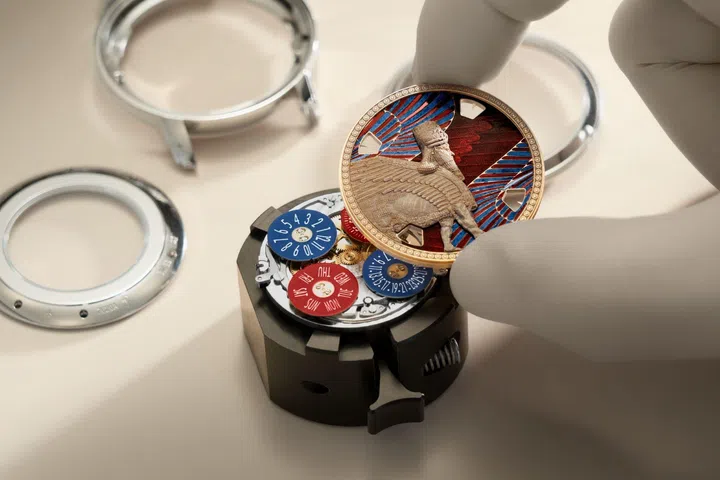
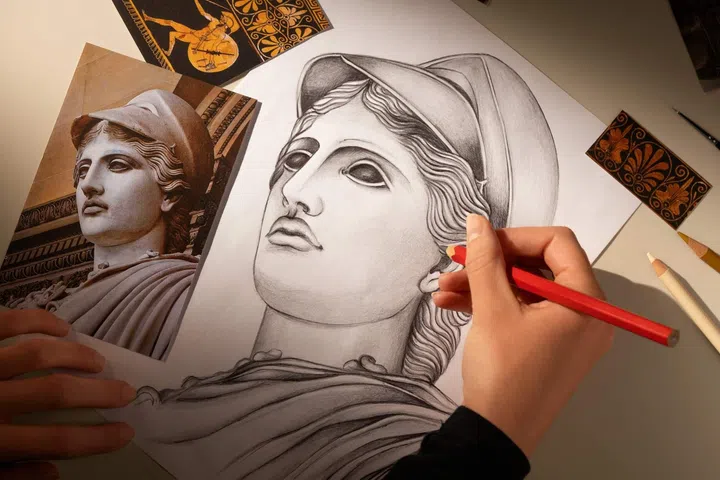
The challenge was immense due to the source artworks’ sheer scale, most of which are several metres high. Reducing them to a 42mm watch dial while preserving their aura and nuances required three years of development.
Imagine extensive consultation with museum curators, and the creation of 3D models to study proportions, shadows, light, and viewing angles before artisans even began work. Each dial eventually required 120 to 220 hours to complete.
Revival of the Ancient Near East
For this edition, Vacheron Constantin works with marble and limestone sandstone instead — a first for the maison — matching the originals’ provenance.
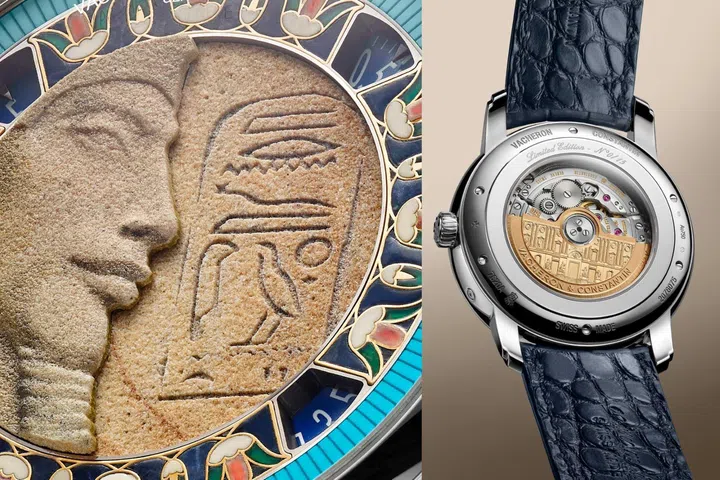
Donguy describes the process as a form of micro-sculpture entirely different from traditional engraving, since the stone is shaped gradually through abrasion rather than incision. The technique takes centre stage on the Buste d’Akhenaton white gold timepiece, inspired by the pharaoh’s sandstone likeness from Egypt’s New Kingdom (1,500-1,000 BCE), specifically the Amarna period.
The original reflects one of the most radical moments in ancient Egyptian history, when Akhenaten attempted to replace traditional polytheistic worship with the cult of Aten, the solar orb.
In its interpretation, Vacheron Constantin reproduces the sovereign in profile using Sinai limestone sandstone that is also hand-patinated to emphasise depth and realism. The rendering preserves the elongated features and unsettling ambiguity of the original, whose stretched eyes and pointed chin symbolised the aesthetic revolution of the Amarna era.
Around it is a vibrant decorative framework channelling Egyptian jewellery preserved at the Louvre. The outer turquoise frieze references the collar of Nakhti, while the inner ring combines red mother-of-pearl, chrysoprase, opaline, and sodalite using stone champleve techniques.
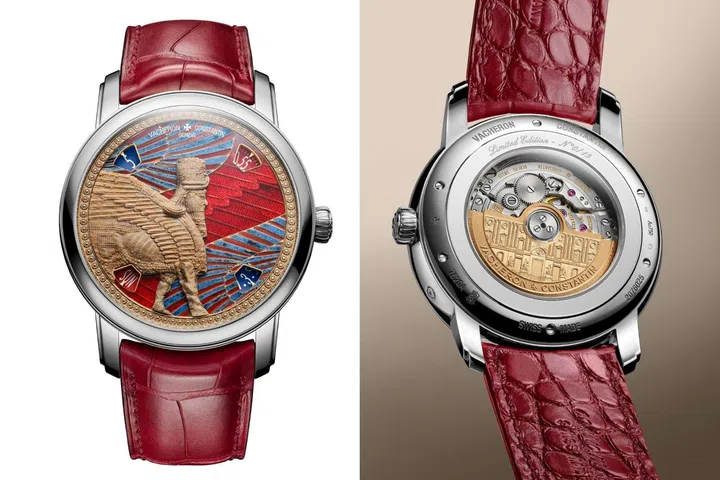
If the Akhenaten piece invites contemplation, the Lamassu de Sargon II watch evokes a cinematic kind of magic. Inspired by the colossal Assyrian guardians from the palace of Khorsabad, it depicts the winged creature with its human head, eagle wings, and bull’s body laid across a fiery red composition.
The Neo-Assyrian Empire (934-609 BCE) was built on spectacle and domination, and this watch captures that very essence. Encased in white gold, the dial combines translucent red flinque enamel with stone champleve work using rods of red agate and blue dumortierite, bringing to mind the culture’s mural paintings.
The deity itself is finely hewn from Italian limestone sandstone and then hand-patinated to sharpen its muscular details and braided beard. Radiating outwards is an enamelled extension of its feather motif, which takes on sheer dynamism.
Visions of the Classical Age
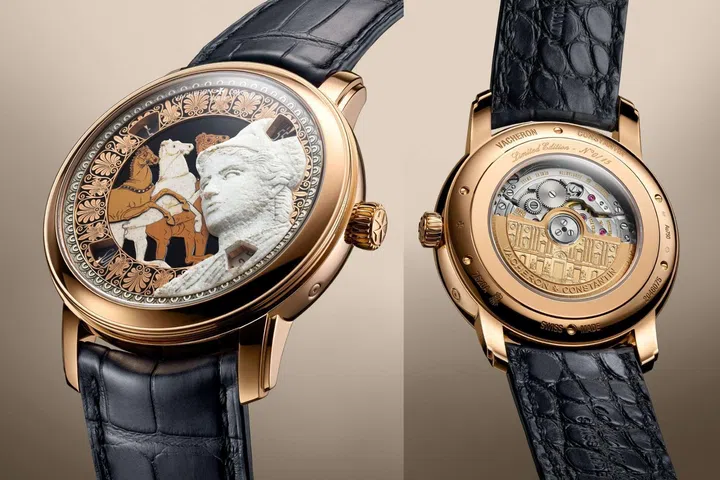
The Greek-inspired Athena de Velletri best demonstrates Vacheron Constantin’s expertise in weaving together multiple crafts. The original marble statue, preserved at the Louvre, is a Roman copy of a lost Greek sculpture, and embodies the goddess’ military and intellectual authority in ancient Greece (480-323 BCE).
For this pink gold creation, she is rendered in the same gleaming white Paros marble used for the statue. Rather than presenting Athena frontally, she is portrayed with a slightly low-angle three-quarter perspective that imparts an imposing presence.
Behind her sits one of the collection’s most intricate constructions: a stone marquetry scene inspired by a Greek amphora depicting gods and giants in battle. Horses carved from onyx and mookaite emerge from the dark, with their musculature and movement enhanced by miniature painting.
Imbuing graphic contrast are the black champleve enamel inner frieze and engraved white gold outer ring.
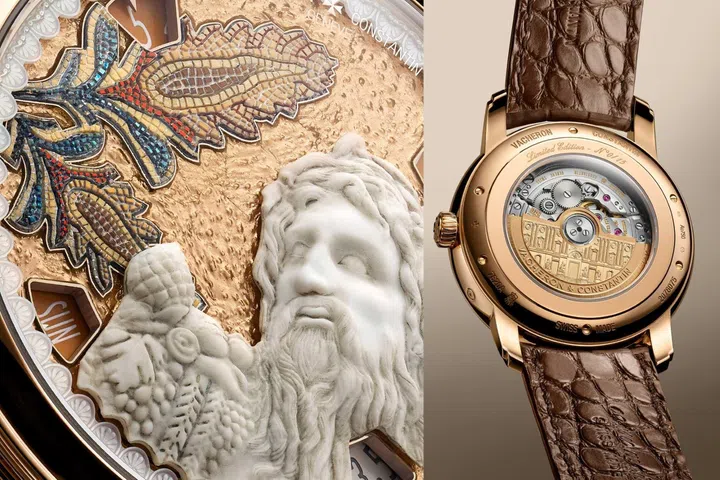
Interpreting the monumental Roman sculpture of the river god Tiber is the Tibre de l’Iseum Campense pink gold timepiece, which exudes the grandeur and decadence of Imperial Rome (27 BCE-476 CE) at its height.
The marble applique of his reclining posture is paired with a second stone micro-mosaic applique inspired by a Roman mosaic from Tunisia, reproduced using thousands of fragments of jasper, chrysocolla, and opaline.
The gold base beneath is textured with gold leaf before being layered with translucent enamel, producing a subtly grained, almost weathered appearance. Encircling the scene is an engraved mother-of-pearl frieze inspired by a Campana plaque.
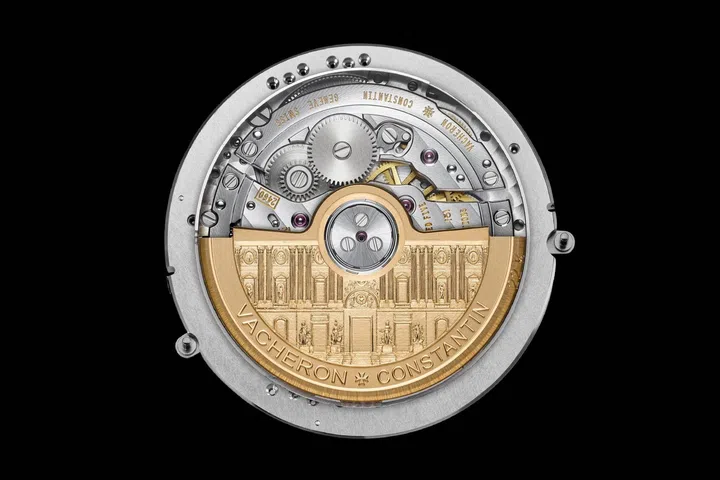
Powering all four models is the self-winding calibre 2460 G4/2, one of Vacheron Constantin’s most important movements placed at the service of artistic expression. Instead of central hands, the movement displays the hours, minutes, day, and date through four apertures positioned around the dial’s periphery, leaving the centre entirely open to the imagination.
Donguy elaborates, “By playing with the colours of the discs in relation to the different elements of the dial, this display blends seamlessly into the decor while remaining highly legible.”
The oscillating weight is also engraved with the Louvre’s eastern facade — a fitting reminder of where this entire project began.
Assembled with incredible micron-level precision, these artistic watches bring the glory of ancient civilisations back to life — once again, on the wrist, as a reminder that time is not only measured in hours, but in the endurance of human memory and creation.