%22%3E%0A%3Cpath%20d%3D%22M412%20101.2H393.7C393.1%20101.2%20392.3%20100.9%20391.8%20100.5C377.3%2087.6004%20362.9%2074.6004%20348.4%2061.6004C344.8%2058.4004%20341.3%2055.2004%20337.7%2052.0004C337.1%2051.5004%20336.2%2051.1004%20335.5%2051.0004C334.2%2050.8004%20333%2051.0004%20331.5%2051.0004V101.1H316.7V0.100391H331.4V44.3004C331.9%2044.3004%20332.2%2044.4004%20332.5%2044.4004C334.9%2044.4004%20337.2%2044.5004%20339.6%2044.4004C340.4%2044.4004%20341.3%2044.0004%20341.8%2043.5004C351.6%2034.4004%20361.4%2025.2004%20371.1%2016.0004C376.5%2010.9004%20381.9%205.90039%20387.3%200.800391C387.9%200.200391%20388.5%200.000390626%20389.3%200.000390626H400.9C384.2%2015.8004%20367.8%2031.3004%20351.2%2047.0004C371.5%2065.0004%20391.8%2082.9004%20412.1%20100.9C412.1%20101%20412.1%20101.1%20412%20101.2ZM180.9%20101.2C184.1%2094.9004%20187.2%2088.9004%20190.3%2082.8004C198.3%2067.3004%20206.2%2051.8004%20214.2%2036.2004C220.3%2024.4004%20226.4%2012.5004%20232.4%200.700391C232.7%200.100391%20233%20-0.0996094%20233.7%20-0.0996094H248.1C248.8%20-0.0996094%20249.2%200.100391%20249.6%200.800391C256%2013.3004%20262.4%2025.7004%20268.8%2038.2004C279.3%2058.6004%20289.8%2079.0004%20300.3%2099.5004C300.5%20100%20300.8%20100.4%20301.1%20101.1C300.5%20101.1%20300.1%20101.2%20299.7%20101.2H286.5C285.6%20101.2%20285.1%20100.9%20284.7%20100.2C280.1%2091.3004%20275.4%2082.4004%20270.8%2073.4004C270.1%2072.1004%20269.3%2071.6004%20267.8%2071.6004H209.9C208.7%2071.6004%20208.1%2072.0004%20207.5%2073.1004C202.9%2082.1004%20198.2%2091.0004%20193.6%20100C193.1%20101%20192.6%20101.3%20191.5%20101.3C188.4%20101.2%20185.3%20101.3%20182.3%20101.3C182%20101.2%20181.6%20101.2%20180.9%20101.2ZM239.1%2011.4004C230%2029.2004%20221.1%2046.7004%20212.1%2064.3004H266.4C257.2%2046.7004%20248.2%2029.2004%20239.1%2011.4004ZM0%200.000390626H43.4C51.2%200.000390626%2058.7%201.20039%2065.7%204.80039C75.9%2010.0004%2078.9%2018.0004%2078.6%2027.4004C78.3%2034.3004%2076%2040.5004%2071.2%2045.5004C67.3%2049.6004%2062.4%2052.3004%2057.1%2054.3004C50.6%2056.7004%2043.9%2058.0004%2037.1%2058.6004C30.1%2059.2004%2023.1%2059.4004%2016.2%2059.7004C15.8%2059.7004%2015.3%2059.8004%2014.8%2059.8004V101.1H0.1C0%2067.4004%200%2033.8004%200%200.000390626ZM14.8%207.10039V52.2004C23.7%2052.4004%2032.6%2052.3004%2041.2%2050.1004C44.4%2049.3004%2047.6%2048.2004%2050.6%2046.7004C58.4%2043.0004%2062.3%2036.7004%2062.7%2028.0004C63%2019.9004%2059.5%2014.1004%2052.4%2010.5004C47.6%208.00039%2042.5%207.10039%2037.2%207.10039H14.8ZM95.9%20101.1V0.100391H167.3V7.20039H110.7V44.7004H158.1V51.9004H110.8V93.9004H171.1V101C146.1%20101.1%20121%20101.1%2095.9%20101.1Z%22%20fill%3D%22black%22%2F%3E%0A%3Cpath%20d%3D%22M35.0004%2025.7996H42.5004V20.6996H44.8004V33.1996H42.6004V27.5996H34.9004V33.2996H32.7004V20.7996H35.0004V25.7996ZM54.4004%2025.8996V27.2996H48.9004V31.6996H55.9004C55.9004%2032.1996%2056.0004%2032.5996%2056.0004%2033.0996H46.5004V20.5996H55.5004V21.8996H49.0004V25.7996C50.7004%2025.8996%2052.5004%2025.8996%2054.4004%2025.8996ZM25.9004%2033.0996H23.5004V21.9996H17.9004V20.6996H31.6004V22.0996H27.1004C26.2004%2022.0996%2025.9004%2022.2996%2025.9004%2023.1996C26.0004%2026.0996%2025.9004%2028.9996%2025.9004%2031.7996V33.0996Z%22%20fill%3D%22black%22%2F%3E%0A%3C%2Fg%3E%0A%3Cdefs%3E%0A%3CclipPath%20id%3D%22clip0_388_462%22%3E%0A%3Crect%20width%3D%22411%22%20height%3D%22101.2%22%20fill%3D%22white%22%2F%3E%0A%3C%2FclipPath%3E%0A%3C%2Fdefs%3E%0A%3C%2Fsvg%3E%0A)
Shape of Nostalgia: Inside Christina Lim’s collection of vintage Cartier watch shapes
Watch collector Christina Lim traces her love of vintage watches, unusual Cartier watch shapes and exquisite watchmaking forms to an eye cultivated from childhood in her family’s jewellery business.
By Yanni Tan /

Share this article
Christina Lim’s semi-detached home offers clues to her collecting instincts long before you get to the watches. Charming vintage furniture and decorative treasures fill the space, including pristine pieces sourced from Raffles Hotel during its 2017 refurbishment.
Taking pride of place in the dining space is a particularly personal survivor: the pre-war signboard from her family’s heritage jewellery business. Rescued from its former shophouse location on North Bridge Road, it now hangs high above a credenza displaying several stunning Cartier and Patek Philippe table clocks.
For the PR consultant and avid traveller, collecting watches is part of a lifelong fascination with beautiful objects, craftsmanship and design that stretches back into childhood.
“I was raised by my maternal grandparents in a shophouse along old North Bridge Road. Back then, we were diamond and precious stone merchants,” she recalls. “My mother herself grew up playing marbles with raw uncut diamonds. So, my proclivity towards all things bright and shiny started there.”

That early exposure developed into collecting vintage jewellery and ladies’ cocktail watches while Lim was a postgraduate student in London. Portobello Road Market became her favourite weekend haunt, offering ample opportunity to develop an eye for pieces from another era.
When she got married, another collecting obsession took over: antique Peranakan and colonial furniture. It explains much about her home today, but furniture eventually presented a rather obvious limitation. “When I finally ran out of space in my house, I went back to collecting watches in earnest.”
Why vintage watches still fascinate her
At her collecting peak, Lim owned about 200 watches, amassed partly through years of frequent travel while holding global and regional roles. She broadly divides them into stone-dial watches, vintage Cartier, ladies’ cocktail watches, and pieces of unusual design, make or provenance.
The common thread is their uniqueness and, frequently, their age. Lim is particularly interested in the inventiveness found in watches created during the middle decades of the 20th century, an era when even diminutive ladies’ watches could showcase remarkable design and mechanical ambition.
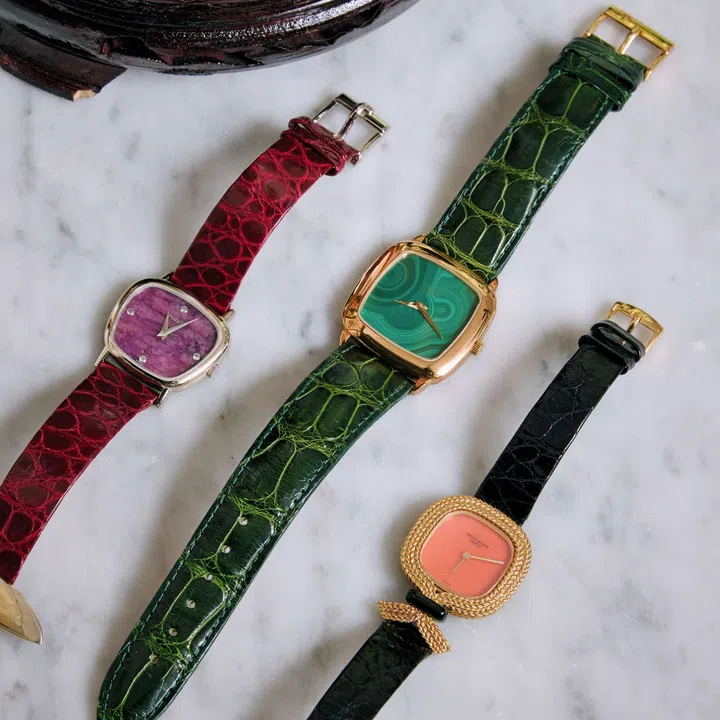
What intrigues her is that so much creative energy persisted through decades marked by war, upheaval, industrialisation and mass production. “That, to me, speaks of the indomitable nature of human aspiration and its unending quest for a higher order of aesthetic — almost spiritual — representation,” she says.
“Vintage watches present a level of craftsmanship and focus on design that are rarely seen these days. The meticulous artistry and inventiveness in horology, especially from the 40s to 70s, are unmatched,” she explains. “Cartier and Piaget, for example, had exquisite designs that played with extraordinary shapes, stone dials, precious metals and jewels for their watches.”
For Lim, who shares her passion on Instagram @herhorology, the fascination goes beyond aesthetics. She points to Jaeger-LeCoultre’s Duoplan of the 1920s and its subsequent feats of miniaturisation, including the Calibre 101, as examples of the technical ingenuity that accompanied this intense focus on form. “That notion alone makes objects of art and especially watches of that time worth collecting.”
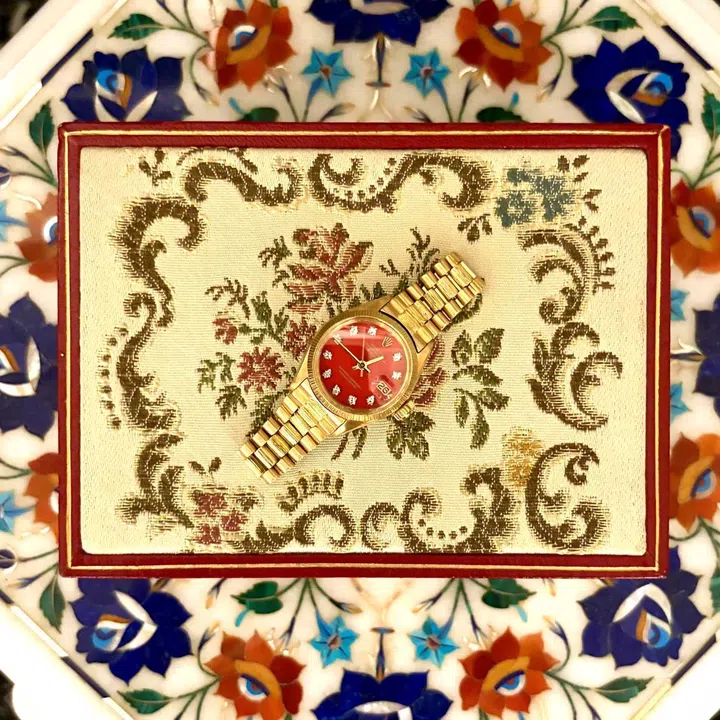
Her own collection reflects that breadth. There are colourful stone-dial Piagets and 70s ladies’ watches from maisons including Rolex, Patek Philippe and Omega, many distinguished by sensational gold bracelets. And Lim has a particular weakness for the intricately crafted bracelets of the period, when bracelet and watch could effectively become a single piece of jewellery. “Vintage bracelets are other-worldly,” she says.
They also come with practical headaches. Vintage bracelets cannot necessarily be resized as easily as their modern equivalents, particularly if spare links have disappeared over the decades or the bracelet has already been altered. Some of Lim’s watches have even remained unworn because their bracelets are too loose or too tight, while others she simply cannot bear to cut permanently to fit one wrist.
Among all these watches, one holds particular significance: a 1970s double-signed Rolex Explorer Ref. 1016 with Tiffany & Co. It is not an ornate cocktail watch or an exuberant stone-dial creation, yet Lim sees something of herself in its unexpected combination of characteristics.
“It represents a rare convergence of adventure and elegance which deeply resonates with my personality and style,” she says. “It is me in a nutshell.”
Cartier watch shapes beyond the familiar
For our photoshoot, however, the focus is Cartier, and Lim’s collection demonstrates just how expansive the French maison’s idea of a watch shape could be.
Cartier’s long history as the self-described “watchmaker of shapes” is precisely what appealed to her. Her interest initially centred on the maison’s 12 signature watch shapes from the 70s, leading her down a collecting path that went well beyond familiar designs such as the Tank and Santos.
“When I delved deeper into Cartier history and its horological evolution, its 12 signature models of different shapes from the 1970s got me hunting for my next collection,” she says.
Six pieces into the pursuit, however, Lim realised that completing a series for its own sake was at odds with how she actually wanted to collect. Some of those Cartier watch shapes simply did not sit comfortably on her small wrist.

“That was a moment of realisation for me that I needed to collect more intentionally, and not for a series’ or trend’s sake,” she elaborates. “There were many other interesting creations from Cartier that caught my eye, so I diversified my collection to include rare vintage pieces from the maison. I freed myself in the process to be more selective.”
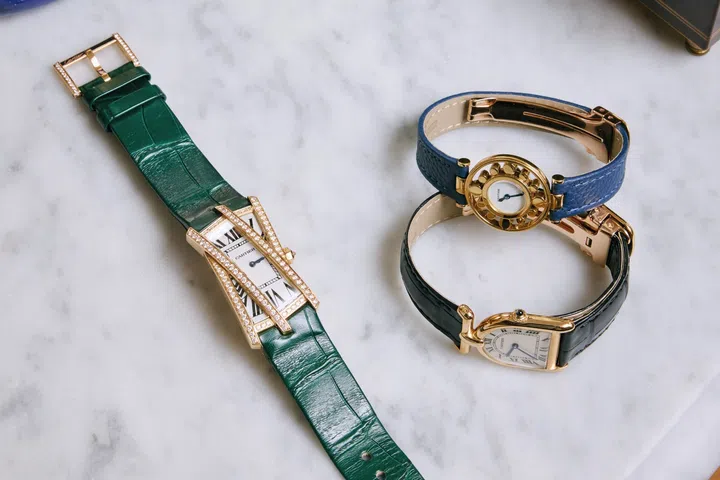
The result extends far beyond Cartier’s better-known historical silhouettes. Alongside 70s pieces, including an exceptional diamond-set Tank Crash, are avant-garde jewellery watches from the bold Cartier Libre collection of the early 2000s, a particularly fertile neo-vintage period for collectors interested in the maison’s more unconventional designs.
“I am most intrigued by the Libre Collection, which features some of Cartier’s most audacious creations to date.”
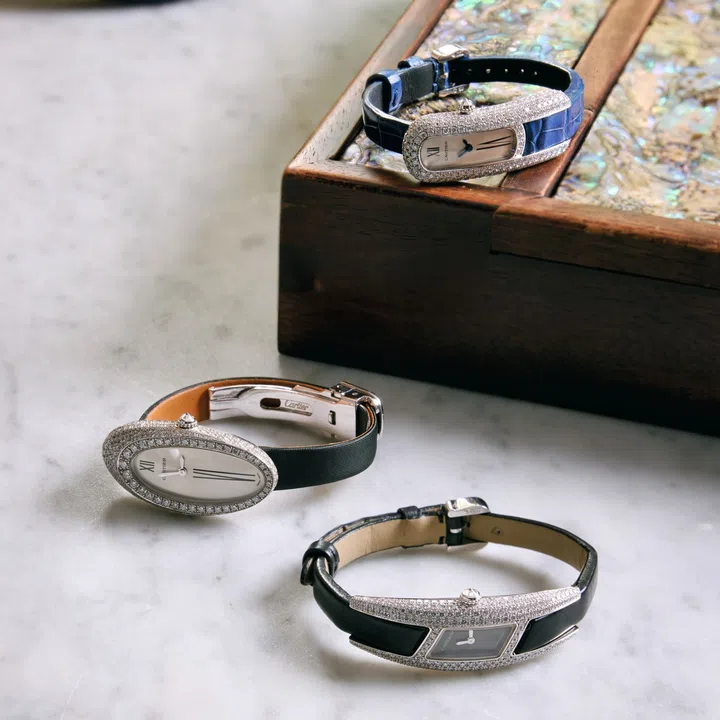
Among Lim’s treasures are the high-shine Cartier Alcyone, Trombone and Himalia. Their sculptural, unconventional forms blur the distinction between watch and jewellery, and demonstrate an experimental side of Cartier that can be easy to overlook if one knows the maison principally through its most famous shapes.
If she could save only one Cartier from a fire, it would be her ultra-rare 1970s Cartier Paris platinum Baignoire, featuring a double tubular bezel, old-style rosette guilloché, an extremely limited run of red Roman numerals, a ruby-set crown and white gold deployant buckle.
The watch came to her through the Cartier Collectors Club, but acquiring it required Lim and her husband to travel to Paris and spend three days navigating very specific conditions attached to the sale. “We gave up cathedrals and cruises to chase Cartier!”
That devotion to the maison has not gone unnoticed. At a recent Cartier event, Lim wore her beloved red-indices Baignoire alongside another favourite, the Tank Crash, drawing plenty of attention from staff and visitors.
It was when she began identifying the Cartier watch shapes that had inspired the event’s custom-made display stools, some based on the 12 signature models from the 70s, that she received perhaps the ultimate collector’s compliment.
“One of the Cartier brand managers present said he had goosebumps hearing me name the models, as he had yet to meet someone who was able to do that in all his years of service,” she recalls. “That was a fun day for me.”
Collecting watches on her own terms
Lim’s approach today is considerably more curated than it was during the height of her collection. The watch itself matters, of course, but increasingly so do the people she encounters, what she learns and the memories that become attached to an acquisition.
“The watch hunt, the learnings and my experiences with people have become important factors in my collecting journey,” she says.
That also means she is less concerned with ticking every conventional collector’s box. Condition and design remain important, but provenance, technical specifications and complete sets of paperwork do not necessarily determine whether she wants a watch.
“In the end, a watch is meaningful to me not only because of where it came from, but also because of what it was, is and becomes in relation to my life,” she says. “My timepieces are collected for enjoyment in my lifetime, and hopefully my children’s too.”
It is an attitude she encourages newer collectors to consider. Rather than following watches or brands that happen to be fashionable, Lim believes that an individual should consider his or her own taste, which can also evolve with time.
“Everyone is different and should have an opportunity to set his or her own unique collecting trajectory,” she adds. “Staying true to one’s evolving tastes and circumstances, and managing limited resources well will help keep the hobby sustainable and stress-free.”
She is equally dismissive of the notion that meaningful collecting necessarily requires the biggest names or budgets.
“Debunk the misconception that collecting is all about the big brands and bling, or that it is only for the wealthy and well-known,” she advises. “Chasing trends or seeking validation from others is neither necessary nor useful; making friends and learning from others will ultimately prove to be more rewarding and fulfilling. That has certainly been the case for me.”
There are still gaps she would like to fill. Lim hopes eventually to add Vacheron Constantin and Audemars Piguet to complete what she calls the “Trinity” in her collection. The Vacheron Constantin Historiques American 1921 appeals for its “sublime canted dial”, while she admires the Audemars Piguet Mini Royal Oak in frosted gold for its “fabulousness”.
Neither, she admits, is particularly elusive. And therein lies the problem. “Both are not difficult to find in the market and perhaps, that is why I keep deferring this aspiration to pursue rare or beautiful vintage watches instead.”
For a collector whose eye was shaped among precious stones, old heritage shophouses, Portobello Road finds and antique furniture, perhaps the readily available was never going to stand much of a chance.