%22%3E%0A%3Cpath%20d%3D%22M412%20101.2H393.7C393.1%20101.2%20392.3%20100.9%20391.8%20100.5C377.3%2087.6004%20362.9%2074.6004%20348.4%2061.6004C344.8%2058.4004%20341.3%2055.2004%20337.7%2052.0004C337.1%2051.5004%20336.2%2051.1004%20335.5%2051.0004C334.2%2050.8004%20333%2051.0004%20331.5%2051.0004V101.1H316.7V0.100391H331.4V44.3004C331.9%2044.3004%20332.2%2044.4004%20332.5%2044.4004C334.9%2044.4004%20337.2%2044.5004%20339.6%2044.4004C340.4%2044.4004%20341.3%2044.0004%20341.8%2043.5004C351.6%2034.4004%20361.4%2025.2004%20371.1%2016.0004C376.5%2010.9004%20381.9%205.90039%20387.3%200.800391C387.9%200.200391%20388.5%200.000390626%20389.3%200.000390626H400.9C384.2%2015.8004%20367.8%2031.3004%20351.2%2047.0004C371.5%2065.0004%20391.8%2082.9004%20412.1%20100.9C412.1%20101%20412.1%20101.1%20412%20101.2ZM180.9%20101.2C184.1%2094.9004%20187.2%2088.9004%20190.3%2082.8004C198.3%2067.3004%20206.2%2051.8004%20214.2%2036.2004C220.3%2024.4004%20226.4%2012.5004%20232.4%200.700391C232.7%200.100391%20233%20-0.0996094%20233.7%20-0.0996094H248.1C248.8%20-0.0996094%20249.2%200.100391%20249.6%200.800391C256%2013.3004%20262.4%2025.7004%20268.8%2038.2004C279.3%2058.6004%20289.8%2079.0004%20300.3%2099.5004C300.5%20100%20300.8%20100.4%20301.1%20101.1C300.5%20101.1%20300.1%20101.2%20299.7%20101.2H286.5C285.6%20101.2%20285.1%20100.9%20284.7%20100.2C280.1%2091.3004%20275.4%2082.4004%20270.8%2073.4004C270.1%2072.1004%20269.3%2071.6004%20267.8%2071.6004H209.9C208.7%2071.6004%20208.1%2072.0004%20207.5%2073.1004C202.9%2082.1004%20198.2%2091.0004%20193.6%20100C193.1%20101%20192.6%20101.3%20191.5%20101.3C188.4%20101.2%20185.3%20101.3%20182.3%20101.3C182%20101.2%20181.6%20101.2%20180.9%20101.2ZM239.1%2011.4004C230%2029.2004%20221.1%2046.7004%20212.1%2064.3004H266.4C257.2%2046.7004%20248.2%2029.2004%20239.1%2011.4004ZM0%200.000390626H43.4C51.2%200.000390626%2058.7%201.20039%2065.7%204.80039C75.9%2010.0004%2078.9%2018.0004%2078.6%2027.4004C78.3%2034.3004%2076%2040.5004%2071.2%2045.5004C67.3%2049.6004%2062.4%2052.3004%2057.1%2054.3004C50.6%2056.7004%2043.9%2058.0004%2037.1%2058.6004C30.1%2059.2004%2023.1%2059.4004%2016.2%2059.7004C15.8%2059.7004%2015.3%2059.8004%2014.8%2059.8004V101.1H0.1C0%2067.4004%200%2033.8004%200%200.000390626ZM14.8%207.10039V52.2004C23.7%2052.4004%2032.6%2052.3004%2041.2%2050.1004C44.4%2049.3004%2047.6%2048.2004%2050.6%2046.7004C58.4%2043.0004%2062.3%2036.7004%2062.7%2028.0004C63%2019.9004%2059.5%2014.1004%2052.4%2010.5004C47.6%208.00039%2042.5%207.10039%2037.2%207.10039H14.8ZM95.9%20101.1V0.100391H167.3V7.20039H110.7V44.7004H158.1V51.9004H110.8V93.9004H171.1V101C146.1%20101.1%20121%20101.1%2095.9%20101.1Z%22%20fill%3D%22black%22%2F%3E%0A%3Cpath%20d%3D%22M35.0004%2025.7996H42.5004V20.6996H44.8004V33.1996H42.6004V27.5996H34.9004V33.2996H32.7004V20.7996H35.0004V25.7996ZM54.4004%2025.8996V27.2996H48.9004V31.6996H55.9004C55.9004%2032.1996%2056.0004%2032.5996%2056.0004%2033.0996H46.5004V20.5996H55.5004V21.8996H49.0004V25.7996C50.7004%2025.8996%2052.5004%2025.8996%2054.4004%2025.8996ZM25.9004%2033.0996H23.5004V21.9996H17.9004V20.6996H31.6004V22.0996H27.1004C26.2004%2022.0996%2025.9004%2022.2996%2025.9004%2023.1996C26.0004%2026.0996%2025.9004%2028.9996%2025.9004%2031.7996V33.0996Z%22%20fill%3D%22black%22%2F%3E%0A%3C%2Fg%3E%0A%3Cdefs%3E%0A%3CclipPath%20id%3D%22clip0_388_462%22%3E%0A%3Crect%20width%3D%22411%22%20height%3D%22101.2%22%20fill%3D%22white%22%2F%3E%0A%3C%2FclipPath%3E%0A%3C%2Fdefs%3E%0A%3C%2Fsvg%3E%0A)
Watches and Wonders 2026: 10 trends setting the course for the future
Luxury watchmaking is moving in intriguing new directions this year, with lab-grown crystal, smarter ergonomics, softer gold tones, as well as serious design and technical innovation making an early impact.
By Allyson Klass and Yanni Tan /
Share this article
Watches and Wonders 2026 in Geneva has only just begun, but a few clear themes are already beginning to take shape. Across this annual luxury horology fair, watchmakers are showing a willingness to experiment, not only with new materials and movement architecture, but also with colour and the way a watch wears on the wrist.
From lab-grown crystal cases and champagne-toned gold dials to chronographs with innovative construction, smarter clasps and ultra-thin movements to unexpectedly new designs, these are seven trends at Watches and Wonders that have caught our attention so far.
Vintage revival
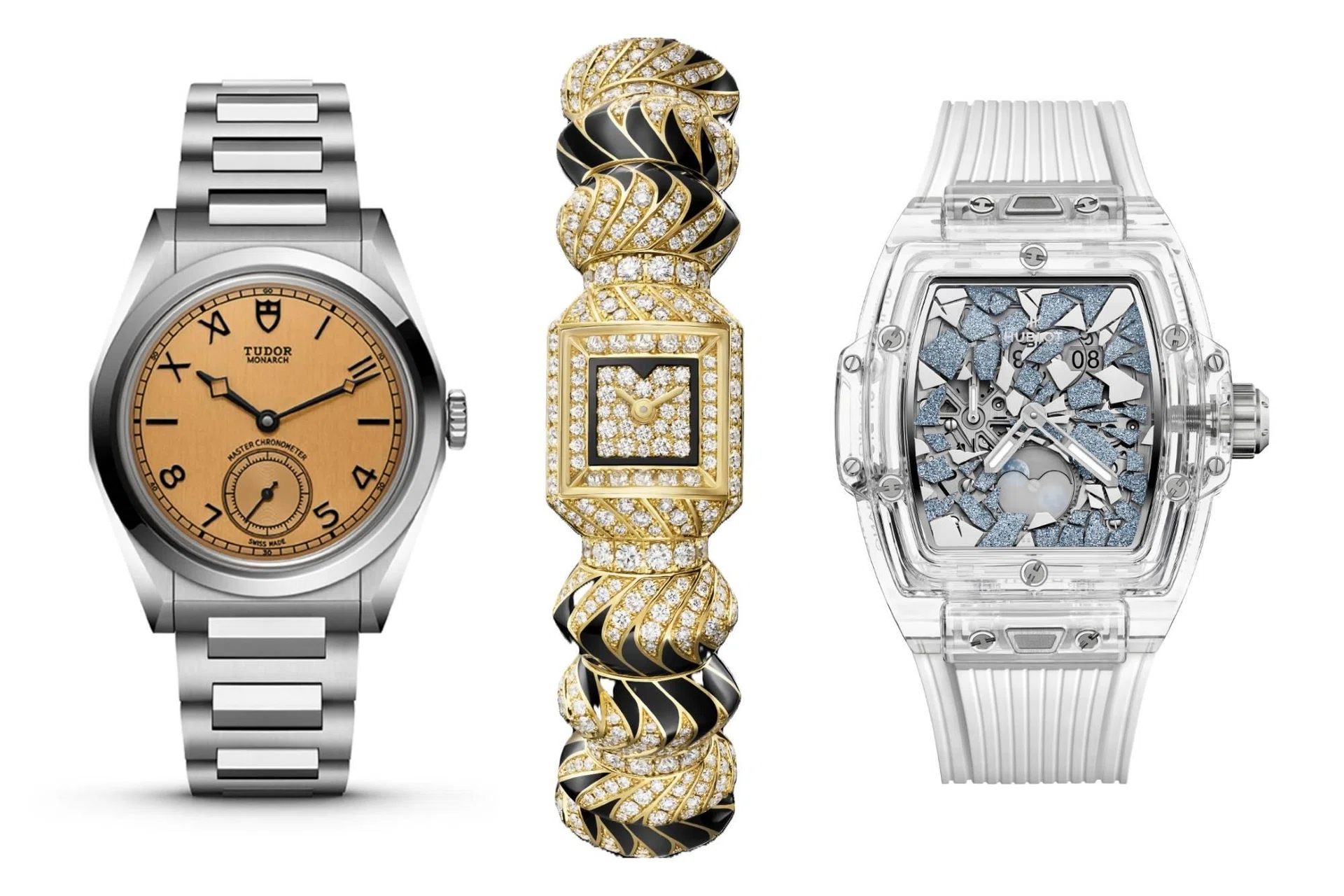
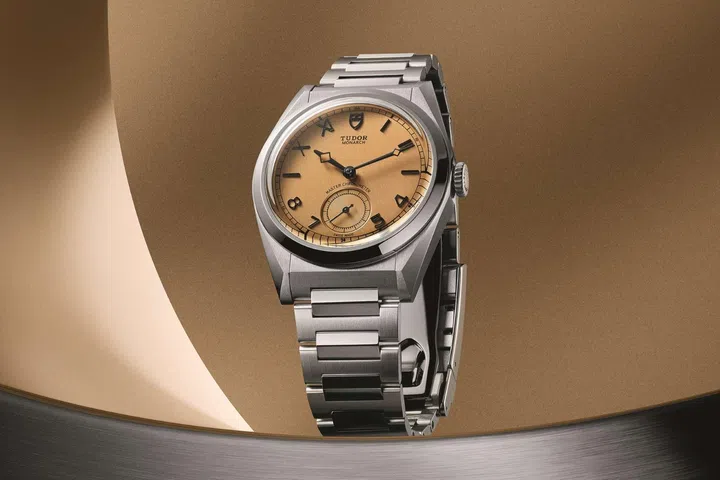
Vintage inspiration is everywhere this year, but the difference lies in execution. Rather than simple reissues, brands are revisiting heritage with modern capability — and in some cases, reviving entire lines. Tudor’s Monarch is a strong example.
The Monarch name carries a century-old legacy, and this new model reinterprets it with a distinctly contemporary lens. The 39mm stainless steel case is finely faceted, paired with a sharply integrated bracelet that echoes the geometry of earlier Tudor designs.
Its dial draws heavily from the past. A vertical-brushed, papyrus-toned surface is paired with an unusual mix of Roman numerals from 10 to 2 and Arabic numerals from 4 to 8 — a layout rooted in Tudor’s early “error-proof” designs.
Inside, the Manufacture Calibre MT5662-2U brings things firmly into the present. Certified as a Master Chronometer by METAS, it delivers precision within 0/+5 seconds per day, resistance to magnetic fields up to 15,000 gauss, and a 65-hour power reserve.
Watches as sculpture
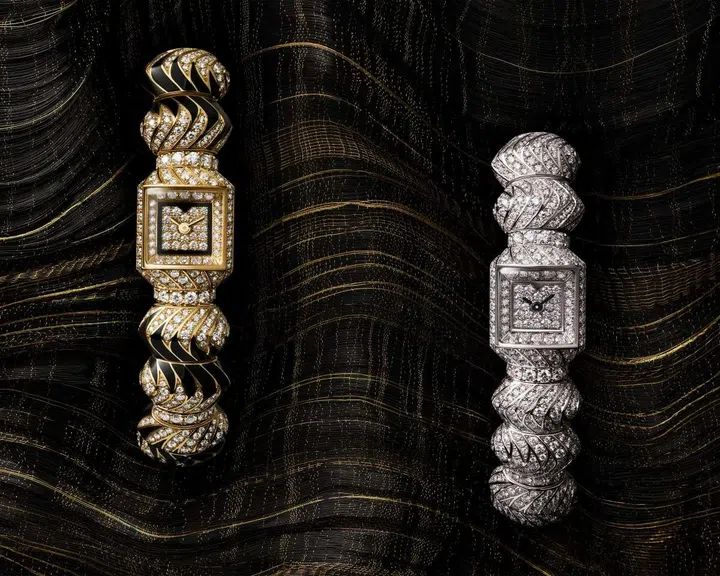
At the highest end of watchmaking, the line between object and timepiece continues to blur. Cartier’s Myst de Cartier is perhaps the best embodiment of this idea.
Described as a “sculpture of a watch”, it brings together jewellery and horology in a form that challenges conventional definitions. Its design is built around volume and movement, drawing inspiration from the flamboyant, sculptural jewellery watches created under Jeanne Toussaint in the 1930s.
The construction itself is unexpected. The bracelet has no clasp, instead forming a continuous, bead-like structure that evokes talismans or protective objects. Alternating curves, a domed crystal, and a geometric diamond-paved dial framed in onyx create a composition that feels more like an art piece than a traditional watch.
Craftsmanship plays a central role. The swirling diamond-studded, bead-linked bracelet requires around 30 hours of gem-setting, while black lacquer details are hand-painted to create contrast and depth.
Rather than prioritising legibility or function, the Myst de Cartier emphasises presence and form. It reflects a growing direction in watchmaking: where timekeeping becomes secondary to expression, and the watch itself becomes an artistic object to be worn.
Rare metals take centre stage
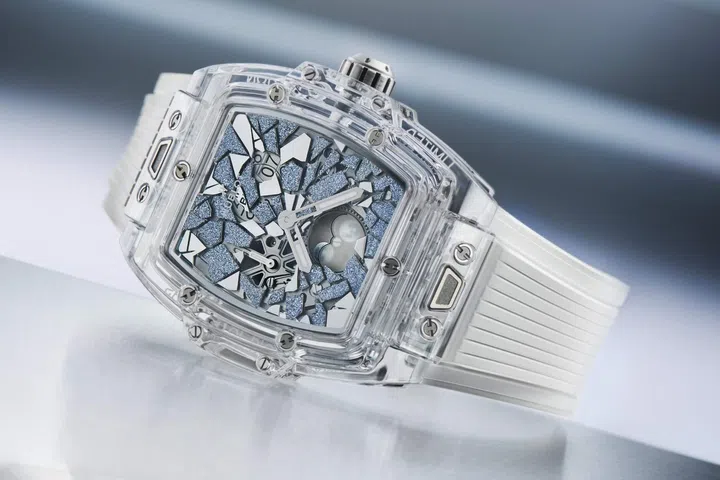
Material innovation continues to be one of the most dynamic areas of watchmaking, but this year saw brands pushing beyond familiar territory to feature rare metals prized for their density and corrosion resistance. Alongside the introduction of hafnium by Panerai and tantalum by Zenith and H. Moser & Cie, Hublot offers one of the most creative expressions of this shift with the Spirit of Big Bang Impact in sapphire and osmium.
Housed in a 42mm tonneau-shaped case crafted from polished sapphire crystal, the watch already operates at the extreme end of what can be machined in watchmaking.
The real point of interest, however, lies on the dial. Here, rhodium-plated elements alternate with shards of crystallised osmium. Part of the platinum group metals, osmium is considered the rarest stable element in the earth’s crust and is typically found only as a by-product of platinum mining. In its crystallised form, it develops a distinctive bluish, almost iridescent sparkle that sets it apart from more familiar metals.
These fragments radiate outward in Hublot’s signature “Impact” motif, extending from the bezel to the dial and orbiting the moonphase display at 6 o’clock. Each element is individually positioned and secured with micron-level precision, creating a layered, almost explosive composition.
Inside, the HUB1770 skeletonised automatic calibre drives the display, offering a 50-hour power reserve along with a big date at 1 o’clock and moonphase indication.
Champagne is the new gold standard
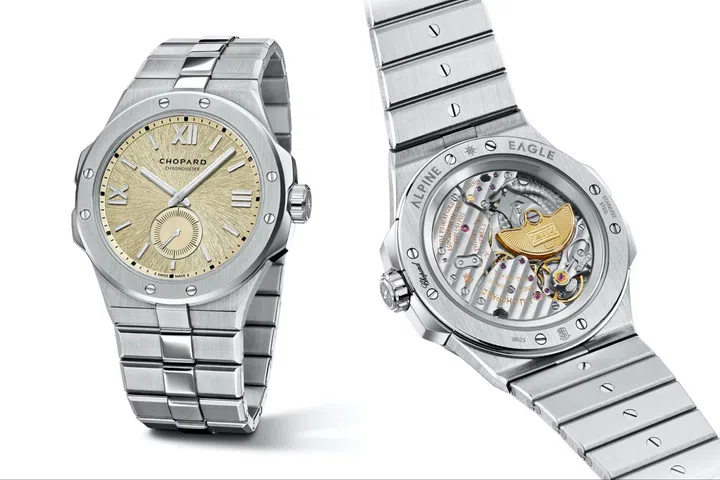
Yellow gold is back in the conversation, although not in the loud, nostalgic way some might expect. Maisons are gravitating toward softer, champagne tones that are more understated and contemporary. Chopard’s new Alpine Eagle 41 XPS is a case in point.
Tracing back to Chopard co-president Karl-Friedrich Scheufele’s original St. Moritz watch in 1980, the latest evolution of the Alpine Eagle story arrives in the maison’s proprietary Lucent Steel at a slim 8mm. However, it’s the dial that steals the show. Named Mountain Glow, the hue is a subtle champagne shade meant to evoke Alpine peaks catching the last light of sunset.
Achieved through galvanic treatment on a brass base stamped with the collection’s signature eagle-iris pattern, the tone sits in a warm, golden middle ground that is neither overly dressy nor sporty. Ethical white gold hands and hour markers coated in Grade X1 Super-LumiNova lend a quiet contrast.
At the heart of the 41mm watch beats the L.U.C 96.40-L calibre. Measuring just 3.3mm thin and wound via a 22k gold micro-rotor, it carries both COSC chronometer certification and the Poincon de Geneve hallmark. Earning the latter with a steel watch is particularly rare and speaks to the level of hand-finishing Chopard applies across the board.

Radical new concepts take flight
If previous years were about refining icons, 2026 could see brands start from scratch. One of the clearest examples comes from IWC Schaffhausen, which introduces a watch conceived not for Earth, but for space: the IWC Pilot’s Venturer Vertical Drive.
Rather than adapting an existing pilot’s watch, IWC has built this from the ground up as a tool watch for human spaceflight. Developed with space company Vast and certified for use on the upcoming Haven-1 commercial space station, it reflects a growing willingness among watchmakers to rethink fundamentals.
The most radical departure is the elimination of the crown. Instead, a patent-pending rotating bezel system controls all functions, paired with a rocker switch on the case to toggle between winding and time-setting. The idea is simple but compelling: astronauts wearing gloves can operate the watch entirely through the bezel.
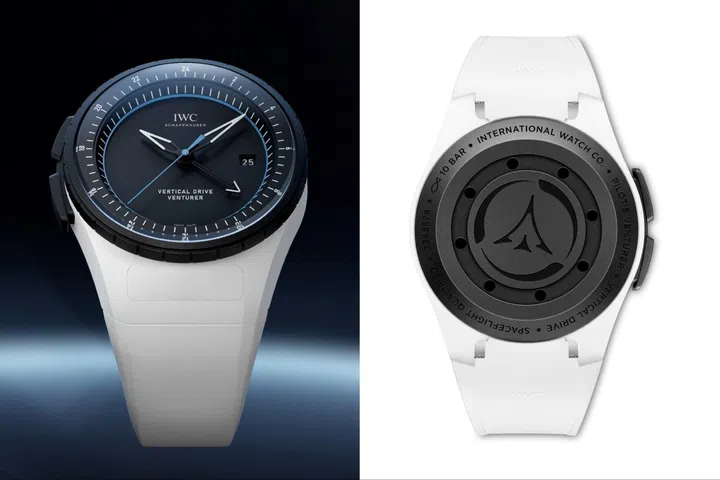
The 44.3mm case is made from white zirconium oxide ceramic with a Ceratanium bezel and caseback, combining extreme hardness with resistance to temperature swings — essential when conditions range from over 100°C in sunlight to -150 deg C in shade.
Inside, the new calibre 32722 offers a 120-hour power reserve and a dual-time display with a 24-hour format suited to orbital life, where astronauts experience multiple sunrises a day.
More than just a technical exercise, the Venturer Vertical Drive points to a broader trend: watches are no longer just evolving — they are being reimagined for entirely new environments and use cases.
Lab-grown crystal goes luxe
Man-made materials are nothing new in horology. Synthetic rubies have long served as jewel bearings, while lab-grown sapphire crystal is standard issue over dials and open casebacks. More recently, laboratory-grown or simulated diamonds and gems have appeared on high-end timepieces.
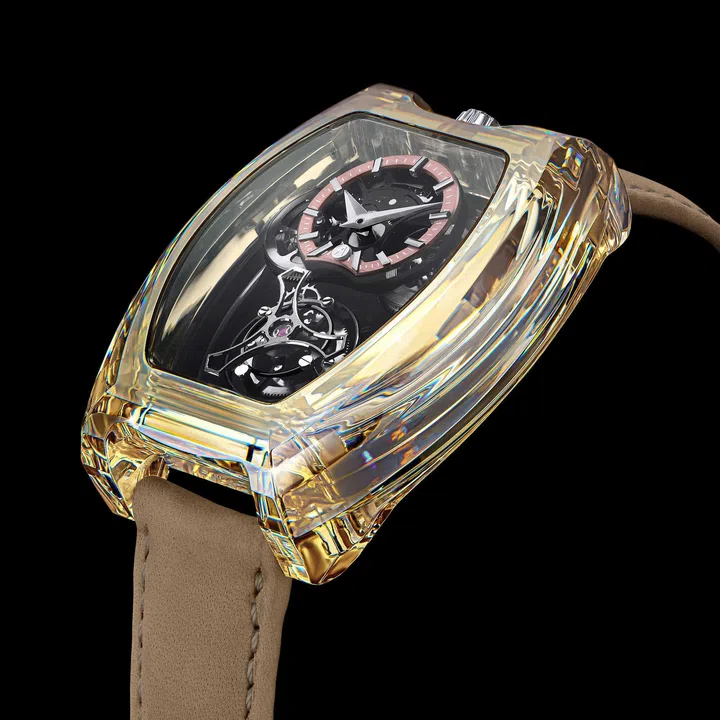
Now, ArtyA Geneve is pushing boundaries further with the Purity Moissanite Curvy Tourbillon, which marks the first time that lab-grown moissanite — a silicon carbide first discovered in naturally formed trace amounts in a meteorite crater in 1893 — has been used to sculpt an entire watch case.
What makes this crystal so compelling for watchmaking is also what makes it so punishing to work with. Sitting between 9.25 and 9.5 on the Mohs scale, it is the second hardest material known after the diamond.
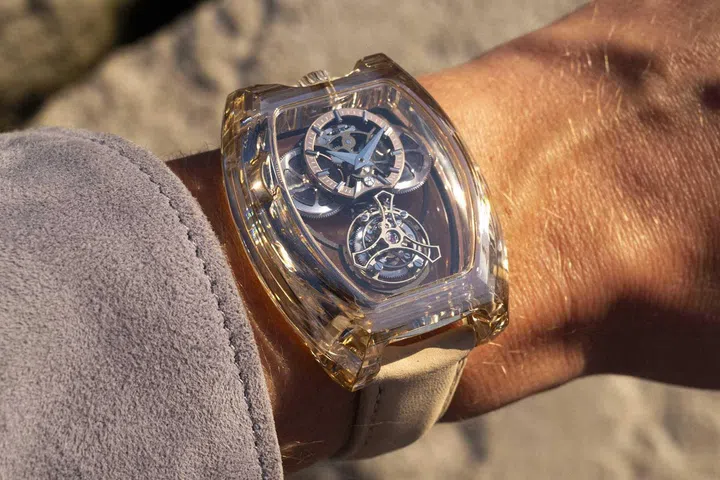
Machining the moissanite into a complex 41mm by 42mm tonneau case with 65 facets required proprietary processes developed by Stanislas Arpa, ArtyA founder Yvan Arpa’s son, to work a crystal with a melting point above 2,700 deg C and resistance far exceeding that of conventional watchmaking materials.
This makes ArtyA the only maison in the world that possesses this new know-how.
The payoff is extraordinary as moissanite’s dispersion index of 0.104 is more than double that of diamond. This means that each facet acts as a miniature prism, which transforms the case into a luminous sculpture. The sides of the warm champagne-hued case act as a natural magnifying lens for the movement within.
The PUR-T3 manufacture calibre is shaped to follow the case’s curved lines, with hours and minutes offset at 12 o’clock and a tourbillon at 6 o’clock. Twin parallel barrels deliver 65 hours of power reserve. The timepiece is a nine-piece limited edition.
Compact complications return
After years of upsized cases, watchmaking is swinging back toward smaller, more wearable proportions — a shift that is especially relevant across Asian markets, where comfort and balance on the wrist matter just as much as presence.
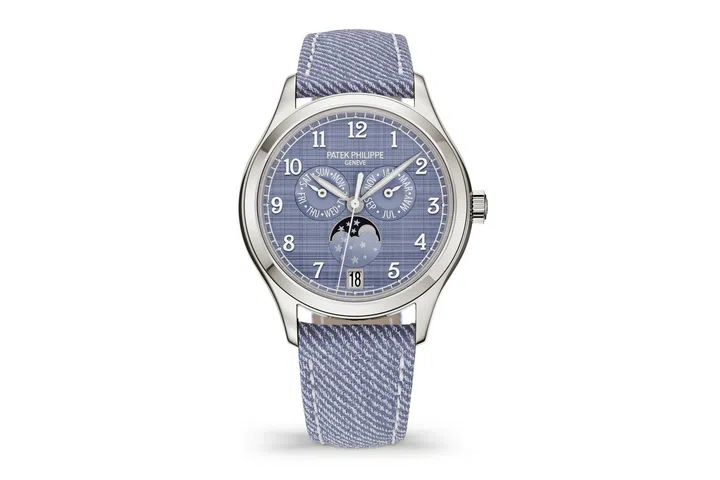
At Patek Philippe, however, this is less a pivot than a continuation. Two new Annual Calendar references illustrate the point. The Ref. 4946G-001 is sized at 38mm, while the Ref. 5396R-016 comes in at 38.5mm — dimensions that align neatly with today’s preferences, but have long defined the brand’s approach to complicated dress watches.
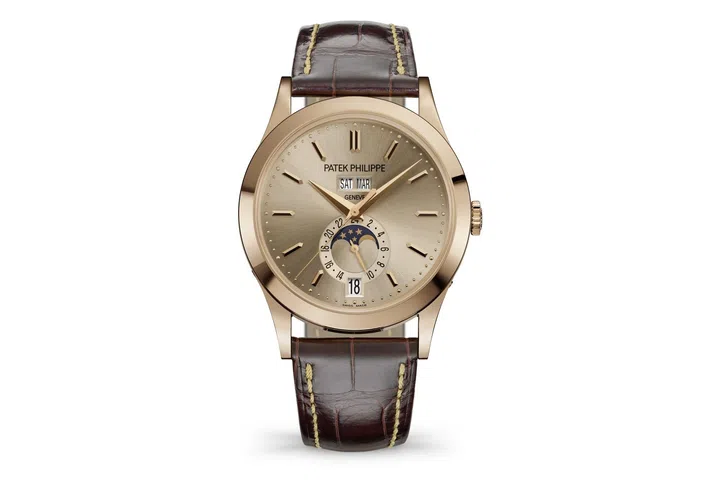
Crucially, neither model has been downsized to meet the moment. The 4946 line only entered the collection in 2025 already at 38mm, while the 5396 has remained at 38.5mm since its debut in 2006. In an industry that spent the past decade pushing beyond 40mm, Patek Philippe simply held its ground.
What makes these watches resonate today is not just their proportions, but their substance. Both house full Annual Calendar mechanisms with moon phases — complications that traditionally demanded larger cases — yet are executed here in compact, balanced formats powered by the self-winding calibre 26-330 family.
As the broader industry recalibrates toward wearability, the takeaway is clear: smaller watches are not a compromise. If anything, they represent a return to a more considered kind of watchmaking — one that Patek Philippe never left behind.
The flexure revolution
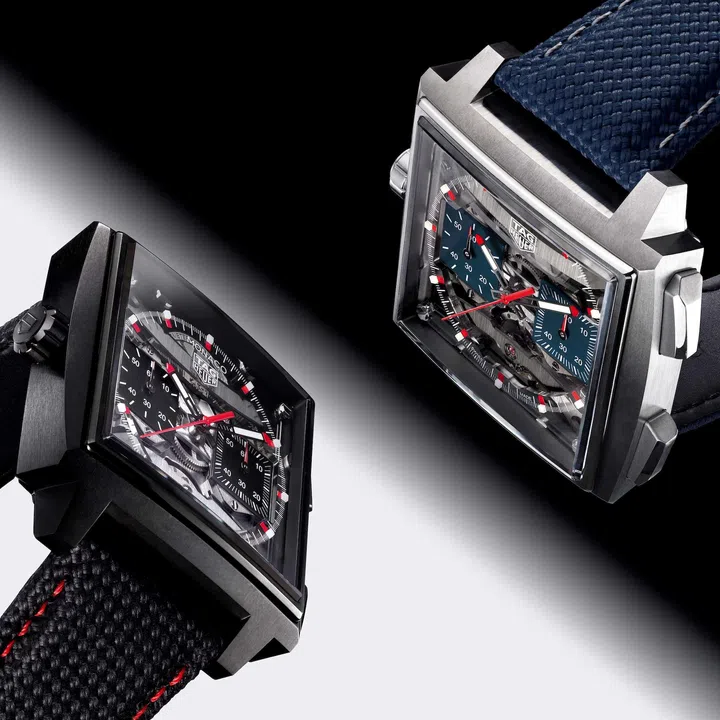
For as long as the chronograph has existed, its start, stop, and reset functions have depended on the same familiar mechanical architecture of levers, springs, column wheels and cams. Tag Heuer’s Monaco Evergraph breaks from that tradition.
Its new Calibre TH80-00, developed over five years by the TAG Heuer Lab in partnership with Vaucher Manufacture Fleurier, replaces virtually the entire conventional actuation system with just two flexible bi-stable components — one handling start and stop, the other reset.
Produced using high-precision LIGA technology, a manufacturing process that allows extremely small and intricate parts to be made with exceptional accuracy, these compliant components snap cleanly between positions with a fast, crisp action that doesn’t degrade over time.
This is a radical rethink from a manufacture, whose relationship with the chronograph stretches back over 160 years. The Evergraph sits at the apex of that lineage.
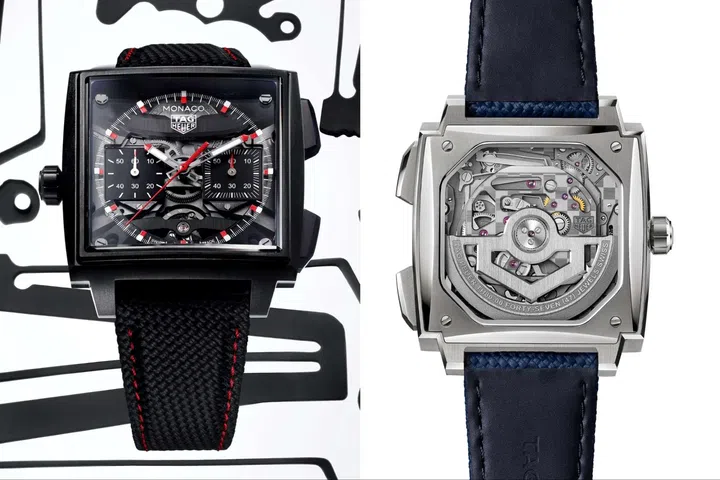
Alongside the compliant mechanism, the movement features a TH-Carbonspring oscillator for magnetic resistance, a 5Hz frequency, 70 hours of power reserve, and COSC certification. An inverted construction places the barrel, gear train and escapement on full display from the dial side through a transparent acrylic crystal.
The 40mm grade 5 titanium case traces its silhouette back to the original 1969 Monaco reference 1133, but has been thoroughly re-engineered for ergonomics, with tapered profiles and sharp-edged facets that lend a monolithic, almost brutalist presence.
The left-side crown, a Monaco signature since the Calibre 11 era, remains. Two references are offered: a natural titanium version with blue accents recalling the Steve McQueen-era ref. 1133B and a black DLC-coated version with red details.
Thin with substance
Ultra-thin watchmaking is hardly new, but what stands out this year is how maisons are pushing slender movements beyond dress watches into iterations that are sportier and more versatile.
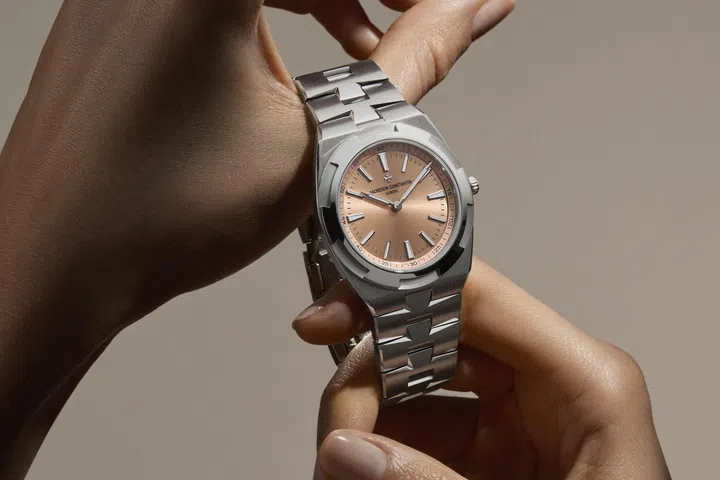
Vacheron Constantin’s Overseas Self-Winding Ultra-Thin is a prime example. At its heart is the new Calibre 2550, a self-winding manufacture movement that took seven years to develop, measures just 2.4mm thin and still delivers an impressive 80-hour power reserve.
The movement combines a platinum micro-rotor, suspended double barrel and compact single-level gear train, all designed to maximise performance within a very tight space. The movement is housed in a 39.5mm platinum case with a thickness of only 7.35mm, a first for the Overseas collection.
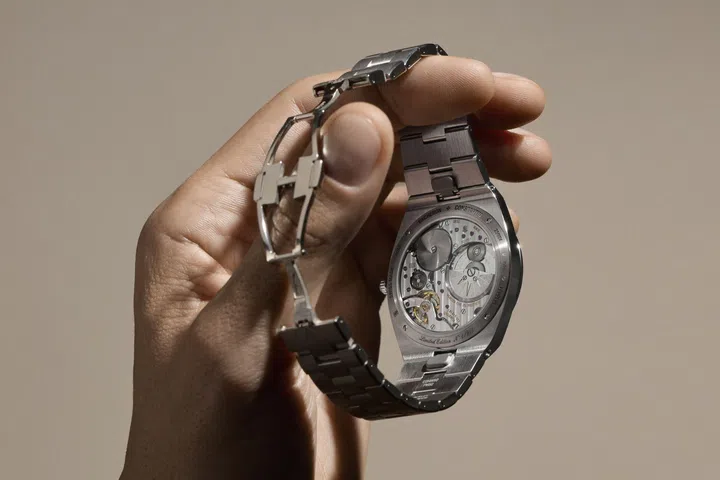
The alloy itself is also special. Containing copper and gallium with thermal hardening treatment, it offers 2.7 times the scratch resistance of standard platinum 950. A sunburst salmon-lacquered dial with white gold hands is a nod to the maison’s heritage of pairing platinum with salmon tones, which dates back to the 1940s.
Three tool-free interchangeable straps complete the package. Limited to 255 pieces, the new model is a boutique exclusive.
Wearability gets smarter
A subtle, but no less meaningful trend, is the growing emphasis on wearability and ergonomics. Since 2025, Zenith has been steadily pushing versatility through interchangeable bracelet and strap options paired with easy quick-change systems.
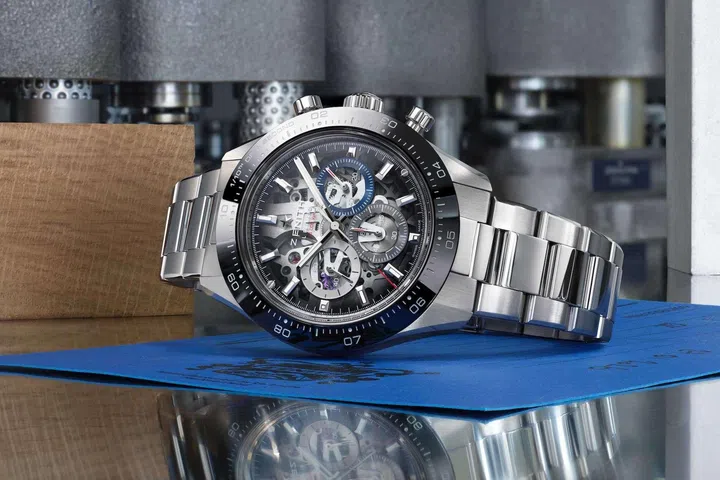
This year, it turns its attention to the clasp. Presented on the new Chronomaster Sport Skeleton, the patented Zenclasp is designed to improve security and everyday comfort with smooth rounded lines, a lift-up safety cover and tool-free micro-adjustment system that allows the bracelet to be resized on the wrist without having to remove the watch.
It adjusts in 2.5mm increments across a total range of 10mm, making it easier to fine-tune the fit throughout the day.
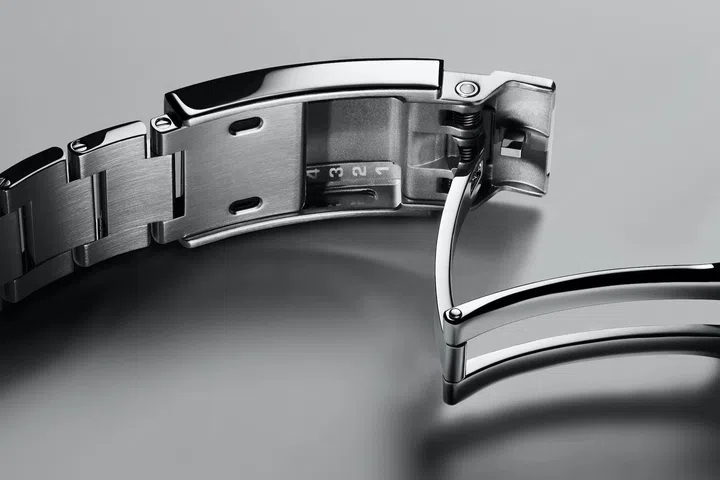
A product of three years’ development, Zenclasp comprises 41 components, including 10 ceramic balls that ensure precise locking and positioning. It was also tested over more than 600,000 opening and closing cycles, equivalent to over 10 years of use.
This folding clasp will be progressively introduced across additional models and references. It can also be adapted to all Chronomaster Sport bracelets that were not originally equipped with it.
The watch itself houses the El Primero 3600 SK, a skeletonised evolution of the legendary high-frequency chronograph first launched in 1969. Visible through a sapphire crystal dial that fades from smoked black to transparent at the centre, the openworked movement reveals its blue-finished column wheel, horizontal clutch and silicon escape wheel. Signature tri-colour counters are also a hat-tip to the original.