%22%3E%0A%3Cpath%20d%3D%22M412%20101.2H393.7C393.1%20101.2%20392.3%20100.9%20391.8%20100.5C377.3%2087.6004%20362.9%2074.6004%20348.4%2061.6004C344.8%2058.4004%20341.3%2055.2004%20337.7%2052.0004C337.1%2051.5004%20336.2%2051.1004%20335.5%2051.0004C334.2%2050.8004%20333%2051.0004%20331.5%2051.0004V101.1H316.7V0.100391H331.4V44.3004C331.9%2044.3004%20332.2%2044.4004%20332.5%2044.4004C334.9%2044.4004%20337.2%2044.5004%20339.6%2044.4004C340.4%2044.4004%20341.3%2044.0004%20341.8%2043.5004C351.6%2034.4004%20361.4%2025.2004%20371.1%2016.0004C376.5%2010.9004%20381.9%205.90039%20387.3%200.800391C387.9%200.200391%20388.5%200.000390626%20389.3%200.000390626H400.9C384.2%2015.8004%20367.8%2031.3004%20351.2%2047.0004C371.5%2065.0004%20391.8%2082.9004%20412.1%20100.9C412.1%20101%20412.1%20101.1%20412%20101.2ZM180.9%20101.2C184.1%2094.9004%20187.2%2088.9004%20190.3%2082.8004C198.3%2067.3004%20206.2%2051.8004%20214.2%2036.2004C220.3%2024.4004%20226.4%2012.5004%20232.4%200.700391C232.7%200.100391%20233%20-0.0996094%20233.7%20-0.0996094H248.1C248.8%20-0.0996094%20249.2%200.100391%20249.6%200.800391C256%2013.3004%20262.4%2025.7004%20268.8%2038.2004C279.3%2058.6004%20289.8%2079.0004%20300.3%2099.5004C300.5%20100%20300.8%20100.4%20301.1%20101.1C300.5%20101.1%20300.1%20101.2%20299.7%20101.2H286.5C285.6%20101.2%20285.1%20100.9%20284.7%20100.2C280.1%2091.3004%20275.4%2082.4004%20270.8%2073.4004C270.1%2072.1004%20269.3%2071.6004%20267.8%2071.6004H209.9C208.7%2071.6004%20208.1%2072.0004%20207.5%2073.1004C202.9%2082.1004%20198.2%2091.0004%20193.6%20100C193.1%20101%20192.6%20101.3%20191.5%20101.3C188.4%20101.2%20185.3%20101.3%20182.3%20101.3C182%20101.2%20181.6%20101.2%20180.9%20101.2ZM239.1%2011.4004C230%2029.2004%20221.1%2046.7004%20212.1%2064.3004H266.4C257.2%2046.7004%20248.2%2029.2004%20239.1%2011.4004ZM0%200.000390626H43.4C51.2%200.000390626%2058.7%201.20039%2065.7%204.80039C75.9%2010.0004%2078.9%2018.0004%2078.6%2027.4004C78.3%2034.3004%2076%2040.5004%2071.2%2045.5004C67.3%2049.6004%2062.4%2052.3004%2057.1%2054.3004C50.6%2056.7004%2043.9%2058.0004%2037.1%2058.6004C30.1%2059.2004%2023.1%2059.4004%2016.2%2059.7004C15.8%2059.7004%2015.3%2059.8004%2014.8%2059.8004V101.1H0.1C0%2067.4004%200%2033.8004%200%200.000390626ZM14.8%207.10039V52.2004C23.7%2052.4004%2032.6%2052.3004%2041.2%2050.1004C44.4%2049.3004%2047.6%2048.2004%2050.6%2046.7004C58.4%2043.0004%2062.3%2036.7004%2062.7%2028.0004C63%2019.9004%2059.5%2014.1004%2052.4%2010.5004C47.6%208.00039%2042.5%207.10039%2037.2%207.10039H14.8ZM95.9%20101.1V0.100391H167.3V7.20039H110.7V44.7004H158.1V51.9004H110.8V93.9004H171.1V101C146.1%20101.1%20121%20101.1%2095.9%20101.1Z%22%20fill%3D%22black%22%2F%3E%0A%3Cpath%20d%3D%22M35.0004%2025.7996H42.5004V20.6996H44.8004V33.1996H42.6004V27.5996H34.9004V33.2996H32.7004V20.7996H35.0004V25.7996ZM54.4004%2025.8996V27.2996H48.9004V31.6996H55.9004C55.9004%2032.1996%2056.0004%2032.5996%2056.0004%2033.0996H46.5004V20.5996H55.5004V21.8996H49.0004V25.7996C50.7004%2025.8996%2052.5004%2025.8996%2054.4004%2025.8996ZM25.9004%2033.0996H23.5004V21.9996H17.9004V20.6996H31.6004V22.0996H27.1004C26.2004%2022.0996%2025.9004%2022.2996%2025.9004%2023.1996C26.0004%2026.0996%2025.9004%2028.9996%2025.9004%2031.7996V33.0996Z%22%20fill%3D%22black%22%2F%3E%0A%3C%2Fg%3E%0A%3Cdefs%3E%0A%3CclipPath%20id%3D%22clip0_388_462%22%3E%0A%3Crect%20width%3D%22411%22%20height%3D%22101.2%22%20fill%3D%22white%22%2F%3E%0A%3C%2FclipPath%3E%0A%3C%2Fdefs%3E%0A%3C%2Fsvg%3E%0A)
Why 2026 is the year of vintage revival in luxury watchmaking
From Art Deco classics and wartime dress watches to 1970s integrated-bracelet icons, these new luxury watches prove that 2026 is the year brands are looking to the past for inspiration.
By Yanni Tan /
Share this article
Luxury watchmaking has always looked to its archives for inspiration, but 2026 marks a notable trend. Rather than producing broadly vintage-inspired aesthetics, brands are reviving the defining aesthetics of specific eras with remarkable fidelity.
From the pioneering wristwatches of the 1910s and the geometric elegance of the Art Deco period to the purposeful tool watches of the 1950s and the integrated sports watches that transformed the 1970s, this year’s launches, including those from Watches and Wonders, celebrate the moments that shaped modern watch design.
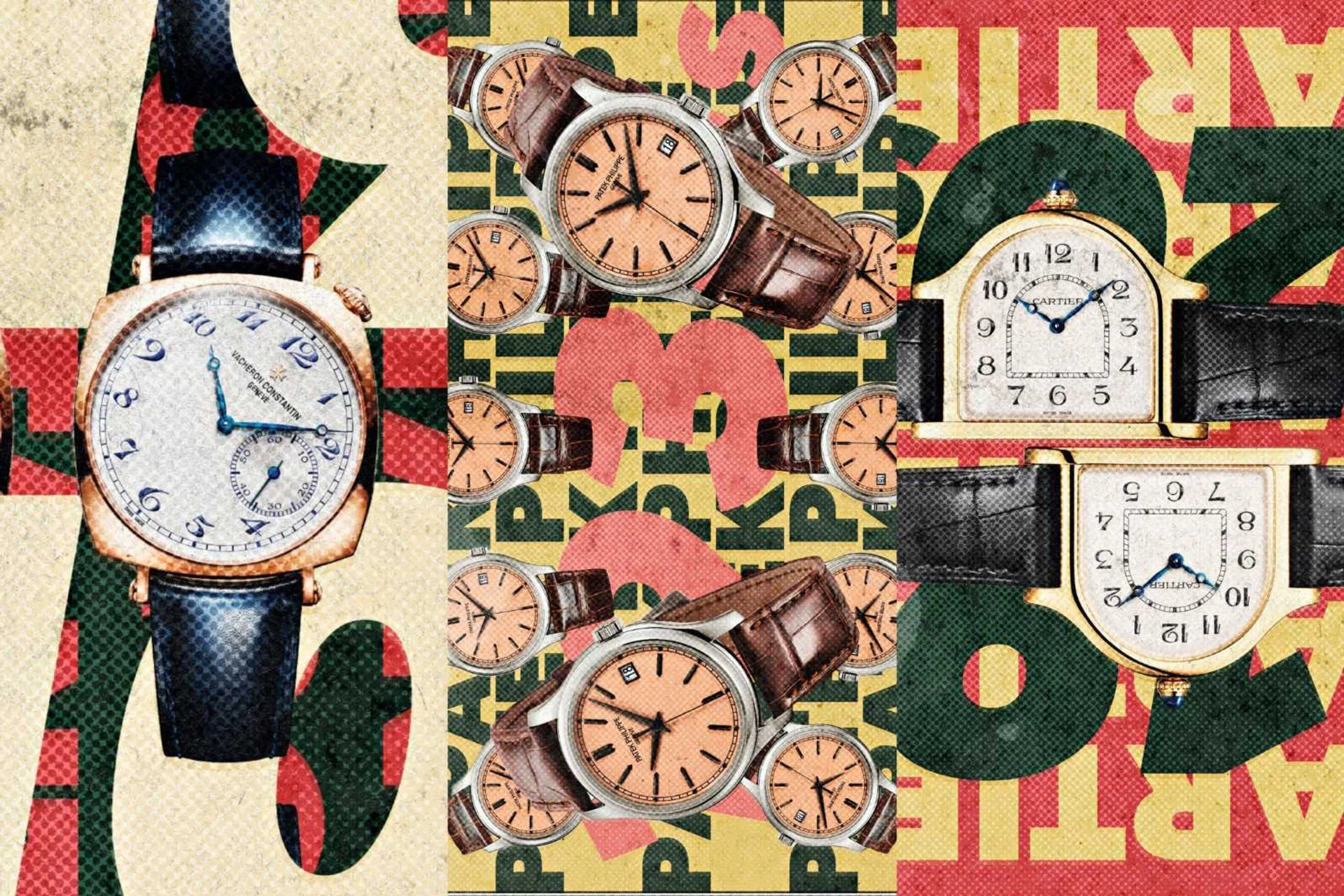
Leading the revival is Patek Philippe’s latest Calatrava, which distils nearly a century of design evolution into a single timepiece, before a host of other maisons revisit the distinctive styles of decades past.
A century of timeless design
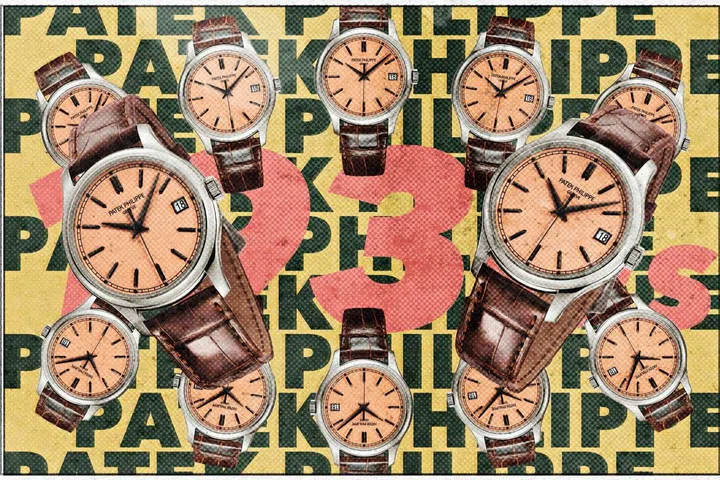
Patek Philippe Calatrava Ref. 5227G-015
Drawing on nearly a century of Calatrava design is this new Ref. 5227G-015. Its understated round case and minimalist dial echo the purity of the original 1930s Calatrava, while the concave bezel, sculpted lugs, and Officer-style hinged caseback evoke elegant dress watches from the mid-20th century.
The warm rose-gilt opaline dial paired with charcoal-grey white gold obus-style hour markers and faceted dauphine hands lends this classic fresh warmth. The polished 39mm white gold case houses the self-winding Calibre 26-330 S C, offering centre seconds, a date display, and up to 45 hours of power reserve.
1910s: The wristwatch comes of age
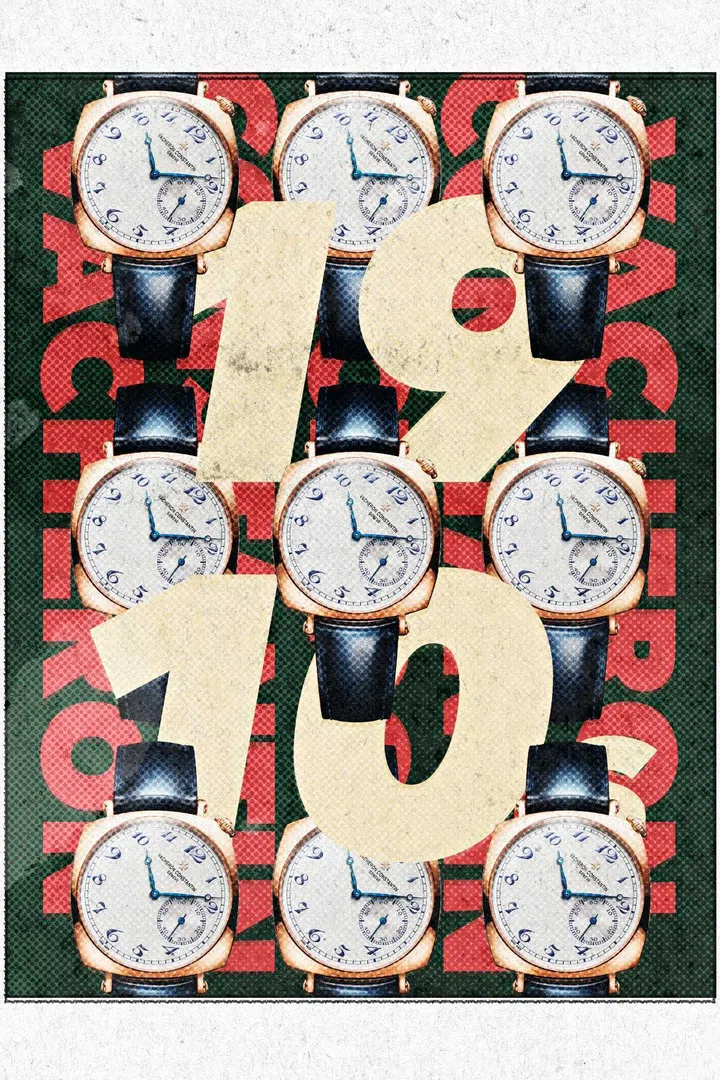
Vacheron Constantin Historiques American 1921
The modern wristwatch was still finding its identity when Vacheron Constantin created an unconventional driver’s watch in 1919, before refining it for the US market in 1921. Its rotated dial, cushion-shaped case, and offset crown broke free from pocket-watch conventions while making the time easier to read behind the wheel.
This watch faithfully revives that pioneering spirit with a new silver-toned dial and blue accents. Available in 36.5mm or 40mm pink gold, it is powered by the manual-winding Calibre 4400 AS with a 65-hour power reserve and Hallmark of Geneva certification.
1920s: Art Deco breaks the mould
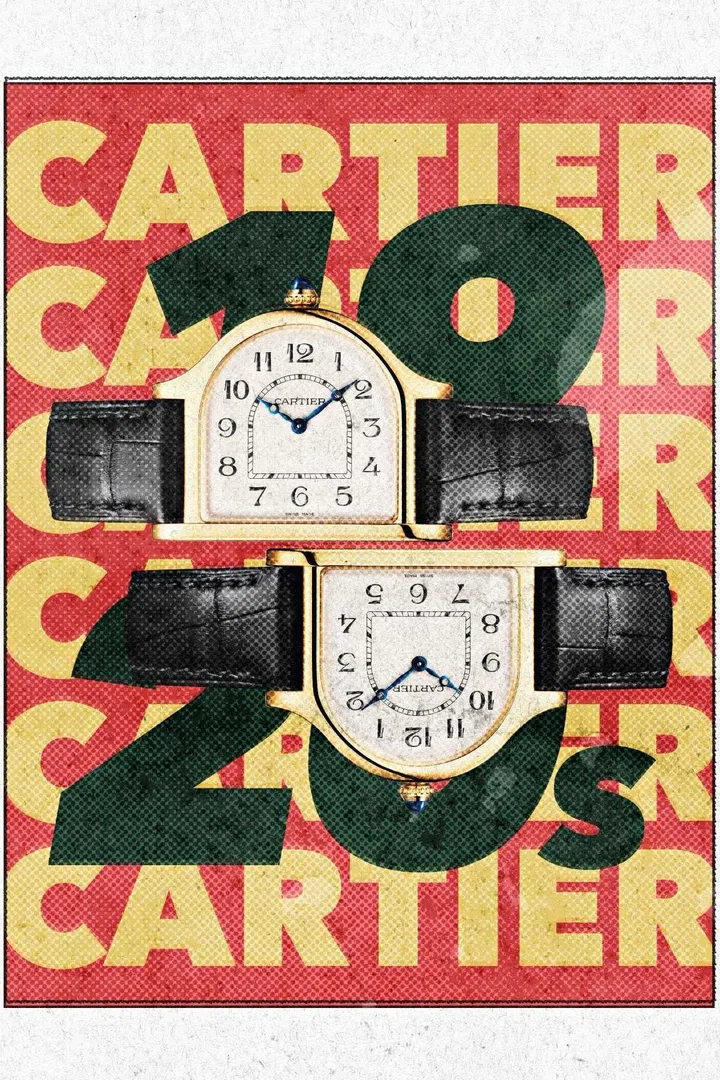
Cartier Privé Cloche
Few decades embraced unconventional forms quite like the Roaring Twenties, when Art Deco encouraged Cartier to transform everyday objects into elegant timepieces. First introduced in 1921, the Cloche took the shape of a tabletop bell, becoming one of the maison’s most distinctive creations.
Returning in 2026 as part of the Cartier Privé collection, it celebrates that era’s fearless experimentation with geometry and proportion. The unmistakable bell-shaped case remains intact, complete with a ruby cabochon crown, while a manual-winding mechanical movement and faithful period styling preserve an enduring design icon.
1930s: Precision for professionals
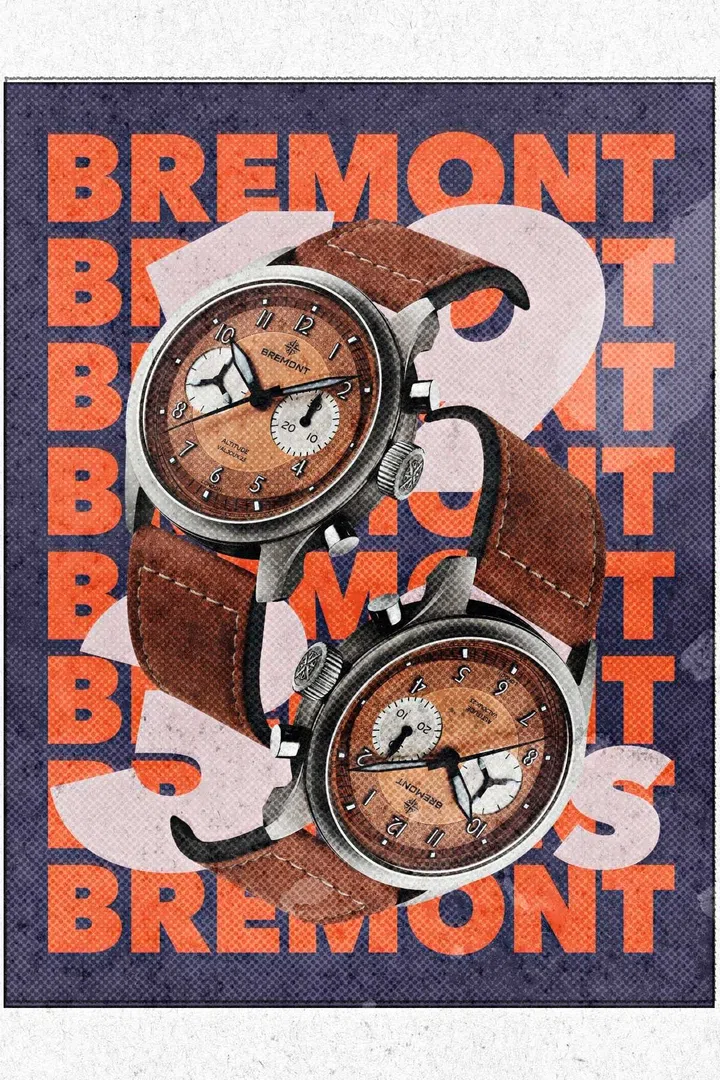
Bremont Altitude Chronograph Pulsograph Valjoux 23
The golden age of chronographs arrived during the 1930s, when doctors, pilots, and racing drivers relied on precise mechanical timers. Bremont channels that era with this watch, combining a warm salmon dial, pulsometer scale, and one of the most celebrated vintage chronograph movements ever produced.
Each of the 40 limited-edition watches houses a meticulously restored new old-stock Valjoux 23, first introduced in 1916 and widely used throughout the 30s and 40s. The 42mm titanium case combines lightweight strength and durability with the elegance of a true vintage chronograph.
1940s: Beauty in restraint and functionality
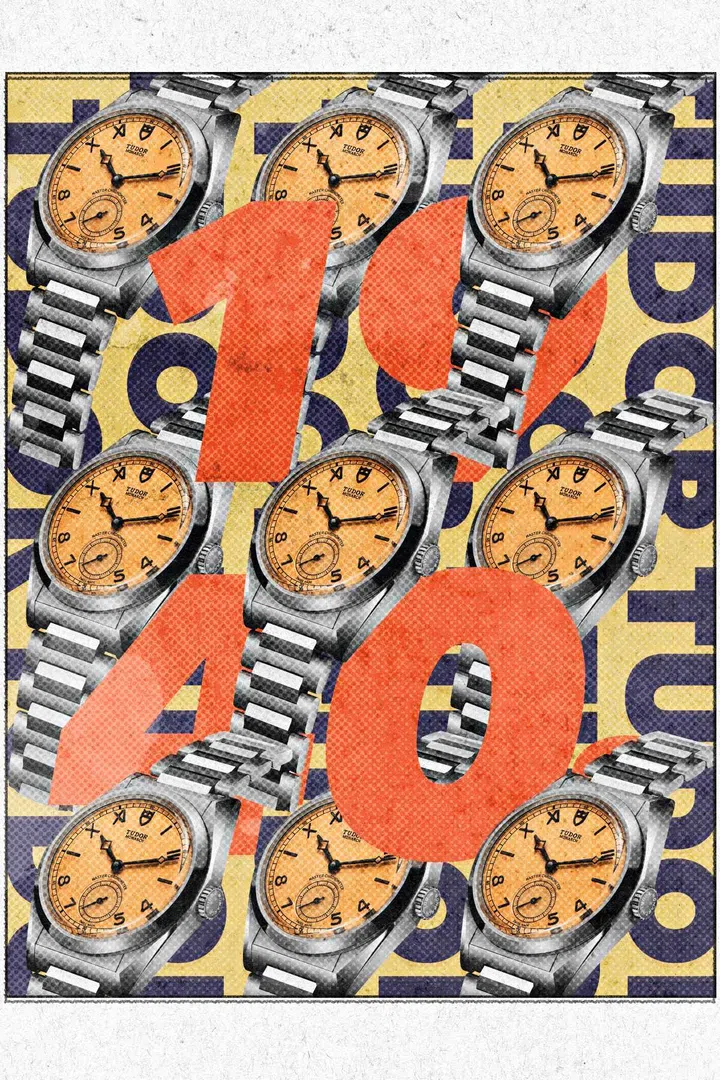
Tudor Monarch
Long before dive watches defined Tudor, it produced dress watches distinguished by elegance and legibility. The Monarch evokes the 1940s wartime aesthetic through its Error-Proof-style dial with Roman and Arabic numerals, small seconds display, and warm champagne dial recalling an era when clarity and practicality reigned.
The 39mm faceted steel case brings vintage proportions into the present, while the integrated bracelet imparts modernity. Beneath the nostalgic exterior lies the Manufacture Calibre MT5662-2U, a METAS Master Chronometer-certified automatic movement offering a 65-hour power reserve and 100m of water resistance.
1950s: Diving into a new era
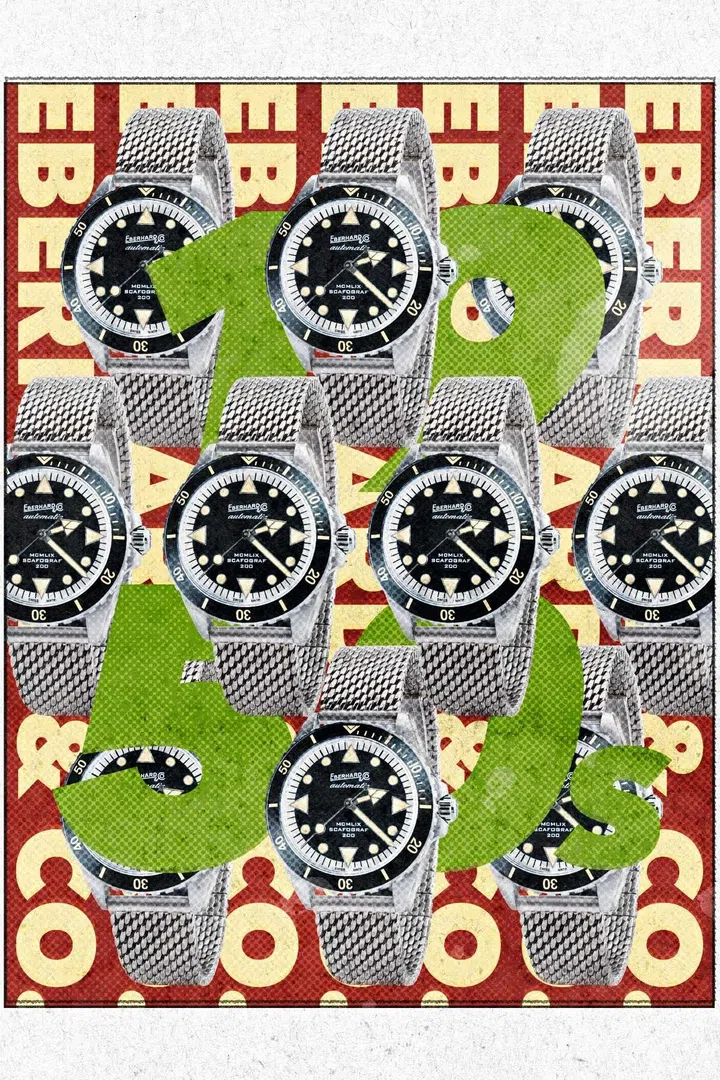
Eberhard & Co. Scafograf 200 MCMLIX
As recreational diving flourished during the 1950s, purpose-built dive watches rapidly evolved from specialist tools into everyday companions. Eberhard revisits that formative decade with this watch, directly inspired by the original Scafograf 100 introduced in 1959.
The triangular hour markers, distinctive handset, and compact 39mm case remain faithful to the original, while a modern helium escape valve and ceramic bezel bring contemporary capability. Completing the nostalgic look is a polished Milanese mesh bracelet, offering period authenticity and a style widely worn from the late 50s to the 70s.

1960s: A chronograph icon is born
Zenith Chronomaster Revival A384 Tropical
The 1960s marked a transformative decade for the chronograph, culminating in a race to develop the first automatic versions by the decade’s end. Introduced in 1969, the original A384 accompanied Zenith’s groundbreaking El Primero, the world’s first integrated high-frequency automatic chronograph.
This tribute creation faithfully recreates its distinctive 37mm stainless steel tonneau case, Gay Frères ladder bracelet and vintage proportions. The white lacquered dial also features chocolate-brown “panda” sub-dials inspired by naturally aged tropical dials prized by collectors. Inside beats the El Primero 400, operating at 36,000vph and delivering a 50-hour power reserve, 50m water resistance, and tenth-of-a-second precision.
1970s: The sports watch changes everything
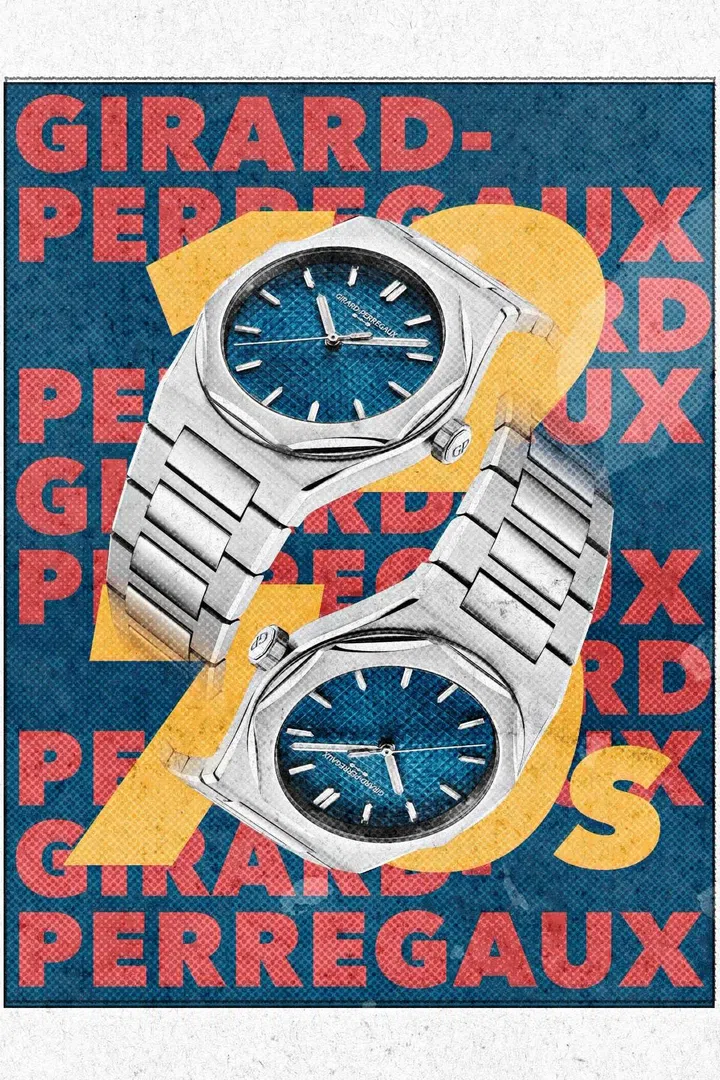
Girard-Perregaux Laureato Fifty Self-winding 39mm Blue Enamel
No decade reshaped luxury watchmaking quite like the 1970s, when integrated-bracelet sports watches became the new icons of modern design. Fifty years after the original Laureato debuted in 1975, Girard-Perregaux celebrates its milestone with the Laureato Fifty.
The signature octagonal bezel, circular plinth, tonneau case, and integrated steel bracelet remain instantly recognisable, while a striking in-house blue enamel dial with a Clous de Paris motif adds depth. The 39mm watch is powered by the new automatic Manufacture Calibre GP4800, offering a 60-hour power reserve and 150m of water resistance.

1980s: Horology embraces exuberance
TAG Heuer Formula 1 38mm Solargraph
The electric 80s brought unprecedented colour and self-expression to sports watches. Launched in 1986 as the first watch to bear the TAG Heuer name, the original Formula 1 stood out with bold colours, daring design, and innovative composite cases, while forging a strong connection with motorsport.
This new Solargraph pastel collection revives that spirited character in a compact 38mm format, retaining signature details such as the bidirectional bezel and shield elements. Powered by the light-driven Calibre TH50-00, it offers up to 10 months of autonomy in darkness and 100m water resistance.